Author: Burt Webb

  • Geiger Readings for April 23, 2024

    Geiger Readings for April 23, 2024

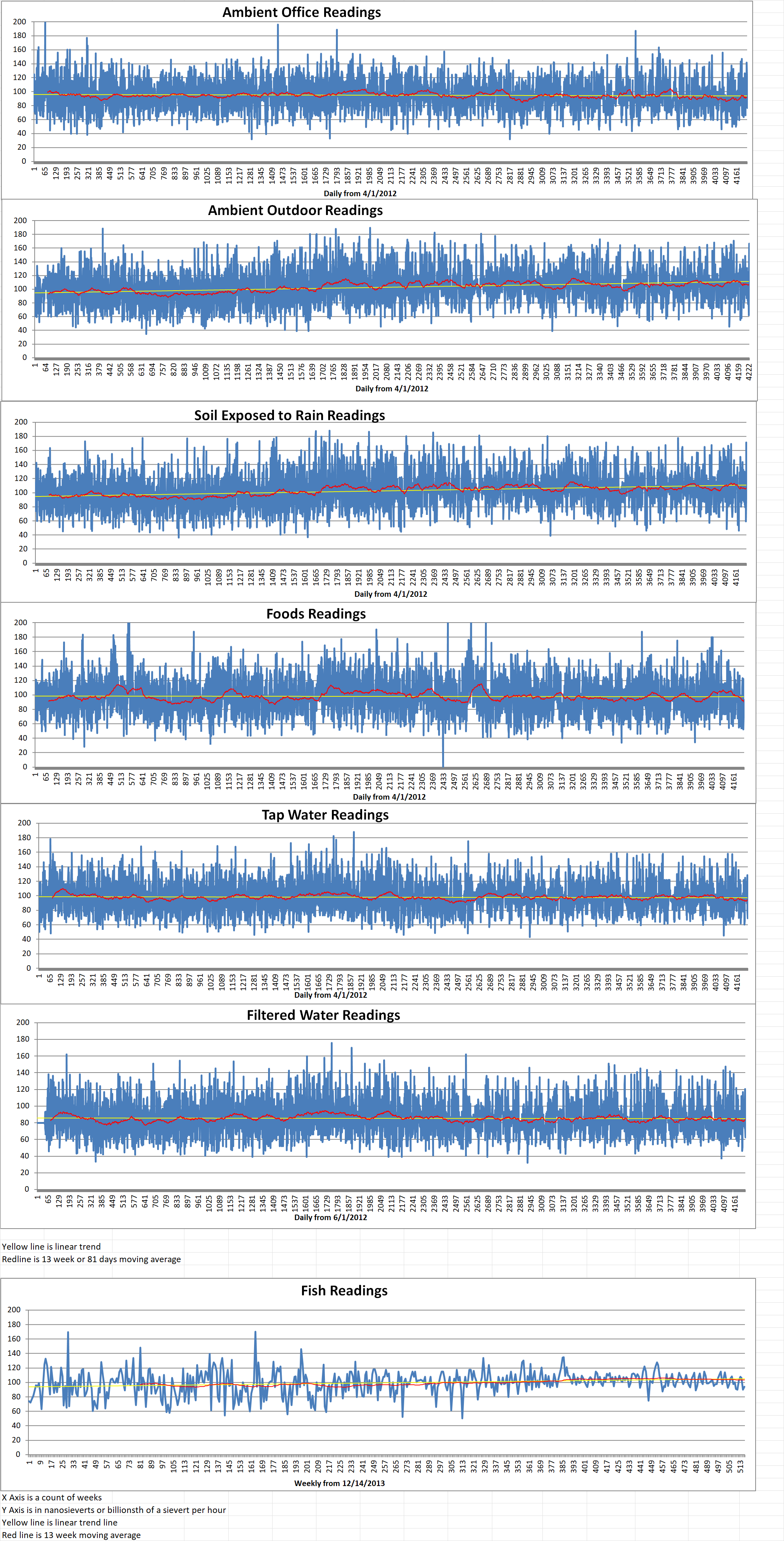
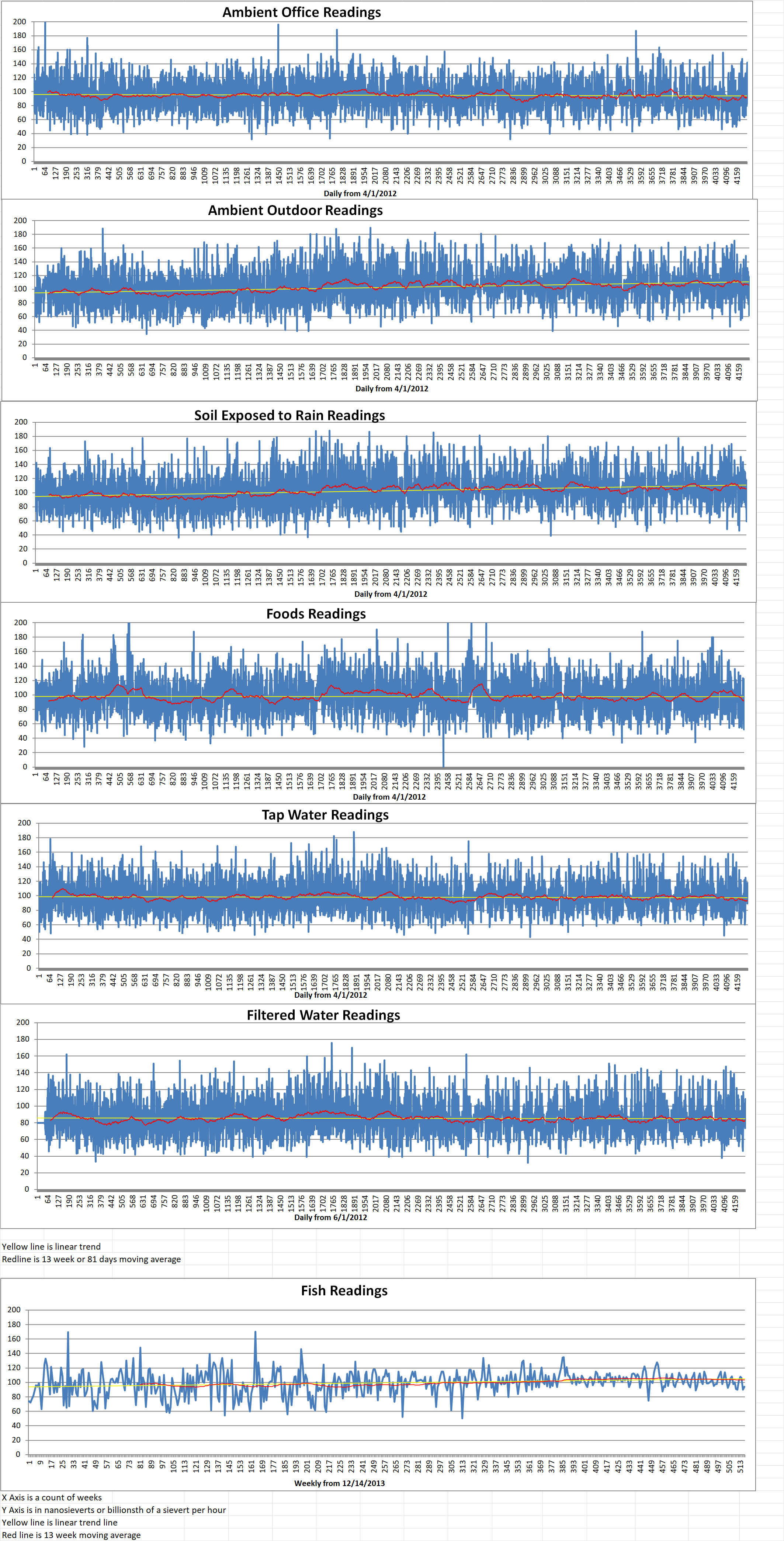
    Ambient office = 77 nanosieverts per hour

    Ambient outside = 128 nanosieverts per hour

    Soil exposed to rain water = 131 nanosieverts per hour

    Green onion from Central Market = 93 nanosieverts per hour

    Tap water = 69 nanosieverts per hour

    Filter water = 63 nanosieverts per hour

  • Nuclear Reactors 1374 – Oklo Is Working On Microreactors To Supply Electricity To AI Server Farms – Part 1 of 2 Parts

    Nuclear Reactors 1374 – Oklo Is Working On Microreactors To Supply Electricity To AI Server Farms – Part 1 of 2 Parts

    Part 1 of 2 Parts    
         Tech firms and Silicon Valley billionaires have been pouring money into nuclear energy for years. They have pitched sustainable power sources as crucial to the green transition. Now they are promoting artificial intelligence.
         While generative AI has grown at lightning speed, nuclear power projects are heavily regulated and usually advance at a very slow pace. That’s raising questions about whether advances in nuclear energy can cut emissions as quickly as energy-hungry AI and other fast-growing technologies are adding to them.
         Sarah Myers West is managing director of the AI Now Institute, a research group focused on the social impacts of AI. She said, “If you were to integrate large language models, GPT-style models into search engines, it’s going to cost five times as much environmentally as standard search.” At current growth rates, some new AI servers could soon consume more than eighty-five terawatt hours of electricity each year, researchers have estimated. This is more than some small nations’ annual energy consumption.
         Myers West continued, “I want to see innovation in this country. I just want the scope of innovation to be determined beyond the incentive structures of these giant companies.”

         Oklo is one of the nuclear startups backed by Sam Altman who is the CEO of OpenAI. He has described AI and cheap, green energy as mutually reinforcing essentials to achieving a future marked by “abundance.”

         In 2021, Altman invested three hundred and seventy five million dollars million in Helion Energy, a nuclear fusion startup that Altman chairs. He told an interviewer that last year Microsoft agreed to buy power from Helion starting in 2028. He added, “Fundamentally today in the world, the two limiting commodities you see everywhere are intelligence, which we’re trying to work on with AI, and energy.” Oklo, which Altman also chairs, is focused on the opposite reaction, fission, which generates energy by splitting an atom; fusion does so by merging atomic nuclei.
         In rural southeastern Idaho, Oklo is working on the construction of a small-scale nuclear powerhouse that could fuel data centers like the ones OpenAI and its competitors need. However, the company also wants to supply mixed-use communities and industrial facilities. It is already contracted to build two commercial plants in southern Ohio.
        Jacob DeWitte is the Oklo CEO and co-founder.  As the U.S. moves toward wide electric vehicle adoption and decarbonization, he said that “the amount of energy we’re going to need to do that is huge. Also heating and cooking — if we want to electrify those processes, you’re going to need even more.”
         Oklo has found getting regulators on board is more difficult than finding potential customers.
         In 2022, the federal Nuclear Regulatory Commission (NRC), which oversees commercial nuclear power plants and materials, denied the company’s application for the design of its Idaho “Aurora” powerhouse. The NRC said that Oklo hadn’t provided enough safety information. In October of 2023, the Air Force rescinded its intent to award a contract for a microreactor pilot program to power a base in Alaska.
         DeWitte said “You’ve got new physics, you have to use new models. You have to do all sorts of stuff that’s different than what they’re used to,” referring to the NRC. Oklo is now working to satisfy the requirements of regulators, he said, acknowledging agency officials must “do their independent job of ensuring this meets adequate safety requirements.”
    Please read Part 2 next
  • Geiger Readings for April 22, 2024

    Geiger Readings for April 22, 2024

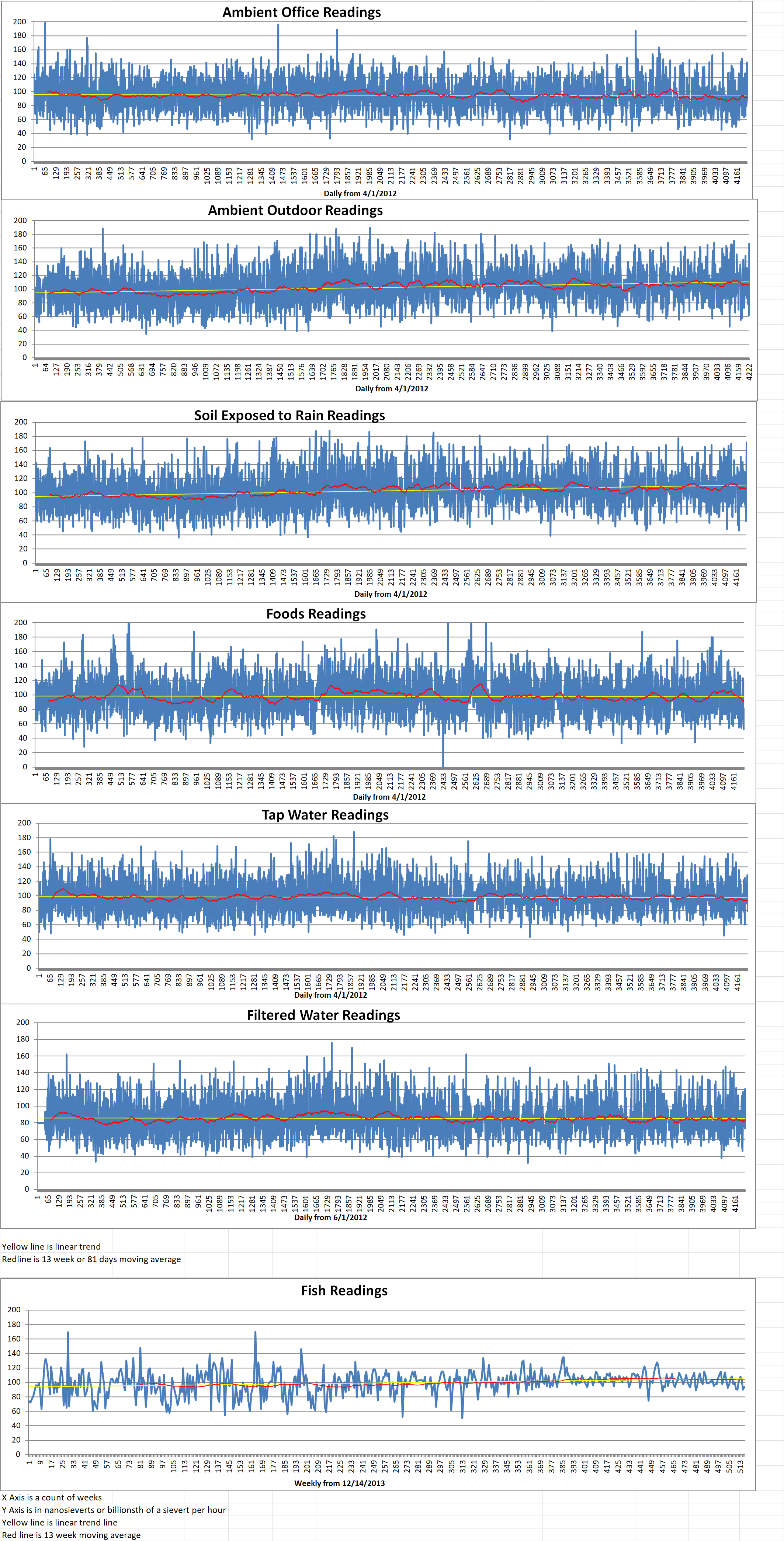
    Ambient office = 88 nanosieverts per hour

    Ambient outside = 167 nanosieverts per hour

    Soil exposed to rain water = 171 nanosieverts per hour

    Blueberry from Central Market = 80 nanosieverts per hour

    Tap water = 79 nanosieverts per hour

    Filter water = 73 nanosieverts per hour

  • Geiger Readings for April 21, 2024

    Geiger Readings for April 21, 2024

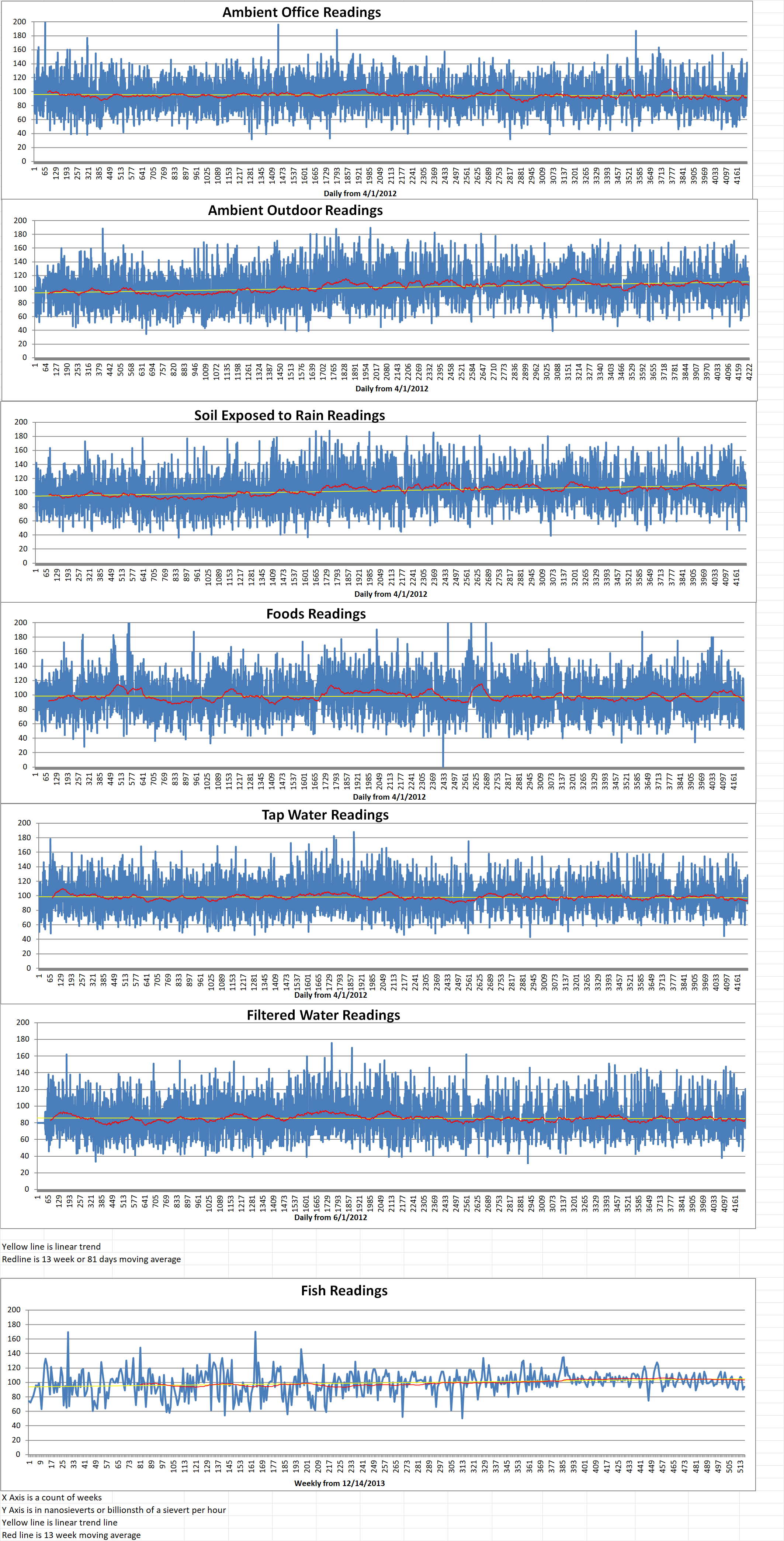
    Ambient office = 120 nanosieverts per hour

    Ambient outside = 100 nanosieverts per hour

    Soil exposed to rain water = 100 nanosieverts per hour

    Avocado from Central Market = 73 nanosieverts per hour

    Tap water = 128 nanosieverts per hour

    Filter water = 121 nanosieverts per hour

  • Geiger Readings for April 20, 2024

    Geiger Readings for April 20, 2024

    Ambient office = 142 nanosieverts per hour

    Ambient outside = 62 nanosieverts per hour

    Soil exposed to rain water = 59 nanosieverts per hour

    Tomato from Central Market = 52 nanosieverts per hour

    Tap water = 118 nanosieverts per hour

    Filter water = 108 nanosieverts per hour

    Dover Sole from Central = 94 nanosieverts per hour

  • Nuclear Reactors 1373 – The European Union Was Encouraged To Invest In New Nuclear Construction

    Nuclear Reactors 1373 – The European Union Was Encouraged To Invest In New Nuclear Construction

    Maroš Šefcovic is the European Commission executive vice-president. He told the ‘Powering Tomorrow, Inspiring Today: Nuclear Energy 2.0’ conference in Brussels that he recognized the need for EU support in investment, funding, and financing due to the high costs associated with nuclear projects.
         Because of these challenges, he called for streamlining construction processes, highlighting nuclear energy’s cost-effectiveness and its consistent, clean power generation capabilities.
         Šefcovic is responsible for the Green Deal, the commission’s pivotal policy initiative aimed at making the bloc’s economy climate neutral and sustainable. He said that Europe operates more than one hundred and fifty nuclear power plants, accounting for twenty two percent of its electricity supply. He highlighted the potential of small modular reactors (SMRs) and nuclear fusion for Europe’s energy landscape.
         The Nuclear Energy 2.0 conference was jointly hosted by power companies EDF, Fortum and Vattenfall, with Euractiv as media partner.
         Thierry Breton is the European commissioner for the internal market. He praised the qualities of nuclear energy, saying it was “once again central in the debate”.

         Breton said that nuclear energy is a key element for safeguarding European autonomy and industrial leadership. This is especially true when by 2050 energy demand will double and need to be carbon neutral.
          Breton added that the EU should allow companies and investors to speed up the permitting process for new nuclear. Nuclear technology legislation should be established that promotes an integrated approach to research, deployment and reinforcing the market.
         The conference heard that if the commission wants to reach its carbon neutral goals, nuclear power should be its biggest energy source. Breton said that Europe should “wise up and turn away from its current trajectory, where the amount of nuclear electricity production has declined in recent decades”.
         Breton told a panel that Europe has voluntary reduced its nuclear power capacity and surrendered technological leadership to Russia and China while it now suffers from “resource poverty”.
         The EU needs to focus on facilitating the large-scale nuclear construction Europe needs by making investment easier and more available. This is an area where the European Investment Bank has a role to play, panelists agreed.
         The panel noted that significant investment is needed for new nuclear. However, nuclear power plants are not “expensive per se” because a huge amount of energy is densely concentrated. This guarantees a long-term, stable supply.
         Luc Rémont is the EDF chief executive officer. He said consumer demand should be central and that “only nuclear and hydro can produce the required, constant base load, 24/7”.
         Ann Mettler is the vice-president at Breakthrough Energy, an organization established by Bill Gates. She said that the lack of competitiveness is growing in the EU. The future demand for energy will be much larger, noting that AI is extremely energy intensive.
         Mettler warned that “No electricity, no progress,”. She added that policy decisions should be less ideological as “we can’t regulate ourselves to net zero”.
         The panelists said there is no silver bullet and a pragmatic energy mix is required. It has to leave ample room to maneuver for member states. They said that there is no “one size fits all” solution and Brussels should not dictate this.

         The panel stressed the need for a level playing field and a technology neutral taxonomy. These should be combined with risk-sharing instruments, so that all financial institutions would be able to invest in nuclear energy. There should be fair access for investment in all net-zero technologies.