Author: Burt Webb
-
Geiger Readings for Sep 27, 2017
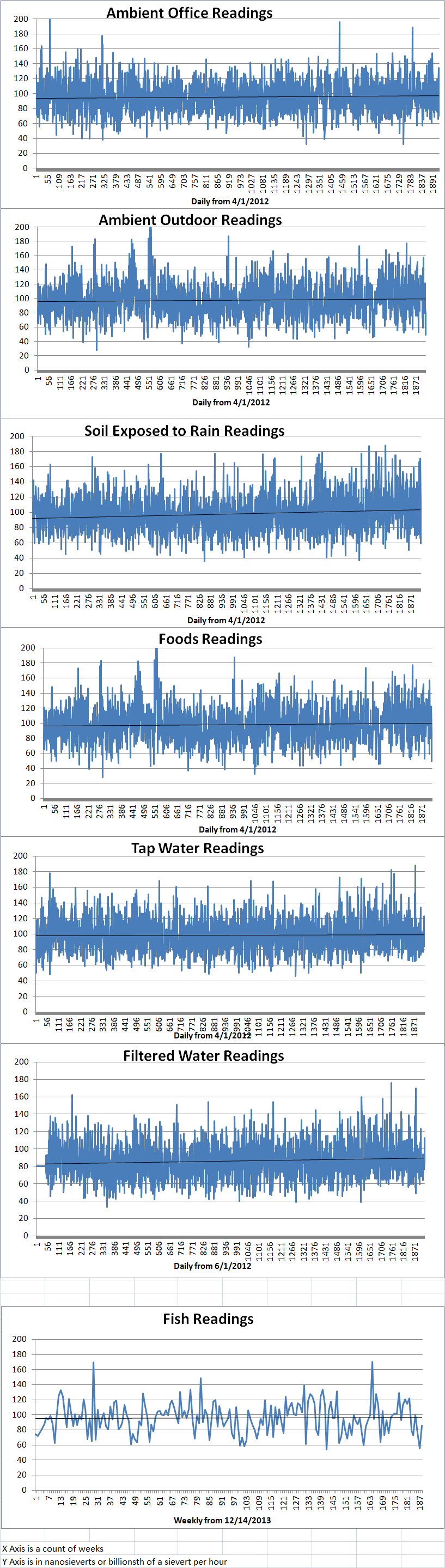
Ambient office = 70 nanosieverts per hourAmbient outside = 58 nanosieverts per hourSoil exposed to rain water = 59 nanosieverts per hourRed onion from Central Market = 49 nanosieverts per hourTap water = 123 nanosieverts per hourFilter water = 113 nanosieverts per hour -
Nuclear Reactors 307 – Russian Plans To Improve The World Nuclear Fuel Cycle – Part 2 of 2 Parts
Part 2 of 2 Parts (Please read Part 1 first)
Russia is working on modernizing the nuclear fuel cycle for its fleet of reactors. It has four main reprocessing facilities operating to deal with spent nuclear fuel. The Mayak facility is the biggest of the four. It is being upgraded to deal with highly-active waste and will be able to reprocess a broader range of used nuclear fuel. It will start the new operations with reprocessing the spent nuclear fuel that was unloaded from Russian VVER-1000 reactors last year.
The Siberian Chemical Plant located in Seversk is a production facility that is operating with reprocessed uranium. The Mining and Chemical Combine located in Zheleznogorsk is a center of spent nuclear fuel management. It has centralized wet and dry storage. It hosts a demonstration center for reprocessing that will start operating in 2019. And it has a fabrication plant for mixed oxide (MOX – mixed uranium and plutonium compounds) fuel to be used in fast reactors. The National Operator for Radioactive Wastes is working on commissioning an underground research laboratory in 2022 for deep geological storage of highly-active nuclear waste.
Rosatom is currently testing three different scenarios for the back-end of the nuclear fuel cycle. The first of these scenarios envisions the recycling of reprocessed uranium and plutonium to create fuel for the existing Russian nuclear power reactors. The reprocessed uranium would be used to fuel the RBMK power reactors and the plutonium would be used to refuel BN-800 fast reactors.
The second scenario is referred to as the REMIX nuclear fuel cycle. REMIX fuel is created directly from an unseperated mixture of recycled uranium and plutonium generated from reprocessing of spent nuclear fuel. This fuel can be used in light water power reactors. The benefit of the REMIX fuel cycle is that the spent nuclear fuel can be reprocessed and reused again and again.
The third scenario is based on a “two-component” nuclear power system. Both light water reactors and fast reactors would be involved. In this scenario, used fuel from light water reactors would be reprocessed. The reprocessed uranium would be use to refuel light water reactors. The plutonium recovered by reprocessing would be used to create MOX fuel which could then be used in light water reactors.
All of three of these scenarios have been evolved over the years from existing operations. All three are now being tested in Russia. “So it’s not a question of the distant future. There are real development scenarios which can be realized in our lifetime,” said the Director of Tenex. She added that these scenarios can answer the challenges that are currently facing the nuclear fuel cycle. They offer “customizable and comprehensive solutions with an emphasis on advanced scientific and engineering achievements.” They also provide opportunities for expanding international cooperation. She said that Russia is prepared to offer a full set of services from supplying fuel to reprocessing to countries which do not have the necessary technology to provide such services for themselves.
The U.S. experimented with nuclear fuel reprocessing for decades but ultimately decided to abandon it. China, Japan and South Korea are all considering reprocessing but there are fears that this could touch off a nuclear arms race in Asia. It will be interesting to see if the Russian campaign to provide reprocessing services to the world will succeed.
-
Nuclear News Roundup Sep 26, 2017
Michigan regulators approved more than $140 million for Consumers to buy out its contract. But at $42 million less than requested, the decision puts Palisades’ closure next year in doubt. Utilitydive.com
The U.S. nuclear power industry could be out of business by the middle of the century. Bloomberg.com
Wind power is now cheaper than nuclear – the energy revolution is happening. Theguardian.com
As North Korea and the US keep escalating their war of words, the world sits on the brink of nuclear destruction. So you’d hope that the people in charge of America’s nukes are keeping a cool head under pressure. But the latest tweet from US Strategic Command doesn’t give much confidence in that. Gizmodo.com
-
Geiger Readings for Sep 265, 2017
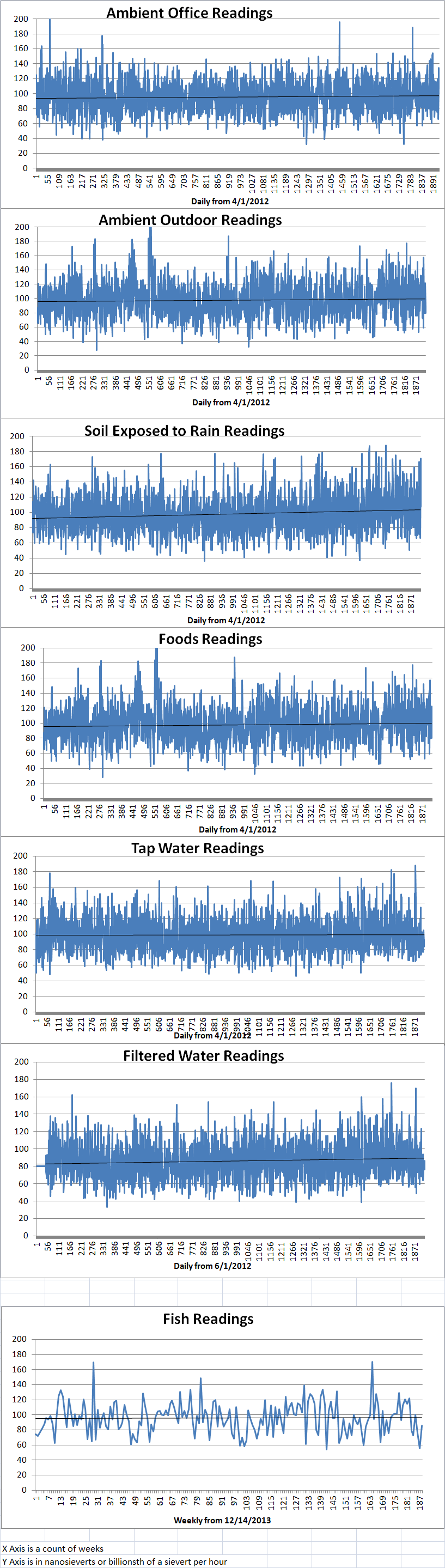
Ambient office = 116 nanosieverts per hourAmbient outside = 108 nanosieverts per hourSoil exposed to rain water = 108 nanosieverts per hourAvodado from Central Market = 80 nanosieverts per hourTap water = 93 nanosieverts per hourFilter water = 87 nanosieverts per hour -
Nuclear Reactors 306 – Russian Plans To Improve The World Nuclear Fuel Cycle – Part 1 of 2 Parts.
Part 1 of 2 Parts
Many agencies and individuals concerned about climate change say that we must find a way to limit average global temperature increase to two degrees Centigrade or less if we hope to avoid severe consequences. Nuclear industry organizations such as the International Energy Agency and the World Nuclear Association support the expansion of nuclear power plants to help achieve that goal.
JSC Tenex is a subsidiary of Rosatom, the Russian nuclear company. Tenex is the “nuclear fuel cycle product supplier” for Rosatom clients. At the World Nuclear Association annual conference in London last week, the general director of JSC Tenex said that a new nuclear fuel cycle was necessary to support the growth of global nuclear energy. The new cycle she proposed focuses on reprocessing and recycling of used nuclear fuel. This will allow uranium and plutonium to be utilized to the fullest extent possible while also reducing the amount of nuclear waste that is generated. She criticized current nuclear fuel cycles and said that they faced many challenges and were not an optimal use of nuclear fuel.
Currently, most nuclear power plants are using the deferred solution of temporary interim storage of spent nuclear fuel because permanent storage or robust recycling alternatives are not available. The Tenex Director said that reprocessing technology that is available is inefficient and the use of reprocessed uranium and plutonium is also inefficient. This is the reason that some of the major companies involved in nuclear power production have suspended reprocessing. International projects to promote reprocessing have faced barriers and delays. “Industry needs a new nuclear fuel cycle based on innovative solutions and integrated approaches,” she said.
It is estimated that by 2050, a million tons of spent nuclear fuel will exist. If uranium and plutonium were extracted via reprocessing from that spent fuel, there would be enough new fuel created to fuel one hundred and forty one gigawatt light water reactors for sixty years.
The new nuclear fuel cycle required by future expansion of nuclear power generation must reduce the amount and danger of spent nuclear fuel. In addition it must promote the use of fissile materials that can be recovered by reprocessing. One important concern that must be addressed is the danger of the use of reprocessed uranium and plutonium for nuclear weapons. The new fuel cycle must address these non-proliferation concerns.
The new fuel cycle should include mandatory reprocessing and the separation of high level wastes so that separate processing of different fissile materials will be facilitated. Reprocessed uranium and plutonium would be used to create new fuel for reactors. Minor actinides that are generated by the fission reaction could be “burned” in fast reactors which would reduce the amount and toxicity of waste. Other fission products could be used for sources for useful radioisotopes for medicine and industry.
Rosatom claims that the current closed fuel cycle for nuclear power plants in which uranium and plutonium are only used once utilizes at best about twenty one percent of used light water reactors fuel. The remaining seventy nine percent consists mostly of U-238. This remainder then goes into temporary storage to await the development of permanent spent nuclear fuel repositories.
Please read Part 2

-
Nuclear News Roundup Sep 25, 2017
Russia showcased its nuclear power expertise in Moscow on Monday, hoping to lure countries like the Philippines to adopt its technology. News.abs-cbn.com
US leads missile interception tests in Scotland in response to nuclear threat from North Korea. Independent.co.uk
Do Flynn’s nuclear dealings top Manafort’s Kurdish referendum? Thebulletin.org
-
Geiger Readings for Sep 25, 2017
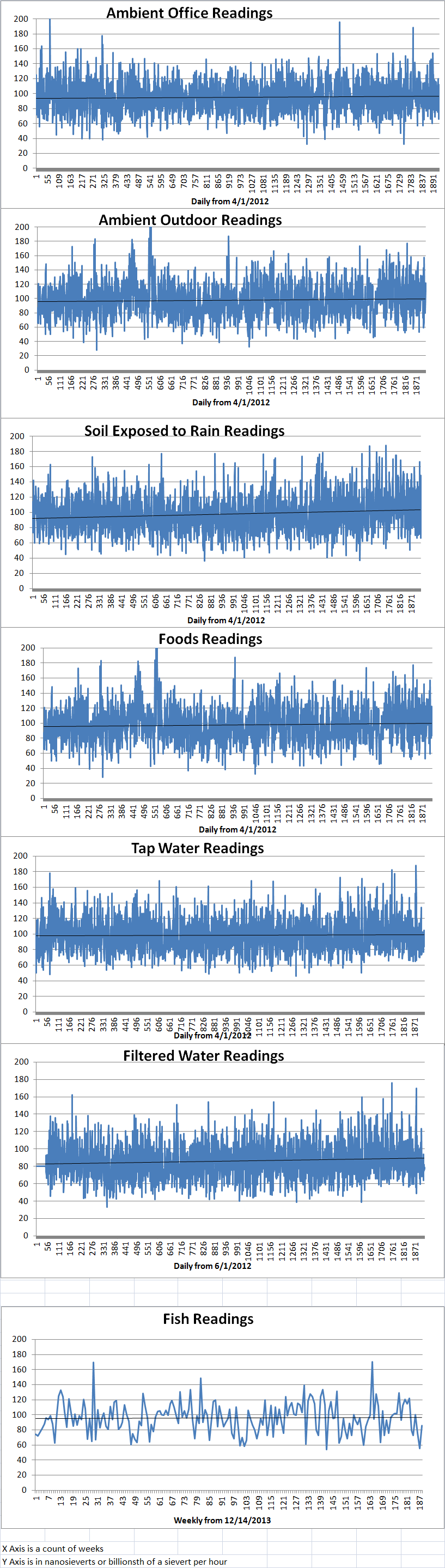
Ambient office = 135 nanosieverts per hourAmbient outside = 177 nanosieverts per hourSoil exposed to rain water = 171 nanosieverts per hourCrimini mushroom from Central Market = 86 nanosieverts per hourTap water = 84 nanosieverts per hourFilter water = 77 nanosieverts per hour -
Nuclear News Roundup Sep 24, 2017
Group opposes bringing German nuclear material through Charleston to Savannah River Site. Postandcourier.com
The U.S. Navy has accepted delivery of the Virginia-class nuclear attack submarine USS Colorado (SSN-788), the 15th boat of the Virginia-class, on September 21, the service announced in a statement. Thediplomat.com
The Vatican Secretary for Relations with States has addressed the United Nations General Assembly, urging governments to do more to prevent wars, protect human dignity and work for a nuclear-free world. Radiovaticana.va
An ally of Jeremy Corbyn in the U.K. has claimed trade unions that are involved in the nuclear industry have become “a voice for big business” because they have been weakened in other sectors. Theguardian.com
-
Geiger Readings for Sep 24, 2017
Ambient office = 112 nanosieverts per hourAmbient outside = 73 nanosieverts per hourSoil exposed to rain water = 66 nanosieverts per hourBeefsteak from Central Market = 122 nanosieverts per hourTap water = 87 nanosieverts per hourFilter water = 77 nanosieverts per hour