Author: Burt Webb
-
Geiger Readings for Mar 30, 2017
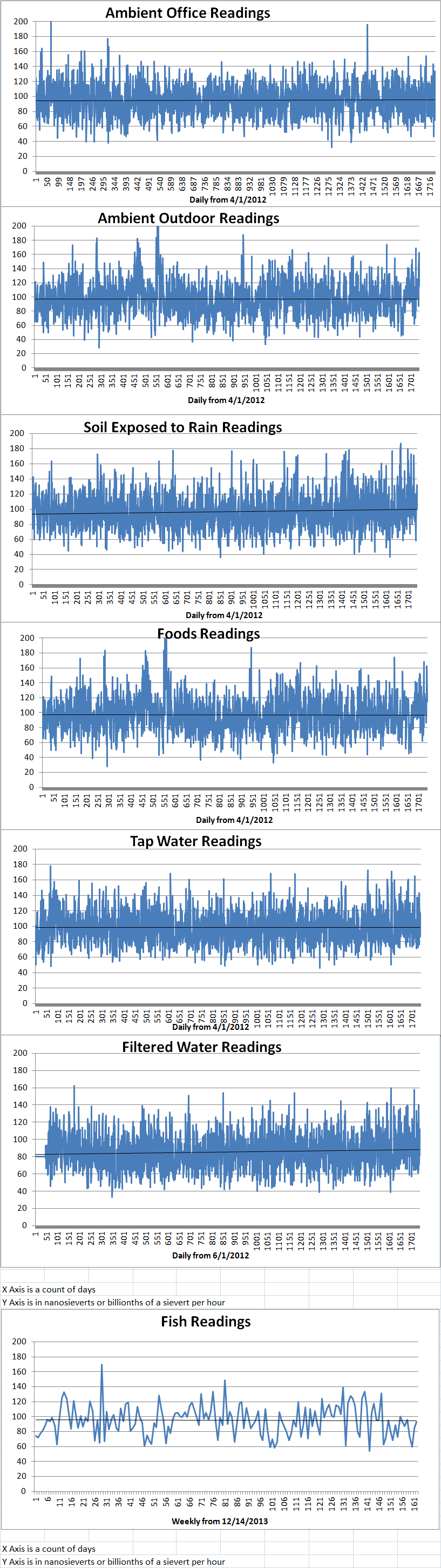
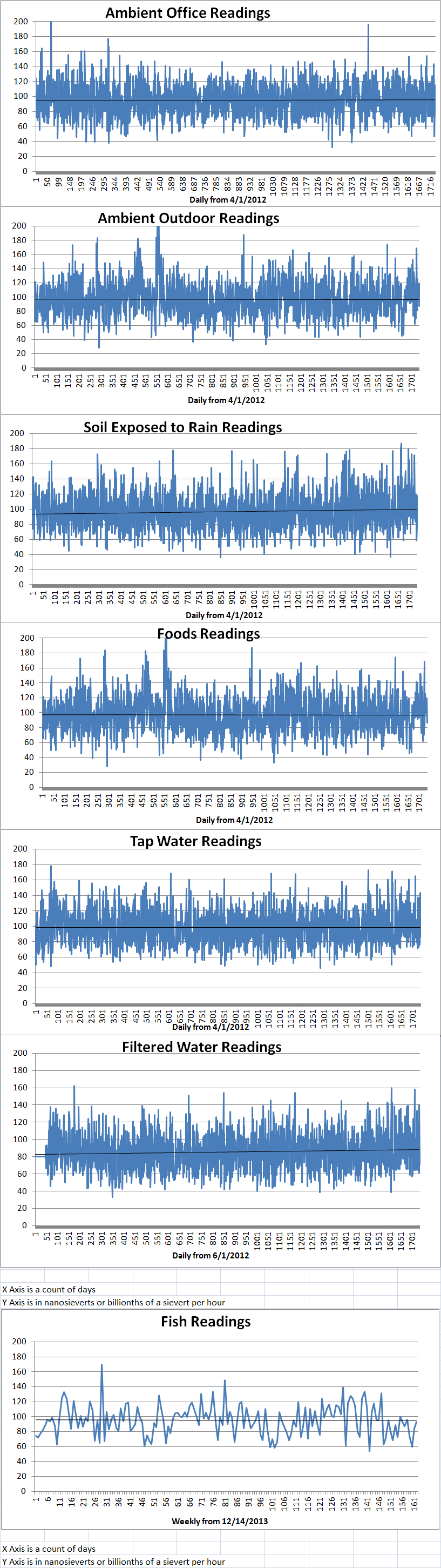
Ambient office = 68 nanosieverts per hourAmbient outside = 105 nanosieverts per hourSoil exposed to rain water = 100 nanosieverts per hourRomaine lettuce from Central Market = 115 nanosieverts per hourTap water = 93 nanosieverts per hourFilter water = 81 nanosieverts per hour -
Nuclear Weapons 261 – Talks Begin At U.N. To Negotiate A Ban On All Nuclear Weapons
Last year more than one hundred and thirteen members of the United Nations voted for a General Assembly resolution to begin talks in March of this year about a global ban on all nuclear weapons. Austria, Brazil, and Ireland were among the nations leading the call for talks about such a ban. This week, more than one hundred and thirteen U.N. members began negotiations over the proposed ban at the U.N. headquarters in New York city.
The purpose of the talks is to create “a legally binding instrument to prohibit nuclear weapons, leading towards their total elimination”. Supporters of the ban hope to have a final document ready by July of this year. Any such ban would only bind the nations who signed it but supporters hope that it will help to set a precedent that will eventually lead to the elimination of nuclear weapons even in those nations which were not early signers of the new treaty.
The U.N. Secretary General opened the talks with the statement “the need for progress on nuclear disarmament has rarely been as urgent as it is today.” With increasing nuclear saber rattling from Russia and North Korea, I would have to agree with the Secretary General.
Forty nuclear and non-nuclear nations have decided to boycott the talks. Opponents of the talks say that the Non-Proliferation Treaty that went into effect in 1970 has led to the gradual reduction of nuclear weapons in the world. The U.S. has reduced its nuclear arsenal by eight five percent since the height of the Cold War. The U.K. has reduced its arsenal by fifty percent during the same period.
The U.S. Ambassador to the U.N., Niki Haley, recently said that “as a mother, as a daughter there is nothing I want more than a world without nuclear weapons but we had to be realistic.” Ms. Haley said the move would mean disarming nations that were “trying to keep peace and safety” while “bad actors” could continue on unchecked. She said: “North Korea would be the one cheering, and all of us and the people we represent would be the ones at risk”.
Yesterday, Army General Curtis M. Scaparrotti, head of U.S. European Command and NATO supreme allied commander spoke to the U.S. House Armed Services Committee. He said “My view is the nuclear weapons ban is just not realistic. It is occurring in a world where we have North Korea in particular who is in violation of U.N. sanctions and resolutions. Russia is also aggressively improving their modernization of their nuclear weapons.” The U.S. is also “aggressively improving their modernization of their nuclear weapons.” And NATO is also increasing its defense spending this year. Nations with nuclear weapons which oppose the ban include the U.S., the U.K, France, Russia, China and North Korea.
Many non-nuclear nations, led by Australia, also oppose the ban. While Australia has been officially opposing the ban talks and has been lobbying other nations to join it, polls of the Australian people show that the majority of them think that Australia should participate in the talks. The Assistant Minister to the Prime Minister told the Australian Senate “Australia shares with the international community the goal of a peaceful and secure world free of nuclear weapons, but that it would not be participating in the UN talks. This approach is consistent with Australia’s clear and long-standing position on the proposed nuclear weapons ban treaty. The proposed ban treaty would not advance nuclear disarmament. It will be ineffective in eliminating, or even reducing, nuclear weapons arsenals. It will not advance security… and it risks undermining the nuclear non-proliferation treaty by creating ambiguity and confusion through parallel obligations and by deepening divisions between nuclear and non-nuclear weapons states.”
Japan has also announced that it will abstain from participating in the talks. Japanese Disarmament Ambassador Nobushige Takamizawa said “Regrettably, given the present circumstances, we must say that it would be difficult for Japan to participate … in a constructive manner and in good faith. We will continue to pursue realistic and effective disarmament measures and will work to create a security environment conducive to the elimination of nuclear weapons.”

-
Nuclear News Roundup Mar 29, 2017
ARMZ, the uranium mining subsidiary of Russia’s Rosatom, has started developing the Vershinnoye uranium deposit in the Republic of Buryatia, in southern Siberia. ARMZ said in a statement on Rosatom’s website the deposit has 4577 tonnes of uranium (tU) reserves and that the first production by in situ leaching (ISL) would be next year by its subsidiary JSC Khiagda. world-nuclear-news.org
Jordan and Saudi Arabia have signed agreements on cooperation in uranium exploration and carrying out a feasibility study into the construction of two small modular reactors (SMRs) in Jordan. world-nuclear-news.org
Westinghouse Electric Company said Wednesday that it was had filed petitions of Chapter 11 bankruptcy protection for the corporation a various subsidiaries and that it was seeking to restructure its business “as a result of certain financial and construction challenges in its U.S. AP1000 power plant projects.” nuclearnews.com
-
Geiger Readings for Mar 29, 2017
Ambient office = 101 nanosieverts per hourAmbient outside = 126 nanosieverts per hourSoil exposed to rain water = 132 nanosieverts per hourOrange bell pepper from Central Market = 162 nanosieverts per hourTap water = 117 nanosieverts per hourFilter water = 112 nanosieverts per hour -
Nuclear Weapons 260 – Air Force Upgrading B-2 Nuclear Stealth Bomber
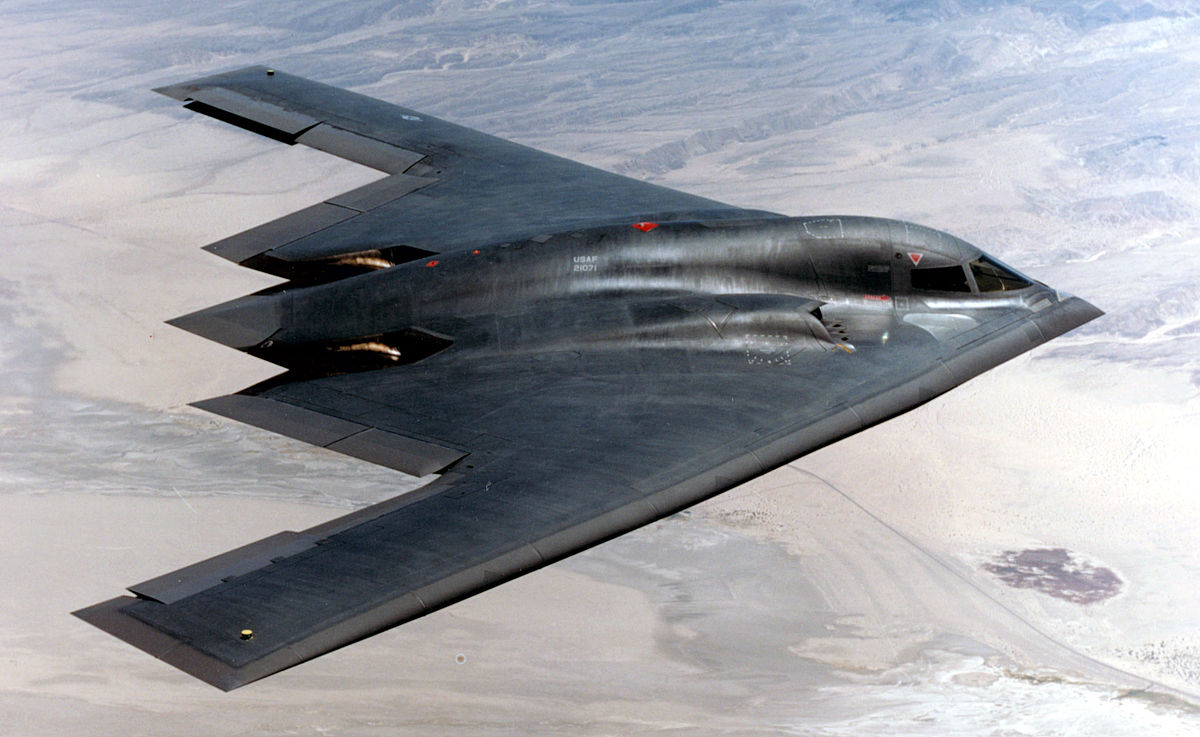
The U.S. Air Force Northrup B-2 Spirit or Stealth Bomber is a heavy penetration strategic bomber. It was introduced into service by the Air Force in 1997. It utilizes low observable stealth technology designed to penetrate enemy anti-aircraft defenses It is the only known stealth aircraft in the world that can carry large air-to-surface standoff weapons. The U.S. Air Force currently operates twenty B-2 bombers. Most of them are based at the Whiteman Air Force Base in Missouri.
The B-2 was originally designed to fly missions against the Soviet Union. It was designed to eluded Soviet air defenses and strike at enemy targets before the enemy even knew that their air space had been penetrated. Stealth technology refers to the ability evade both low frequency “surveillance” radar which indicates that there are unknown aircraft in the area and the higher frequency “engagement” radar that can pinpoint the location of specific enemy planes. The B-2 can fly undetected into enemy territory and destroy enemy radar and air defense systems so that other planes can fly through the “corridor” that has been opened up and engage the enemy.
The B-2 is basically a flying wing that carries a crew of two on up to a forty hour mission. It can fly missions at up to fifty thousand feet and it has a range of almost seven thousand miles but can be refueled in flight for longer missions. It can carry up to forty thousand pounds of ordinance and deploy either conventional munitions and nuclear warheads.
Conventional weapons that are currently carried by the B-2 include the Mark 82 and Mark 84 bombs, CBU-87 Combined Effects Munitions, GATOR mines and the CBU-97 Sensor Fuzed Weapon, GBU-28 five thousand pound Bunker Busters, two thousand pound Joint Direct Attack Munitions (JDAMS), five thousand pound JDAMS, Joint Standoff Weapons, Joint Air-to-Surface Standoff Missiles, and a thirty thousand pound bomb known as the Massive Ordnance Penetrator and other munitions.
The B-2 can also carry nuclear weapons such as the B-61 Mods 3, 4, 7 and 10. The B-61 is a variable yield nuclear bomb in the range of three hundred tons of TNT to three hundred and forty thousand tons of TNT depending on the Mod number. B-61 bombs in various configurations are deployed today along with the B-2 bombers.
The B-61 Mod 12 is a new version of the B-61 bomb that is going to incorporate all the prior versions into one bomb which can have its yield set to different values as needed. A guided tail kit is being added to the B-61 and it will have an inertial guidance system for navigation. This will allow much more accurate targeting. The B-61 will be added to the B-2 arsenal. The B-2 will also be upgraded with the B-61 Mod 11 which is a nuclear bomb designed with penetration capability to hit buried targets. A Long Range Standoff Weapon called the LRSO which is an air-launched, guided missile is also being added to the B-2.
The electronics of the B-2 are also being upgraded. Systems to detect enemy surveillance systems are being added. High-bandwidth satellite communication systems are be incorporated. B-2 will be able to communicate directly with drones operating in the theater of war. The Air Force intends to employ B-2 until 2050.
B-2 Spirit stealth bomber:
-
Geiger Readings for Mar 28, 2017
Ambient office = 134 nanosieverts per hourAmbient outside = 109 nanosieverts per hourSoil exposed to rain water = 112 nanosieverts per hourBartlett pear from Central Market = 143 nanosieverts per hourTap water = 87 nanosieverts per hourFilter water = 73 nanosieverts per hour -
Nuclear Reactors 271 – MIT Working On New Small Molten Salt Reactor
The MIT Nuclear Reactor Laboratory has an idea about how to jump-start the development of a new generation of nuclear reactors. They want to “piggyback” a new research reactor on their existing infrastructure. The normal process for the creation of a new reactor design requires that a license be obtained from the Nuclear Regulatory Commission and that a standalone experimental prototype be built. This may require as much as a decade and costs hundreds of millions of dollars. The proposed MIT one megawatt experimental reactor would not be able to produce a fission reaction on its own and so should not have to be licensed by the NRC. This would significantly reduce the time to construct and the cost of the new reactor.
MIT currently operates a six-megawatt research reactor on campus. The new “subcritical” reactor would be built adjacent to the existing reactor’s hexagonal core in two rooms which were once used for medical irradiation to testing cancer treatments. The new reactor would be about half the usual size of research reactors. The fission reaction in the new reactor would be initiated by neutron produced by the existing reactor. The researchers hope that construction of the new reactor will only require a simple amendment to the NRC permit for the existing reactor which started operating in 1974.
The purpose of the new reactor is to test designs for a small, transportable molten salt cooled reactor. Such reactors are intended to supply power off the grid to remote communities or worksites. It is hoped that such small molten salt reactors can be simpler, safer and cheaper than conventional power reactors. The new MIT research reactor might eliminate the need to build a full-scale prototype of a commercial version of the molten salt reactor depending on the results of the experiments and the concerns of the NRC regulators.
Safety issues, cost overruns, construction delays, costly regulatory requirements and low prices for fossil fuels have all hurt the nuclear power industry in the U.S. Reactor research in the U.S. has declined along with the nuclear industry. Only a few new reactors are being built and more old reactors are being retired. The public and investors are not enthusiastic about nuclear power generation. In the meantime, China is forging ahead with reactor construction and research. There is concern in the U.S. that our country is falling behind in a critical technology sector. MIT hopes that its research reactor project will help address this concern.
The chief nuclear scientist at the Idaho National Laboratory is skeptical about the licensing approach for the MIT project. He says that the NRC might not accept the claim that a full-scale licensing process and a stand-alone prototype are not necessary for the MIT project. However, he says that he believes that some sort of alternative to the usual licensing process required by the NRC may be needed in order to stimulate research into small molten salt reactors. There are other nuclear facilities in the U.S. that are eager to work on this new type of small reactor.
-
Nuclear News Roundup Mar 27, 2017
Nuclear professionals from across Asia will be able to use new training facilities at a soon-to-be-opened Indian research centre under extended cooperation between India and the International Atomic Energy Agency (IAEA). world-nuclear-news.org
An international team representing nuclear power regulators from France, Canada, the United States, Finland, Britain and China has warned that the culture of credibility at AREVA’s Le Creusot forge remained below expectations for the sophisticated nuclear power industry even two years past the discovery of anomalies at the Flamanville reactor expansion project. nuclearstreet.com
-
Geiger Readings for Mar 27, 2017
Ambient office = 115 nanosieverts per hourAmbient outside = 109 nanosieverts per hourSoil exposed to rain water = 118 nanosieverts per hourCelery from Central Market = 87 nanosieverts per hourTap water = 86 nanosieverts per hourFilter water = 71 nanosieverts per hour