Author: Burt Webb
-
Geiger Readings for Jan 08, 2017
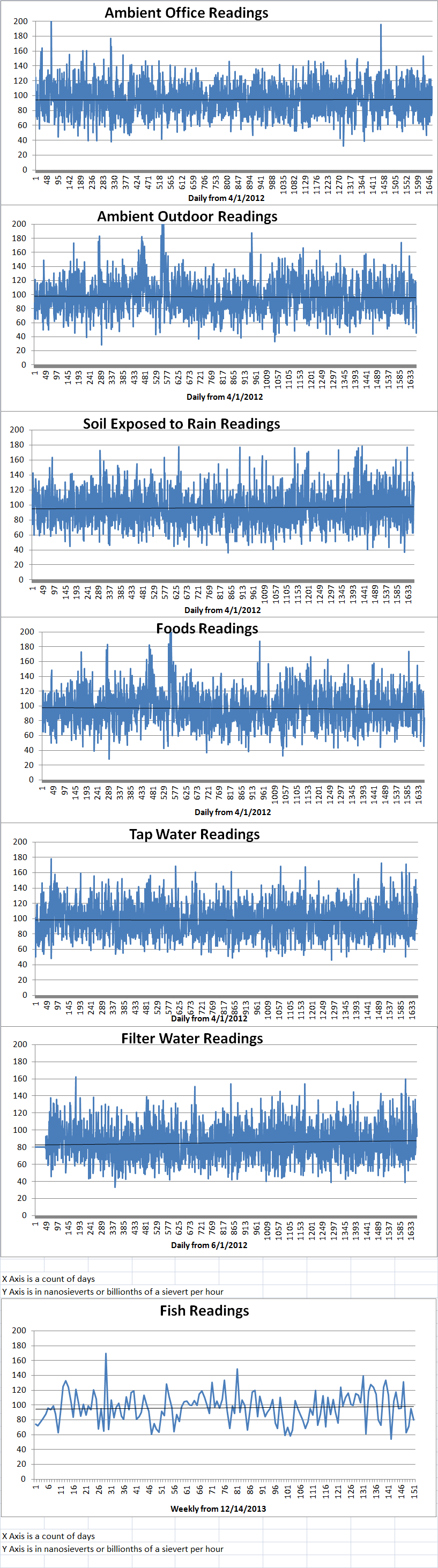
Ambient office = 112 nanosieverts per hourAmbient outside = 125 nanosieverts per hourSoil exposed to rain water = 126 nanosieverts per hourRomaine lettuce from Central Market = 84 nanosieverts per hourTap water = 120 nanosieverts per hourFilter water = 102 nanosieverts per hour -
Nuclear News Roundup Jan 07, 2017
-
Geiger Readings for Jan 07, 2017
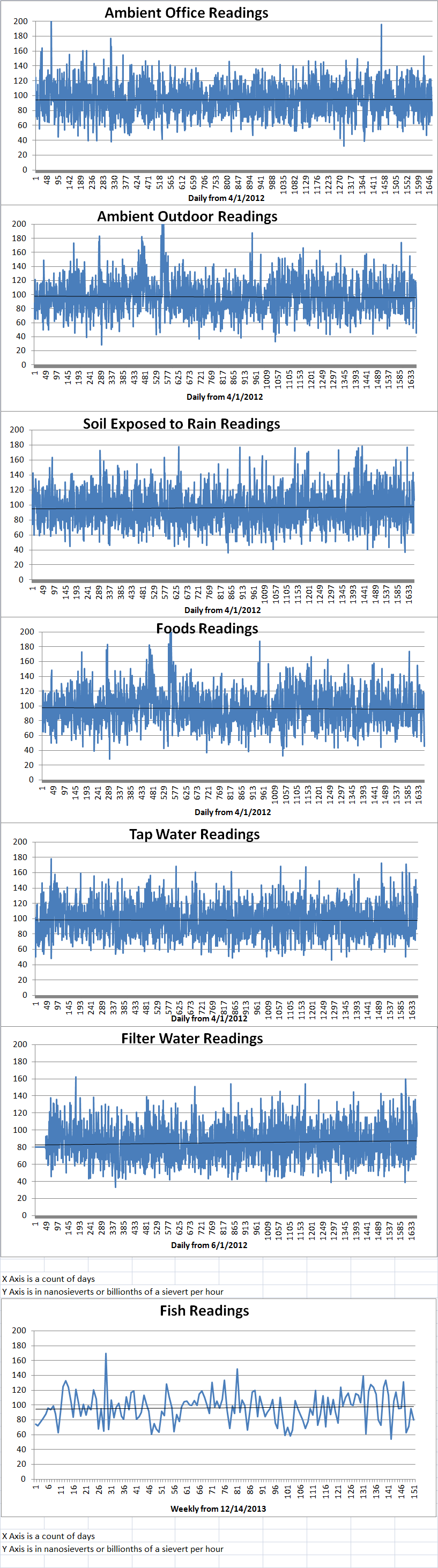
Ambient office = 91 nanosieverts per hourAmbient outside = 107 nanosieverts per hourSoil exposed to rain water = 107 nanosieverts per hourOrange bell pepper from Central Market = 45 nanosieverts per hourTap water = 115 nanosieverts per hourFilter water = 93 nanosieverts per hourDover sole – Caught in USA = 80 nanosieverts per hour -
Radioactive Waste 208 – Ontario Power Generation Working On Nuclear Waste Repository On Shores Of Lake Huron
Disposing of nuclear waste is a major problem for all countries that use nuclear power to generate electricity. In the U.S., the Yucca Mountain Repository for spent nuclear fuel was supposed to be ready by 1999 but the uncompleted project was canceled in 2009. Meanwhile, spent nuclear fuel continues to pile up at power reactor sites around the country. Cooling pools are filling up and spent fuel assemblies will have to be moved to onsite or offsite temporary storage in dry casks. The U.S. will not have a permanent spent nuclear fuel repository until 2050 at the earliest. In addition to spent nuclear fuel, there also low level and intermediate level nuclear waste from nuclear power plant operations that has to be disposed of. Ontario Power Generation in Ontario, Canada is currently working on the disposal of low level and intermediate level nuclear waste generated by the operation their nuclear power plants.
Ontario Power Generation has developed a plan for the disposal of nuclear waste from its three nuclear power plants in a permanent geological repository on the shores of Lake Huron. The repository would be located at the Bruce Nuclear Generation Station site near Inverhuron and Tiverton, Ontario and would take nuclear waste from the Bruce, Darlington, and Pickering nuclear power plants. The repository would be about twenty-two hundred feet underground in impermeable limestone. A Canadian federal panel approved the plan in 2015.
In February of 2016, the Canadian minister of the environment and climate changes requested that OPG carry out two additional studies with respect their disposal of nuclear waste. He asked for an environmental evaluation of two alternative waste disposal sites and a cumulative evaluation of environmental impact if a separate spent nuclear fuel repository was also located the Bruce site.
OPG reported that any of the three locations would meet the primary objectives of public health and safety, worker health and safety and environmental protection but that the two alternative locations would cost more because establishing new sites would have effects on land use, vegetation, and wildlife. In addition, there would be significant increases in transportation costs to those two other sites. Twenty-two thousand shipments would be required to move stored waste from the Bruce site to either of the alternative sites. This would raise the possibility of contamination of public roads and lands if there were transportation accidents. The alternative sites would increase costs from one to three billion dollars and offer no benefits.
Canada’s Nuclear Waste Management Organization is working on locating a site for the creation of a permanent geological repository for spent nuclear fuel. OPG concluded that there would be no adverse cumulative effects of locating such a repository at the Bruce site near the planned low level and intermediate level waste repository.
Communities near the proposed Bruce site are very concerned about locating a nuclear waste repository near Lake Huron which would be below the level of the lake. Groups of activists are mobilizing against the repository.
Bruce Nuclear Generation Station:
-
Geiger Readings for Jan 06, 2017
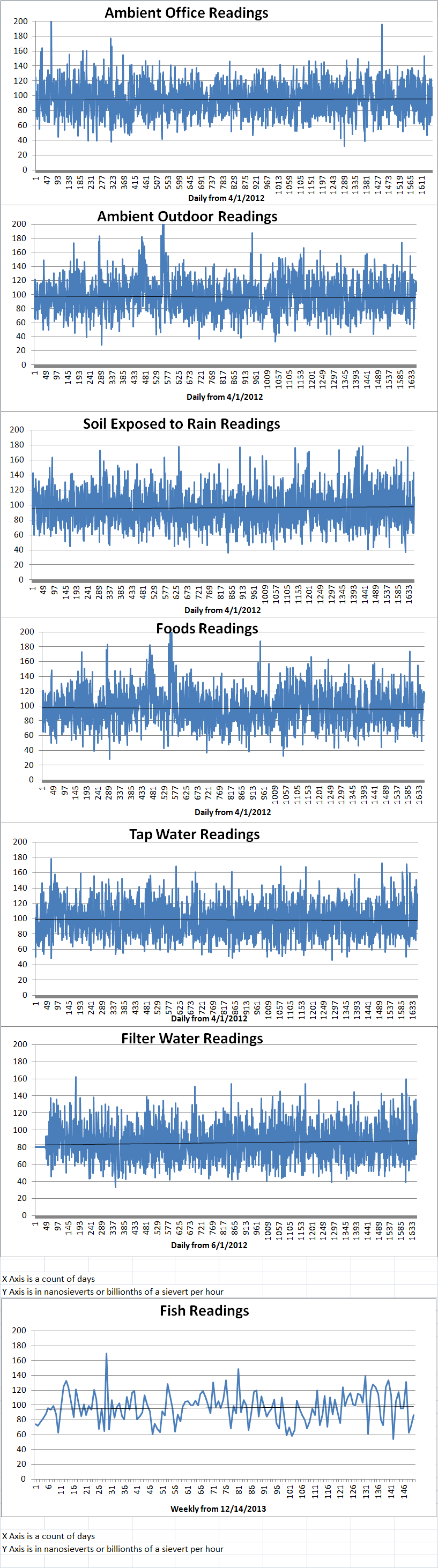
Ambient office = 78 nanosieverts per hourAmbient outside = 126 nanosieverts per hourSoil exposed to rain water = 130 nanosieverts per hourBroccoli from Central Market = 90 nanosieverts per hourTap water = 115 nanosieverts per hourFilter water = 107 nanosieverts per hour -
Nuclear Reactors 446 – Rising Cancer Rates Around Hope Creek – Salem Nuclear Power Plants
Hope Creek Nuclear Generating Station is a nuclear power plant located in Lower Alloways Creek Township, in Salem County, New Jersey. It has one twelve hundred megawatt power reactor that went into operation in 1981. PSEG Nuclear LLC owns and operates the plant. It is located at the same site as the Salem Nuclear Power Plant which has two power reactors with a total capacity of about twenty two hundred megawatts. One unit went into operation in 1977 and the other in 1981. The Salem plant is owned and operated by PSEG Nuclear LLC and Excelon LLC.
I have been blogging lately about problems with nuclear reactor components manufactured by Areva in France. The investigation has spread to nine nuclear power plants located in the U.S. and, it turns out, the Hope Creek/Salem facilities may have imported some of the questionable components from Areva.
There is a new report out by epidemiologist Joseph Mangano commissioned by a citizens watchdog group called Unplug Salem. The report states that there have been rising cancer rates in the communities around the two nuclear power plants. Prior to 1990, the cancer rates for Salem County were below the average rate for other counties in New Jersey. According to the new report, as of 2014, the cancer rates for Salem County are now above the average rate for New Jersey counties.
The report does not claim to have shown a direct link between the increasing cancer rates and radiological releases from the three nuclear power reactors but it does call for increased diligence on the part of state and national regulators of nuclear power plants. In view of the increased cancer rates and the reports of possibly flawed components, the public is entitled to more detailed information about the operation of the three power reactors.
The French authorities are moving aggressively in their investigation of French nuclear power plants that purchased questionable components from Areva. They have found falsified quality control record and have instructed Areva to visually inspect records of over six thousand components dating back to 1960. Eighteen nuclear power reactors were shut down by the French regulator agency while inspection of components from Areva was carried out.
When the news of the investigation of possible U.S. purchase and installation of flawed components from Areva at U.S. nuclear power plants first became public, the NRC refused to release the list of U.S. reactors that might have purchased flawed components. They made the argument that the information was proprietary and that there was no threat to the public. However, apparently that position has not proved to be sustainable and it was just announced that the NRC will reveal the names of the nine U.S. power plants that may have Areva components.
It should be determined if any of the Areva components at any of the nine U.S. nuclear power plants could possibly cause a major nuclear accident if it fails. If there is even the remotest possibility of such an accident, the nuclear power plant utilizing the component should be shut down immediately. In any case, all questionable components should be carefully inspected at every one of the nine nuclear power plants before they are given a clean bill of health.
Hope Creek/Salem nuclear power complex:

-
Geiger Readings for Jan 05, 2017
Ambient office = 73 nanosieverts per hourAmbient outside = 108 nanosieverts per hourSoil exposed to rain water = 111 nanosieverts per hourGreen bell pepper from Central Market = 118 nanosieverts per hourTap water = 132 nanosieverts per hourFilter water = 120 nanosieverts per hour -
Radioactive Waste 207 – Contamination Spreading In Old REDOX Facility at Hanford
Hanford keeps turning up in my blogs because it is one of the most radioactively contaminated sites on Earth thanks to the Department of Defense use of the site for the development of nuclear weapons. At one point, they poured millions of gallons of radioactive liquids directly into ditches that were not even lined with plastic. There are underground tanks that are filled with a witches brew of toxic chemicals and radioactive substances that are leaking into the soil. The U.S. government is getting ready to spend a trillion dollars to upgrade U.S. nuclear weapons while Hanford goes begging for a few more billion dollars to clean up Hanford. The Department of Energy is so incompetent that they have to be hauled into court to force them to meet cleanup deadlines. The DoE is also being sued for their failure to protect the workers at Hanford.
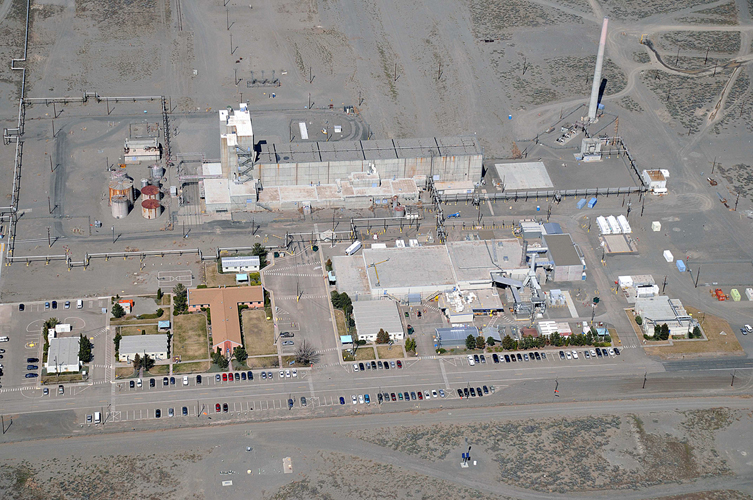
Now it is being reported that radioactive contamination is spreading in an old complex at Hanford called the Reduction-Oxidation (REDOX) plant. The REDOX facility was used between 1952 and 1967 to remove plutonium from around twenty four thousand tons of spent uranium fuel rods for use in nuclear weapons. Currently, the REDOX facility is scheduled for demolition no earlier than 2030.The local newspaper reports that the REDOX plant is far inside the boundaries of the Hanford Reservation and does not pose a threat to public health.
The new report said that annual inspections over the past few years have found that water leaking into the building through the roof and joints has spread radioactive contamination. Evidence of animal intrusions and deteriorating asbestos was also found. There are concerns about contamination being spread by animals that get into the building, a fire that might damage the building, utility pipes bursting or the penetration of rain water.
The new report suggested that one hundred and eighty million dollars spent on “interim” cleanup of the building in the near future. Demolition of an attached building that is highly contaminated and demolition of annexes to the main building should help prevent further spread of contamination. There are also two tanks containing chemicals used to make plutonium that should be removed.
The report also suggested that reducing the spread of contamination in the REDOX building would help the DoE retain skilled workers needed to continue the cleanup and decommissioning work at Hanford. There are reports that the new Trump administration is interested in accelerating the cleanup at Hanford. It is anticipated that this may result in more federal money becoming available soon to expand cleanup efforts and hire more workers with the necessary skills.
Considering the problems that the State of Washington has had with the work of the DoE at Hanford, it would be a major improvement of the situation if the new administration actually chose to move forward more aggressively on cleaning up the radioactive contamination left over from the development of the U.S. nuclear arsenal.
REDOX complex at Hanford: