Author: Burt Webb

  • Geiger Readings for Aug 19, 2016

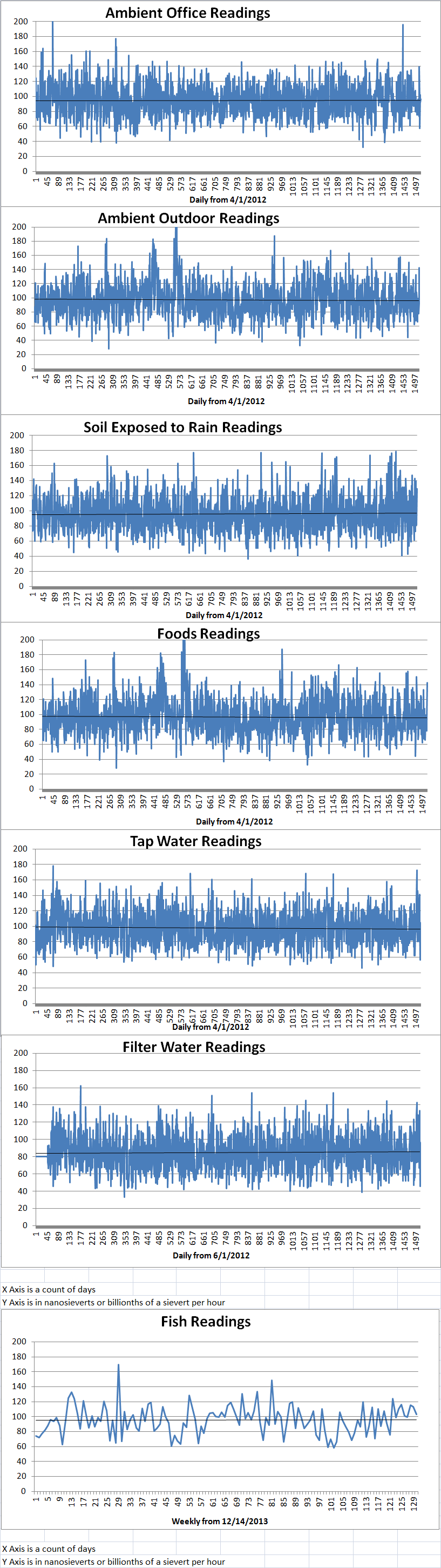
    Ambient office = 109 nanosieverts per hour
     
    Ambient outside = 99 nanosieverts per hour
     
    Soil exposed to rain water = 97 nanosieverts per hour
     
    Sugar pea from Central Market = 86 nanosieverts per hour
     
    Tap water = 93 nanosieverts per hour
     
    Filtered water = 85 nanosieverts per hour
     
  • Nuclear Weapons 220 – Is The U.S. Moving Nuclear Bombs From Turkey To Romania

           During the recent aborted coup in Turkey, the Incirlik air base near the Syrian border was surrounded and all flights in and out were cancelled. The U.S. is currently using Incirlik as a base for bombing operations against ISIS. The U.S. has fifty B61 nuclear gravity bombs stored at the base. The Turkish base commander was arrested as part of the aftermath of the coup attempt. The events at the Incerlik air base raise the question of whether the U.S. would be able to maintain control of U.S. nuclear weapons at the base in the event of widespread civil disorder in Turkey. The fact President Erdogan of Turkey visited Russian President Putin in St. Petersburg shortly after the coup to rebuild relations also has U.S. military planners worried.

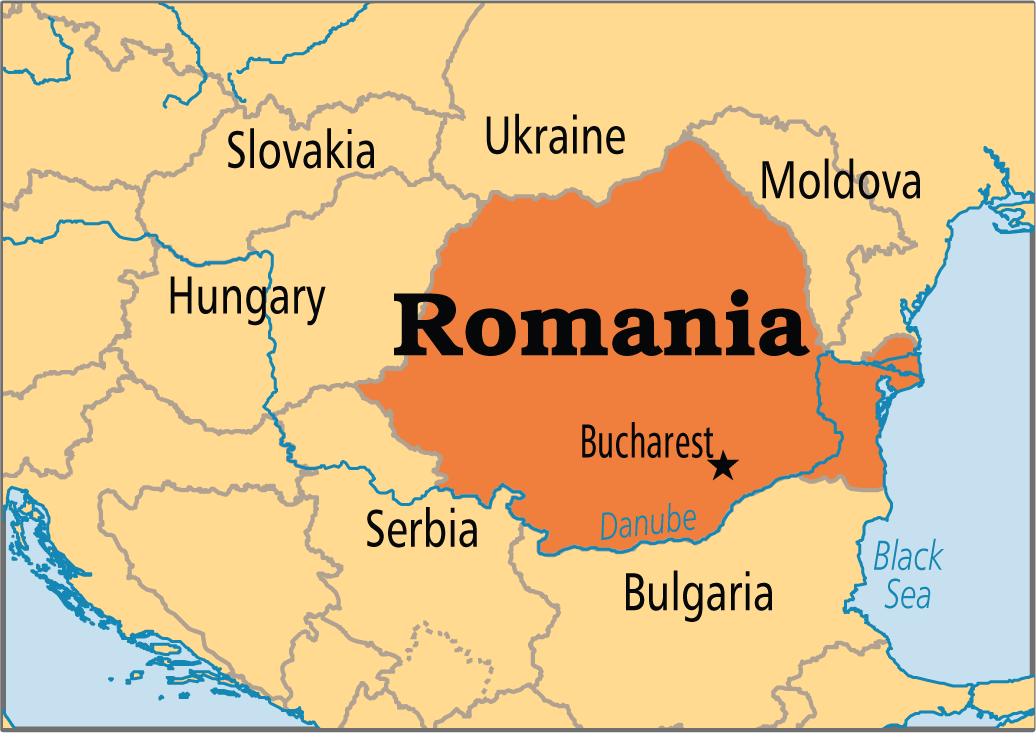
           EurActiv, a European online news site based in Brussels, has just reported that the U.S. is moving twenty of the B61 nuclear bombs from Incirlik in Turkey to the Desevelu air base in Romania. Russia is already upset about the U.S. anti-missile system that was turned on in May in Romania. The U.S. says that the system is meant to guard against missiles fired from Middle Eastern countries like Iran but Russia is concerned that it might be used against Russian missiles.

           The movement of nuclear weapons from Turkey to Romania would be sure to anger the Russians even more. Romania recently denied the stories about the move and stated that there were no U.S. nuclear weapons in Romania and there would not be any U.S. nuclear weapons moved to Romania from Turkey. The Founding Act signed in 1997 between NATO and Russia specifically states that NATO members “have no intention, no plan and no reason to deploy nuclear weapons on the territory of new members [such as Romania], nor any need to change any aspect of NATO’s nuclear posture or nuclear policy – and do not foresee any future need to do so”.

          The non-profit Campaign for Nuclear Disarmament is saying that under the terms of the nuclear Non-Proliferation Treaty, it would be illegal for the U.S. to move nuclear bombs to Romania. Article One of the treaty says that the movement of nuclear weapons to a non-nuclear state is prohibited. In addition, Article Two states that non-nuclear signatories of the treaty agree to never acquire nuclear weapons from a nuclear state. There are currently U.S. nuclear weapons in other non-nuclear NATO members so it is unclear why moving such weapons to Romania would be any different.

          Since the annexation of the Crimea by Russia in 2014, the situation on the western Russian border has been deteriorating. In the Ukraine, the lull in the fighting with Russian back rebels has been disappearing and the fighting is intensifying. Russia is in the process of moving forty thousand troops to the border with Ukraine. Moving nuclear weapons to Romania which is a neighbor of Ukraine would probably not be a good idea given the current geopolitical climate in Eastern Europe.

  • Geiger Readings for Aug 18, 2016

    Ambient office = 97 nanosieverts per hour
     
    Ambient outside = 136 nanosieverts per hour
     
    Soil exposed to rain water = 129 nanosieverts per hour
     
    Serano pepper from Central Market = 143 nanosieverts per hour
     
    Tap water = 105 nanosieverts per hour
     
    Filtered water = 97 nanosieverts per hour
     
  • Nuclear Weapons 220 – Donald Trump, Japan and Nuclear Weapons

           Since Donald Trump started talking about other countries under treaty for U.S. defense who were not pulling their weight, the question of nuclear weapons has been brought up. Trump thinks that if another country such as Japan is not contributing enough to their own defense, then the U.S. should back off and leave them on their own. When asked whether or not Japan should have their own nuclear weapons, Trump said “Maybe they would be better off – including with nukes, yes, including with nukes.”

            Apparently, Trump is unaware of the Japanese constitution which was drafted in 1947 by the Allies after World War II that forbids Japan from having offensive forces and weapons with which they could wage war on other countries.

           Article 9 of the Japanese constitution states that the Japanese people “forever renounce war.” It also says that Japan will never maintain “land, sea, and air forces, as well as other war potential.” While nuclear weapons are not actually mentioned specifically in Article 9, they are major offensive weapons and such weapons and their delivery systems would logically be covered by Article 9.      Japan does have some military capability for self-defense including land, sea, and air forces.

           In addition to the constitution of Japan forbidding offensive weapons like nuclear bombs, there is also the fact the U.S. brought countries like Japan and South Korea under its nuclear umbrella to discourage them from developing their own nuclear weapons programs. Both Japan and South Korea certainly have the technical capability to develop their own nuclear weapons. But, this would lead to a nuclear arms race in southeast Asia which would certainly draw in China. Such a development would destabilize that region and go against U.S. strategic interests.

           The Abe government in Japan is considering revising their constitution. Any changes would have to be voted on by the citizens of Japan. Many members of Abe’s political party want to modify the wording of the section in Article about military capability in order to clarify the right of Japan to expand and maintain military capability in the name of self-defense. If the U.S. withdrew its nuclear umbrella from Japan, it is likely that Japan would embark on the development of nuclear weapons.

          Being realistic, it is difficult to believe that a small vulnerable country like Japan does not have top secret plans for rapid conversion of industries producing consumer products to the production of weapons and military vehicles, ships and planes. There are also likely plans for the production of nuclear weapons and delivery systems. Indeed, the national security institutions of Japan would be derelict in their duties if they had not developed such plans. And, considering how automated the Japanese industries are, the retooling of Japanese industry would probably happen very quickly if we withdrew our protection and the geopolitical situation deteriorated.

          If Donald Trump is elected President and turns away from the countries that we are under treaty to protect with our nuclear arsenal, he may unintentionally destabilize southeast Asia and trigger a nuclear arms race. 

  • Geiger Readings for Aug 17, 2016

    Ambient office = 92 nanosieverts per hour
     
    Ambient outside = 74 nanosieverts per hour
     
    Soil exposed to rain water = 81 nanosieverts per hour
     
    Serano pepper from Central Market = 93 nanosieverts per hour
     
    Tap water = 56 nanosieverts per hour
     
    Filtered water = 46 nanosieverts per hour
     
  • Nuclear Reactors 397 – Safety Audit Of Proposed Finnish Nuclear Power Project Raises Troubling Questions

           Fennovoima Ltd. is a Finnish nuclear power company. It was established in 2007 by a consortium of Finnish power and industrial companies. It does not currently own any nuclear power reactors but is preparing to build a twelve hundred megawatt nuclear power plant at Pyhajoki. The Vice Chairman of the Fennovoima Board of Directors is the Deputy Director General for Business Development for Rosatom Energy International, a Russian government owned firm.

           The Finnish Radiation and Nuclear Safety Authority (STUK) is responsible for the protection of Finnish citizens, their society, the environment and future generations from the dangers of nuclear radiation. STUK has been conducting a safety audit of the plans for the Fennovoima power plant construction project since last fall. The project will need to satisfy the safety requirements being analyzed by the audit in order to qualify for a permit to construct the power plant. Fennovoima hopes to start construction in 2018 and complete construction in 2024.

           An initial report was issued by STUK last December. In that report, STUK raised concerns about whether or not Fennovoima was making safety a priority on the project. The report also posed the question of whether or not Fennovoima had the technical expertise required to safely construct and operate a nuclear power plant.

          Part of the safety audit included interviews with three quarters of the workers on the project. Some of the workers interviewed said that the project managers were ignoring safety issues. There were reports of retaliation against workers who raised safety concerns. The interviewees included both recent hires and experienced workers. It turned out that some of the most experienced workers interviewed were very critical and reported troublesome observations about Fennovoima and their management practices.

          The report said that in some cases, if workers refused to sign safety documents,  signatures were forged on those documents so that they would be approved. Multiple interviewees reported this problem. Another problem that was reported suggested that keeping to the schedule was more important to the management than insuring that safety requirements were met. Only one member of the Fennovoima management team has experience in nuclear safety and different members of the management team have different ideas about nuclear safety.

           The newspaper that wrote the story about the preliminary audit report has requested that STUK make the report public. STUK has refused to do so and said that the audit was still ongoing and would not be finished until 2017 at which time the full audit report would be issued.

         Fennovoima has rejected the charges leveled by the workers who were interviewed. Fennovoima representative have said that they are working on improving communications within the project. They also said that the changed signatures that were reported had to do with the organization of the Rosatom portion of the project team and were not relevant to safety issues. Rosatom is the principle contractor on the project and will be responsible for the actual construction of the reactor.

            The concerns raised by the workers who were interviewed reflect my concerns about nuclear power reactor construction projects. Too often, safety takes a back seat to money and time. And whistleblowers are often persecuted. Corporations tightly focused on the bottom line cannot be trusted to build and operate safe nuclear power plants.

  • Geiger Readings for Aug 16, 2016

    Ambient office = 102 nanosieverts per hour
     
    Ambient outside = 109 nanosieverts per hour
     
    Soil exposed to rain water = 100 nanosieverts per hour
     
    White potato from Central Market = 78 nanosieverts per hour
     
    Tap water = 105 nanosieverts per hour
     
    Filtered water = 99 nanosieverts per hour