Stormont to sell off its nuclear bunker in Ballymena in Ireland. bbc.com
Historically, India contracted with Canada for the construction of nuclear reactors. The former chairman of the Atomic Energy Regulatory Board in India, A Gopalakrishnan, said in an interview with the Times of India that the India-Canadian relationship was quite successful. “We had a relationship with Canada – they kept 150 engineers of ours for almost three years in Canada, telling us about their computer codes, how they are analyzing, etc. We learned through tutorials and then we installed 20-odd reactors [of Canadian design].”
Things did not go as smoothly when the Indians contracted with Russia for the construction of two reactors based on Russian designs at the Indian Kudankulam nuclear power plant. The first reactor reached criticality in July of 2013. The reactor was connected to the Indian national electrical grid in October of 2013. However, it was more than a year later in December of 2014 before the reactor actually began to function as a commercial source of power. In six months, the reactor had to be shut down for what was expected to be a two month outage but actually developed into a seven month outage.
Gopalakrishnan said that many of the problems stemmed from a desire to do as much of the work as possible with Indian engineers being directed by Indian supervisors with a “made in Indian” attitude. The Russian consultants were rarely consulted. Gopalakrishnan went on to say that many Indian components were used at Kudankulam. An early priority was to keep costs down. Indian quality control for materials was also not adequate.
One example of the difficulties at Kudankulam involved the electrical wiring for the plant. Some of the work done followed Canadian practices because India had built so many reactors with Canadian designs and Canadian assistance. Some work had to be redone because the Russia approach turned out to be significantly different than the Canadian approach and there was electromagnetic interference when the equipment was turned on.
Gopalakrishnan pointed out that the Russians had had great success in building nuclear reactors in China because of the concept of a “reference plant.” “The Russians took 100 percent responsibility — brought their own equipment , selected Chinese engineers who were working there, but the Russians had complete control over them. All liability was initially with Russians. And after two or three years of satisfactory operation, as Russian reactors, they became Chinese plants.” Gopalakrishnan suggested that things would have gone better for the construction of the Kudankulam reactors if India had followed the same procedure as the Chinese in contracting Russian assistance.
I have often blogged about my concern over the boom in sales of nuclear reactors on the international market. When a country such as France, Russia, Japan or China contracts with a foreign nation for the construction of nuclear power reactors, it is not just a matter of the quality of the components or the integrity of the design or the technical expertise of the country providing the nuclear technology. The culture, government and attitude of the country buying the reactor is also very important. Arrogance, incompetence and/or corruption can cause serious problems even with the best design, components and consultants.
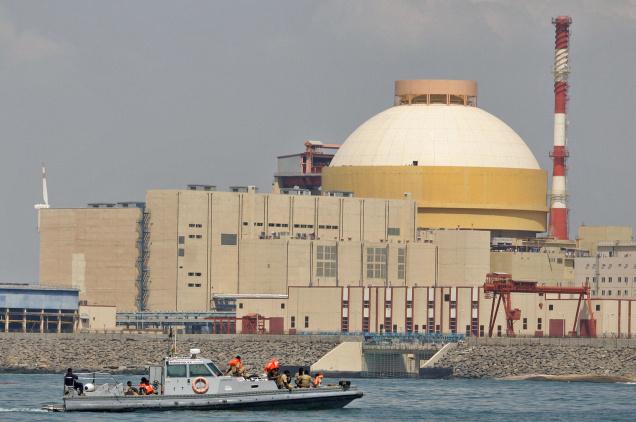
Kudankulam nuclear power plant:
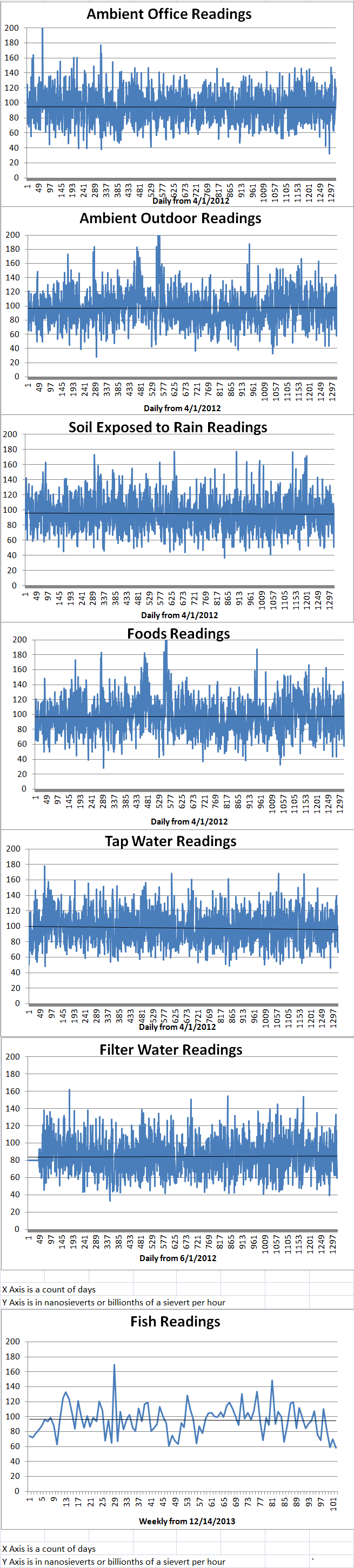
According to NRA (Nuclear Regulation Authority), Cs-134/137 density in Tokyo tap water is 24% higher than Fukushima. fukushima-diary.com
Under the MOU, the two companies will cooperate in nuclear power plant engineering, construction, operation and maintenance, KHNP announced today. world-nuclear-news.org
Toshiba Corporation in Japan has serious financial problems. A massive accounting scandal involving the company has been making headlines lately. Toshiba has reported that it is demanding that five executives accused of embezzlement return more than twenty six million dollars to the company. In addition, Toshiba said that it has paid over sixty two million dollars in fines to Japanese government regulators for accounting irregularities. These irregularities include overstating Toshiba’s profits by more than two billion dollars in the last seven years of operation.
Toshiba stated this week that it was going to fire the ShinNihon accounting firm. ShinNihon had done accounting for Toshiba for over sixty years. However, they did not identify the financial activities that led to the accounting scandal. Toshiba said that it was going to retain PricewaterhouseCoopers for auditing to replace ShinNihon. Toshiba hopes that this move along with other planned actions will help to restore investor confidence in the company.
The Fukushima nuclear disaster in March of 2011 that resulted in the shutdown of all Japanese nuclear reactors seriously impacted Toshiba. Toshiba had been supplying maintenance services for the boiling water reactors in Japan. With the reactors shut down, there was a major loss of revenue for Toshiba.
Toshiba is attempting to reorganize its business and is considering selling off some of its divisions to raise capital. The section of the company that makes hard disk drives for computers in one of the divisions that might be sold. The rising dominance of mobile devices and the decline of traditional personal computers is a good reason for Toshiba to sell this division. Toshiba would retain control of the division that makes flash memories which can be used in popular mobile devices. Toshiba is also considering the sale of Toshiba Medical Systems. The sale of this division would bring four billion dollars to Toshiba in return for eighty percent of its share of TMS.
Toshiba owns Westinghouse, the U.S. firm that supplies nuclear power reactors. Their pressurized water reactors are popular in foreign markets and were very profitable for Toshiba. Following the Fukushima disaster, there was a decline in orders for new reactors. The Japanese Times reported that that Westinghouse wrote down assets by over one billion dollars for fiscal years 2012 and 2013. This also had a serious financial impact on Toshiba. Toshiba has announced that it is considering selling the Westinghouse division. With sixty six nuclear reactors being constructed worldwide and many more in the planning stages, Toshiba should be able to find a buyer for Westinghouse.
Recently I posted about the global supply chain that is supporting the rise in reactor construction. Japan supplies a lot of nuclear components to foreign nuclear projects and Prime Minister Abe intends to expand nuclear exports as a major part of his economic program. It is worrisome to note that over half of the nuclear components being shipped out of Japan are not being inspected by the Japanese government. Seeing massive illegal activities in a giant of the Japanese nuclear industry like Toshiba does not instill confidence that Japanese nuclear components will always meet the rigorous technical specification necessary for nuclear safety.