Blog
-
Geiger Readings for Jul 11, 2015
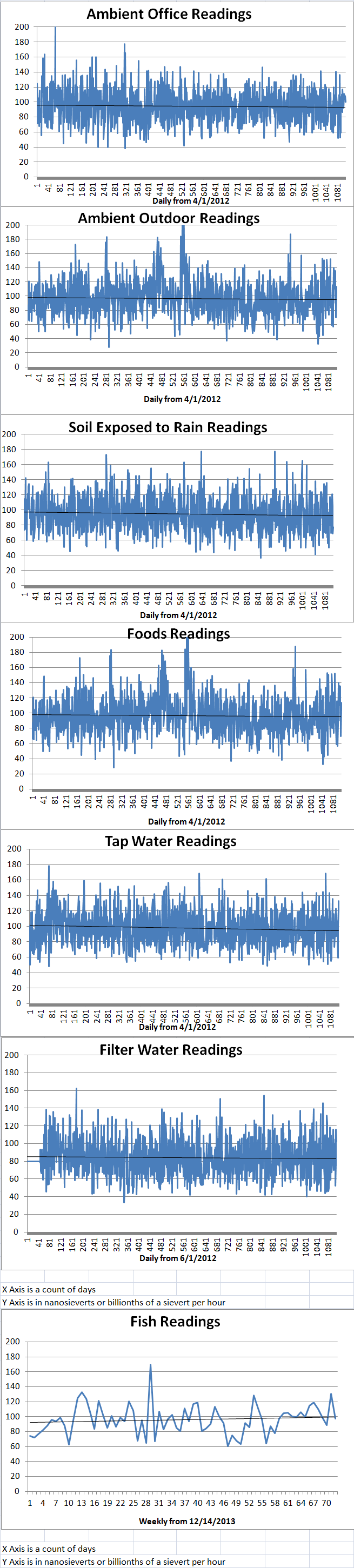
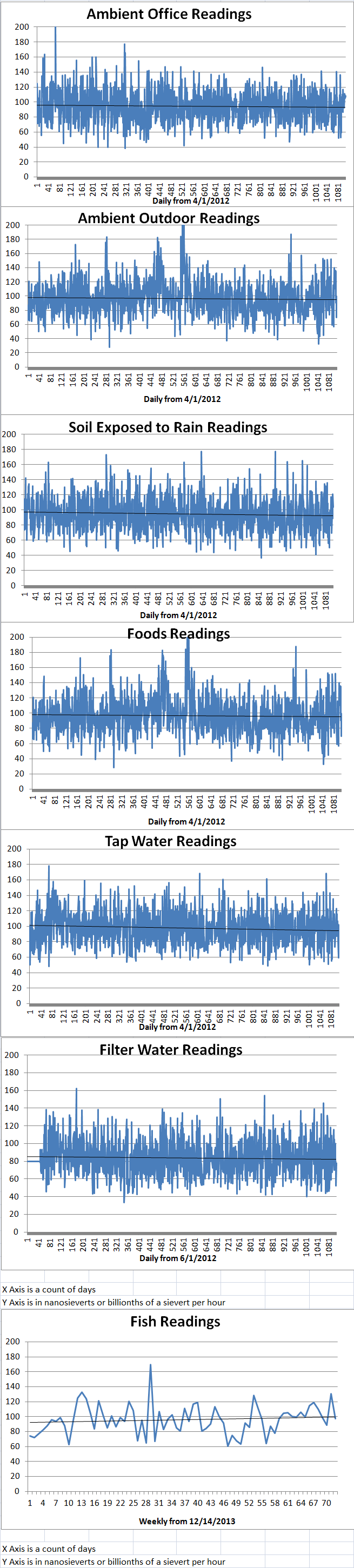
Ambient office = 73 nanosieverts per hourAmbient outside = 107 nanosieverts per hourSoil exposed to rain water = 107 nanosieverts per hourMango from Central Market = 99 nanosieverts per hourTap water = 117 nanosieverts per hourFiltered water = 108 nanosieverts per hourPacific Cod – Caught in USA = 105 nanosieverts per hour -
Nuclear Reactors 268 – Russia Responds To News of Ukraine Cancellation of Nuclear Construction Contracts
I blogged recently (Ukraine Cancelling Contract With Russia for Completion of Two Nuclear Power Reactors ) about Ukraine cancelling contracts with Russia for completion of nuclear reactors three and four at the Khmelnitsky nuclear power plant. The proposal for parliament to officially cancel the contracts came on July 8, 2015. The possibility of cancelling a nuclear fuel production facility being constructed at Smolino was also mentioned.
Rosatom, the Russian nuclear construction firm that had been contracted by Ukraine, announced on July 9, 2015 that they were surprised by the recent series of articles in the Ukrainian media about the status and future of the construction projects. It said that Ukraine had not formally informed Russia that it wanted to cancel them.
Construction of the third reactor for Khmelnitsky was started in 1985 and the fourth reactor was started in 1986. When construction of both was stopped in 1990, the third reactor was seventy five percent complete and the fourth reactor was twenty eight percent complete. In 2010, Russia and Ukraine signed an intergovernmental agreement to restart construction of the two partially completed reactors. In late 2010, Russia’s Sberbank indicated that it was willing to provide a loan of a billion dollars to Energoatom, the Ukrainian utility that operates the Khmelnitsky power plant. Ukraine was supposed to provide fifteen percent of the cost of the project.
In early 2011, Energoatom and ASE signed a formal contract for the completion of the third and fourth reactors at Khmelnitsky. The contract called for the third reactor to be completed in 2016 and the fourth reactor to be completed in 2017. However, two months later, Energoatom complained that it was not satisfied with the interest rate that the Sberbank wanted to charge on the loan.
In July of 2014, Ukraine’s Cabinet stated that it had decided that Ukraine should build new nuclear power reactors based on “Western design” as opposed to the Russian design of the partially completed third and fourth reactors at Khmelnitsky. In August of 2014, Energoatom said that Ukraine would not cooperate with Russia on the completion of the two reactors under construction. A few days later a contract was signed with the Czech firm Skoda JS for the construction of brand new reactors at Khmelnitsky. Further announcements followed with respect to closer cooperation with European companies for the sale of electricity from new reactors and the purchase of fuel for the reactors from non-Russian suppliers.
Westinghouse and TVEL, a Rosatom subsidiary, both bid on construction of a nuclear fuel plant in 2010 and TVEL won the bid. The nuclear fuel plant construction was started in 2012 with a projected completion date of 2014. It was supposed to start supply fuel to all the nuclear power plants in the Ukraine by 2016 and sell any extra fuel assemblies to the European market under arrangements with TVEL. In 2013, TVEL transferred forty two million dollars into Nuclear Fuel Plant, its joint venture with Ukraine’s Nuclear Fuel State Concern, and is waiting for Ukraine to provide an equal amount to the project.
TVEL has already manufactured components for the Ukrainian fuel facility at its own expense but has been unable to deliver them because Ukraine has failed to pay for them. TVEL has also signed an agreement for the production of nuclear fuel for Ukraine but Ukrainian authorities have not yet signed it. Rosatom has repeated stated that TVEL has fulfilled all of its obligations with respect to the fuel plant. Construction on the fuel plant was halted in 2014 because of contract disputes. Rosatom stated that it is ready to move forward with the construction of the nuclear fuel plant and the two reactors for the Khmelnitsky power plant.
In March of 2014, Energoatom announced that it was going to be working with Westinghouse to obtain nuclear fuel and possibly completion of the construction of the fuel plant.
Smolino Nuclear Fuel Plant:

-
Radiation News Roundup Jul 10, 2015
Spain’s seven nuclear power reactors generated 57.3 TWh of electricity in 2014, accounting for one-fifth of the country’s electricity, according to figures compiled by trade association Foro Nuclear. world-nuclear-news.org
A French weekly, Le Canard enchaine, has claimed that nuclear power giant Areva has known since 2006 that the steel in the reactor pressure vessel head construction for some of its build projects had high levels of carbon that caused the steel to be more brittle. nuclearstreet.com
A Toshiba company spokesman confirmed the company was seeking a partner to support its majority stake in its U.S. nuclear power subsidiary Westinghouse Electric Company, but underplayed its connection to an accounting scandal in which Toshiba overstated profits. nuclearstreet.com
-
Geiger Readings for Jul 10, 2015
Ambient office = 100 nanosieverts per hourAmbient outside = 66 nanosieverts per hourSoil exposed to rain water = 77 nanosieverts per hourWatermelon from Central Market = 114 nanosieverts per hourTap water = 121 nanosieverts per hourFiltered water = 108 nanosieverts per hour -
Nuclear Reactors 267 – New EPR Design Reactor in France Has Unsafe Levels of Carbon in Pressure Vessel Steel
I have blogged recently about the problems that the British are having with their project to build two nuclear reactors for the Hinkley Point Nuclear Power Station in Somerset. They have contracted for the construction of French Areva reactors based on the European Pressurized Reactor (EPR) design. The French intend the EPR design to be their entry into the competition for the next generation of commercial nuclear power reactors. Aside from union and financing problems, one of the things slowing down the British project is a concern over the safety of the design of the French reactors.
The French are also constructing a reactor based on the EPR design in Flamanville, France. Recently, the French Nuclear Safety Authority (ASN) found “serious” problems with the steel housing that contains the reactor core. Chemical and mechanical tests found a high level of carbon in the steel of the pressure vessel. This level of carbon will reduce the mechanical strength of the pressure vessel which has to be able to withstand the enormous heat and pressure of the cooling water circulating through the reactor. The pressure vessel is forty two feet tall and is designed to cope with great mechanical and thermal shocks. The ASN says that the steel in the vessel is far below the required strength by perhaps as much as fifty percent of what is needed.
ASN are demanding that Areva conduct destructive testing on the one hundred and sixteen ton pressure vessel lid that was intended for installation at the Hinkley Point C power plant. EDF, the French utility that is in charge of both the Hinkley Point C project and the construction of the EPR in France have assured the ASN that they will carry out all necessary tests to prove the safety of their design.
This “flagship” project of Areva and the EDF utility is way behind schedule with the expected completion date moving from 2012 to 2017. It is also way over budget as the cost has risen from three and a half billion dollars to over nine billion dollars. The ASN has stated that if Areva and EDF cannot satisfy safety specifications, then ASN will consider stopping the construction of the reactor in France. If the construction on the Flamanville reactor is halted due to the carbon in the steel, then it might be necessary for Areva to build a new base and a new lid for the pressure vessel. This would delay completion even more and would also result in a huge increase in cost.
The British Office for Nuclear Regulation (ONR) is working closely with the ASN in France. They say that they will assume that whatever the ASN concludes with respect to the safety of the EPR at Flamanville will also be assumed to apply to the reactors to be constructed at the Hinkley Point C power plant. If the ASN stops the Flamanville reactor construction on the grounds of safety, the ONR will stop the Hinkley Point project before construction of the reactors even begins. The financing of the Hinkley Point C project has not been worked out yet and EDF says that there is plenty of time to apply lessons learned at Flamanville to the construction of components for use at Hinkley Point C.
Two EPRs are under construction at Taishan, China. The pressure vessels were cast in the same forge where the Flamanville pressure vessel was made. ASN staff are going to China to discuss safety issues with Chinese authorities.
Flamenville reactor construction:
-
Radiation News Roundup Jul 09, 2015
Suggestions that Russia is the frontrunner in a bidding process to build a new nuclear plant in South Africa are untrue, deputy director-general for nuclear energy Zizamele Mbambo said on the sidelines of the Brics summit in Russia on Thursday. iol.co.za
International Isotopes has amended its project participation agreement with New Mexico’s Lea County to reflect the delay in constructing its planned facility to deconvert depleted uranium hexafluoride. world-nuclear-news.org
-
Geiger Readings for Jul 09, 2015
Ambient office = 108 nanosieverts per hourAmbient outside = 68 nanosieverts per hourSoil exposed to rain water = 69 nanosieverts per hourWatermelon from Central Market = 108 nanosieverts per hourTap water = 122 nanosieverts per hourFiltered water = 116 nanosieverts per hour -
Radioactive Waste 135 – Radioactive Waste From U.S. Nuclear Testing is Leaking in the Marshall Islands
Following World War II, the Unites States needed a remote area to test nuclear weapons. The Enewetak Atoll and the Bikini Atoll in the Marshall Islands (M.I.) became the main sites of the United States Pacific Proving Grounds. The M.I.are about midway between Australia and Hawaii. They were far enough from shipping lanes and populations centers to be considered a safe place to test nuclear weapons.
The U.S. tests in the M.I. began in 1946 and in 1948 the locate population of fishermen and farmers were moved to another atoll a couple of hundred miles away. Between 1946 and 1958, there were a total of sixty seven nuclear bombs detonated on the two atolls. The explosions covered the islands with irradiated debris including some of the Plutonium-239 used in the warhead. Pu-239 has a half-life of twenty four thousand years.
At the end of the testing, the US Defence Nuclear Agency and the Department of Energy spent eight years cleaning up the contaminated soil. Unfortunately the U.S. Congress failed to allocate sufficient funds to decontaminate the islands to the point where they would be safe for human settlements. The DNA and the DOE would have preferred to dump the contaminated soil and other debris into the deep ocean but this was prohibited by international treaties. The agencies scraped the topsoil off the islands and mixed it with radioactive debris.
In 1979, over one hundred thousand tons of radioactive debris and contaminated topsoil generated by twelve years of nuclear explosions was buried in a three hundred and fifty foot crater on the northern tip of Runit Island. The nuclear waste was then covered by an eighteen inch thick cap of concrete consisting of three hundred and fifty eight concrete panels. The cap is known officially as the Runit Dome. The concrete dome over the crater was never intended to be permanent. The two hundred million dollar cleanup project was only supposed to hold the waste until a permanent solution was found.
Only half of the forty Marshal islands were cleaned up before rising costs caused the cleanup to end. Enjebi island where over half the inhabitants of the Marshall Islands had lived was never cleaned up. In 1980, the original inhabitants of Enewetak were allowed to return to their island. In 1983, the Marshall Islands signed a compact of free association with the U.S. which granted some privileges but not U.S. citizenship. Part of the deal was settling all claims past, present and future with respect to the U.S. Nuclear testing. The government of the M.I. was given responsibility for the Runit Dome waste depository.
The concrete is beginning to crack and the radioactive waste under the dome is starting to leach out into the surrounding soil. A 2013 report by the US Department of Energy found that the level of radioactivity in the soil around the burial hole was higher than the contents of the crater. The rising level of the ocean and more powerful storms and surges brought about climate change are now threatening the buried waste. There is a concern that the dome could be breached and the contents could spill out into the Pacific Ocean. Concerned scientists have pointed out the irony that the nuclear waste left behind by the U.S. tests is now being threaten by the climate change caused by carbon dioxide emitted by nations such as the U.S.
The U.S. government claims that it has no responsibility to help the M.I. deal with the Runit Dome depository. The M.I. is a very poor country and is still affected by the damage that the U.S. testing program did to their traditional livelihoods. health and environment. The international Nuclear Claims Tribunal says that the U.S. testing did at least two hundred and forty million dollars of damage to the M.I. Activists in the M.I. say that with the huge defense budget of the U.S., it could certainly afford to help the M.I. deal with the radioactive legacy of U.S. nuclear testing.
Runit Dome:
-
Geiger Readings for Jul 08, 2015
Ambient office = 108 nanosieverts per hourAmbient outside = 109 nanosieverts per hourSoil exposed to rain water = 104 nanosieverts per hourPlum from Central Market = 70 nanosieverts per hourTap water = 102 nanosieverts per hourFiltered water = 78 nanosieverts per hour