Blog
-
Geiger Readings for June 01, 2015
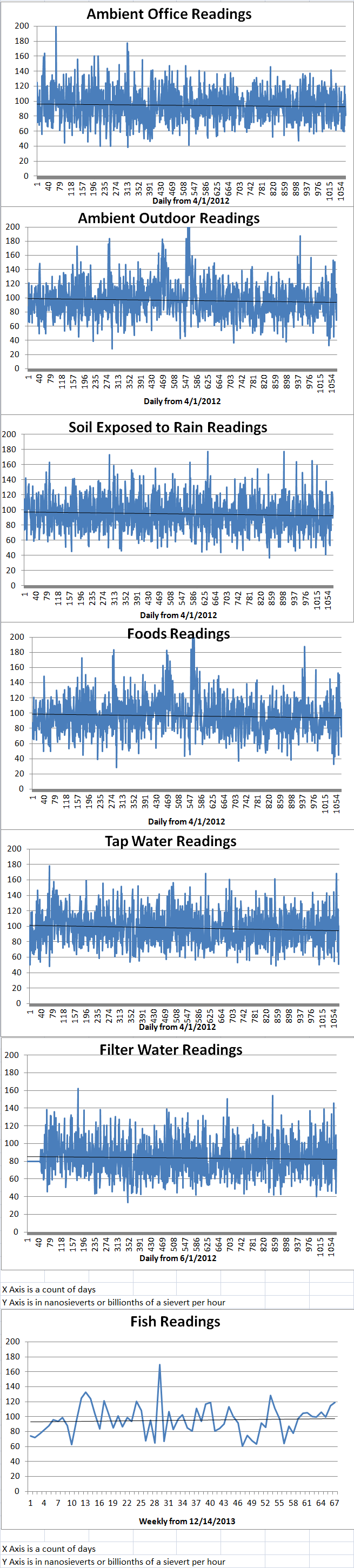
Ambient office = 81 nanosieverts per hourAmbient outside = 103 nanosieverts per hourSoil exposed to rain water = 106 nanosieverts per hourCrimini mushroom from Central Market = 105 nanosieverts per hourTap water = 101 nanosieverts per hourFiltered water = 93 nanosieverts per hour -
Radiation News Roundup May 31, 2015
Earthquake measuring 8.5 magnitude shakes most of Japan. theguardian.com
Angela Ortiz would like to see Tohoku contributing to Japan and the world. japantimes.co.jp
EOn and Vattenfall have signed an agreement to cooperate in the decommissioning and dismantling of their jointly owned nuclear power plants in Germany. world-nuclear-news.org
French Foreign Minister Laurent Fabius said a possible nuclear deal with Iran risks sparking a nuclear arms race in the Middle East unless the agreement grants international inspectors access to Iranian military sites and other secret facilities. wsj.com
-
Geiger Readings for May 31, 2015
Ambient office = 107 nanosieverts per hourAmbient outside = 116 nanosieverts per hourSoil exposed to rain water = 90 nanosieverts per hourIceberg lettuce from Central Market = 69 nanosieverts per hourTap water = 51 nanosieverts per hourFiltered water = 44 nanosieverts per hour -
Radiation News Roundup May 30, 2015
-
Geiger Readings for May 30, 2015
Ambient office = 109 nanosieverts per hourAmbient outside = 112 nanosieverts per hourSoil exposed to rain water = 115 nanosieverts per hourDanjou pear from Central Market = 93 nanosieverts per hourTap water = 121 nanosieverts per hourFiltered water = 110 nanosieverts per hourDover sole – Caught in USA = 119 nanosieverts per hour -
Ten Nuclear Misconceptions – Part One of Two Parts
Part One of Two Parts.
Yesterday, I posted comments on a list of problems with nuclear power. Today I am going to comment on another list of “dangerous nuclear misconception.” This list was published on the listverse.com website.
1) The Fukushima disaster is under control. There is a lot of confusion about the current status of the efforts to clean up after the March 2011 meltdowns at the Fukushima nuclear plant in Japan. While the Fukushima aftermath has largely faded from the headlines, stories keep appearing cataloging continuing problems and failures on the part of TEPCO to solve problems such as contaminated water leaking from a huge farm of tanks. They still don’t even know exactly where the melted reactor cores are and, even if they did, they have no way of dealing with them. If the cores melt through to the groundwater beneath the plant, there could be radioactive steam explosions that would spread contamination over the countryside. The ruins of the reactors are highly radioactive making cleanup difficult if not impossible. It is estimated that it will require fifty billion dollars and several years to complete the cleanup. I think that this is a very optimistic estimate.
2) There is a great danger that aggressive and/or unstable countries will secretly develop their own domestic nuclear industries and proceed to create nuclear arsenals. It is very difficult and expensive for a country to create an domestic nuclear industry with reactor construction, uranium processing, plutonium recovery and nuclear weapons development. Unless a country has its own uranium mines, international purchases of uranium are closely monitored and expensive. The technological infrastructure needed to refine uranium and recover plutonium is complex, expensive and requires skilled scientists. These capabilities and staffing would be impossible to obtain without other countries being aware of attempts and preventing acquisition of needed hardware such as centrifuges. Nuclear weapons development ultimately requires testing which would be impossible to conceal.
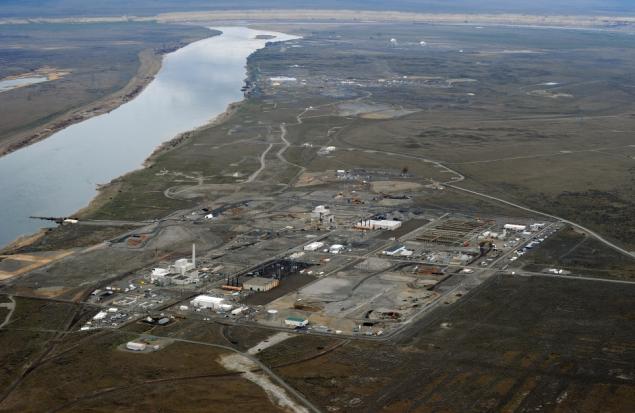
3) Nuclear waste is being safely stored. There are many legal nuclear waste facilities around the world which are leaking radioactive materials. There are also many illegal dumps of nuclear waste that are leaking into the environment. There has been a lot of talk about creating permanent geological nuclear waste storage facilities but so far, only a few have been created. Germany closed such a facility because it was leaking into the groundwater. The U.S. was going to build a facility at Yucca Mountain but analyses of the site revealed that the original assessments of the site failed to account for groundwater movement. The U.S. did build a geological repository in New Mexico for waste from nuclear weapons development which was shut down recently because a waste drum exploded and radioactive materials were spread over twenty miles from the site. The Hanford Nuclear Reservation in Washington State is leaking a witches brew of radioactive and toxic chemicals from hundreds of deteriorating underground storage tanks.
4) There are many potential sites for additional nuclear waste disposal. Worldwide, there is a rejection of government attempts to find new places to store nuclear waste. Japan has changed a policy of allowing local governments to volunteer for waste siting to one where the government will select the site. States in the U.S. have passed laws to prevent the storage of high level wastes inside their borders. Other nations have faced fierce public backlash when considering sites for nuclear waste disposal. There is underground traffic all over the world where criminal enterprises are being paid to illegally dump nuclear waste because of a lack of legal facilities.
5) We always know if people are injured by radioactive contamination. Radiation is odorless, tasteless, and colorless. There is background radiation from natural uranium in varying amounts everywhere. Radon gas is produced from natural radium and can collect in basements of homes and buildings. There are spikes in radioactive steam and gas released from nuclear power plants during normal operations. Biological damage from these different sources radiation can take years or even decades to show up in the form of cancers and other diseases. It is estimated that tens of thousands of people die in the U.S. each year from radioactive poisoning from natural or man-made sources.
(See Part Two)
Hanford Nuclear Reservation in Washington State:
-
Geiger Readings for May 29, 2015
Ambient office = 67 nanosieverts per hourAmbient outside = 111 nanosieverts per hourSoil exposed to rain water = 124 nanosieverts per hourAvacado from Central Market = 84 nanosieverts per hourTap water = 122 nanosieverts per hourFiltered water = 102 nanosieverts per hour -
Nuclear Reactors 247 – Ten Problems for the Nuclear Power Industry
I recently saw a list of problems facing the nuclear industry on nuclear-news.net. Since I have been blogging lately about problems with major nuclear companies in different countries, I decided that I would comment on the items in their list.
1). The nuclear industry is living with the reality that there will be another major nuclear accident soon which will upset the public and investors. Combining a push by nuclear construction companies and some national governments for a new nuclear reactor construction boom with the fact that there are serious concerns about corruption and incompetence in the industry and its regulators, a major nuclear accident is virtually guaranteed. There are estimates that one may happen in the next six years.
2) Many of the operating nuclear reactors in the world were built in the 1970s. They are reaching the end of their life spans and are becoming more dangerous and harder to repair. Recently a U.S. reactor was shut down because it was too expensive to repair. There will be an very expensive and complex wave of reactor decommissioning in the next decade.
3) There is a great deal of publicity about a bunch of orders for new reactors which turn out to be mostly hot air. A deeper analysis reveals that while there is a great deal of discussion going on, there are few actually signed firm orders for new reactor construction.
4) Countries which have the capability to build new reactors are encountering public resistance and investor apathy domestically so they are in fierce competition to sell reactors to other countries. There may be a lot more sellers than buyers. And questions have been raised that even if some of the nuclear exporters get orders, they may not be able to deliver.
5) Climate change is already having an impact on nuclear reactors. Several reactors in the U.S. have had to be temporarily shut down because the bodies of water they were using for cooling became too warm. Reactors have been shut down because of dangers posed by severe storms recently. Climate change is predicted to increase the frequency of such storms. At least twenty reactors in the U.S. are in danger from flooding which will increase due to climate change.
6) The strategic need for nuclear arsenals is diminishing. Small scale conflicts and asymmetric warfare call for different types of weapons such as drones. Although major nuclear powers are spending on upgrading nuclear arsenals, nuclear weapon infrastructure is deteriorating in the U.S. and Russia. Calls for complete nuclear armament are increasing across the globe.
7) Global economic problems have reduced the demand for electricity. Conservation has also reduced demand. There is less demand for construction of any new power plants including nuclear.
8) Renewable energy is becoming more popular worldwide. Innovation is rapidly lowering prices for wind and solar. National governments are mandating investment in renewable energy sources as an alternative to new nuclear plants.
9) Nuclear power plants are in danger because of war and terrorism. The Ukrainian government has expressed fear that their nuclear reactors may be damaged or destroyed by the civil war there, either by intent or accident. Nuclear reactors and spent fuel pools will be tempting targets for terrorists. Their destruction would deprive the target country of electric power and possibly threaten millions of people with radioactive fallout.
10) Public opinion is turning against nuclear power across the world. The Fukushima disaster in Japan in 2011 was a major blow to the reputation of nuclear power as a safe energy source. In China, a uranium processing plant project was abandoned due to public pressure. One more big nuclear accident and there will be huge global public rejection of nuclear power.
-
Radiation News Roundup May 28, 2115
The MOU was signed during a CNNC delegation’s visit to Egypt between 21 and 23 May. talkingpointsmemo.com
A state of national emergency was declared by the USA in 2000 to help to ensure that payments to Russia under the 1993 agreement to downblend surplus military high-enriched uranium could not be derailed by unrelated legal actions. world-nuclear-news.org