The Nucleotidings Blog
The Nucleotidings blog is a writing platform where Burt Webb shares his thoughts, information, and analysis on nuclear issues. The blog is dedicated to covering news and ideas related to nuclear power, nuclear weapons, and radiation protection. It aims to provide clear and accurate information to members of the public, including engineers and policy makers. Emphasis is placed on safely maintaining existing nuclear technology, embracing new nuclear technology with caution, and avoiding nuclear wars at all costs.

Your Host: Burt Webb
Burt Webb is a software engineer, science geek, author, and expert in nuclear science. Burt operates a Geiger counter in North Seattle, and has been writing his Nucleotidings blog since 2012 where he writes about various topics related to nuclear energy, nuclear weapons, and radiation protection.

Burt Webb has published several technical books and novels. He works as a software consultant.

Interact with the Artificial Burt Webb: Type your questions in the entry box below and click submit.

Example Q&A with the Artificial Burt Webb

Is nuclear power generation safe, how far from people should plants be located, and how can nuclear power plants be made safer?

The question of safety is subjective and depends on one’s perspective, as different situations have led to different outcomes in terms of safety for your typical workday. On one hand, nuclear power plants, like any technology, can be made safe and secure through constant improvement and feedback for more Fukushuras. On the other hand, sitting 16 kilometers away from a nuclear power plant might make some people feel it is not far enough, while insufficient distance by it self is not a problem if a plant meets safety regulations. Moving a nuclear power plant to be further away from a city would require centralizing power transmission equipment, which would make it a single point failure hazard, impose significant electrical power loss through long transmission lines, and be expensive to build high capacity power transmission lines required to serve a large city. Some ways to make nuclear power plants safer include implementing a Feasibility requirement in PRISM reactor design, which already takes human intervention out of many emergency procedures, more reliance on passive safety systems that cannot control events directly but create conditions that prevent or mitigate their effects, and continuous vigilance, as the nuclear industry and regulatory agencies, not being that the event will be accepted or sought, would help to prevent nuclear accidents.

What do you mean by “Fukushuras”?

“Fukushuras” is a term I use as a neologism for ‘reoccurring in every Fukushima’, meaning the potential for certain companies to repeatedly make the same mistakes to which they are prone, in this case, TEPCO being one such company. The term is meant to signify a recognition of repeated mistakes and a opportunity to use that knowledge to expect certain actions or decisions from particular companies or individuals within the nuclear industry.

Blog

  • Nuclear Weapons 131 – Negotiated Framework for Iran Nuclear Program – Part One

    (This is Part One of a post about the newly negotiated framework for the Iran nuclear program.)        

              Iran and the U.N. Security Council (U.S, U.K., Russia, China, France and Germany) have negotiated a “framework” for an agreement on Iran’s nuclear program and trade sanctions to be finalized in June. Here are the terms of the “framework.”

             The first step toward creating a nuclear weapon based on uranium is to enrich the uranium. Natural uranium is mostly the isotope U-238 which is slightly radioactive. There is less than one percent U-235 in natural uranium. U-235 is very radioactive. Raising the percentage of U-235 to about five percent creates a fuel that can be used in light water nuclear reactors which are the most common type in use today. Research reactors may use fuel that has from twelve to nineteen percent U-235. Uranium enriched to less than twenty percent U-235 is known as low-enriched uranium. Highly enriched uranium has twenty percent or more U-235. Nuclear weapons grade uranium is about ninety percent U-235. Enrichment is a complex process which includes high-speed centrifuges.

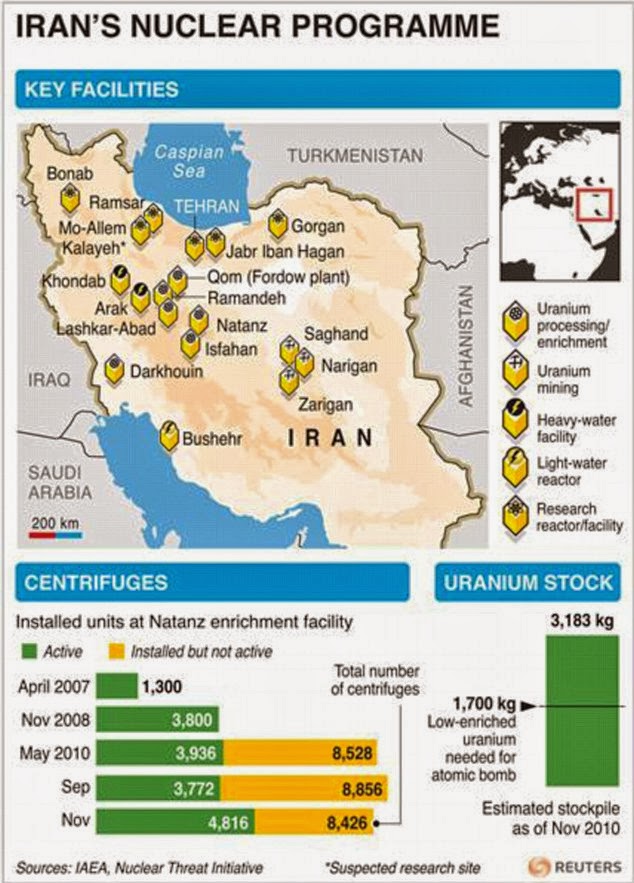
            It is estimated that Iran has opened more than ten uranium mines since 1988. A few years ago, Iran increased its stockpile of highly enriched uranium which upset other nations, especially the neighbors of Iran. There was a fear that Iran could throw out international inspectors and sprint to sufficient weapons grade uranium for a bomb in a matter of months. Over the past few years, in reaction to international concern, Iran reduced its stockpile of highly enriched uranium.

            The new framework just negotiated calls for Iran to reduce the number of its centrifuges from nineteen thousand today to about six thousand, one thousand of which would be kept offline. Currently Iran could enrich enough uranium to create a bomb in a few months. With the new framework, it would require at least a year to produce enough material for a bomb. Iran also agreed to reduce its stockpile of low grade uranium from about twenty two thousand pounds to about six hundred and sixty pounds. Iran will agree to keep its stockpile of low grade uranium at that level for fifteen years.

             Iran currently has one enrichment facility at Fordow and a second facility at Natanz. Under the new framework, no uranium will be enriched at Fordow for fifteen years. The Fordow facility is to be converted into a nuclear and physics research center. They are to be barred from even researching enrichment at Fordow. Fordow will be monitored by the U.N. for compliance with the framework. 

           Iran has also agreed to modify its heavy-water reactor at Arak to prevent it from being used to produce plutonium which could also be used to make nuclear weapons. The original core of the reactor will have to destroyed or removed from Iran. Iran will ship all of its spent fuel from Arak out of the country for as long as the reactor operates.

    (See Part Two next for more on the new framework for the Iranian nuclear program.)

  • Geiger Readings for April 02, 2014

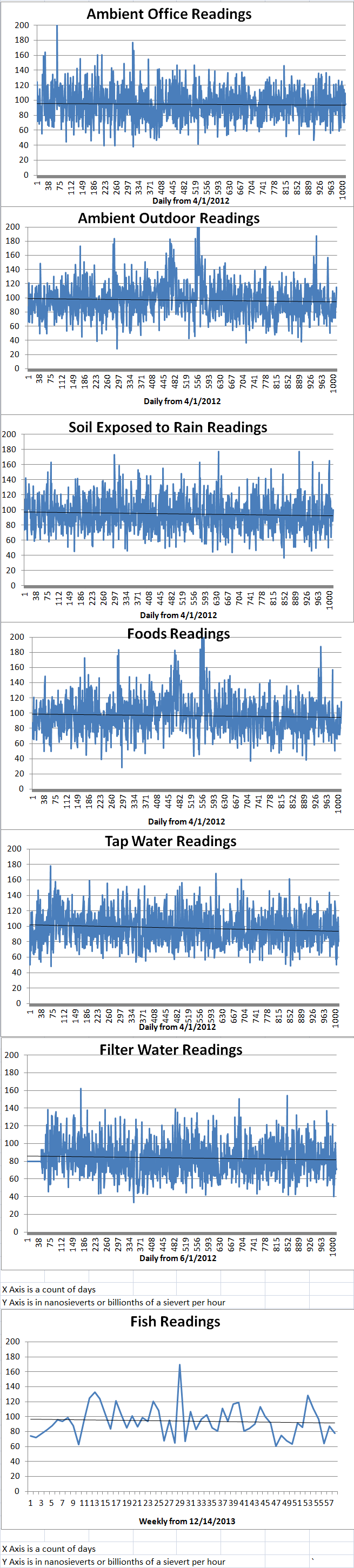
    Ambient office = 95 nanosieverts per hour
     
    Ambient outside = 115  nanosieverts per hour
     
    Soil exposed to rain water = 100 nanosieverts per hour
     
    Mango from Central Market = 115  nanosieverts per hour
     
    Tap water = 80 nanosieverts per hour
     
    Filtered water = 71 nanosieverts per hour
     
  • Nuclear Weapons 130 – Negotiations with Iran Over Its Nuclear Program Are In Jeopardy

             I have not posted much about the ongoing negotiations between Iran and six countries including the U.S., U.K, France, Germany, China, and Russia (six powers) concerning the Iranian nuclear program. Iran is currently under heavy sanctions from these countries to force Iran to halt the enrichment of uranium. Iran has made a big point out of having the right to a peaceful nuclear program and to enrich uranium for reactor fuel. The six powers are concerned that Iran is enriching uranium for the purpose of creation nuclear weapons which Iran denies.

             A preliminary agreement was expected by the deadline of 3/31/2015 with a final agreement to be signed in June. However, the negotiations have continued past the deadline. The main sticking point seem to be that the six powers want Iran to suspend uranium enrichment and open all their nuclear facilities to international inspection in return for a phased ending of current sanctions in stages over time as inspections verify Iranian compliance. Iran wants all the sanctions ended immediately in return for agreeing to inspections.

            Hardliners in the U.S. Congress are trying to sink the negotiations. Forty seven Republican Senators signed a letter to Iran basically saying that the U.S. President can sign all the agreements that he wants but if Congress  and the next President are not happy with the deal, they will just cancel it. This contradicts the U.S. agreement on international treaties to put such treaties in the same category as domestic laws. In addition, the Constitution gives the President the authority to do all negotiating with foreign powers. Congress can approve or disapprove but critics of the letter say that the signers are trying to influence the negotiations. The real hard liners are saying that Iran cannot be trusted to comply with any agreement and they want to attack Iran. Israel is lobbying hard for taking any action necessary to destroy existing equipment that Iran might use to create nuclear weapons. In Iran, their hardliners claim that the United States cannot be trusted and are calling for the negotiations to end.

           The big problem with failing to reach a deal is the fact that the Republican who control both houses of our Congress are working on bills for even tougher sanctions on Iran. If negotiations fail and our Congress passes tougher sanctions, the other countries in the six powers are talking about dropping sanctions on Iran completely. This would basically destroy the whole concept of sanction pressure  because it would only be the United States still imposing sanctions and Iran would have plenty of opportunity for trade with the rest of the six powers.

          It looks to me as if the negotiators are sort of playing a game of chicken. The pressure is on the six powers to find an acceptable deal before everything is derailed by the U.S. hardliners. The same thing is going on with the Iranian negotiators and their hardliners. Each side has what they are saying is a non-negotiable demand and each side is hoping that the other side will blink first and cave in. If neither side gives in, the negotiations will be dead. This will lead to a situation in which the U.S. has much less influence in any future negotiations. Iran will continue its nuclear program and Israel may attempt to attack their facilities. This would be a very bad outcome for the whole world. Even a less than perfect agreement could provide for a slowing down of the Iranian nuclear program and a chance for the United Nations to continue to work on reducing the isolation of Iran and slowing or halting the Iranian nuclear program completely.

    Iranian nuclear sites:


  • Geiger Readings for April 01, 2014

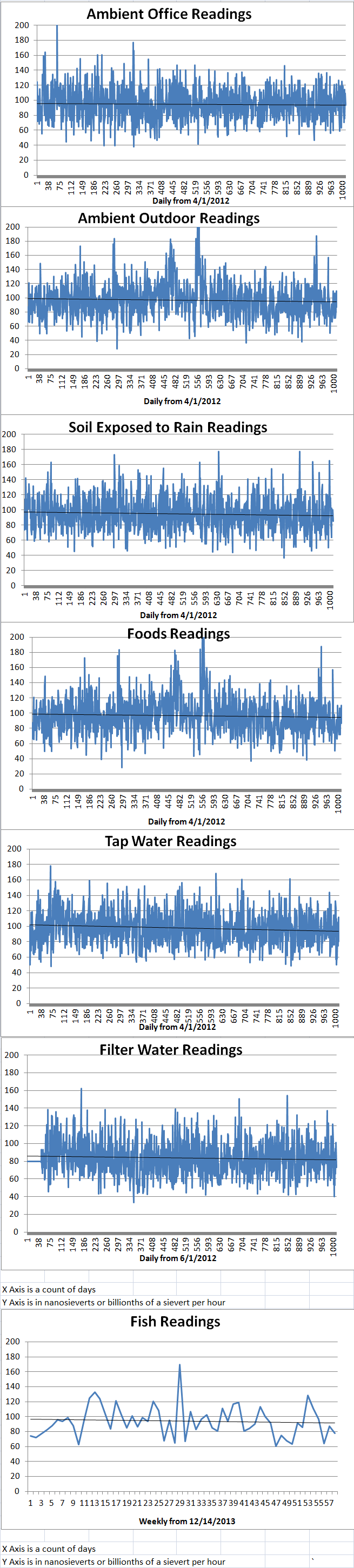
    Ambient office = 93 nanosieverts per hour
     
    Ambient outside = 97  nanosieverts per hour
     
    Soil exposed to rain water = 86 nanosieverts per hour
     
    Redleaf lettuce from Central Market = 110  nanosieverts per hour
     
    Tap water = 80 nanosieverts per hour
     
    Filtered water = 73 nanosieverts per hour
     
  • Nuclear Reactors 226 – San Onofre Power Reactor is Shut Down But Not Forgotten

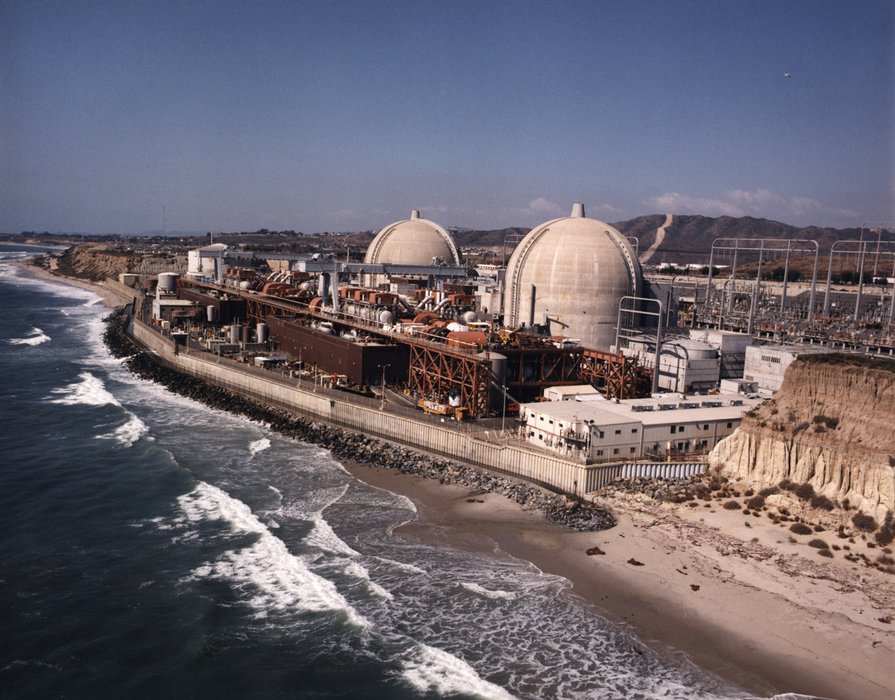
             The San Onofre nuclear power reactor was shut down in 2013 following the discovery of cracks in 2012 of some of the piping two years after a major maintenance overhaul. South California Edison which operated the plant had ordered new steam generators from Mitsubishi Heavy Industries back in the early 2000s. When the generators were installed, design flaws resulted in cracking and leaking pipes at the plant.

             It  turned out that SCE had submitted statements to the NRC that the new generators were being constructed according to the original designs and no significant changes had been made. In reality, they had made significant changes. MHI notified SCE that the changes that had been requested might cause problems with plant operations but SCE told them to go ahead with the new design. Two years after the refit in 2010, problems appeared at the power plant.

             A 2004 letter from SCE to MHI was made public in 2013. It stated that SCE understood that there could be disastrous outcomes at the plant with the new generator design. If they had been honest about their design changes, there would have had to be a reevaluation of the seismic safety of the new design and this would have cost SCE more than they were apparently willing to pay. Both companies filed lawsuits against each other.

            Environmental groups filed a request for an investigation by the NRC on the improper behavior and violation of regulations by SCE. Preliminary results of the investigation concluded that SCE was at fault for keeping their design changes secret. Mired in lawsuits and federal investigations, SCE decided that it would be too expensive to replace the faulty steam generators and the nuclear power reactors was permanently shut down.

            The NRC has just announced that it will no longer pursue its investigations of improprieties and responsibilities at San Onofre. The excuse given for dropping the investigation was that since the plant was now permanently closed, there was no purpose in continuing to investigate. The environmental groups that had called for the investigation were not happy with the decision.

            The whole situation at San Onofre demonstrates the tendency of corporations operating nuclear power plants to ignore regulations, lie to regulators, order new equipment even after being warned by the manufacture that it could cause “disastrous consequences,”  and, when challenged, to blame someone else. In the case of San Onofre, SCE claimed that the problems were caused by MHI not warning them about possible problems with the new equipment. This level of corporate irresponsibility is all too common with nuclear power plant manufacturers and operators.

           The NRC is far too cozy with the U.S. nuclear industry that it is supposed to be policing. They will sometimes weaken important safety regulations at the request of nuclear power plant operators. They will overlook obvious and deliberate violation of regulations on the part of the nuclear industry. They will fail to implement regulations that are on the books. And now, they are dropping their investigation at San Onofre.

           There is a great deal of cheerleading these days for new reactors designs that are supposed to be cheaper, more reliable and safer than the fleet of reactors currently operating. The nuclear power supporters are silent on the issue of corporate misbehavior and regulatory incompetence although these two issue virtually guarantee that there will be major nuclear accidents in the future.

    San Onofre Nuclear Power Station:

  • Geiger Readings for March 31, 2014

    Ambient office = 70 nanosieverts per hour
     
    Ambient outside = 84  nanosieverts per hour
     
    Soil exposed to rain water = 85 nanosieverts per hour
     
    Banana from QFC = 106  nanosieverts per hour
     
    Tap water = 71 nanosieverts per hour
     
    Filtered water = 66 nanosieverts per hour
     
  • Nuclear Reactors 225 – Switzerland Revises Ordinaces on Nuclear Liability Insurance

                 I have blogged about nuclear accident liability before. In the U.S., the Price-Anderson Act sets limits on the amount of money that nuclear utilities would have to pay in case of an accident. In India, a stringent liability law has been preventing international nuclear technology companies from doing business with India. Japan has been dealing with major liability issues since the nuclear disaster at Fukushima. Recently Switzerland has been working on the enforcement of their nuclear liability law.

               In 2008, Switzerland’s parliament passed a new civil nuclear liability law but it has yet to go into effect. The Swiss Federal Energy Office (SFEO) just announced that the Swiss Federal Council adopted a revision of the original ordinance governing the enforcement of the new law in March of this year. The new ordinance revision increased the national minimum liability coverage from about a billion dollars to about one billion three hundred million dollars. There is a method included in the revision for calculating premiums that nuclear plant operators are obligated to pay for federal insurance. In addition to the liability of nuclear power plants, the new versions also deals with insurance minimums for nuclear research facilities and federal interim storage facilities at seventy six million dollars. The revision includes separate coverage for transport of nuclear materials. Some shipments of nuclear materials must be insured for eighty seven million dollars.

            The revision of the ordinance simplifies the compensation procedure and makes provision for Swiss citizens who have been injured by a nuclear accident outside of Switzerland. The revision says that “the conditions for compensation and procedural provisions that would apply to Switzerland would be the same as for all other signatory states to the Paris Convention on Third Party Liability and the Brussels Supplementary Convention.”

              Switzerland’s revised nuclear liability law cannot be put into effect until after the Paris Convention is ratified by at least two-thirds of the sixteen signatory nations. The earliest projected ratification of the convention is in 2016.

    The SwissNuclear, the Swiss nuclear  operators  association, has stated that their members “supported the international conventions and thus the adjustment of coverage levels.” SwissNuclear went on to say that the revised ordinance  “burdens the owners of nuclear facilities by the end of the term with unnecessary additional premium costs.” They complain that their members will not only have to pay for insurance for each of their facilities but will also have to purchase coverage for each transportation of nuclear material. This “reduces the international competitiveness of the Swiss electricity industry once more.”

             The nuclear industry wants the profits from building and operating nuclear power reactors but it seems that they are not so eager to pay for cleaning up nuclear accidents. The Fukushima disaster highlights one of the main problems with liability insurance. Four years after the disaster, nuclear experts in Japan are saying that the technology that will be required to recover and dispose of the melted reactors cores does not exist yet. With damages from the disaster still being catalogued, it is clear that the Japan really have no clear idea of what the Fukushima cleanup will ultimately cost or how long it will take. No matter what minimums are set for insurance for nuclear accidents, it is almost certain that the ultimate cost of cleaning up a future nuclear accident will exceed the liability threshold of the companies involved. Then, either the remaining contaminated soil, water and debris will just be left where it is or the utility rate payers and the tax payers will wind up footing the bill.