Blog
-
Geiger Readings for March 19, 2014
Ambient office = 118 nanosieverts per hourAmbient outside = 107 nanosieverts per hourSoil exposed to rain water = 89 nanosieverts per hourRomaine lettuce from Central Market = 83 nanosieverts per hourTap water = 87 nanosieverts per hourFiltered water = 82 nanosieverts per hour -
Nuclear Weapons 128 – What Would Happen If Iran Got Nuclear Weapons
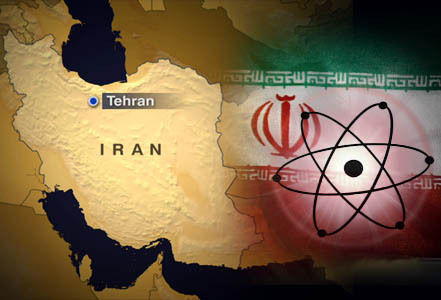
Iran has been in the news a lot lately with respect to the possibility that they may develop nuclear weapons. The U.S. and six other major nations are negotiating with Iran over uranium enrichment and sanctions. The primary issue is to have Iran stop enrichment and open facilities to inspection in return for ending the crippling sanctions. I wrote recently about the attempt of Republicans in the Senate to scuttle the deal before it is signed. They want to impose even more sanctions on Iran but the risk of that is for the other six countries to end sanctions and any hope of a real deal. The Republican answer seems to be that we should consider invading Iran if they don’t comply. Israeli leaders have said that Iran should not even have the equipment to enrich uranium and they have threatened to take unilateral actions. I also recently blogged about the use of the questionable concept of breakout or how long it would take for Iran to enrich enough uranium for a weapon as a key element of the negotiation.
Recently there was an article on the Internet VICE channel about what would happen if Iran were to obtain nuclear weapons. They interviewed two experts on International Affairs for their opinions. William H. Tobey is a Senior Fellow at Harvard’s Belfer Center for Science and International Affairs at Harvard and Kamran Bokhari is a Stratfor advisor on the Middle East and South Asia.
Bokhari says that he thinks that the Iranians would secretly develop a nuke but would be hesitant to test it because of the international backlash. Tobey says that it would totally change the way that Iran approached regional actions. He thinks that the Iranians would figure that they could do just about anything to its neighbors and the neighbors would not dare to react with force. But, that would require that the neighbors knew they had the bomb which brings up Bokhari’s point about major nuclear power reacting and the risk of sanctions again.
With respect to a threat to Israel, Bokhari says that Israel is so small that even a single nuclear strike would be devastating. He thinks that they will have to assume the worst and take action to prevent Iranian nukes. Tobey agrees that Israel is afraid of Iran having even one nuke and that if the situation does not change, more extreme Israeli governments might be elected with apocolyptic inclinations.
When asked about whether Israel could attack Iran’s nuclear facilities, Bokhari said that there were very serious logistical constraints that might prevent Israel from successfully wiping out Iran’s nuclear capability. These concerns include the distance to Iran, number of planes required, permitted flight paths and enough powerful bombs to penetrate the concrete and dirt covering underground Iranian facilities.
The interview then switched to what a nuclear attack would do to Israel. Tobey said that the main topic of current discussion was about political and economic fallout. A single bomb would not directly wipe out Israel but the hit to the economy and the reaction of those who survived would be devastating.
If Iran did nuke Israel, the international community would recoil in horror and Iran would become a pariah. They can threaten other nations but could they threaten world powers to trade with them? Very unlikely. They would have to know that the current sanctions would look like a slap on the wrist compared to what would happen if they did nuke Israel.
Another concern about an Iranian nuke is the possibility of an accidental launch. There has also been the fear that Iran could provide a nuclear weapon to a terrorist group but Bokhari is very skeptical about this as am I. You need a serious infrastructure to handle nuclear weapons which the terrorists don’t have. It would come back on Iran anyway.
And, finally, Israel’s nuclear arsenal has to be taken into account. I am absolutely certain that there are contingency plans for Israel to nuke major cities and oil fields in the Middle East if they feel that they are losing a fight for survival. It is possible that an Iranian nuclear strike might trigger that doomsday scenario. Nobody wants that.
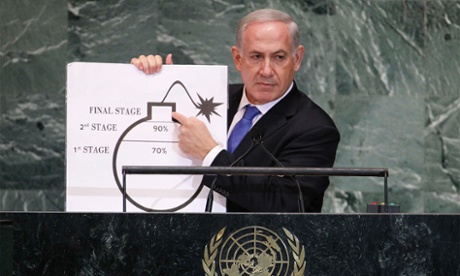
Israeli Prime Minister testifies about Iranian nuclear weapons:

-
Radiation News Roundup March 18, 2014
On 3/16/2015, TEPCO announced they measured the highest density of Cs-134/137 at 2 boring wells located in Reactor 2 seaside. The sampling date was 3/16/2015. fukushima-diary.com
The US Nuclear Regulatory Commission (NRC) has approved Westinghouse’s testing approach for its small modular reactor design. world-nuclear-news.org
Poland will be an important market in Europe for Westinghouse, Mike Kirst, the company’s vice president for strategy and external relations for Europe, said in an interview with EurActiv published today. world-nuclear-news.org
-
Geiger Readings for March 18, 2014
Ambient office = 63 nanosieverts per hourAmbient outside = 97 nanosieverts per hourSoil exposed to rain water = 117 nanosieverts per hourRedleaf lettuce from Central Market = 66 nanosieverts per hourTap water = 87 nanosieverts per hourFiltered water = 83 nanosieverts per hour -
Radioactive Waste 122 – Halliburton and the U.S. Defense Department Were Fracking Nuclear Waste in the 1960s
I strive for accuracy in this blog. I recently encountered a very disturbing story. All news accounts I have seen trace back to a single article published by on Truthstream Media on March 6, 2015. This is a website created by Aaron Dykes and Melissa Melton. They claim to have found newspaper articles from the 1960s which say that contractors and the U.S. government worked together in the development of a system for injecting cement mixed with low-level nuclear waste from weapons development into fracking wells drilled in the Conasauga shale formation which lies under parts of Alabama, Tennessee and Georgia.
The U.S. Defense Department had little concern about environmental damage when it started the U.S. nuclear weapons program in the 1940s. The Hanford Nuclear Reservation in Washington States is still cleaning up the mess the DoD left there where millions of gallons of low-level waste was just poured into dirt trenches and allowed to soak into the ground. The Waste Isolation Pilot Plant in New Mexico which is charged with disposing of similar waste just had a drum of waste explode, releasing plutonium and americium into the environment. The WIPP will be shut for several years while they work on repairing the damage.
There are five articles in Texas newspapers in 1964 that mention the waste fracking program. Four of them have identical text and the fifth has the same text with a few minor changes. The accounts talk about how Union Carbide which operates the nuclear materials division of the U.S. Oak Ridge National Laboratories in Tennessee teamed up with Halliburton. Halliburton’s contribution was the creation of a special cement. The low-level waste was mixed with the cement and the mixture was injected into a well. The injected mixture fracked the earth around the well hole. After forty eight hours, the mixture hardened into a solid layer underground.
Fracking is very controversial. The supporters talk about energy independence and jobs. The critics talk about polluted ground water, release of methane which exacerbates global warming and the occurrence of earthquakes near fracking wells in what had been stable geology. If it is true that the U.S. government, Union Carbide and Halliburton started fracking nuclear waste in 1960, this should have been public long ago.
The big question at this point is whether or not the U.S. government has any records that specify where this waste was injected into fracking wells. It would also be nice to know how long this program lasted. Considering the fact that the documentation at Hanford was very shoddy with respect to disposal of similar waste, it is possible that the records of this waste fracking do not exist. This is regrettable because it would allow a study of long term effects of using this method of nuclear waste disposal. Liquids and gases from fracking escape into the ground water and atmosphere near fracking sites. It would be informative to compare the location of clusters of cancers and birth defects with the sites where nuclear waste was injected into the ground.
Conasauga shale:
-
Geiger Readings for March 17, 2014
Ambient office = 74 nanosieverts per hourAmbient outside = 46 nanosieverts per hourSoil exposed to rain water = 50 nanosieverts per hourIceberg lettuce from Central Market = 84 nanosieverts per hourTap water = 76 nanosieverts per hourFiltered water = 61 nanosieverts per hour -
Nuclear Weapons 127 – 47 Republcans Sign A Warning Letter To Iran About Nuclear Negotiations
I have been monitoring the negotiations between the Iranian government and six major world powers consisting of the United States, Russia, Germany, France, Britain and China over Iran’s nuclear program. Iran did have a deal with the European Union from 2004 to suspend uranium enrichment but had repeatedly threatened to resume enrichment in violation of the agreement. In order to put pressure on Iran to suspend uranium enrichment that could lead to weapons grade uranium and to submit to international inspections, the six negotiating nations have maintained severe sanctions on trade with Iran. Now the parties are negotiating on reaching an agreement on the framework for a final settlement this month. The final settlement would be signed by the end of June.
On March 9th, forty seven Republicans signed a letter to the Iranian government authored by a freshman Senator named Tom Cotton. Basically the letter says that whatever deal is settled upon in the negotiations better be acceptable to the Republicans in the U.S. government or the next Republican in the White House will just cancel the agreement. The Iranians pointed out that if the United States President signs an agreement with other nations, it has the force of international law and cannot be simply ended with the stroke of another President’s pen.
The hard-liners in Iran pointed to the letter as proof that the U.S. does not negotiate in good faith and cannot be trusted. The other nations that are part of the negotiation were upset by the letter. If a deal cannot be reached with Iran because of U.S. confusion and infighting between political factions, the other nations may drop the Iran sanctions and end any chance of a new agreement on curtailing Iran’s uranium enrichment in the near future.
U.S. law and tradition place the power to negotiate with foreign powers squarely in the hands of the President. Congress is to advise but the President defines the agreements. Some critics of the Republican letter have cited an old law called the Logan Act dating from the founding of the U.S. However, that law says that people who have no authority in the U.S./ government cannot negotiate with foreign powers. An argument could be made that they do have some authority because they are Congressmen. Others say that the Republicans are guilty of treason but that is not possible because that charge can only be leveled if the U.S. is in a declared war with another country and it is not.
While the forty seven Republican who signed the letter may not be guilty under the Logan Act or laws pertaining to treason, it is clear that they are interfering with President Obama’s ability to negotiate an acceptable arrangement with Iran and the other six nations. A recent article pointed out that while Republicans have sharply criticized a previous U.S. deal with North Korea to halt its nuclear program as being a failure, supporters of the agreement respond that the N.K. nuclear activities were curtailed for ten years because of the U.S. deal. If we can slow Iran’s potential to build anuclear weapons for a similar period, then the current negotiations should be considered a success.
-
Radiation News Roundup March 16, 2014
Hong Kong’s government Center For Food Safety, found a series of radioactive Japanese tea samples in 2014. fukuleaks.org
Turkey faces a number of unique security threats that it will have to contend with as it continues to develop nuclear power and “comprehensive policies” are needed to protect the country’s future nuclear power stations and related infrastructure, a study by an independent think tank says. nucnet.org
-
Geiger Readings for March 16, 2014
Ambient office = 109 nanosieverts per hourAmbient outside = 86 nanosieverts per hourSoil exposed to rain water = 102 nanosieverts per hourOrange bell pepper from Central Market = 79 nanosieverts per hourTap water = 76 nanosieverts per hourFiltered water = 69 nanosieverts per hour