Blog
-
Geiger Readings for February 10, 2014
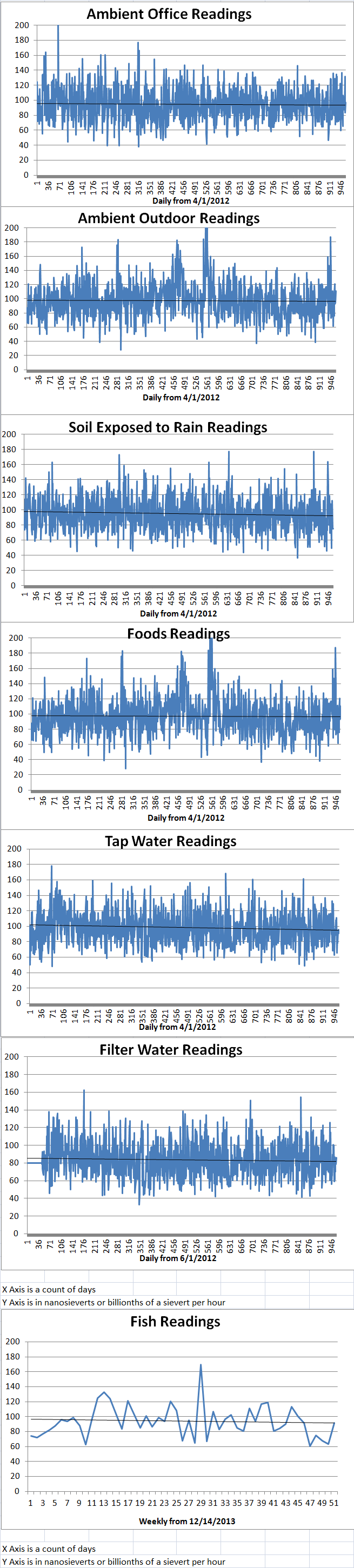
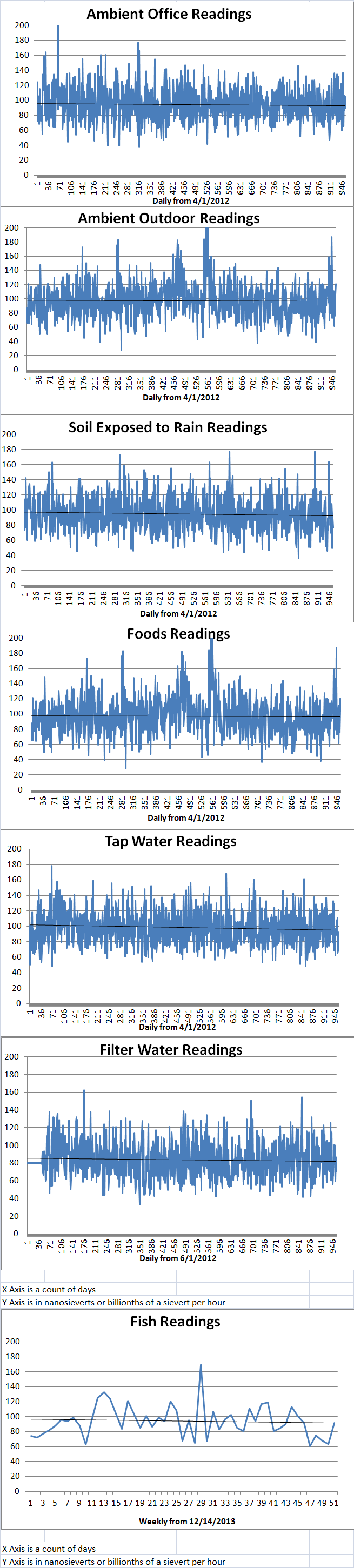
Ambient office = 97 nanosieverts per hourAmbient outside = 74 nanosieverts per hourSoil exposed to rain water = 75 nanosieverts per hourRomaine lettuce from Central Market = 111 nanosieverts per hourTap water = 91 nanosieverts per hourFiltered water = 86 nanosieverts per hour -
Nuclear Reactors 209 – The United States Rejects New International Nuclear Safety Standards
I have written numerous posts about nuclear safety on the blog. One point that I keep coming back to is the idea governments are failing in their duties to protect their citizens because of what is called regulatory capture. This occurs when the industry being regulated exerts political pressure to avoid being held accountable for violating regulations. But in order for this to happen, there has to be regulation in the first place. Often, industries will lobby against new or existing regulations. This is a more direct route. You cannot violate a regulation that does not exist.
The Swiss have been pushing for more stringent international regulation of nuclear power plants to prevent nuclear meltdowns. They have been strong supporters of an European Union initiative to modify and strengthen existing international reactor safety standards since the horrible nuclear disaster in Fukushima Japan in March of 2011. Both the United States and Russia have been strong opponents of changing the safety regulations. The E.U. coalition was going to present a formal amendment to safety standards for a vote at the February 2015 International Atomic Energy Agency’s (IAEA) Convention on Nuclear Safety. However, intense lobbying by the U.S. delegation to the Convention resulted in the plans for the formal presentation to be cancelled. Instead, the E.U. coalition will present a statement that has not voted upon and does not make any changes to existing safety standards.
Officially, the U.S. delegation stated that they were not opposing the call for safety upgrades to nuclear reactors because it would increase costs to the nuclear industry and result in a loss of market share. However, there are people in the U.S. Congress that doubt that statement. Senators Edward J. Markey (Dem/MA) and Barbara Boxer (Dem/CA) sent a letter to the head of the Nuclear Regulatory Commission in December of last year. The NRC head, Allison Macfarlane, resigned her post at the end of 2014. In the letter, the senators detailed the reasons for their opinion that the NRC helped to undermine the proposed changes safety standards in spite of a statement by Macfarlane that cost of upgrades to nuclear power plants was not a factor in U.S. opposition.
There is precedence for the Senator’s concerns. The NRC Japanese Learning Task Force was charged with learning what lessons could be learned from the Fukushima disaster. The JPTF recommended that all U.S. power reactors with the same design as Fukushima (GE Mark I and Mark II boiling water reactors) “install high capacity external radiation filters for hardened vents on the vulnerable containment systems.” The JPTF said that such filters were “a cost-benefited substantial safety enhancement.” The new filters would vent extreme heat, high pressure and explosive gases while at the same time preventing the release of radioactive particles into the atmosphere. An international energy investment bank predicted that the NRC would reject the call for the new filters because “added stress this places on the incumbent’s portfolio and the fragile state of affairs of their licensees’ financial and economic condition.” While Europe and Japan have made it a practice to install such filters, the third of the U.S. power reactors that share the Fukushima design are not required to install them.
Basically, it appears that the rejection of the new safety standards at the Convention were a result of the NRC and the U.S. government protecting the nuclear industry in the U.S. from having to pay the substantial cost of upgrading their power reactors. Adding insult to injury, when pressed, the U.S. government lied when it said that nuclear industry costs were behind rejection of the new standards.
IAEA Convention on Nuclear Safety:
-
Geiger Readings for February 09, 2014
Ambient office = 84 nanosieverts per hourAmbient outside = 81 nanosieverts per hourSoil exposed to rain water = 75 nanosieverts per hourRedleaf lettuce from Central Market = 94 nanosieverts per hourTap water = 96 nanosieverts per hourFiltered water = 79 nanosieverts per hour -
Radiation News Roundup February 08, 2014
Fuel from Fukushima reactors is “melting down daily.” enenews.com
Sources Name June As Target For Japan’s Nuclear Restart At Sendai. nuclearstreet.com
Nuke plants face EMP disaster as feds scramble for quick fix. washingtonexaminer.com
-
Geiger Readings for February 08, 2014
Ambient office = 132 nanosieverts per hourAmbient outside = 105 nanosieverts per hourSoil exposed to rain water = 112 nanosieverts per hourVine ripened tomato from Central Market = 93 nanosieverts per hourTap water = 93 nanosieverts per hourFiltered water = 80 nanosieverts per hour -
Radiation News Roundup February 07, 2014
Tectonic stress levels off northeastern Japan back to pre-disaster state. ajw.asahi.com
30 Bq/Kg of Cs-134/137 detected from pig excrement in Iwaki city to prove internal exposure of domestic animals. fukushima-diary.com
The restart of two of Japan’s idled nuclear reactors has moved a step closer after Kansai Electric Power Company submitted revisions to its work plans for approval by the country’s nuclear regulator. world-nuclear-news.org
Southern Co. CEO Says It’s Time To Reassess New Plant Time Line. nuclearstreet.com
-
Geiger Readings for February 07, 2014
Ambient office = 92 nanosieverts per hourAmbient outside = 94 nanosieverts per hourSoil exposed to rain water = 77 nanosieverts per hourRed seedless grape from Central Market = 121 nanosieverts per hourTap water = 78 nanosieverts per hourFiltered water = 70 nanosieverts per hourDover sole – Caught in USA = 92 nanosieverts per hour -
Nuclear Reactors 208 – Nuclear Power Is No Longer Competitive in the United States
I have mentioned in past blogs that nuclear power is being challenged from several directions. Cheap and abundant natural gas has made existing nuclear power less competitive and reduced demand for new nuclear power.. Renewables are getting cheaper and better every day. The nuclear industry has resorted to asking for price guarantees and claiming that they are a low-carbon source of electricity. Some states are considering designating nuclear power as a renewable resource because spent fuel can be reprocessed and more fuel extracted. The nuclear industry has also been striking back at some other sources of energy.
Although it has been cheap natural gas that has had the greatest impact on nuclear power, the nuclear industry has chosen to attack renewables instead. Nuclear power accounts for about twenty percent of the electricity generation in the U.S. and wind generates about four percent and solar generates about two tenths of one percent. Nuclear plant owners have lobbied successfully against renewable sources and energy efficiency standards in some states. They are trying to make changes in regional capacity markets that would retard adoption of solar and wind. The new standards would help nuclear power generators.
Nuclear and renewables often compete as states develop federally mandated “Clean Power Plans.” In deregulated states, nuclear has been having difficulty competing in the open market with natural gas but also wind power. Distributed solar generation systems have reduced demand for electricity from the grid. The energy system in the U.S. appears to be moving away from large centralized power plants which reduces the attraction of and support for nuclear power plants.
Supporters of nuclear energy have made exaggerated claims that nuclear power is steady and reliable. They say that nuclear fuel is the ultimate clean fuel with zero carbon emissions or the release of other harmful gases. With respect to carbon emissions, scientific studies have found that nuclear power does have a carbon footprint that may exceed natural gas plants if a low grade uranium ore is the source of fuel.
On the other hand, nuclear opponents talk about the health and safety risks of nuclear power plants. They worry about the long term cost of such things as decommissioning a nuclear power plant and disposal of nuclear waste. A major nuclear accident like Fukushima can cause billions of dollars in damages to the environment and impact the health of millions.
In Illinois, Exelon, operators of six nuclear power plants in Illinois, says that unless the state steps in with heavy subsidies to the tune of half a billion dollars, they will have to shut down three of their plants because they will not be competitive in the open energy market. Critics say that the state has already subsidized Exelon enough and that Exelon is exaggerating the problems at the three plants under discussion.
In Ohio, the renewables and energy efficiency standards were suspended by successful lobbying of FirstEnergy. FirstEnergy claimed that the existing standards were “distorting the marketplace” and costly to ratepayers. Now FirstEnergy is asking for ratepayers to be forced to pay a guaranteed rate for electricity for the Davis-Besse nuclear power plant near Toledo. Critics say that this three billion dollar gift to the nuclear industry will certainly distort the marketplace.
Analysts say that the nuclear industry is attacking renewables because they have no ability to affect the price or market position of natural gas. In addition, many utilities and power companies that own nuclear power plants also own coal, oil and/or natural gas power plants. In the energy marketplace, all sources of electricity are paid the same amount as the highest bid. When natural gas was expensive, nuclear benefited. Now that natural gas is cheap and cheap wind power is available, nuclear power is at a disadvantage because of the expense of operation. When nuclear power was subsidized, the nuclear industry thought that was fine. Now that solar and wind are getting subsidies, the nuclear industry lobbies against them. The truth of the matter is that nuclear power is more expensive than other sources and getting more and more expensive all the time. Nuclear power cannot compete on a level playing field. It should be retired as quickly as possible.
FirstEnergy Davis-Besse nuclear power plant: