Blog
-
Geiger Readings for September 30, 2014
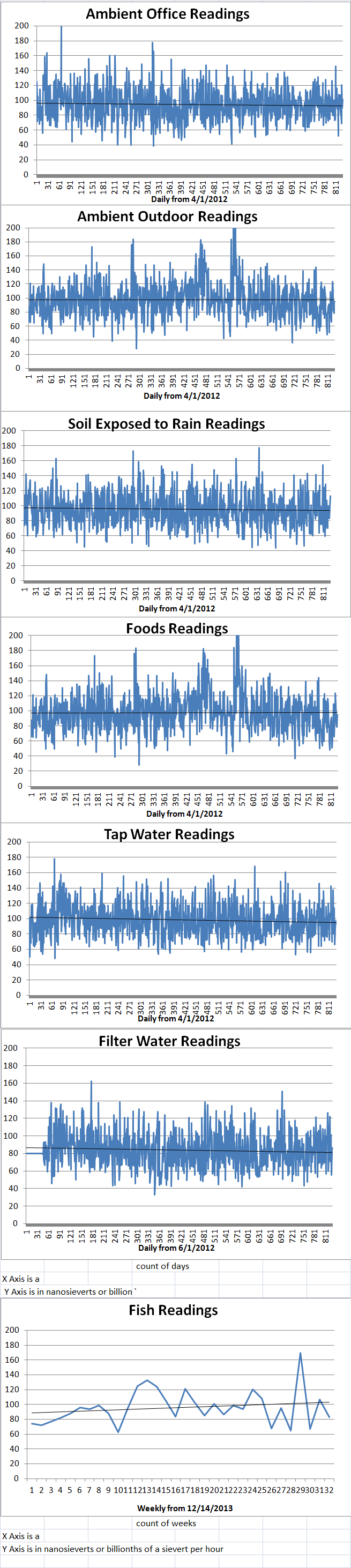
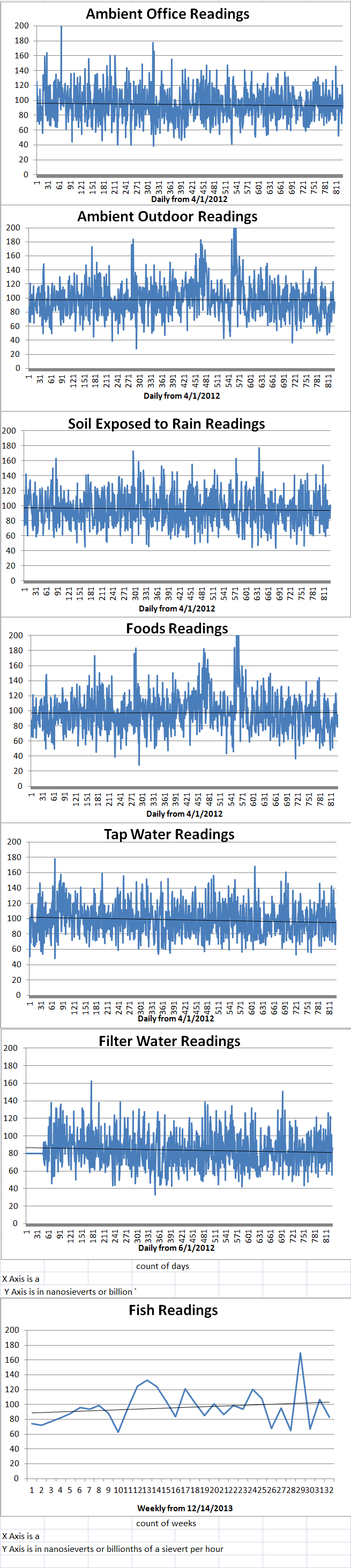
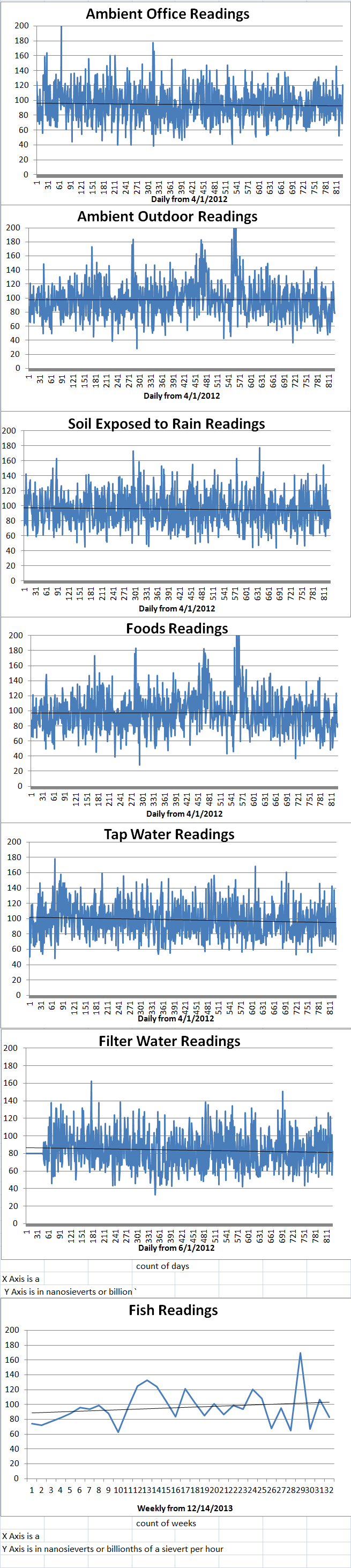
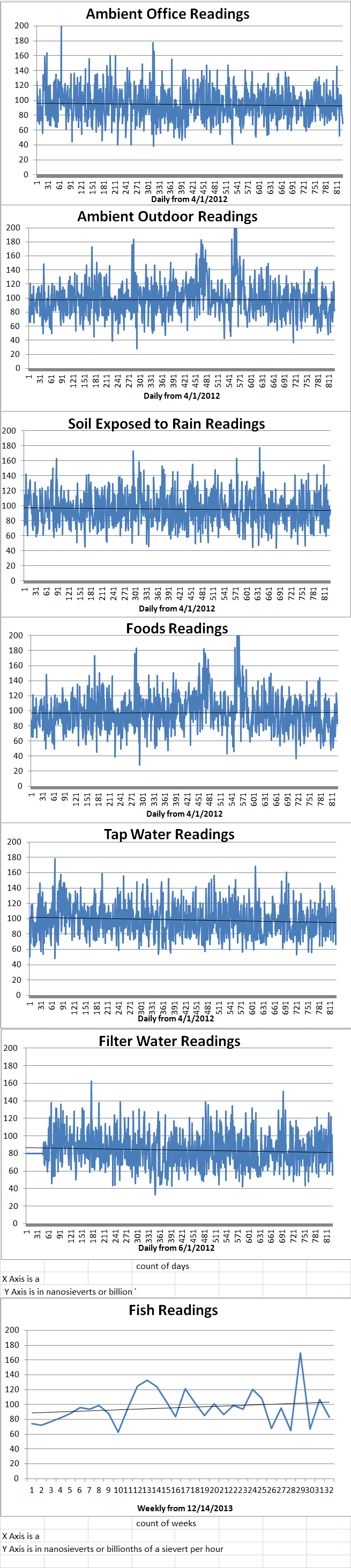
Ambient office = 101 nanosieverts per hourAmbient outside = 107 nanosieverts per hourSoil exposed to rain water = 113 nanosieverts per hourPeach from Central Market = 95 nanosieverts per hourTap water = 93 nanosieverts per hourFiltered water = 86 nanosieverts per hour -
Nuclear Batteries 1 – New Betavoltaic Nuclear Batteries
I have mentioned nuclear batteries in past blog posts. They are especially useful for long term low power devices such as space probes or medical implants. Research into the betavolatic version of nuclear battery technology is over fifty years old. Early cardiac pacemakers used a nuclear battery based on promethium until lower cost lithium ion batteries became available.
Betavoltaics are a type of nuclear battery that utilizes beta particles (high energy electrons). In the conventional designs, the beta particles move through a semiconductor and produce an electric current. The semiconductor material in early betavoltaics was inefficient in producing electricity so high energy and dangerous radioactive isotopes had to be used. As time went by, better and better semiconductor materials were developed and less dangerous radioactive isotopes such as tritium could be used. There was still the problem with the slow degradation of the semiconductor material as it was damaged by the high energy electrons. As the semiconductor deteriorated, the production of electricity decreased.
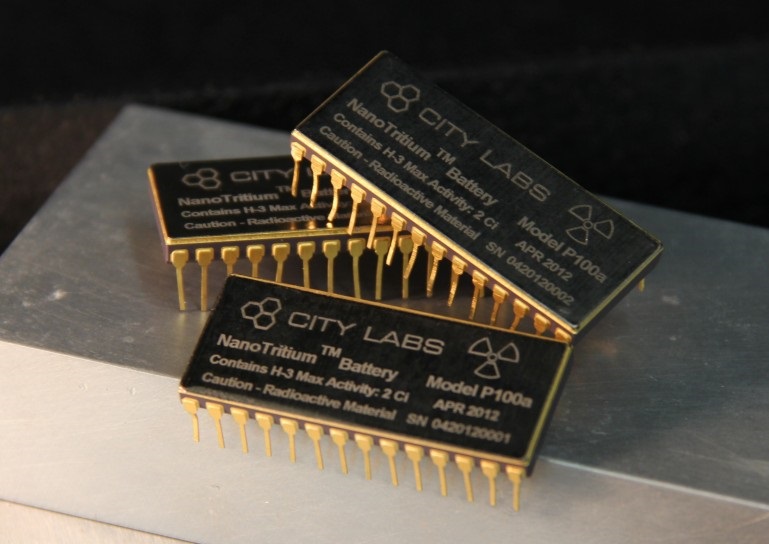
In 2012, City Labs introduced its NanoTritium betavoltaic power source. This device is configured in the form of an electronic chip that can be plugged into a circuit board. The half life of tritium is about twelve years and City Labs says that it NanoTritium battery can provide energy to electronic devices for up to twenty years. It is sturdy and hermetically sealed with a solid form of tritium that should increase safety and reliability. It can withstand temperatures over a hundred degree Celsius range as well as severe vibrations and a large ranges of altitudes. The NanoTritium battery is the first commercially available betavoltaic nuclear battery for companies that do not have a license to handle radioactive materials. This will make it attractive for a much wider range of applications than the old betavoltaics. The current price of the battery is a few thousand dollars and that is expect to drop with increased production.
Recently, researchers at the University of Missouri announced the development of a new type of betavoltaic battery. Instead of being based on solid semiconductor material that was vulnerable to degradation, the new batteries utilize water. Water can absorb a great deal of nuclear energy, generating free radicals. These ionized versions of hydrogen, oxygen and water molecules make it possible to use the solution to generate power. The new battery utilizes a strontium-90 isotope. A titanium dioxide electrode with structures at the nano level and a platinum coating converts the electrochemical energy in the water into electrons that generate a flow of electricity.
These new betavoltaics could be game-changers for a number of industries as their features such as small size, high output, reliability, safety, cost and relaxed licensing make them candidates for power sources for a wider variety of devices. They could be a boon to medical equipment manufacturers who are constantly inventing new implantable devices that need small reliable long lived batteries.
-
Radiation News Roundup September 29, 2014
-
Geiger Readings for September 29, 2014
Ambient office = 89 nanosieverts per hourAmbient outside = 87 nanosieverts per hourSoil exposed to rain water = 101 nanosieverts per hourGreen seedless grapes from Central Market = 95 nanosieverts per hourTap water = 97 nanosieverts per hourFiltered water = 86 nanosieverts per hour -
Geiger Readings for September 28, 2014
Ambient office = 121 nanosieverts per hourAmbient outside = 91 nanosieverts per hourSoil exposed to rain water = 83 nanosieverts per hourRed seedless grapes from Central Market = 79 nanosieverts per hourTap water = 88 nanosieverts per hourFiltered water = 82 nanosieverts per hour -
Radiation News Roundup September 27, 2014
-
Geiger Readings for September 27, 2014
Ambient office = 69 nanosieverts per hourAmbient outside = 96 nanosieverts per hourSoil exposed to rain water = 94 nanosieverts per hourCarrot from Central Market = 83 nanosieverts per hourTap water = 66 nanosieverts per hourFiltered water = 56 nanosieverts per hourPacific Cod – Caught in USA = 83 nanosieverts per hour -
Nulcear Weapons 95 – The World Came Close To Nuclear War in 1983
I have posted before about how close the world came to a nuclear war on several occasions. Sometimes it came down to the decision of one man. One human being who could decide the fate of the entire human race in a matter of moments. Fortunately for us, each time, that individual decided against nuclear suicide. These people were highly trained and had their orders from their superiors but something stopped them at the crucial moment. I like to think that it was a matter of basic humanity. When the choice came, they could not bring themselves to contribute to the death of billions and the end of human civilization.
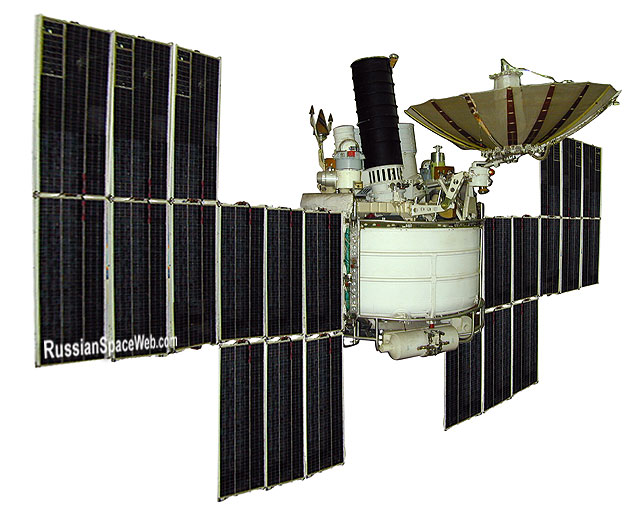
On September 26, 1983, a lieutenant colonel in the Soviet Air Defence Forces named Stanislav Petrov was stationed at Serpukhov, a secret military bunker near Moscow in the U.S.S.R. He was charged with monitoring Oko which was the Soviet Union’s early warning system to detect a nuclear attack. If the Oko system issued an alert of a nuclear attack, Petrov was to report the alert to his superiors. Early in the morning of the 26, one of the satellites in the Oko system reported that the United States had just launched five ballistic missiles toward the U.S.S.R.
Three weeks before the Oko alert on the 26th, the Soviets had shot down a South Korean airliner that strayed into a sensitive area in U.S.S.R. Following the crash of the airliner, rhetoric heated up on both sides and the Cold War got colder. Considering this timeline and the belligerence of both nations, Petrov had to take the Oko launch alert seriously.
Petrov later reported that he had “a funny feeling in my gut” that the Oko launch alert was a false alarm. He pointed out that if the U.S. was going to launch a nuclear attack on the U.S.S.R., it would have launch many more missiles than the five reported. Additionally, the Soviet national radar system was not reporting radar corroboration of the supposed launches. And, finally, he admitted that he did not have full confidence in the Oko alert system when it came to detecting nuclear launches. Petrov reported the Oko alert to his superiors as a false alarm as was later proven to be the case.
Another such episode occurred when the U.S. was blockading Cuba during the Cuban Missile Crisis. A Soviet naval vessel crossed the line that the U.S. had announced and it was being monitored by a U.S. naval vessel. The protocol was to go to high alert if a Soviet vessel crossed the line. The Captain of the U.S. vessel should have informed Washington, D.C. of the incursion in the forbidden zone which would have moved our forces to the high alert status. That would have caused the U.S.S.R. to do the same and World War Three might have been the result. Instead, the Captain of the U.S. vessel decided that the Soviet vessel had strayed off course and simply waited to see what would happen. The Soviet vessel was off course and soon sailed back out of the forbidden zone. The U.S. Captain said that he just couldn’t bring himself to launch a chain of events that might have destroyed human civilization.
Russia inherited the Perimeter automatic retaliatory system from the Soviets. The Perimeter system has a network of sensors to detect nuclear blasts inside Russia. If the system is unable to communicate with Central Command, then it will launch the Russia nuclear arsenal at the United States. I would much prefer to have a human being with common sense and empathy for other people deciding whether to launch a nuclear war.
Oko Satellite:

-
Radiation News Roundup September 26, 2014
Nuclear Expert says that ‘mystery’ Fukushima plutonium was found. enenews.com
The Finnish government has decided not to grant Teollisuuden Voima Oyj (TVO) an extension to its 2010 decision in principle for the construction of a fourth unit at the Olkiluoto nuclear power plant. world-nuclear-news.org