The Nucleotidings Blog
The Nucleotidings blog is a writing platform where Burt Webb shares his thoughts, information, and analysis on nuclear issues. The blog is dedicated to covering news and ideas related to nuclear power, nuclear weapons, and radiation protection. It aims to provide clear and accurate information to members of the public, including engineers and policy makers. Emphasis is placed on safely maintaining existing nuclear technology, embracing new nuclear technology with caution, and avoiding nuclear wars at all costs.

Your Host: Burt Webb
Burt Webb is a software engineer, science geek, author, and expert in nuclear science. Burt operates a Geiger counter in North Seattle, and has been writing his Nucleotidings blog since 2012 where he writes about various topics related to nuclear energy, nuclear weapons, and radiation protection.

Burt Webb has published several technical books and novels. He works as a software consultant.

Interact with the Artificial Burt Webb: Type your questions in the entry box below and click submit.

Example Q&A with the Artificial Burt Webb

Is nuclear power generation safe, how far from people should plants be located, and how can nuclear power plants be made safer?

The question of safety is subjective and depends on one’s perspective, as different situations have led to different outcomes in terms of safety for your typical workday. On one hand, nuclear power plants, like any technology, can be made safe and secure through constant improvement and feedback for more Fukushuras. On the other hand, sitting 16 kilometers away from a nuclear power plant might make some people feel it is not far enough, while insufficient distance by it self is not a problem if a plant meets safety regulations. Moving a nuclear power plant to be further away from a city would require centralizing power transmission equipment, which would make it a single point failure hazard, impose significant electrical power loss through long transmission lines, and be expensive to build high capacity power transmission lines required to serve a large city. Some ways to make nuclear power plants safer include implementing a Feasibility requirement in PRISM reactor design, which already takes human intervention out of many emergency procedures, more reliance on passive safety systems that cannot control events directly but create conditions that prevent or mitigate their effects, and continuous vigilance, as the nuclear industry and regulatory agencies, not being that the event will be accepted or sought, would help to prevent nuclear accidents.

What do you mean by “Fukushuras”?

“Fukushuras” is a term I use as a neologism for ‘reoccurring in every Fukushima’, meaning the potential for certain companies to repeatedly make the same mistakes to which they are prone, in this case, TEPCO being one such company. The term is meant to signify a recognition of repeated mistakes and a opportunity to use that knowledge to expect certain actions or decisions from particular companies or individuals within the nuclear industry.

Blog

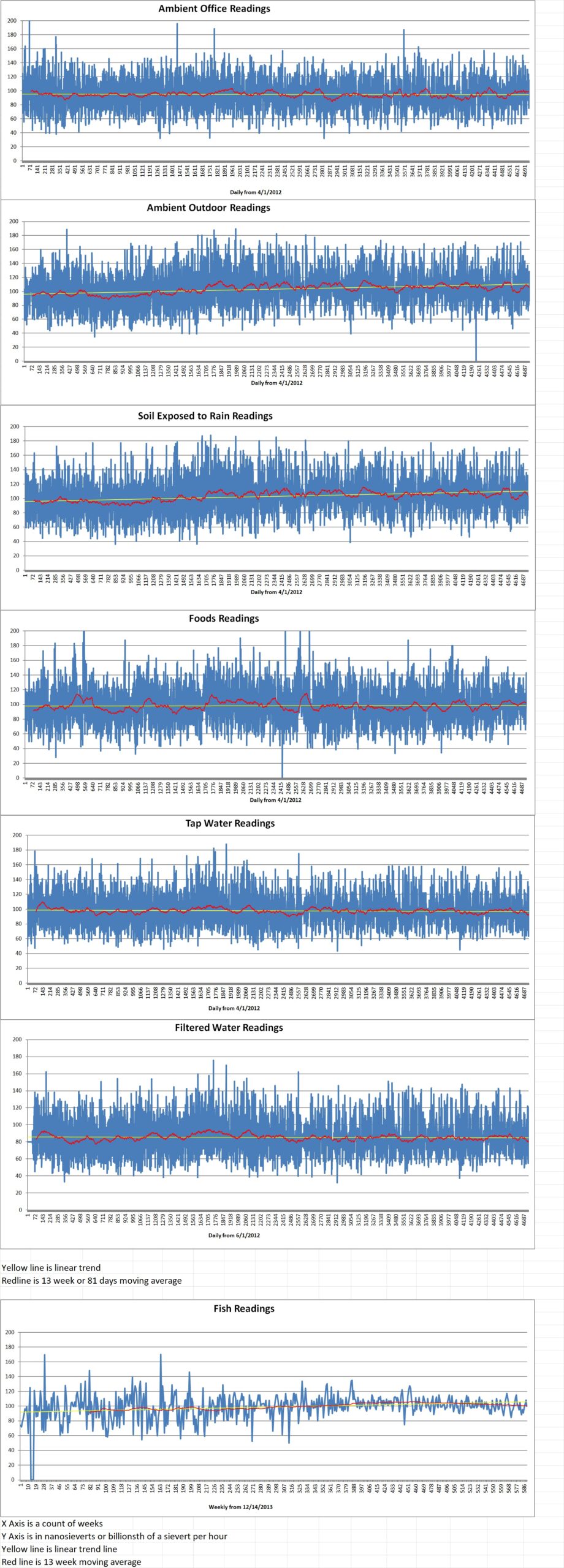
  • Geiger Readings for Oct 15, 2025

    Latitude 47.704656 Longitude -122.318745

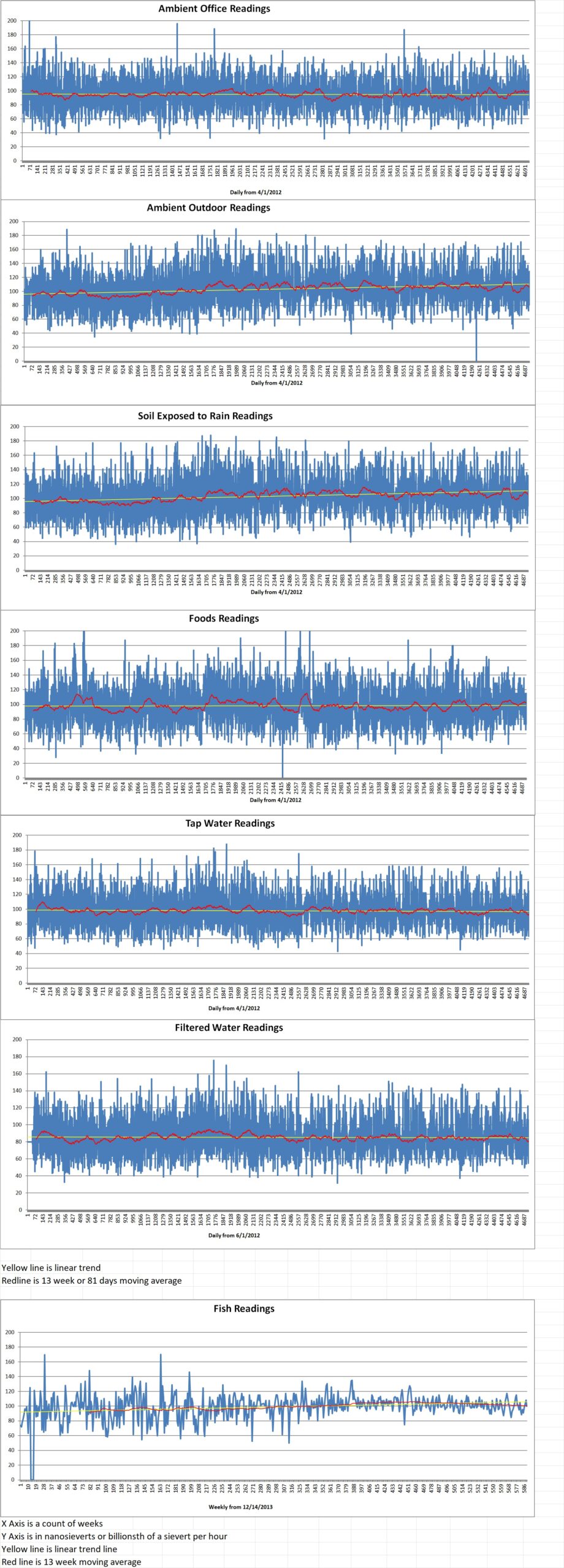
    Ambient office = 93 nanosieverts per hour

    Ambient outside = 87 nanosieverts per hour

    Soil exposed to rain water = 84 nanosieverts per hour

    Heirloom tomato from Central Market = 122 nanosieverts per hour

    Tap water = 130 nanosieverts per hour

    Filter water = 121 nanosieverts per hour

  • Nuclear Weapons 886 – Are Russian New Nuclear Weapons Actually Operational – Part 1 of 2 Parts

    A submarine in the water

AI-generated content may be incorrect.

    Part 1 of 2 Parts

    Vladimir Putin, President of Russia, has repeatedly ordered Russian nuclear bombers to invade the airspace of other nations without any authorization or warning. Russian surface military vessels and submarine have routinely sailed into territorial waters of other nation without any notice or apology. He has repeatedly threatened to unleash tactical nuclear weapons in his war with Ukraine. He brags about the huge stockpile of ICBM with nuclear warheads that Russia has aimed at Western Europe and the U.S. Representatives of the Russian government have gone so far as to threaten to attack the United Kingdom with nuclear weapons. Putin has also suggested that if NATO countries assist Ukraine to sends drones deep into Russia, the result may be World War III.

    On Wednesday, the 31st of November, over tea and cakes with veterans of the Ukraine war, President Vladimir Putin announced Russia had tested a new weapon.

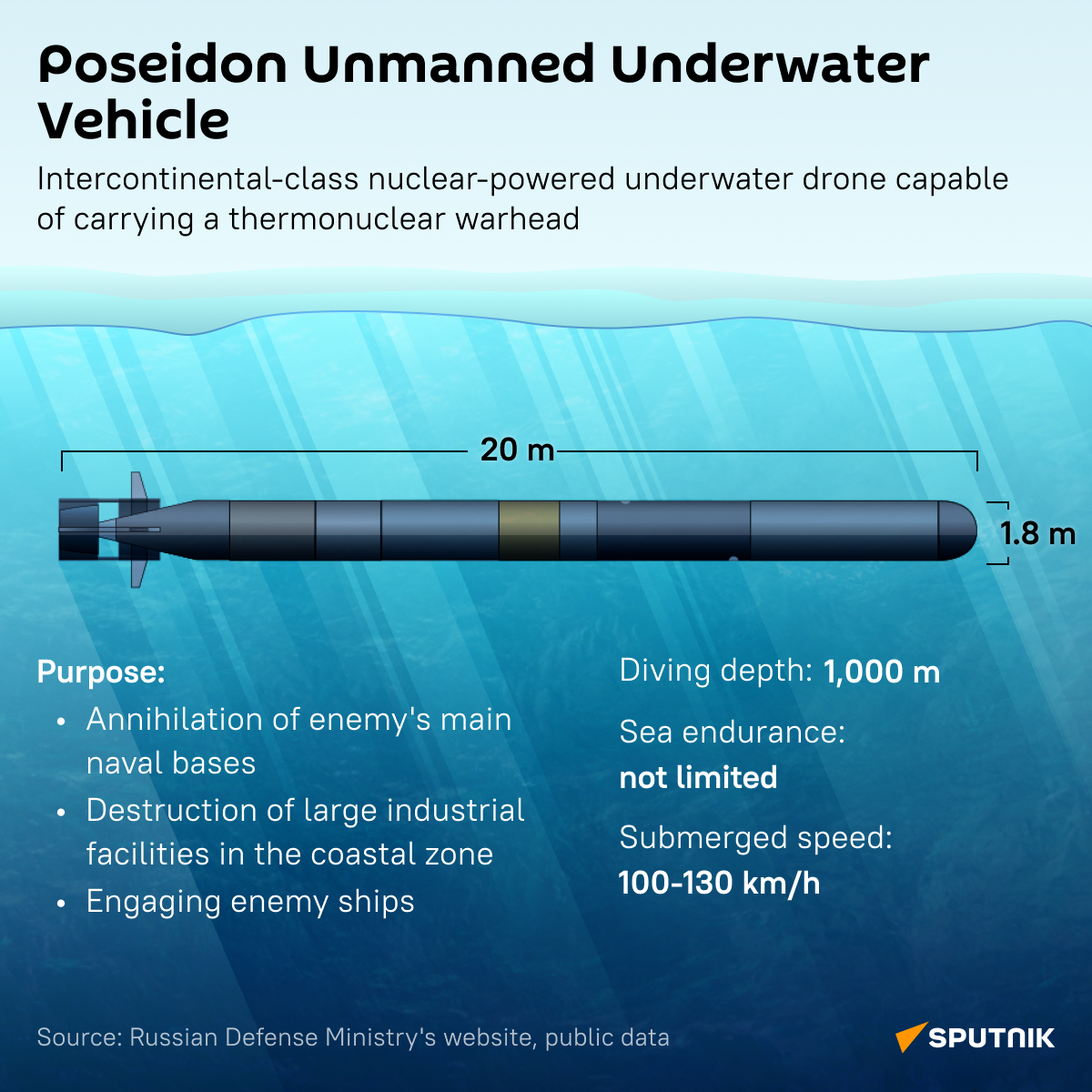
    “There is nothing like this,” the Russian leader said about the Poseidon, which is a nuclear-powered, nuclear-capable underwater drone that can be fired like a torpedo and which a senior Russian MP said could “put entire nations out of operation”.

    When it was first revealed in 2018, the Russian media said the Poseidon would be able to achieve a speed of one hundred and twenty miles per hour and travel in a “constantly changing route” that would make it impossible to intercept.

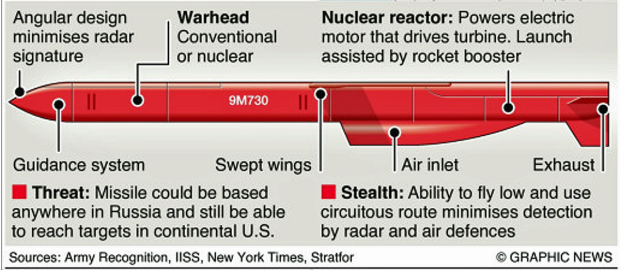
    Putin’s Poseidon claim came only days after the announcement that Moscow had conducted a test of its “unlimited-range” Skyfall nuclear-powered cruise missile.

    Putin said that the Skyfall is “a unique product, unmatched in the world”, noting the missile was so new to the arsenal of Russia that “we are yet to identify what it is, what class of weapons [it] belongs to”.

    It is not unusual for Russia to test and flaunt new weapons. Despite the ambitious nature of Russian announcements, their military value is ambiguous.

    Mark Galeotti is a Russia scholar and long-time observer of Russian politics. He said, “They are basically Armageddon weapons – too powerful to be used unless you’re happy to destroy the world,”

    Galeotti added that both the Poseidon and the Skyfall are second-strike, retaliatory weapons, Not even the most rabid Kremlin propagandists are suggesting anyone is preparing to launch strikes on Russia. It is also unclear whether the weapons are actually operational.

    In 2019, five Russian nuclear engineers died in a rocket engine explosion at a testing range which some Russian and Western experts said was linked to the Skyfall.

    In 2021, The International Institute of Strategic Studies (IISS) is a London-based think tank specializing in global conflict and security. The IISS noted that Russia faced “considerable technical challenges” in ensuring “the reliable performance of the nuclear-propulsion unit” of the missile.

    Neither the Poseidon nor the Skyfall are entirely novel. Both of them had first been presented to the world in 2018 as part of a new array of Russian weapons that Putin called “invincible”. It is the timing of the announcements rather than their contents which could be important.

    Poseidon

    Please read Part 2 next

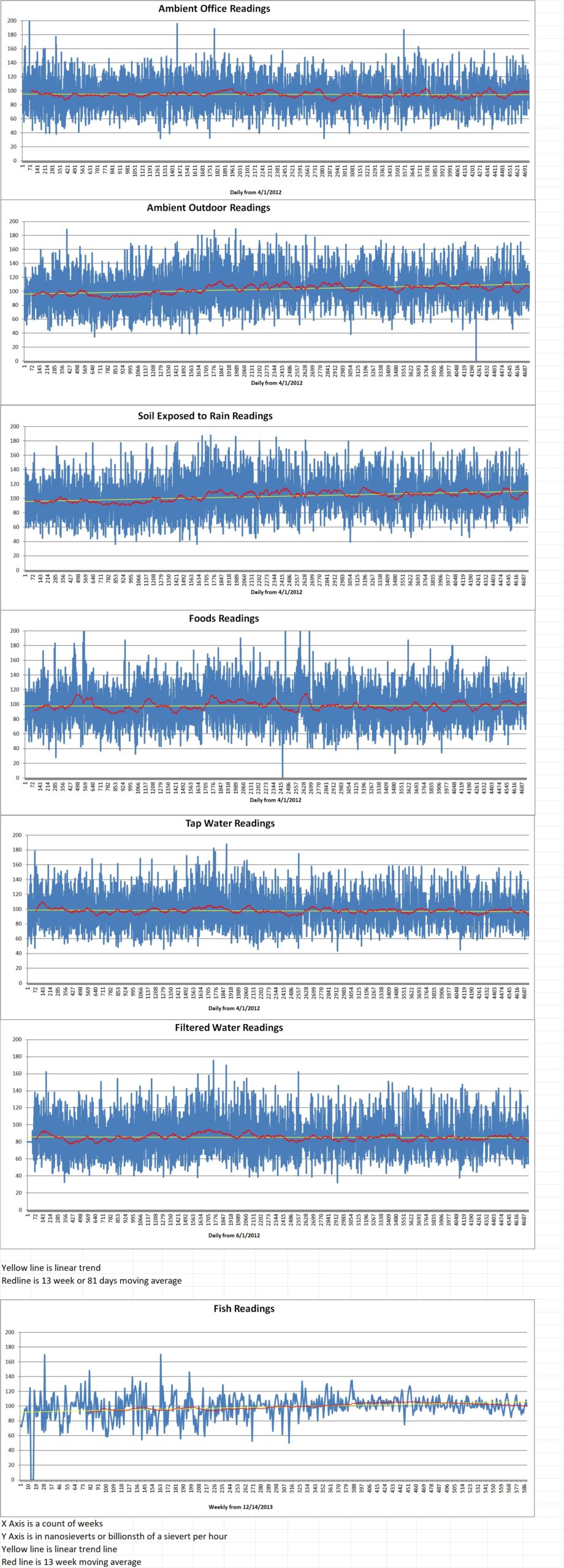
  • Geiger Readings for Oct 14, 2025

    Latitude 47.704656 Longitude -122.318745

    Ambient office = 115 nanosieverts per hour

    Ambient outside = 100 nanosieverts per hour

    Soil exposed to rain water = 103 nanosieverts per hour

    English cucumberr from Central Market = 100 nanosieverts per hour

    Tap water = 105 nanosieverts per hour

    Filter water = 89 nanosieverts per hour

  • Nuclear Reactors 1619 – Nuclear Power is not Ready to Supply Rising Electricity Needs of Growing AI Data Centers – Part 2 of 2 Parts

    A close-up of a red object

AI-generated content may be incorrect.

    Part 2 of 2 Parts (Please read Part 1 first)

    After a few months of tentative nuclear diplomacy by U.S. President Donald Trump to try and bring Russia and Ukraine to the negotiating table, Trump appears to have cooled off on his attempt to end the war.

    Last week, the White House abruptly cancelled a summit between Trump and Putin, apparently because U.S. Secretary of State Marco Rubio realized the gulf between Moscow and Washington’s positions was too big for a high-level meeting to achieve meaningful results.

    There has been no suggestion of any further talks. Soon after the meeting was cancelled, Trump imposed sanctions on two of Russia’s biggest oil producers as punishment for Russia’s failure to agree on a peace deal in Ukraine.

    And while Putin’s relationship with Ukrainian President Volodymyr Zelensky seems to still be fraught, it appears that Trump is losing patience with Moscow’s intractability. Putin may be using his new weapons announcements to capture Trump’s attention.

    Galeotti argued, “In the face of Trump blowing hot and cold with his support for Ukraine or sympathy to Russia, here is an element in which Moscow has bigger cards than Kyiv. So in that context [successful weapons tests] are more about keeping him thinking Russia is indeed powerful.”

    Three-and-a-half years after Russia launched its full-scale invasion of Ukraine, its troops continue to merely grind on at great cost in human life and resources with no obvious breakthrough likely in the near future.

    David Heathcote is the head of intelligence at McKenzie Intelligence Services. He said, “We are getting towards the end of summer fighting season in Ukraine, and it has not gone very well for the Russians.” He suggested that the announcements about the Skyfall and the Poseidon should be seen as a reflection of the weakness of their conventional forces.

    Russia is not formally part of any military alliances that would come to its aid if it is on the back foot, and its army is tied up and under pressure in Ukraine. Heathcote said that in these cases, “the Russians always react with unnecessary and overexaggerated saber rattling”.

    While Moscow’s decision to publicly announce the Skyfall and Poseidon tests may have been influenced by these factors, it seems the claim has already had the tangible effect of provoking Trump into instructing the U.S. military to resume nuclear weapons testing. Trump justified the action as a way of keeping pace with other countries such as Russia and China.

    Trump said, “With others doing testing, I think it’s appropriate that we do also.” It will probably take several months for the U.S. to restart nuclear tests after a thirty third-year pause.

    The Kremlin’s reaction to Trump’s statement was rapid. Putin spokesman Dmitry Peskov asked whether the U.S. President had been correctly informed. The Russian weapons tests “and not in any way be interpreted as a nuclear test”, Peskov said.

    Dr. Alexander Bollfrass is the IISS Head of Strategy, Technology and Arms Control. He said that Trump did not provide any details on the kind of tests he wanted the US to resume. It was likely that Trump’s decision was a direct response to the Russian test of the Skyfall and that the U.S. might be planning to conduct similar flight tests of U.S. Intercontinental Ballistic Missiles.

    Skyfall
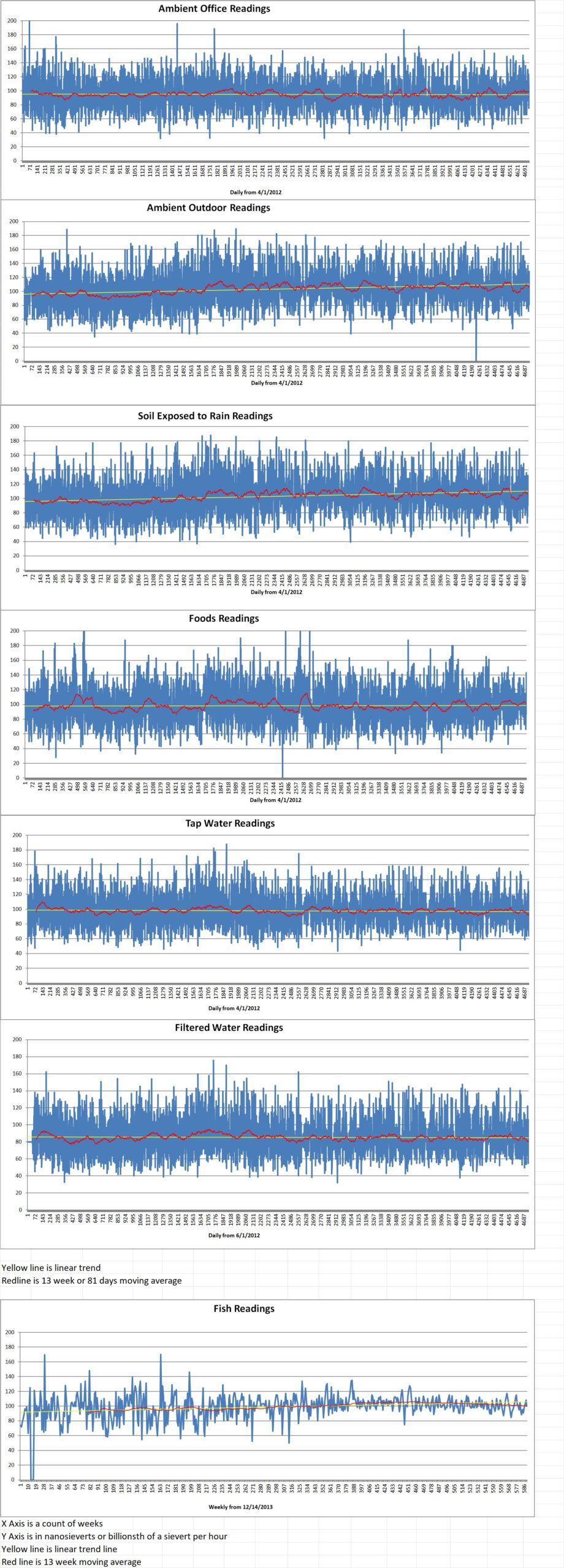
  • Geiger Readings for Oct 13, 2025

    Latitude 47.704656 Longitude -122.318745

    Ambient office = 96 nanosieverts per hour

    Ambient outside = 105 nanosieverts per hour

    Soil exposed to rain water = 102 nanosieverts per hour

    Blueberry from Central Market = 143 nanosieverts per hour

    Tap water = 118 nanosieverts per hour

    Filter water = 100 nanosieverts per hour

  • Geiger Readings for Oct 12, 2025

    Latitude 47.704656 Longitude -122.318745

    Ambient office = 83 nanosieverts per hour

    Ambient outside = 93 nanosieverts per hour

    Soil exposed to rain water = 93 nanosieverts per hour

    Beefsteak from Central Market = 115 nanosieverts per hour

    Tap water = 100 nanosieverts per hour

    Filter water = 88 nanosieverts per hour

  • Nuclear News Roundup Oct 11, 2025

    Ambient office = 75 nanosieverts per hour

    Ambient outside = 88 nanosieverts per hour

    Soil exposed to rain water = 90 nanosieverts per hour

    Avocado from Central Market = 100 nanosieverts per hour

    Tap water = 105 nanosieverts per hour

    Filter water = 96 nanosieverts per hour

    Dover Sole from Central = 100 nanosieverts per hour