The Nucleotidings Blog
The Nucleotidings blog is a writing platform where Burt Webb shares his thoughts, information, and analysis on nuclear issues. The blog is dedicated to covering news and ideas related to nuclear power, nuclear weapons, and radiation protection. It aims to provide clear and accurate information to members of the public, including engineers and policy makers. Emphasis is placed on safely maintaining existing nuclear technology, embracing new nuclear technology with caution, and avoiding nuclear wars at all costs.

Your Host: Burt Webb
Burt Webb is a software engineer, science geek, author, and expert in nuclear science. Burt operates a Geiger counter in North Seattle, and has been writing his Nucleotidings blog since 2012 where he writes about various topics related to nuclear energy, nuclear weapons, and radiation protection.

Burt Webb has published several technical books and novels. He works as a software consultant.

Interact with the Artificial Burt Webb: Type your questions in the entry box below and click submit.

Example Q&A with the Artificial Burt Webb

Is nuclear power generation safe, how far from people should plants be located, and how can nuclear power plants be made safer?

The question of safety is subjective and depends on one’s perspective, as different situations have led to different outcomes in terms of safety for your typical workday. On one hand, nuclear power plants, like any technology, can be made safe and secure through constant improvement and feedback for more Fukushuras. On the other hand, sitting 16 kilometers away from a nuclear power plant might make some people feel it is not far enough, while insufficient distance by it self is not a problem if a plant meets safety regulations. Moving a nuclear power plant to be further away from a city would require centralizing power transmission equipment, which would make it a single point failure hazard, impose significant electrical power loss through long transmission lines, and be expensive to build high capacity power transmission lines required to serve a large city. Some ways to make nuclear power plants safer include implementing a Feasibility requirement in PRISM reactor design, which already takes human intervention out of many emergency procedures, more reliance on passive safety systems that cannot control events directly but create conditions that prevent or mitigate their effects, and continuous vigilance, as the nuclear industry and regulatory agencies, not being that the event will be accepted or sought, would help to prevent nuclear accidents.

What do you mean by “Fukushuras”?

“Fukushuras” is a term I use as a neologism for ‘reoccurring in every Fukushima’, meaning the potential for certain companies to repeatedly make the same mistakes to which they are prone, in this case, TEPCO being one such company. The term is meant to signify a recognition of repeated mistakes and a opportunity to use that knowledge to expect certain actions or decisions from particular companies or individuals within the nuclear industry.

Blog

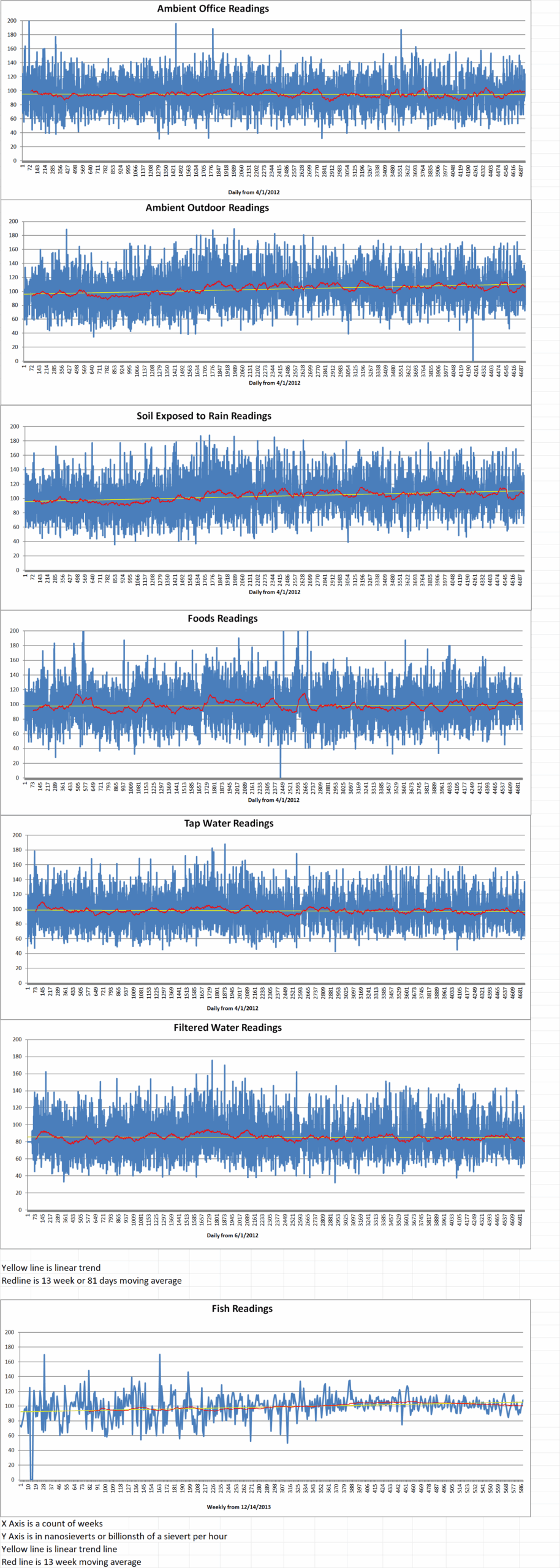
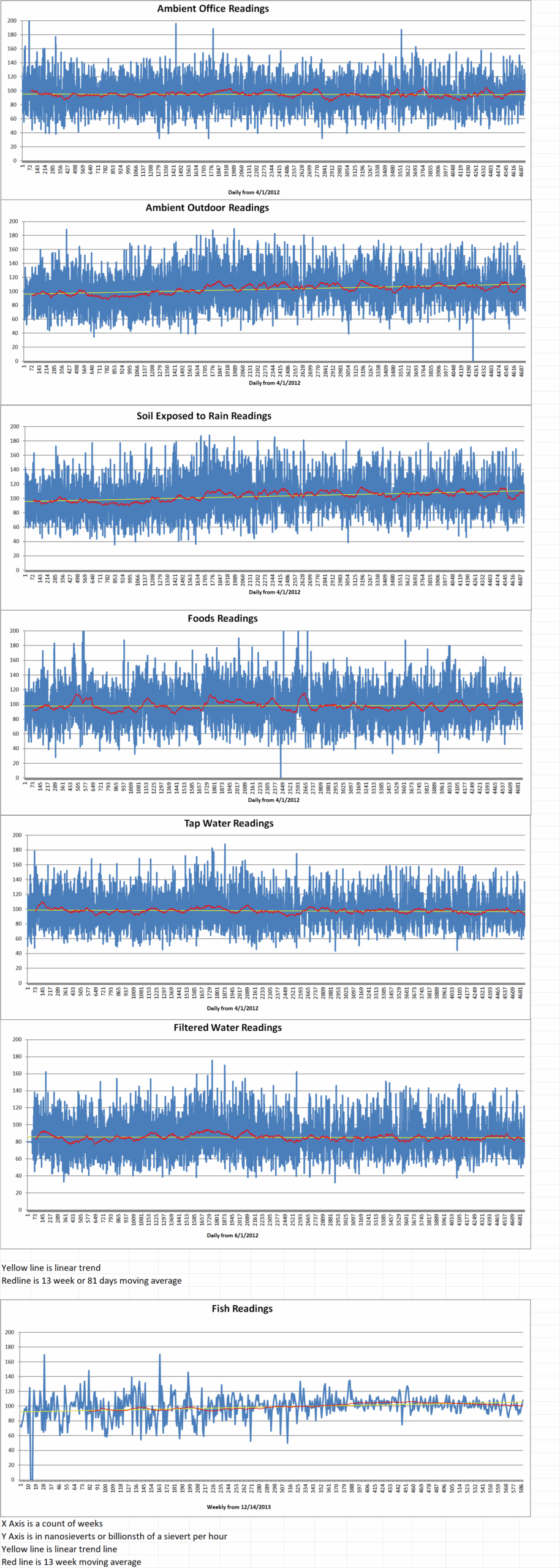
  • Geiger Readings for Oct 11, 2025

    Latitude 47.704656 Longitude -122.318745

    Ambient office = 75 nanosieverts per hour

    Ambient outside = 88 nanosieverts per hour

    Soil exposed to rain water = 90 nanosieverts per hour

    Avocado from Central Market = 100 nanosieverts per hour

    Tap water = 105 nanosieverts per hour

    Filter water = 96 nanosieverts per hour

    Dover Sole from Central = 100 nanosieverts per hour

  • Nuclear Reactors 1618 – Nuclear Power is not Ready to Supply Rising Electricity Needs of Growing AI Data Centers – Part 1 of 2 Parts

    A green field with a cross

AI-generated content may be incorrect.

    Part 1 of 2 Parts

    Matthew Wald is a former reporter for The New York Times who reported on nuclear energy and electric technologies. He currently works as a writer and communications consultant specializing in nuclear technology and policy for the Breakthrough Institute, a non-governmental organization that advocates for advanced nuclear reactors. In a recent Zoom talk to Friends of Oak Ridge National Laboratory and others, he said, “We do need to get our electricity house in order.” He stated that many Americans think the way to keep their electricity costs down is to install rooftop solar panels on their houses.

    Wald continued, “This is artisanal energy policy, which is my term for people who think that steps you take at home are going to solve our national energy problems. It won’t do the job. We’re going to need some major new power plants.” He added that those plants should house nuclear reactors.

    Wald added, “The nuclear industry and community have committed industrial sin. Nuclear suffered through a long drought, and now it sees terrific demand for its product, and it’s not ready to deliver the needed electricity.”

    New companies planning to build advanced nuclear power reactors, including microreactors and small modular reactors, have missed the upcoming round of construction that is being undertaken by builders of generators powered by natural gas. Wald claimed that the United States (U.S.) lacks enough gas generators to meet predicted future power demands, as well as the capacity to build them. He noted that many electric utilities that used to “build nuclear plants aren’t interested anymore.”

    However, startups are announcing their intentions to build nuclear reactors or make nuclear fuel, including three Wald named (Kairos Power, Oklo and X-energy) that have purchased property in Oak Ridge’s western industrial parks.

    Wald mentioned a trend in which artificial intelligence companies such as Amazon, Meta and Microsoft are making power purchase agreements (PPAs) with owners or constructors of nuclear power plants to ensure their future AI data centers will have reliable power. The PPAs significantly lower the high-tech companies’ carbon footprint and help keep the power plants in operation.

    Wald did not mention that Kairos Power, which is building the Hermes series of demonstration reactors in Oak Ridge, also has a PPA with Google and TVA, and that Amazon has a PPA with X-energy, which is building the TRISO-X fuel fabrication factory in Oak Ridge.

    If the demand for electricity continues to rise because of the needs of AI data centers and a growing U.S. population that continues to purchase new electronic gadgets and appliances, energy policy with respect to nuclear reactors must change.

    Wald said that one part of the new model that must change is the way that the U.S. Nuclear Regulatory Commission (NRC) works to license new advanced thirty- to three hundred-megawatt nuclear reactors that differ from the many traditional one thousand megawatt pressurized-water and boiling-water reactors in power plants it has approved for decades.

    Wald said, “Regulators must supply human intelligence to each license application, but their process must run many times faster than it does now, especially for licensing reactors that produce just three hundred megawatts or thirty megawatts or ten megawatts or one megawatt. These are just one-by-one individual licenses. If we’re going to think big, we’ve got to rethink regulation.”

    Breakthrough Institute

    Please read Part 2 next

    A purple background with white text

AI-generated content may be incorrect.

    Part 2 of 2 Parts (Please read Part 1 first)

    In answer to a question on the NRC, Wald said that the commission is working on accelerating its licensing processes because of an executive order from President Trump. He said he agrees that this is an excellent idea because “what the NRC does is not very productive. It has a bureaucracy that is resistant to change and that’s now dealing with new technologies. I am open to the idea that they’ll make errors, they’ll approve things they shouldn’t, and we’re going to learn from experience. The NRC has this habit of approving things they have approved before and of not approving of anything nobody’s ever done before. That’s not a recipe for successful innovation and industrial progress.”

    Wald talked about the need for economic production of nuclear power reactors with novel designs. Stimulating a nuclear renaissance, he said, will necessitate making “new products like we stamp out Boeing 737s or we used to stamp out Liberty ships. In serial production, if not mass production, economics must be key. We’ve got to design the better mousetrap and figure out how to build it and how to deliver it at competitive cost. Carbon reduction pledges will help in the market, but in the end, future nuclear power plants will rise or fall on the economics.”

    The politics of nuclear power must change too, Wald said. Noting that the not-in-my-backyard cliché, or NIMBY, as a common objection to proposals to build nuclear reactors near neighborhoods, Wald pointed out that “some of the new reactor designs will occupy literally about as much space as a backyard. Some of the designs will have plug-and-play reactor cores with the old nuclear core going back to the manufacturer every few years” to get its spent nuclear fuel replaced with fresh nuclear fuel.

    Wald discussed a scenario in which the staff of a reactor manufacturing company’s headquarters were welcomed to a large neighborhood in a big city. Years later, the local residents noticed a truck had just delivered an old reactor core to the headquarters!

    Wald said that “The other problem with artisanal energy policy is it doesn’t work as part of a system. Solar and wind tribalists say their costs are going down. But we would be much better off if we invested our money into collective solutions. We should invest our money in the electric grid. If all the money used to purchase eleven-kilowatt emergency generators, like I and others have in my neighborhood, had gone into the grid instead, we’d all be better off.

    Wald added, “I think that solar and wind farms have their place, but only to the extent that they benefit the system. Adding solar panels in a place where noontime electricity prices on the grid are negative is not a good idea, although federal and state incentives may make that happen.”

    He was asked if many more nuclear power reactors were built to meet increasing demands for electricity by AI data centers, would the grid be able to handle the load? He answered that “This is actually something in nuclear power’s favor.” He noted that little high-voltage transmission is being built in the country because of successful lawsuits based on environmental rules.

    Wald mentioned that “The amount of electricity transmission you need to support a new reactor is lower than what you need for wind or solar or hydro energy sources. Nuclear plants have reasonably flexible siting requirements.”

    Wald surprised a few people in his audience by saying he’s not sure that commercial fusion power reactors envisioned for mid-century will be needed. He said that “I think fusion power seeks to solve two problems that fission does not, in fact, have.”

    “One of the problems is a shortage of fuel, and the other is the disposal of radioactive waste. We don’t have a shortage of uranium, and we don’t have any shortage of plutonium if we want it. The problem of radioactive waste from nuclear power plants is manageable.”
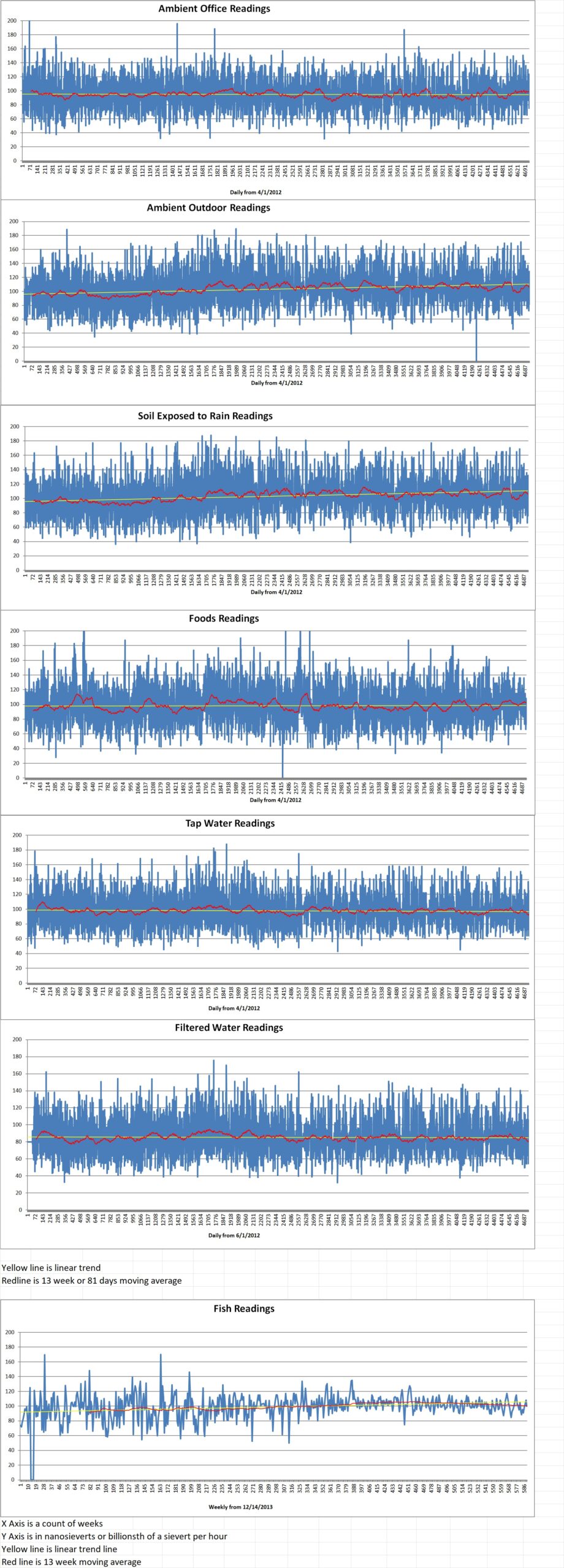
  • Geiger Readings for Oct 10, 2025

    Latitude 47.704656 Longitude -122.318745

    Ambient office = 108 nanosieverts per hour

    Ambient outside = 128 nanosieverts per hour

    Soil exposed to rain water = 132 nanosieverts per hour

    Shitake mushroomfrom Central Market = 87 nanosieverts per hour

    Tap water = 64 nanosieverts per hour

    Filter water = 55 nanosieverts per hour

  • Nuclear Reactors 1617 – U.S. Army Launches Janus Program to Accelerate Adoption of Microreactors Across Army Installations

    The Army and Department of Energy will collaborate in the development and install microreactors on Army installations in the United States, Army Secretary Dan Driscoll and Energy Secretary Christopher Wright announced Oct. 14.

    Jeff Waksman is the principal deputy assistant secretary of the Army for installations, energy and environment. He said that the new “Janus Program” is named after the Roman god of transition. It is an initiative that represents a “transition from prototypes to fully commercial nuclear power to provide energy resilience for our soldiers.” Waksman moderated the discussion about the Janus Program at the Association of the U.S. Army’s 2025 Annual Meeting and Exposition.

    According to an Army statement released prior to the discussion, the program will provide “resilient, secure, and assured energy to support national defense installations and critical missions.”

    Driscoll emphasized that modern warfare is at an “inflection point,” where “how we inflict violence on each other and how we will defend against that violence has changed.” The Janus Program is the “first big step toward having the U.S. Army work with the private sector” and other U.S. government agencies to “push forward nuclear energy for our country.”

    Wright mentioned that the Army’s development during World War II of the first atomic weapon, which eventually led to a commercial nuclear program in the U.S.

    In 1957, the Army built the first nuclear reactor to be connected to a commercial power grid at Fort Belvoir, Virginia, giving rise to the nuclear power industry, Waksman said.

    Wright said that the current U.S. Navy submarine fleet is powered by nuclear reactors that don’t need to be refueled for “the life of the submarine.” This changed the game for submarine warfare. “I think we can do the same thing with our Army, with small reactors that can be deployed in all different settings.”

    However, the Army’s program will not be, in Waksman’s words, a “Navy 2.0” program. As part of the Janus Program, nuclear reactors “will be commercially owned and operated” with the Army providing oversight, Waksman said, adding that that arrangement makes it unique.

    The DoE is supporting the project in three ways. The first way is to collaborate with the Army to develop a program to produce the “high-assay, low-enriched uranium,” fuel that microreactors need to function. Unlike low enriched uranium that traditional light water nuclear reactors burn, or the highly enriched uranium used to fuel nuclear submarines and enable nuclear weapons. No U.S. company currently produce the fuel, also known as HALEU. Wright said that “We can fix that.”

    Second, prototype nuclear reactors will undergo testing at the Energy Department’s Idaho National Laboratory before being installed on an Army installation. Wright said that at least one microreactor will “go critical,” meaning producing a sustained chain reaction, next year, maybe “before July 4th.”

    And third, the DoE will provide regulatory reform. Wright continued that over the years, the Nuclear Regulatory Commission, which is responsible for the safety of U,S. nuclear power plants, gradually changed its priorities from “safety, safety, safety” to “bureaucracy, bureaucracy and safety.” That will change, he said.

    U.S. Army

  • Geiger Readings for Oct 09, 2025

    Geiger Readings for Oct 09, 2025

    Ambient office = 105 nanosieverts per hour

    Ambient outside = 119 nanosieverts per hour

    Soil exposed to rain water = 119 nanosieverts per hour

    Roma tomato from Central Market = 108 nanosieverts per hour

    Tap water = 77 nanosieverts per hour

    Filter water = 62 nanosieverts per hour

  • Nuclear Reactors 1616 – Deep Fission Working on Burying Small Reactors a Mile Deep in Kansas – Part 3 of 3 Parts

    A green and blue logo

AI-generated content may be incorrect.

    Part 3 of 3 Parts (Please read Parts 1 and 2 first)

    The Deep Fission’s federal filing last month said it plans to construct its first reactor sites at locations “with existing industrial use and limited environmental sensitivity.” Its goal is to satisfy the requirements to qualify for a streamlined environmental regulatory process or exemptions.

    Since President Trump wants to see three reactors up and running by the Fourth of July, DF was asked whether this is the timeline for its work in Kansas. The company said it is aiming for that date at one of its sites, but would not say whether this refers to the Kansas location.

    TerraPower, the other nuclear company considering Kansas, was co-founded by former Microsoft CEO Bill Gates. This summer it broke ground on a four-billion-dollar nuclear facility in Wyoming as a demonstration project that is co-funded by the U.S. Department of Energy.

    TerraPower’s technology consists of immersing uranium in liquid sodium instead of water. This cooling liquid has a far higher boiling point, which the company says adds to the reactor’s safety. The company’s design also would also allow for turning the plant’s power output up and down. That ability appeals to utility companies.

    This would make it possible to adjust to the ebb and flow of electricity demand and to adapt to the sunny and windy days when solar and wind farms churn out lots of power. Traditional nuclear power plants with conventional reactors, such as Evergy’s Wolf Creek Nuclear Generating Station, cannot do that.

    TerraPower’s goal in Kansas is to explore the prospects for a utility-scale advanced nuclear facility, search for appropriate reactor sites and gauge the interest of those communities in hosting such a facility. The company is looking for sites on the Kansas side of Evergy’s two-state service area, which would mean somewhere in eastern or central Kansas.

    Advanced nuclear power and small modular reactors (SMRs) represent a new chapter in U.S. nuclear energy that remains largely in the design and testing phases. These next-generation reactor designs are meant to address key challenges with nuclear power plants, including the fact that traditional facilities are so large and complex to build. Companies working on the newer designs claim that these will be safe yet faster to build. This claim has received support from both Democrats and Republicans at the federal level, including both the Biden and Trump administrations.

    NucNet, an independent news outlet covering the nuclear industry, reports that state governments are interested, too.

    Several states are considering legislation or incentives for advanced nuclear technology. This includes Kansas’ neighbor, Oklahoma, which passed a law this year directing its utility and energy regulatory body, the Oklahoma Corporation Commission, to explore the prospects for nuclear power.

    Kansas currently has one conventional nuclear power plant, Wolf Creek, about sixty miles south of Topeka. The Wolf Creek plant generates about one-fifth of the state’s electricity.

    Although nuclear power facilities don’t generate carbon emissions, the idea of deploying more nuclear power is already meeting with tough questions from Kansas-based clean energy advocates that have lobbied for years to increase the state’s wind and solar power.

    They’re concerned that nuclear energy is too expensive, and Evergy’s rates continue to rise. The groups argue that Kansas needs to provide more affordable, clean energy because many low-income households are already struggling to pay their utility bills and climate change is predicted to bring worse summer heat waves.

    TerraPower

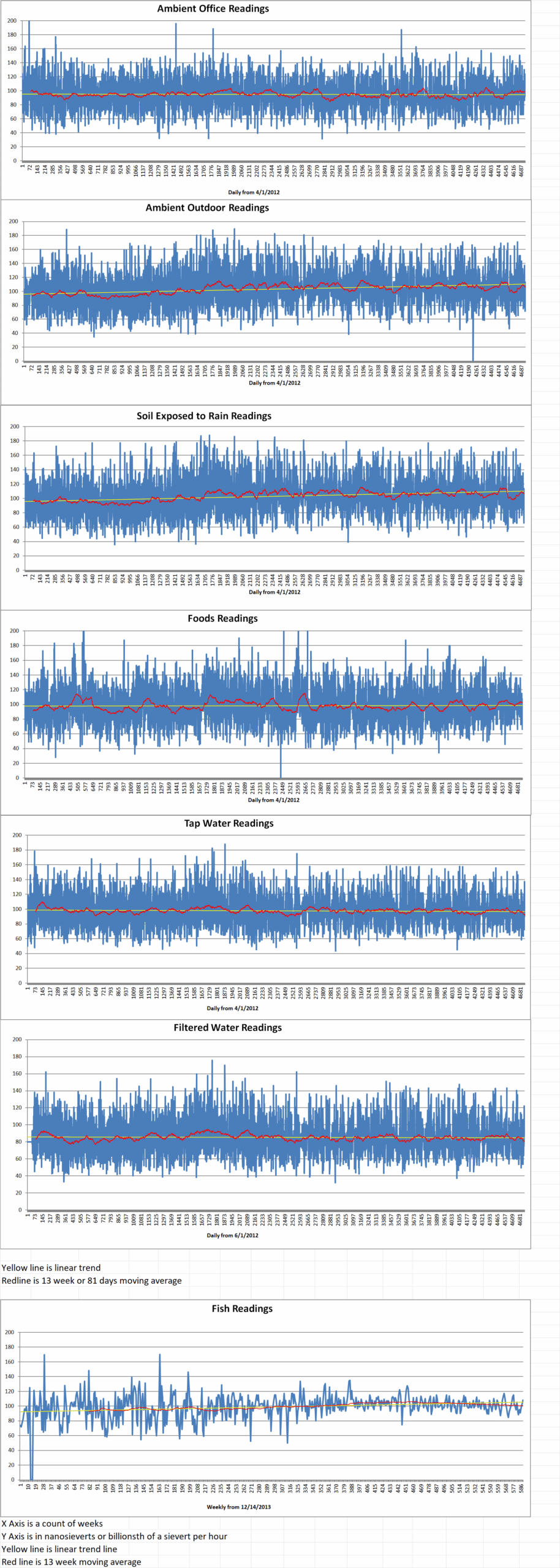
  • Geiger Readings for Oct 08, 2025

    Latitude 47.704656 Longitude -122.318745

    Ambient office = 124 nanosieverts per hour

    Ambient outside = 81 nanosieverts per hour

    Soil exposed to rain water = 76 nanosieverts per hour

    Yellow bell pepper from Central Market = 73 nanosieverts per hour

    Tap water = 125 nanosieverts per hour

    Filter water = 106 nanosieverts per hour