
Part 1 of 2 Parts
Butte County in Idaho is suing the Department of Energy (DoE) over nuclear waste stored at the desert site west of Idaho Falls. The lawsuit was filed last Monday in the U.S. District Court of Idaho’s Eastern Division. It followed the recent death of former Idaho Governor Phil Batt. He and fellow former Governor, Cecil Andrus, worked out the 1995 Settlement Agreement with the DoE. This agreement laid out deadlines governing nuclear waste cleanup in Idaho.
The forty-nine page complaint was filed on the county’s behalf by Arco attorney Steve L. Steven. Among issues raised in the lawsuit is the federal government’s failure to create permanent national repository for spent nuclear fuel. This has forced local communities to house the spent nuclear fuel. The lawsuit says that “The interim storage of spent nuclear fuel in Butte County is now de facto permanent disposal.” The complaint went on to say that forced interim storage has “ongoing social and economic impacts to Butte County as well as social and economic impacts that have yet to occur.”
The lawsuit argues that the storage of spent nuclear fuel at the site has “detrimental effects” and that there’s a reason that the DoE continues to store waste in places such as Butte County rather than “next to the Forrestal Building in Washington D.C. where DOE would be free from the need for state or local government cooperation.”
The lawsuit claims that the DoE is in violation of laws which date back nearly seventy years that regulate the management of nuclear waste. The DoE has not honored commitments set forth in the Atomic Energy Act to address federal impacts to local communities. The lawsuit says the DoE has never utilized the authority “to make payments to local communities ‘where special burdens have been cast upon the State or local government by activities of the Commission.’”
The lawsuit claimed that by not utilizing the discretionary authority that it has, the DoE demonstrates its unwillingness to acknowledge the impact of nuclear waste storage on local communities.
The lawsuit says that weeks before the filing of the complaint, Butte County sent correspondence to the DoE’s Washington headquarters “offering to informally discuss and compromise” on the county’s concerns under the Interim Storage Fund. The DoE headquarters did not respond.
The lawsuit notes that the county’s culture and economics livelihood are “inextricably linked” to the Idaho National Laboratory and that it “has always been and continues to be a staunch supporter of INL and its mission, except for the challenges herein presented.” According to the website of the Idaho National Laboratory, sixty percent of the site’s eight hundred and ninety square miles are in Butte County.
The lawsuit mentions several instances in which spent nuclear fuel has been stored at the DoE’s desert site for far longer than originally intended and in facilities that were not designed to hold waste for such long periods. The lawsuit claims that the DoE provides interim storage capacity for about three hundred metric tons of spent nuclear fuel at it desert site.
Please read Part 2 next
Blog
-

Radioactive Waste 894 – Butte County Idaho Is Suing The Department Of Energy Over Storage Of Nuclear Waste – Part 1 of 2 Parts
-
Nuclear News Roundup Mar 07, 2023
Rooppur 1 outer containment concreting completed ahead of schedule world-nuclear-news.org
State proposes regulations for nuclear facilities ktoo.org
NuScale places first order for SMR long-lead materials world-nuclear-news.org
Vogtle 3 reaches first criticality world-nuclear-news.org
-
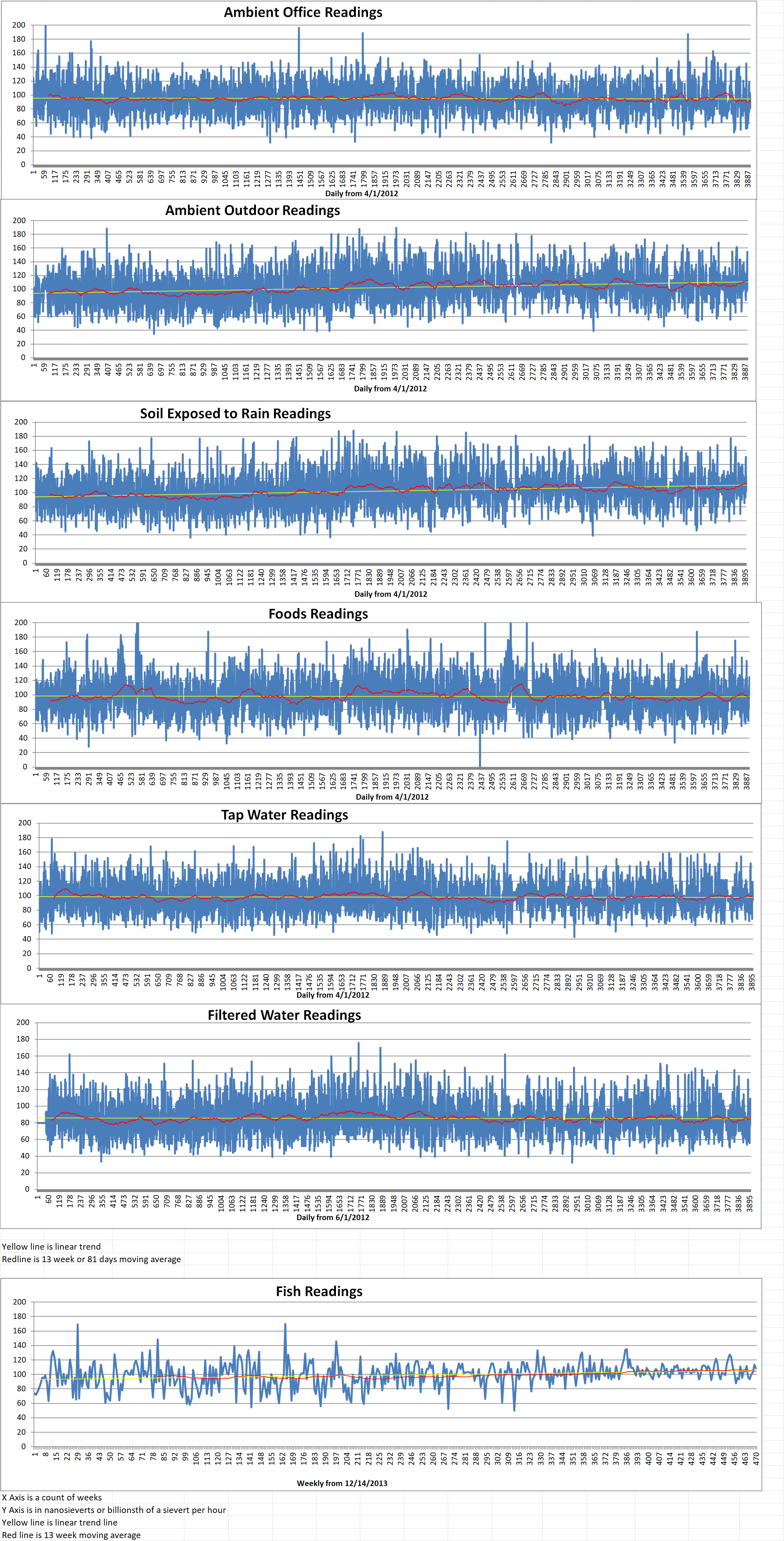
Geiger Readings for Mar 07, 2023
Ambient office = 97 nanosieverts per hour
Ambient outside = 99 nanosieverts per hour
Soil exposed to rain water = 102 nanosieverts per hour
Red bell pepper from Central Market = 125 nanosieverts per hour
Tap water = 106 nanosieverts per hour
Filter water = 94 nanosieverts per hour
-

Nuclear Reactors 1137 – Leadcold Developing Lead Cooled Small Modular Reactors In Sweden
Leadcold is a lead-cooled small modular reactor (SMR) technology developer based in Sweden. They are conducting a feasibility study on the construction and operation of a demonstration Swedish Advanced Lead Reactor (SEALER).
The SEALER-D reactor is intended to have a thermal output of eighty megawatts. The fuel rods will be cooled by about eight hundred tons of liquid lead. The reactor will have a height and a diameter of about fifty feet.
The company stated that building the research reactors is an important step for Leadcold to start producing SMRs for the global market. Leadcold’s goal is for its first SEALER-55 commercial reactor to be ready for operation by 2030. It is assumed that permission to conduct nuclear activities will be granted.
Jacob Stedman is the CEO of Leadcold. He said, “Sweden needs more baseload power that can complement the rapid and important expansion of wind and solar. This reactor will be the first step towards the next generation of nuclear for cheap and safe baseload electricity. We look forward to now starting to investigate the conditions for Sweden’s next research reactor in collaboration with Studsvik AB, the municipality and the authorities.”
Joakim Lundström is the Business Area President for Fuel and Materials Technology at Studsvik AB. He said “It is positive that Leadcold is investigating the possibilities for a research reactor at Studsvik, where we can contribute with our unique and world-leading expertise.”
In a press release, Studsvik AB said, “Such a development would fit well within the other research and development activities taking place on our site. We look forward to helping to contribute towards LeadCold’s evaluation with our diverse array of expertise ranging from nuclear fuel, reactor materials, and testing development and infrastructure to our efficient solutions for waste handling, and we hope our site proves a suitable location for their reactor.”
Uniper Sweden, Leadcold and the Royal Institute of Technology (KTH) announced in February 2021 that they are collaborating. Together they are exploring the possibility of constructing a demonstration Leadcold SEALER reactor at the Oskarshamn nuclear power plant site by 2030. The partners received a ninety-nine million dollar grant from the Swedish Energy Agency towards building a two and a half megawatts of thermal energy non-nuclear prototype (SEALER-E) at Oskarshamn.
The SEALER design generates fifty-five megawatts over a ten-to-thirty-year period without requiring refueling. After operation, the first SEALER units will be moved to a centralized recycling facility.
Stedman said, “The development of new nuclear power must take place in close cooperation with the municipality, the government and the authorities. Sweden has become a very good country to develop the nuclear power of the future in. We have committed political decision-makers, competent authorities, and consumers and industry who want cheap and green electricity. We look forward to taking the first step towards building Sweden’s next nuclear reactor.”
Leadcold is a spin-off from KTH in Stockholm. Lead-cooled reactors have been under development since 1996. Leadcold was founded in 2013 as a joint stock company. It has Canadian subsidiary, Leadcold Reactors Inc. This subsidiary is registered in Alberta, Northwest Territories and Nunavut. -
Nuclear News Roundup Mar 06, 2023
Russians warned of nuclear attack after hackers break in to country’s TV service news.yahoo.com
Visiting Professor Talks Protest Music in Japan Following the Fukushima Nuclear Disaster newsletter.blogs.wesleyan.edu
Italy’s Enel, UK’s Newcleo Link up on Nuclear Energy Technology usnews.com
Seaborg joins TerraPraxis coal-to-nuclear initiative world-nuclear-news.org
-
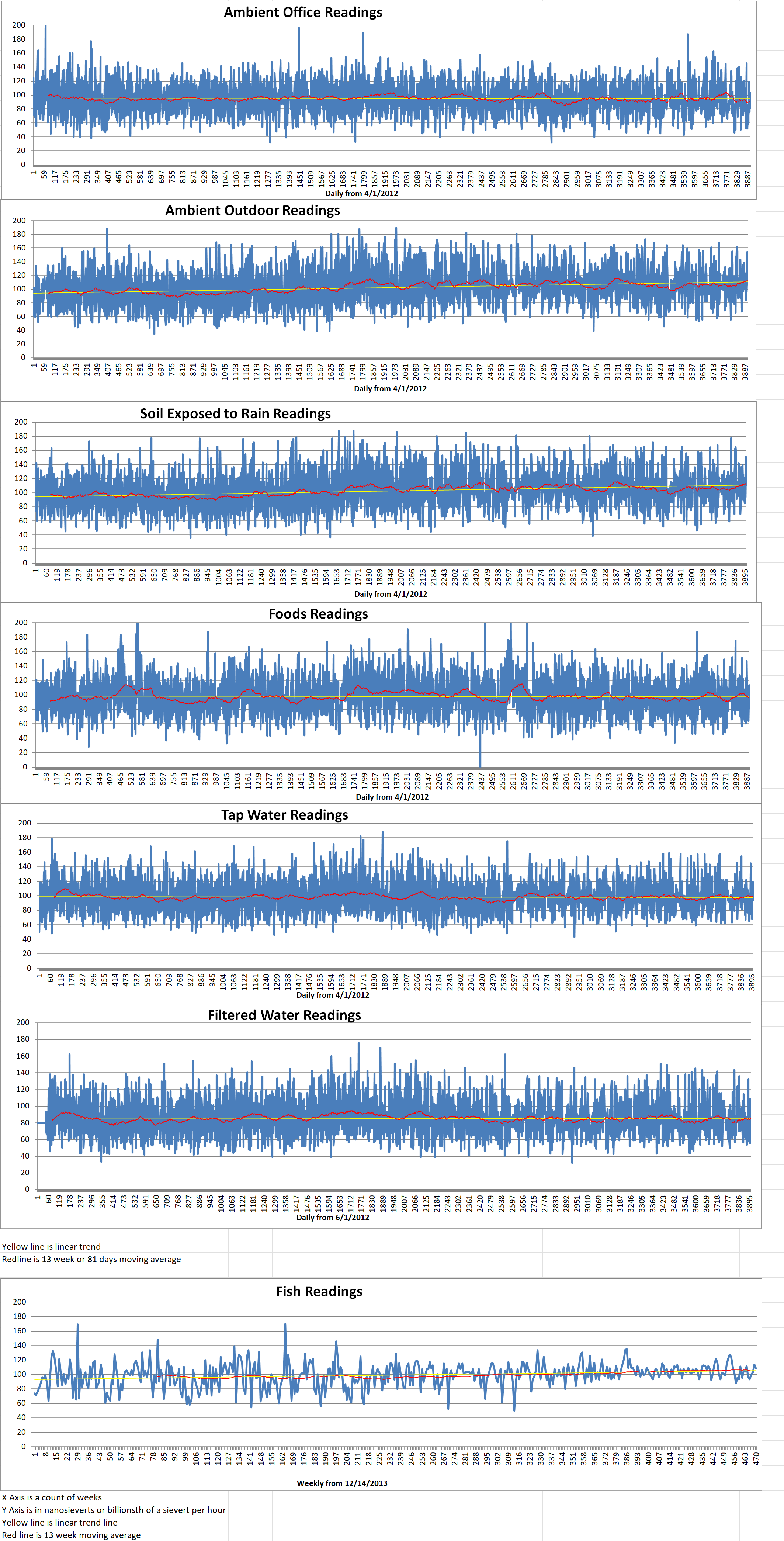
Geiger Readings for Mar 06, 2023
Ambient office = 81 nanosieverts per hour
Ambient outside = 116 nanosieverts per hour
Soil exposed to rain water = 123 nanosieverts per hour
English cuumber from Central Market = 100 nanosieverts per hour
Tap water = 94 nanosieverts per hour
Filter water = 80 nanosieverts per hour
-
Nuclear News Roundup Mar 05, 2023
Projects produce new energy: Clean hydrogen combines with clean nuclear oswegocountynewsnow.com
IAEA chief slams ‘complacency’ over stricken Zaporizhzhya nuclear power plant unews.un.org
TN Tech unveils plans for new nuclear engineering program local3news.com
‘Putin’s nuclear threat is a REAL threat…not just words’, Russian opposition politician warns dailymail.co.uk
-
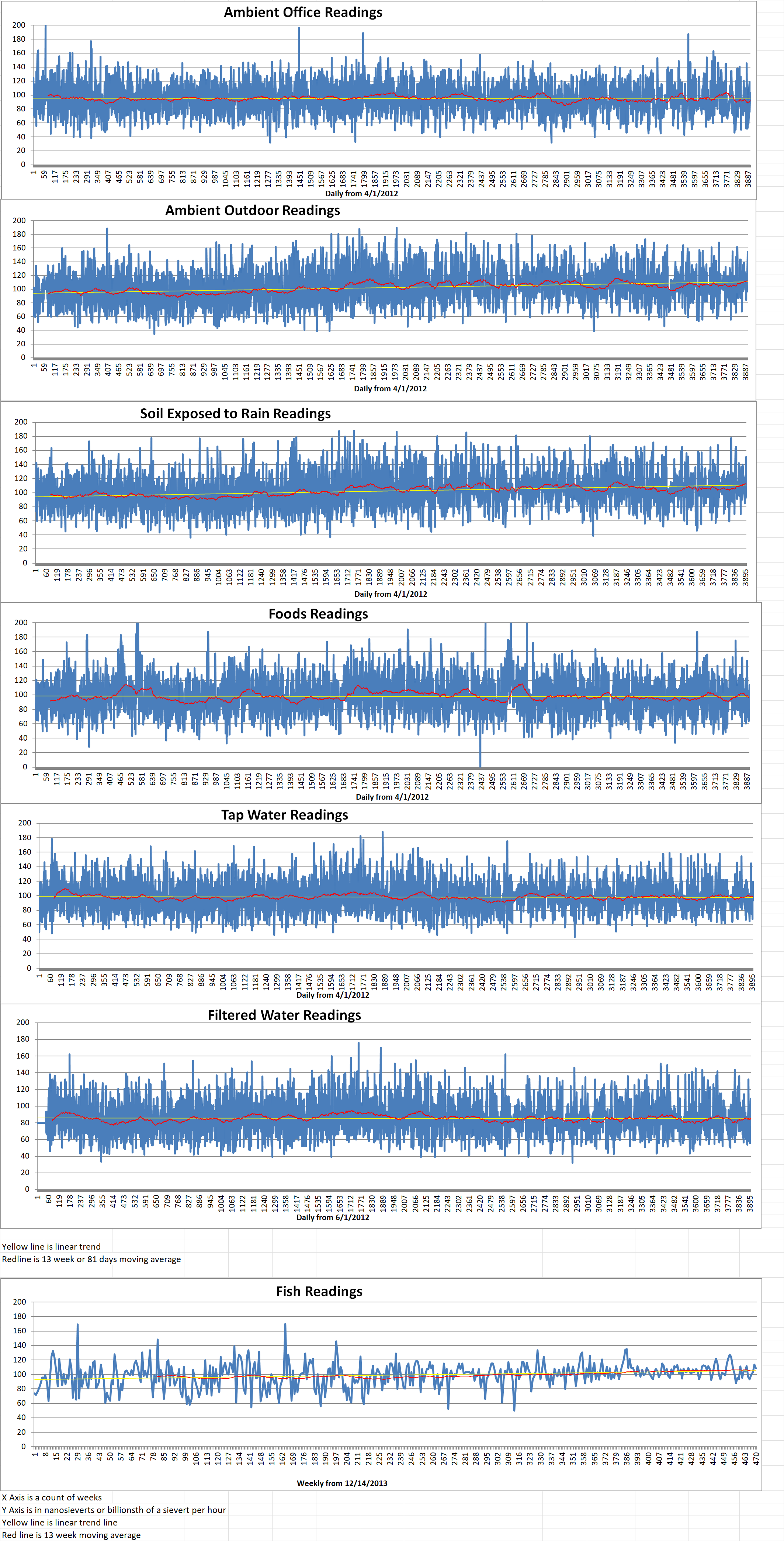
Geiger Readings for Mar 05, 2023
Ambient office = 103 nanosieverts per hour
Ambient outside = 106 nanosieverts per hour
Soil exposed to rain water = 110 nanosieverts per hour
Blueberry from Central Market = 114 nanosieverts per hour
Tap water = 96 nanosieverts per hour
Filter water = 77 nanosieverts per hour
-
Nuclear News Roundup Mar 04, 2023
Westinghouse Celebrates First Criticality at Vogtle Unit 3 with Southern Nuclear, Georgia Power and Other Partners westinghousenuclear.com
Terrestrial Energy opens nuclear technology development office in Calgary calgaryhearld.com
Plant Vogtle nuclear expansion reaches key milestone mainstreetnews.com
U.S. Navy names new nuclear submarine after Louisiana native, former Secretary of Navy foxnews.com
-
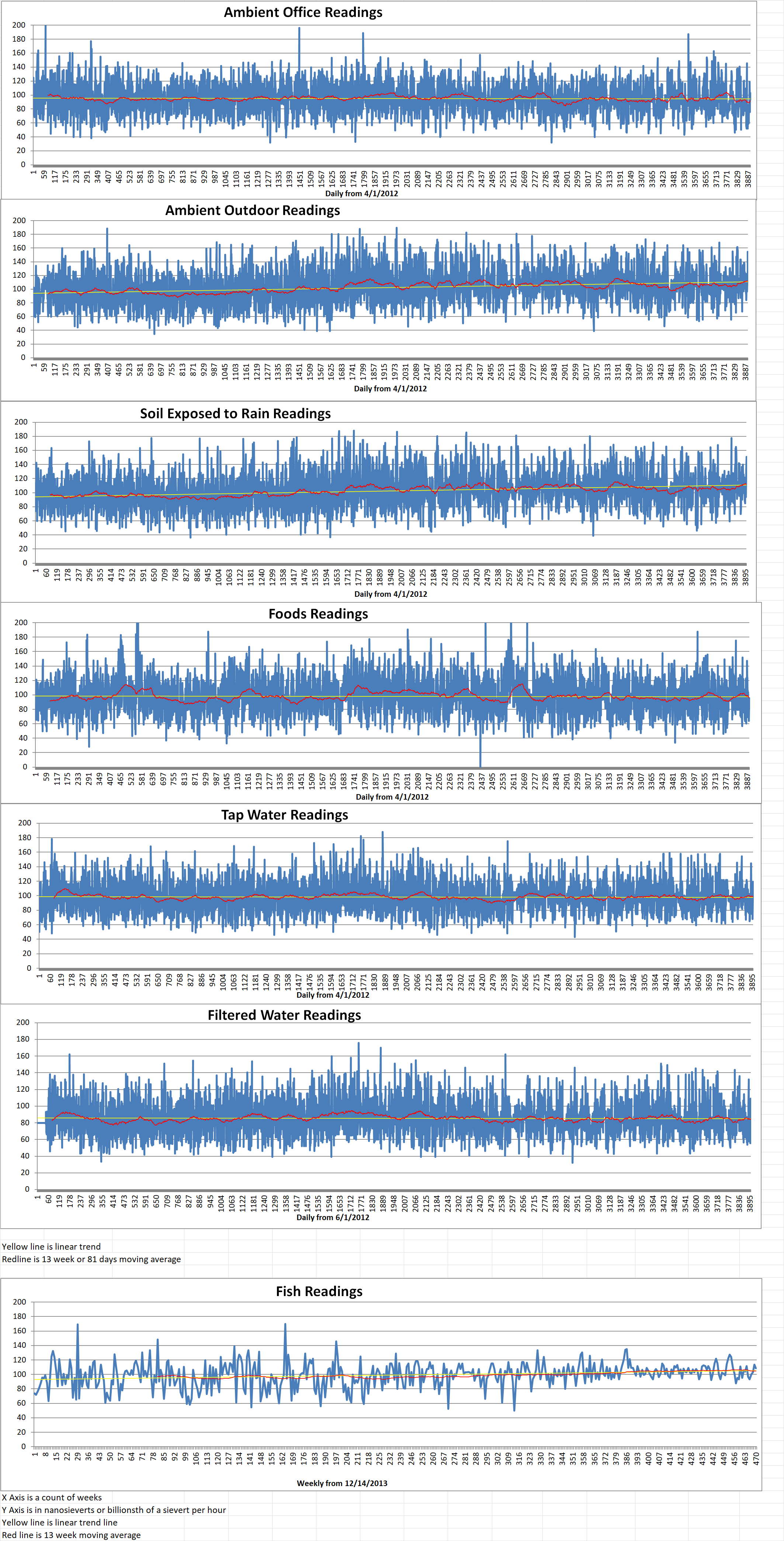
Geiger Readings for Mar 04 2023
Ambient office = 102 nanosieverts per hour
Ambient outside = 155 nanosieverts per hour
Soil exposed to rain water = 151 nanosieverts per hour
Asparagus from Central Market = 91 nanosieverts per hour
Tap water = 119 nanosieverts per hour
Filter water = 109 nanosieverts per hour
Dover Sole from Central = 109 nanosieverts per hour