Blog
-
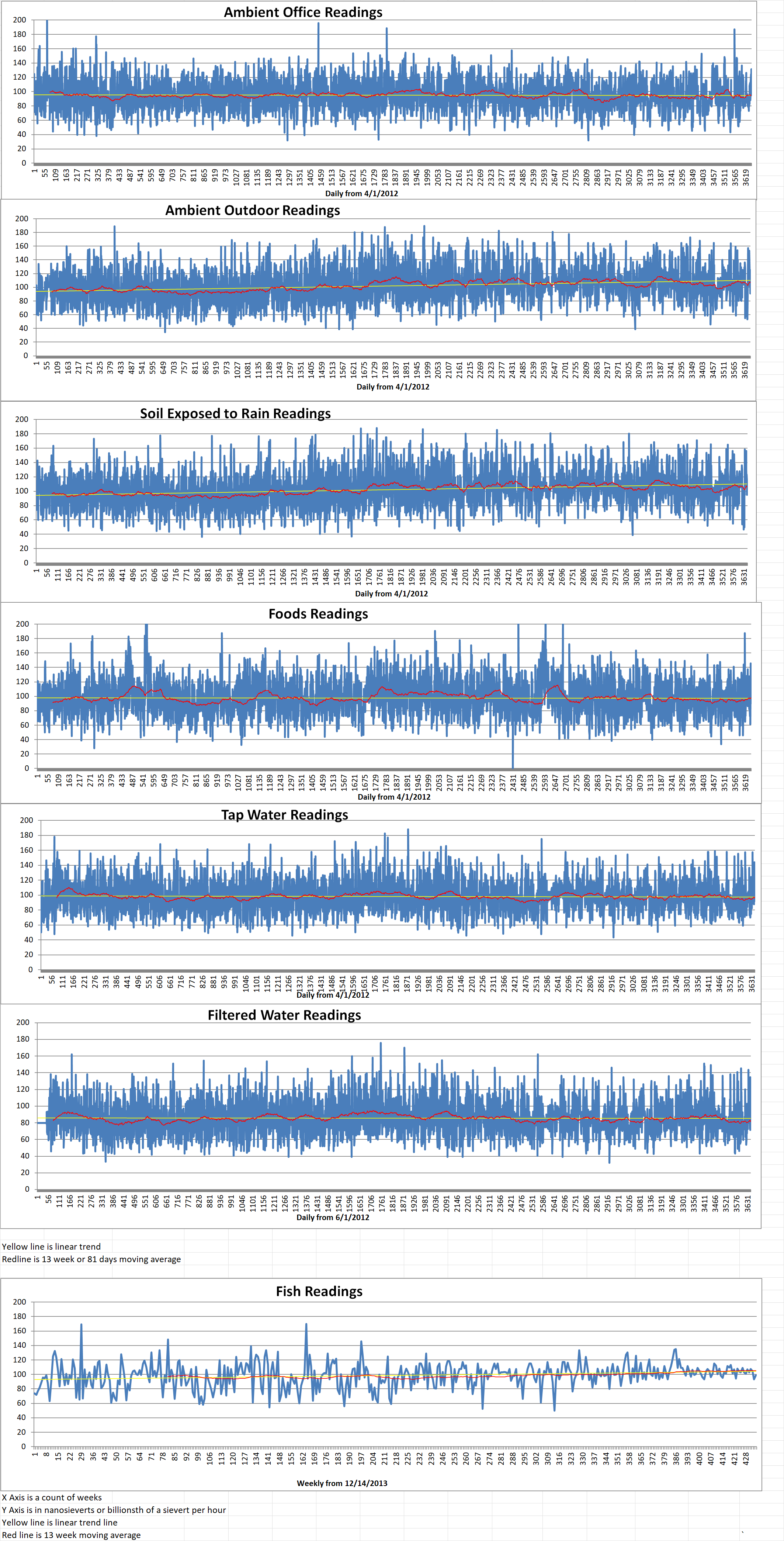
Geiger Readings for June 25, 2022
Ambient office = 131 nanosieverts per hour
Ambient outside = 102 nanosieverts per hour
Soil exposed to rain water = 102 nanosieverts per hour
Tomato from Central Market = 134 nanosieverts per hour
Tap water = 105 nanosieverts per hour
Filter water = 87 nanosieverts per hour
Dover Sole from Central = 99 nanosieverts per hour
-
Nuclear News Roundup June 24, 2022
IAEA assesses ageing management at Dutch research reactor world-nuclear-news.org
Energoatom re-establishes link to Zaporizhzhya nuclear plant power-technology.com
Bulgaria may partially ditch Russian nuclear fuel after 2024 – report seenews.com
Campaigners’ anger over ‘nuclear weapons’ convoy on M6 warringtonguardian.co.uk
-
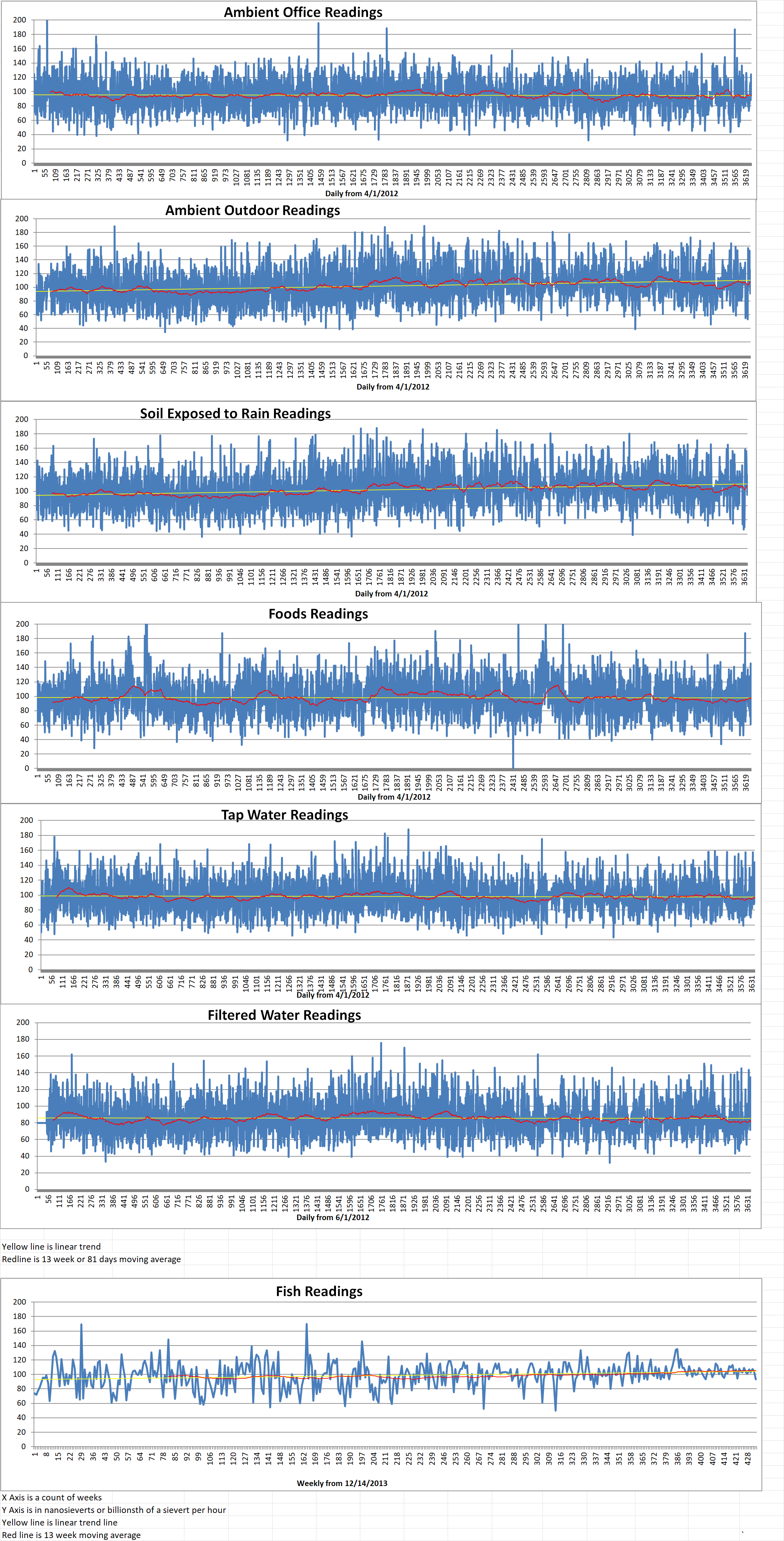
Geiger Readings for June 24, 2022
Ambient office = 95 nanosieverts per hour
Ambient outside = 91 nanosieverts per hour
Soil exposed to rain water = 95 nanosieverts per hour
Vineripened tomato from Central Market = 90 nanosieverts per hour
Tap water = 103 nanosieverts per hour
Filter water = 95 nanosieverts per hour
-
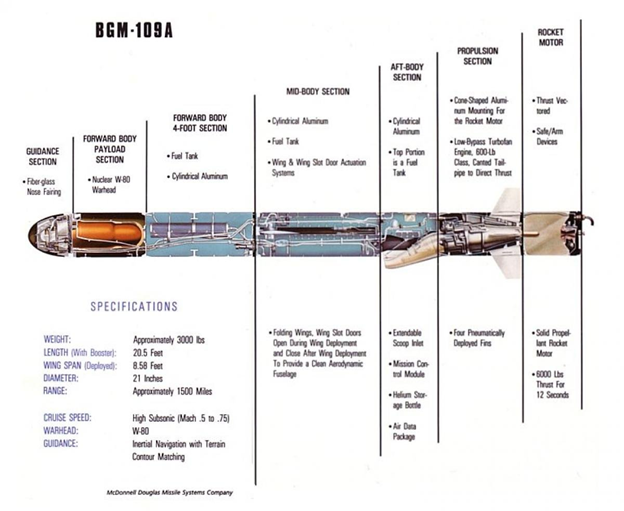
Nuclear Weapons 782 – The Fate Of The Nuclear-Armed Sea-Launched Cruise Missile Program Is Being Debated – Part 1 of 2 Parts
Part 1 of 2 Parts
Representative Jim Cooper (D-Tenn) recently added an amendment to the House version of the Fiscal 2023 National Defense Authorization Act. His amendment would provide forty-five million dollars for the Nuclear-Armed Sea-Launched Cruise Missile (NASLCM). President Biden’s administration has indicated that it wants to cancel the NASLCM program.
The U.S. Department of Defense (DoD) has not publicly stated just how powerful the NASLCM is but Pentagon spokesman Oscar Seára described it as a “low-yield” weapon. The new missile would give the U.S. military a relatively small nuclear weapon. The purpose of the missile would be to deter Russia and/or China from using their own low-yield nuclear weapons. They would assume that the U.S. would not respond with far more powerful strategic nuclear weapons.
The 2018 U.S. Nuclear Posture Review states “Expanding flexible U.S. nuclear options now, to include low-yield options, is important for the preservation of credible deterrence against regional aggression. It will raise the nuclear threshold and help ensure that potential adversaries perceive no possible advantage in limited nuclear escalation, making nuclear employment less likely.”
The Biden administration continues to pursue its decision to cancel the NASLCM program in the proposed DoD budget for fiscal 2023 according to a spokesman for the National Security Council. Their decision was based on the findings of the 2022 Nuclear Posture Review (NPR) as well as an interagency process led by the DoD. The Pentagon completed the 2022 NPR earlier this year but has not yet released an unclassified version of the review.
It is too early to determine whether the funding for the NASLCM will be included in the final version of the National Defense Authorization Act (NDAA). The NDAA will probably be negotiated by members of Congress at a conference committee later this year. Even if the forty-five million dollars is included in the final version of the bill, the House Appropriations Committee did not include any money for the NASLCM in its version of the defense appropriations bill which funds the military.
The fact that the money for the NASLCM was included in the House version of the latest defense policy bill indicated that at least several members of Congress believe that the U.S. needs to be prepared to fight a limited nuclear war. If a “limited nuclear war” is considered possible, then it should be possible for the U.S. to escape mutually assured destruction by a limiting exchange with Russia and/or China to low-yield weapons.
However, the purpose of having the NASLCM in the Pentagon’s nuclear arsenal is to deter enemies from launching nuclear attacks rather than making it easier to wage limited nuclear conflicts according to retired Navy Rear Adm. Vic G. Mercado. He served as Assistant Secretary of Defense for Strategy, Plans, and Capabilities from July of 2019 to January 2021.
Mercado said, “To me, it is all about deterrence. We need some capacity to be able to fill a deterrence gap. If we leave the gap, then we are at risk.”
Please read Part 2 next -
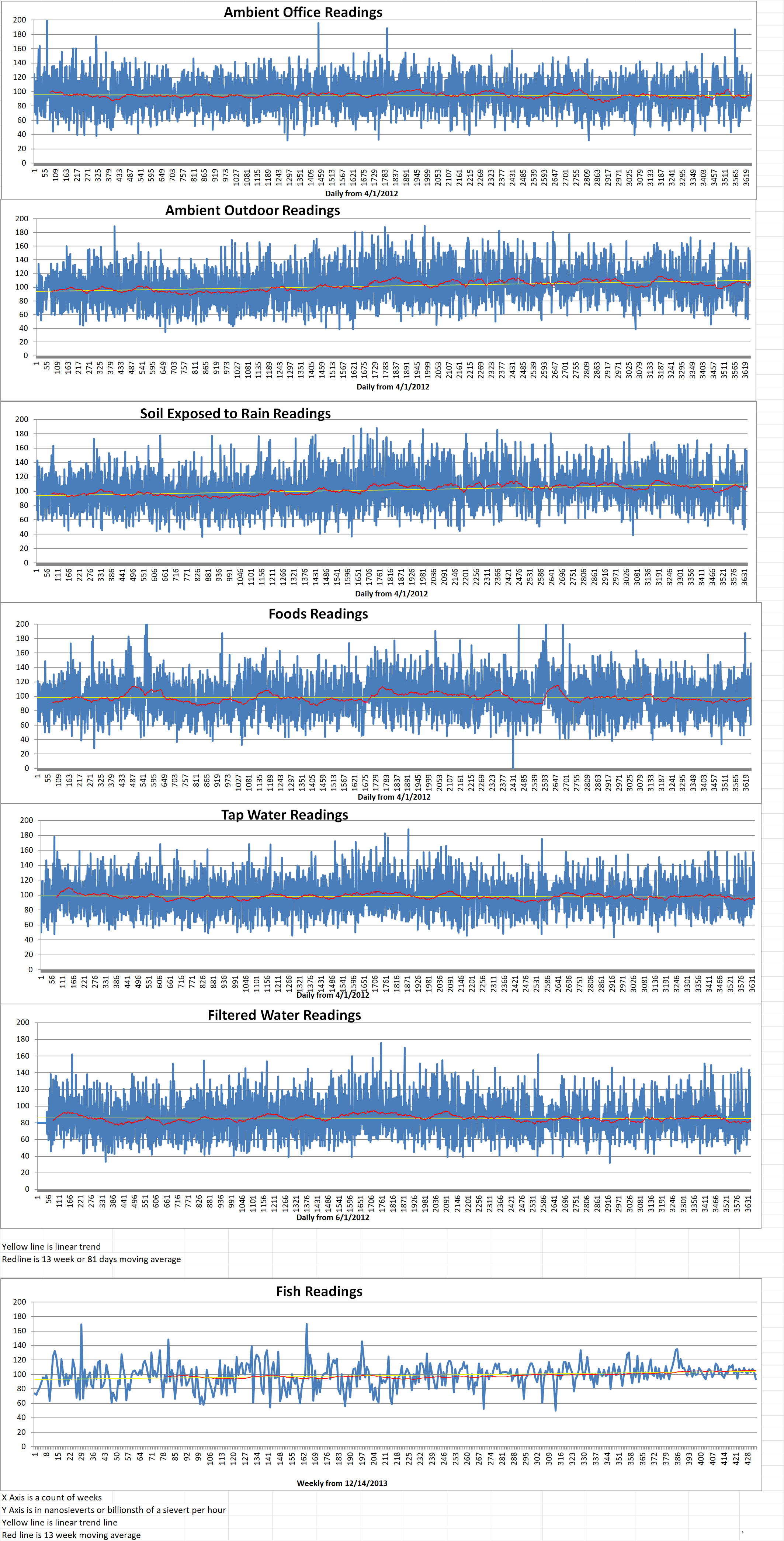
Geiger Readings for June 23, 2022
Ambient office = 124 nanosieverts per hour
Ambient outside = 119 nanosieverts per hour
Soil exposed to rain water = 113 nanosieverts per hour
Sweet pointed pepper from Central Market = 97 nanosieverts per hour
Tap water = 144 nanosieverts per hour
Filter water = 135 nanosieverts per hour
-
Nuclear News Roundup June 23, 2022
IAEA Voices Concern for Staff at Ukrainian Nuclear Plant, Demands Access usnews.com
Sixth Hongyanhe unit enters commercial operation world-nuclear-news.org
New cocoon for US legacy reactor world-nuclear-news.org
Sellafield processes last of fast reactor fuel world-nuclear-news.org
-

Nuclear Reactor 1044 – Idaho National Laboratory Working On MARVEL Microreactor – Part 3 of 3 Parts
Part 3 of 3 Parts (Please read Parts 1 and 2 first)
In addition, because microreactors will be located near where energy will be consumed, the cost of transmitting the power will be zero. Microreactors also require fewer personnel and less maintenance work than conventional reactors. This is partly because their fuel needs to be replaced only every five years to ten years as opposed to less than every two years for a light water reactor. Micro reactors are designed so that many of their systems operate passively which makes them more safe than reactors generating power today.
Microreactors utilize a different type of fuel enriched to just below the twenty percent limit set by nuclear non-proliferation treaty requirements. This fuel is called HALEU which stands for high-assay low-enriched uranium. This type of fuel allows reactors to be smaller than conventional commercial nuclear power reactor.
Arafat said, “We can actually build a much more efficient core that is significantly more compact and smaller. So, we would actually require a much smaller amount of fuel to design a reactor rather than a much larger core. That’s the biggest advantage of going higher enrichment.”Arafat said, “So everything from heat generation, heat transport, heat removal to heat rejection, all of those coolant loops are done passively without any engineered systems.” The outside of the reactor is made of boron carbide which is also used on armored vehicles. Arafat said, “So if there’s a manmade or an extreme weather conditions that can come through, there’s going to be little or no effect to the actual operation or safety of these systems.”
Steve Nesbit is the President of the nuclear trade group, American Nuclear Society. He supports the idea of micronuclear reactors and the MARVEL projects specifically, but he cautions that they’re not going to be a panacea for global warming.
Conventional light water reactors generate hundreds of megawatts of energy and a microreactor will generate between one and five megawatts of energy. Nesbit said, “I do think they have a future but there are limits to the ability to address our clean energy needs with them. Microreactors are ideally suited for remote situations with microgrids, but not so much as a means of gigawatt scale generation of clean electricity for the conventional grid.”
Alex Gilbert is a nuclear innovation expert and professor. He said, “They are distributed energy resources, meant to serve off-grid customers, small towns, and industrial operations. Alaska is likely to be an early initial market, as well as other parts of the Arctic like Canada, Russia, and Scandinavia. They can play keystone roles in microgrids, complementing distributed solar and batteries.”
However, many of the key issues and problems that face the development of microreactors are the same that face the development of large scale nuclear in the U.S. Gilbert said, “We have an atrophied supply chain, costs will be high and unpredictable to start, and the regulatory system is poorly suited to handle them.” That having been said, Gilbert thinks that addressing these issues and problems for the deployment of microreactors can help to pave the way for those same issues “for large-scale roll out of larger advanced reactors.”
Arafat knows that the MARVEL project has a larger purpose. That larger purpose is to flex the muscles of nuclear innovation for the first time in decades. Arafat said, “So the art, science, and the technology of going through the development of new reactors is also sort of a new realm for us in many ways.” -
Nuclear News Roundup June 22, 2022
SKB receives permit to expand Clab capacity world-nuclear-news.org
ISU receives over $1 million in grants from Nuclear Regulatory Commission eastidahonews.com
Purdue and Duke Energy advance nuclear power exploration with public lecture series, executive advisory group purdue.edu
Advanced nuclear tech projects selected for US federal support world-nuclear-news.org