
The U.S. Department of Energy (DoE) has granted Stony Brook University three million four hundred thousand dollars. This is one of eleven nationwide projects seeking to increase the deployment of nuclear power as a reliable source of clean energy and limit the amount of waste produced from Advanced Nuclear Reactors (AR).
Jason Trelewicz is an associate professor in the Department of Materials Science and Chemical Engineering in the College of Engineering and Applied Sciences. He is the leader of the new project funded by the DoE. It is hoped that the project will significantly reduce AR waste burden via improved fuel utilization and reduced uranium loading.
The Advanced Research Projects Agency-Energy (ARPA-E) funds important energy related projects in the U.S. The “Optimizing Nuclear Waste and Advanced Reactor Disposal Systems” (ONWARDS) program will develop technologies that can help resolve the waste and storage challenges associated AR fuel cycles. The DoE awarded thirty-six million dollars to eleven projects that will collaborate to reduce nuclear waste, support safe and sustainable domestic fuel stocks, and advance the U.S.’ clean energy portfolio.
Trelewicz said “This is a particularly exciting project as it directly addresses one of the Achilles’ heels of advanced nuclear fission as a baseload energy source – spent nuclear fuel and the long-term disposition of high-level waste. Under the ONWARDS program, our team’s research combines novel fuel and waste forms with a comprehensive systems approach for improving fuel utilization and reducing uranium loading to enable economically attractive fission power with minimal compact reactor waste burden.”
ONWARDS was unveiled last year as its first program was launched to identify and facilitate technologies for AR used nuclear fuel (UNF) recycling, waste forms, UNF disposal pathways and associated advanced safeguards technologies.
U.S. Representative Lee Zeldin said, “Stony Brook University is leading the way in so many fields that are strengthening our nation. This initiative is no different, developing a comprehensive new approach to better understand the performance of new fuel and waste forms and ultimately reduce nuclear waste more efficiently than even state-of-the-art technologies. The December 2020 appropriations legislation I strongly supported will pay for this critical research.”
Nuclear power is a reliable source of energy in the U.S. It is also the largest domestic source of clean energy, and it provides about half of the U.S.’ carbon-free energy. That amounts of about one fifth of all U.S. electricity. Nuclear power production, however, produces radioactive waste which must be disposed of by safely storing it in a permanent repository. Mitigating these waste and storage concerns will support the goals outlined in U.S. President Joe Biden’s Bipartisan Infrastructure Law to support the equitable expansion of the nation’s clear energy sources, including nuclear energy.
U.S. Secretary of Energy Jennifer M. Granholm said, “Developing novel approaches to safely manage nuclear waste will enable us to power even more homes and businesses in America with carbon-free nuclear energy,” said U.S. Secretary of Energy Jennifer M. Granholm. “ARPA-E is doing just that by supporting companies and universities that are working on next-generation technologies to modernize advanced reactors and strengthen the nation’s clean energy enterprise.”
Blog
-

Radioactive Waste 847 – U.S. Department Of Energy Grants Stony Brook University Funding For Program To Improve Waste Disposal For Advanced Reactors
-
Nuclear News Roundup Mar 25, 2022
Three-Quarters of Americans Concerned About Russia Targeting U.S. With Nuclear Weapons usnews.com
‘Our top search term is nuclear’: US bunker sales soar as anxiety over Russia rises theguardian.com
Putin is losing in Ukraine, will he now go nuclear? Jpost.com
Russia backs off threat of using nuclear force amid Ukraine war foxnews.com
-
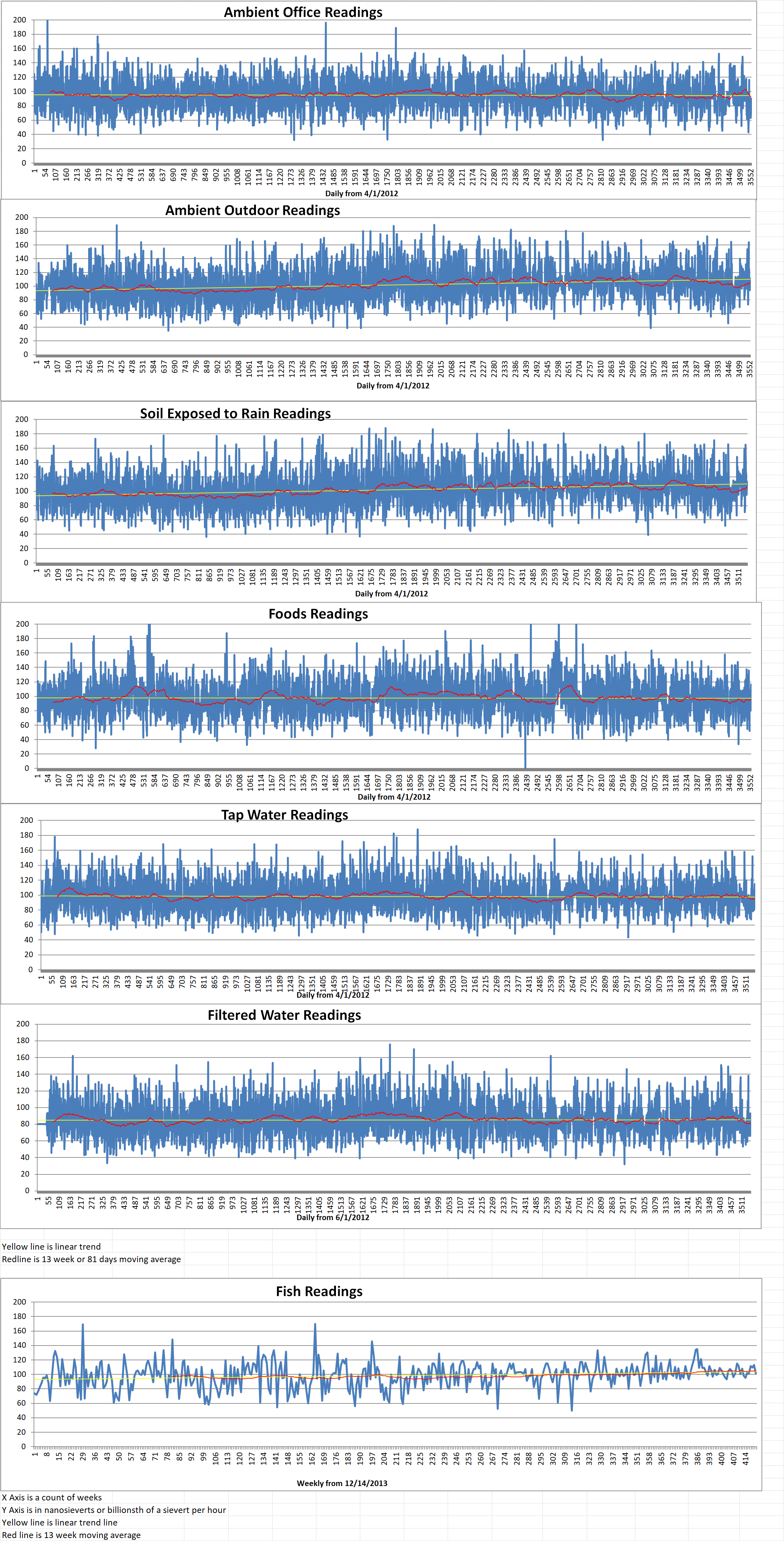
Geiger Readings for Mar 25, 2022
Ambient office = 90 nanosieverts per hour
Ambient outside = 103 nanosieverts per hour
Soil exposed to rain water = 106 nanosieverts per hour
Lemon from Central Market = 94 nanosieverts per hour
Tap water = 85 nanosieverts per hour
Filter water = 72 nanosieverts per hour
-
Nuclear Weapons 771 – Has Russian Been Properly Maintaining Nuclear Warheads – Part 3 of 3 Parts
Part 3 of 3 Parts (Please read Parts 1 and 2 first)
It is likely that the money was paid out for the servicing of Russian nuclear weapons. The question is whether or not the work was actually done. So what if tritium has not been put in Russian nuclear warheads? If nuclear weapons are ever used in quantity, that would be the end of civilization and no one will be looking for the people who were supposed to be servicing the warheads. Aside from Putin’s belligerence, Russia’s command and control systems do seem to conform to the doctrines of Mutually Assured Destruction which requires some confirmation of an incoming nuclear strike before the nuclear footballs go active to allow a strike to be ordered.
With respect to the theft of tritium, it is fungible. It is used for many industrial and scientific applications. It would not be hard to fence or perhaps it would not have been purchased in the first place.
The teams that load the tritium into the warheads would not be the only ones you would have to buy off. There is also the question of what happens to the tritium that was in the warhead before it was serviced. The old tritium would be mixed with helium. The maintenance team has to extract the old gas in the warhead before the new tritium can be injected. The old gas mixture has to be taken to someplace where it can be reprocessed because that is a way to recover some of the tritium costs. So, the reprocessors would also have to be bought off. However, reprocessing this gas is easy because the helium and hydrogen-3 are chemically different. The gas mixture is burned, the helium is released and the tritated water is electrolyzed to make pure tritium again. It is not a major industrial operation.
Would it be possible to buy off all these people if you were the oligarch in charge of the maintenance program? If you received thirty million dollars in annual income from nuclear warhead maintenance, there would be plenty of money for bribes. There would be little chance that tritium theft would ever be dis covered. How could anyone find out that alpha-emitting gas (alpha particles can’t even penetrate a sheet of paper much less a bomb casing) that are supposed to be in the bomb is not actually there.
Such a tritium grift could start with just some of the nuclear warheads in the arsenal. A nuclear nation does not really need forty-five hundred bombs to deter attacks by other nuclear powers. China only ever bothered to build a few hundred nuclear warheads. Even a few nuclear warheads falling on major industrial, military and population centers would destroy any country on Earth. Any oligarch who was working a tritium grift would be tempted to keep stealing more and more tritium as the years went by. It would be a tempting target for a corrupt oligarch who was charged with maintaining a nuclear arsenal. -
Nuclear News Roundup Mar 24, 2022
NTI Experts in Vienna for Global Conference on Strengthening Nuclear Security nti.org
Nuclear Industry Peers Reunite in Las Vegas This Week to Collaborate on Work Digitalization at the Dynamic Work Execution Symposium Hosted by NextAxiom businesswire.com
Physicist Tom Ramos to Explain How LLNL Helped Avert Nuclear War independentnews.com
Johnson’s energy strategy held up over nuclear funding row with Sunak theguardian.com
-
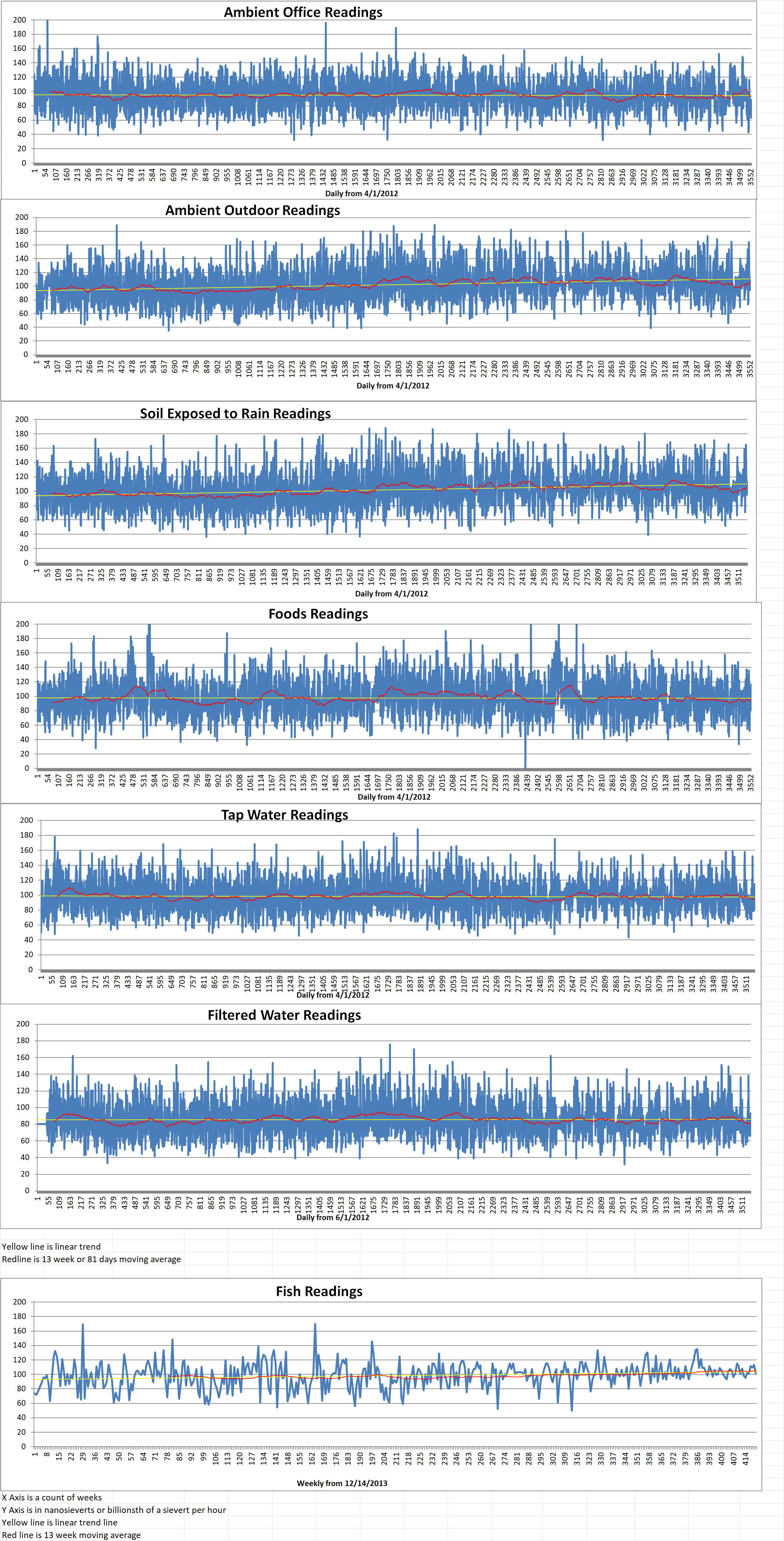
Geiger Readings for Mar 24, 2022
Ambient office = 88 nanosieverts per hour
Ambient outside = 09 nanosieverts per hour
Soil exposed to rain water = 108 nanosieverts per hour
Ginger root from Central Market = 116 nanosieverts per hour
Tap water = 115 nanosieverts per hour
Filter water = 93 nanosieverts per hour
-
Nuclear Weapons 770 – Has Russian Been Properly Maintaining Nuclear Warheads – Part 2 of 3 Parts
Part 2 of 3 Parts (Please read Part 1 first)
Tritium has a half-life of twelve and a half years. So, it decays as time passes. Worse yet, its decay product is helium-3 which absorbs neutrons. It is critical that the boosting gas in a nuclear warhead is periodically refreshed. The exact interval for nuclear armed nations to refresh the tritium in their warheads is a closely guarded, classified secret. However, there is broad agreement between nuclear scientist that it is at most every ten years, and unlikely to be less than five years for practical reasons. Whatever the interval required, it is a simple matter of math to calculate that every bomb needs about two tenths of a gram of new tritium per year on average. Tritium costs thirty thousand dollars a gram.
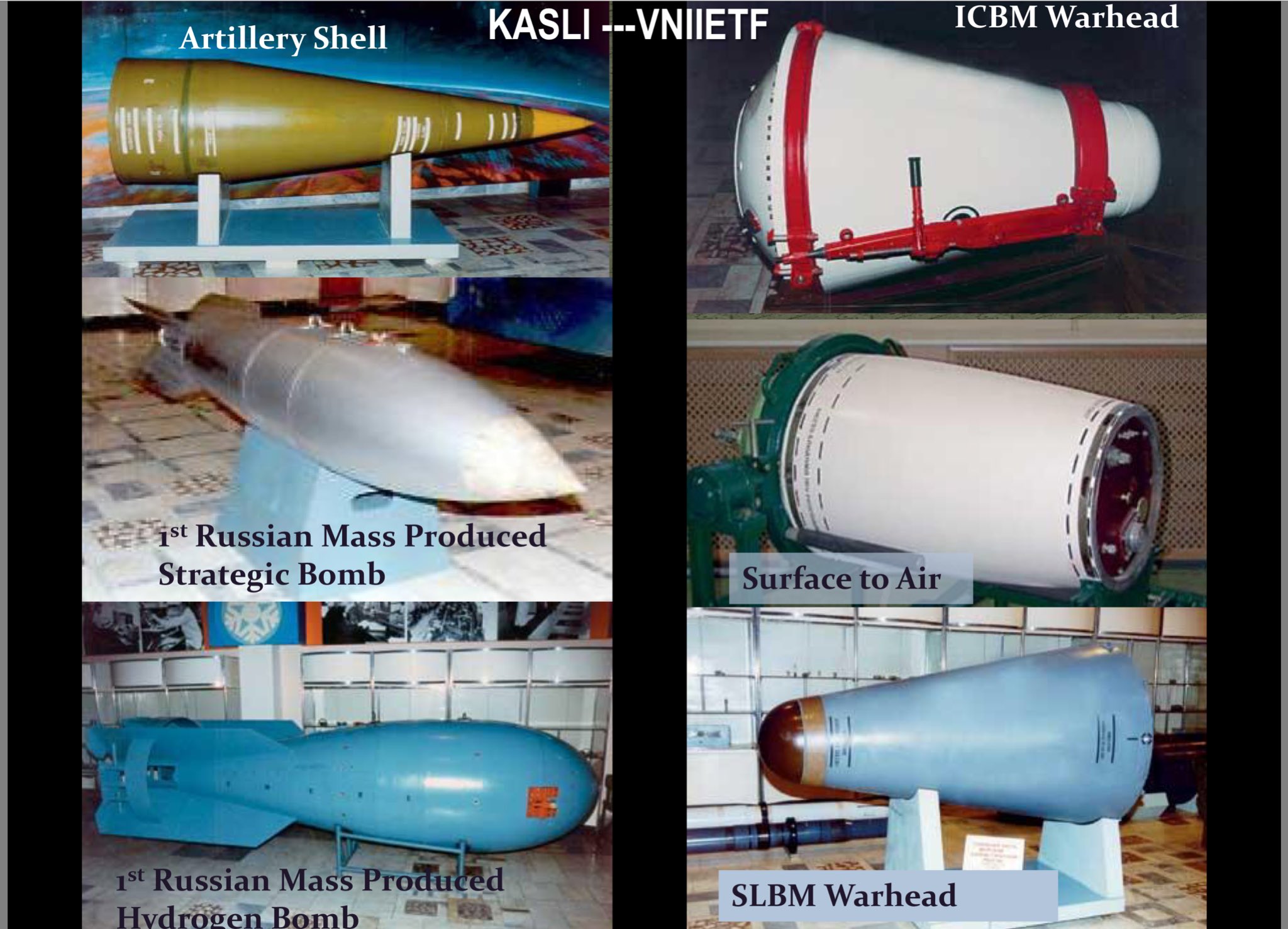
This means that, with forty-five hundred nuclear warheads, it should cost Russia on the order of thirty million dollars per year to maintain its nuclear arsenal. Even if they don’t keep the reserve warheads topped off with fresh tritium until they are needed, you have to have enough tritium on hand to fill them if they are needed immediately. So, whether or not you put the tritium in the bombs or not, it is a cost just to keep them available for service. Small tactical battlefield nukes are just as expensive to maintain as a full-sized hydrogen bomb that can destroy a whole city.
Thirty million dollars is not a lot of money for Russia. But it is a lot of money for an individual if you can manage to steal it. For that reason, it is not unlikely that tritium intended for maintenance on nuclear warheads may have been stolen in Russia.
Assuming a ten-year service interval, Russia needs to service about two bombs per workday to keep its arsenal fresh. The teams that do this maintenance are probably small. It would not require more than two to four people to service something the size of a bowling ball. A lot of teams are not needed. Two or three teams would probably be sufficient. The staff who do the maintenance work are very highly skilled and security cleared for such work.
Every time one of these maintenance teams walk into a room to service a nuclear warhead, they carry a canister about the size of a fire extinguisher holding about eight grams of tritium. (You need enough to put in the bomb so that that ten years later, when it is next serviced, it will still have enough tritium to successfully ignite the expected explosion.) Each canister is worth about a quarter million dollars.
Russian army ‘meals ready to eat’ (MREs) with an expiration date of 2015 can still be purchased on the international black market. Russian armored personnel carrier tires are failing in the field because they are cheap knockoffs of good tires and they aren’t being maintained properly. Russian tanks have to be regularly serviced and some of the problems with the Russian invasion have involved tanks that stalled on the road in Ukraine due to poor maintenance. Given this record, it is logical to believe that proper maintenance on nuclear warheads may not have been carried out in Russia.
Please read Part 3 next -
Nuclear News Roundup Mar 23, 2022
Government to take 20% stake in £20bn next-generation scheme news.sky.com
French Foreign Minister Le Drian: Confident Iran Nuclear Deal Is Near usnews.com
Russian diplomat: If NATO threatens us we have the right to press the nuclear button news.sky.com
Ukrainians seek refuge in the shadow of a nuclear power plant globalnews.ca
-
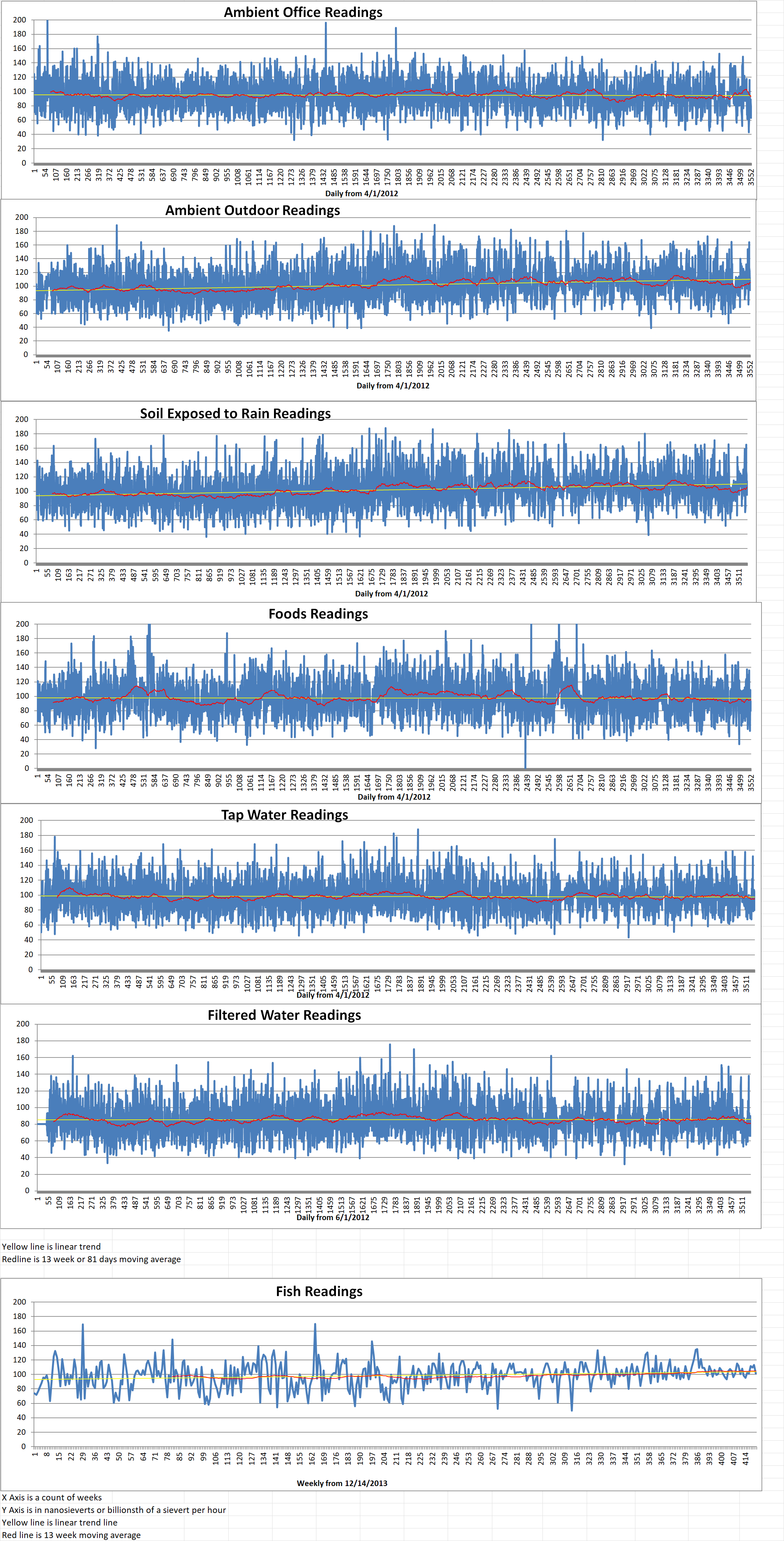
Geiger Readings for Mar 23, 2022
Ambient office = 63 nanosieverts per hour
Ambient outside = 94 nanosieverts per hour
Soil exposed to rain water = 95 nanosieverts per hour
Blueberry from Central Market = 80 nanosieverts per hour
Tap water = 83 nanosieverts per hour
Filter water = 66 nanosieverts per hour
-
Nuclear Weapons 769 – Has Russian Been Properly Maintaining Nuclear Warheads – Part 1 of 3 Parts
Part 1 of 3 Parts
Russia is the number two nuclear power in the world. They have about fifteen hundred warheads deployed on delivery systems and forty-five hundred in standby reserve. For years, Vladimir Putin, the President of Russia, has been brandishing his nuclear sword around the world. Russia has flown nuclear bombers through other countries airspace without warning. Russia has also been sailing nuclear armed ships and submarines through other countries territorial waters without warning. Years ago, he said that if Russia were losing a ground war to NATO troops with conventional weapons, he might use tactical nuclear weapons on the battlefield. However, there is one issue that might cause problems for Putin if he decides to use nuclear weapons. Do the warheads in the Russian arsenal actual work?
It might seem unlikely that Russians nuclear weapons would not work but it is a possibility. There are two connected reasons that Russia might not actually be a nuclear power.
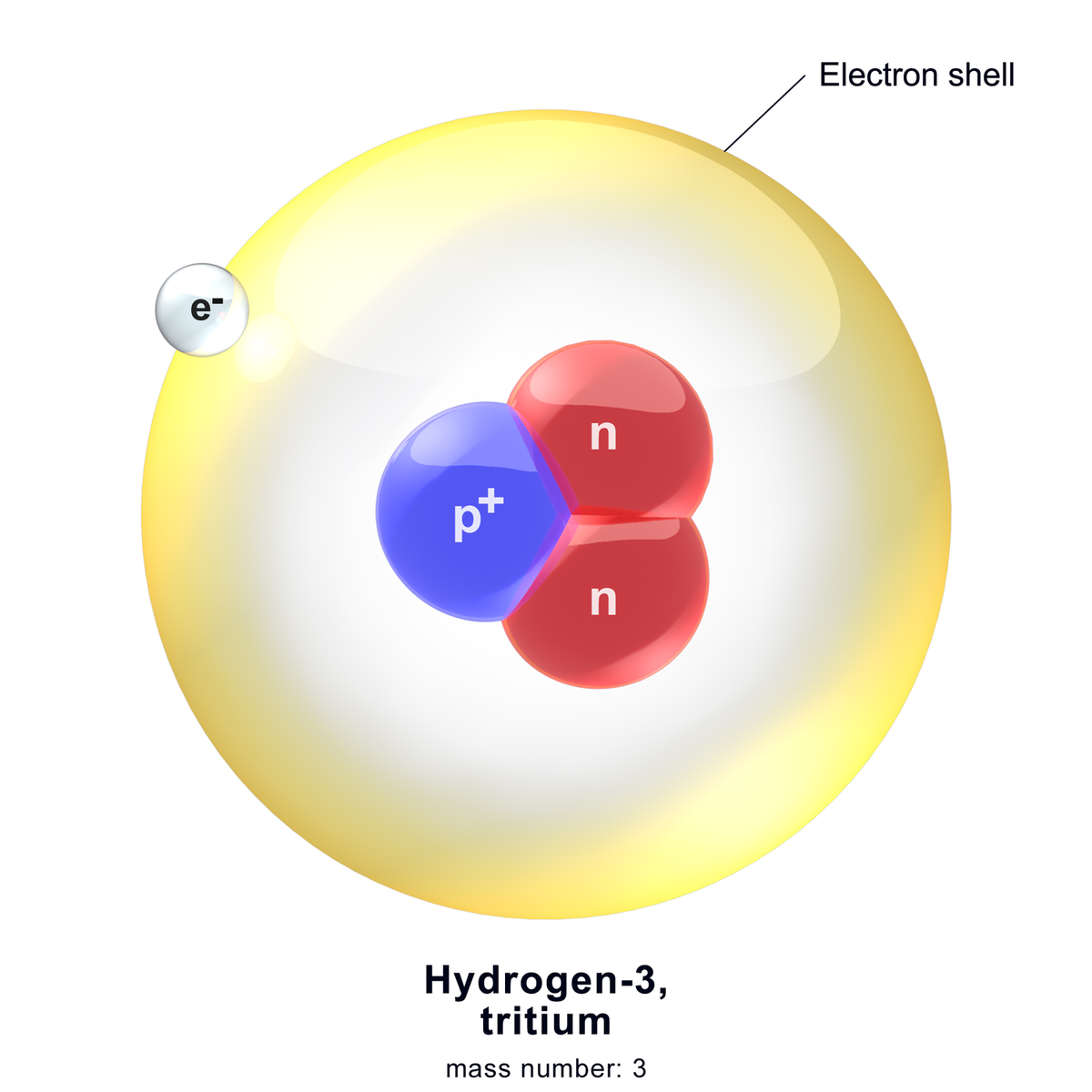
First, nuclear weapons have what can be referred to as a “shelf life”. They are not like standard ammunitions that can be wrapped in grease paper and still function fifty years later. Nuclear warheads had critical parts made of radioisotopes which decay over time. They must be serviced regularly to replace those critical parts. There are several different components that must be replaced but one of the most important is tritium gas. Tritium gas is an radioactive isotope of hydrogen in which the nuclei contain one proton and two neutrons.
The nuclear bomb dropped on Nagasaki, Japan, at the end of World War II. It weighed ten thousand pounds and was six feet across. The explosion was equivalent to twenty thousand tons of TNT. It obliterated most of Nagasaki but was very impractical from a modern perspective.
Modern nuclear fission weapons are “boosted” with tritium. They have hollow cores (referred to as ‘levitated’ cores) with a hollow sphere surrounding a smaller solid core which is suspended by wires in the center of the outer sphere. This configuration is more effective at compression. But it is not enough to make an atomic bomb the size of a bowling ball.
In order to achieve that goal, tritium gas is pumped into the hollow space inside the levitated core. Modern bombs need between three and foud grams of tritium in order to achieve the desired fission reaction. The tritium fuses as it is compressed, which generates billions of neutrons. The initiators of Fat Man only released a few neutrons. The compression in modern warheads speeds up the reaction. This is critical for hydrogen bombs because they depend on the flash of gamma rays from the initial reaction to compress and react the secondary stage before everything is blown apart by the fission’s trigger atomic blast wave.
This is also critical for tactical battle field nukes which must be lightweight and portable. It is safe to say that there are no un-boosted nuclear weapons in existence except possibly for a few prototypes in the possession of almost nuclear power like South Africa of North Korea.
Please read Part 2 next