Part 1 of 2 Parts
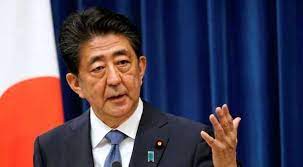
Shinzo Abe is a former Prime Minister of Japan. Last Sunday he suggested that Japan should break a long-standing taboo and hold an active debate on the possibility of Japanese acquisition of nuclear weapons. He included the possibility of some sort of “nuclear sharing” program similar to the one that NATO operates in conjunction with the U.S. His comments were prompted by the Russian invasion of Ukraine. He said, “Japan is a signatory to the Nuclear Non-Proliferation Treaty and has its three non-nuclear principles, but it should not treat as a taboo discussions on the reality of how the world is kept safe.”
Abe quit as Japanese Prime Minister in 2020 but is still highly influential as the head of the ruling Liberal Democratic Party’s largest faction. He noted that if Ukraine had kept some of the Soviet nuclear weapons stationed there during the Cold War instead of sending them back to Russia in exchange for a security guarantee, it may not have been invaded by Russia a few days ago.
Abe stressed what the Japanese government said is an “increasingly severe security environment” in Asia. This includes threats posed by China’s growing assertiveness and North Korea’s nuclear program. Abe pointed to NATO’s nuclear sharing arrangements as an example of how Japan could counter those and other threats to its security. He said, “Japan should also consider various options in its discussions, including nuclear sharing.
The NATO nuclear sharing arrangement permits the U.S. to keep its nuclear weapons in Europe under its custody. It allows allies who do not have nuclear weapons to share them and participate in the decision-making process in the event that their use is being considered.
The Japanese cities of Hiroshima and Nagasaki were devastated by U.S. atomic bombs at the end of World War II. This makes it the only country on Earth that has ever experienced a nuclear attack. Currently, Japan relies on the U.S. nuclear umbrella to deter threats. This was written into the pacifist postwar Constitution that was drawn up at the end of World War II after Japan surrendered.
Japan has three non-nuclear principles that were first laid out in 1967. They call for Japan to never possess, produce or allow nuclear weapons on Japanese territory. The spirit of these principles has been secretly violated in the past. Polling suggests that the Japanese citizens remain steadfastly against the idea of Japan acquiring its own nuclear arsenal. However, Abe hinted that a sharing agreement similar to NATO’s could be a more acceptable option for the Japanese public.
Abe said that “Many people in Japan probably don’t know about the NATO sharing system.” Abe added that Japan would have to maintain its long-held goal of abolishing nuclear weapons. He also said that “It’s important to move toward that goal, but when it comes to how to protect the lives of Japanese citizens and the nation, I think we should conduct discussions by taking various options fully into consideration.”
Please read Part 2 next
Blog
-
Nuclear Weapons 767 – Japan May Reconsider Acquiring Nuclear Weapons – Part 1 of 2 Parts
-
Nuclear News Roundup Mar 07, 2022
Putin’s nuclear alert part of ‘pattern’ of ‘manufacturing threats’: Psaki abcnews.go.com
Iran’s Nuclear Deal Cannot Limit Tehran’s Missile Programme – Nour News usnews.com
‘Guaranteed defeat’: President Putin supervises nuclear drills Aljazeera.com
North Korea accused of testing ICBM system, restoring nuclear test site jpost.com
-
Geiger Readings for Mar 07, 2022
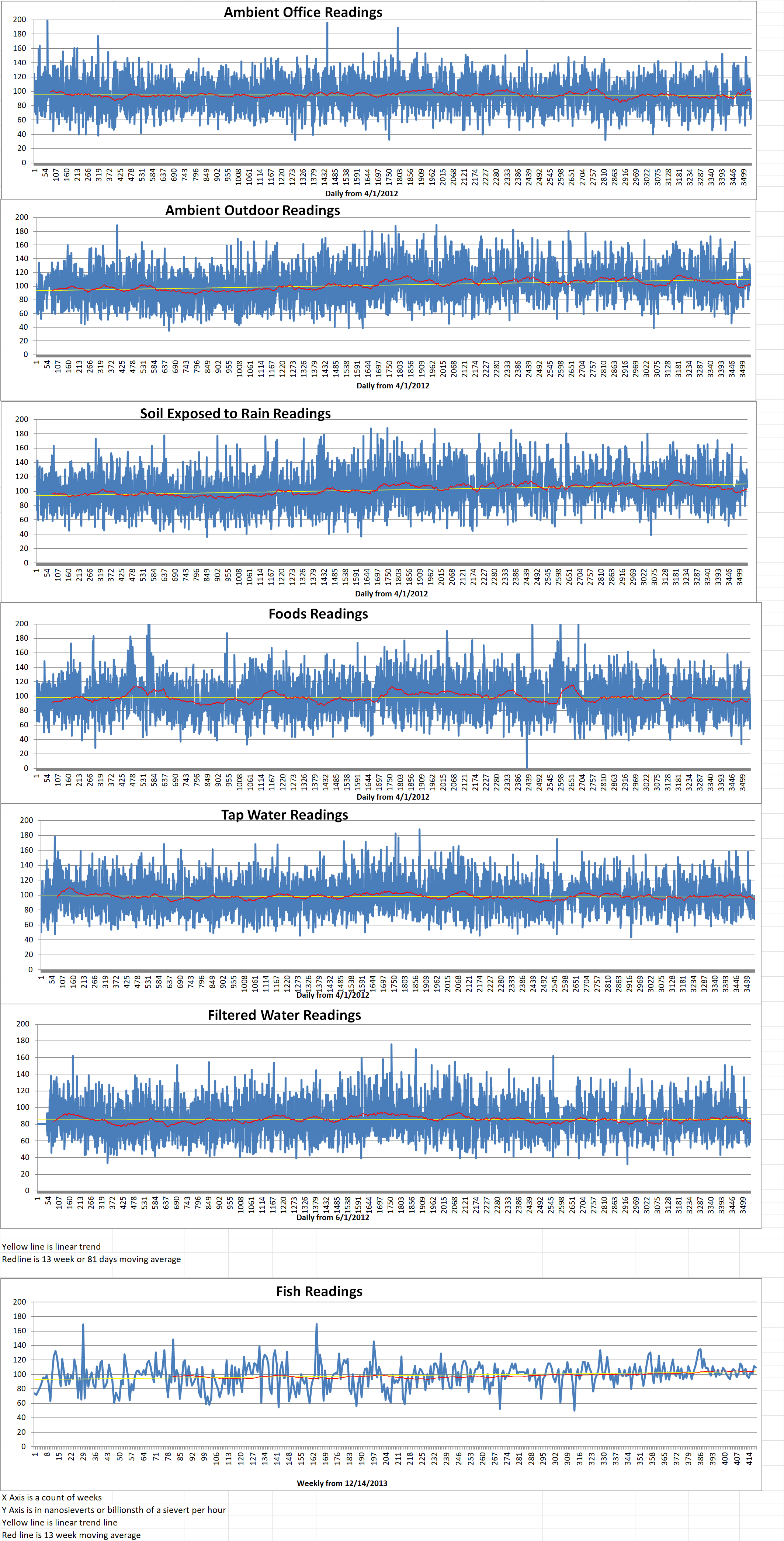
Ambient office = 89 nanosieverts per hour
Ambient outside = 112 nanosieverts per hour
Soil exposed to rain water = 112 nanosieverts per hour
Blueberry from Central Market = 66 nanosieverts per hour
Tap water = 67 nanosieverts per hour
Filter water = 59 nanosieverts per hour
-
Nuclear News Roundup Mar 06, 2022
North Korea Could Return to ICBM, Nuclear Tests This Year-U.S. Intelligence Report usnews.com
Indian test reactor reaches operation landmark world-nuclear-news.org
Zelenskyy says Putin’s threats of nuclear war are a ‘bluff’ that shows ‘nothing else is working’ news.yahoo.com
It doesn’t take a madman to start a nuclear war timesnews.net
-
Geiger Readings for Mar 06, 2022
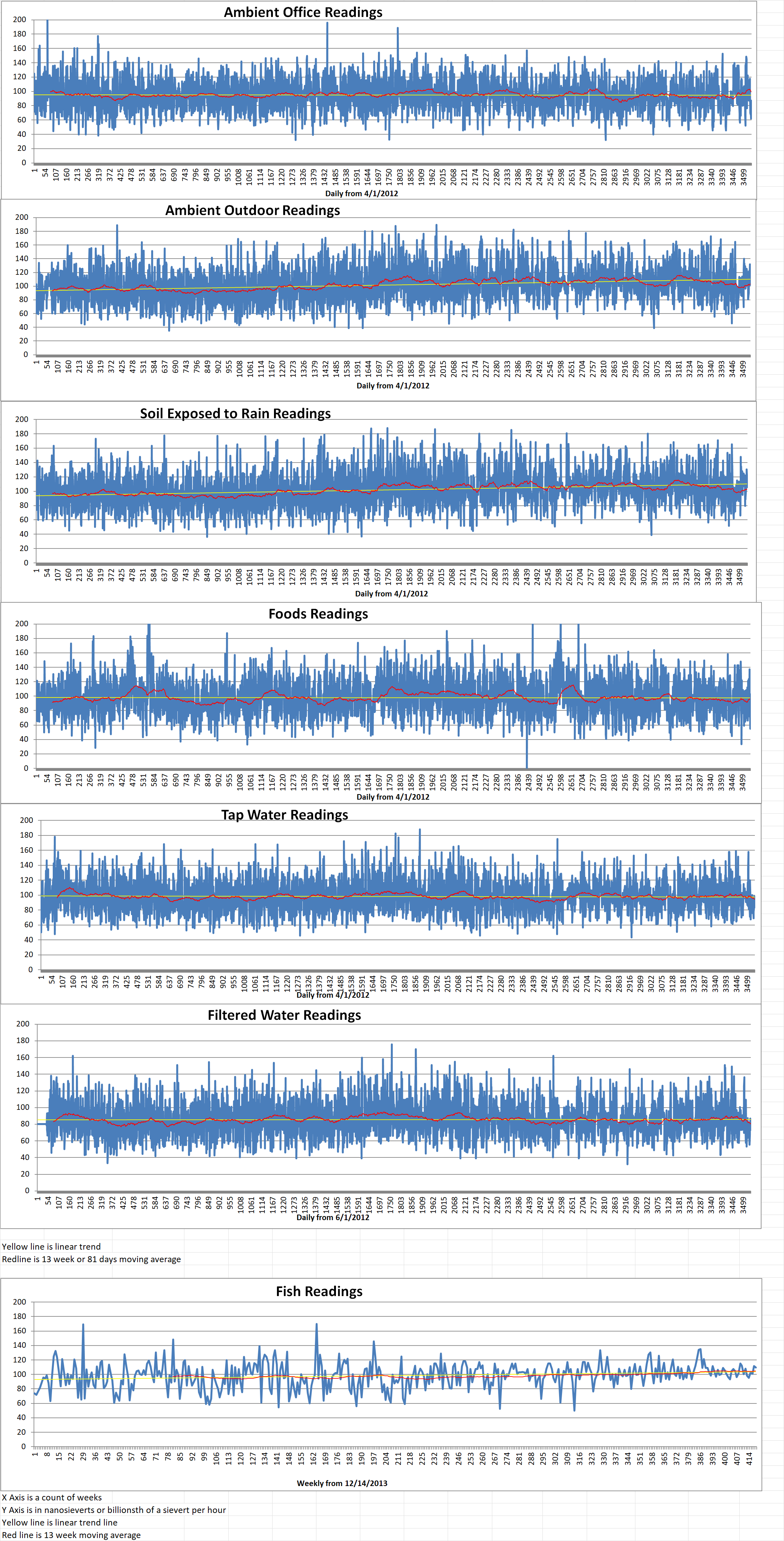
Ambient office = 77 nanosieverts per hour
Ambient outside = 102 nanosieverts per hour
Soil exposed to rain water = 106 nanosieverts per hour
English cucumbers from Central Market = 55 nanosieverts per hour
Tap water = 87 nanosieverts per hour
Filter water = 73 nanosieverts per hour
-
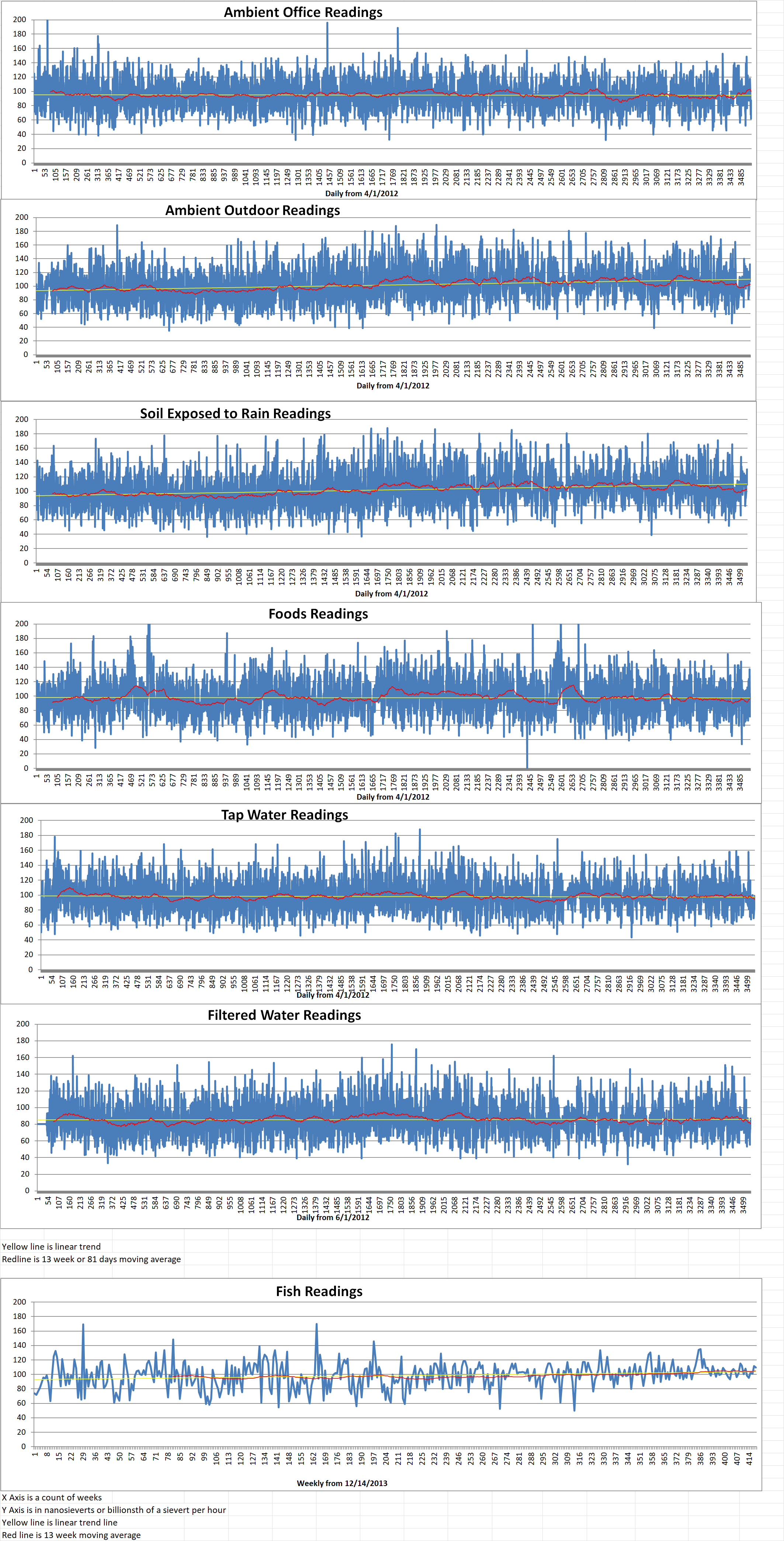
Geiger Readings for Mar 05, 2022
Ambient office = 87 nanosieverts per hour
Ambient outside = 107 nanosieverts per hour
Soil exposed to rain water = 109 nanosieverts per hour
English cucumbers from Central Market = 88 nanosieverts per hour
Tap water = 94 nanosieverts per hour
Filter water = 85 nanosieverts per hour
Dover sole = 110 nanosieverts per hour
-
Nuclear News Roundup Mar 05, 2022
Did you know Guilford County has a nuclear blast plan? Myfox8.com
New satellite photos show first construction in years at North Korea nuclear test site, analysts say nbcnews.com
Karachi 3 begins supplying electricity world-nuclear-news.org
Philippines relaunches nuclear energy program world-nuclear-news.org
-
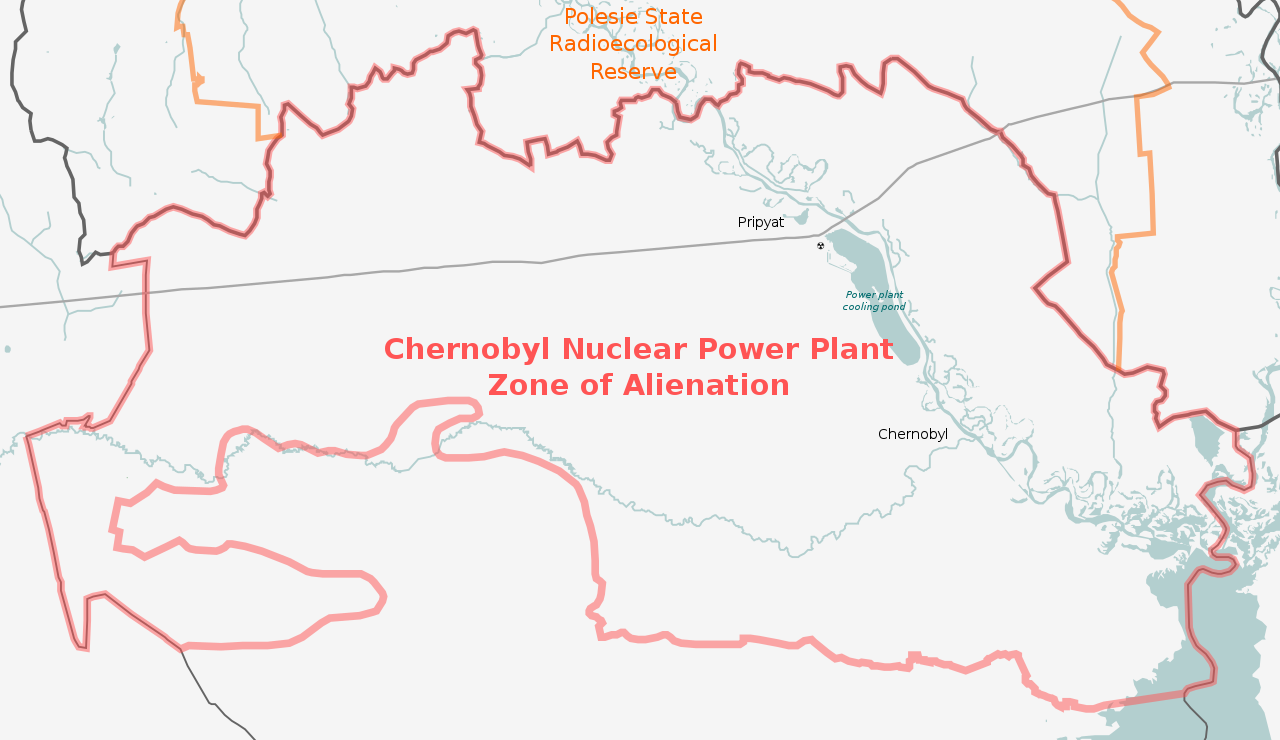
Radioactive Waste 845 – Russian Troops Take The Chernobyl Nuclear Power Plant In Ukraine – Part 3 of 3 Parts
Part 3 of 3 Parts (Please read Part 1 and 2 first)
There were no accommodations for workers to stay overnight at the Chernobyl plant so they set up a temporary dormitory. Some workers are sleeping on camp beds and tables, others are sleeping on the floor. In order to get some downtime, the workers have arranged shifts so that one group can work while the other group sleeps.
The families of the workers trapped at Chernobyl say that this is a difficult time. Mayor Romichev said “Some of the workers require medication which is limited at the plant, and that adds extra worries for the relatives. We have to tell them that there is currently no safe way of getting the workers out of there.”
Workers trapped at the Chernobyl plant are feeing the physical and psychological effects being forced to work and live for over a week at a decommissioned nuclear power plant. There are fears that such stress could be impacting their ability to safely and competently carry out their duties. Mayor Fomichev said, “Under these conditions, the workers’ concentration gets worse and worse, and that is a threat to safety. It may not be a working power plant, but it still requires a lot of attention to make sure all systems are working normally.”
Rafael Grossi is the director general of the International Atomic Energy Agency. He has repeatedly pointed out the need for the workers at Chernobyl to be able to rest in order to carry out their jobs safely. He said in an interview that he had conveyed that message to the Russians. Nuclear experts say that because Chernobyl is not function nuclear power plant, there is limited danger to public health.
James Smith is a professor of environmental science at the university of Portsmouth. He has been researching Chernobyl for many years and has visited the site many times. He said, “The last reactor shut down in the year 2000, so the spent nuclear fuel… is not significantly heat-generating anymore.” He went on to explain that this makes it extremely unlikely that a major release of radioactivity could happen. However, radiation levels did spike in the area when the plant was seized because of dust stirred up by the movement of heavy military vehicles.
While the risk of a major nuclear catastrophe may be low, the emotional cost to the workers trapped at the plant and their families is high. Relatives of one of the workers at the plant said, “All the staff are super exhausted and desperate. They doubt that anyone cares about them. Right now they don’t see anyone doing anything to rescue them.” In an interview with the BBC, she appealed to the IAEA to intervene so the current batch of workers could leave, and a fresh crew take over.
Grossi said that he had made contact with both the Ukrainian and Russia authorities in an attempt to improve safety at Chernobyl and Ukraine’s operating nuclear power plants where experts say that the consequences of open conflict could be more serious. Nothing definite has been arranged. -
Nuclear News Roundup Mar 04, 2022
Ukraine says nuclear plants ‘operating normally’ world-nuclear-news.org
There’s a 10% chance of a nuclear apocalypse in the next year, one research firm says seekingalpha.com
Russia’s nuclear threats over Ukraine are keeping StratCom busy news-journal.com
Belgian Greens Make U-Turn to Consider Nuclear Plants Extension usnew.com
-
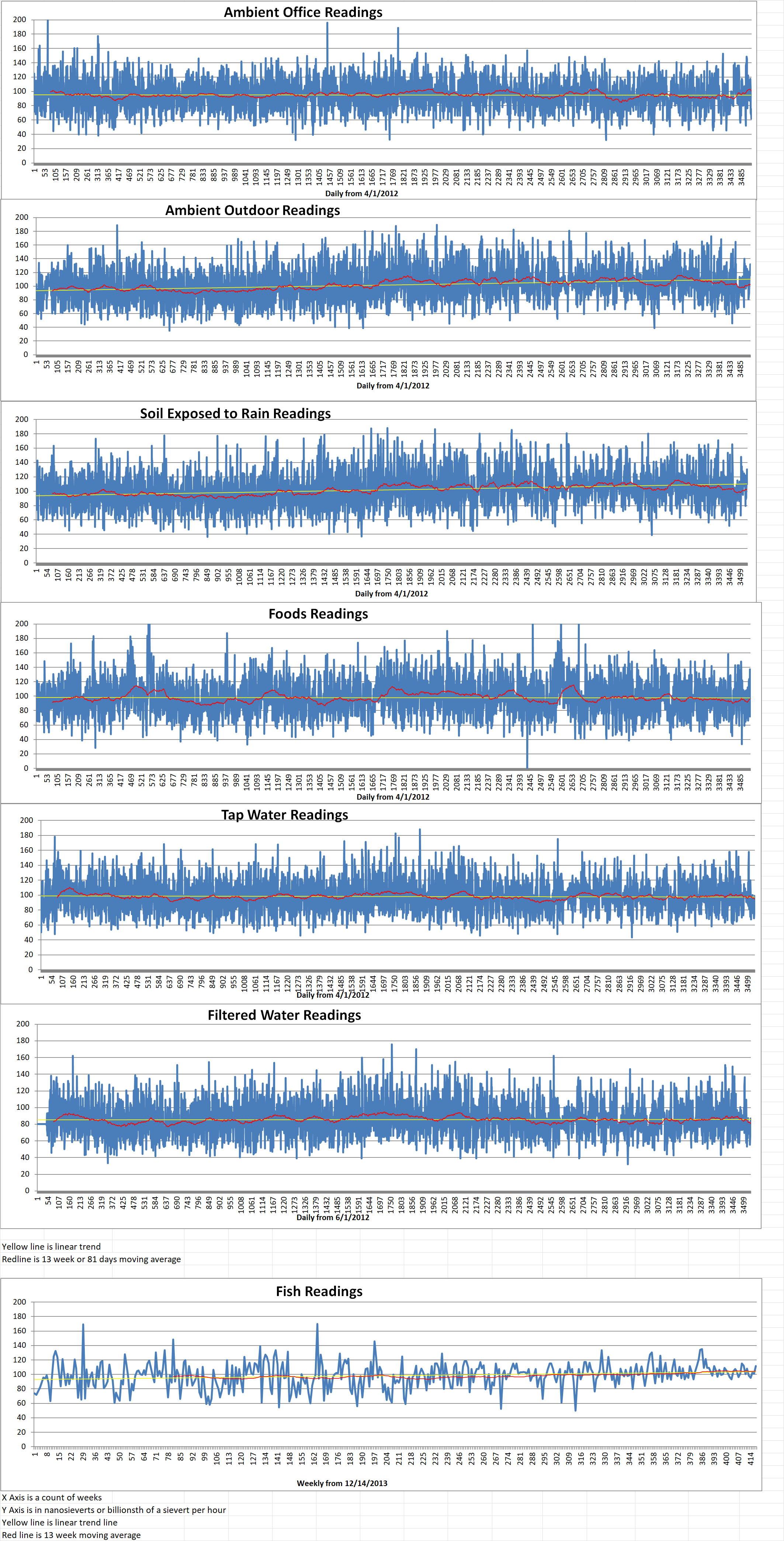
Geiger Readings for Mar 04, 2022
Ambient office = 62 nanosieverts per hour
Ambient outside = 123 nanosieverts per hour
Soil exposed to rain water = 119 nanosieverts per hour
English cucumbers from Central Market = 103 nanosieverts per hour
Tap water = 99 nanosieverts per hour
Filter water = 87 nanosieverts per hour