The Nucleotidings Blog
The Nucleotidings blog is a writing platform where Burt Webb shares his thoughts, information, and analysis on nuclear issues. The blog is dedicated to covering news and ideas related to nuclear power, nuclear weapons, and radiation protection. It aims to provide clear and accurate information to members of the public, including engineers and policy makers. Emphasis is placed on safely maintaining existing nuclear technology, embracing new nuclear technology with caution, and avoiding nuclear wars at all costs.

Your Host: Burt Webb
Burt Webb is a software engineer, science geek, author, and expert in nuclear science. Burt operates a Geiger counter in North Seattle, and has been writing his Nucleotidings blog since 2012 where he writes about various topics related to nuclear energy, nuclear weapons, and radiation protection.

Burt Webb has published several technical books and novels. He works as a software consultant.

Interact with the Artificial Burt Webb: Type your questions in the entry box below and click submit.

Example Q&A with the Artificial Burt Webb

Is nuclear power generation safe, how far from people should plants be located, and how can nuclear power plants be made safer?

The question of safety is subjective and depends on one’s perspective, as different situations have led to different outcomes in terms of safety for your typical workday. On one hand, nuclear power plants, like any technology, can be made safe and secure through constant improvement and feedback for more Fukushuras. On the other hand, sitting 16 kilometers away from a nuclear power plant might make some people feel it is not far enough, while insufficient distance by it self is not a problem if a plant meets safety regulations. Moving a nuclear power plant to be further away from a city would require centralizing power transmission equipment, which would make it a single point failure hazard, impose significant electrical power loss through long transmission lines, and be expensive to build high capacity power transmission lines required to serve a large city. Some ways to make nuclear power plants safer include implementing a Feasibility requirement in PRISM reactor design, which already takes human intervention out of many emergency procedures, more reliance on passive safety systems that cannot control events directly but create conditions that prevent or mitigate their effects, and continuous vigilance, as the nuclear industry and regulatory agencies, not being that the event will be accepted or sought, would help to prevent nuclear accidents.

What do you mean by “Fukushuras”?

“Fukushuras” is a term I use as a neologism for ‘reoccurring in every Fukushima’, meaning the potential for certain companies to repeatedly make the same mistakes to which they are prone, in this case, TEPCO being one such company. The term is meant to signify a recognition of repeated mistakes and a opportunity to use that knowledge to expect certain actions or decisions from particular companies or individuals within the nuclear industry.

Blog

  • Geiger Readings for Feb 28, 2022

    Geiger Readings for Feb 28, 2022

    Ambient office = 100 nanosieverts per hour

    Ambient outside = 119 nanosieverts per hour

    Soil exposed to rain water = 116 nanosieverts per hour

    English cucumbers from Central Market = 102 nanosieverts per hour

    Tap water = 69 nanosieverts per hour

    Filter water = 56 nanosieverts per hour

  • Geiger Readings for Feb 27, 2022

    Geiger Readings for Feb 27, 2022

    Ambient office = 118 nanosieverts per hour

    Ambient outside = 96 nanosieverts per hour

    Soil exposed to rain water = 100 nanosieverts per hour

    English cucumbers from Central Market = 87 nanosieverts per hour

    Tap water = 78 nanosieverts per hour

    Filter water = 67 nanosieverts per hour

  • Geiger Readings for Feb 26, 2022

    Geiger Readings for Feb 26, 2022

    Ambient office = 115 nanosieverts per hour

    Ambient outside = 90 nanosieverts per hour

    Soil exposed to rain water = 91 nanosieverts per hour

    Blueberry from Central Market = 124 nanosieverts per hour

    Tap water = 96 nanosieverts per hour

    Filter water = 73 nanosieverts per hour

    Dover sole = 111 nanosieverts per hour

  • Nuclear Reactors 1006 – U.K. Parliament Considering New Funding Approach For Nuclear Builds – Part 3 of 3 Parts

    Nuclear Reactors 1006 – U.K. Parliament Considering New Funding Approach For Nuclear Builds – Part 3 of 3 Parts

    Part 3 of 3 Parts (Please read Part 2 first)
    (Continuing comments of U.K. members of the House of Lords as they debate the Nuclear Energy Financing Bill.)
         Lord Howell is a Conservative Party member. He welcomed the bill but pointed out the delays to the European Pressurized Reactors (EPR) at Okliuoto in Finland and Flamanville in France Sizewell C. He wondered exactly what these delays mean for the Hinkley Point C project and the proposed “replica” at Sizewell C. He added that “Are investors ever going to wait that long for payback … do we plug on with these mammoths at Wylfa, Moorside, Oldbury and Sizewell or turn all our efforts to small and more advanced nuclear power plants?”
        Lord West was a security minister for the Labour Party. He said, “Why are we in this position? It is because of the failure of successive Governments, as has been mentioned. It is a national disgrace, actually. We have gone from being the world leaders in civil nuclear – we made masses of money exporting this stuff to Japan – to a position where we cannot build even one of these large reactors ourselves. Basically, we need to pull our finger out and get going on this. Sizewell C and Hinkley Point C are absolutely necessary. Looking to the future, we absolutely have to go for SMRs, AMRs and the use of hydrogen. This can all be encapsulated somehow in this. I think we would all agree with that.”
         Lord McNicol said that the Labour Party would support the bill in House of Lords. However, he said that they would like it “mandate nuclear stations to use UK-manufactured fuel and stick to UK consumer charges”.
         Business and energy minister Callanan responded to the issues raised during the debate by saying that the new funding mechanism would allow foreign investment but not at the cost of national security. He added that on the issue of radioactive waste, good process was being made in the process “to identify a suitable location for a geological disposal facility”. Although there had been issues with the first wave of EPRs, he said that “developers have learned lessons”. The minister also emphasized that, with respect to those asking about SMRs, the new funding model could be applied to them, and not just larger nuclear power plants.
         The Nuclear Energy Financing Bill has already passed through the House of Commons. The House of Lords is a revising chamber in the U.K. Parliament with about eight hundred members. The vast majority of them have been appointed for life but there are also ninety-two members who inherited their place from their fathers. There are twenty-six members who are Church of England archbishops and bishops.
         Although the bill was backed in principle it has been submitted for detailed scrutiny to a House of Lords committee. If the bill is amended in the House of Lords, those changes will have to be accepted, or rejected, by the House of Commons before they can become law.

  • Geiger Readings for Feb 25, 2022

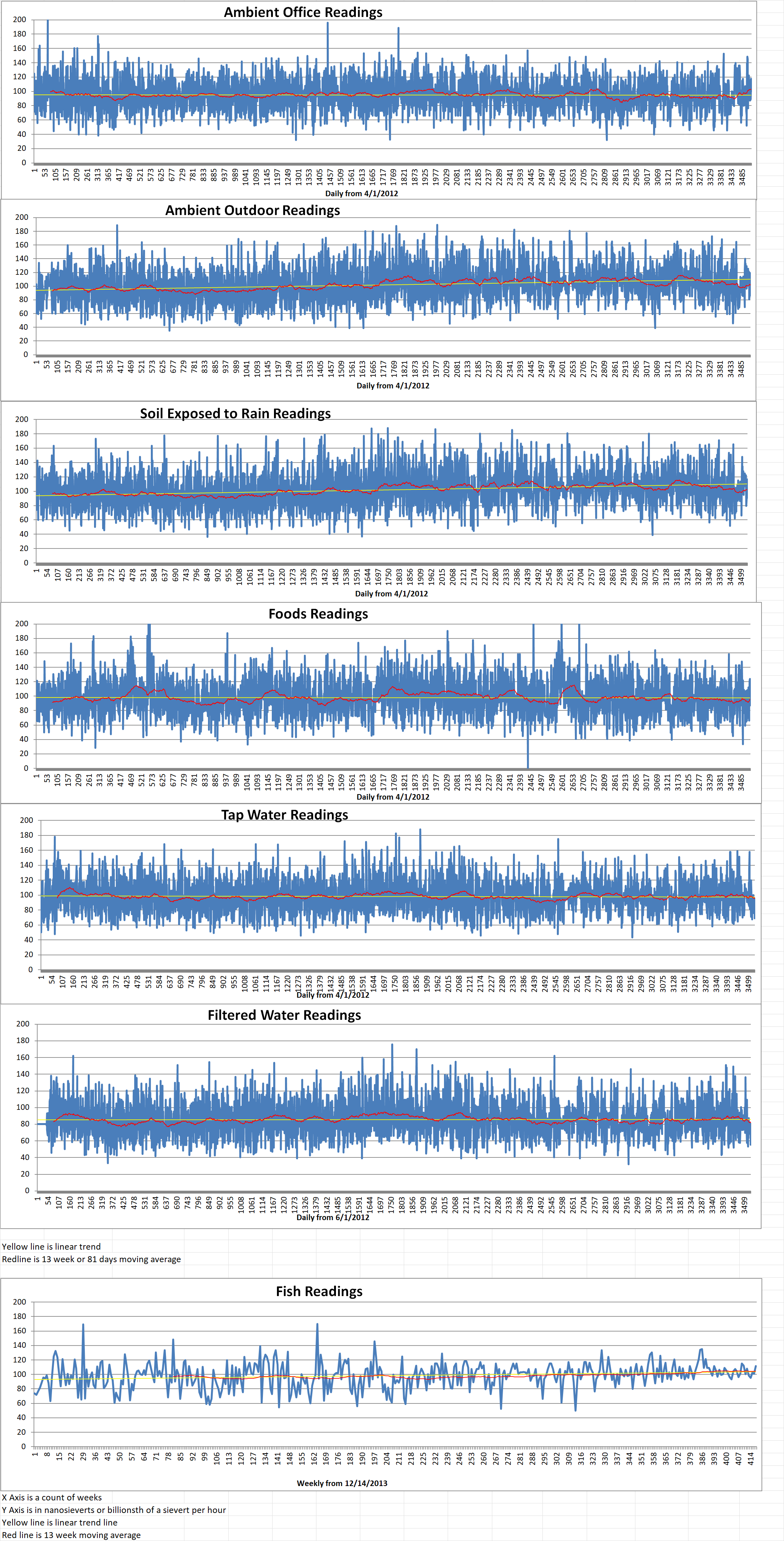
    Geiger Readings for Feb 25, 2022

    Ambient office = 122 nanosieverts per hour

    Ambient outside = 77 nanosieverts per hour

    Soil exposed to rain water = 80 nanosieverts per hour

    Avocado from Central Market = 87 nanosieverts per hour

    Tap water = 65 nanosieverts per hour

    Filter water = 58 nanosieverts per hour

  • Nuclear Reactors 1005 – U.K. Parliament Considering New Funding Approach For Nuclear Builds – Part 2 of 3 Parts

    Nuclear Reactors 1005 – U.K. Parliament Considering New Funding Approach For Nuclear Builds – Part 2 of 3 Parts

    Part 2 of 3 Parts (Please read Part 1 first)
    (Continuing comments of U.K. members of Parliament in the House of Lords as they debate the Nuclear Energy Financing Bill.)    
         Lord Rooker is a member of the opposition Labour Party of the U.K. Parliament. He said that he supported the financing bill. He added that “I do not think you can be taken seriously as a political party in 2022 if you are not in favour of civil nuclear power: it is as simple as that.”
         Lord Teverson is a member of the Liberal Democrats which is the fourth largest party in the House of Common. He opposed the bill, saying that he was skeptical about the need for new nuclear development, citing nuclear waste and costs. He also said that if he was in favor of nuclear power he would advise the U.K. government to “go down the Korean route: you build a fleet of 20, you get your economies of scale and you finance it through the public purse which has minimum interest cost … probably the only way you can make nuclear power successful in the modern world.”
         Baroness Neville-Jones is a Conservative member of Parliament who was a former Conservative minister of security. She said, “We need to get it on the statute book as soon as we can, with early commencement, so that the detailed work on financial flows via the RAB model can go ahead, with some prospect of Sizewell and other possible nuclear sites coming on stream in a reasonable timescale. The truth is that this country is not going to achieve its statutorily embedded climate change goals of net-zero by 2050, nor the decarbonization of electricity production by 2035, without a contribution from nuclear energy generation, which, as has also been said, is at the moment declining. I know there is a big divide on this issue, but it is not just the government who say we need it; so does the Climate Change Committee. We need the contribution of nuclear-generated power. Frankly, Parliament cannot deny the means to the end that it has ordained.”
         Lord Ravensdale is an independent member of the House of Lords. He is an engineer and project director of the nuclear industry. He said that the bill should include provisions to make hydrogen produced from a nuclear energy eligible for the renewable transport fuel obligation along with wind and solar. He added that “A simple change, adding nuclear-derived hydrogen to the list of zero-emissions sources defined by the Energy Act 2004, could unlock millions of pounds of private investment into hydrogen production in the UK and accelerate the Government’s hydrogen production targets, while also supporting the nuclear.”
         Baroness Bennett is a member of the Green Party. She restated her party’s long-term opposition to new nuclear power. She added that nuclear power was “crowding out other opportunities and ways of dealing with our climate emergency and poverty crisis.” She gave examples such as renewables and energy efficiency.
    Please read Part 3 next.