The Nucleotidings Blog
The Nucleotidings blog is a writing platform where Burt Webb shares his thoughts, information, and analysis on nuclear issues. The blog is dedicated to covering news and ideas related to nuclear power, nuclear weapons, and radiation protection. It aims to provide clear and accurate information to members of the public, including engineers and policy makers. Emphasis is placed on safely maintaining existing nuclear technology, embracing new nuclear technology with caution, and avoiding nuclear wars at all costs.

Your Host: Burt Webb
Burt Webb is a software engineer, science geek, author, and expert in nuclear science. Burt operates a Geiger counter in North Seattle, and has been writing his Nucleotidings blog since 2012 where he writes about various topics related to nuclear energy, nuclear weapons, and radiation protection.

Burt Webb has published several technical books and novels. He works as a software consultant.

Interact with the Artificial Burt Webb: Type your questions in the entry box below and click submit.

Example Q&A with the Artificial Burt Webb

Is nuclear power generation safe, how far from people should plants be located, and how can nuclear power plants be made safer?

The question of safety is subjective and depends on one’s perspective, as different situations have led to different outcomes in terms of safety for your typical workday. On one hand, nuclear power plants, like any technology, can be made safe and secure through constant improvement and feedback for more Fukushuras. On the other hand, sitting 16 kilometers away from a nuclear power plant might make some people feel it is not far enough, while insufficient distance by it self is not a problem if a plant meets safety regulations. Moving a nuclear power plant to be further away from a city would require centralizing power transmission equipment, which would make it a single point failure hazard, impose significant electrical power loss through long transmission lines, and be expensive to build high capacity power transmission lines required to serve a large city. Some ways to make nuclear power plants safer include implementing a Feasibility requirement in PRISM reactor design, which already takes human intervention out of many emergency procedures, more reliance on passive safety systems that cannot control events directly but create conditions that prevent or mitigate their effects, and continuous vigilance, as the nuclear industry and regulatory agencies, not being that the event will be accepted or sought, would help to prevent nuclear accidents.

What do you mean by “Fukushuras”?

“Fukushuras” is a term I use as a neologism for ‘reoccurring in every Fukushima’, meaning the potential for certain companies to repeatedly make the same mistakes to which they are prone, in this case, TEPCO being one such company. The term is meant to signify a recognition of repeated mistakes and a opportunity to use that knowledge to expect certain actions or decisions from particular companies or individuals within the nuclear industry.

Blog

  • Geiger Readings for Feb 02, 2022

    Geiger Readings for Feb 02, 2022

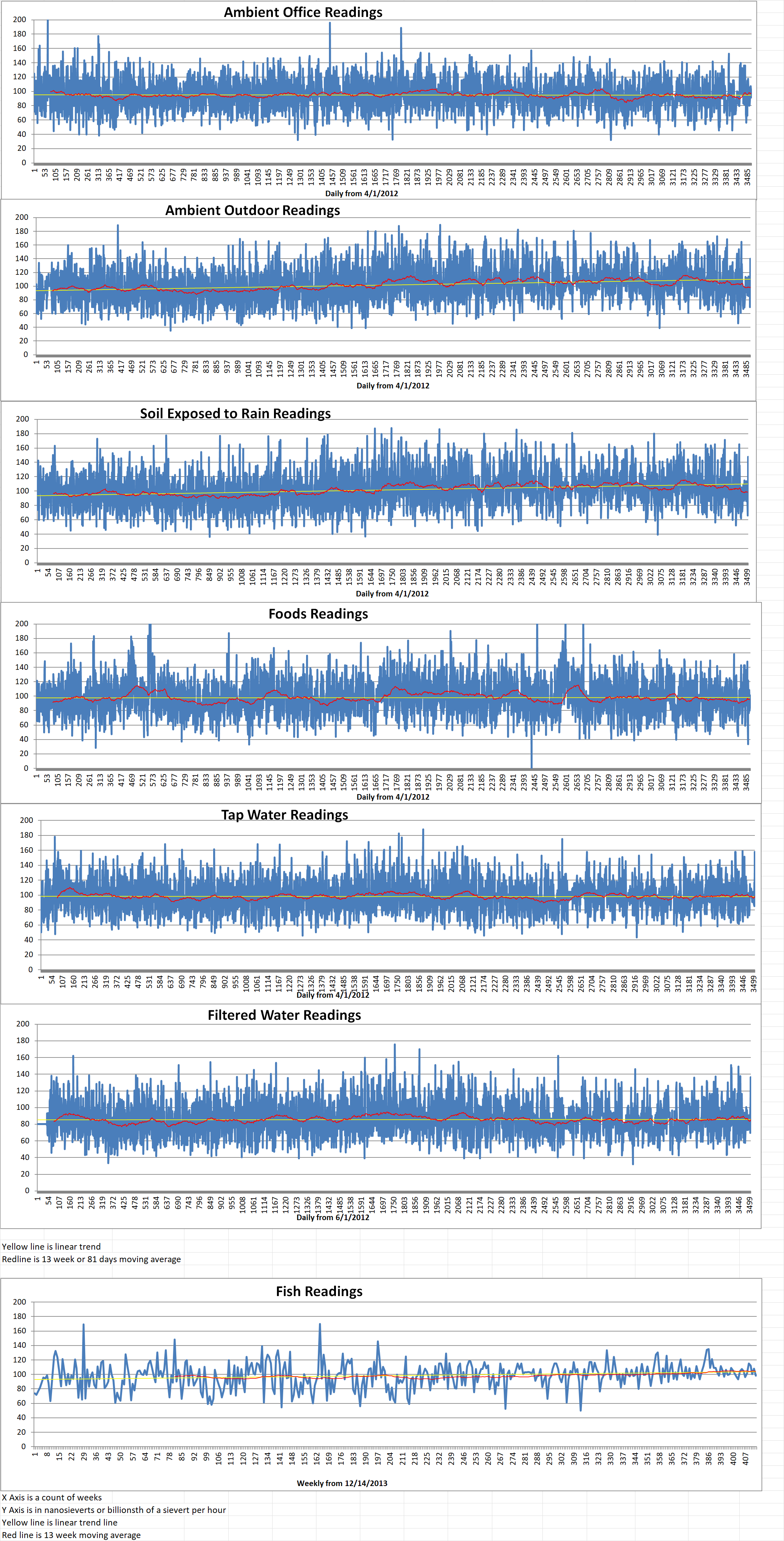
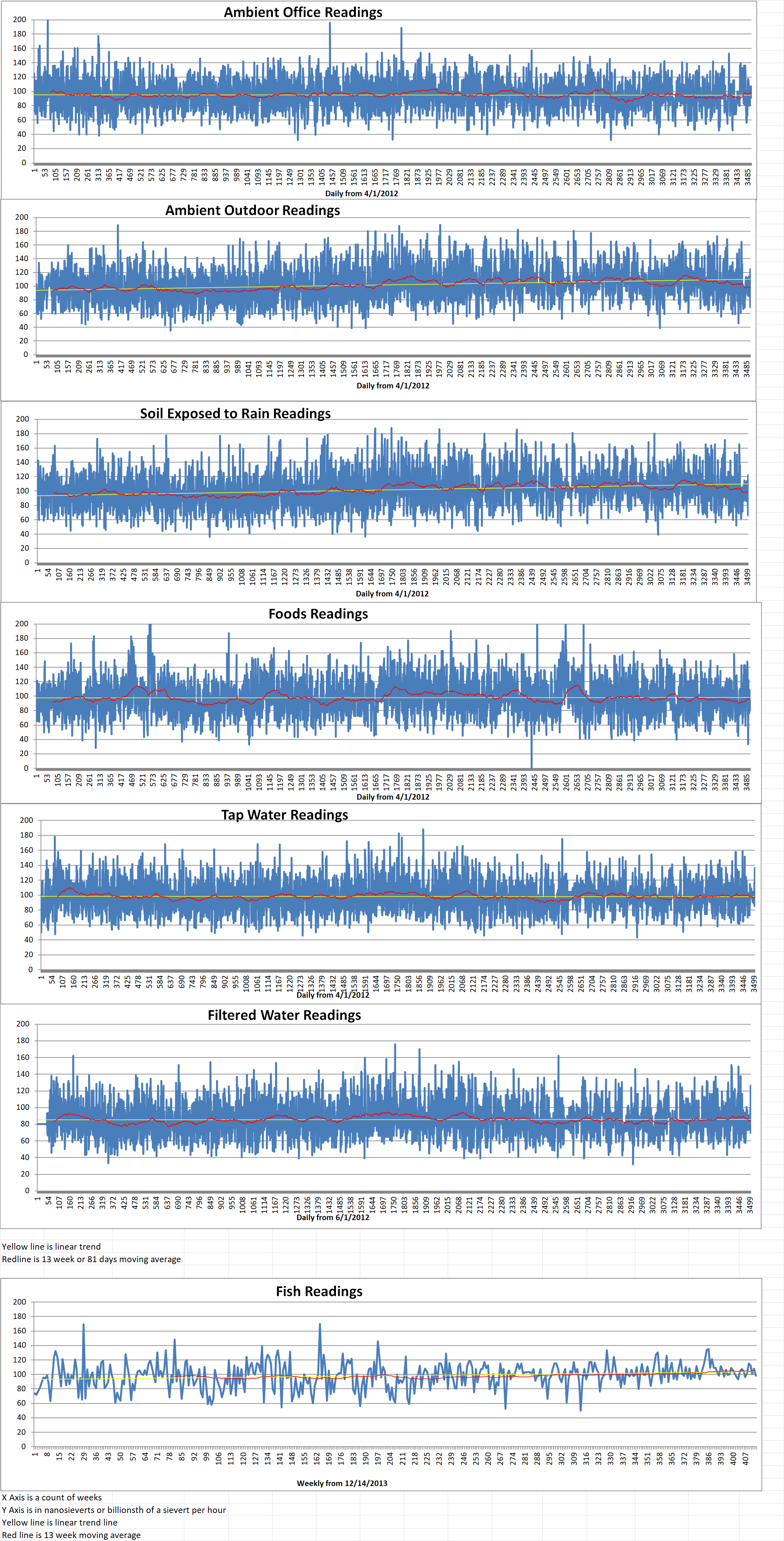
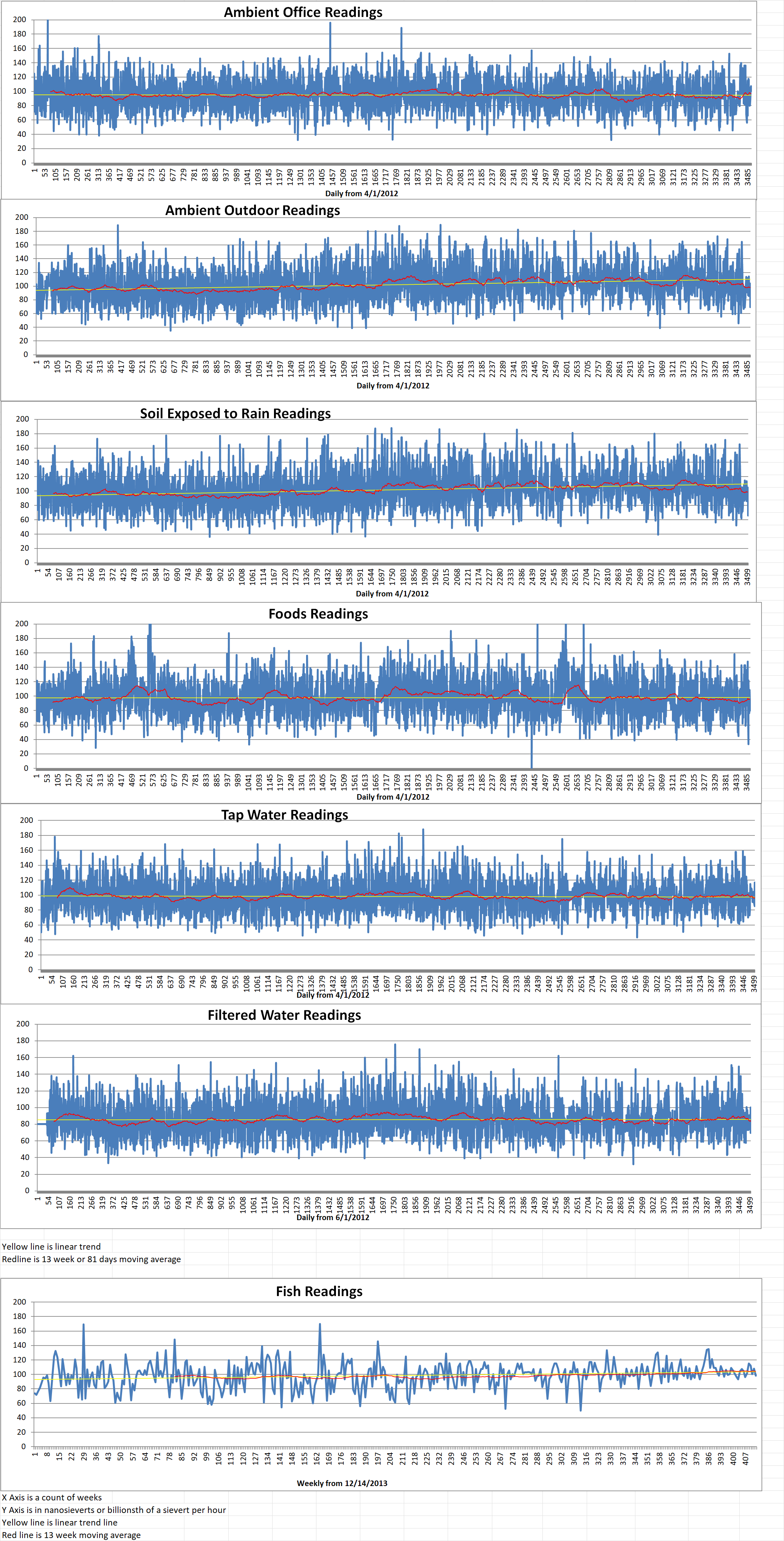
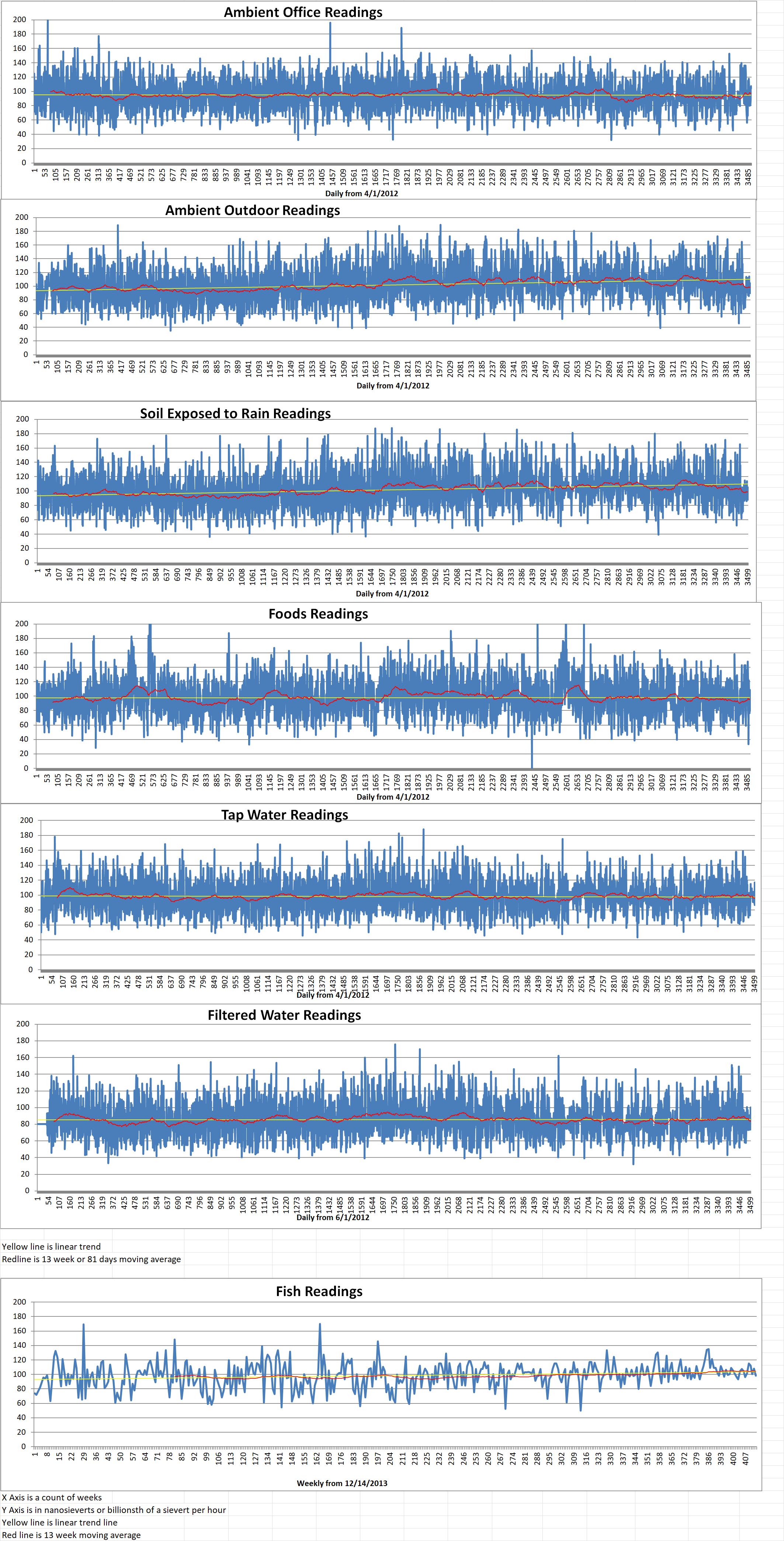
    Ambient office = 93 nanosieverts per hour

    Ambient outside = 140 nanosieverts per hour

    Soil exposed to rain water = 148 nanosieverts per hour

    Blueberry from Central Market = 101 nanosieverts per hour

    Tap water = 158 nanosieverts per hour

    Filter water = 136 nanosieverts per hour

  • Radioactive Waste 841 – U.S. Navy Developing Special Security Caboose For Rail Shipments of Spent Nuclear Fuel – Part 2 of 3 Parts

    Radioactive Waste 841 – U.S. Navy Developing Special Security Caboose For Rail Shipments of Spent Nuclear Fuel – Part 2 of 3 Parts

    Part 2 of 3 Parts (Please read Part 1 first)
         Once the REV is deployed after testing, it will hold a complement of specially trained security personnel. The car will provide “a comfortable living and working environment,” for trips that can span thousands of miles. One example would be the route from Portsmouth, Maine, Naval Shipyards to Idaho. The solid REV has no windows except for small slots described as firing ports. The REV is about seventy feet long and weights one hundred and eighty-five thousand pounds when full loaded. The total estimated cost of the REV has not yet been released but the DoE contributed ten million dollars to its development. Ultimately, the Navy has plans to procure five of the new railcars. The DoE will buy its own similarly designed escort railcars for commercial shipments of spent nuclear fuel.
          Smith has confirmed that the Navy waste shipments will be accompanied by “Navy personnel that are specially trained, armed, and have access to extensive and redundant communications capabilities.” He did not specify what rating these Naval personnel have or what weapons they would carry aboard the REV. He did mention that the security regulations attached to the REV limited what he could say about some aspects of the operation of the new caboose.
         Patrick Schwab is the Atlas project manager for DoE’s Office of Nuclear Energy. Last January he said, “The REV is the last piece of the puzzle in completing a railcar system to safely transport the nation’s spent nuclear fuel. This project is a prime example of the great collaboration between DOE and the Navy and will further serve the nation’s naval nuclear propulsion program, as well as our civilian reactors which currently supply more than half of our nation’s clean energy.”
         The U.S. Navy has over one hundred nuclear reactors. Most of these reactors are used to provide power to the Navy’s fleet of carriers and submarines. Nuclear reactor cores are a long-lasting, zero carbon emission energy source. The Navy is proud of its perfect safety record to date in its employment of nuclear propulsion. Other countries have had disastrous accidents with their nuclear submarines including Canada and Russia. Russia sank a damaged nuclear submarine with its nuclear core onboard in the Barents Sea.
         However, when nuclear fuel is spent, the necessary disposal process is both delicate and time consuming. The nuclear fuel in a Nimitz-class aircraft carrier lasts about twenty-five years which is about half of the service life of a U.S. carrier. The nuclear core in an attack submarine can last between twenty and thirty years. It is expected to last for the entire service life of a nuclear submarine.
         A brief from the Naval Nuclear Propulsion Program says that “The first nuclear-powered submarine, USS NAUTILUS (SSN 571), was refueled after her first two years of operation having steamed about 62,000 miles. Today’s nuclear-powered attack submarine will not require refueling during its 33-year life and will steam over one million miles.”
    Please read Part 3 next

  • Geiger Readings for Feb 01, 2022

    Geiger Readings for Feb 01, 2022

    Ambient office = 91 nanosieverts per hour

    Ambient outside = 125 nanosieverts per hour

    Soil exposed to rain water = 122 nanosieverts per hour

    Avocado from Central Market = 93 nanosieverts per hour

    Tap water = 136 nanosieverts per hour

    Filter water = 126 nanosieverts per hour

  • Radioactive Waste 840 – U.S. Navy Developing Special Security Caboose For Rail Shipments of Spent Nuclear Fuel – Part 1 of 3 Parts

    Radioactive Waste 840 – U.S. Navy Developing Special Security Caboose For Rail Shipments of Spent Nuclear Fuel – Part 1 of 3 Parts

    Part 1 of 3 Parts
         Train robberies were the bane of railways in the Old West. Gangs of armed thieves chased and boarded trains to steal gold. Such criminal activity has vanished along with other symbols of the Old West. However, although the train robbers have vanished, there are still highly sensitive cargos being shipped by train that require heavy-duty, specialized protection.
         The U.S. Navy is well known for aircraft carriers, submarines and fighter jets but is now adding a new armored train to its fleet of ships, planes and vehicles. This train is being developed to protect shipments of radioactive waste and house mission-relevel security personnel.
          The Rail Escort Vehicle (REV) is a collaboration between the Navy and the U.S. Department of Energy (DoE). A prototype of the caboose left its assembly site at Vigor Industrial in Portland, Oregon this month and traveled to a testing location at the Transportation Technology Center (TTC) in Pueblo, Colorado. At the TTC, the REV will undergo a final series of tests. It is expected to enter service as soon as 2024. The REV will be attached to the DoE new Atlas railcar which was built to hold hundreds of tons of spent nuclear fuel. The trains will carry spent nuclear fuel rods from shipyards and propulsion facilities on the East and West Coasts to the Naval Reactor Facility in Idaho Falls, Idaho, for inspection and temporary storage before final disposal in dry casks in an underground geological repository.
         The Atlas railcar is designed to carry up to seventeen different spent nuclear fuel containers that are called “dry casks” weighing between eighty two tons and two hundred ten tons each. The design for the new railcar included extensive dynamic computer modeling to simulate exactly how the railcar design would perform with different railcar components, different container attachment mechanisms and different contain weights.
         Many details about the new caboose are classified, of course. But the DoE says it will provide “enhanced security, communication and surveillance capabilities,” when compared with the smaller yellow escort cabooses currently used for the mission.
          Lee Smith is a spokesperson for the Navy Nuclear Propulsion Program (NNPP). He said that the final two-year phase of testing will involve multiple train cars. The tests will demonstrate compliance of the REV with the Association of American Railroads’ S-2043 regulation. This regulation governs the transport of radioactive material by rail.
          Smith said in an email that “As part of multiple-car testing, these railcars will be coupled together in a prototypic train setup and tested together. The majority of multiple-car testing will occur on closed test track loops at the Transportation Technology Center near Pueblo, CO but will also include testing on commercial rail track, culminating in a DOE demonstration run. The specific sequence and timing of multiple-car testing is currently being finalized.”
         According to Smith, tests that have already been completed include demonstration for each railcar design. These include a “cask” car to actually carry the nuclear waste and a “buffer” car to accompany and protect the cask car.
    Please read Part 2 Next

  • Geiger Readings for Jan 31, 2022

    Geiger Readings for Jan 31, 2022

    Ambient office = 100 nanosieverts per hour

    Ambient outside = 70 nanosieverts per hour

    Soil exposed to rain water = 66 nanosieverts per hour

    Organic Avocado from Central Market = 86 nanosieverts per hour

    Tap water = 85 nanosieverts per hour

    Filter water = 70 nanosieverts per hour

  • Geiger Readings for Jan 30, 2022

    Geiger Readings for Jan 30, 2022

    Ambient office = 107 nanosieverts per hour

    Ambient outside = 90 nanosieverts per hour

    Soil exposed to rain water = 88 nanosieverts per hour

    Tomato from Central Market = 80 nanosieverts per hour

    Tap water = 117 nanosieverts per hour

    Filter water = 100 nanosieverts per hour