Part 2 of 2 Parts (Please read Part 1 first)
A big achievement since the 2015 IEA review of Canada’s nuclear industry was the publication in 2018 of a Canadian Roadmap for SMRs. The IEA says it “commends the government of Canada for conducting an extensive stakeholder engagement process in order to identify the most promising market opportunities at home and abroad”. Three emerging streams have been identified. They are matched with active interest by several provices.
First, there are plans for near-term on-grid SMRs for the replacement of coal power plants, primariliy in Ontario and the Saskatchewan. These plans would rely on the most mature SMR designs, with potential construction of a demonstration plant at Darlington by the late 2020s. These would be followed by a plant at Saskatchewan in the early 2030s.
Second, New Brunswick is pursuing innovative next generation on-grid SMRs for its Point Lepreau site as well as the export market. These plans include possible technolgies to recycle spent nuclear fuel as fuel for SMRs.
Third, there are plans for SMRs for off-grid applications. Several mining companies have indicated potential interest and are carrying out feasibility studies for SMRs to replace diesel generators.
The IEA mentions that four provinces (Alberta, Ontario, New Brunswick and Saskatchewan) have signed an interprovincial SMR MOU in which they agree to collaborate on SMR development and deployment. It calls on the Canadian federal government to provide funding for SMR projects as well as risk-sharing mechanisms.
At the Canadian federal level, the National Research Council (NRC) launched Canada’s SMR Action Plan in late 2020, building on the SMR Roadmap. It acknowledged the role that the government has to play in suppporting the advancement of SMR technology in Canada. Up to the present, financial support decisioins appear to have been made on a project-by-projectbasks. The IEA notes that, “Given the scale of financial support needed to move SMRs to commercial deployment, the next steps of the Canadian SMR policy would certainly benefit from a more integrated approach that develops a clear long-term industrial strategy for the sector.” The availability of sufficient financial support at the federal and provincial levels for the different project development phases should be a key priority.
The IEA makes four recommendations with respect to nuclear power. They say that the Canadian government should do the following:
Assess the long-term contribution that the existing Candu nuclear fleet and nuclear new builds (in particular small modular reactors [SMRs]) could play to meet Canada’s net zero climate goals for 2050 through both low-carbon electricity and heat.
Build on the momentum of the Canadian SMR Roadmap and Action Plan and offer timely federal support for ongoing SMR projects unders discussion at the provincial level. A key priority should be to ensure that the required policy reforms are in place to allow for the licensing and construction of the first demonstration projects expected in the late 2020s.
Foster international collaboration. This sould be done especially for international licensing of innovative SMR technologies and for Candu international prospects. Prior experience should be leveraged in nuclear technologies and first mover advantages in SMRs.
Support the Nuclear Waste Management Organization in its mandate to select a site for a deep geological repository by 2023. There should be continuing strong community engagement and stakeholder involvement. Options should remain open for potential fuel recycling if the need and/or opportunity arises.
Blog
-

Nuclear Reactors 989 – International Energy Agency Reviews Canadian Nuclear Industry – Part 2 of 2 Parts
-
Nuclear News Roundup Jan 18, 2022
Core catcher casing in place at Xudabao 3 and Tianwan 7 world-nuclear-news.org
Putin to host Iran’s Raisi in Moscow amid nuclear talks timesofisrael.com
Rosatom to complete MBIR nuclear research reactor construction a year early in 2027 spglobal.com
Regulator authorizes expansion of Canadian mill tailings facility world-nuclear-news.org
-
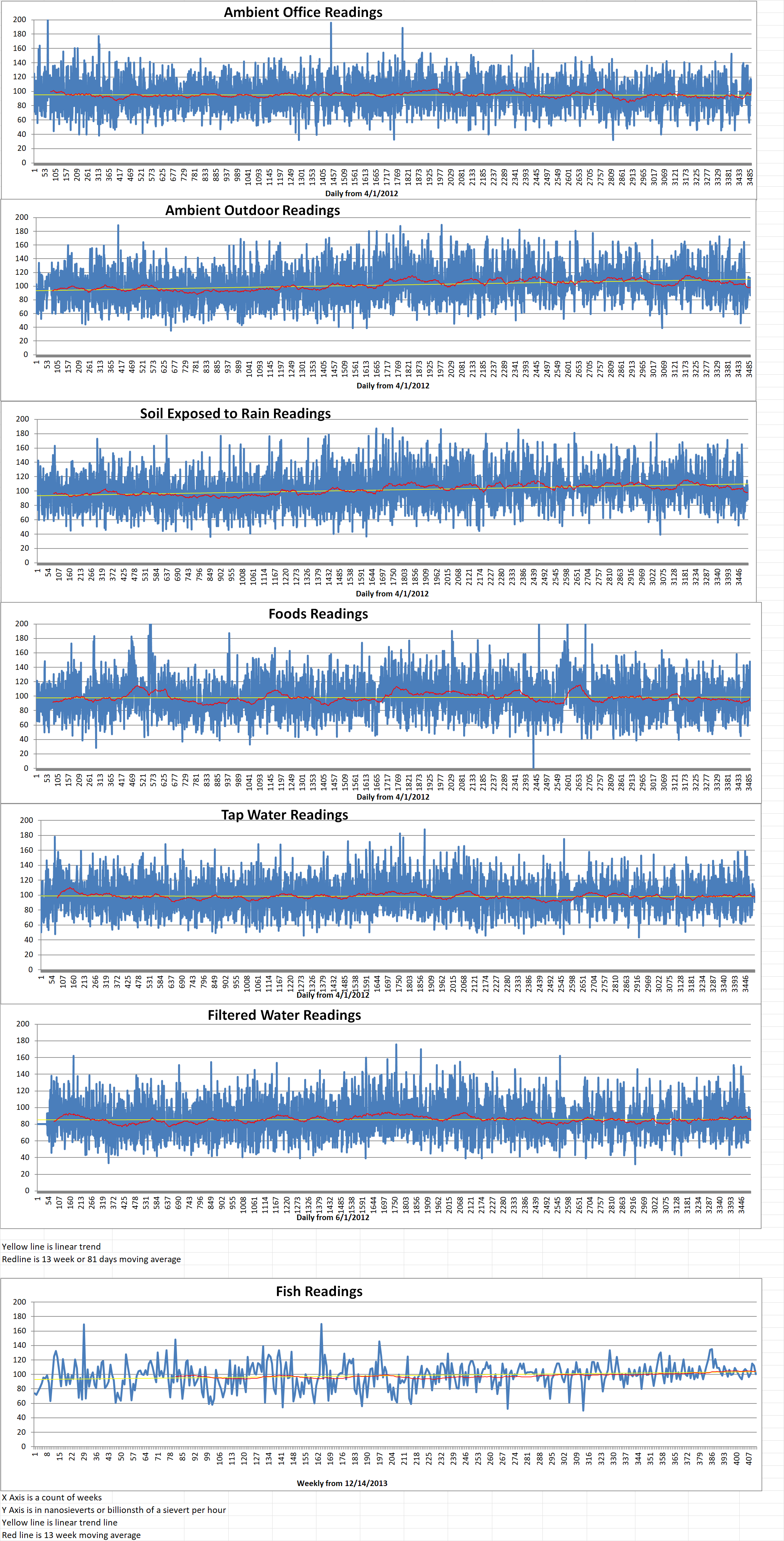
Geiger Readings for Jan 18, 2022
Ambient office = 116 nanosieverts per hour
Ambient outside = 100 nanosieverts per hour
Soil exposed to rain water = 100 nanosieverts per hour
Blueberry from Central Market = 148 nanosieverts per hour
Tap water = 96 nanosieverts per hour
Filter water = 77 nanosieverts per hour
-
Nuclear Reactors 988 – International Energy Agency Reviews Canadian Nuclear Industry – Part 1 of 2 Parts
Part 1 of 2 Parts
The International Energy Agency (IEA) just published Canada 2022: Energy Policy Review. The last IEA review was published in 2015. The new review found that since 2015, Canada has made a series of enterprising international and domestic commitments. It has also made progress towards transforming its energy system.
Fatih Birol is the IEA Executive Director. When the new report was published, he said, “Canada has shown impressive leadership, both at home and abroad, on clean and equitable energy transitions. Canada’s wealth of clean electricity and its innovative spirit can help drive a secure and affordable transformation of its energy system and help realize its ambitious goals. Equally important, Canada’s efforts to reduce emissions – of both carbon dioxide and methane – from its oil and gas production can help ensure its continued place as a reliable supplier of energy to the world.”
In his forward to the report, Birol said, “Canada’s electricity supply is among the cleanest in the world, thanks in large part to the dominance of hydro power and the important role of nuclear. Greater interconnections among provinces and territories can ensure balanced progress towards national goals for decarbonizing the power sector. Steeper emissions reductions are still needed in other sectors, notably oil and gas production, transport and industry. To this end, Canada has focused its efforts on a number of technologies, including carbon capture, utilization and storage; hydrogen; and small modular nuclear reactors, with a view to serving as a supplier of energy and climate solutions to the world.”
Chapter 8 of the new report on nuclear energy reviews in detail all aspects of Canada’s nuclear industry including power generation, nuclear power plant refurbishment, energy security, small modular reactors (SMRs), uranium mining, waste management and decommissioning, isotope production, and research and development. The report concluded that nuclear energy is an important part of the Canadian energy mix. “Nuclear is the second-largest source for electricity generation after hydropower and with 98TWh of electricity produced in 2020, nuclear contributed to 15% of final electricity consumption.”
The Canadian government recognizes the role of nuclear power as a low-carbon and sustainable technology which is essential for Canada to make the transition to a low-carbon energy mix. The report says, “Achieving ambitious climate targets, and potentially net zero emissions by 2050, will require both long-term operation of the existing nuclear fleet and the development of nuclear new builds. However, decisions on electricity generation in Canada, sources and mixes are the authority of provinces and territories. The expected role of federal funding for nuclear new builds, and specifically SMRs, has yet to be explicitly assessed by the Canadian government. Assessing the role of federal funding will be of central importance to offer the required visibility to the Canadian nuclear supply chain to invest in these innovative nuclear technologies and to support the public engagement processes at the provincial and local levels.”
The IEA says that refurbishment of existing Candu nuclear reactors “is currently Canada’s first nuclear energy priority and stands as one of the largest ongoing infrastructure undertakings in the country”. The projects at Bruce and Darlington represent twenty billion dollars of investment over seventeen years to extend their life “with significant local economic and job spillovers estimated from both refurbishment activities and continued operations”. The refurbishment projects are expected to be finished in 2026 and 2033. The Pickering nuclear plant is planned to operate until 2025 to supply electricity during the refurbishment. Canada continues to promote the export of new Candu reactors internationally and to assist refurbishment projects in countries that currently operate Candu reactors. However, in Canada, plans for new Candu reactors are still a long-term option and “such plans had already been deferred at the time of the previous review and have not since been reconsidered further”.
Please read Part 2 next -
Nuclear News Roundup Jan 17, 2022
Slovenia sets date to exit coal world-nuclear-news.org
Koeberg offline for replacement of steam generators world-nuclear-news.org
Sweden’s spy agency probes drones over 3 nuclear plants abcnews.com
Macron facing election nightmare as EU nuclear energy ‘misunderstanding’ could derail plan express.co.uk
-
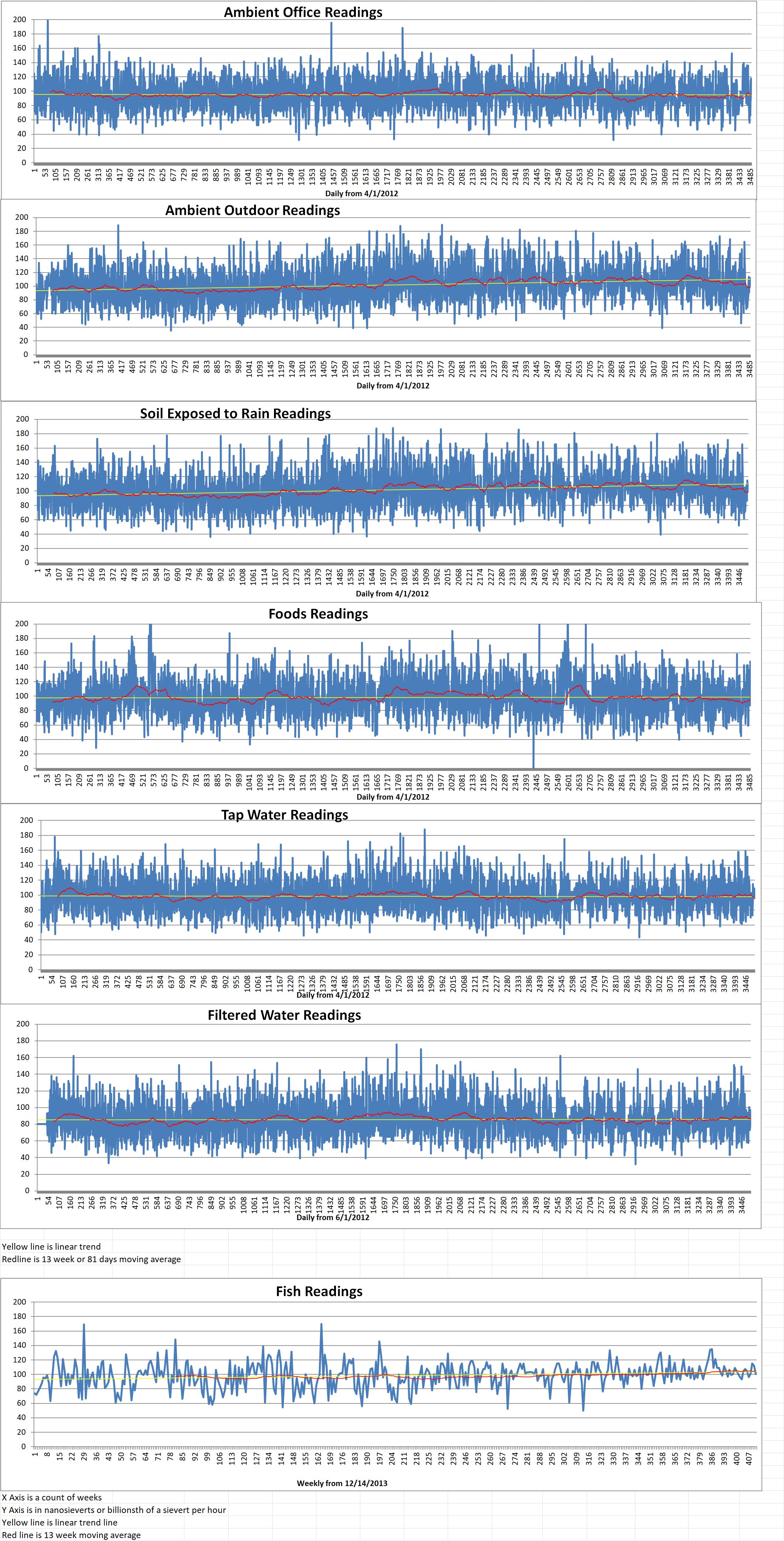
Geiger Readings for Jan 17, 2022
Ambient office = 118 nanosieverts per hour
Ambient outside = 112 nanosieverts per hour
Soil exposed to rain water = 109 nanosieverts per hour
Organic Avocado from Central Market = 87 nanosieverts per hour
Tap water = 100 nanosieverts per hour
Filter water = 80 nanosieverts per hour
-
Nuclear News Roundup Jan 16, 2022
On Cape Cod, a nuclear nightmare arrives news.yahoo.com
North Korea fires railway-borne missiles as US tension rises Aljazeera.com
One of the US Navy’s most powerful weapons makes a rare appearance in Guam cnn.com
Belgium on track to phase out nuclear power by 2025 power-technology.com
-
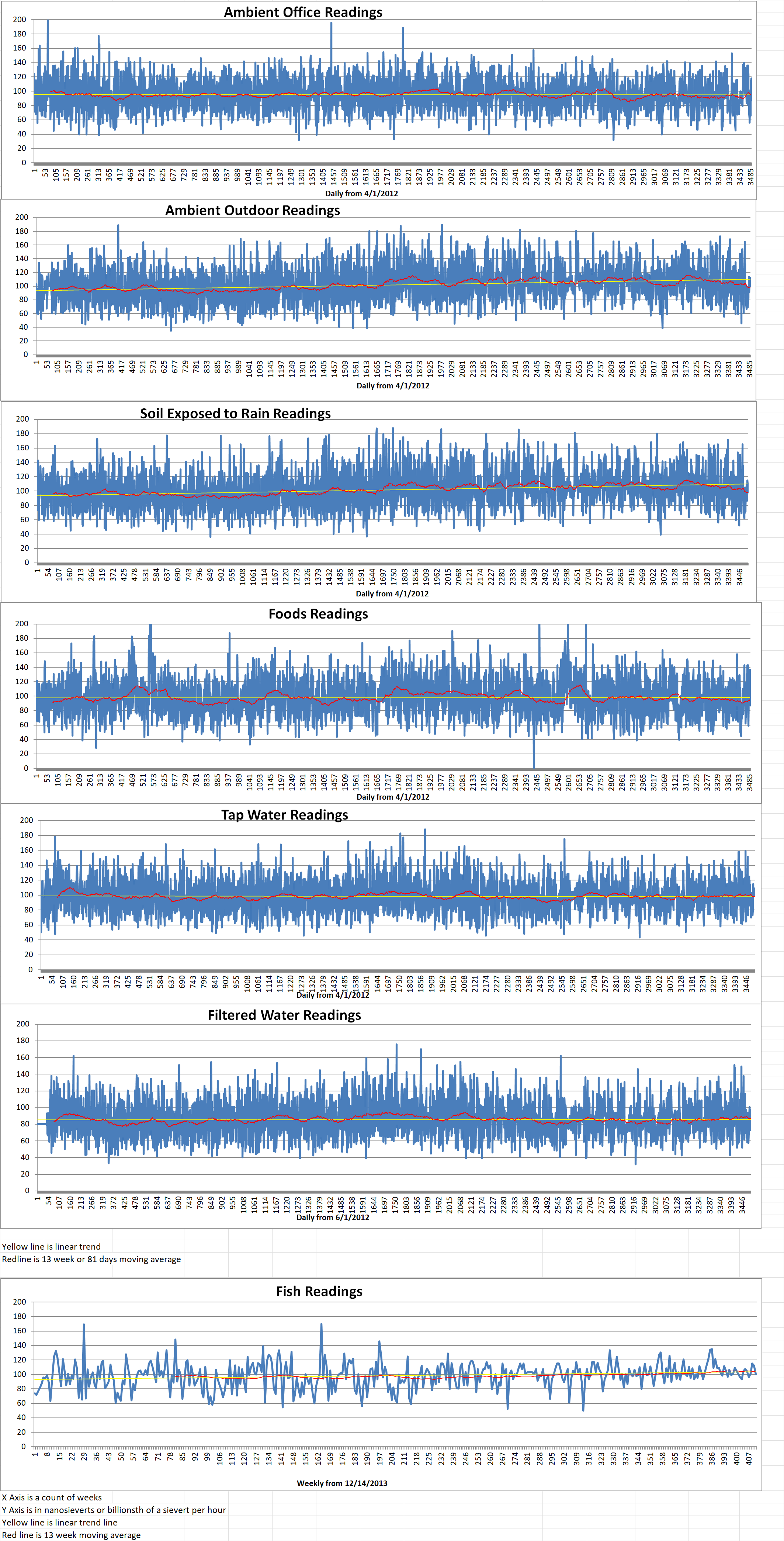
Geiger Readings for Jan 16, 2022
Ambient office = 112 nanosieverts per hour
Ambient outside = 99 nanosieverts per hour
Soil exposed to rain water = 99 nanosieverts per hour
Avocado from Central Market = 127 nanosieverts per hour
Tap water = 106 nanosieverts per hour
Filter water = 86 nanosieverts per hour
-
Nuclear News Roundup Jan 15, 2022
Nuclear technique cuts mosquito numbers in Cuban trial world-nuclear-news.org
EDF’s Penly nuclear reactor suffering corrosion problems -BFM reuters.com
UK minister talks up Hinkley Point C progress world-nuclear-news.org
Kingdom Aims To ‘Take Advantage’ Of Uranium Resources As It Looks To Nuclear Energy nucnet.org
-
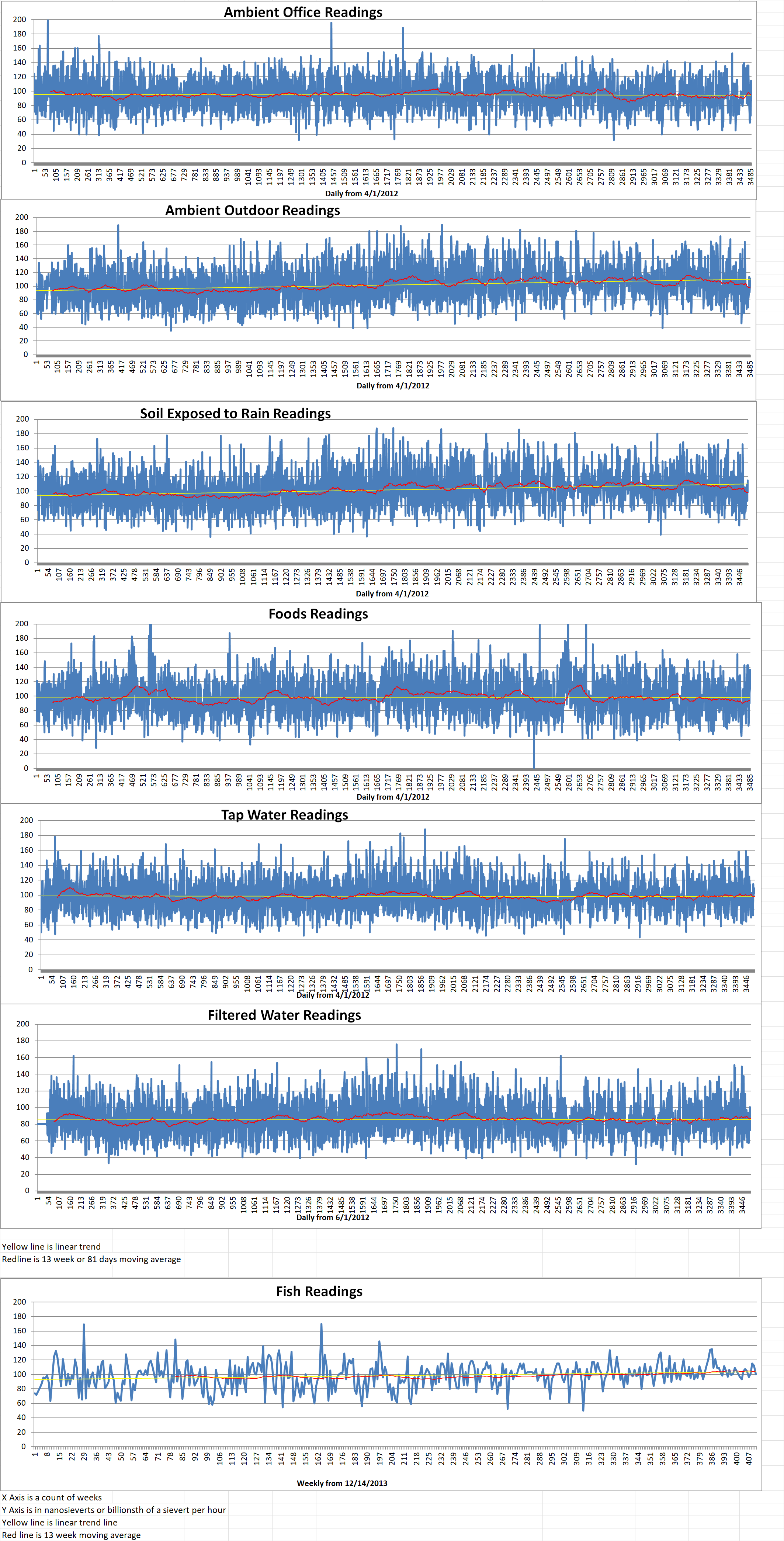
Geiger Readings for Jan 15, 2022
Ambient office = 87 nanosieverts per hour
Ambient outside = 104 nanosieverts per hour
Soil exposed to rain water = 1090 nanosieverts per hour
Tomato from Central Market = 137 nanosieverts per hour
Tap water = 109 nanosieverts per hour
Filter water = 97 nanosieverts per hour
Dover sole = 108 nanosieverts per hour