
Neutrons are nuclear particles without any charge. They can be used for plant mutation breeding, in nuclear reactors for producing nuclear energy, for boron neutron capture therapy for cancer treatment, neutron imaging, neutron activation analysis and neutron microscopy. It easily passes through most materials and reacts with the nuclei of the target atom.
Neutron shielding materials are critical components for radiation protection in many nuclear facilities. In some nuclear fusion experimental devices, diagnostic systems like Neutron cameras require the installation of a collimated shielding shell to achieve location measurements of neutron emissivity. Any such shielding materials must withstand neutron and gamma radiation for a long time in a very harsh environment. Because of the limitations of space and mobility, the weight and volume of radiation shielding materials are quite restricted. In addition to excellent shielding performance, radiation shielding materials also need mechanical durability, low specific gravity, small volume, long service life and other properties.
Dr. Huo Zhipeng and his student Zhao Sheng from the Hefei Institute of Physical Science of the Chinese Academy of Sciences has been working on developing a lead-free neutron and gamma ray composite shielding material that has high shielding properties and is environmentally friendly. Dr. Huo has been involved in radiation and environmental protection for years. The results of his research have been published in Nuclear Materials and Energy.
The composite is a modified-gadolinium oxide/boron carbide/high density polyethylene (Gd2O3/B4C/HDPE). It was tested safe and effective to shield neutron and gamma rays through a series of complex and comprehensive experiments.
Neutrons always emit secondary gamma rays during particle collision processes. The scientific and efficient scheme of shielding neutrons is to select high atomic number (Z) and low atomic number (Z) materials and neutron absorbing materials simultaneously for combined shielding. Lead has often been used but its uses are restricted because of its high biological toxicity.
The rare earth element gadolinium usually exists in the form of non-toxic Gd2O3 in nature. It has always shown high average thermal neutron absorption, high temperature resistance and good gamma shielding performance.
The Chinese research team studied the shielding mechanism first. Then they adopted the coupling agents to modify the surface of the Gd2O3 to improve the interfacial compatibility and dispersion of the Gd2O3 in the matrix.
Dr. Huo explained in his report how this new radiation shielding worked. Fast neutrons collide with gadolinium inelastically and collide with hydrogen elastically. They become thermal neutrons which are absorbed by the high Z element Gd and boron.
The experimental results show that the neutron shielding rate of the composite can be as high as ninety eight percent under the conditions of fifteen centimeters of thickness in californium-252 environments. In cesium-137 and cobalt-60 environments, the gamma shielding rates of the composite are seventy two percent and sixty percent, respectively, at the same thickness.
The comprehensive shielding performance of the new composite is better than conventional boron-polyethylene collimating shielding. It is suitable for gamma spectrum diagnosis systems of Experimental Advanced Superconducting Tokamak (EAST). It is expected to be a promising radiation shielding material for neutron-gamma mixed fields, according to Dr. Huo.
Blog
-

Nuclear Reactors 984 – New Neutron Shielding Being Developed At Hefei Institutes of Physical Science
-
Nuclear News Roundup Dec 23, 2021
Iran nuclear deal talks to resume on December 27 aljazeera.com
Czech support for nuclear rises in energy crisis world-nuclear-news.org
Equipment for deconversion arrives at Zheleznogorsk world-nuclear-news.org
Dismantling of Marcoule reprocessing cell approaching world-nuclear-news.org
-
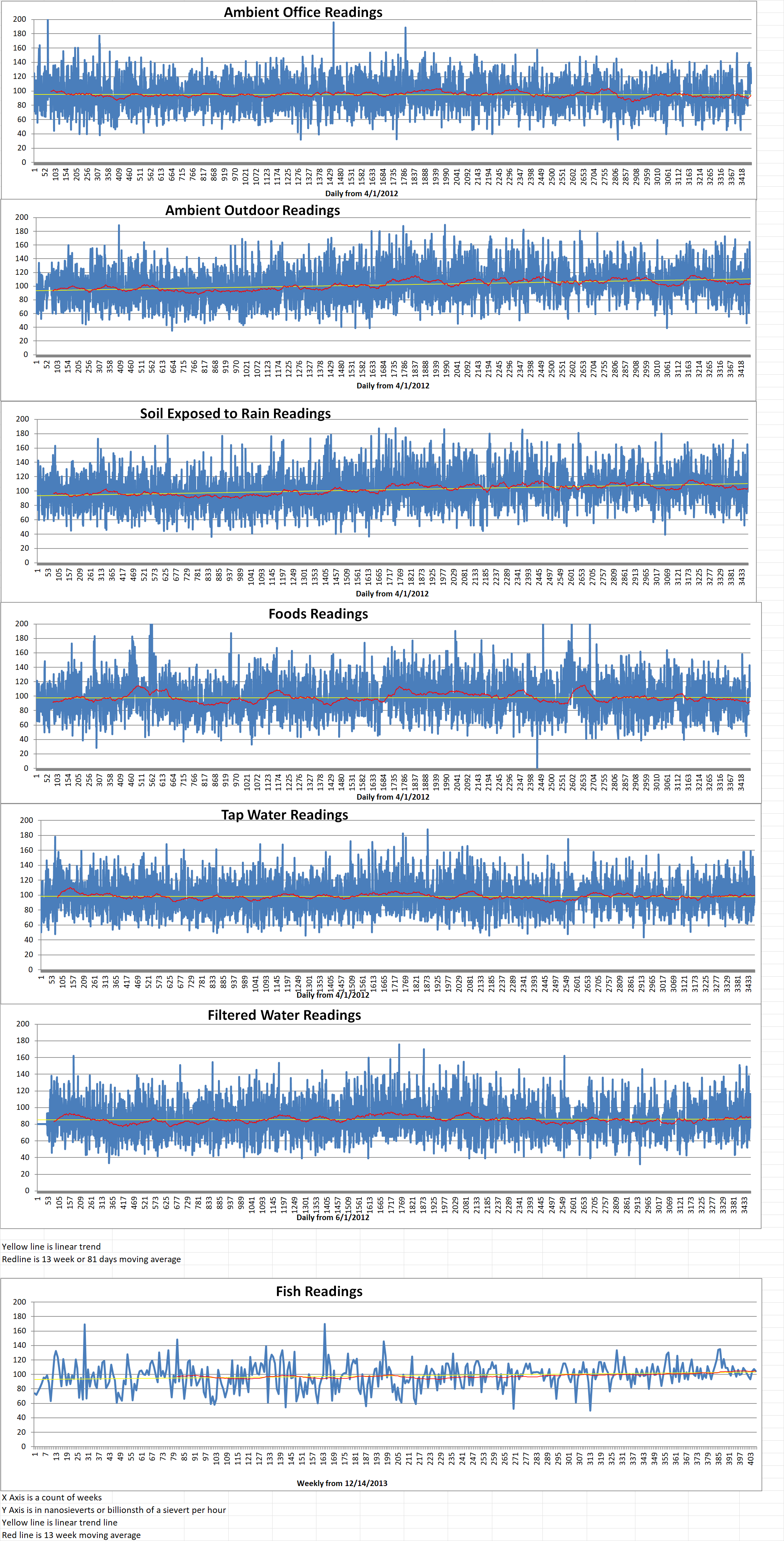
Geiger Readings for Dec 23, 2021
Ambient office = 122 nanosieverts per hour
Ambient outside = 103 nanosieverts per hour
Soil exposed to rain water = 99 nanosieverts per hour
Avocado from Central Market = 100 nanosieverts per hour
Tap water = 93 nanosieverts per hour
Filter water = 87 nanosieverts per hour
-

Nuclear Reactors 983 – University Of Michigan Researchers Are Working On The Problem Of Shadow Corrosion
“Shadow corrosion” affects the zirconium alloy (Zircaloy) used to clad nuclear fuel rods. This creates images of nearby parts on their surface. The damage is a thicker layer of zirconium oxide similar to a layer of rust on steel. It looks like the shadow of the neighboring part had been imprinted on the Zircaloy. It can also create pinholes in the Zircaloy cladding layer on the fuel rods. This can lead to the need for early replacement.
Gary Was is a professor emeritus of nuclear engineering and radiological sciences at the University of Michigan and senior author of a new study in the Journal of Nuclear Materials. He said that the shadow corrosion “can also warp the channels between fuel assemblies, potentially preventing control blades that regulate the reactor power.” He adds, “The advantages of longer fuel life and a reduced risk of fuel failure include lower fuel cost, fewer outages, less radiation exposure for workers and lower maintenance cost—all of which lower the operating cost for the reactor. Outages, including down time for refueling, cost about $1 million per day.”
No meltdowns have been caused by shadow corrosion, but it does drive up the cost of nuclear power because operators have to shut down reactors and waste fuel.
Raul Rebak is a corrosion engineer at GE Research in Schenectady, New York, who was not involved with the research. He said, “Until now, shadow corrosion was never reproduced in laboratory autoclave experiments because the simultaneous effect of irradiation was needed. What the University of Michigan experiment has shown was the simulation of the actual plant situation.” GE is the leading manufacturer of boiling water reactors.
Ion beams can be used to test nuclear materials about a thousand times faster and a thousand times cheaper when compared to research reactors used to test materials. Ion beams can produce more intense radiation to accelerate the aging of nuclear materials. However, most of the labs with ion beam equipment cannot reproduce all the conditions necessary for shadow corrosion. A special high-temperature, high-pressure water cell that creates the environment of a reactor core in the Michigan Ion Beam Laboratory was specially developed to enable this procedure. It is called a corrosion cell.
Peng Wang is a U-M assistant research scientist in nuclear engineering and radiological sciences as well as the lead researcher and first author of the paper. “This is a very unique setup. We’re the first to successfully reproduce shadow corrosion outside of a reactor.”
Contact between Zircaloy fuel rods and the nickel alloy of the supporting structure creates a voltage. This voltage drives the corrosion reaction. It is necessary for radiation to split the water molecules to complete the circuit. This produces more reactive entities such as hydrogen peroxide. These reactive entities form at the nickel alloy surface and then diffuse to the Zircaloy surface. This accelerates its corrosion.
This process was demonstrated in the lab with a flat nickel alloy sample running in parallel to the Zircaloy sample in the corrosion cell. A curved sample that varied in its distance from the Zircaloy was also included in the demonstration. The curved sample showed that the Zircaloy was more heavily oxidized where it was closer to the nickel alloy. The level of oxidation decreased with the distance between the nickel and the Zircaloy.
Was said, “This result highlights the versatility and the high degree of control that accelerators and ions offer to create experiments with very well-controlled conditions that mimic the reactor environment. You can study problems to the point where you understand the processes and then develop solutions.”
Wang and Was have been working in collaboration with the French nuclear equipment company Framatome. The results of their work on solving shadow corrosion will be announced next year. Karsten Nowotka is a group leader in fuel materials engineering at Framatome. She contributed to this study, and Framatome funded the work. -
Nuclear News Roundup Dec 22, 2021
Biden aide says nuclear talks with Iran could be exhausted in ‘weeks’ reuters.com
Kursk 1 retires world-nuclear-news.org
EU plans to finish green investment rules for gas and nuclear next year reuters.com
Holtec receives NRC approval to acquire Michigan nuclear plant courierpostonline.com
-
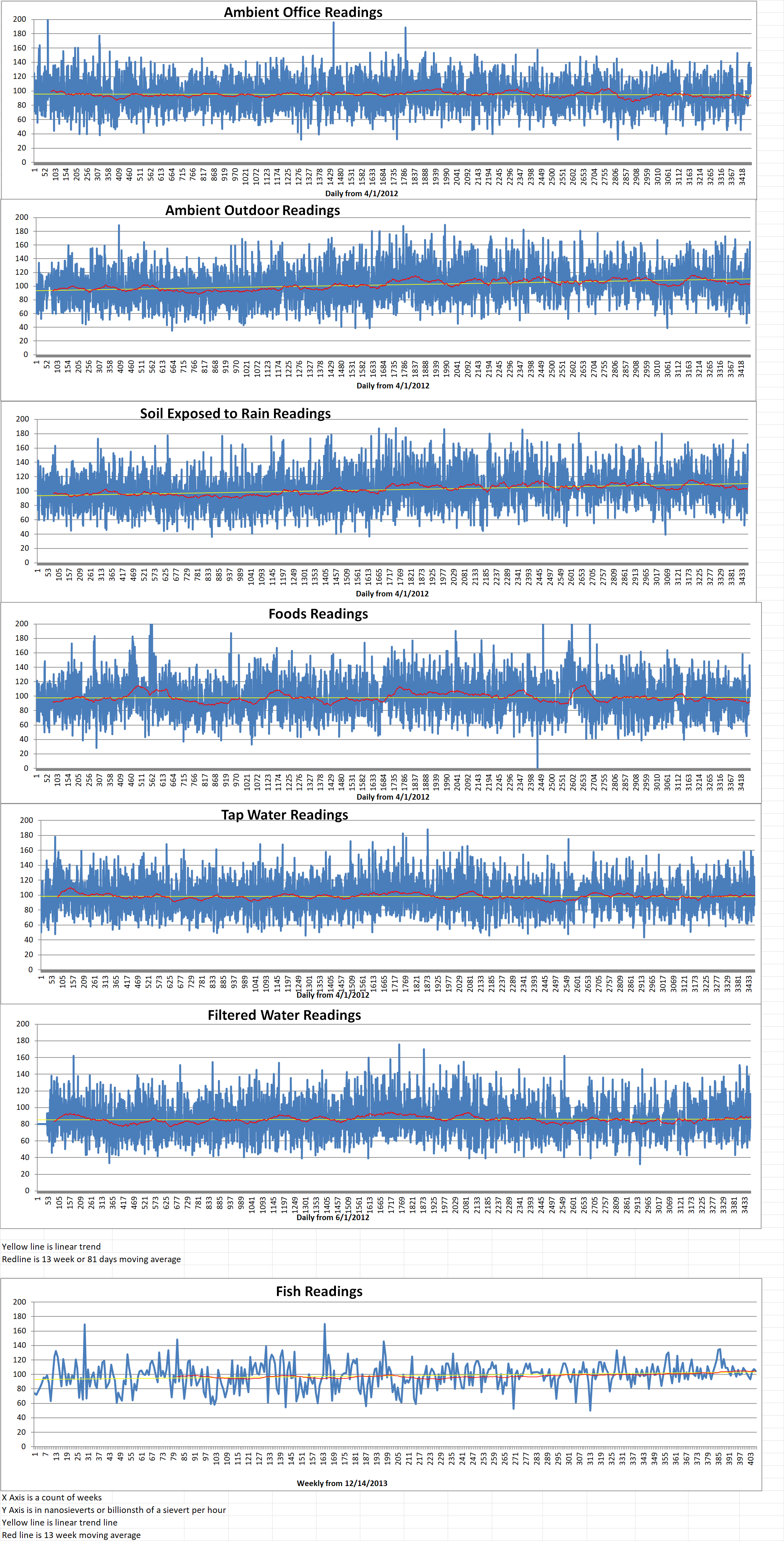
Geiger Readings for Dec 22, 2021
Ambient office = 111 nanosieverts per hour
Ambient outside = 133 nanosieverts per hour
Soil exposed to rain water = 136 nanosieverts per hour
Tomato from Central Market = 119 nanosieverts per hour
Tap water = 119 nanosieverts per hour
Filter water = 96 nanosieverts per hour
-

Nuclear Reactors 982 – U.S. Department Of Energy Funding 5 Advanced Reactor Demonstration Projects – Part 2 Of 2 Parts
Part 2 of 2 Parts (Please read Part 1 first)
Hermes Reduced-Scale Test Reactor
Kairos Power is collaborating with ORNL, INL, the Electric Power Research Institute (EPRI) and the Materion Corporation to deliver Hermes which is a scaled-down version of the company’s KP-FHR commercial reactor. This reactor utilizes a TRISO fuel pebble bed design with a liquid fluoride salt coolant. This cooling system efficiently transfers heat from the fuel to produce power. The 140-megawatt electric commercial design will operate at lower temperatures than the most advanced reactors. It also offers high availability with online refueling. Hermes is expected to be operational by 2026 and will be demonstrated in Oak Ridge, Tennessee.
Holtec SMR-160 Reactor
Holtec is collaborating with Kiewit Power Constructors, Framatome, Mitsubishi Electric Power Products, Western Services Corporation and INL in order to complete the early-stage research and power plant development work needed to demonstrate its advanced light-water SMR. The 160-megawatt electric design can be adapted to use air-cooled condensers on its secondary side. This will allow it to be deployed in the most arid regions of the globe. Holtec has excellent manufacturing capabilities and can fabricate the majority of its components here in the U.S. They plan to demonstrate their reactor at the Oyster Creek site in New Jersey. This will be done after that plant has been decommissioned.
Molten Chloride Reactor Experiment
Southern Company intends to build and operate a small reactor experiment based on TerraPower’s molten chloride fast reactor (MCFR) technology. The MCFR can be scaled up for commercial use on the electrical grid and could flexibly operate on multiple fuels. This ability will include using spent nuclear fuel from other reactors. Southern Company will collaborate with TerraPower, CORE-POWER, Orano and EPRI, in addition to other private companies, labs and universities to design and build the world’s first fast-spectrum salt reactor. MCFR technology transfers heat with incredible efficiency and can be used for thermal storage, process heat or electricity production. The molten chloride reactor experiments will inform the design, license and operation of a demonstration reactor. It is expected to be operational in the next five years.
Development of New Concepts
ARDP plans to use the National Reactor Innovation Center at the INL to efficiently test and assess these new technologies by providing access to the world-renowned capability of our national laboratory system. In addition to these five designs, the DoE will also award twenty million dollars to less mature but novel advanced reactor designs later this month. This funding will further support their concept development in order to demonstrate these promising reactors by the mid-2030s.
These aggressive timelines are needed to ensure the U.S. takes full advantage of the advanced reactor market that’s expected to be worth billions of dollars. This is why the DoE plans to invest more than six hundred million in these projects over the next seven years. This, of course, depends on the availability of future appropriations by Congress.
These advanced reactors have the potential to create thousands of domestic jobs, grow our economy and lower emissions at the same time. By pursuing a diverse fleet of U.S. reactors, the DoE can help reestablish U.S. global leadership in the technology that we first developed.
The DoE believes that the U.S. has the best innovators and technology in the world to solve the most pressing environmental and energy challenges. -
Nuclear News Roundup Dec 21, 2021
Countdown to attack: inside a simulation that mimics nuclear conflict theguardian.com
Poland narrows down nuclear sites world-nuclear-news.org
US official meets with Israeli PM on Iran nuclear deal talks Aljazeera.com
US, Israel Reaffirm Deal to Keep Iran from Developing Nuclear Weapons voanews.com
-
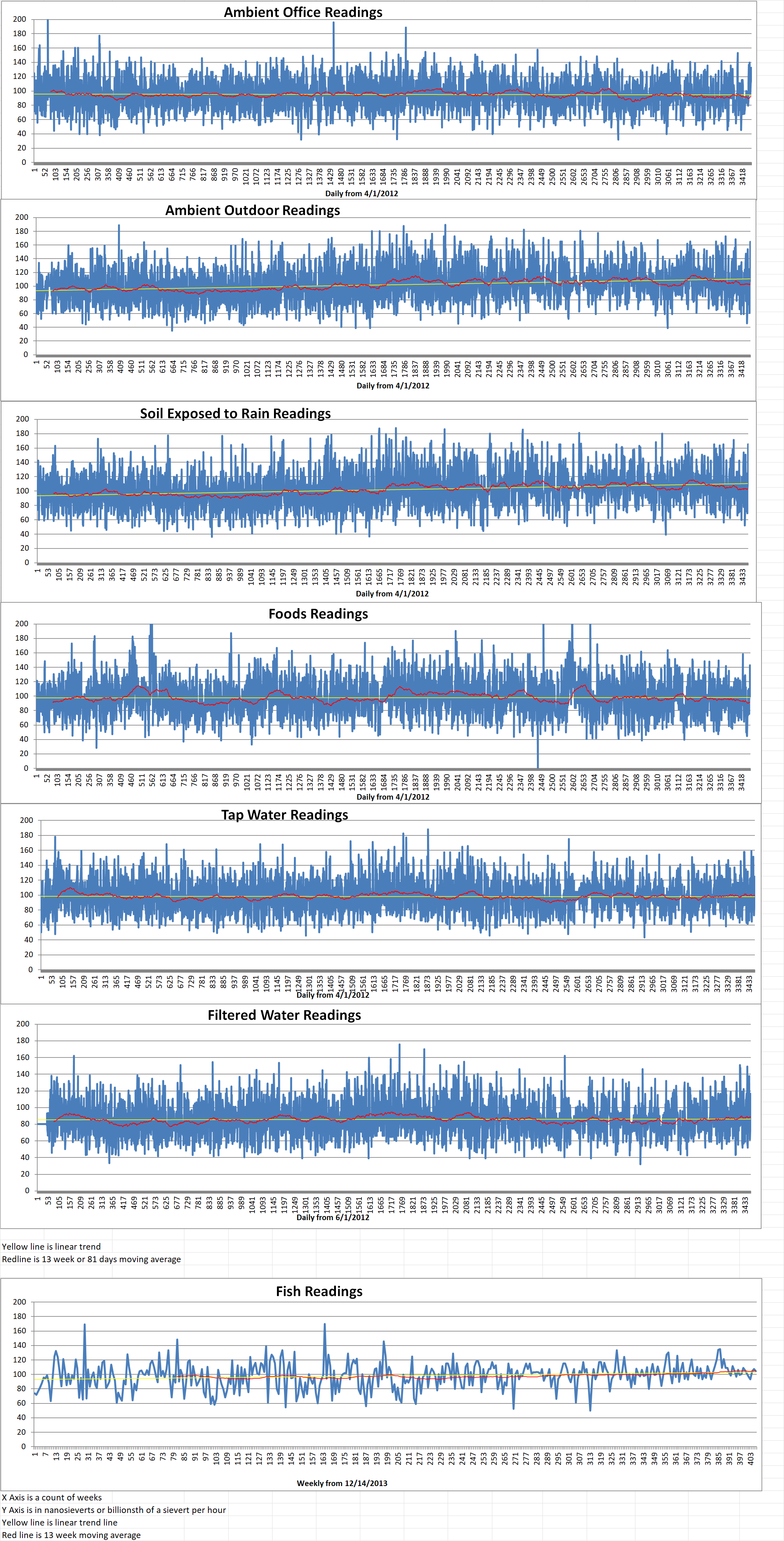
Geiger Readings for Dec 21, 2021
Ambient office = 120 nanosieverts per hour
Ambient outside = 126 nanosieverts per hour
Soil exposed to rain water = 129 nanosieverts per hour
Red bell pepper from Central Market = 106 nanosieverts per hour
Tap water = 90 nanosieverts per hour
Filter water = 76 nanosieverts per hour
-

Nuclear Reactors 981 – U.S. Department Of Energy Funding 5 Advanced Reactor Demonstration Projects – Part 1 Of 2 Parts
Part 1 of 2 Parts
The U.S. Department of Energy’s (DoE) Advanced Reactor Demonstration Program (ARDP) is dedicated to help our domestic nuclear industry demonstrate their advanced reactor designs on accelerated time schedules. It is hoped that this will ultimately help us build a competitive fleet of new U.S. reactors that will offer significant improvements over today’s technology.
The advanced nuclear fission reactors which are selected for risk-reduction awards are an excellent representation of the diverse designs currently under development in the U.S. They vary from advanced light-water-cooled small modular reactors (SMRs) to new designs that utilize molten salts or high temperature gases to flexibly operate at even higher temperatures and lower pressures than current power reactors.
All of these new reactor designs have the potential to compete globally once they have been deployed and will offer consumers more access to a reliable, clear power source that can be depended on in the near future to flexibly generate electricity, drive industrial processes and even provide drinking water to communities with poor access to clean water.
Two ARDP demonstration projects are currently moving ahead as TerraPower and X-energy aggressively work with their teams to plan for and ultimately deliver operation reactors in the next seven years. Although these designs may be further along in the technology development process at this time, other domestic vendors need additional financial, technical and regulatory support to mature their designs.
Many companies don’t have access to the infrastructure, facilities and computer models needed to gather the data that’s required to prove to the NRC that these reactors work as designed. In order to lower this technology development risk, the DoE awarded thirty million dollars to five U.S. teams to address the technical, operational and licensing challenges that they currently face. The goal is to improve technological readiness and prepare these five companies for future demonstration, and eventual deployment.
Listed below are short descriptions of five U.S. designs that could be operational within the next fourteen years.
BWXT Advanced Nuclear Reactor
BWXT Technologies is working on a transportable microreactor that can function in off-grid applications and remote areas to produce 50 megawatts of thermal energy for deployment in the early 2030s. This high-temperature gas cooled reactor uses a different form of DoE’s TRISO fuel that contains a uranium nitride fuel kernel for better performance. The team will collaborate with the Idaho National Laboratory (INL) and the Oak Ridge National Laboratory (ORNL) to test and qualify the new TRISO fuel.
They will also focus on optimizing new manufacturing technologies that could help to cut the cost of microreactors in half. In addition, they will develop capabilities that could benefit other advanced reactor designs in the process.
eVinci Microreactor
Westinghouse Electric Company is also working on a transportable microreactor that can be installed on-site in under thirty days. The 15-megawatt thermal reactor utilizes TRISO fuel and a specialized heat pipe design to flexibly operate on a grid on in a remote location. The company will collaborate with Los Alamos National Laboratory, INL, and Texas A&M University to develop a small demonstration unit. This short term, two years project supports a larger effort by Westinghouse to demonstrate a prototype reactor by 2024. Full commercial deployment is targeted for the mid-to-late 2020s.
Please read Part 2 next