
Part 2 of 3 Parts (Please read Part 1 first)
Matt Crozat is senior director of policy development at the Nuclear Energy Institute. He said that it is “real progress” for the federal government to put billions of dollars in place to address the potential closure of nuclear power plants. He added that it “shows just how far we’ve come in appreciating the role that nuclear energy is going to play in a low-carbon future.”
Some analysts say that it is not clear how the nuclear credit program and a possible new production tax credit would function together over several years. One nuclear power plant may not be able to receive both tax credits. The production tax credit might function as a “cleaner” policy tool according to Crozat. Its value may be reduced to zero if the plant’s revenues are high enough.
Lukas Ross is climate and energy justice program manager at Friends of the Earth. He expressed opposition to the nuclear credit program and the potential nuclear production tax credit. He said that “Nobody is saying that every reactor needs to close tomorrow, but in situations where the reactors can be replaced safely with renewables and efficiency, that’s the course that should be taken.”
There was some support for the infrastructure bill from some Republicans in Congress, others have criticized its size of the focus of planned spending. Florida Governor Ron DeSantis was quoted by WPTV as saying that the bill was “pork-barrel spending” and he suggested that his state’s share was unfair.
Aside from nuclear power, DoE highlighted investment plans in the bill ranging from more than seven billion dollars for the supply chain for batteries to three and a half billion dollars aimed at a weatherization assistance program. It said that eleven billion dollars would be set aside for grants to states, tribes and utilities to upgrade the resilience of the U.S. power grid against such events as cyberattacks and extreme weather. The DoE also said that about twenty-one billion dollars would be available for funding clean energy demonstrations and research hubs. That money would impact areas such as clean hydrogen, advanced nuclear and carbon capture, direct air capture and industrial emissions reduction.
DoE said yesterday that it plans to add about one thousand workers as it implements aspects of the infrastructure bill.
Yesterday, the DoE was asked about criticism that carbon capture prolongs the life of fossil fuels. The DoE pointed to the role that the technology can play in decarbonizing sectors such as cement, chemicals and steel. Bauman said that those sectors “don’t have readily available alternatives to quickly replace fossil fuels, and so we are going to advance a lot of these solutions to make sure that we are making progress in every part of the economy where we’ve got to reduce emissions, and protect and create new, good-paying industrial jobs.”
The U.S. electric grid is the key to reducing greenhouse gas emission across the U.S. according to many experts. The infrastructure bill could be a key first step for modernizing and upgrading the grid, because the grid allocates billions of dollars to developing new electric transmission lines, enhancing the existing transmission system and encouraging regulators to prepare for expansive changes in energy resources and consumption needs. Even if this is true, funding may only cover a fraction of the expected costs of building out the power grid to support both carbon-free electricity and zero-emission transporting and heating.
One section of the new infrastructure bill creates a two and a half billion loan program to boost the construction of new electric power transmission lines or help repair existing lines. Projects that use grid-enhancing technologies would be prioritized. The bill also adds three billion dollars in funding to an existing program at DoE that seeks to modernize the electric transmission and distribution systems. Grid-enhancing technologies refer to a range of tools that can make the grid system more reliable and flexible, including to make it more able to respond to the ebbs and flows of solar and wind resources.
Please read Part 2 next
Blog
-
Nuclear Reactors 970 – Potential Impacts Of Infrastructure Bills On U.S. Nuclear Industry – Part 2 of 3 Parts
-
Nuclear News Roundup Nov 09, 2021
Macron says France will build new nuclear energy reactors reuters.com
Iran works the room ahead of nuclear talks axios.com
Nuclear radiation used to transmit digital data wirelessly sciencedaily.com
Joint venture fuel assembly plant opens in Kazakhstan world-nuclear-news.org
-
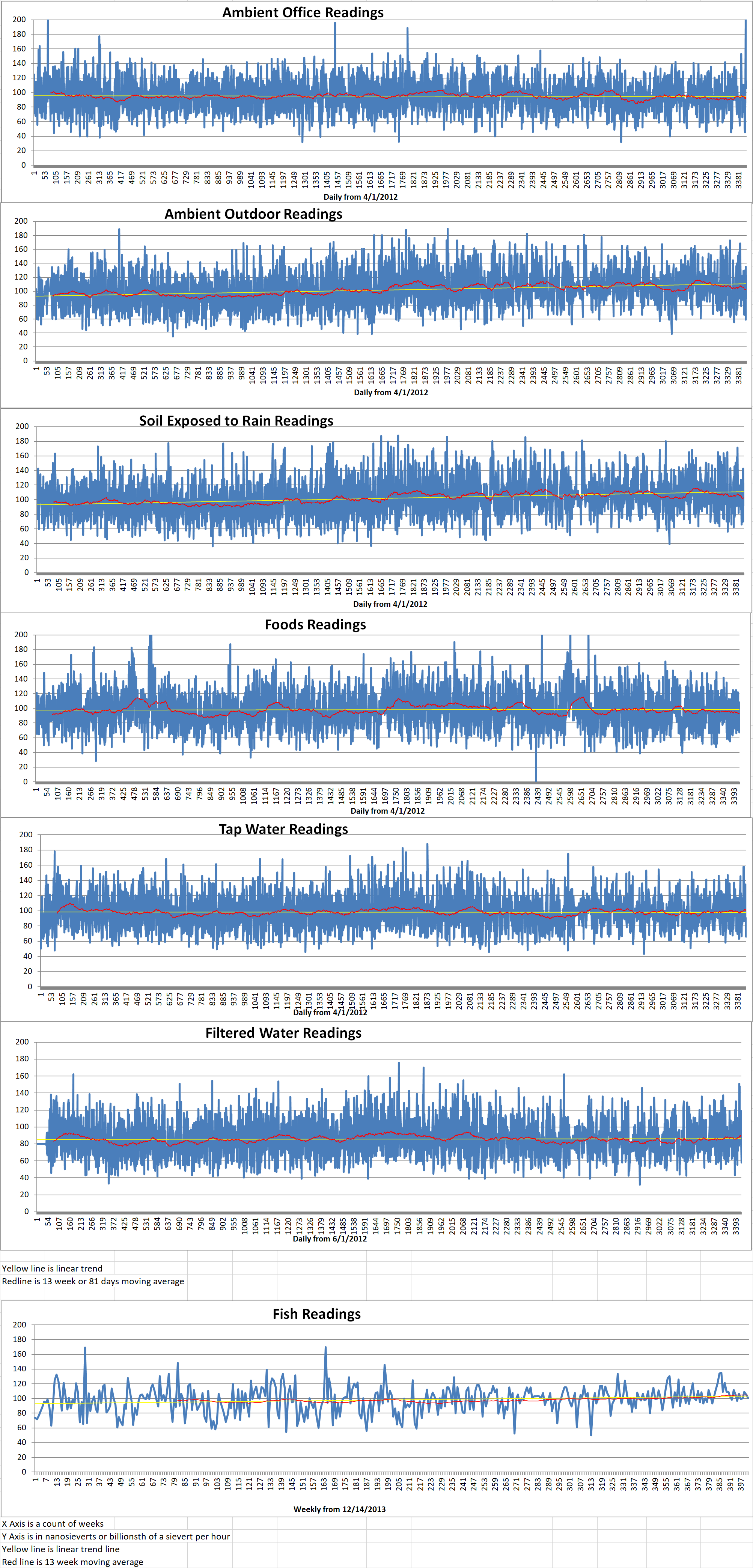
Geiger Readings for Nov 09, 2021
Ambient office = 106 nanosieverts per hour
Ambient outside = 122 nanosieverts per hourSoil exposed to rain water = 122 nanosieverts per hourCelery from Central Market = 104 nanosieverts per hourTap water = 66 nanosieverts per hourFilter water = 58 nanosieverts per hour -

Nuclear Reactors 969 – Potential Impacts Of Infrastructure Bills On U.S. Nuclear Industry – Part 1 of 3 Parts
Ambient office = 106 nanosieverts per hour
Ambient outside = 122 nanosieverts per hour
Soil exposed to rain water = 122 nanosieverts per hour
Celery from Central Market = 104 nanosieverts per hour
Tap water = 66 nanosieverts per hour
Filter water = 58 nanosieverts per hour
-
Nuclear News Roundup Nov 08, 2021
2021 Top Owners Sourcebook: Delays for Nuclear Units enr.com
Fuel loading under way at Fuqing 6 world-nuclear-news.org
First look: Top Republicans demand nuclear questionnaire axios.com
Argentina invests in nuclear education world-nuclear-news.org
Part 1 of 3 Parts
The U.S. Department of Energy (DoE) announced yesterday that it would begin a six billion nuclear credit program in about four months. The intent of the program is to help keep U.S. commercial power reactors operating. This program will fulfill a mandate in the bipartisan infrastructure bill that President Biden intends to sign Monday.
Jeremiah Baumann is the DoE’s deputy chief of staff. He told reporters yesterday that the owners and operators of commercial nuclear power plants will need to submit application to prove a need and to ensure that taxpayers’ money will be well spent. He went on to say that more details will be released in the coming weeks and months about the process and exactly how the money will be allocated. The program could run for up to five years.
Baumann said, “It’s designed to support those nuclear facilities that need economic support in order to keep operating and keep providing the benefits of that emissions-free power to communities across the country. So it’s not sort of a universally available automatic piece that goes out to anyone.”
Bauman spoke during a DoE briefing that was intended to highlight key energy components of the infrastructure bill which was passed by the U.S. House of Representatives last Friday after months of negotiation. The Biden administration is promoting the benefits of the bill in order to win public support as questions remain about high energy prices. Yesterday in Baltimore, Biden referred to the bill as “a once-in-a-generation investment to create good-paying jobs, modernize infrastructure, turn the climate crisis into an opportunity.” The larger “Build Back Better Act” is still pending in Congress. It could provide even more benefits to the nuclear industry if it becomes law. It may include a production tax credit for operating nuclear power plants.
Nuclear power reactors remain a critical piece of the U.S. grid. The U.S. Energy Information Administration stated that it accounted for about twenty percent of the nation’s electricity generation mix last year. However, nuclear power still remains controversial among critics who point to operational safety problems and to issues with permanently dispose of spent nuclear fuel.
Some advocates have raised concerns about giving economic aid to reactors that could affect prices for other power generators or delay renewable energy expansion. Some reactors have closed or announced plans to shutter in recent years. Some states have sought to provide subsidies to keep them running.
The Electric Power Supply Association (ESPA) represents competitive electricity suppliers. They declined to comment yesterday on the nuclear credit program in the recently passed infrastructure bill. The ESPA has stated that subsidies for existing nuclear sources such as zero-emission credits would “distort market outcomes, inhibit private development of clean energy alternatives and divert government funds away from research and development for nascent advanced nuclear technologies.”
Bauman told reporters that the U.S. “can’t afford to have this setback of losing a lot of carbon-free electricity” from a climate standpoint. He pointed out that it is a “top priority” to keep the country’s fleet of operating nuclear reactors “wherever appropriate and safe” as additional clean energy is needed.
Please read Part 2 next -
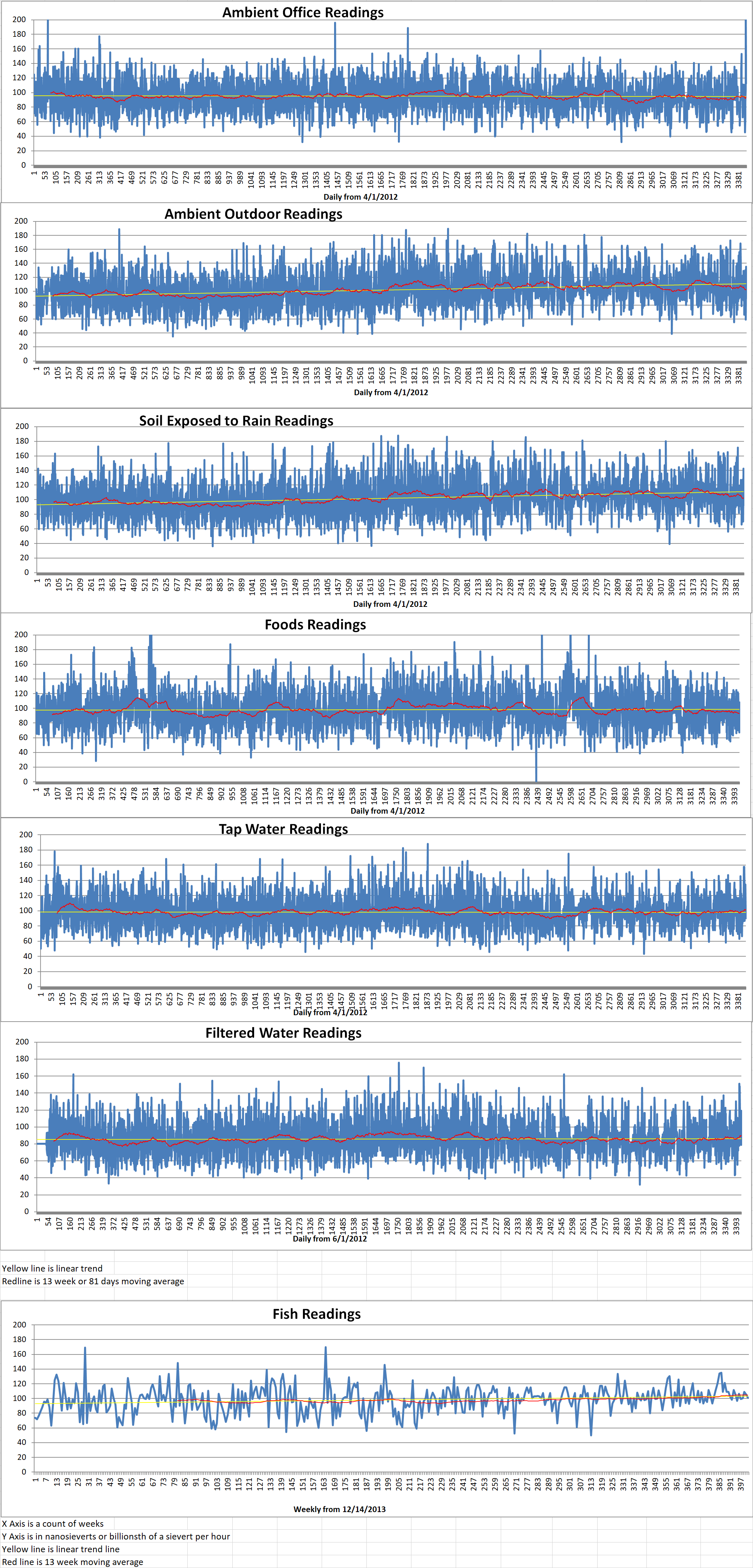
Geiger Readings for Nov 08, 2021
Ambient office = 116 nanosieverts per hour
Ambient outside = 104 nanosieverts per hour
Soil exposed to rain water = 100 nanosieverts per hour
Yellow onion from Central Market = 108 nanosieverts per hour
Tap water = 90 nanosieverts per hour
Filter water = 82 nanosieverts per hour
-
Nuclear News Roundup Nov 07, 2021
Turkey plans to introduce 2nd, 3rd nuclear power plants: Erdoğan hurriyetdailynews.com
‘Minor material deficiency’ in nuclear propulsion plant sidelines USS Nimitz navytimes.com
China: Homes of 200,000 residents in Haiyang now fully heated by nuclear power hindustantimes.com
NBP ready to support government in building nuclear power plants in Poland thefirstnews.com
-
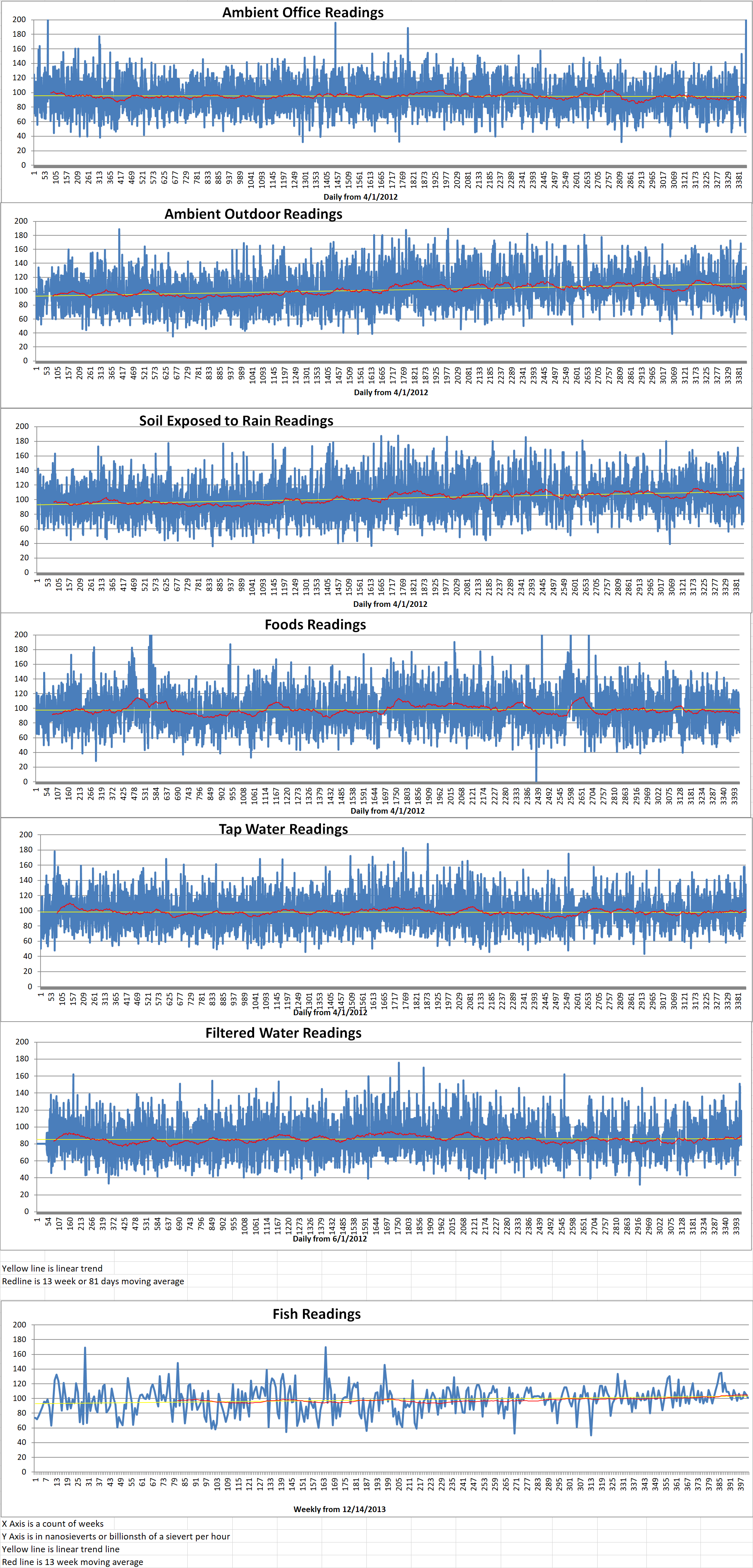
Geiger Readings for Nov 07, 2021
Ambient office = 76 nanosieverts per hour
Ambient outside = 84 nanosieverts per hour
Soil exposed to rain water = 87 nanosieverts per hour
English cucumber from Central Market = 87 nanosieverts per hour
Tap water = 119 nanosieverts per hour
Filter water = 109 nanosieverts per hour
-
Nuclear News Roundup Nov 06, 2021
Iran claims it’s almost doubled stockpile of enriched uranium with nuclear talks set to resume cbsnews.com
Isotope-producing legacy waste disposition project moves to next phase world-nuclear-news.org
Why nuclear power for Australia is just a grand fantasy theaustralian.com.au
Cape Nagloynyn contracts take shape world-nuclear-news.org
-
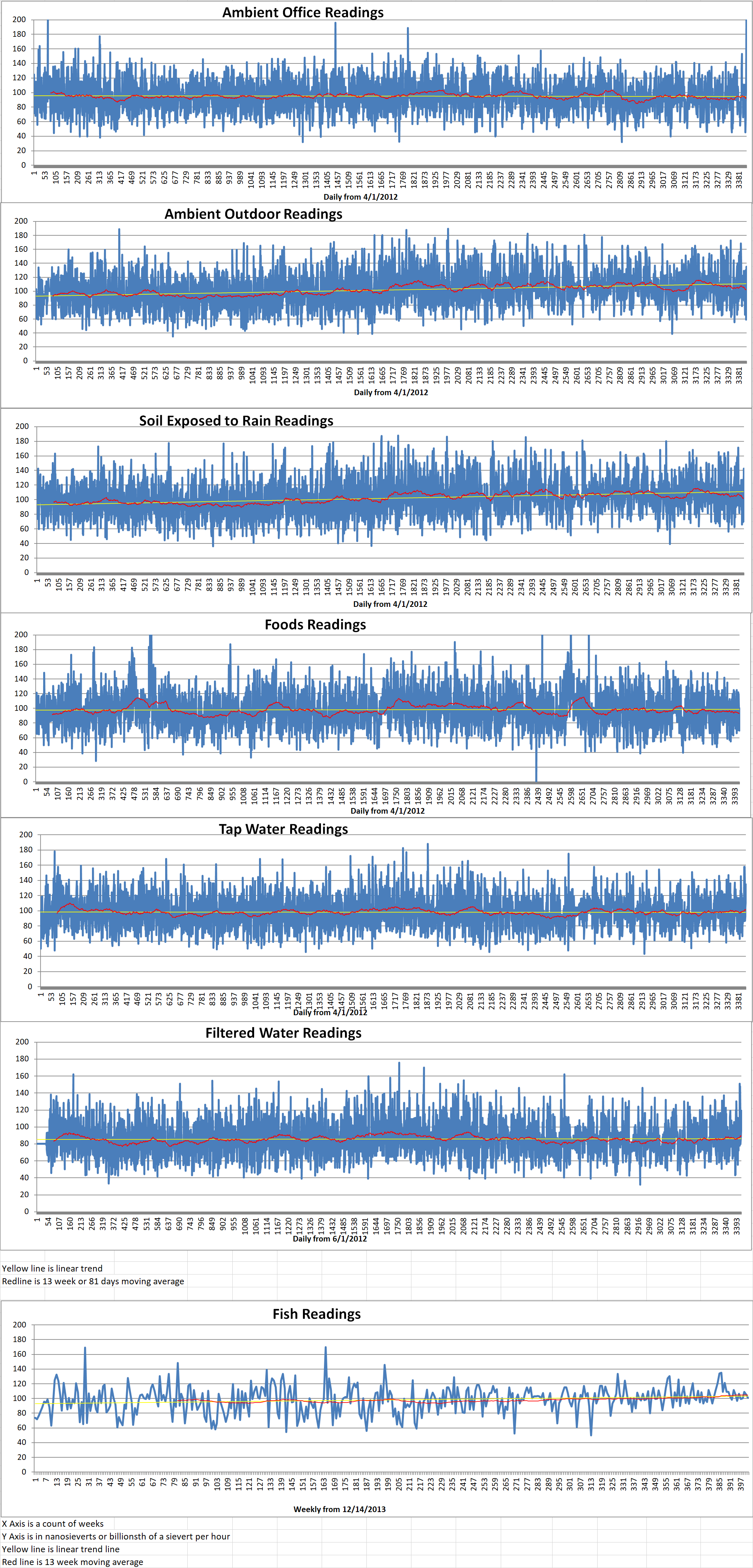
Geiger Readings for Nov 06, 2021
Ambient office = 76 nanosieverts per hour
Ambient outside = 84 nanosieverts per hour
Soil exposed to rain water = 87 nanosieverts per hour
Blueberry from Central Market = 87 nanosieverts per hour
Tap water = 119 nanosieverts per hour
Filter water = 109 nanosieverts per hour
Dover sole – Caught in USA = 101 nanosieverts per hour