
The Waste Isolation Pilot Plant (WIPP) is a federal facility in an old salt mine near Carlsbad, New Mexico. The plant was completed about twenty years ago and put into operation to receive shipments of radioactive waste from national laboratories and nuclear weapon production facilities around the U.S. The waste includes special boxes and barrels packed with lab coats, rubber gloves, tools and debris contaminated with plutonium and other radioactive elements. No liquid is allowed in the drums that are shipped to WIPP.
The WIP has been operating for over two decades and has received almost thirteen thousand shipments. It is believed that the shifting salt in the old salt mine will eventually encapsulate the waste after the underground chambers are filled and sealed.
In 2014, a barrel from the Los Alamos National Laboratory was treated with a new absorbent that had not been sufficiently tested. The chemical processes in the barrel generated hydrogen gas which accumulated and eventually exploded. Problems with the air conditioning and filters allowed radioactive materials to escape from repository into the surrounding countryside.
The incident slowed down the federal government’s cleanup program. It also prompted policy changes at national laboratories and defense related sites around the U.S. New Mexico state regulators are considering a permit change that some critics say could make expanded operations at the WIPP possible. A final decision is expected later this year.
The WIPP was closed for three years while expensive cleanup and repairs were carried out. The repository is operating again. Lack of space became a serious concern following the 2014 event because some areas of the mine had to be close off.
The U.S. government has been mining a new chamber called Panel 8 at the WIPP. The new chamber took seven years to dig and will be put into use beginning next year. Workers still need to run power lines to the newly excavated. Air monitors and chain link to protect the walls also need to be installed.
Reinhard Knerr is a manager with the Department of Energy’s Carlsbad Field Office. He said that the completion of Panel 8 had taken a long time, but it will be ready just in time because Panel 7 is expected to be full by next April.
The rooms that make up Panel 8 are three hundred feet long, thirty-three feet wide and fifteen feet high. Operators say that laser measuring devices were used to guide the mining machines that cut the salt. Big trucks were used to take the removed materials to a hoist that moved them to the surface. More than one hundred fifty-seven thousand tons of salt were mined during the Panel 8 project.
The next project at the WIPP will be for the mining machines to carve out passageways that will connect Panel 8 to a utility shaft that is currently under construction.
There have been a number of incidents at national laboratories and at the WIPP which suggest that regulations have not been followed properly in the operation of the repository. Hopefully things will run more smoothly in the future at the WIPP.
Blog
-

Radioactive Waste 826 – A New Chamber Is Being Dug At The Waste Isolation Pilot Plant In New Mexico
-
Nuclear News Roundup Oct 18, 2021
France unveils nuclear power overhaul – with an eye on China franc24.com
New Belgian transport vehicle for solid wastes world-nuclear-news.org
Urenco launches new radioisotope cascade world-nuclear-news.org
US suspends authority to ship nuclear materials to China neimagazine.com
-
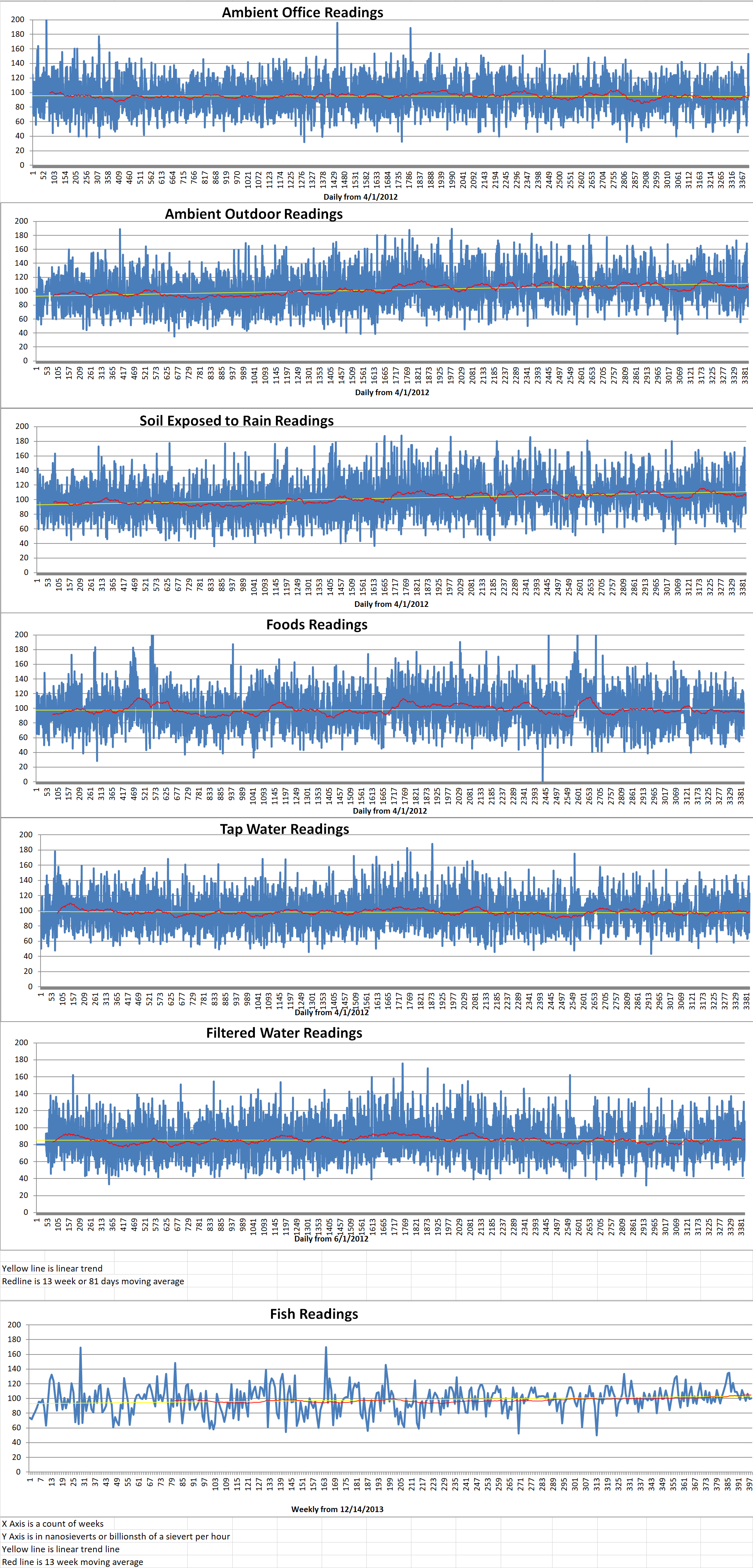
Geiger Readings for Oct 18, 2021
Ambient office = 96 nanosieverts per hour
Ambient outside = 108 nanosieverts per hour
Soil exposed to rain water = 108 nanosieverts per hour
Gala Apple from Central Market = 72 nanosieverts per hour
Tap water = 112 nanosieverts per hour
Filter water = 105 nanosieverts per hour
-
Nuclear News Roundup Oct 17, 2021
$224M Georgia Power rate hike likely for nuclear plant abcnews.go.com
Fuel loading completed at Shin Hanul 1 world-nuclear-news.org
Iran Not Ready to Restart Nuclear Talks, Wants to Discuss Texts First Haaretz.com
Germans asked to keep reactors in operation world-nuclear-news.org
-
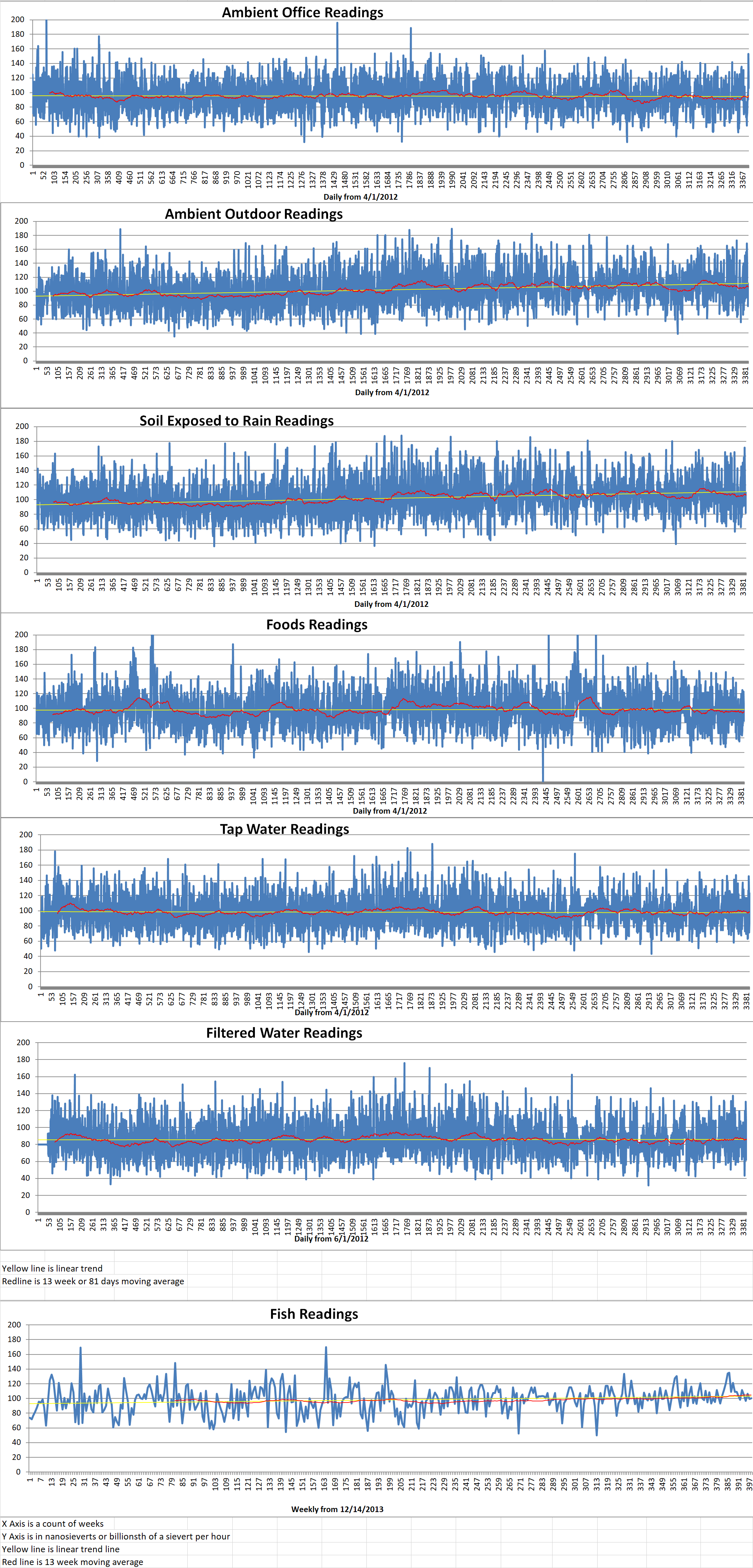
Geiger Readings for Oct 17, 2021
Ambient office = 108 nanosieverts per hour
Ambient outside = 100 nanosieverts per hour
Soil exposed to rain water = 102 nanosieverts per hour
Shitake mushroom from Central Market = 94 nanosieverts per hour
Tap water = 23 nanosieverts per hour
Filter water = 107 nanosieverts per hour
-
Nuclear News Roundup Oct 16, 2021
UPDATE: DEP says nuclear gauge located fox56.com
Lake County distributing potassium iodide to anyone living or working near Perry Nuclear Power Plant news5cleveland.com
Viewpoint: Welcome nuclear newcomer countries to the nuclear family world-nuclear-news.org
France makes nuclear offer to Poland world-nuclear-news.org
-
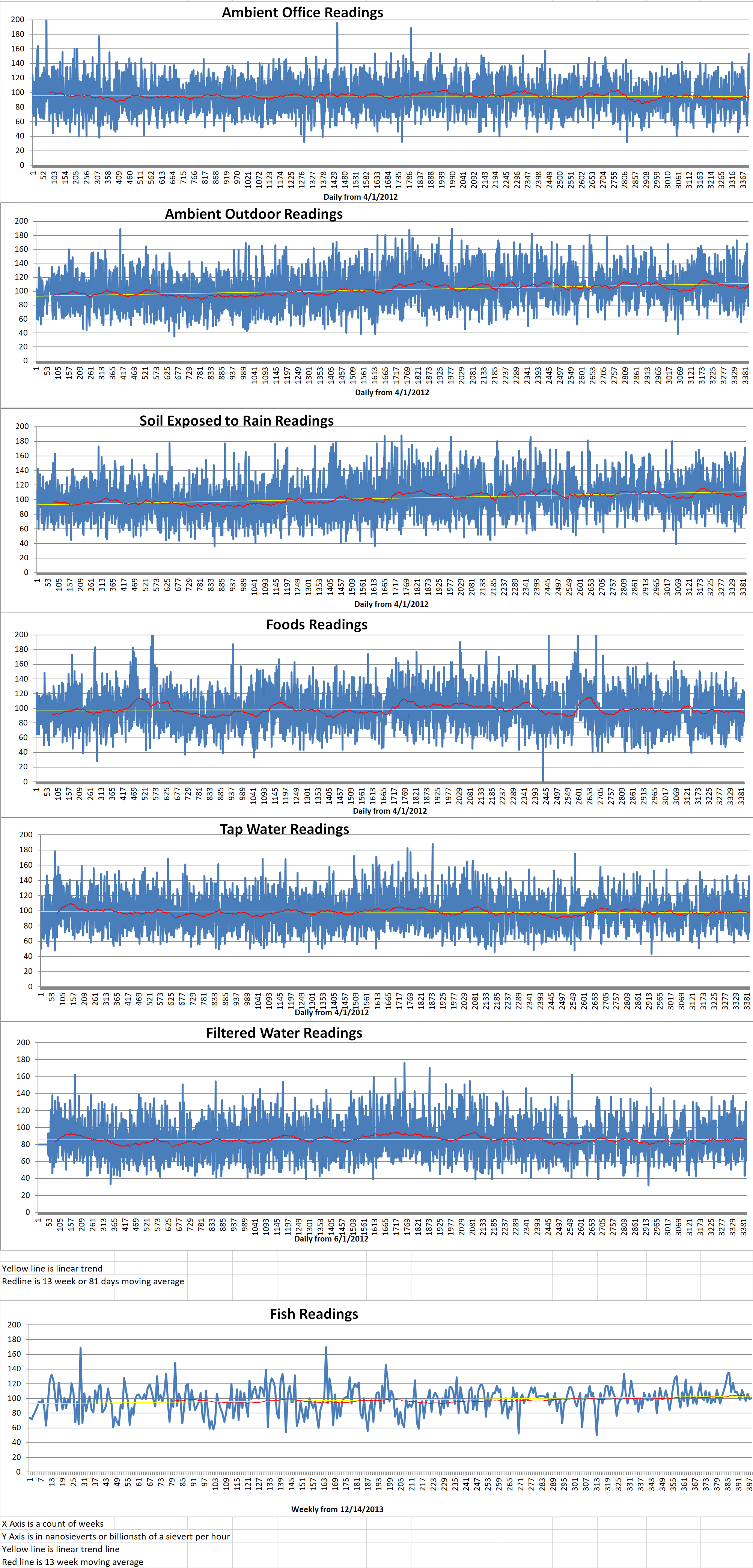
Geiger Readings for Oct 16, 2021
Ambient office = 106 nanosieverts per hour
Ambient outside = 111 nanosieverts per hour
Soil exposed to rain water = 109 nanosieverts per hour
English cucumber from Central Market = 83 nanosieverts per hour
Tap water = 89 nanosieverts per hour
Filter water = 76 nanosieverts per hour
Dover sole – Caught in USA = 100 nanosieverts per hour
-
Radioactive Waste 825 – Tritium Exposure – Part 3 of 3 Parts
Part 3 of 3 Parts (Please read Parts 1 and 2 first)
The production of tritium is not usually a goal in existing nuclear reactors, but it does occur as a side product in pressurized water reactors (PWRs) which utilize boric acid as a neutron poison in their primary cooling loop. This is done to help moderate the nuclear fission chain reaction. Boron-10 can sometimes capture a neutron and produce helium-4 and tritium. In heavy water reactors such as the CANDU, deuterium can also capture neutrons and convert into tritium.
Most of the tritium that is produced in the reactor’s primary cooling loop remains there and is eventually removed for commercial and research purposes. Because tritium is a hydrogen isotope, it also has the capability of hydrogen to escape attempts to contain it. Nuclear reactors have a problem containing the tritium inside the primary cooling loop.
Generally, the place where some tritium migrates into the secondary cooling loop is through the heat exchanger. These are devices where heat transfer efficiency is very important. This means that the walls of heat exchangers are usually made of thin nickel alloy. Although, these alloys are resistant to embrittlement by hydrogen diffusion, these heat exchangers do allow some hydrogen to pass through. This hydrogen winds up at the turbines and in the cooling water that is either released into a nearby body of water or into the atmosphere in a cooling tower.
Since HWRs and PWRs produce a significant amount of tritium in normal operation in their primary loops, this means that relatively more hydrogen including tritium will migrate into their secondary cooling loop. New alloys being developed for heat exchangers may reduce the amount of tritium in the secondary loop. More effective capture mechanisms may allow even the low amounts of tritium in the secondary loop to be removed.
All of these issues will also be of importance in the development of future fusion reactors. Many of these reactor designs utilize a deuterium-tritium fuel mixture. There are also increasing uses of hydrogen in industrial and other applications. Containing hydrogen isotopes is critical regardless of whether it is merely a waste product as it is in fission reactors, or an ingredient in an industrial process, a fuel or an energy carrier.
Many analysts feel that the most harmful part of the use of the LNT model is that it may create the illusion that a world with zero radiation is somehow possible or, at the very least, highly desirable.
The release of tritium by nuclear fission power plants and other artificial sources such as discarded tritium-based batteries and self-illuminating signs is undesirable. There needs to be more research into ways to limit its impact but that is not a significant issue. We live on a planet with radioactive materials in the soil, water and atmosphere, and the atmosphere also protects us from cosmic rays and other radiation hazards.
Research will continue into different models of the dangers of radiation exposure and time will tell whether the LNT or LDR are more accurate ways of modeling the risks of radiation exposure. -
Nuclear News Roundup Oct 15, 2021
France: Iran must show willingness to resume nuclear deal talks jpost.com
Pentagon Denies Chinese Accusation of Cover-Up in Nuclear Attack Submarine Crash news.usni.org
Dismantling of Belvoir nuclear reactor set to begin wtop.com
Radioactive liquid spilled outside Tri-Cities nuclear fuel plant. Here’s what happened tri-cityherald.com
-
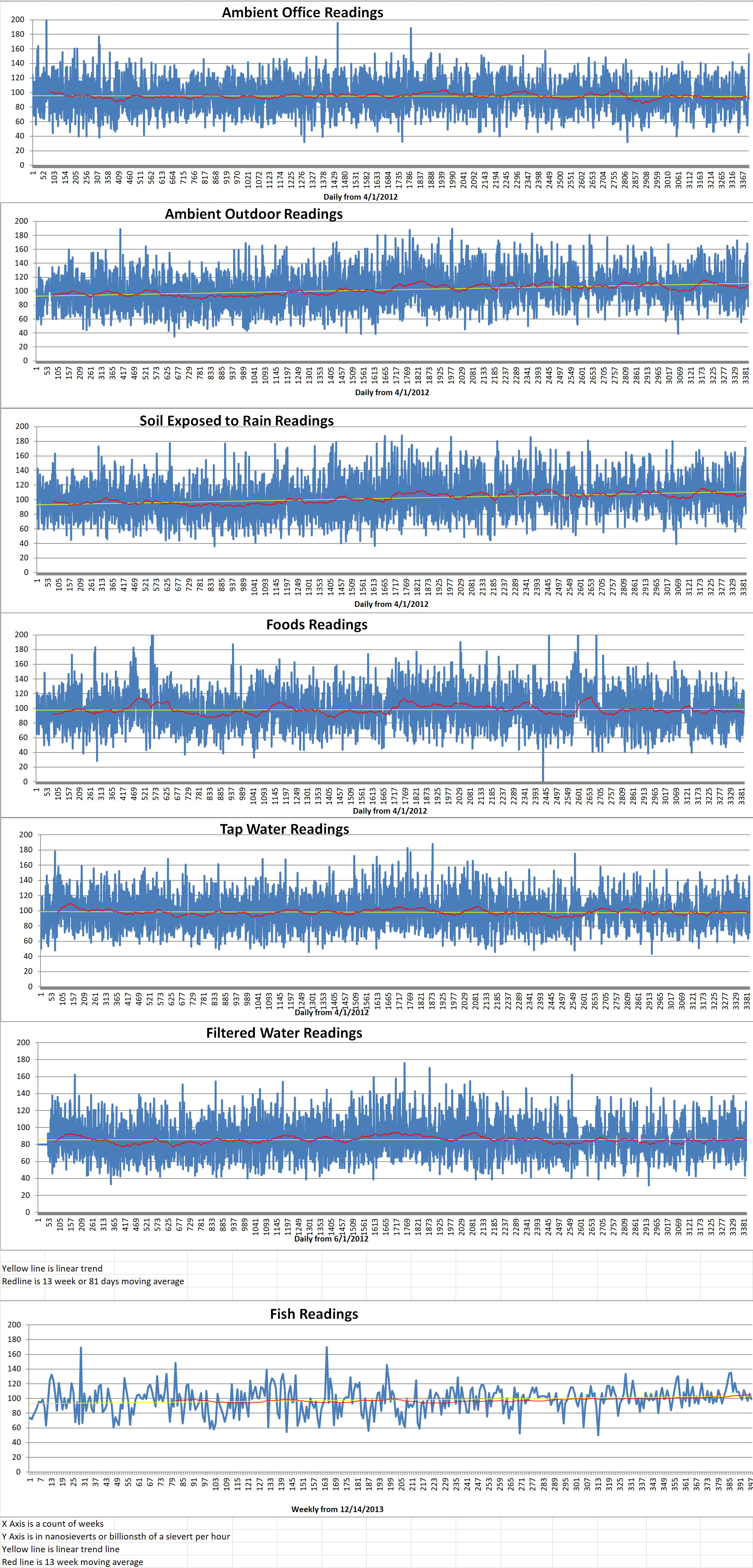
Geiger Readings for Oct 15, 2021
Ambient office = 153 nanosieverts per hour
Ambient outside = 79 nanosieverts per hour
Soil exposed to rain water = 82 nanosieverts per hour
Blueberry from Central Market = 107 nanosieverts per hour
Tap water = 72 nanosieverts per hour
Filter water = 62 nanosieverts per hour