Part 1 of 2 Parts
I have been posts a lot of articles lately about the race to create commercial nuclear fusion. A lot of companies and institutions are taking part in the research. Last year, I posted about a spin-off from M.I.T.’s Plasma Science and Fusion Center called Commonwealth Fusion Systems. Today I am posting an update on their research.
Researchers at M.I.T.’s Plasma Science and Fusion Center and engineers at the company, Commonwealth Fusion Systems, have started testing an extremely powerful magnet that is needed to trigger nuclear fusion to generate immense heat which can then be converted to electricity. It is one step on the path towards the creation of a commercial nuclear fusion reactor. Nuclear fusion is a desirable energy source because it can help mitigate climate change while producing no carbon dioxide or toxic waste.
Despite decades of investment and aggressive promises, there has been no commercial payoff for fusion research. There is a long history of nuclear fusion research but, so far, scientists and engineers have yet to create a fusion system that will generate more power than it consumes.
Though the necessary breakthroughs that are needed for commercial nuclear fusion reactors have not yet been achieved, it is still promoted as one of the possible paths to ending reliance on fossil fuels. Some researchers believe that fusion research could finally make that critical leap during this decade.
More than two dozen private companies in the U.S., Europe, China and Australia as well as government-funded consortia in some countries are now investing heavily in efforts to construct commercial fusion reactors. Total investment in such research is approaching two billion dollars.
Some of the startups and consortia are constructing powerful lasers to generate fusion reactions while others are exploring new kinds of fuel. Most of them say that they believe that they will be able to prove that their technology can generate competitively priced electricity by the end of this decade. They claim that they will be able to construction commercial nuclear fusion power plants to send electricity to the power grids soon after 2030.
Commonwealth’s revolutionary new magnet will be one of the most powerful in the world. It will be a critical component in compact nuclear fusion reactors called a Tokamaks. Tokamaks use magnetic fields to compress plasma until it is hotter than the center of the sun. Tokamaks are donut shaped reactors surrounded by magnets. They were first considered by Soviet scientists in the 1950s.
Commonwealth claims that their magnet is a significant technological breakthrough that will make Tokamak designs commercial viable for the first time. They say that they are not yet ready to test their reactor prototype. Their researchers are just completing the new magnet and hope that it will be operational by 2025.
The Commonwealth scientists hope that they will soon be able to generate a magnetic file that is almost twice the strength of the magnets that are planned for use by a global consortium of the European Union and six other countries who are assembling an experimental fusion reactor named ITER in Cadarache, France. The ITER consortium hopes to be able to generate electricity at the site by 2035.
Please read Part 2 next
Blog
-

Nuclear Fusion 145 – MIT Scientists And Commonwealth Fusion Systems Are Constructing Powerful New Magnets For Tokamaks – Part 1 of 2 Parts
-
Nuclear News Roundup Aug 12, 2021
Is This Scenic Dutchess County Spot a Hotbed of Nuclear Waste? Wpdh.com
Jacobs selected for Cape Town nuclear plant refurbishment globalconstructionreview.com
Long-Range Conventional Precision Strike: Taiwan’s Post-Nuclear Deterrent? Thediplomat.com
-
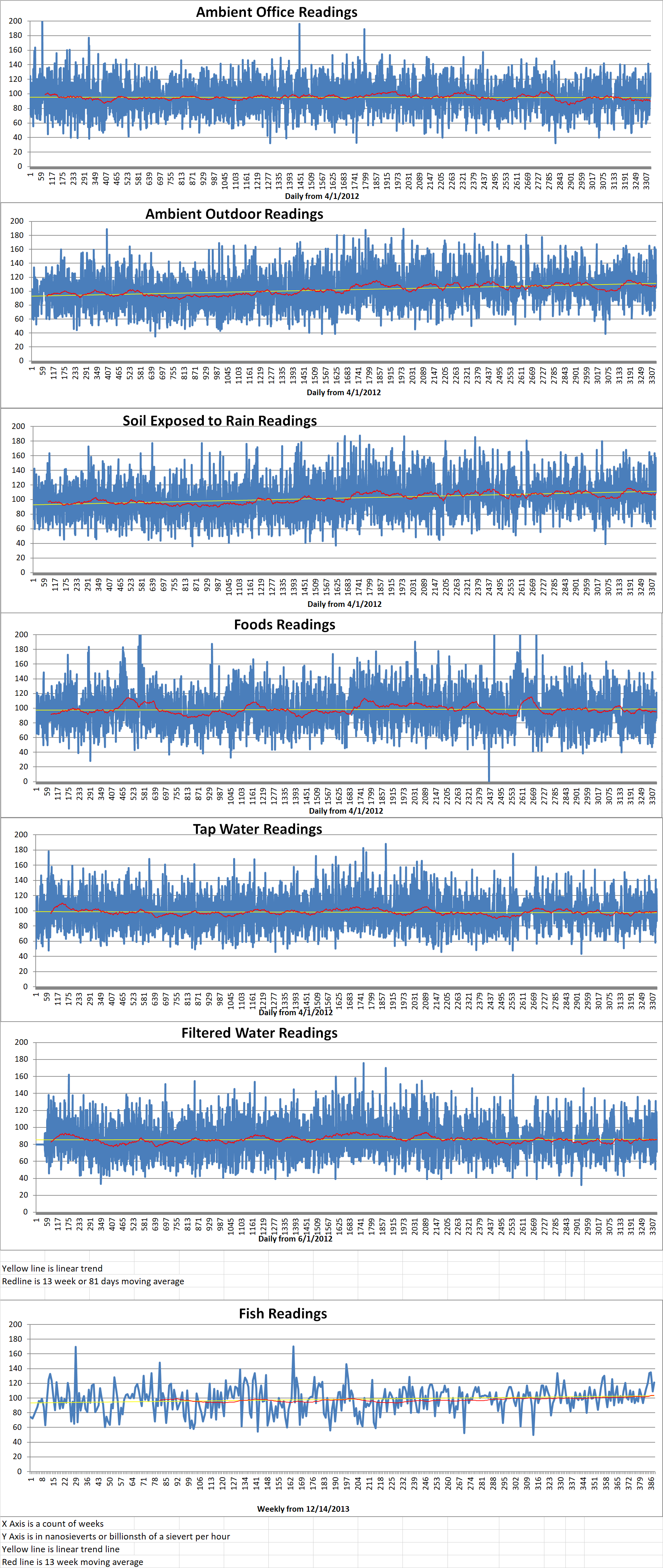
Geiger Readings for Aug 12, 2021
Ambient office = 128 nanosieverts per hour
Ambient outside = 123 nanosieverts per hour
Soil exposed to rain water = 122 nanosieverts per hour
Avocado from Central Market = 100 nanosieverts per hour
Tap water = 92 nanosieverts per hour
Filter water = 72 nanosieverts per hour
-

Nuclear Reactors 938 – Problems At The Utah Small Modular Reactors Project
Energy sources are a major topic of discussion for U.S. municipalities. Critics of many proposed projects believe that when it comes to the use of public funds, taxpayers and communities of states such as Utah should not act as venture capitalists for risky bets on untried energy systems. The Utah Associate Municipal Power Systems (UAMPS) is recruiting towns and communities around the western U.S. to pay for a type of nuclear power referred to as small modular reactors (SMRs). If this project goes forward, the reactors will be constructed in southern Idaho.
Last fall, seven Utah cities from Logan to Lehi withdrew their support for the UAMPS nuclear project because of the financial risks that their residents should not be asked to accept. However, many municipalities, such as Brigham City, Hyrum, Hurricane and Washington City are still willing to risk gambling with their taxpayer dollars.
If SMRs are ready for market, then the private sector should show it by putting up its money. Governments should stay out of it especially when public funds are at risk. The participation commitments that UAMPS has been demanding from Utah communities that are interested in buying the SMR electricity require upfront payments from residents for a product that is full of uncertainty. Oregon-based NuScale is the developer of the SMRs but they have never built a plant like this before. The design keeps changing and it is almost a decade away from even being potentially operational.
Any investment of public dollars from those municipalities willing to gamble their money must be done in the open with public scrutiny. Unfortunately, the information exchange between UAMPS and its potential payers has been opaque. When information is provided, it is troubling. For example, the budget for the project has expanded from an initial estimate of three billion to a more recent estimate of six billion, It was only recently revealed that the company that was going to operate the plant, Energy Northwest, withdrew in March.
In late June, UAMPS suddenly decided to reduce the number of SMRs at the planned power plant from twelve to six because they were struggling to get enough communities to commit to justify twelve units. This reduction led to a hike in the projected price that UAMPS had been promising which upset the still-participating municipalities.
Plenty of Utah city council members have heard their constituents and have said “thanks but no thanks”. Bountiful, Kaysville, Murray, Lehi and Heber were some of biggest subscribers to the SMRs proposal but have since left the project. However, other municipalities remain official interested in this particular power project and are continuing their participation. If you reside in any of the communities still in the project, pay attention and watch your power bill. There may still be an opportunity to withdraw from the project.
Utah municipalities should be conservative watchdogs of tax dollars. Prudent and transparent use of public money is acceptable. Unproven technology and murky promises that keep shifting are not acceptable. At this time, SMRs are a venture, not a product. Let private venture capital come in and pay for such projects, not Utah taxpayers. -
Nuclear News Roundup Aug 11, 2021
Reactor vessel annealed in Armenia world-nuclear-news.org
The Case for a New North Korean Nuclear Deal thediplomat.com
How Iran’s Deadly Tanker Attack Is Linked to the Nuclear Deal foreignpolicy.com
Doosan awarded second Chinese IAPS contract world-nuclear-news.org
-
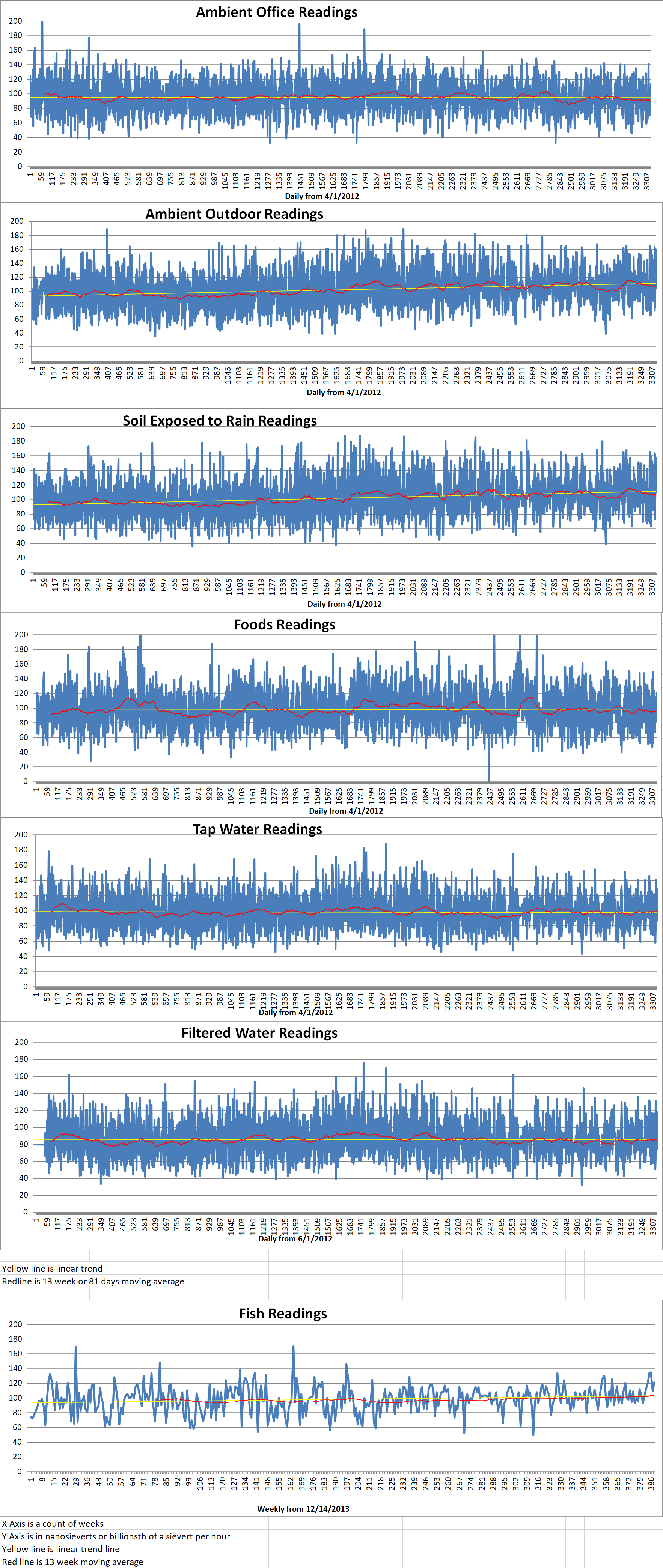
Geiger Readings for Aug 11, 2021
Ambient office = 114 nanosieverts per hour
Ambient outside = 105 nanosieverts per hour
Soil exposed to rain water = 110 nanosieverts per hour
Crimini mushrooms from Central Market = 121 nanosieverts per hour
Tap water = 89 nanosieverts per hour
Filter water = 75 nanosieverts per hour
-
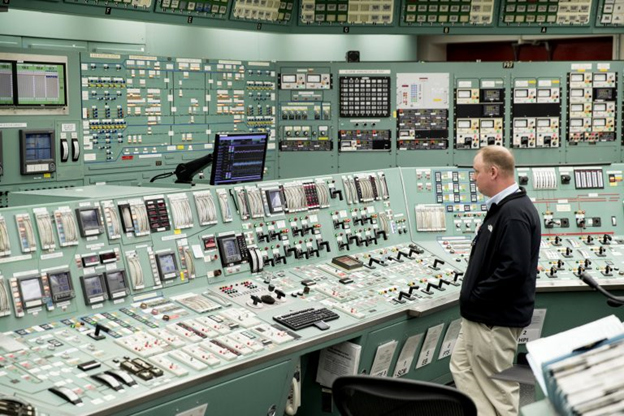
Nuclear Reactors 937 – Virtual Reality Is An Excellent Training Tool For Nuclear Power Plant Operators – Part 2 of 2 Parts
Part 2 of 2 Parts (Please read Part 1 first)
Workers must be well trained in the operation and maintenance of nuclear fuel handling systems in a nuclear power plant. Safe handling of nuclear fuel rod assemblies is critical to ensure smooth functioning. However, the configuration of the fuel channels in the reactors is very complex and training the engineers in real environments can be difficult. Through computer simulations, VR provides a safe and highly realistic simulated environment where workers can learn about handling fuel without exposure to radiation or compromising the structural integrity of the reactor.
Preparing for accidents and emergencies that could happen at a commercial nuclear power plant is a critical necessity. Laws in each nuclear-powered country require nuclear operating companies to develop and maintain emergency preparedness plans for their nuclear power plants to protect the public. However, planning and managing such training can consume a considerable amount of time and resources. This is one place where training in a simulated environment is important. Emergency situations such as loss of electricity supply, failure of emergency generators, failure of cooling systems or leaks can be recreated in a virtual environment for training and testing purposes. Virtual environments allow users to test the correct operation of the devices, tools and procedures that would be used in different emergency situations. It also helps to maintain the level of preparedness of the staff that would be involved in these emergencies.
In addition, VR enables testing of the response time and the communication and decision-making skills of the teams in emergency situations that could not be created in real life.
Most of the nuclear industry still uses tradition training methods such as computer-based training, with limited sessions of on-site training. This means that engineers are not always certain about what needs to be done in real life in an actual environment.
VR allows the creation and simulation of virtual worlds. These worlds immerse trainees in the virtual environment as if they were inside an actual nuclear power plant. In a VR environment, trainees can move around the simulated plant in complete safety. VR controllers allow the trainee to interact with virtual control panels, turbines and fuels in the simulated virtual world. This is not possible in real-life training. VR training results in higher reproducibility and safety. It is also cost-effective, since multiple sessions can be conducted at relatively low cost. Studies have indicated that VR-enabled training has improved the overall responsiveness of those working at nuclear power plants.
The best aspect of VR is that it allows real-time collaboration and creates an accurate immersive environment. Assembly, operations, maintenance, and decommissioning of nuclear power plants training through VR can be used at all stages at a fraction of the costs of other options and in complete safety. The nuclear industry can use VR training to increase efficiency and maximize operations. It is a very safe way to train teams and attract young workers to the industry who may be familiar with VR from video games and entertainment. -
Nuclear News Roundup Aug 10, 2021
Vigil held at East End Park to encourage peace and nuclear disarmament winstedphoenix.org
Merrimac Emergency Management Asks Residents to Take Seabrook Nuclear Power Station jgpr.net
UK NIA says electricity imports undermine energy security neimagzine.com
Minutman III test launch showcases readiness of U.S. nuclear force’s safe, effective deterrent afgsc.af.mil
-

Geiger Readings for Aug 10, 2021
Ambient office = 97 nanosieverts per hour
Ambient outside = 129 nanosieverts per hour
Soil exposed to rain water = 129 nanosieverts per hour
Peach from Central Market = 87 nanosieverts per hour
Tap water = 87 nanosieverts per hour
Filter water = 80 nanosieverts per hour
-

Nuclear Reactors 936 – Virtual Reality Is An Excellent Training Tool For Nuclear Power Plant Operators – Part 1 of 2 Part
Part 1 of 2 Parts
Commercial nuclear fission power reactors have operated safely for the most part during the last seventy years. However, they are still prone to severe accidents or production losses caused by human errors. Virtual reality (VR) makes it possible to create realistic and immersive training environments relating to nuclear power plants in order to train operators on how to perform critical tasks safely. VR training enables operators to practice various situation in a virtual site including such things as emergency evacuation, plant operation, fuel handling, leaks and fires. Because the simulated environment feels extremely realistic, it creates a highly realistic experience to teach the right response in difficult situations.
Turbine generators must have periodic inspections and maintenance. However, carrying out hands-on training in maintenance of the turbines and engines in a nuclear plant can be a challenge because of the time required, the risks and the costs involved. VR makes it possible to train maintenance engineers in a more engaging and safer manner without the problems of finding the actual equipment to use during training. From assembly to dismantling of turbines, through repair, a virtual environment assists technician to go through various steps of training and see all the part working together before they do it in a real reactor.
Operators must be properly trained to handle critical functions in the control room of a nuclear power plant. VR has been proven to be an effective and efficient training tool. In order to enhance users’ understanding of nuclear fission reactor principles, a VR system based on a simulator can be developed to interface with possible scenarios in nuclear power plants. With VR, a nuclear power plant can supply an immersive training experience to its operators without affecting the safety of the power plant. Utilizing VR, owners of a power plant can simulate everything from basic operations to emergency situations, with real-life stress factors to make training very realistic.
Entrance to a commercial nuclear power plant is restricted and not usually open to young engineers or visitors. VR permits engineers to perform the activities inside the plant, freely navigating it to develop a better understanding of the orientation of the plant without compromising safety. Virtual tours of commercial nuclear power plants allow visitors to experience the control room, dive down into the reactor or go to the turbine hall and switch yard.
Providing training for the decommissioning of commercial nuclear power plants is a lengthy process. VR gives workers a sense of what it is like in the reactors in reality. It is able to serve a critical role in training teams to decommission the reactors. VR training can assist nuclear power plant workers at decommissioning sites by familiarizing them with the relevant steps required in a safe and controlled environment. Training in highly realistic environments can help prevent accidents. Utilizing VR for decommissioning training is also very cost effect because operators would need disposable protective gear for physical training. Such equipment can be very expensive. In some countries, decommissioning authorities have also started to use VR-powered decommissioning solutions because robots can work faster and are unaffected by continuous exposure to radioactive elements.
Please read Part 2 next