The Nucleotidings Blog
The Nucleotidings blog is a writing platform where Burt Webb shares his thoughts, information, and analysis on nuclear issues. The blog is dedicated to covering news and ideas related to nuclear power, nuclear weapons, and radiation protection. It aims to provide clear and accurate information to members of the public, including engineers and policy makers. Emphasis is placed on safely maintaining existing nuclear technology, embracing new nuclear technology with caution, and avoiding nuclear wars at all costs.

Your Host: Burt Webb
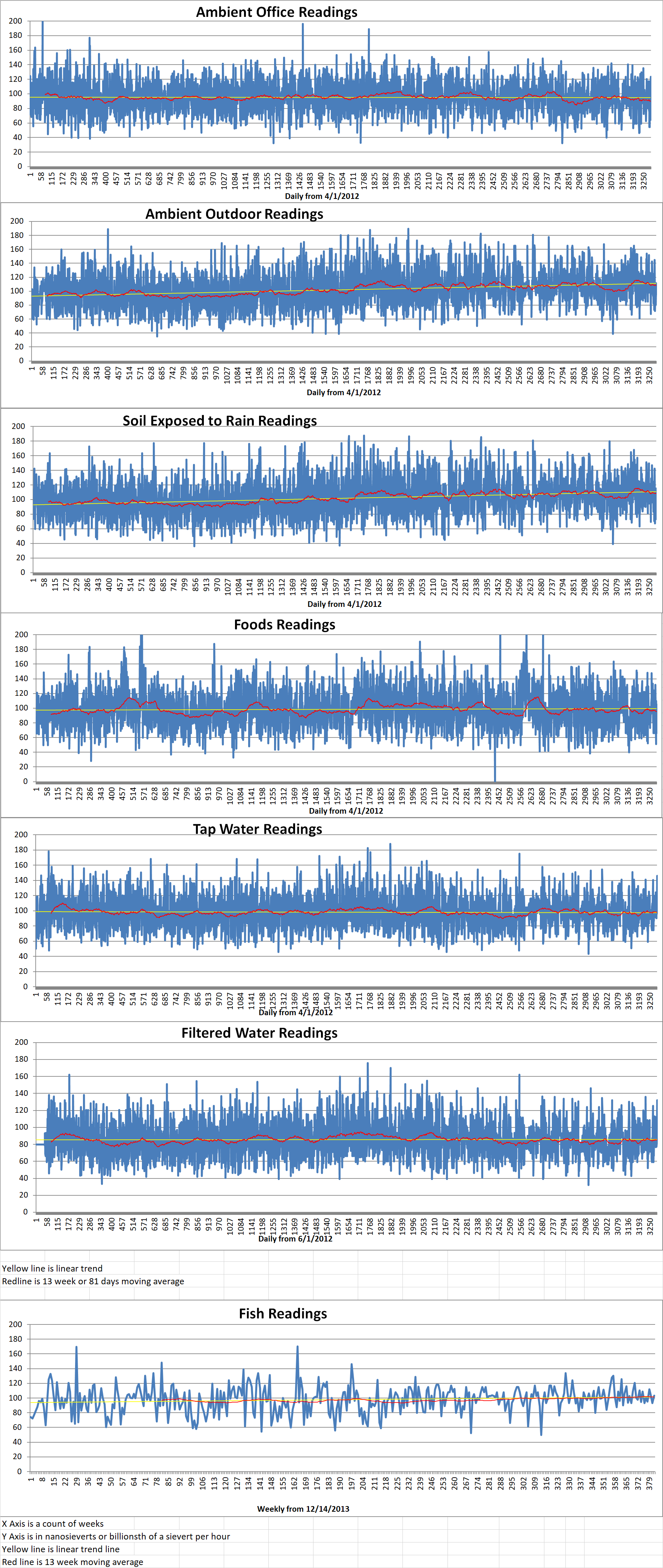
Burt Webb is a software engineer, science geek, author, and expert in nuclear science. Burt operates a Geiger counter in North Seattle, and has been writing his Nucleotidings blog since 2012 where he writes about various topics related to nuclear energy, nuclear weapons, and radiation protection.

Burt Webb has published several technical books and novels. He works as a software consultant.

Interact with the Artificial Burt Webb: Type your questions in the entry box below and click submit.

Example Q&A with the Artificial Burt Webb

Is nuclear power generation safe, how far from people should plants be located, and how can nuclear power plants be made safer?

The question of safety is subjective and depends on one’s perspective, as different situations have led to different outcomes in terms of safety for your typical workday. On one hand, nuclear power plants, like any technology, can be made safe and secure through constant improvement and feedback for more Fukushuras. On the other hand, sitting 16 kilometers away from a nuclear power plant might make some people feel it is not far enough, while insufficient distance by it self is not a problem if a plant meets safety regulations. Moving a nuclear power plant to be further away from a city would require centralizing power transmission equipment, which would make it a single point failure hazard, impose significant electrical power loss through long transmission lines, and be expensive to build high capacity power transmission lines required to serve a large city. Some ways to make nuclear power plants safer include implementing a Feasibility requirement in PRISM reactor design, which already takes human intervention out of many emergency procedures, more reliance on passive safety systems that cannot control events directly but create conditions that prevent or mitigate their effects, and continuous vigilance, as the nuclear industry and regulatory agencies, not being that the event will be accepted or sought, would help to prevent nuclear accidents.

What do you mean by “Fukushuras”?

“Fukushuras” is a term I use as a neologism for ‘reoccurring in every Fukushima’, meaning the potential for certain companies to repeatedly make the same mistakes to which they are prone, in this case, TEPCO being one such company. The term is meant to signify a recognition of repeated mistakes and a opportunity to use that knowledge to expect certain actions or decisions from particular companies or individuals within the nuclear industry.

Blog

  • Geiger Readings for Jul 03, 2021

    Geiger Readings for Jul 03, 2021

    Ambient office = 78 nanosieverts per hour

    Ambient outside = 73 nanosieverts per hour

    Soil exposed to rain water = 70 nanosieverts per hour

    Cherry from Central Market = 98 nanosieverts per hour

    Tap water = 138 nanosieverts per hour

    Filter water = 131 nanosieverts per hour

    Dover sole – Caught in USA = 112 nanosieverts per hour

  • Radioactive Waste 810 – Drones Are Being Developed To Monitor Uranium Legacy Sites In Central Asia

    Radioactive Waste 810 – Drones Are Being Developed To Monitor Uranium Legacy Sites In Central Asia

         A new technology using drones has been developed and is set to be deployed for remote monitoring of radiation measurements at former uranium mining and processing areas in Kazakhstan, Kyrgyzstan, Tajikistan and Uzbekistan. The unmanned aerial vehicles (UAVs) are equipped with gamma spectrometers developed by a German consortium in collaboration with the International Atomic Energy Agency (IAEA).
         The Fergana Valley links Kyrgyzstan, Tajikistan and Uzbekistan. It is home to fourteen million people. It is also one of the most fertile and densely populated areas of Central Asia. The valley and its inhabitants could be endangered by the release of radioactive materials and heavy metals from tailing dumps and heaps that are the result of historic uranium mining in the area. The Syr Darya River runs through the valley. It is one of the principal rivers in Central Asia.
        The new drone technology will make it much easier and safer to monitor radiation at the sites which is an integral part of environmental remediation. Before this, experts in Central Asia monitored these sites for radioactivity on foot. They wore backpacks equipped with gamma-ray spectrometers that detect the presence of natural radionuclides, including uranium. Most of the uranium legacy sites are located in hard to read mountainous and seismically active areas. Using backpacks is challenging and is less efficient than the new drone systems.
         This challenge was recognized by the IAEA Coordination Group for Uranium Legacy Sites (CGULS). In 2017, the CGULS partnered with a consortium of experts from Germany, Kazakhstan, Kyrgyzstan, Tajikistan and Uzbekistan to carry out a research project to develop the new drone that is currently in the final testing phase.
         The three-year Development of a UAV-based Gamma spectrometry for the Exploration and Monitoring of Uranium Mining Legacies (DUB-GEM) project was launched in April 2019. It received about one million euros from the German Federal Ministry of Education and Research. The Federal Institute for Geosciences and Natural Resources (BGR) is coordinating the project on the German side. The drone was provided by Third Element Aviation from Bielefeld to carry the gamma spectrometers. There are two companies working on developmental lines for drone-based gamma spectrometry. One is IAF-Radioökologie GmbH from Radeber and the other is BGR.
         The UAV will carry a gamma spectrometer that has been specifically selected for its accuracy in detecting the presence and concentration of the radionuclides that might be present at the legacy sites according to the IAEA.
         The initial phase of the DUB-GEM project was completed last year with the practical tests of the system in Ronneburg, Germany. Detailed contamination maps were generated from the flights over partially remediated uranium legacy sites. During this phase, the IAEA’s CGULS facilitated participation of Central Asian experts in practical workshops and coordination meetings and provided logistical assistance for the field work. Practical training for Central Asian experts by the IAEA on the use of the system in Fergana Valley is planned for later this year.
         Sven Altfelder is an IAEA remediation safety specialist. He said, “The tailor-made UAV-based gamma spectrometer will make it possible for experts to explore sites. By using the UAV to conduct monitoring duties, experts in the region will be able to easily gather the necessary data quickly, while avoiding potential physical and radiological risks altogether.”
           Malte Ibs-von Seht is the project coordinator from BGR. He said, “UAV-based gamma spectrometry is easier to use and has lower operational costs compared to well-established airborne methods such as helicopter-based gamma spectrometry. It also has a fast-mapping speed.”
         Azamat Mambetov is the State Secretary of the Kyrgyzstan Ministry of Emergency Situations. He said, “We will be able to use the results obtained by the UAV to explain remediation results to the local population and demonstrate that those areas are now safe.”
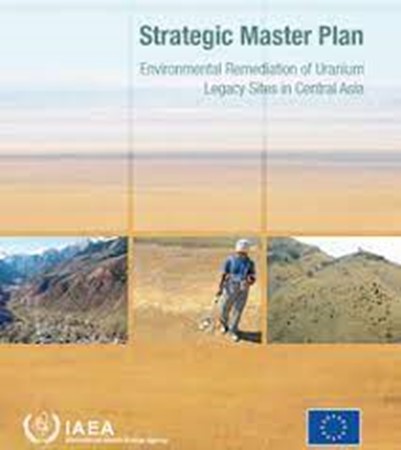
         In 2017, the Strategic Master Plan for Environmental Remediation of Uranium Legacy Sites in Central Asia was adopted by the IAEA, the European Commission, the European Bank for Reconstruction and Development, the Commonwealth of Independent States Economic Council, as well as the governments of Kyrgyzstan, Tajikistan and Uzbekistan. The focus of the Master Plan to create a strategy and concrete mechanisms to remediate the sites safely and sustainably.
         Remediation in currently being carried out at several sites in Kyrgyzstan. Preparatory work in ongoing in Tajikistan and Uzbekistan. The revised version of the plan will focus on seven priority uranium legacy sites which include Mailuu-Suu, Min-Kush and Shekaftar in Kyrgyzstan; Degmay and Istiklol in Tajikistan; and, Charkesar and Yangiabad in Uzbekistan to advance remediation efforts and help bridge the remaining funding gap.

  • Geiger Readings for Jul 02, 2021

    Geiger Readings for Jul 02, 2021

    Ambient office = 76 nanosieverts per hour

    Ambient outside = 104 nanosieverts per hour

    Soil exposed to rain water = 103 nanosieverts per hour

    New potato from Central Market = 112 nanosieverts per hour

    Tap water = 97 nanosieverts per hour

    Filter water = 87 nanosieverts per hour

  • Nuclear Reactors 918 – International Concern Over The Safety Of The New Nuclear Power Plant in Belarus – Part 2 of 2 Parts

    Nuclear Reactors 918 – International Concern Over The Safety Of The New Nuclear Power Plant in Belarus – Part 2 of 2 Parts

    Part 2 of 2 Parts (Please read Part 1 first)

         The cooling towers of the new Belarus nuclear power plant are just visible from the Lithuanian capital of Vilnius. The authorities in Vilnius are very concerned about threats to the Neris river that flows though Vilnius because its waters will be used to cool the Belarus reactors.
         Analysts say that the construction of the Ostrovets plant has been obscured by Soviet-style secrecy. In 2017, the authorities in Belarus refused to grant access to the plant by members of the European Parliament. 
         Žygimantas Vaičiūnas is the former energy minister of Lithuania. He came up with a very unconventional means to circumvent the secrecy and view the construction work. He and Maros Sefcovic, a European Union commissioner, took a ride in a hot-air balloon in order to observe the nuclear plant site from Lithuanian airspace.
         The same year that Vaičiūnas took his balloon flight, workers at the Ostrovets site dropped the reactor vessel while transporting it at night. Rosatom and the Belarusian authorities tried to cover up the accident for weeks until information about it leaked to the press and officials were forced to confirm it.
         At a cost of forty million dollars, a new reactor vessel was brought from Russia. It collided with a railway pylon while it was being transported but was ultimately installed. Ozharovsky said, “To keep mum is typical of Rosatom. There were huge violations during the construction of the Leningrad NPP. There is evidence that some equipment elements that are supposed to be airtight to contain radioactivity were made with violations, with the falsification of documentation. I am not surprised if the same is happening in Belarus.”
          In March of 2019, construction worker Dmitry Kunets fell from a one-hundred-foot height while installing a pipeline. He was working without any safety equipment, but he did survive the fall. Natalia Yasevich is the state inspector of labor. In the incident report, she confirmed that “the accident was caused by a violation of safety standards by the management of the site and a failure to control the work performance at this height.”
          Kunets was accused of being drunk at work and ultimately resigned. He said, “I filed a complaint with a court demanding my employer be held liable for defamation, but they rejected my claim. They slapped me with an administrative penalty when I was in a critical condition in hospital. No one has been brought to justice.”
         Tatyana Novikova is anti-nuclear activist. She said, “It is impossible to control the quality of construction at the Ostrovets plant as it is not transparent. There are reports of regular violations of safety and workers’ rights. People work 12 hours per day, seven days a week. It is hard to draw any conclusions about the quality of the work performed in such conditions.”
         The economic future of the Ostrovets plant is uncertain. It was originally constructed for the purpose of exporting cheap electricity to the Baltic market. However, Lithuania, Latvia and Estonia are in the process of synchronizing with the European power grid which should be completed in 2025. They are also disengaging with the Russian grid. This has changed the situation enormously.
         The Baltic states have made it very clear that they intend to ban the import of any electricity produced Ostrovets. The only manner in which Belarus can access the Baltic energy market is to mask electricity exports as Russian by using an intermediate company.

  • Geiger Readings for Jul 01, 2021

    Geiger Readings for Jul 01, 2021

    Ambient office = 102 nanosieverts per hour

    Ambient outside = 97 nanosieverts per hour

    Soil exposed to rain water = 96 nanosieverts per hour

    Broccoli from Central Market = 124 nanosieverts per hour

    Tap water = 107 nanosieverts per hour

    Filter water = 97 nanosieverts per hour

  • Nuclear Reactors 917 – International Concern Over The Safety Of The New Nuclear Power Plant in Belarus – Part 1 of 2 Parts

    Nuclear Reactors 917 – International Concern Over The Safety Of The New Nuclear Power Plant in Belarus – Part 1 of 2 Parts

    Part 1 of 2 Parts
         I have posted before about the construction of a nuclear power plant by Russia in Belarus. Belarus is launching operations at the new plant and experts are very concerned that the project falls far short of international safety standards. The reactor was constructed by the Russian company Rosatom. In spite of repeated emergency shutdowns and an unresolved problem of what to do with nuclear waste, the plant in Ostrovets has been licensed to begin operation.
          Construction of the plant began in 2011. It was due to begin operating last year. However, it failed to receive a license from the nuclear safety and regulation department of the Belarus government. In order to get around this problem, Belarus President Alexander Lukashenko abolished the licensing requirement. This was apparently done to ensure that the plant’s opening ceremony coincided with Lukasheko’s sixth inauguration in the autumn of 2020. Equipment failure forced the work to stop on the next day. Experts had warned from the beginning of construction that the Ostrovets project failed to adhere to international safety standards.
         Aleksander Zdankov is the former auditor of the Accounts Chamber of Russia. He said, “In order to get the project off the ground, Rosatom started its construction without any architectural documentation.” Public hearings were held in Minsk last April which were supposed to inform citizens about the new plant but were actually more propaganda exercises.
         Andrei Ozharovsky is a renowned Russian nuclear physicist. He has been prevented from entering Belarus because of his public opposition to the Ostrovets plant. He has presented a list of detailed questions about the plant that were never answered. He said, “When asking the Belarusian nuclear regulatory authorities about emissions, I was told that there are none. It is a lie. Gaseous and radioactive emissions of this type of a reactor are being removed through ventilation pipes. There is a huge list of wastes: cesium, strontium, cobalt, even tritium.”
         Irina Sukhiy is the head of the Ecohouse NGO. She has raised concerns about the lack of emergency response preparations in the event of a major meltdown but received no reply. She said, “In Finland the emergency evacuation zone is around 1,000 kilometers. In Belarus it is only 15 km.” Belarus officials have also dismissed International Atomic Energy guidelines that nuclear power plants should not be built within one hundred kilometers of major population centers.
         The Ostrovets plant hosts a new type of reactor called the WER-1200. Officials argue that it will reduce the effects of a Fukushima-type accident through a special security system called melt traps. However, the melt traps cannot prevent the release of radioactive materials into the atmosphere. Ozharovsky said, “Any nuclear power plant can cause serious disasters. Why did the Fukushima accident happen? Their nuclear reactors were made in Japan and America – two of the most advanced countries in engineering. What can we expect from Rosatom, which is linked to Chernobyl?” The Belarusian authorities have also violated the U.N.’s Espoo and Archus conventions. These conventions require them to consult with their neighbors about the potential for cross-border environmental impact.
    Please read Part 2 next

  • Geiger Readings for Jun 30, 2021

    Geiger Readings for Jun 30, 2021

    Ambient office = 123 nanosieverts per hour

    Ambient outside = 95 nanosieverts per hour

    Soil exposed to rain water = 96 nanosieverts per hour

    Lime from Central Market = 105 nanosieverts per hour

    Tap water = 146 nanosieverts per hour

    Filter water = 132 nanosieverts per hour