
Part 1 of 2 Parts
The Axially Symmetric Divertor Experiment (ASDEX) Upgrade is a divertor tokomak that went into operation at the Max Planck Institute for Plasma Physics (MPIPP) in Germany in 1991. For the last thirty years, the ASDEX Upgrade has been blazing a trail towards the creation of a nuclear fusion power plant that could generate climate-neutral energy. This experimental fusion reactor has been repeatedly expanded and improved during this time. It has provided numerous insights that have been incorporated into the design and operation of other fusion reactors. One example of this is scenarios that the ASDEX Upgrade team have provided for the operation of the JET test plant in the U.K. and the ITER test plant in France. They have also provided forecasts for a planned demonstration power plant.
The main goal of nuclear fusion research is to develop a climate-and environmental-friendly power plant for commercial use. Its purpose is to derive energy from the fusion of atomic nuclei. The fuel used in nuclear fusion reactors is an extremely thin, ionized gas called a plasma. In order to ignite the fusion reaction, the plasma must be enclosed in powerful magnetic fields and heated to over a hundred million degrees.
In order to control the interaction between the hot fuel and the surrounding walls of the donut-shaped tokamak, the team at the MPIPP have equipped the ASDEX Upgrade with a divertor which is part of its name. Through an additional magnetic field, the divertor field removes impurities from the plasma and improves its thermal insulation.
In contrast to its predecessor ASDEX, in the ASDEX Upgrade, the divertor and important properties of the plasma, especially density and load on the walls, are more closely adapted to the conditions expected in later fusion power reactors. The ASDEX Upgrade is equipped with powerful plasma heaters and sophisticated measuring equipment for observing the plasma. This means that the ASDEX Upgrade can be used to develop operating modes for a potential fusion power plant. In over thirty-eight thousand plasma discharges to date, the ASDEX Upgrade has answered important research questions for the European Joint Experiment (JET) and the International Experimental Reactor (ITER) as well as a planned demonstration plant.
The ASDEX Upgrade team took an important step towards the design and construction of future fusion power plant when they covered the walls of the plasma containment vessel with tungsten instead of carbon. Carbon does have some experimental advantages for experimental plants. However, it is not suitable for the operation of an actual commercial fusion power plant because it is too strongly eroded by the plasma and too much of the plasma binds to the carbon. Due to its high melting point, tungsten is well suited to act as a wall coating. However, the plasma cools down quickly because of even the smallest impurities in the tungsten coating that are released from the walls. Following a lot of experimentation, the ASDEX Upgrade team was able to solve this problem.
In a major rebuild, the JET received a tungsten divertor in 2011. The ITER team decided not to bother working with a carbon diverter and to go straight to a tungsten divertor.
Please read Part 2 next
Blog
-

Nuclear Fusion 123 – Max Planck Institute for Plasma Physics Working ASDEX Upgrade Experimental Fusion Reactor – Part 1 of 2 Parts
-
Nuclear News Roundup Mar 29, 2021
-

Geiger Readings for Mar 29, 2021
Ambient office = 53 nanosieverts per hour
Ambient outside = 95 nanosieverts per hour
Soil exposed to rain water = 89 nanosieverts per hour
Crimini mushroom from Central Market = 121 nanosieverts per hour
Tap water = 107 nanosieverts per hour
Filter water = 82 nanosieverts per hour
-
Nuclear News Roundup Mar 28, 2021
Boris Johnson should withdraw this reckless nuclear weapons plan theguardian.com
Walla Walla City Council votes to support UN treaty prohibiting nuclear weapons union-bulletin.com
Lebanese PM says dangerous nuclear substances found at southern oil plant timesofisrael.com
TVO cleared for fuel loading at Finnish EPR world-nuclear-news.org
-
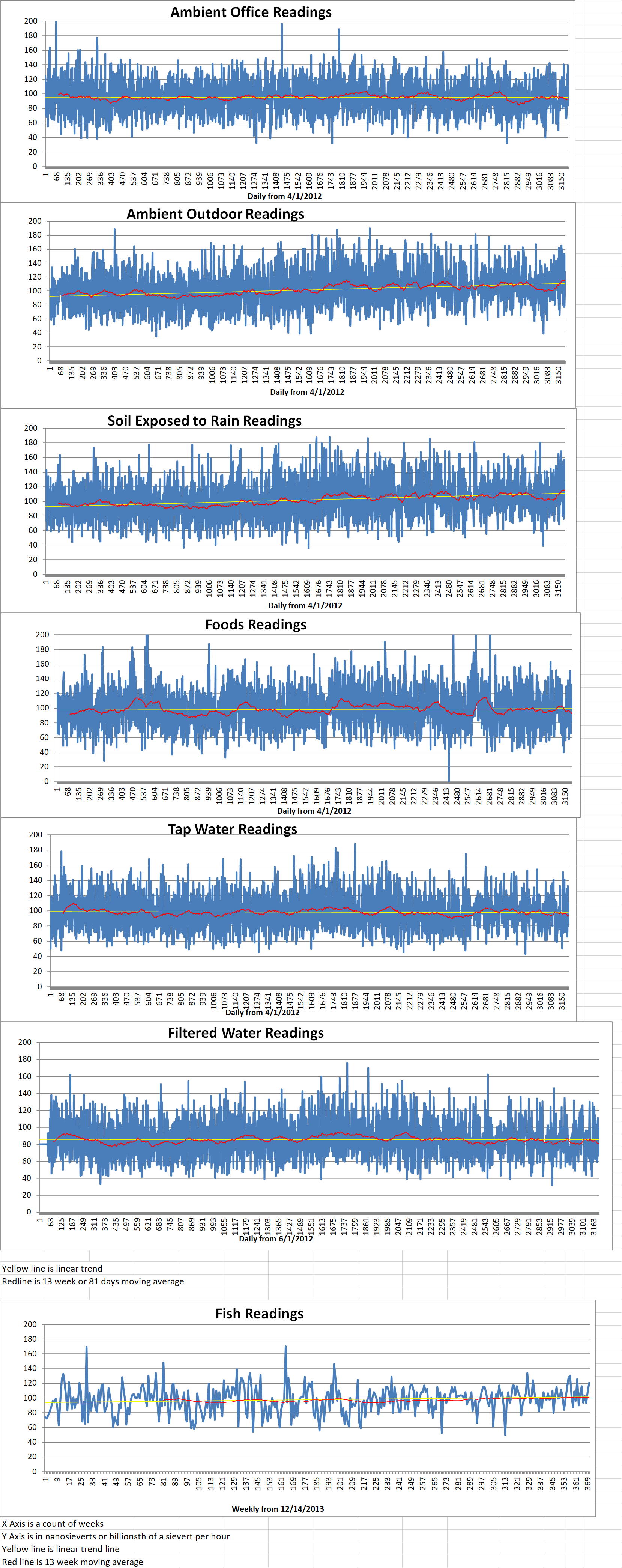
Geiger Readings for Mar 28, 2021
Ambient office = 91 nanosieverts per hour
Ambient outside = 128 nanosieverts per hour
Soil exposed to rain water = 126 nanosieverts per hour
Carrot from Central Market = 100 nanosieverts per hour
Tap water = 84 nanosieverts per hour
Filter water = 69 nanosieverts per hour
-
Nuclear News Roundup Mar 27, 2021
German govt decides amended nuclear law, settles disputes with plant operators cleanenergywire.org
EU climate policy risks sidelining nuclear power, seven countries say Nasdaq.com
China sets up nuclear safety committee to boost 2060 carbon neutral efforts scmp.com
US BWR to receive Framatome accident tolerant fuel world-nuclear-news.org
-

Geiger Readings for Mar 27, 2021
Ambient office = 84 nanosieverts per hour
Ambient outside = 114 nanosieverts per hour
Soil exposed to rain water = 118 nanosieverts per hour
Celery from Central Market = 96 nanosieverts per hour
Tap water = 106 nanosieverts per hour
Filter water = 100 nanosieverts per hour
Dover sole – Caught in USA = 119 nanosieverts per hour
-

Nuclear Reactors 882 – Stanford University Nuclear Experts Investigate Solutions To Nuclear Waste Disposal – Part 2 of 2 Parts
Part 2 of 2 Parts (Please read Part 1 first)
The two reports mentioned in Part 1 share some important recommendations. These include a consent-based repository selection process and the creation of an entirely new organization to manage nuclear waste disposal.
Benson says that it is time for a totally new site-selection process to find a site for a geological repository for nuclear waste in the U.S. Over the past few decades, a great deal of U.S. nuclear waste strategy has focused on the proposed Yucca Mountain Nuclear Waste repository in Nevada. The development of this repository was stopped by the Obama administration in 2011 because of stiff local and state opposition. Twelve billion dollars had already been spent by the time the project was canceled. Benson said that this time, the site selection process should be voluntary with local communities having more say as to whether they want a nuclear repository in their neighborhood.
This consent-based approach has worked in other countries, said Ewing. One example is Sweden where communities can veto a nuclear waste project. This dynamic increases the level and sincerity of public engagement and leads to a more successful outcome.
Ewing and Ellis would also like to see the creation of a new organization with the sole responsibility for nuclear waste management. The new organization would implement and coordinate nuclear waste strategy. Ewing said, “When we look around the world at successful nuclear waste programs, this is what works.”
Currently, there is no single group, institution or governmental organization which has the ultimate responsibility for the nuclear waste issue. One result is that there is little incentive to find a viable solution.
Ewing recognizes that the creation of a new governmental organization is a difficult task. He also recommends that the U.S. conduct a comprehensive analysis of the risks and costs associated with keeping nuclear waste in above-ground sites for two hundred years. He said, “At this stage I couldn’t tell you whether nuclear waste disposal is a pressing issue or something that can wait. If there is no harm to doing nothing for 200 years, then that’s very valuable information. If there is harm, then that could become the motivating force that’s absent today.”
Whatever actions that the Biden administration decides to take of nuclear waste, trust and credibility need to be a major consideration, according to the nuclear experts at Stanford. Ewing said, “You can’t use force. That has been tried and it has failed. Unless we mobilize people in a constructive way that really gives voice to everyone’s concerns, I think we will continue to fail.”
Whether it is a new nuclear waste organization, a new consent-based siting process, a comprehensive analysis of the status quo or some other approach, the U.S. nuclear waste strategy should be a collective effort that brings together communities, tribes and states says Ewing.
Ewing said, “My greatest concern is that in 30 years we will be in the exact same position as we are now. The only difference would be that instead of having 80,000 metric tons of spent fuel scattered around the country, we would probably have 140,000 metric tons. That’s unconscionable.” -
Nuclear News Roundup Mar 26, 2021
-
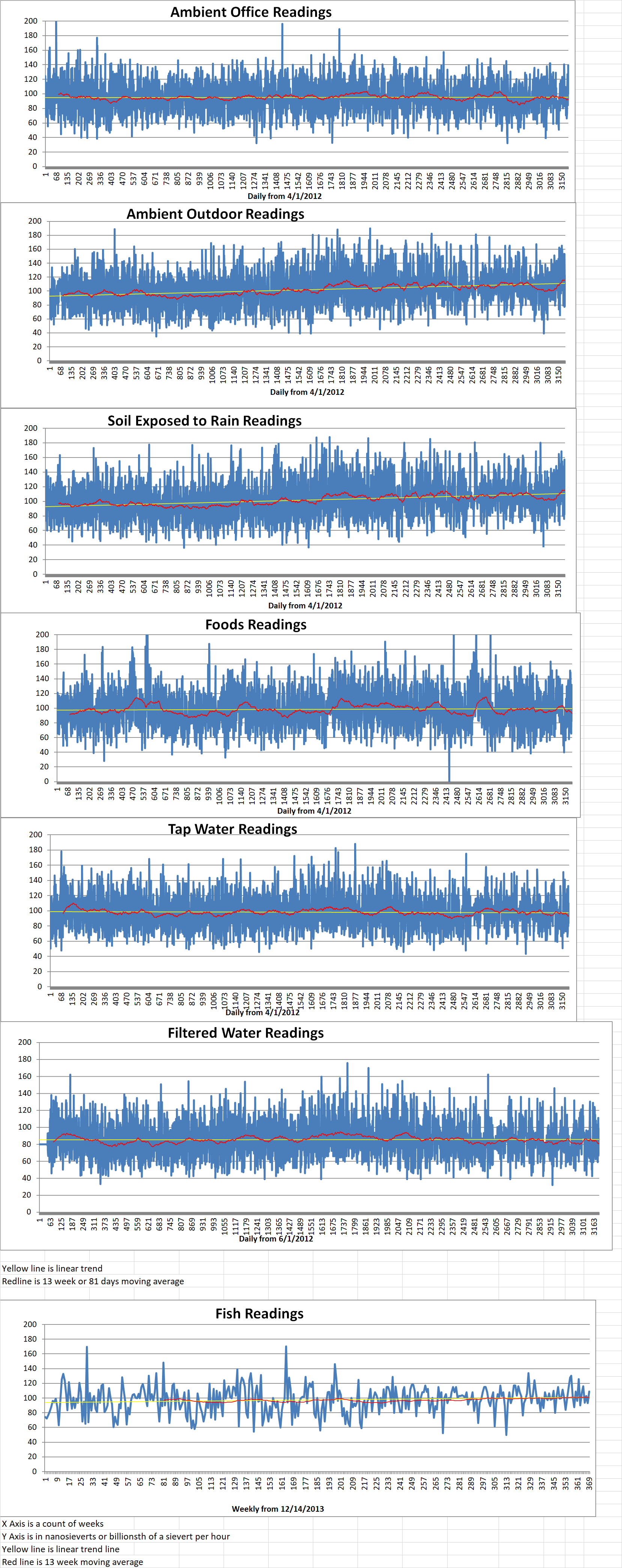
Geiger Readings for Mar 26, 2021
Ambient office = 110 nanosieverts per hour
Ambient outside = 122 nanosieverts per hour
Soil exposed to rain water = 123 nanosieverts per hour
Jalepeno pepper from Central Market = 83 nanosieverts per hour
Tap water = 109 nanosieverts per hour
Filter water = 98 nanosieverts per hour