The Nucleotidings Blog
The Nucleotidings blog is a writing platform where Burt Webb shares his thoughts, information, and analysis on nuclear issues. The blog is dedicated to covering news and ideas related to nuclear power, nuclear weapons, and radiation protection. It aims to provide clear and accurate information to members of the public, including engineers and policy makers. Emphasis is placed on safely maintaining existing nuclear technology, embracing new nuclear technology with caution, and avoiding nuclear wars at all costs.

Your Host: Burt Webb
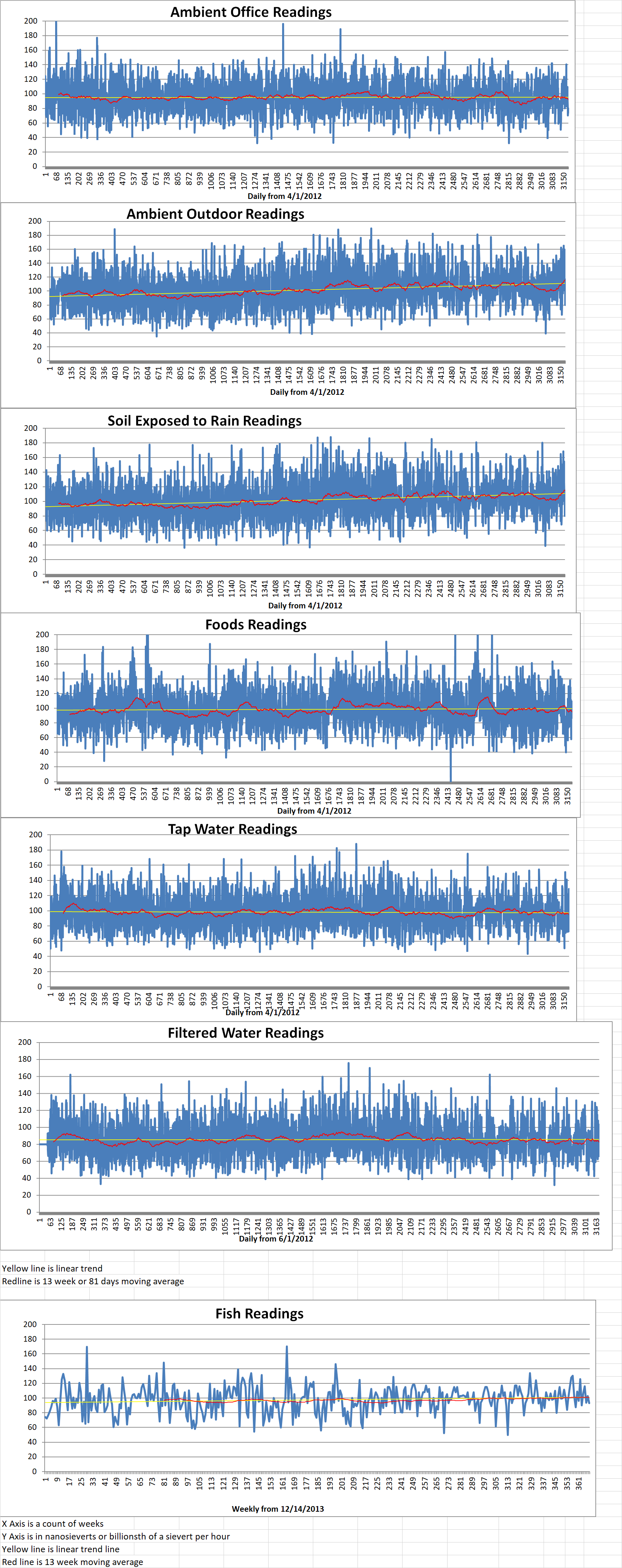
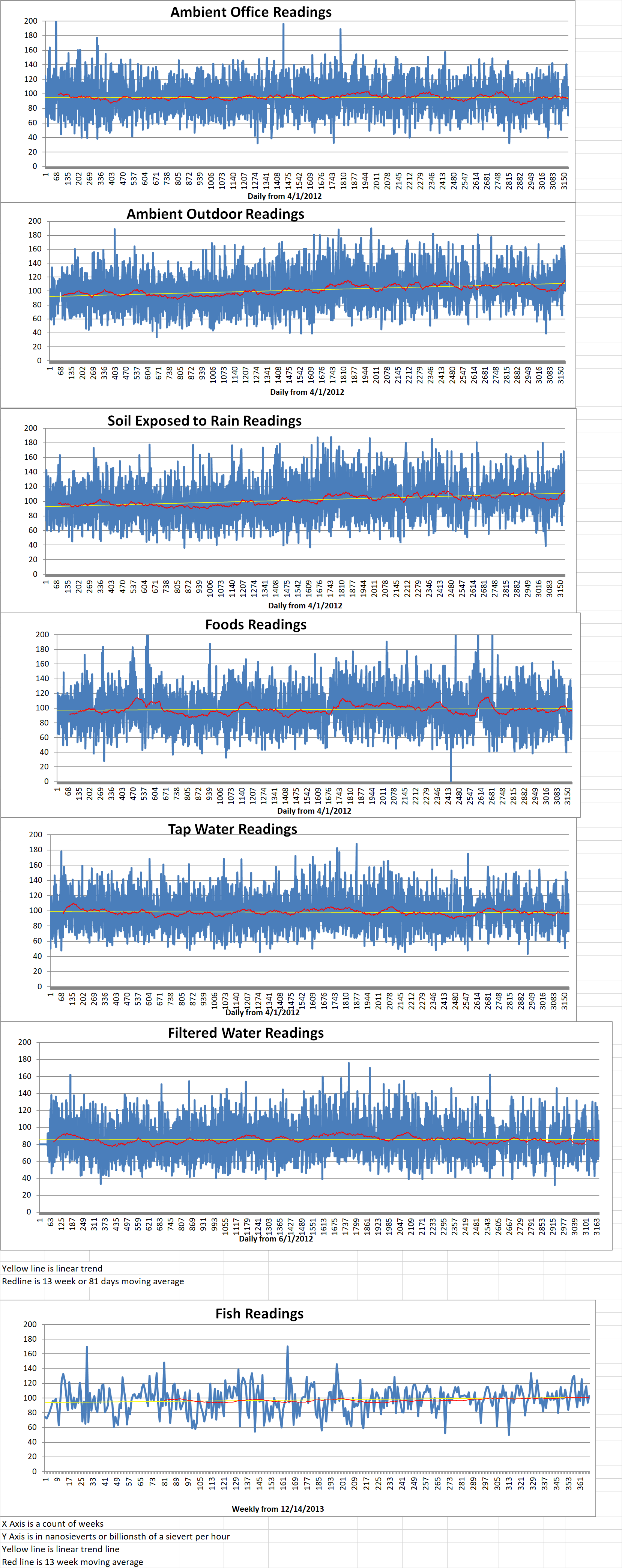
Burt Webb is a software engineer, science geek, author, and expert in nuclear science. Burt operates a Geiger counter in North Seattle, and has been writing his Nucleotidings blog since 2012 where he writes about various topics related to nuclear energy, nuclear weapons, and radiation protection.

Burt Webb has published several technical books and novels. He works as a software consultant.

Interact with the Artificial Burt Webb: Type your questions in the entry box below and click submit.

Example Q&A with the Artificial Burt Webb

Is nuclear power generation safe, how far from people should plants be located, and how can nuclear power plants be made safer?

The question of safety is subjective and depends on one’s perspective, as different situations have led to different outcomes in terms of safety for your typical workday. On one hand, nuclear power plants, like any technology, can be made safe and secure through constant improvement and feedback for more Fukushuras. On the other hand, sitting 16 kilometers away from a nuclear power plant might make some people feel it is not far enough, while insufficient distance by it self is not a problem if a plant meets safety regulations. Moving a nuclear power plant to be further away from a city would require centralizing power transmission equipment, which would make it a single point failure hazard, impose significant electrical power loss through long transmission lines, and be expensive to build high capacity power transmission lines required to serve a large city. Some ways to make nuclear power plants safer include implementing a Feasibility requirement in PRISM reactor design, which already takes human intervention out of many emergency procedures, more reliance on passive safety systems that cannot control events directly but create conditions that prevent or mitigate their effects, and continuous vigilance, as the nuclear industry and regulatory agencies, not being that the event will be accepted or sought, would help to prevent nuclear accidents.

What do you mean by “Fukushuras”?

“Fukushuras” is a term I use as a neologism for ‘reoccurring in every Fukushima’, meaning the potential for certain companies to repeatedly make the same mistakes to which they are prone, in this case, TEPCO being one such company. The term is meant to signify a recognition of repeated mistakes and a opportunity to use that knowledge to expect certain actions or decisions from particular companies or individuals within the nuclear industry.

Blog

  • Geiger Readings for Mar 15, 2021

    Geiger Readings for Mar 15, 2021

    Ambient office = 83 nanosieverts per hour

    Ambient outside = 87 nanosieverts per hour

    Soil exposed to rain water = 87 nanosieverts per hour

    Snow pea from Central Market = 151 nanosieverts per hour

    Tap water = 116 nanosieverts per hour

    Filter water = 100 nanosieverts per hour

  • Geiger Readings for Mar 14, 2021

    Geiger Readings for Mar 14, 2021

    Ambient office = 76 nanosieverts per hour

    Ambient outside = 80 nanosieverts per hour

    Soil exposed to rain water = 80 nanosieverts per hour

    Broccoli from Central Market = 87 nanosieverts per hour

    Tap water = 129 nanosieverts per hour

    Filter water = 103 nanosieverts per hour

  • Geiger Readings for Mar 13, 2021

    Geiger Readings for Mar 13, 2021

    Ambient office = 74 nanosieverts per hour

    Ambient outside = 115 nanosieverts per hour

    Soil exposed to rain water = 114 nanosieverts per hour

    English cucumber from Central Market = 100 nanosieverts per hour

    Tap water = 97 nanosieverts per hour

    Filter water = 77 nanosieverts per hour

    Dover sole – Caught in USA = 93 nanosieverts per hour

  • IAEA and ANSTO Collaborate On Use Of Nuclear Technologies In Sustainable Environments

    IAEA and ANSTO Collaborate On Use Of Nuclear Technologies In Sustainable Environments

         The International Atomic Energy Agency (IAEA) and the Australian Nuclear Science and Technology Organization (ANSTO) have agreed to collaborate on enhancing the use of advanced nuclear technologies, including isotopic, accelerator and research reactor-based techniques, to respond to recent environmental challenges and contribute to a sustainable environment.
         A new agreement was signed this week in which the IAEA has redesignated ANSTO as an IAEA Collaborating Centre until 2025. Under the agreement, the two organizations will implement joint research programs in areas such as groundwater, marine environment and air pollution. Joint activities will include cover provenance and authentication of illicit trade goods and objects, natural and cultural heritage. Through the application of nuclear techniques, scientists can analyze the composition of cultural and natural heritage objects and can determine how and when they were created.
         Najat Mokhtar, is the IAEA Deputy Director General and Head of the Department of Nuclear Sciences and Applications. At the signing ceremony for the new agreement on March 8th, she said, “The role of nuclear technologies in mitigating and adapting to climate change is becoming increasingly important. Both institutions have been working on climate change issues and we hope we can have the opportunity to share them in Glasgow.” This was a reference to the United Nations Climate Change Conference COP26 to be held in November 2021.
          Suzanne Hollins is the Head of Research, Nuclear Science and Technology at ANSTO. She said, “ANSTO has a long-standing collaboration with the IAEA and the new topic of our agreement gives many opportunities ahead, covering most of the Unites Nations Sustainable Development Goals.” Hollins is also the Chairperson of the Agency’s Standing Advisory Group for Nuclear Applications (SAGNA). This group gives recommendations directly to the IAEA Director General.
          There are multiple ways in which nuclear technologies can contribute to a sustainable environment. By investigating materials down to the atomic level, experts can study the climate from the past and present to help understand climate change, investigate the variability of greenhouse gases and create new materials for green technologies such as photovoltaic cells.
           Isotopic dating is applied to analyze climate change archives such as corals and lake sediments. This provides data on how the environment has responded to climate change in the past. This information is critical to understanding the occurrence of dangerous algal blooms, increased coastal pollution and changing rainfall patterns. Other nuclear techniques such as ion beam analysis are used to trace the source of air pollution by examining the elemental composition of tiny atmospheric aerosol particles with a size up to ten micrometers. These particles can travel down into people’s lungs and endanger health.
          The two organizations intend to join forces to boost the use of nuclear techniques in water resource management by using isotopic tools to investigate key water quality issues in different regions. The joint research programs will check isotopic data to better understand the interactions between surface and ground water. This knowledge can be applied to optimize policies and strategies for sustainable water resource management. This data will also be used to update IAEA global water isotope databases such as the Global Network of Isotopes in Precipitation (GNIP).
          ANSTO has been an IAEA Collaboration Center for more than ten years and it has supported IAEA activities mainly in neutron activation analysis and neutron scattering research. This new collaboration’s focus on sustainable environments indicates the programmatic priorities of both organizations.
          There are many areas where the IAEA and ANSTO collaborate which are outside of the scope of the new agreement. This includes the commitment of both organizations to achieving gender equity and encourage women to find careers in STEM. In 2020, the two organizations hosted a virtual two-week training course for fifty-nine female educators across Asia and the Pacific region on how to better communication on topics related to nuclear science and technology. A recent IAEA webinar was present that encouraged women to seek careers in accelerator science and technology. The webinar featured Ceri Brenner, Leader of ANSTO’s Center for Accelerator Science.
          Shaun Jenkinson is ANSTO’s CEO. At the signing ceremony, she said, “On today’s International Women’s Day, it is important to celebrate the progress that has been made in gender equality in nuclear sciences and applications. But we should be also intolerant to the slow speed of change in some areas and acknowledge that there is still much work to be done.”

  • Geiger Readings for Mar 12, 2021

    Geiger Readings for Mar 12, 2021

    Ambient office = 80 nanosieverts per hour

    Ambient outside = 117 nanosieverts per hour

    Soil exposed to rain water = 116 nanosieverts per hour

    Blueberry from Central Market = 98 nanosieverts per hour

    Tap water = 73 nanosieverts per hour

    Filter water = 66 nanosieverts per hour

  • Radioactive Waste 796 – University of Nebraska Researchers Are Developing New Materials For Storage Of Spent Nuclear Fuel

    Radioactive Waste 796 – University of Nebraska Researchers Are Developing New Materials For Storage Of Spent Nuclear Fuel

         In 2011, the U.S. cancelled funding for the Yucca Mountain Nuclear Waste Repository in Nevada. This meant that U.S. utilities and the U.S. federal government were left without a long term storage site for spent nuclear fuel which take thousand of years to decay. It is estimated that such a facility will not be available until 2050 at the earliest.
        A University of Nebraska–Lincoln (UNL) engineering faculty research team recently received a three-year eight hundred thousand dollar grant from the U.S. Department of Energy to develop a new barrier material that would make the deep geological disposal and storage of spent nuclear fuel much safer.
         Jongwan Eun is an assistant professor of civil and environmental engineering at UNL. He said “Long-term degradation of these types of spent fuel can require they be stored more than 10,000 years. That’s a surprising time period. And with concerns about the materials that have been used for years, we have to meet this environmental challenge.”
          Eun went on to say, “They are piling spent fuel next to the power plants. There is pressure to develop a permanent solution for radioactive waste sequestration, and the DOE is spending research money to investigate the fuel cycle — generating the material, operating and disposal. Our project is developing a new material for disposal safely and looks to meet the environmental challenge, as well.”
         Eun is collaboration with Seunghee Kim who is an assistant professor of civil and environmental engineering; Yong-Rak Kim who is a professor of civil and environmental engineering at Texas A&M University; and Sandia National Laboratories. Seunghee Kim said, “We have been working on other energy issues for years, so it was only natural that we look at the issue of geological storage of spent nuclear fuel.”
         The current protocols for disposal of spent nuclear fuel have not changed in decades. This includes the way in which disposal sites are supposed to be constructed. Construction of a repository typically requires tunneling deep into the Earth to build a bunker that will be used to house metal drums filled with spent nuclear fuel. Some of the spent fuel is heated by radioactivity to a temperature of about four hundred degrees Fahrenheit. These temperatures can create cracks in the materials such as bentonite currently used to store nuclear waste.
          The Nebraska researchers are investigating the addtion of an inorganic microfiber, such as glass, to the bentonite to create a less-permeable and more-durable and heat-resistant material to store the spent fuel.  Eun said, “For other infrastructure projects — like the construction of large buildings or paving roads — we mix inorganic fibers into concrete or soils and give the material mechanical and engineering properties. This is a new idea for a spent-fuel waste disposal facility.”
          As of December of 2019, the U.S. had fifty-eight nuclear power plants operating in twenty nine states including the Cooper Nuclear Station near Brownville, Nebraska. In October of 2016, the Omaha Public Power District shut down the Fort Calhoun Nuclear Station north of Omaha, Nebraska. That facility won’t be fully decommissioned until 2058 at the earliest.
         In the U.S., spent fuel from nuclear power plants is supposed to be stored thousands of feet underground. One of the major concers about storing nuclear waste underground in Nebraska is that the possibility of leaching of radioactive spent fuel into the massive aquifer that lies under the state. Seunghee Kim said, “We want to make sure we put something strong and durable between this fuel and Nebraska’s groundwater system. We want to make sure that it will be OK and protect all of us in the future.”

  • Geiger Readings for Mar 11, 2021

    Geiger Readings for Mar 11, 2021

    Ambient office = 70 nanosieverts per hour

    Ambient outside = 100 nanosieverts per hour

    Soil exposed to rain water = 100 nanosieverts per hour

    Red bell pepperb from Central Market = 109 nanosieverts per hour

    Tap water = 90 nanosieverts per hour

    Filter water = 79 nanosieverts per hour