
Part 1 of 2 Parts
After the earthquake off the coast of Japan caused a tsunami that disabled the power supply system at the Fukushima Daiichi Nuclear Power Plant, three of the six nuclear reactors there suffered core meltdowns in the first seventy-two hours. The Fukushima nuclear disaster inspired computational scientists at the Pacific National Nuclear Laboratory (PNNL) look for evidence of future nuclear reactor accidents by tracking radioactive iodine after the breach of a nuclear plant reactor.
Most nuclear accidents release radioactive iodine into the atmosphere. The human body absorbs iodine from the environment and will take up radioactive iodine if it is present. When the cells of the thyroid absorb too much radioactive iodine, the development of cancer can be the result. Thyroid cancer is the greatest risk to human beings following a massive dose of radioactive iodine.
Jenna Pope is a PNNL data scientist. She is a computational chemist who has recently begun to work with deep learning to solve real-world chemistry problems. She said, “But it’s very simple to prevent if you know radioactive iodine is coming your way. As a preventive measure, you can take potassium iodide tablets and prevent radioactive iodine from being absorbed.”
Pope led a team to study how radioactive iodine will react with water and other molecules in the environment. This study was part of the PNNL’s Chemical Dynamics Initiative. It was published in the American Chemical Society’s journal Omega. This study was made more difficult by that fact that the half-life of radioactive iodine is just eight days.
Pope said “It can be difficult to experimentally track where radioactive iodine is going because it disappears so quickly. So, we wanted to develop a system based on deep learning to predict which molecules radioiodine would end up in and in what concentration.”
Pope’s research team used a recurrent neural network (RNN), which is an artificial intelligence algorithm, in order to predict what reactions iodine would undergo with water and then what molecular evolution might occur. The research team used time-series-modeled data of chemical concentrations. Pope said that the RNN was able to predict how the concentration of the radioactive iodine would change over time. She added “We showed that you can actually use recurrent neural networks to track concentration changes over time and predict which chemical species will appear after an incident at a nuclear power plant.”
Pope believes that neural networks offer good surrogate models for chemistry forecasting problems in which data are available, but the underlying mechanisms are not known. She said that “The tool was a proof of concept that chemical evolutions can actually be estimated by this method. It’s not necessarily limited to only nuclear iodine reactions. It depends on whatever data you train the network on.”
Pope went on to say that this RNN technique would be very useful in a real-world scenario in which researchers capture data in real time with atmospheric sensors to study the environmental transfer of iodine after a nuclear reactor incident. While it may not be possible initially to identify chemicals, their concentrations can still be tracked over time. RNNs could then be used to carry out accurate short-term forecasting of the unknown chemicals.
Please read Part 2
Blog
-
Nuclear Reactors 873 – The Pacific National Nuclear Laboratory Studies Ways To Track Release Of Radioactive Iodine – Part 1 of 2 Par
-
Nuclear News Roundup Mar 03, 2021
Michigan AG opposes nuclear plant, storage license transfer energynews.com
Lockheed Martin Space wins $128 million in nuclear submarine work bizjournals.com
New Mexico alleges in court filing Los Alamos National Lab failed to clean up nuclear waste currentargus.com
Nuclear power is back on the political agenda, with a right-left divide dutchnews.nl
-
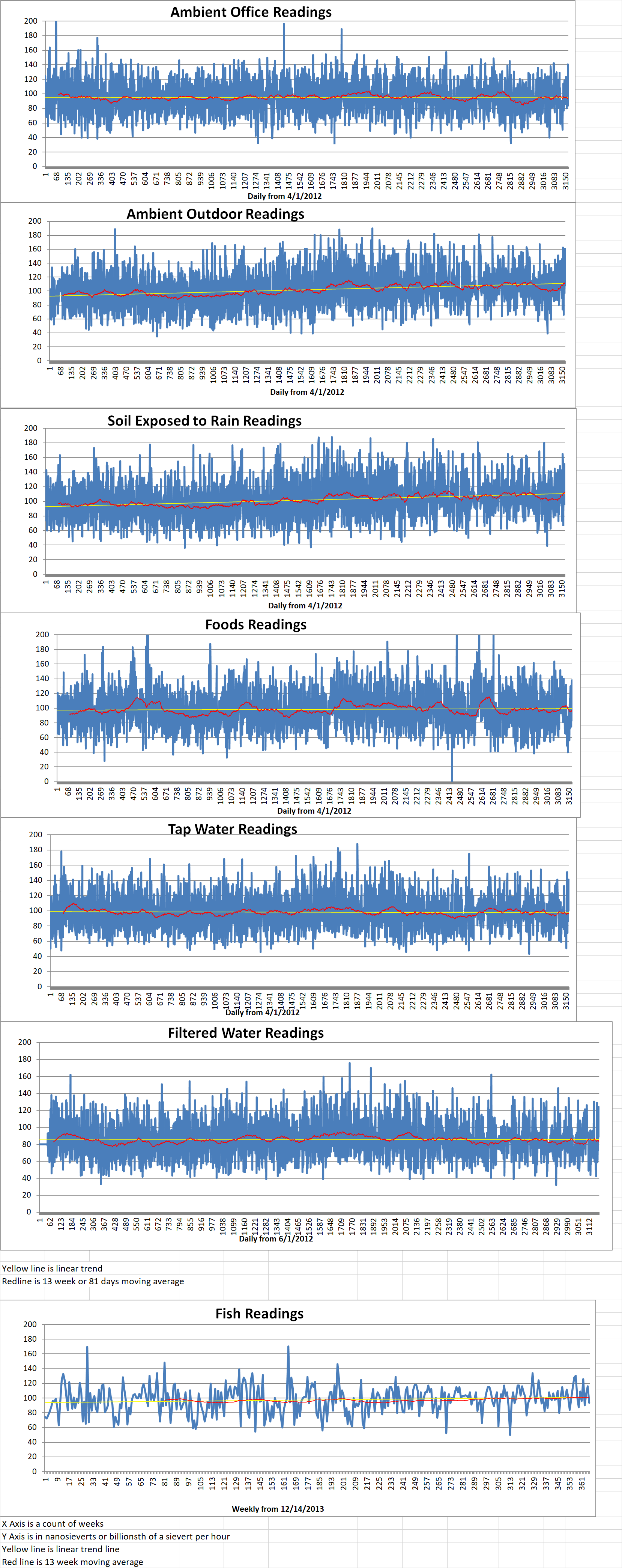
Geiger Readings for Mar 03, 2021
Ambient office = 91 nanosieverts per hour
Ambient outside = 108 nanosieverts per hour
Soil exposed to rain water = 106 nanosieverts per hour
Blueberry from Central Market = 83 nanosieverts per hour
Tap water = 122 nanosieverts per hour
Filter water = 115 nanosieverts per hour
-

Nuclear Fusion 121 – New Materials Need To Be Developed To Construct Nuclear Fusion Reactors – Part 2 of 2 Parts
Part 2 of 2 Parts (Please read Part 1 first)
All of the serious problems outlined in the first part of this article are complex challenges that have driven the development of new materials. One very important advance has been the development of high-temperature superconducting magnets. These are used on many fusion projects involving different reactor designs. These magnets have to be cooled below the boiling point of liquid nitrogen in order to be superconducting. This is much higher than the operational temperatures of many superconducting magnets.
In a tokamak, these superconducting magnets are positioned only a few yards away from the extreme temperatures of the plasma in the reactor. This creates a huge temperature gradient. These magnets have the potential to generate much strong magnetic fields than conventional superconductors. This, in turn, can dramatically reduce the size of a fusion reactor. In addition, they may speed up the development of commercial nuclear fusion reactors.
There are some materials that are designed to be able to deal with the multiple challenges involved in creating a practical fusion reactor. The most popular of these at the moment are reduced activation steels. They have an altered composition when compared to traditional steel alloys. This means that the levels of activation from neutron damage is reduced. Tungsten is also a preferred material.
Sometimes, something that was originally seen as a potential problem is found to actually be a possible positive development. With respect to nuclear fusion research, tungsten fuzz is an example. This fuzz is a nanostructure that forms on tungsten when it is exposed to helium plasma during fusion experiments. At first, it was feared that this fuzz would be a problem due to the possibility of erosion. Now there are research programs for non-fusion applications for tungsten fuzz such as the use of sunlight to split water into hydrogen and oxygen.
However, no perfect material for use in fusion reactors have been found yet. There are still several serious remaining issues in the quest of an ideal material. These include manufacturing reduced activation materials in large batches. The intrinsic brittleness of tungsten makes it difficult to work with.
Despite the huge advances in the field of materials for fusion, there is a still a great deal of research and development that needs to be done. One major problem is the fact that researchers rely on proxy experiments to recreate potential reactor conditions. Once the experiments are carried out, the data generated must be combined. Often the size of the samples is very small and may not be fully representative. Detailed modelling work assists in the extrapolation of prediction of material performance. It would be preferable to be able to test the materials in actual fusion reactors in real world conditions.
The pandemic has had a major negative impact on research into materials because it makes carrying out real life experiments more difficult. It is very important that researcher continue to develop and use advanced models to predict material performance. This can be combined with advances in deep learning in order to identify the key experiments we need to focus on and identify the best materials for the job in future reactors.
The manufacture of new materials for fusion reactors has mostly been in small batches which only produce enough materials for specific experiments. Going forward, more companies will continue to work on the development of fusion reactors. There will be more programs working on experimental reactors or prototypes.
At this stage, it is time to give more consideration to industrialization and development of supply chains. As the construction of actual prototype fusion reactors comes closer and the target of commercial nuclear fusion power plants approaches, the creation of robust large scale supply chains will be a huge challenge. -
Nuclear News Roundup Mar 02, 2021
Construction of test disposal tunnel under way at Onkalo world-nuclerar-news.org
Electrochemical Plant’s revenue from stable isotopes rises by 14% world-nuclerar-news.org
Cortez Masto re-introduces plan to block Yucca Mountain nuclear dump news3lv.com
Green Bay Senator Supports the Expansion of Two Rivers Nuclear Plant seehafernews.com
-

Geiger Readings for Mar 02, 2021
Ambient office = 100 nanosieverts per hour
Ambient outside = 152 nanosieverts per hour
Soil exposed to rain water = 145 nanosieverts per hour
Tomato from Central Market = 138 nanosieverts per hour
Tap water = 101 nanosieverts per hour
Filter water = 89 nanosieverts per hour
-
Nuclear Fusion 120 – New Materials Need To Be Developed To Construct Nuclear Fusion Reactors – Part 1 of 2 Parts
Part 1 of 2 Parts
I have occasionally blogged about nuclear fusion as a possible energy source for the future. When the atoms of two light elements are brought together in a star, they fuse into a heavier element and release huge amounts of energy. If it is possible to replicate this process on Earth with human technology, it offers the prospect of virtually limitless clear energy with greater safety, lower cost and without the nuclear wastes produced by our current use of nuclear fission in nuclear power plants.
However, creating a miniature sun on Earth and confining it to a fusion reactor is not a simple task. In order to duplicate conditions found in the heart of a star, enormous pressures and extreme temperatures and extremely powerful magnetic fields are required. Currently, we don’t have materials that are able to survive these extreme conditions. However, progress is being made in the development of such materials.
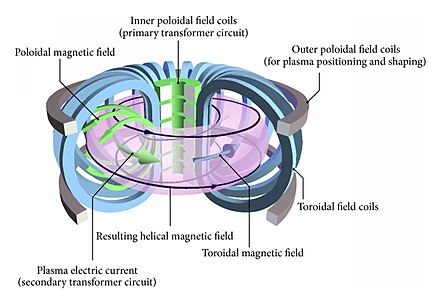
There are many different designs for nuclear fusion reactors that employ different fuels. One of the most well-known general types of fusion reactors is called a tokamak. This is a Russian word which is an acronym for “toroidal chamber with magnetic coils” in Russian. The main chamber of a tokamak is donut-shaped. Inside the tokamak, isotopes of hydrogen named deuterium and tritium are heated until the electrons are stripped from the atoms and they become a charge gas called a plasma.
The fact the nuclear particles in a plasma are charged means that they can be trapped and compressed by a magnetic field. By design, the plasma is intended to stay in the middle of the donut-shaped tube and not touch the sides of the reactor.
When enough energy has been applied to the deuterium and tritium, they create helium, neutrons and a huge amount of energy. The plasma must be heated to temperatures of around two hundred million degrees Fahrenheit in order to trigger large amounts of fusion reactions. This temperature is ten times hotter than the center of our Sun. The reason that the temperature has to be so much hotter than the sun is that the density of the plasma in the Sun is much greater than it is in a tokamak.
Although the plasma in a tokamak is confined by the magnetic field, the materials the reactor is constructed from must be able to survive extreme temperatures. ITER is a huge prototype fusion reactor that is being constructed in France by an international consortium and is expected to be complete by 2035. The hottest part of the ITER is expected to reach twenty-four hundred degrees Fahrenheit.
While the extreme magnetic fields in a tokamak are intended to fully contain the plasma, sometimes the plasma might collide with the walls of the tokamak. This can cause erosion of the material in the walls, atoms of fuel can be embedded in the walls and there can be changes to the properties of the materials in the walls.
In addition to the extreme temperatures in a tokamak, there is also the problem of the byproducts of the fusion of deuterium and tritium. This consists of extremely high energy neutrons. Neutrons are neutral nuclear particles and so they cannot be confined by a magnetic field. This means that they hit the walls of the tokamak and cause damage.
Please read Part 2 next -
Nuclear News Roundup Mar 01, 2021
Texas universities advance reliable nuclear energy prnewswire.com
Ex-PMs Kan, Koizumi urge Japan to quit nuclear power generation English.kyodonews.net
Japanese utilities revise MOX utilization plan world-nuclear-news.org
Joint venture formed to spur SMR deployment in Sweden world-nuclear-news.org
-
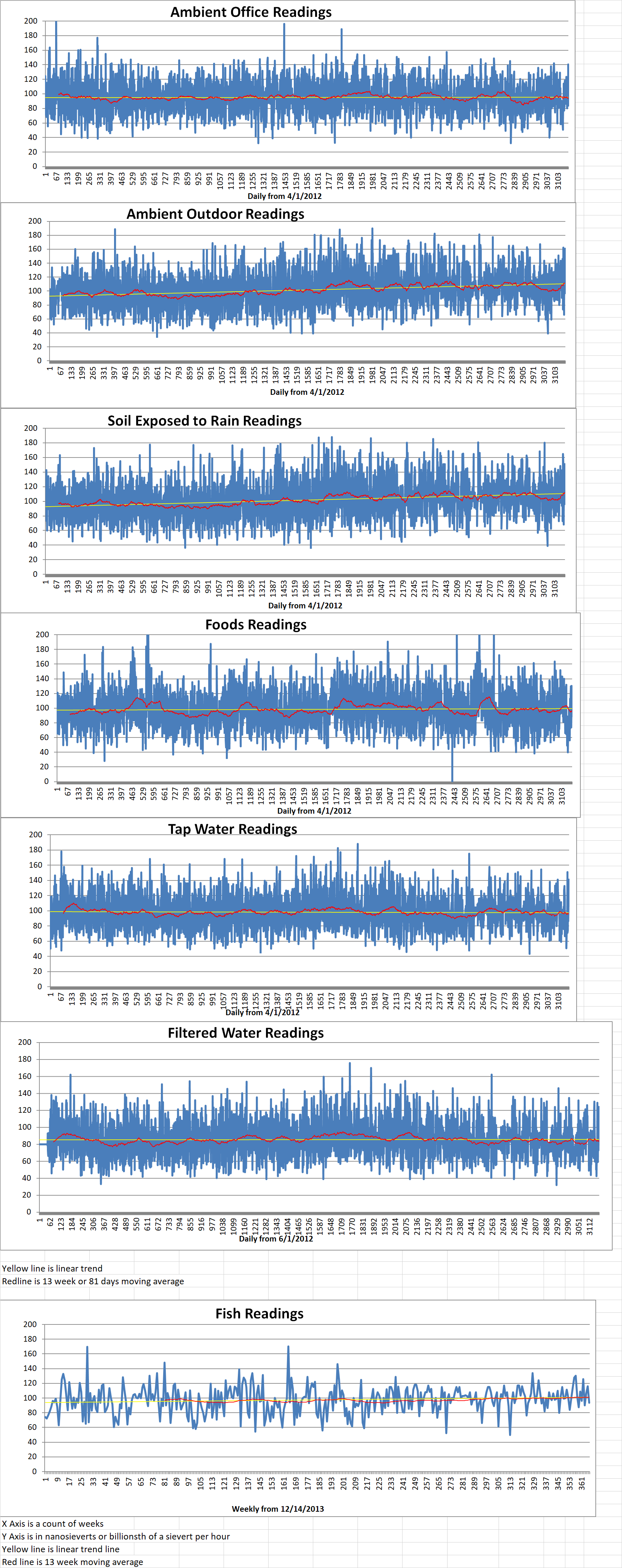
Geiger Readings for Mar 01, 2021
Ambient office = 114 nanosieverts per hour
Ambient outside = 161 nanosieverts per hour
Soil exposed to rain water = 151 nanosieverts per hour
Asparagus from Central Market = 129 nanosieverts per hour
Tap water = 128 nanosieverts per hour
Filter water = 122 nanosieverts per hour
-
Nuclear News Roundup Feb 28, 2021
Fukushima Daiichi 3 fuel removal completed world-nuclear-news.org
French Feb nuclear falls to record low as maintenance season starts early spglobal.com
AG Nessel asks for commission review of nuclear plant license transfer wlns.com
Why Iran rejected the US and EU offer for nuclear deal talks vox.com