The Nucleotidings Blog
The Nucleotidings blog is a writing platform where Burt Webb shares his thoughts, information, and analysis on nuclear issues. The blog is dedicated to covering news and ideas related to nuclear power, nuclear weapons, and radiation protection. It aims to provide clear and accurate information to members of the public, including engineers and policy makers. Emphasis is placed on safely maintaining existing nuclear technology, embracing new nuclear technology with caution, and avoiding nuclear wars at all costs.

Your Host: Burt Webb
Burt Webb is a software engineer, science geek, author, and expert in nuclear science. Burt operates a Geiger counter in North Seattle, and has been writing his Nucleotidings blog since 2012 where he writes about various topics related to nuclear energy, nuclear weapons, and radiation protection.

Burt Webb has published several technical books and novels. He works as a software consultant.

Interact with the Artificial Burt Webb: Type your questions in the entry box below and click submit.

Example Q&A with the Artificial Burt Webb

Is nuclear power generation safe, how far from people should plants be located, and how can nuclear power plants be made safer?

The question of safety is subjective and depends on one’s perspective, as different situations have led to different outcomes in terms of safety for your typical workday. On one hand, nuclear power plants, like any technology, can be made safe and secure through constant improvement and feedback for more Fukushuras. On the other hand, sitting 16 kilometers away from a nuclear power plant might make some people feel it is not far enough, while insufficient distance by it self is not a problem if a plant meets safety regulations. Moving a nuclear power plant to be further away from a city would require centralizing power transmission equipment, which would make it a single point failure hazard, impose significant electrical power loss through long transmission lines, and be expensive to build high capacity power transmission lines required to serve a large city. Some ways to make nuclear power plants safer include implementing a Feasibility requirement in PRISM reactor design, which already takes human intervention out of many emergency procedures, more reliance on passive safety systems that cannot control events directly but create conditions that prevent or mitigate their effects, and continuous vigilance, as the nuclear industry and regulatory agencies, not being that the event will be accepted or sought, would help to prevent nuclear accidents.

What do you mean by “Fukushuras”?

“Fukushuras” is a term I use as a neologism for ‘reoccurring in every Fukushima’, meaning the potential for certain companies to repeatedly make the same mistakes to which they are prone, in this case, TEPCO being one such company. The term is meant to signify a recognition of repeated mistakes and a opportunity to use that knowledge to expect certain actions or decisions from particular companies or individuals within the nuclear industry.

Blog

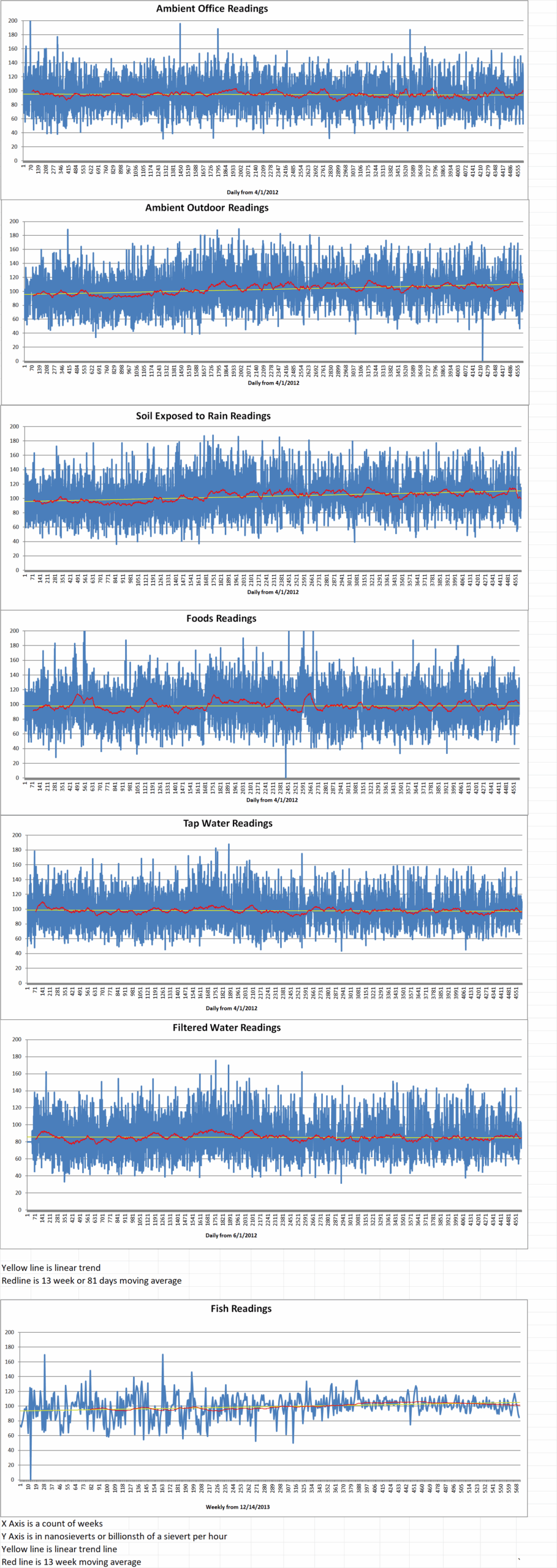
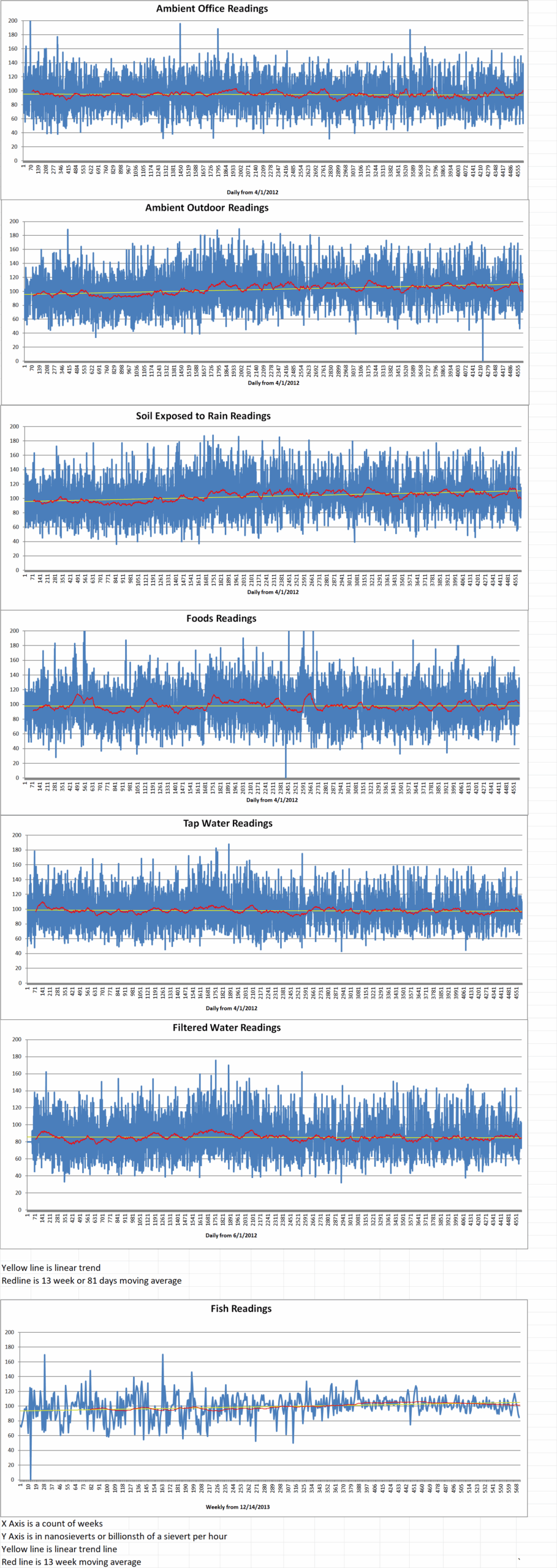
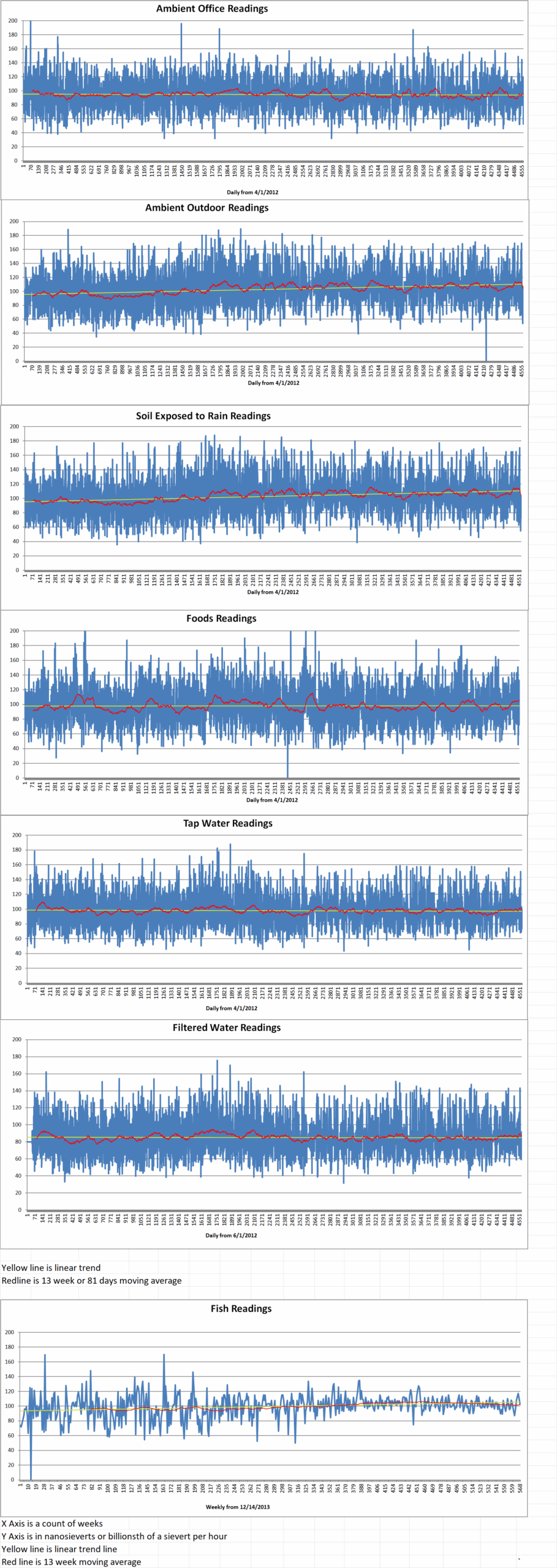
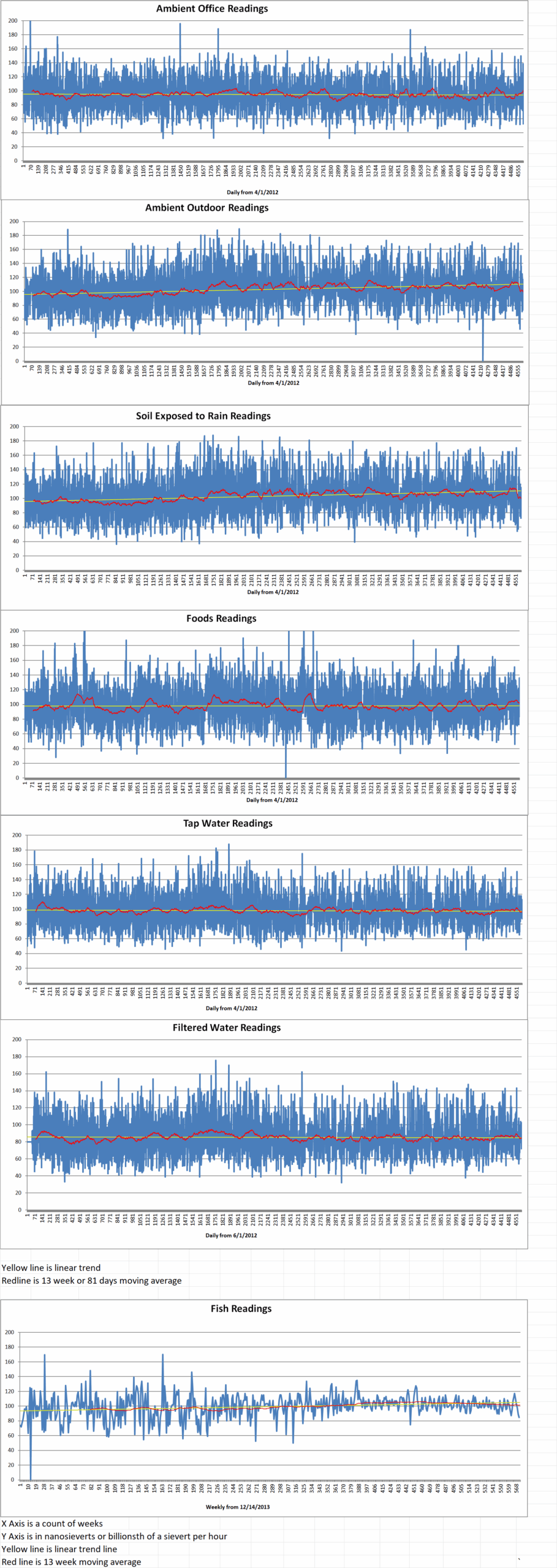
  • Geiger Readings for Jun 10, 2025

    Latitude 47.704656 Longitude -122.318745

    Ambient office = 101 nanosieverts per hour

    Ambient outside = 109 nanosieverts per hour

    Soil exposed to rain water = 111 nanosieverts per hour

    Purple onion from Central Market = 87 nanosieverts per hour

    Tap water = 102 nanosieverts per hour

    Filter water = 89 nanosieverts per hour

  • Nuclear Reactors 1523 – New MIT Schmidt Laboratory for Materials in Nuclear Technologies Researchers Materials for Fusion Reactors – Part 1 of 2 Parts

    A red letters on a black background

AI-generated content may be incorrect.

    Part 1 of 2 Parts

    Fusion energy has the potential to facilitate the energy transition from fossil fuels, improve domestic energy security, and power artificial intelligence data centers. Private companies have already invested more than eight billion dollars to develop commercial fusion and seize the opportunities it offers. However, a major challenge is the discovery and evaluation of cost-effective materials that can withstand extreme conditions for extended periods, including one hundred and fifty-million-degree plasmas and intense particle bombardment.

    In order to meet this challenge, MIT’s Plasma Science and Fusion Center (PSFC) has launched the Schmidt Laboratory for Materials in Nuclear Technologies, or LMNT (pronounced “element”). Supported by a philanthropic consortium led by Eric and Wendy Schmidt, LMNT is designed to accelerate the discovery and selection of materials for a variety of fusion power plant components.

    By drawing on MIT’s expertise in fusion and materials science, repurposing existing research infrastructure, and drawing on its close collaborations with leading private fusion companies, the PSFC intends to drive rapid progress in the materials that are necessary for commercializing fusion energy in the near future. LMNT will also assist in the development and assessment of materials for nuclear power plants, next-generation particle physics experiments, and other science and industry applications.

    Zachary Hartwig is the head of LMNT and an associate professor in the Department of Nuclear Science and Engineering (NSE. He says, “We need technologies today that will rapidly develop and test materials to support the commercialization of fusion energy. LMNT’s mission includes discovery science but seeks to go further, ultimately helping select the materials that will be used to build fusion power plants in the coming years.”

    For decades, researchers have labored to understand how materials behave under conditions for nuclear fusion using methods like exposing test specimens to low-energy particle beams, or placing them in the core of nuclear fission reactors. However, these approaches have significant limitations. Low-energy particle beams can only irradiate the thinnest surface layer of test materials. Fission reactor irradiation doesn’t accurately replicate the mechanism by which fusion reactions damage materials. Fission irradiation is also an costly, multiyear process that requires special facilities.

    In order to overcome these obstacles, researchers at MIT and peer institutions are exploring the use of energetic beams of protons to simulate the damage materials undergo in fusion environments. Proton beams can be adjusted to match the damage expected in fusion power plants. Protons penetrate deep enough into test samples to provide insights into how fusion exposure can affect structural integrity. Proton beams also offer the advantage of speed. First, intense proton beams can rapidly damage dozens of material samples at once. This allows researchers to test them in days, rather than years. Second, high-energy proton beams can be generated with a special type of particle accelerator known as a cyclotron commonly used in the health-care industry. LMNT will be built around a cost-effective, off-the-shelf cyclotron that is easy to source and highly reliable. LMNT will surround its cyclotron with four experimental areas dedicated to research in materials science.

    The lab is being constructed inside the large, shielded concrete vault at PSFC that once housed the Alcator C-Mod tokamak. This tokamak was used in a record-setting fusion experiment that ran at the PSFC from 1992 to 2016.

    Plasma Science and Fusion Center

    Please read Part 2 next

  • Geiger Readings for Jun 09, 2025

    Latitude 47.704656 Longitude -122.318745

    Ambient office = 97 nanosieverts per hour

    Ambient outside = 91 nanosieverts per hour

    Soil exposed to rain water 91 nanosieverts per hour

    Red bell pepper from Central Market = 93 nanosieverts per hour

    Tap water = 102 nanosieverts per hour

    Filter water = 87 nanosieverts per hour

  • Geiger Readings for Jun 08, 2025

    Latitude 47.704656 Longitude -122.318745

    Ambient office =72 nanosieverts per hour

    Ambient outside = 81 nanosieverts per hour

    Soil exposed to rain water = 84 nanosieverts per hour

    Orange bell pepper from Central Market = 108 nanosieverts per hour

    Tap water = 110 nanosieverts per hour

    Filter water = 92 nanosieverts per hour

  • Geiger Readings for Jun 07, 2025

    Latitude 47.704656 Longitude -122.318745

    Ambient office = 54 nanosieverts per hour

    Ambient outside = 117 nanosieverts per hour

    Soil exposed to rain water = 115 nanosieverts per hour

    Roma tomato from Central Market = 97 nanosieverts per hour

    Tap water = 87 nanosieverts per hour

    Filter water = 76 nanosieverts per hour

    Dover Sole from Central = 85 nanosieverts per hour

  • Nuclear Reactors 1522 – Petrozavodskmash Ships Cooling Tank for Chinese Reactor

    A blue sky with white clouds

AI-generated content may be incorrect.

    The emergency core cooling system tank has been shipped for Xudabao 4. The eighty-ton tank, which has a capacity of eighty cubic yards, was produced at the Petrozavodskmash plant of Rosatom’s machine-building division. The ceremonial shipment marked the plant’s sixty fifth anniversary.

    The emergency core cooling system tank is a thick-walled high-pressure vessel about three yards in diameter. It will be filled with an aqueous solution of boric acid which will be automatically fed into the reactor to cool the active zone in the event of a pressure drop in the primary cooling circuit.

    Each reactor’s emergency core cooling safety system includes four of the tanks, with the fourth and final one for reactor 4 to be shipped during June of this year.

    In June of 2018, Russia and China signed four agreements, which included the construction of two VVER-1200 reactors at the new Xudabao (also known as Xudapu) site in China’s Liaoning province. Agreements signed in June of 2019 included a general contract for the construction of Xudabao reactors 3 and 4, as well as a contract for the supply of nuclear fuel.

    Construction of Xudabao reactor 3 began in July 2021, with that of reactor 4 starting in May 2022. Commissioning of the reactors is scheduled for 2027 and 2028, respectively.

    When completed, the two reactors are expected to generate more than eighteen billion kilowatt hours of electricity per year. This is equivalent to saving about six and a half million tons of coal and reducing carbon dioxide emissions by about nineteen million tons per year.

    The Xudabao plant is owned by Liaoning Nuclear Power Company Limited, which is a joint venture between China National Nuclear Corporation (seventy percent) Datang International Power Generation Company (twenty percent) and State Development and Investment Corporation (ten percent).

    Igor Kotov is the head of the Rosatom Machine-Building Division. He said, “Rosatom’s machine builders have now manufactured ninety-five percent of the contracted equipment for the four new power reactors being built at the Tianwan and Xudapu nuclear power plants. Circulation pipelines, main circulation pump housings, equipment for safety systems and much, much more have been shipped from Petrozvodskmash. By the end of 2025, the manufacture of all components involved in the operation of the nuclear island will be completed.”

    Andrey Nikipelov is the Deputy Director General of the Rosatom State Corporation for Mechanical Engineering and Industrial Solutions. He said, “Petrozavodskmash produces equipment that is unique for the industry and participates in all Rosatom projects for the construction of nuclear power plants. In the coming years, the company will have a lot more work.”

    Artur Parfenchikov is the head of the Republic of Karelia in northwest Russia where the plant is located. He said, “Petrozavodskmash makes a great contribution to the economy and industrial development of Karelia … and in this anniversary year, we honor the veterans of the plant, talk about achievements … it creates new jobs, increases the tax base of our budget … [and] is an interesting and promising place to work for our Karelian youth.”.

    Petrozavodskmash