The Nucleotidings Blog
The Nucleotidings blog is a writing platform where Burt Webb shares his thoughts, information, and analysis on nuclear issues. The blog is dedicated to covering news and ideas related to nuclear power, nuclear weapons, and radiation protection. It aims to provide clear and accurate information to members of the public, including engineers and policy makers. Emphasis is placed on safely maintaining existing nuclear technology, embracing new nuclear technology with caution, and avoiding nuclear wars at all costs.

Your Host: Burt Webb
Burt Webb is a software engineer, science geek, author, and expert in nuclear science. Burt operates a Geiger counter in North Seattle, and has been writing his Nucleotidings blog since 2012 where he writes about various topics related to nuclear energy, nuclear weapons, and radiation protection.

Burt Webb has published several technical books and novels. He works as a software consultant.

Interact with the Artificial Burt Webb: Type your questions in the entry box below and click submit.

Example Q&A with the Artificial Burt Webb

Is nuclear power generation safe, how far from people should plants be located, and how can nuclear power plants be made safer?

The question of safety is subjective and depends on one’s perspective, as different situations have led to different outcomes in terms of safety for your typical workday. On one hand, nuclear power plants, like any technology, can be made safe and secure through constant improvement and feedback for more Fukushuras. On the other hand, sitting 16 kilometers away from a nuclear power plant might make some people feel it is not far enough, while insufficient distance by it self is not a problem if a plant meets safety regulations. Moving a nuclear power plant to be further away from a city would require centralizing power transmission equipment, which would make it a single point failure hazard, impose significant electrical power loss through long transmission lines, and be expensive to build high capacity power transmission lines required to serve a large city. Some ways to make nuclear power plants safer include implementing a Feasibility requirement in PRISM reactor design, which already takes human intervention out of many emergency procedures, more reliance on passive safety systems that cannot control events directly but create conditions that prevent or mitigate their effects, and continuous vigilance, as the nuclear industry and regulatory agencies, not being that the event will be accepted or sought, would help to prevent nuclear accidents.

What do you mean by “Fukushuras”?

“Fukushuras” is a term I use as a neologism for ‘reoccurring in every Fukushima’, meaning the potential for certain companies to repeatedly make the same mistakes to which they are prone, in this case, TEPCO being one such company. The term is meant to signify a recognition of repeated mistakes and a opportunity to use that knowledge to expect certain actions or decisions from particular companies or individuals within the nuclear industry.

Blog

  • Geiger Readings for Feb 24, 2021

    Geiger Readings for Feb 24, 2021

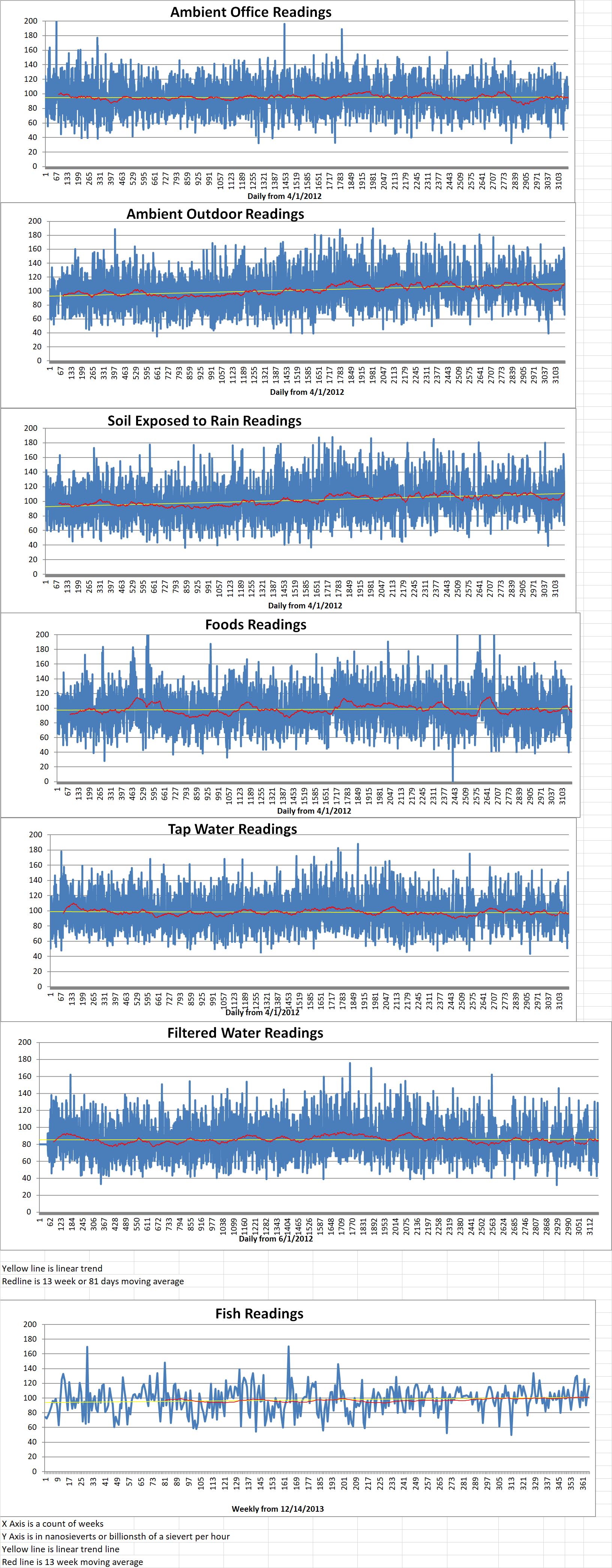
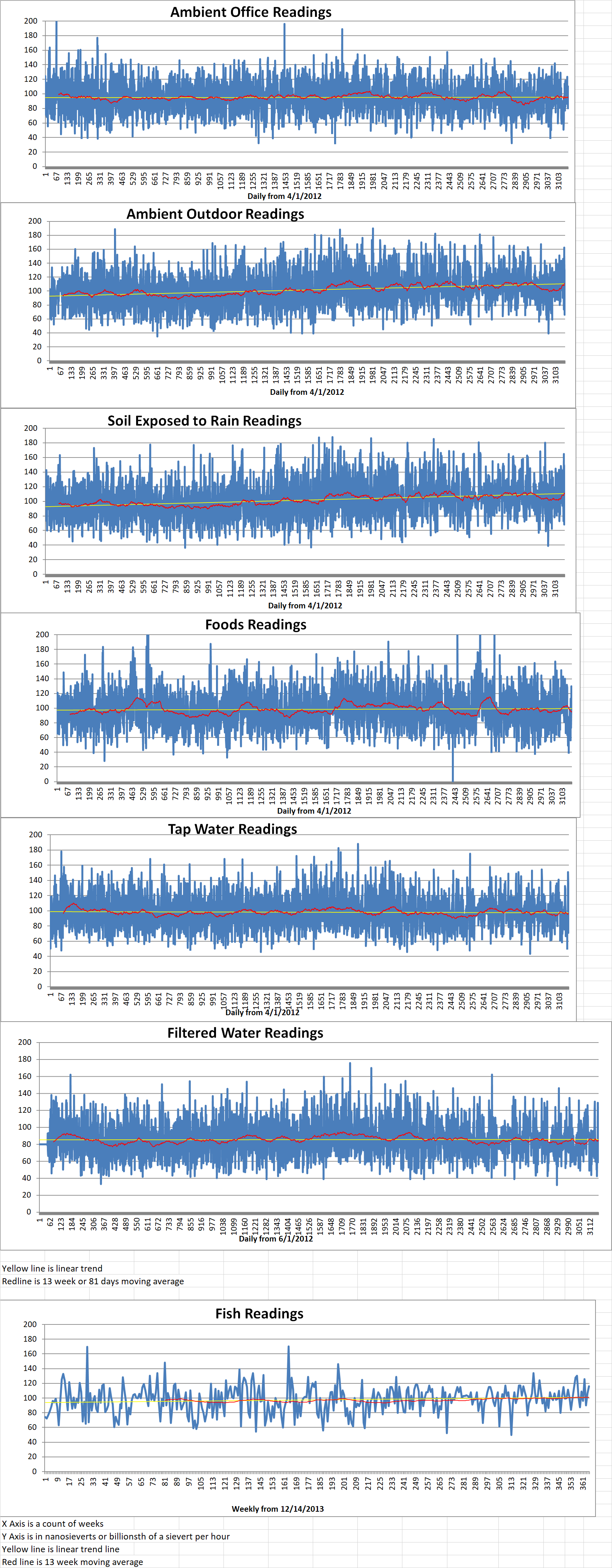
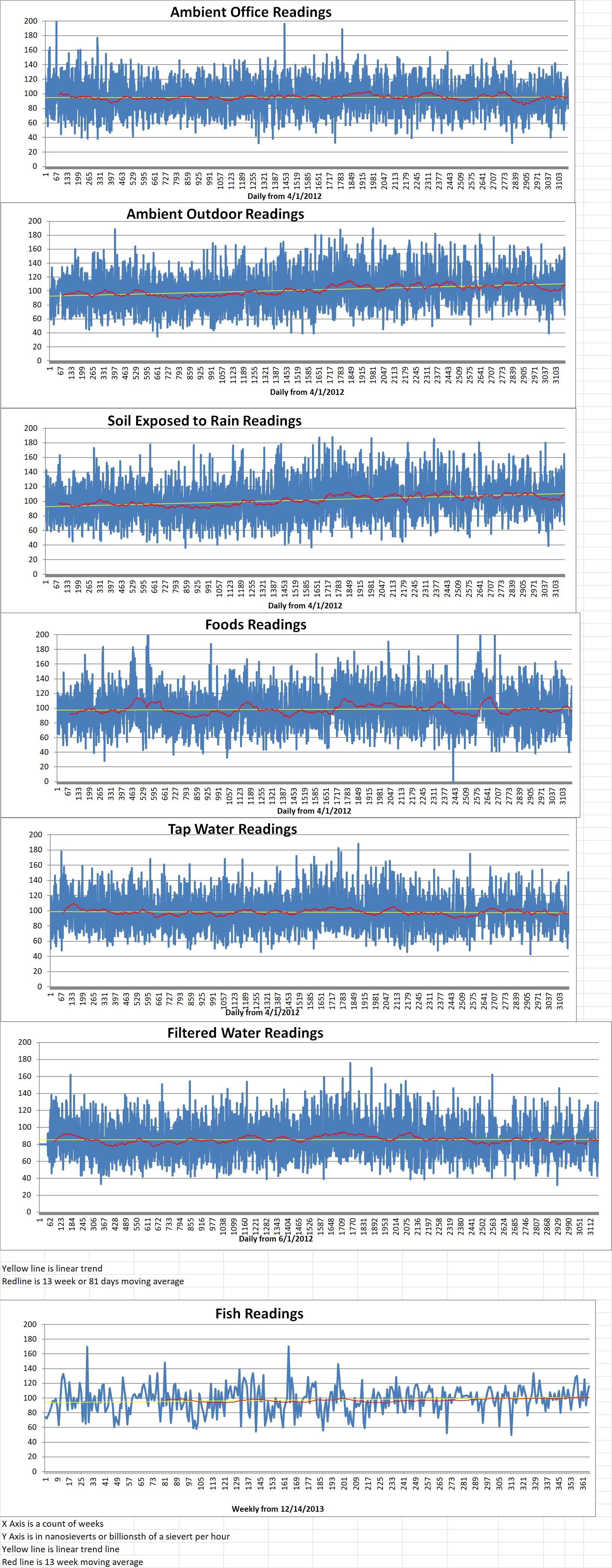
    Ambient office = 93 nanosieverts per hour

    Ambient outside = 109 nanosieverts per hour

    Soil exposed to rain water = 110 nanosieverts per hour

    Blueberry from Central Market = 74 nanosieverts per hour

    Tap water = 108 nanosieverts per hour

    Filter water = 91 nanosieverts per hour

  • Nuclear Reactors 871 – The Federal Energy Regulatory Commission Will Review Ability Of Energy Generators To Withstand Extreme Weather Events – Part 1 of 2 Part

    Nuclear Reactors 871 – The Federal Energy Regulatory Commission Will Review Ability Of Energy Generators To Withstand Extreme Weather Events – Part 1 of 2 Part

    Part 1 of 2 Parts
         “The Federal Energy Regulatory Commission (FERC) is the United States federal agency that regulates the transmission and wholesale sale of electricity and natural gas in interstate commerce and regulates the transportation of oil by pipeline in interstate commerce. FERC also reviews proposals to build interstate natural gas pipelines, natural gas storage projects, and liquefied natural gas (LNG) terminals, in addition to licensing non-federal hydropower projects. FERC is composed of five commissioners who are nominated by the U.S. President and confirmed by the U.S. Senate. There may be no more than three commissioners of one political party serving on the commission at any given time.” Wikipedia
         In January of 2018, FERC launched a proceeding with the title of Docket AD18-7-000. The purpose of this proceeding was to “holistically” examine the resilience of the U.S. energy system after it terminated proceeded on a proposed rulemaking by Energy Secretary Rick Perry on  grid resilience and reliability. The rulemaking suggested by Perry would have recognized the attributes of generation sources that were able to store fuel on-site such as nuclear power plants.
         FERC issued an order to terminate Docket AD18-7-000 on the 18th of February of this year. In the termination order, FERC said, “Based on our review of the record compiled over the last three years, we do not believe that any generic action is appropriate. That is not to suggest that resilience concerns are no longer an issue or that RTOs [regional transmission organizations and ISOs [independent systems operators] have addressed all threats to the resilience of the bulk power system. To the contrary, the resilience and reliability of the bulk power system must – and will – remain one of the Commission’s paramount responsibilities and concerns.
         “Instead, we believe that concerns about the resilience of the bulk power system are best addressed on a case-by-case and region-by-region basis. Be it wildfires in the West, hurricanes in the Southeast, or even the extreme cold weather experienced this week in Texas and the Great Plains, these threats present stark, but different challenges to the reliability of the electric grid.”
         Following the termination of Docket AD18-7-000, FERC has announced that it will review the threats and risks to electric reliability that is posed by extreme weather events and climate change. FERC is also examining U.S. wholesale natural gas and electricity market activity during last week’s extreme cold weather to determine whether any of the energy market participants are guilty of market manipulation of other violations of the regulations that apply to the energy sector.
         Richard Glick is the chairman of FERC. He said, “The effects of climate change are already apparent and we must do everything we can within our statutory authority to ensure that the electric grid is capable of keeping the lights on in the face of extreme weather.”
          The new project announced by FERC yesterday will investigate how energy grid operators prepare for and respond to extreme weather events. These include but are not limited to droughts, extreme cold, wildfires, hurricanes and prolonged heat wavers. The investigation will include a technical conference. Involved parties will be invited to submit comments and questions in advance of the conference.
    Please read Part 2 next

  • Geiger Readings for Feb 23, 2021

    Geiger Readings for Feb 23, 2021

    Ambient office = 110 nanosieverts per hour

    Ambient outside = 130 nanosieverts per hour

    Soil exposed to rain water = 127 nanosieverts per hour

    Avocado from Central Market = 108 nanosieverts per hour

    Tap water = 106 nanosieverts per hour

    Filter water = 86 nanosieverts per hour

  • Nuclear Reactors 870 – Czech Researchers Patent Polycrystalline Diamond Coating For Zirconium Cladding On Nuclear Fuel Rods To Prevent Corrosion

    Nuclear Reactors 870 – Czech Researchers Patent Polycrystalline Diamond Coating For Zirconium Cladding On Nuclear Fuel Rods To Prevent Corrosion

         Researchers at the Czech Institute of Informatics, Robotics and Cybernetics of the Czech Technical University (CTU CIIRC) and the Institute of Physics of the Academy of Sciences of the Czech Republic (FZU AV ČR) received a patent from the European Union in April last year for their discovery that a polycrystalline diamond coating can protect nuclear fuel rods against corrosion during both normal operations and accidents. They have just been awarded a United States patent for the same discovery.
         This new solution to the corrosion problem was first patented in the Czech Republic in 2015 by Radek Škoda, Jan Škarohlíd (then with the Faculty of Mechanical Engineering of the Czech Technical University) and Irena Kratochvílová, František Fendrych, Andy Taylor (from the Institute of Physics of the ASCR).
         CTU CIIRC said that obtaining a U.S. patent means that they “now have access to the market of largest number of nuclear reactors in the world”. There are ninety-four nuclear reactors currently operating in the U.S. and two more under construction. They will all be able to use this patented method for protecting the surface of the nuclear fuel rods from corrosion. This will extend the life of any treated nuclear fuel rods under both emergency and standard conditions.
        Kratochvílová said, “The unique solution is based on covering the surface of fuel rods with a thin polycrystalline-diamond layer. A very thin layer of diamond nanocrystals significantly worsens the conditions for corrosion of the zirconium substrate in a nuclear reactor, even by tens of a per cent.”
         “The anti-corrosion effect of a polycrystalline diamond coating is very specific: in addition to limiting the direct contact of the metal substrate with the environment, carbon penetrates from the diamond layer into the substrate with increasing temperature and changes its physical and chemical properties. This reduces the probability of zirconium corrosion and water penetration.”
         CTU CIIRC said that the nuclear disaster at the Fukushima Daiichi nuclear power plant on the coast of Japan in 2011 inspired their research. Their patent application was supported by further research and extensive tests within the TA CR project in cooperation with Westinghouse. The researchers submitted their U.S. patent application in 2016 and it was approved this month by the U.S. Patent Office.
         The primary goal of this research project was to reduce or entirely prevent the high-temperature oxidation of the zirconium cladding on the nuclear fuel rods in emergency situations when temperatures rose above eighteen hundred degrees Fahrenheit. During this exothermic reaction, a great amount of heat is released. Hydrogen gas is also released which can explode. Corroded zirconium clad nuclear fuel rods can crack and release radioactive materials into the primary cooling circuit. The release of heat can complicate the cooling of the core and increase the further high-temperature oxidation of the zirconium cladding on the nuclear fuel rods. According to the patent application, this type of corrosion of zirconium alloys is reduced by covering the nuclear fuel rods with a protective layer of polycrystalline-diamond.
         CTU CIIRC said, “Further research has confirmed the considerable potential of this solution even at reactor operating temperatures, thereby extending the service life of the fuel, which is typically removed from the reactor due to the corroded surface and not sufficient combustion. The solution thus significantly reduces the burden to the environment.”

  • Geiger Readings for Feb 22, 2021

    Geiger Readings for Feb 22, 2021

    Ambient office = 93 nanosieverts per hour

    Ambient outside = 87 nanosieverts per hour

    Soil exposed to rain water = 87 nanosieverts per hour

    English cucumber from Central Market = 100 nanosieverts per hour

    Tap water = 74 nanosieverts per hour

    Filter water = 62 nanosieverts per hour

  • Geiger Readings for Feb 21, 2021

    Geiger Readings for Feb 21, 2021

    Ambient office = 80 nanosieverts per hour

    Ambient outside = 66 nanosieverts per hour

    Soil exposed to rain water = 68 nanosieverts per hour

    Red bell pepper from Central Market = 130 nanosieverts per hour

    Tap water = 71 nanosieverts per hour

    Filter water = 59 nanosieverts per hour