
Part 3 of 3 Parts (Please read Part 1 and Part 2 first)
A second situation occurred in the second four-month period of 2020 as reported in RC 101104. Edmin Lyman is the Director of Nuclear Energy Security at the Union of Concerned Scientists in the United States. He said, “it could be dangerous if emergency supplies did not start or were disrupted before the external electricity was restarted. If that happened, the plant would suffer a complete loss of AC power. If not restored. Within a few hours, the radioactive fuel in the core of the reactor could heat up and melt eventually, as happened in three reactors in the Fukushima Daiichi plant in Japan after a major earthquake and tsunami, which occurred in 2011.” He said that the plant is more vulnerable “when the external electricity is not available in the event of another type of accident” such as a rupture of the pipe.”
Between 2012 and 2020, Laguna Verde reported thirty three extraordinary events. The CFE estimates that it is losing almost a million dollars a day. The Laguna Verde plant started operating Unit 1 in 1990 and Unit 2 in 1995. Each Unit was licensed for forty years and a capacity of two thousand twenty megawatts.
In July, the Energy Department renewed the CNLV operating licenses for another thirty years following a review by the Nuclear Regulatory Authority of safety requirements in a process that began 2015. A 2018 report from the World Association of Nuclear Power Operators (WANO), there was an announcement that the Factory Owners Club Atomic, to which Federal Commission for Electricity (CFE) belongs, awarded Unit 2 a score of 87 on its Performance Index. This means that is thirtieth of thirty six nuclear plants rated. Unit 1 got a rating of 74.8. The assessment put the Mexican nuclear power plant in its worst quarter performance along with seven other U.S. nuclear power plants. The actions taken by the owners and operators of Laguna Verde failed to improve the performance of the plant. The plant has been under observation since June of 2018 by WANO.
Since 2014, the performance of Laguna Verde has been below the average of the facilities overseen by WANO. In 2019, its rating was twenty points below average. Lehmann said, “In some cases, loss of external energy is inevitable, as is the case with natural disasters that cause a breakdown in the power grid. Equipment malfunctions that can cause that loss can be avoided through strict inspections and maintenance.” He warned that the possibility of a power outage can be reduced by hardening the plant against such accidents.
In October of 2020, Energy Secretary Rossio Nahle told the Mexican Senate that the generator was now running without problems after an investment of two hundred million dollars in maintenance. He said, “It is very good and has the highest safety standards and standards.” Unfortunately, the records of the CFE which owns Laguna Verde tell a much different story about the safety at the plant.
Blog
-

Nuclear Reactors 866 – Problems Have Shut Down The Two Reactors At Mexico’s Only Nuclear Power Plant – Part 3 of 3 Parts
-
Nuclear News Roundup Feb 05, 2021
Launch of SMILE plant ageing management project world-nuclear-news.org
Iran plans centrifuge expansion world-nuclear-news.org
Blinken wants Iran team with range of views on nuclear deal axios.com
Nuclear Threats pulitzercenter.org
-
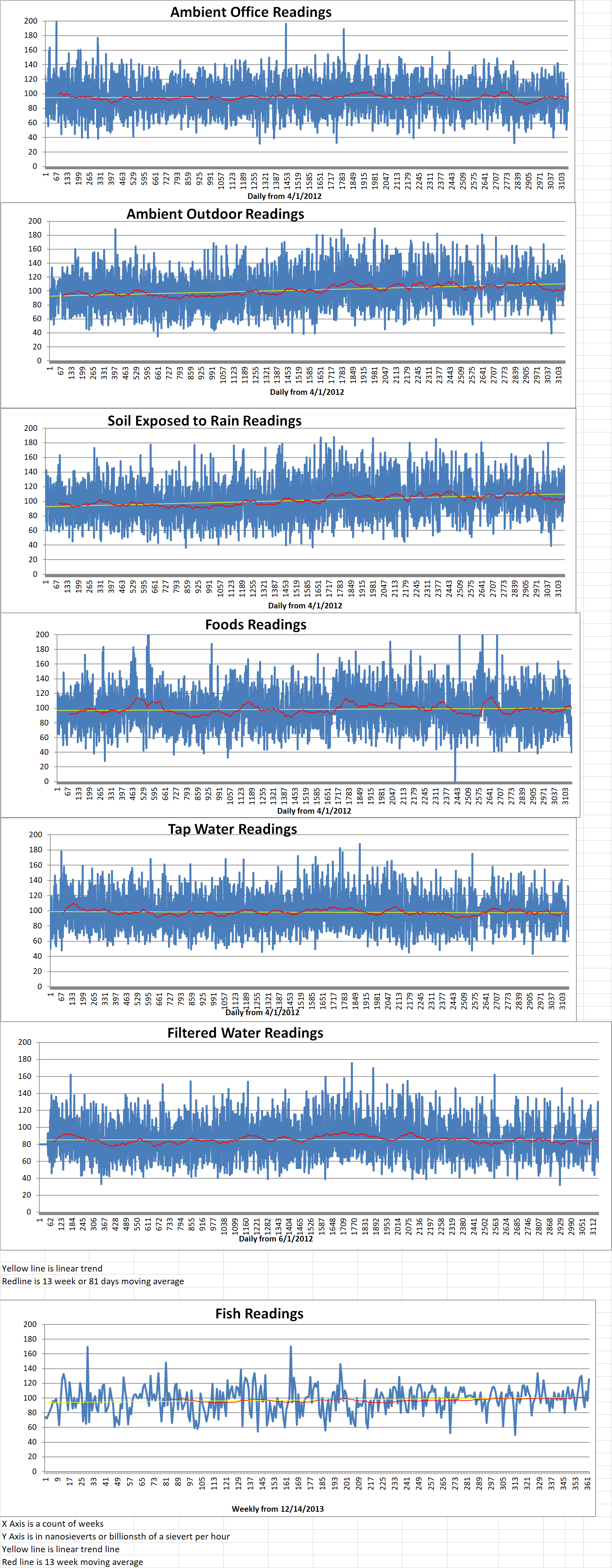
Geiger Readings for Feb 05, 2021
Ambient office = 82 nanosieverts per hour
Ambient outside = 130 nanosieverts per hour
Soil exposed to rain water = 137 nanosieverts per hour
Blueberry from Central Market = 73 nanosieverts per hour
Tap water = 67 nanosieverts per hour
Filter water = 60 nanosieverts per hour
-

Nuclear Reactors 865 – Problems Have Shut Down The Two Reactors At Mexico’s Only Nuclear Power Plant – Part 2 of 3 Parts
Part 2 of 3 Parts (Please read Part 1 first)
Some of the problems at the plant included two diesel leaks. The National Commission for Nuclear Safety and Safeguards (CNSNS) stated that the verification of the generator was found be satisfactory. During the first four months of 2020, Unit 2 was in the yellow danger category because this diesel generator was not available. One plant worker said, “Given the speed of contract delivery, contractors came in a hurry, because they were commissioned during refueling. The connection (to the generator) is likely loose.” A group of one hundred and fifty employees led by Hector Lopez Villarreal disagreed with decisions made by plant management.
During normal operation and fueling, the management of the nuclear power plant uses the color monitoring system to indicate the degree of risk anticipated in operating the reactors. This system has been adapted from the standards used by the U.S. Nuclear Regulatory Commission (NRC). The NRC characterized the safety significance of its findings using a green, white, yellow and red color-code with green representing findings having low safety significance and red assigned to findings with high safety significance.
In the second half of 2020, Laguna Verde recorded one orange warning that several systems could fail. In September of 2020, operators carried out work to change the reactor’s control rod mechanisms despite being forbidden to do so under the Administration Procedure for assessing and managing risks before performing any maintenance work on Unit 1 and Unit 2.
The nuclear power plant remained in an emergency condition on December 20 for over two hours due to a major power outage in Unit 2. The 2-13/20 Reportable Event Notification indicates that the power outage was caused by human error on the installation of electrical panels. The fatal fault caused the AT3 electrical autotransformer, which is one of the plant’s critical energy sources, to accelerate. About midnight there was an increase in operation of the auxiliary transformer T2T22. This was considered an ‘unusual event’ so the plant operators declared an emergency. The diesel generators were running as a precaution.
Unusual events are defined as an event that is unexpected. This includes earthquakes, roadblocks near the plant, fires and other unexpected occurrences. The building suffered a blackout as workers completed efforts to install a steam dryer which improves steam quality by reducing moisture in the vessel that surrounds the core and suspends the dry well drain. Unit 2 was left without the access control program and the air conditioning and ventilation system. This disrupted the checkpoints used to verify that workers had not been exposed to radiation.
This chain of events occurred when the standby transformer was not connected because it was undergoing maintenance. The declared state of emergency ended at around 2 AM on Monday, the 21st of December. The AT3 transformer had previously been reported as having problems. In the first four months of 2020, both Units at the plant were in the yellow risk category due to the problems emerging in this system according to a case report on the incident.
Please read Part 3 next -
Nuclear News Roundup Feb 04, 2021
Pit production, nuclear deterrence important in nation’s defense strategy postandcourier.com
Biden nominee confirms opposition to Yucca Mountain world-nuclear-news.org
Japan, UK team up for nuclear robotics and automation research world-nuclear-news.org
Italy begins search for national radwaste storage site rld-nuclear-news.org
-
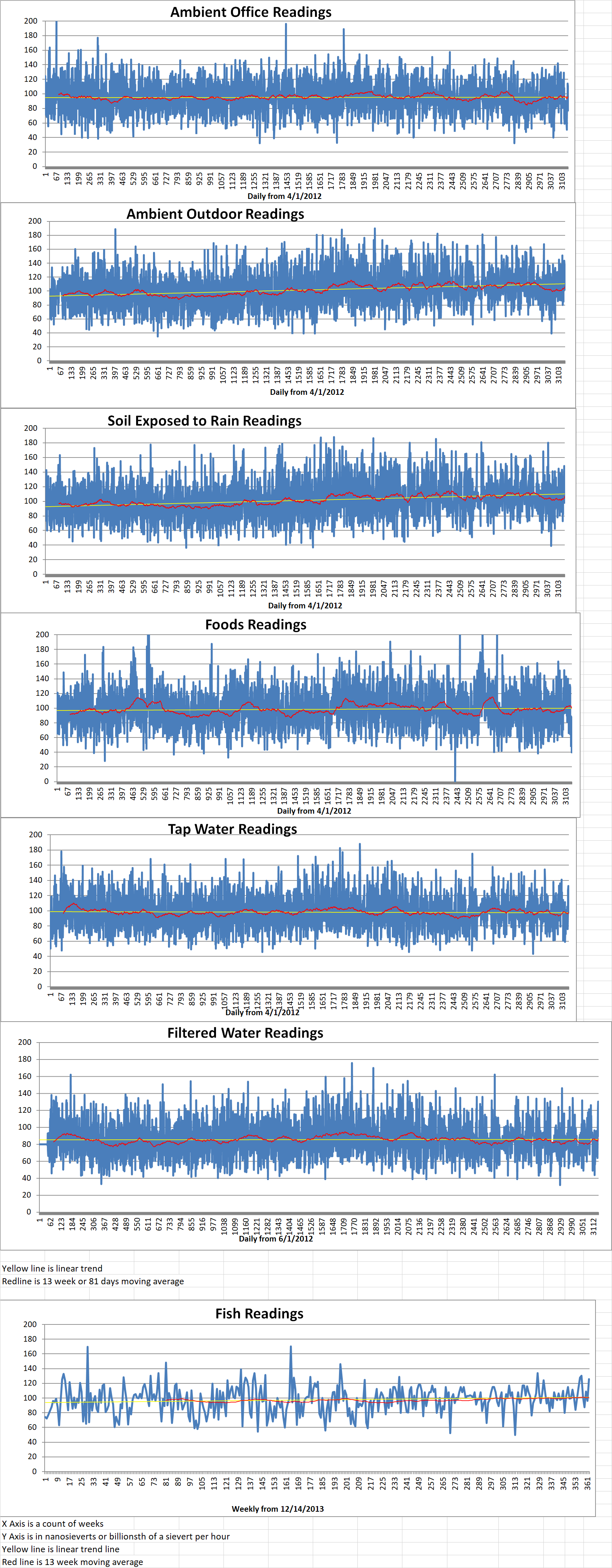
Geiger Readings for Feb 04, 2021
Ambient office = 87 nanosieverts per hour
Ambient outside = 102 nanosieverts per hour
Soil exposed to rain water = 98 nanosieverts per hour
Carrot from Central Market = 40 nanosieverts per hour
Tap water = 98 nanosieverts per hour
Filter water = 90 nanosieverts per hour
-
Nuclear Reactors 864 – Problems Have Shut Down The Two Reactors At Mexico’s Only Nuclear Power Plant – Part 1 of 3 Parts
Part 1 of 3 Parts
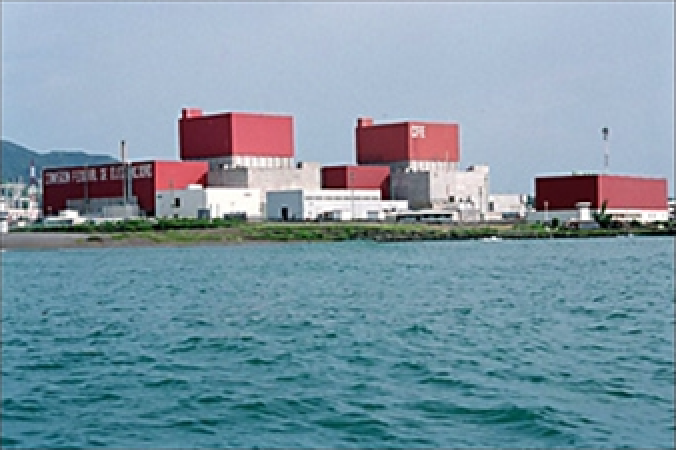
I often blog about commercial nuclear power reactors in the U.S, Europe and Asia. Occasionally, I blog about reactors in South America but I have never blogged about the single operational nuclear power plant in Mexico called the Laguna Verde Nuclear Power Plant (CNLV). The CNLV experienced serious technical problems during 2020 that have carried over to 2021. Unit 2 is has been shut down for more than three weeks because there have been problems with refueling the reactor. Unit 1 needs to have some damage repaired which required it to be shut down.
These failures mean that the Federal Commission for Electricity (CFE), owner of the plant in the municipality of Alto Lucero (Veracruz), does not have access to the eight hundred and ten megawatts produced by each of these reactors when they are fully operational. The one thousand six hundred and twenty megawatts produced by these two reactors accounts of four percent of the installed electrical capacity and two percent of Mexico’s total power generation.
The most recent problem occurred on the 20th of January when Unit 1 was forced into an emergency shutdown which resulted in the risk color category switching from orange to red. Red risk means that it cannot be operated because its safety cannot be guaranteed. The origin of the problem was due to corrosion in the T11 auxiliary transformer and its secondary wiring. This defect was caused by acceleration of the turbines which interfered with the ignition of the transformer. This means that the nuclear power plant only has three emergency diesel generators to feed the generator in case internal fluids are lost.
Early in the morning of the 21st of January, a fuel leak was discovered while the Emergency Diesel Generator II was being tested. This was reported in the Plant Condition Report #106688. This report said, says “Compensatory measures and contingency plans are in place. The organization is notified in order to stay in this state for the shortest time.”
This diesel generator also failed maintenance tests in the fourth quarter of 2020. The National Commission for Nuclear Safety and Safeguards (CNSNS), the Mexican regulator for the sector attached to the Ministry of Energy, discovered at least seven malfunctions according to the inspection report. PR-02/20-LV I was prepared in order to verify the safety of the reactor during the twentieth nuclear refueling of Unit 1 which was conducted between August and September of 2020.
Luis Bravo is the communications coordinator for the conventional armed forces in Europe. He “categorically and categorically denies” any failures. He said, “The Laguna Verde Nuclear Power Plant is in a process of refueling as part of the maintenance that is scheduled long in advance, according to the standards and security protocols established by national regulations, it is internationalized.” In December of 2020, it was reported that the plant was rated as being in a hazardous condition for thirteen hours because of contractor work performed during the refueling process.
Please read Part 2 next -
Nuclear News Roundup Feb 03, 2021
Japan says nuclear crucial to hitting net zero goal by 2050 ft.com
Ukraine Wants to Bolster its Budget with Nuclear-powered Crypto Mining cryptonews.com
German Greens MEP calls for quick phase-out of nuclear energy theparliamentmagzine.eu
South Korea says North Korea nuclear plant documents were ‘just an idea’ reuters.com
-
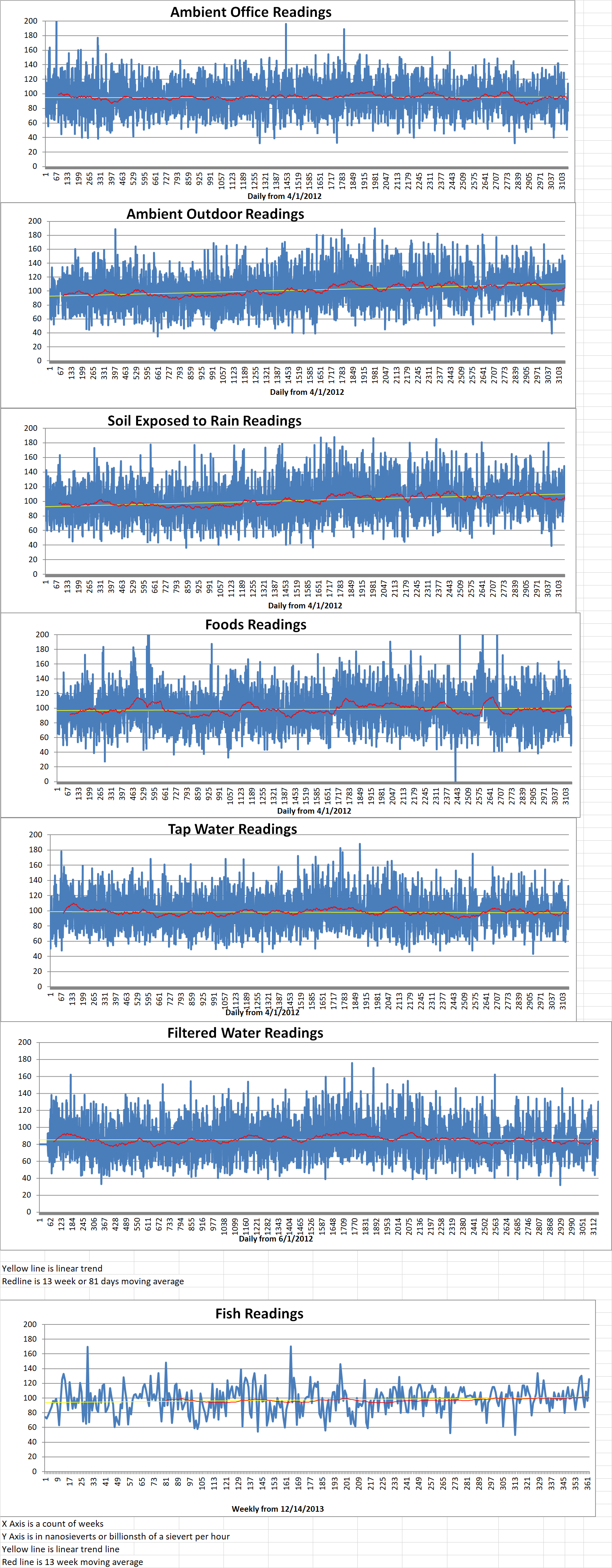
Geiger Readings for Feb 03, 2021
Ambient office = 77 nanosieverts per hour
Ambient outside = 105 nanosieverts per hour
Soil exposed to rain water = 102 nanosieverts per hour
Carrot from Central Market = 87 nanosieverts per hour
Tap water = 115 nanosieverts per hour
Filter water = 103 nanosieverts per hour
-
Nuclear Reactors 863 – The Problem Of Embrittlement In Aging Nuclear Reactors – Part 2 of 2 Parts
Part 2 of 2 Parts (Please read Part 1 first)
The fleet of old, decrepit commercial nuclear power reactors in the U.S. must be inspected for embrittlement as soon as possible. Any reactors with serious embrittlement must be immediately shut down. Nuclear power in the U.S. is under the jurisdiction of the Nuclear Regulatory Commission (NRC). There is serious concern that the NRC has succumbed to what is called “regulatory capture” which means that the domestic nuclear industry has far too much influence over the regulators.
There have been three globally famous nuclear power plant disasters including Three Mile Island, Chernobyl and Fukushima. These have all resulted in a public backlash against nuclear power. Decisions makers and investors have also been increasingly reluctant to back nuclear power. The cost of safe, green, clean renewable energy, led by solar and wind, has been steadily dropping for decades. Energy efficiency has been increasing and the cost of natural gas is at a record low. All of these factors have contributed to the ongoing collapse of the nuclear power industry.
There are only two commercial nuclear power reactors currently being built in the U.S. These are Unit 3 and Unit 4 at the Vogtle nuclear power plant in Georgia. The cost of these two Units is way over budget at an estimated thirty billion dollars and construction costs are still increasing. Almost all of the nuclear power plants in the U.S. are producing electricity at a much higher cost than electricity generated by solar and wind installations.
The NRC is working had to keep the nuclear power industry alive by issuing greater and greater extensions of the licenses for nuclear power plants. This month, the NRC held a meeting for public input on its plan to extend operating life spans of commercial nuclear power plants to one hundred years. Many of the speakers who attended the meeting spoke against the proposed license extensions.
Erica Gray is the nuclear issues chair of the Virginia Sierra Club. She pointed out that currently there is no permanent solution for the disposal of spent nuclear fuel in the U.S. She said, “It’s time to stop this whole nuke con job. It is unethical to continue to make the most toxic waste known to mankind. And renewable energy can power the world.”
Paul Gunter is the director of the Reactor Oversight Project of the national organization Beyond Nuclear. He said that their position on the extension of operating licenses to one hundred years was an emphatic “No”.
Speaker after speaker at the NRC meeting raised the possibility of serious nuclear accidents if reactors are allowed to continue to operate up to one hundred years.
On January 27, President Biden announced a climate change agenda to transition the U.S. towards renewable energy sources. Obviously, the use of fossil fuel must end in order to mitigate climate change. But that will not be enough because nuclear power also contributes to global warming despite repeated false claims that it is carbon-free power. The entire “nuclear fuel chain” including uranium mining, milling and fuel enrichment is carbon intensive. The nuclear power plants themselves emit carbon-14 which is a radioactive form of carbon.