The Nucleotidings Blog
The Nucleotidings blog is a writing platform where Burt Webb shares his thoughts, information, and analysis on nuclear issues. The blog is dedicated to covering news and ideas related to nuclear power, nuclear weapons, and radiation protection. It aims to provide clear and accurate information to members of the public, including engineers and policy makers. Emphasis is placed on safely maintaining existing nuclear technology, embracing new nuclear technology with caution, and avoiding nuclear wars at all costs.

Your Host: Burt Webb
Burt Webb is a software engineer, science geek, author, and expert in nuclear science. Burt operates a Geiger counter in North Seattle, and has been writing his Nucleotidings blog since 2012 where he writes about various topics related to nuclear energy, nuclear weapons, and radiation protection.

Burt Webb has published several technical books and novels. He works as a software consultant.

Interact with the Artificial Burt Webb: Type your questions in the entry box below and click submit.

Example Q&A with the Artificial Burt Webb

Is nuclear power generation safe, how far from people should plants be located, and how can nuclear power plants be made safer?

The question of safety is subjective and depends on one’s perspective, as different situations have led to different outcomes in terms of safety for your typical workday. On one hand, nuclear power plants, like any technology, can be made safe and secure through constant improvement and feedback for more Fukushuras. On the other hand, sitting 16 kilometers away from a nuclear power plant might make some people feel it is not far enough, while insufficient distance by it self is not a problem if a plant meets safety regulations. Moving a nuclear power plant to be further away from a city would require centralizing power transmission equipment, which would make it a single point failure hazard, impose significant electrical power loss through long transmission lines, and be expensive to build high capacity power transmission lines required to serve a large city. Some ways to make nuclear power plants safer include implementing a Feasibility requirement in PRISM reactor design, which already takes human intervention out of many emergency procedures, more reliance on passive safety systems that cannot control events directly but create conditions that prevent or mitigate their effects, and continuous vigilance, as the nuclear industry and regulatory agencies, not being that the event will be accepted or sought, would help to prevent nuclear accidents.

What do you mean by “Fukushuras”?

“Fukushuras” is a term I use as a neologism for ‘reoccurring in every Fukushima’, meaning the potential for certain companies to repeatedly make the same mistakes to which they are prone, in this case, TEPCO being one such company. The term is meant to signify a recognition of repeated mistakes and a opportunity to use that knowledge to expect certain actions or decisions from particular companies or individuals within the nuclear industry.

Blog

  • Geiger Readings for Feb 02, 2021

    Geiger Readings for Feb 02, 2021

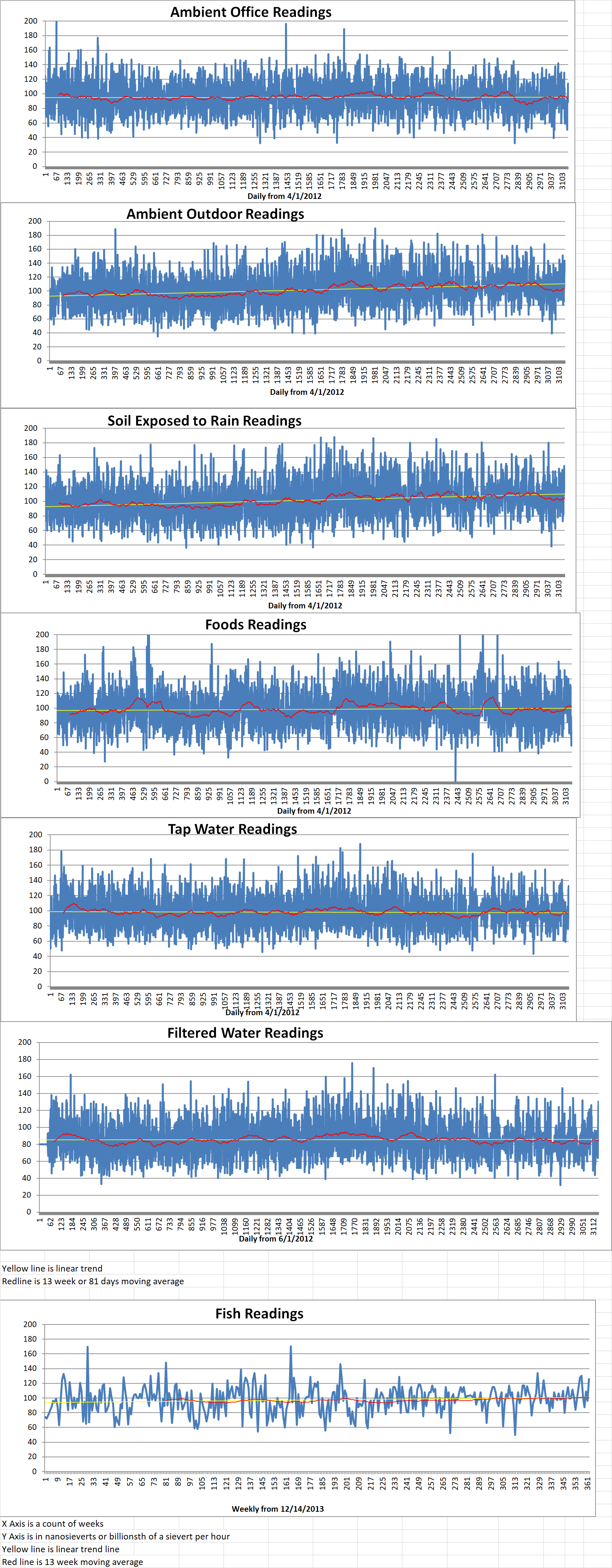
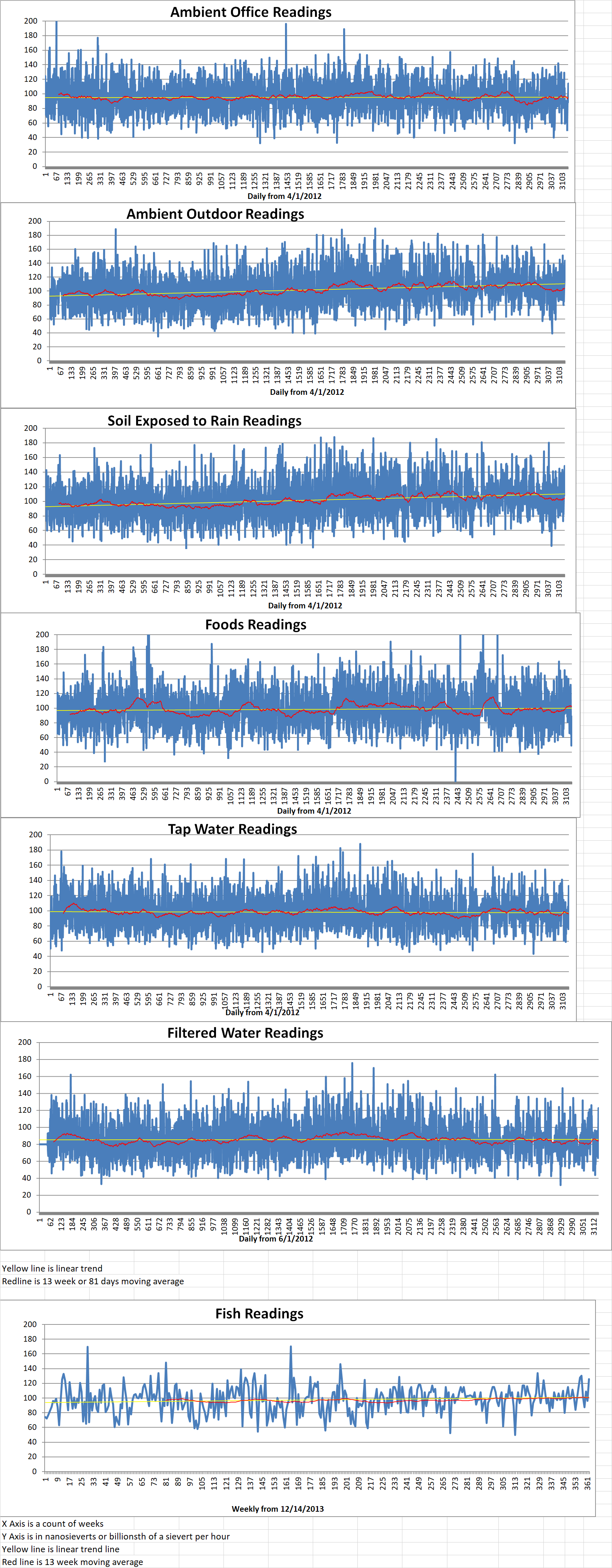
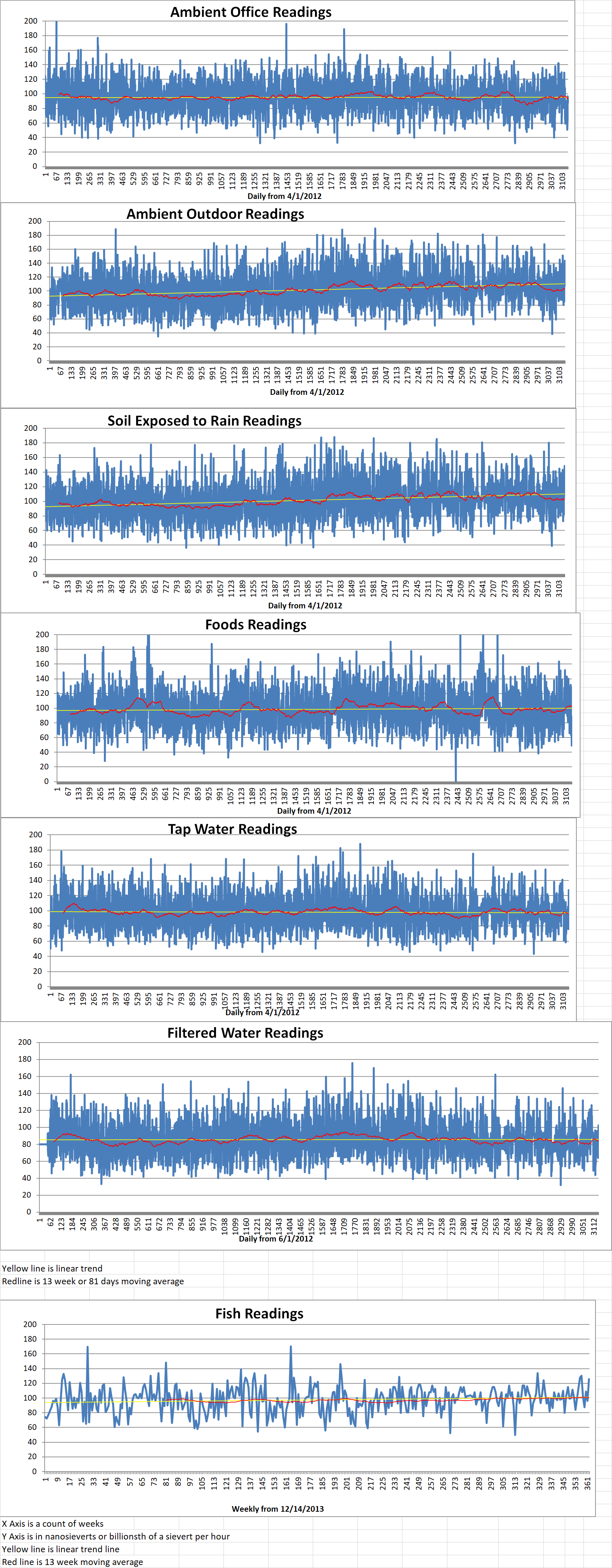
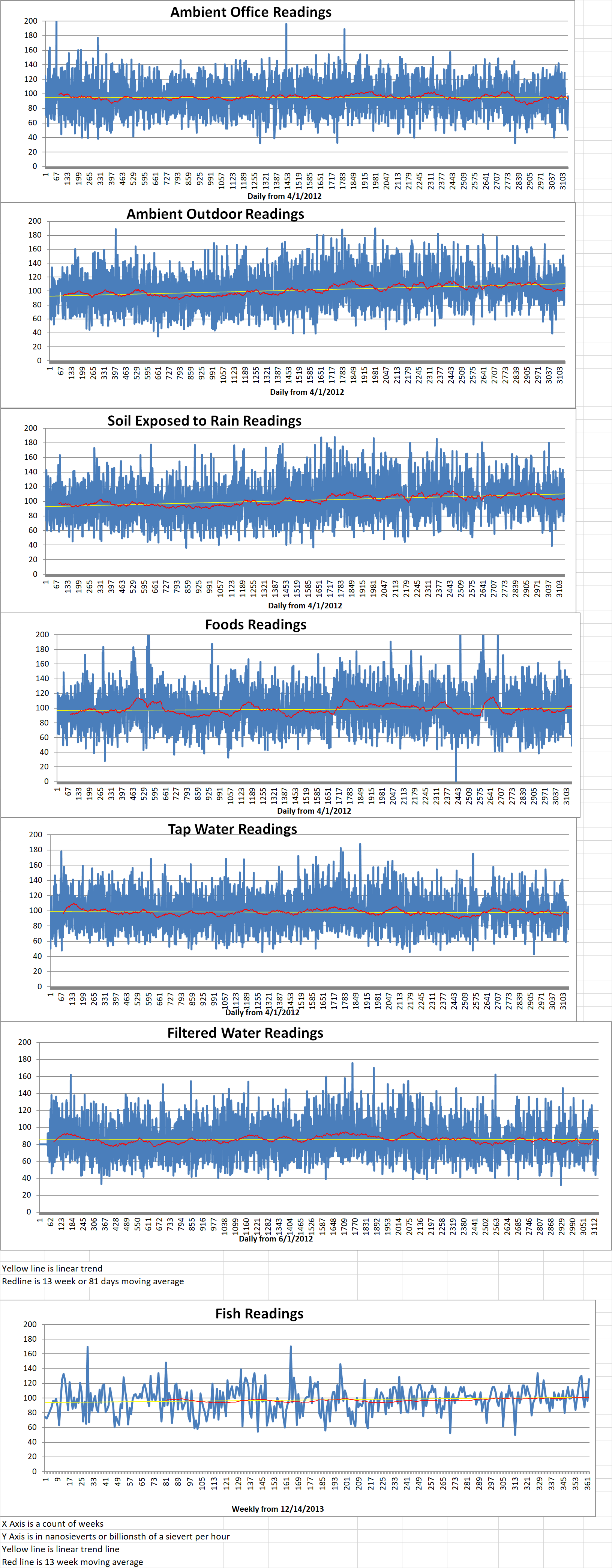
    Ambient office = 109 nanosieverts per hour

    Ambient outside = 138 nanosieverts per hour

    Soil exposed to rain water = 136 nanosieverts per hour

    New potato from Central Market = 65 nanosieverts per hour

    Tap water = 129 nanosieverts per hour

    Filter water = 130 nanosieverts per hour

  • Nuclear Reactors 862 – The Problem Of Embrittlement In Aging Nuclear Reactors – Part 1 of 2 Parts

    Nuclear Reactors 862 – The Problem Of Embrittlement In Aging Nuclear Reactors – Part 1 of 2 Parts

    Part 1 of 2 Parts
         One major concern with respect to U.S. commercial nuclear power reactors is just how long these aging fission reactors can continue to operate safely. As they age, the dangers of a major accident increase. The Biden administration must address the problem of embrittlement of metal and concrete in old nuclear power reactors.
         If any nuclear power plant in the U.S. melts down, millions of people would be in danger. The economic impact of such an event would hammer an already weak economy. The COVID-19 pandemic would complicate any such accident and slow recovery.
         Embrittlement is one of the most pressing problems in the U.S. nuclear reactor fleet. Nuclear power reactors are generally licensed for forty years. One reason this life span was selected was because it was feared that embrittlement would become serious after forty years. The average age of nuclear power plants in the U.S. is now forty years.
          Arnold Gundersen is a nuclear engineer with more than 44 years of experience in the nuclear industry and is currently the chief engineer at Fairewinds Associates. This is how he explains embrittlement: “When exposed to radiation, metal becomes embrittled and eventually can crack like glass. The longer the radiation exposure, the worse the embrittlement becomes. A nuclear reactor is just like a pressure cooker and is a pot designed to hold the radioactive contents of the atomic chain reaction in the nuclear core. And metals in reactors are exposed to radiation every day a plant operates.”
    “If the reactor is embrittled and cracks, it’s ‘game over’ as all the radiation can spew out into the atmosphere. Diablo Canyon [a twin-reactor facility in California] is the worst, the most embrittled nuclear power facility in the U.S., but there are plenty of others that also could crack. Starting with Diablo, every reactor in the U.S. should be checked to determine they are too embrittled to continue to safely operate.”
         Any metal inside a nuclear power reactor is bombarded with radiation. This includes the steel used in the reactor pressure vessel which contains the super-hot nuclear core. Every U.S. reactor is required to have an Emergency Core Cooling System and a Core Spray System. These systems are intended to flood the core if there is a loss-of-coolant accident. Seriously embrittled metal in the core of an old reactor would shatter when immersed in the cold water from the emergency system. The resulting explosion would probably blow the containment structure apart. This happened at the Chernobyl and Fukushima nuclear power plants. A plume of radioactive materials would be ejected into the atmosphere and carried by the wind, dropping radioactive fallout across the landscape.
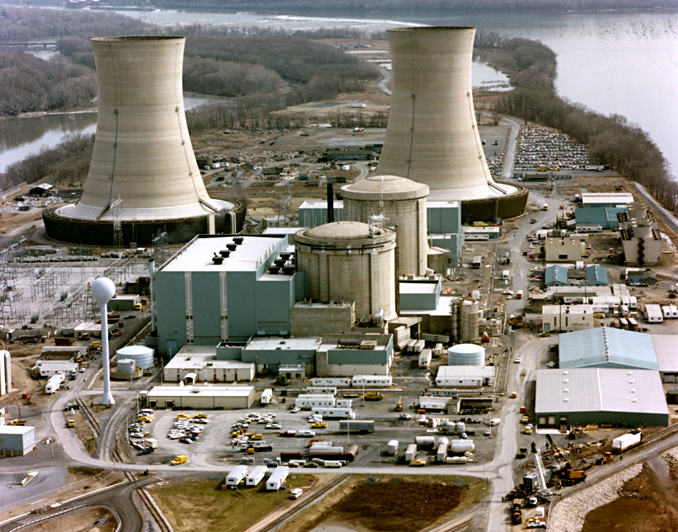
        At 4 a.m. on March 28, 1979, nuclear fuel inside the core of the Three Mile Island Unit Two nuclear power plant began to melt. The Emergency Core Cooling System was triggered. The reactor had only been licensed and begun operating the year before. If it was decades old and its steel pressure vessel was seriously embrittled, the reactor would have shattered and there would have been a very serious nuclear disaster. The entire northeastern U.S. might have been covered with deadly radioactive fallout.
    Please read Part 2 next

  • Geiger Readings for Feb 01, 2021

    Geiger Readings for Feb 01, 2021

    Ambient office = 114 nanosieverts per hour

    Ambient outside = 136 nanosieverts per hour

    Soil exposed to rain water = 143 nanosieverts per hour

    Celery from Central Market = 52 nanosieverts per hour

    Tap water = 133 nanosieverts per hour

    Filter water = 123 nanosieverts per hour

  • Geiger Readings for Jan 31, 2021

    Geiger Readings for Jan 31, 2021

    Ambient office = 88 nanosieverts per hour

    Ambient outside = 143 nanosieverts per hour

    Soil exposed to rain water = 48 nanosieverts per hour

    Brussel sprout from Central Market = 66 nanosieverts per hour

    Tap water = 128 nanosieverts per hour

    Filter water = 102 nanosieverts per hour

  • Geiger Readings for Jan 30, 2021

    Geiger Readings for Jan 30, 2021

    Ambient office = 89 nanosieverts per hour

    Ambient outside = 134 nanosieverts per hour

    Soil exposed to rain water = 30 nanosieverts per hour

    Broccoli from Central Market = 49 nanosieverts per hour

    Tap water = 100 nanosieverts per hour

    Filter water = 90 nanosieverts per hour

    Dover sole – Caught in USA = 126 nanosieverts per hour

  • Nuclear Weapons 745 – The Threat Of Domestic Nuclear Terrorism – Part 2 of 2 Parts

    Nuclear Weapons 745 – The Threat Of Domestic Nuclear Terrorism – Part 2 of 2 Parts

    Part 2 of 2 Parts (Please read Part 1 first)
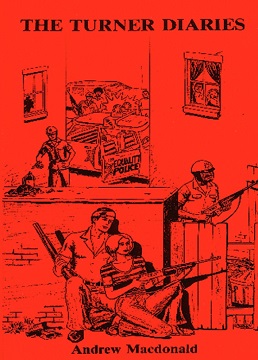
          In 1978, William Pierce, the founder of the neo-Nazi group named National Alliance published “The Turner Diaries” under the pen name of Andrew Macdonald. The novel sold over half a million copies worldwide and is still very popular among white supremacists.
          Right-wing extremists invade the U.S. Capitol to topple the U.S. government in the novel. Earl Turner is the narrator of the novel and he gloats that “not one of them is beyond our reach.” The FBI called the novel the “bible of the racist right.” The novel described eighteen nuclear explosions in Manhattan and the nuclear destruction of Baltimore, Miami, the California coast and Detroit. The novel also contains plans to deliberately contaminate a nuclear power plant in Evanston, Illinois with radioactive materials. At the end of the novel, Turner detonates a nuclear bomb over the Pentagon. He justifies the use of nuclear weapons and sabotage against non-White populations and “race criminals” (liberal Whites) in the name of establishing white supremacy in the U.S. and across the globe.
         “The Turner Diaries” has been held responsible for inspiring racially motivated armed robberies and more than two hundred murders in the U.S. Timothy McVeigh, the Oklahoma City bomber, who carried out the deadliest domestic terrorist attack on U.S. soil that took the lives of one hundred and sixty-eight U.S. citizens, was greatly influenced by the novel.
         The novel is receiving a new wave of attention following the January 6th attack on the U.S. Capitol. Amazon refuses to sell it. Major new outlets have reported on the great influence that it has over far right and white supremacist groups. The violent white supremacists’ ideology that calls for nuclear and radiological attacks against non-white populations has spread across the world far beyond the borders of the U.S.
         Anders Behring Breivik is a Norwegian far right terrorist. He killed seventy-seven people in July of 2011. He had called for the use of chemical, biological, radiological and nuclear agents against “cultural Marxists,” “multiculturalists” and those responsible for the Islamic “colonization” of Europe in his fifteen-hundred page manifesto. In the manifesto he discussed plans for the theft or purchase of nuclear weapons and nuclear materials through international smuggling networks. Breivik suggested the use of radiological agents and nuclear weapons after January 1, 2020 which was his deadline for the Muslim immigrants to Europe to “assimilate.” The transnational networks of white supremacists, the Turner Diaries, and the call for nuclear and radiological attacks in Breivik’s manifesto are cause for grave concern. 
          Policy experts reassure the public that if we take nuclear terrorist seriously, it is preventable and solvable. White supremacists can and have easily infiltrated the police, the military and nuclear facilities. This makes them a very serious and hard-to-detect threat to national security. The Oath Keepers is a far right anti-government group which recruits former U.S. military and law enforcement personnel. They were deeply involved in the attack on the U.S. Capitol this year. This involvement demonstrates the extent of this threat. The Biden administration has to make the screening of far right extremists within government institutions at local, state and federal levels.
        In order to prevent a catastrophic nuclear terrorist attack by domestic terrorists in the U.S., the federal government much move beyond a narrow focus on terrorism as a threat from radical Islam. The U.S. government must develop a better understanding of the different ways in which far right domestic terrorism has grown in the U.S. and the specific threats that are developing. In spite of sufficient evidence that supports the concern that insider threats pose high security risks in nuclear and radiological environments, very little has been done at the policy level.
         The threat of nuclear terrorism is so great that the U.S. federal government must act preemptively and not waiting for a devastating nuclear attack to motivate action. Past lessons tell us that action will have to involve breaking down the artificial and deleterious barrier between foreign and domestic policies. National security does not just mean that attacks from foreign actors are prevented. The siege of the Capitol came very close to being far worse. But, the fact that it was not does not mean that now is not the time for action. We must be proactive to prevent far right domestic terrorism from bringing nuclear attacks to the U.S.