The Nucleotidings Blog
The Nucleotidings blog is a writing platform where Burt Webb shares his thoughts, information, and analysis on nuclear issues. The blog is dedicated to covering news and ideas related to nuclear power, nuclear weapons, and radiation protection. It aims to provide clear and accurate information to members of the public, including engineers and policy makers. Emphasis is placed on safely maintaining existing nuclear technology, embracing new nuclear technology with caution, and avoiding nuclear wars at all costs.

Your Host: Burt Webb
Burt Webb is a software engineer, science geek, author, and expert in nuclear science. Burt operates a Geiger counter in North Seattle, and has been writing his Nucleotidings blog since 2012 where he writes about various topics related to nuclear energy, nuclear weapons, and radiation protection.

Burt Webb has published several technical books and novels. He works as a software consultant.

Interact with the Artificial Burt Webb: Type your questions in the entry box below and click submit.

Example Q&A with the Artificial Burt Webb

Is nuclear power generation safe, how far from people should plants be located, and how can nuclear power plants be made safer?

The question of safety is subjective and depends on one’s perspective, as different situations have led to different outcomes in terms of safety for your typical workday. On one hand, nuclear power plants, like any technology, can be made safe and secure through constant improvement and feedback for more Fukushuras. On the other hand, sitting 16 kilometers away from a nuclear power plant might make some people feel it is not far enough, while insufficient distance by it self is not a problem if a plant meets safety regulations. Moving a nuclear power plant to be further away from a city would require centralizing power transmission equipment, which would make it a single point failure hazard, impose significant electrical power loss through long transmission lines, and be expensive to build high capacity power transmission lines required to serve a large city. Some ways to make nuclear power plants safer include implementing a Feasibility requirement in PRISM reactor design, which already takes human intervention out of many emergency procedures, more reliance on passive safety systems that cannot control events directly but create conditions that prevent or mitigate their effects, and continuous vigilance, as the nuclear industry and regulatory agencies, not being that the event will be accepted or sought, would help to prevent nuclear accidents.

What do you mean by “Fukushuras”?

“Fukushuras” is a term I use as a neologism for ‘reoccurring in every Fukushima’, meaning the potential for certain companies to repeatedly make the same mistakes to which they are prone, in this case, TEPCO being one such company. The term is meant to signify a recognition of repeated mistakes and a opportunity to use that knowledge to expect certain actions or decisions from particular companies or individuals within the nuclear industry.

Blog

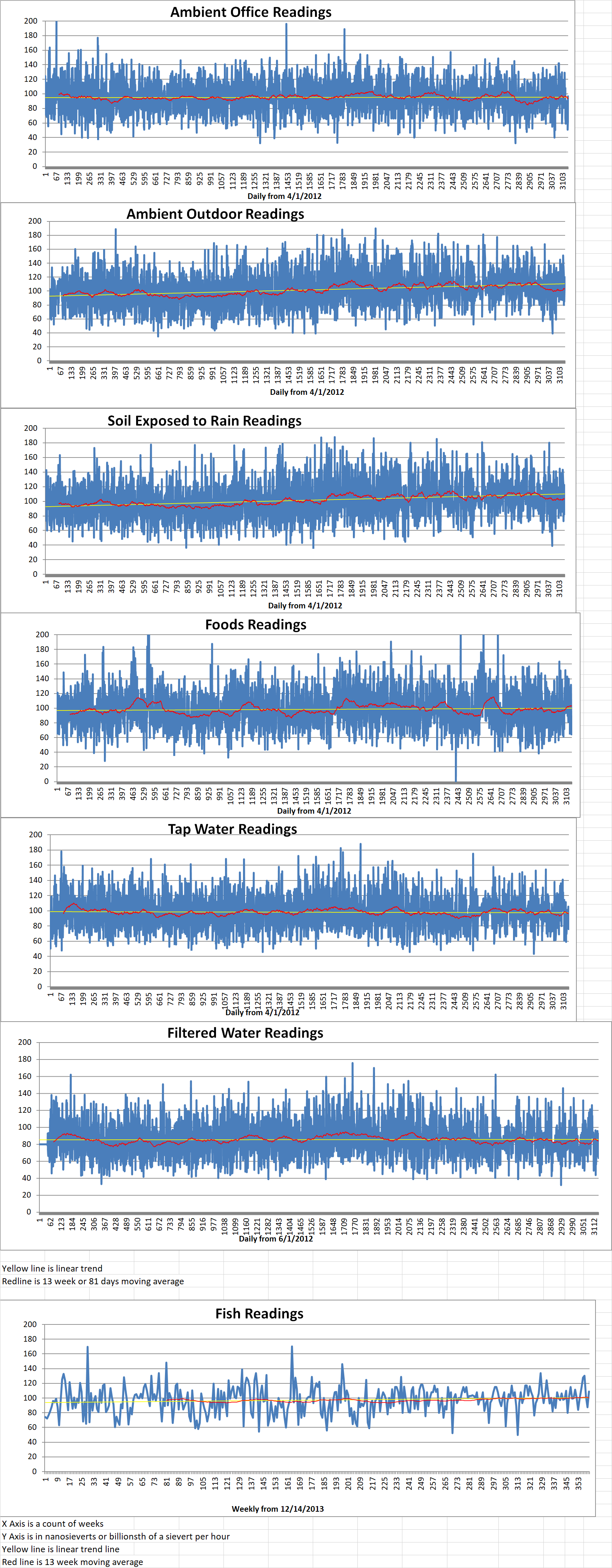
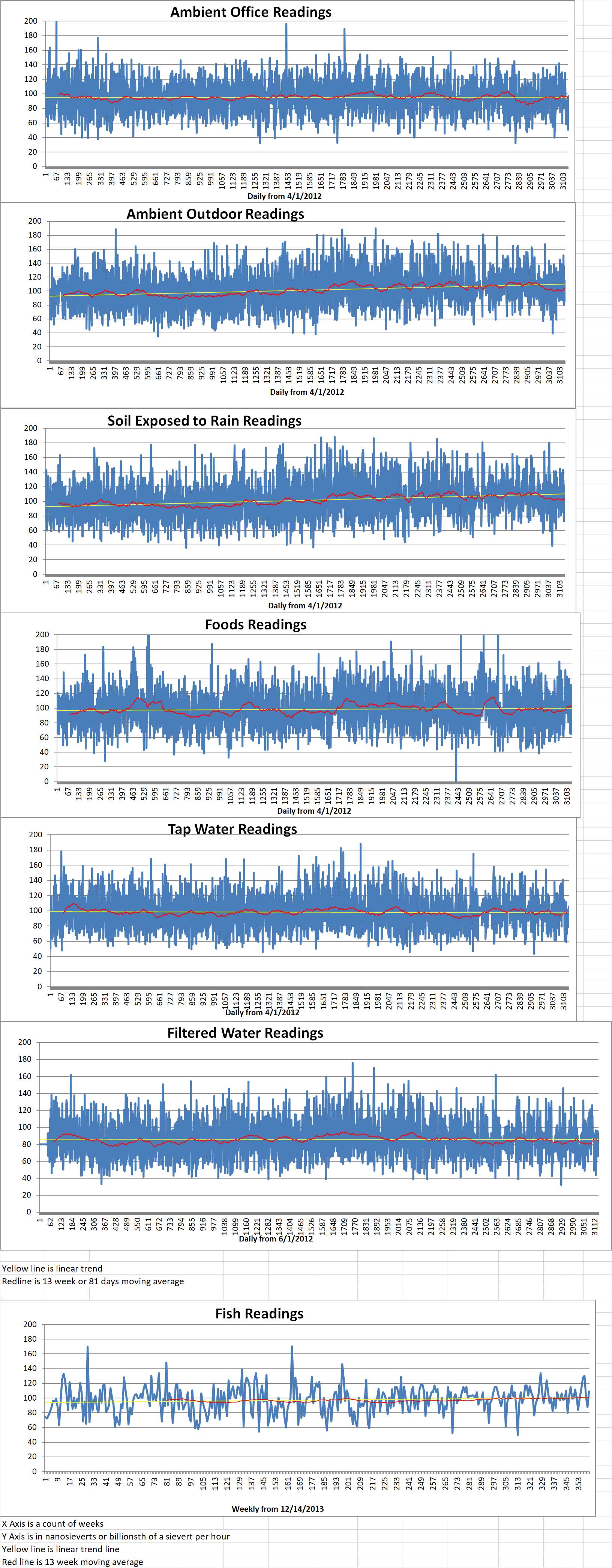
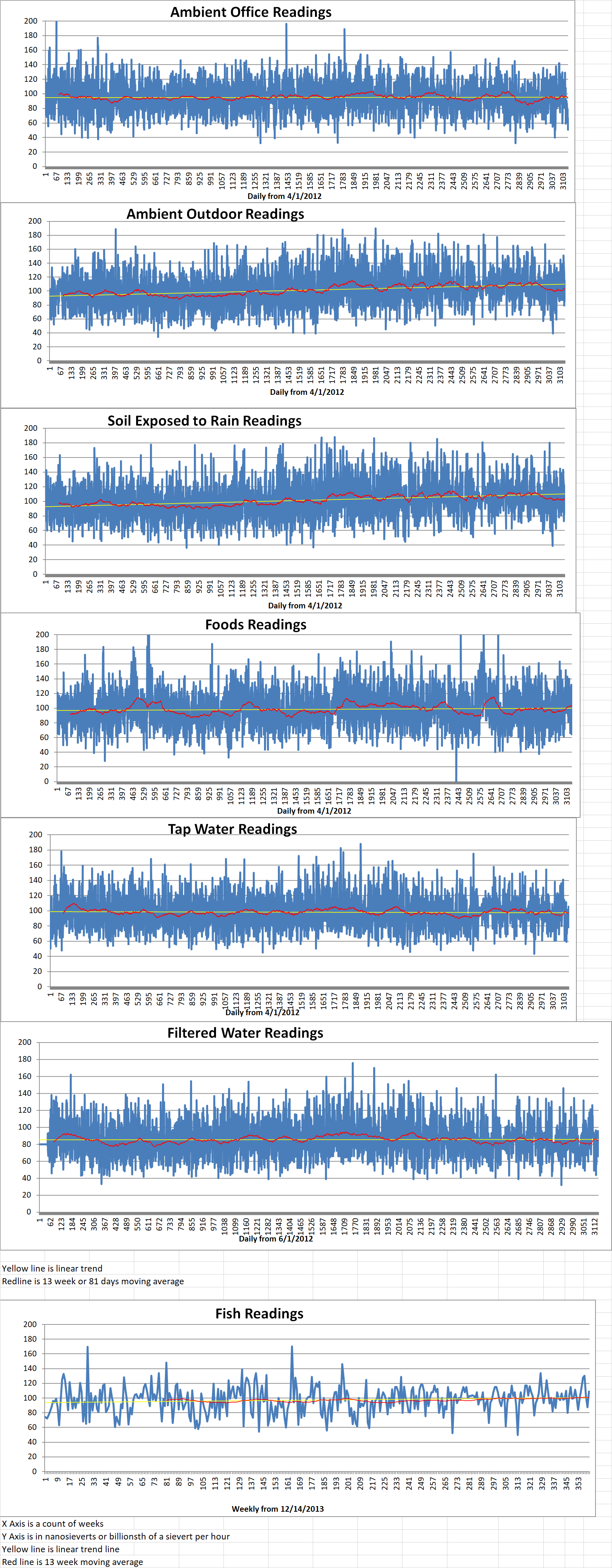
  • Geiger Readings for Jan 29, 2021

    Geiger Readings for Jan 29, 2021

    Ambient office = 91 nanosieverts per hour

    Ambient outside = 120 nanosieverts per hour

    Soil exposed to rain water = 122 nanosieverts per hour

    Red bell pepper from Central Market = 89 nanosieverts per hour

    Tap water = 76 nanosieverts per hour

    Filter water = 64 nanosieverts per hour

  • Nuclear Weapons 744 – The Threat Of Domestic Nuclear Terrorism – Part 1 of 2 Parts

    Nuclear Weapons 744 – The Threat Of Domestic Nuclear Terrorism – Part 1 of 2 Parts

    Part 1 of 2 Parts     
          On January 6th of 2021, thousands of followers of Donald Trump stormed the U.S. capitol in an unprecedented display of right-wing white supremacist fury. Fortunately, only a few people were killed though many were injured. The nation was horrified but it could have been much worse. Some of the rioters had brought home-made bombs and incendiary devices with them that could have killed and injured hundreds including members of Congress. In a worst-case scenario, there could have been an act of nuclear terrorism.
         I have posted about the dangers of nuclear terrorism before. There is a broad international law enforcement project to prevent the sale, transport and use of nuclear materials by terrorists. While the fear of nuclear terrorism by foreign parties is very real, the equally real possibility of domestic nuclear terrorism exists but has not received much press. The idea of nuclear and radiological terrorism has been a part of white-supremacist ideology for decades.
         Unfortunately, the U.S. policy community seems to believe that the threat of nuclear terrorism is a mostly external threat. Such Islamist terrorism networks as the Islamist State, Al-Qaeda and their splinter groups have attempted to obtain nuclear materials on the black market. But U.S. far-right extremist groups also have history of attempting to secure nuclear weapons and radiological materials for use in terrorist attacks against the U.S. federal government. Members of neo-Nazi groups such as the Atomwaffen Division (which means “atomic weapons” in German), also known as the National Socialist Order, is documented to have tried to get nuclear materials in the past in order to stage terrorist attacks.
         U.S. policy makers as far back the 1970s have been concerned about international terrorism because of the increase activities of armed insurgent groups in the Middle East. In 1972, the Palestinian terrorist group called Black September killed eleven Israeli Olympic team members. The spike in oil prices in 1973 brought a great deal of money to petroleum exporting countries in the Middle East and raised fears of a violent, non-white, Muslim world. In 1974, India detonated its first nuclear bomb. This led Pakistan to develop its own nuclear weapons with the help of Iran, Libya and other M.E. nations hostile to the West. These developments caused Western policy makers to fear that nuclear materials could fall into the hands of nations and non-state actors with hostile intentions toward Western nations including the U.S. In 1979, a new Islamist government in Iran took hostages from the U.S. embassy and the ensuing drama spent more than a year on U.S. television. The events of the decade of the 70 solidified U.S. fears of radical Islam as a serious threat to U.S. national security.
         During the decades of the 70s, nuclear terrorism was also a domestic threat. Nuclear power grew explosively in that decade and it was feared that a large amount of plutonium would be widely available on the black market. By 1980, white-power advocates had organized for a violent armed struggle of “leaderless resistance” to the U.S. federal government. Many of those involved were returning Vietnam war veterans hardened by military training. To them, the federal government was the source of unacceptable societal change that threatened White Christian Americans.
    Please read Part 2 next

  • Geiger Readings for Jan 28, 2021

    Geiger Readings for Jan 28, 2021

    Ambient office = 97 nanosieverts per hour

    Ambient outside = 107 nanosieverts per hour

    Soil exposed to rain water = 108 nanosieverts per hour

    Avocado from Central Market = 65 nanosieverts per hour

    Tap water = 85 nanosieverts per hour

    Filter water = 81 nanosieverts per hour

  • Nuclear Batteries Are An Intense Area Of Research – Part 3 of 3 Parts

    Nuclear Batteries Are An Intense Area Of Research – Part 3 of 3 Parts

    Part 3 of 3 Parts (Please read Parts 1 and 2 first)

         Like a nested Russian Matryoshka doll, the nuclear battery power modules have smaller modules inside. Only the control module is accessible. The other modules are factory sealed with the fuel core already integrated. The fuel is non-weapons grade, low enriched to five percent uranium.
         At the end of its five to ten year operational life when itsfuel is exhaused, the sealed unit is shipped back to a centralized facility for refuelling and refurbishment. Most of the unit can be reused. There is no need for high-level radioactive waste handling and storage at the user site. One important feature of nuclear batteries is that the nuclear core is the right size for bore-hole disposal. The time required for installation or replacement is only days, compared to the years that are required for the construction of a full sized nuclear power plant.
         Jacopo Buongiorno is a nuclear engineering professor at MIT and another of ANPEG’s co-founders. He said that the nuclear battery has builtin safety features that make it impossible for the battery to ever melt down or release radioactive materials without any operator intervention. It is also much easier to secure and protect than a full-sized nuclear power plant. Any intentional damage only requires replacement while the damaged unit is refurbished.
          This pattern of developmental progression has guaranteed that these units are the safest, cleanest, most compact power sources ever developed. The physical size of these units is tiny when compared to the footprint of a solar farm or wind farm. In addition, they are not subject to the whims of the weather as are solar and wind installations.
          A recent MIT Energy Initiative study discovered that it is important to rapidly expand nuclear energy in order to address the problems of climate change and poverty. The fact that we can make these batteries quickly is important.
         Nuclear batteries could also play a major part in dealing with the problems of informal settlements such as refugee camps and slums. At the present moment, over a billion people do not have access to electricity for cooking, lighting, heating, sanitation, clean water or adequate shelter. If this problem is not addressed quickly, there may be twice as many people at risk as there are today by 2040.
         It required about three thousand kilowatt hours per person per year to lift someone up out of poverty. We generate twenty-four trillion kilowatt hours per year. Over sixteen trillion of that is from fossil fuels. The amount of clean energy we need to end global poverty and mitigate climate change is over thirty-five trillion kilowatt hours per year by 2040. It is estimated that at that time the population of the world will be over ten billion.
         If nuclear power makes up only a third of this total energy demand, the world will need about a hundred thousand of these nuclear batteries. Larger nuclear power plants with generation capacities of one gigawatt or more are still being constructed in China, the Middle East, Russia and other places. Five new standard nuclear reactors were put into operation last year. Over one hundred of the four hundred nuclear power plants currently operating around the globe are expected to still be operating in 2040.
         Small modular reactors (SMRs) of various designs, LWR, MSR or others are scheduled to be built in this decade and thousands should be online by 2040. The flexibility of SMRs and nuclear batteries will play a critical role in deploying power to where it is needed the most.

  • Geiger Readings for Jan 27, 2021

    Geiger Readings for Jan 27, 2021

    Ambient office = 66 nanosieverts per hour

    Ambient outside = 115 nanosieverts per hour

    Soil exposed to rain water = 122 nanosieverts per hour

    English cucumber from Central Market = 89 nanosieverts per hour

    Tap water = 106 nanosieverts per hour

    Filter water = 93 nanosieverts per hour

  • Nuclear Batteries Are An Intense Area Of Research – Part 2 of 3 Parts

    Nuclear Batteries Are An Intense Area Of Research – Part 2 of 3 Parts

    Part 2 of 3 Parts (Please read Part 1 first)
         One of the technologies that can help decentralize the national power grid already exists in the form of a micro reactor or Nuclear battery. Researchers at the Massachusetts Institute of Technology (MIT) have convened an industry collaboration called the Advanced Nuclear and Production Expert Group (ANPEG). The purpose of this collaboration is to develop a Nuclear battery to join this new modern market. The development of Nuclear Batteries will include factory production, modular package delivery, minimal site preparation and standardized interoperability with processes that can directly utilize the heat and/or electricity generated to produce goods and services on site directly for local consumption and trade. This new energy market can be free from the need from long distance fuel pipelines and large national grids.
         A Nuclear battery is a streamlined object about the size of a large automobile. It would be able to fit into a standard twenty-foot-long ISO shipping container. Just like new cars, it would roll off an automated assembly line. Thousands can be industrially mass produced.
         Norman Foster is the o-founder of ANPEG. He said, “Like new cars, the Nuclear battery would roll off an automated assembly line, one of mass produced thousands. Plugged into a similar-sized conversion module, its typical 10 MW output could power 8,000 homes or a cluster of skyscrapers, a mid-sized data center or a desalination plant for 150,000 people. Residual heat could be used locally for building heat or food production instead of being discarded. The transmission grid would be nano-sized and buried – no more pylons and overhead cables to fail during extreme weather events.”
         This local flexibility is a key attraction for the use of such systems in the developing world. These Nuclear Batteries could be distributed to any urban, rural, or maritime location and put into service with very little setup time required. They will be able to provide electricity, clean water and other important community services.
          Iain MacDonald is also an ANPEG co-founder. He said, “The Nuclear battery is a fundamental energy advance in both form and function, shifting the way nuclear is perceived by the pubic and stakeholders and differentiating it from all other energy sources in its capability to address adaptation to climate change, and standard of living in one clean system.”
          Nuclear Batteries are not a new concept. Since the 1960s, the U.S. military has been hauling small nuclear reactors around behind trucks. Nuclear Batteries are also used in submarines and to power satellites on deep space missions. Westinghouse has already begun to implement such batteries with their WEC eVinci Nuclear battery.
          An ex-Liberty ship fitted with a nuclear battery powered the construction of the Panama Canal from 1968 to 1975. More recently, a NASA/Los Alamos team, headed by an ANPEG member named Patrick McClure developed a nuclear battery system called Kilopower. Kilopower is a nano-scale, affordable fission nuclear power system that could be used to power long durations stays on the Moon, Mars and other planetary surfaces.
    Please read Part 3