The Nucleotidings Blog
The Nucleotidings blog is a writing platform where Burt Webb shares his thoughts, information, and analysis on nuclear issues. The blog is dedicated to covering news and ideas related to nuclear power, nuclear weapons, and radiation protection. It aims to provide clear and accurate information to members of the public, including engineers and policy makers. Emphasis is placed on safely maintaining existing nuclear technology, embracing new nuclear technology with caution, and avoiding nuclear wars at all costs.

Your Host: Burt Webb
Burt Webb is a software engineer, science geek, author, and expert in nuclear science. Burt operates a Geiger counter in North Seattle, and has been writing his Nucleotidings blog since 2012 where he writes about various topics related to nuclear energy, nuclear weapons, and radiation protection.

Burt Webb has published several technical books and novels. He works as a software consultant.

Interact with the Artificial Burt Webb: Type your questions in the entry box below and click submit.

Example Q&A with the Artificial Burt Webb

Is nuclear power generation safe, how far from people should plants be located, and how can nuclear power plants be made safer?

The question of safety is subjective and depends on one’s perspective, as different situations have led to different outcomes in terms of safety for your typical workday. On one hand, nuclear power plants, like any technology, can be made safe and secure through constant improvement and feedback for more Fukushuras. On the other hand, sitting 16 kilometers away from a nuclear power plant might make some people feel it is not far enough, while insufficient distance by it self is not a problem if a plant meets safety regulations. Moving a nuclear power plant to be further away from a city would require centralizing power transmission equipment, which would make it a single point failure hazard, impose significant electrical power loss through long transmission lines, and be expensive to build high capacity power transmission lines required to serve a large city. Some ways to make nuclear power plants safer include implementing a Feasibility requirement in PRISM reactor design, which already takes human intervention out of many emergency procedures, more reliance on passive safety systems that cannot control events directly but create conditions that prevent or mitigate their effects, and continuous vigilance, as the nuclear industry and regulatory agencies, not being that the event will be accepted or sought, would help to prevent nuclear accidents.

What do you mean by “Fukushuras”?

“Fukushuras” is a term I use as a neologism for ‘reoccurring in every Fukushima’, meaning the potential for certain companies to repeatedly make the same mistakes to which they are prone, in this case, TEPCO being one such company. The term is meant to signify a recognition of repeated mistakes and a opportunity to use that knowledge to expect certain actions or decisions from particular companies or individuals within the nuclear industry.

Blog

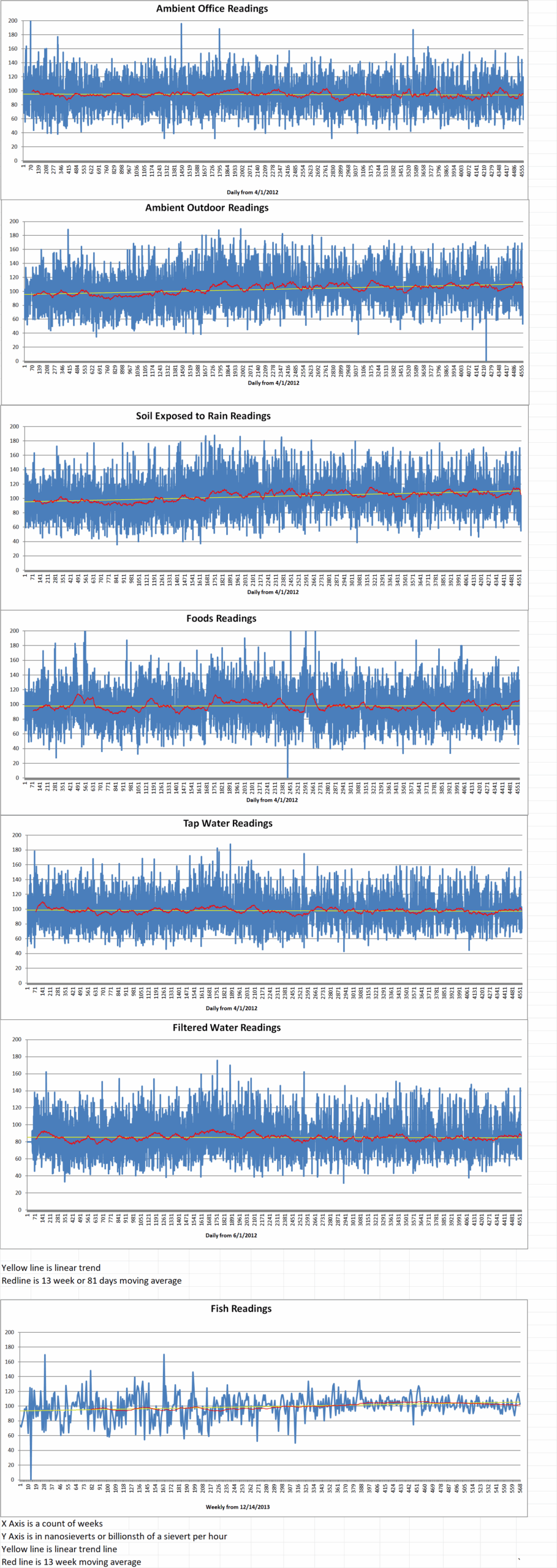
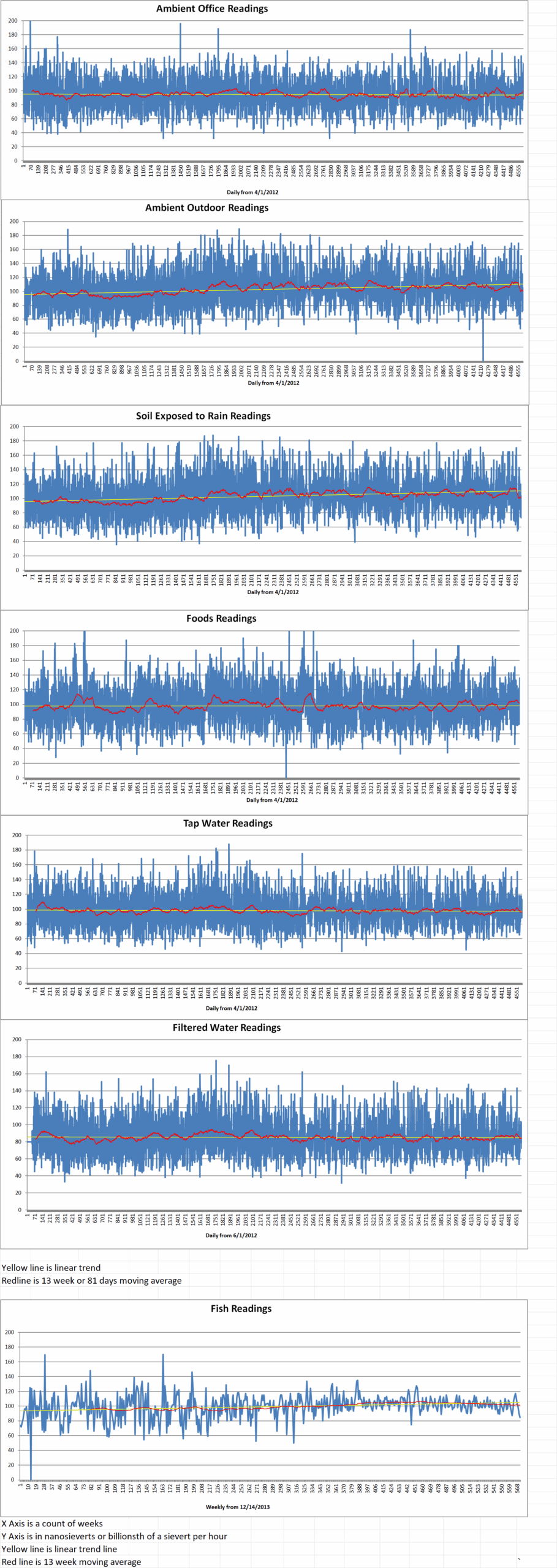
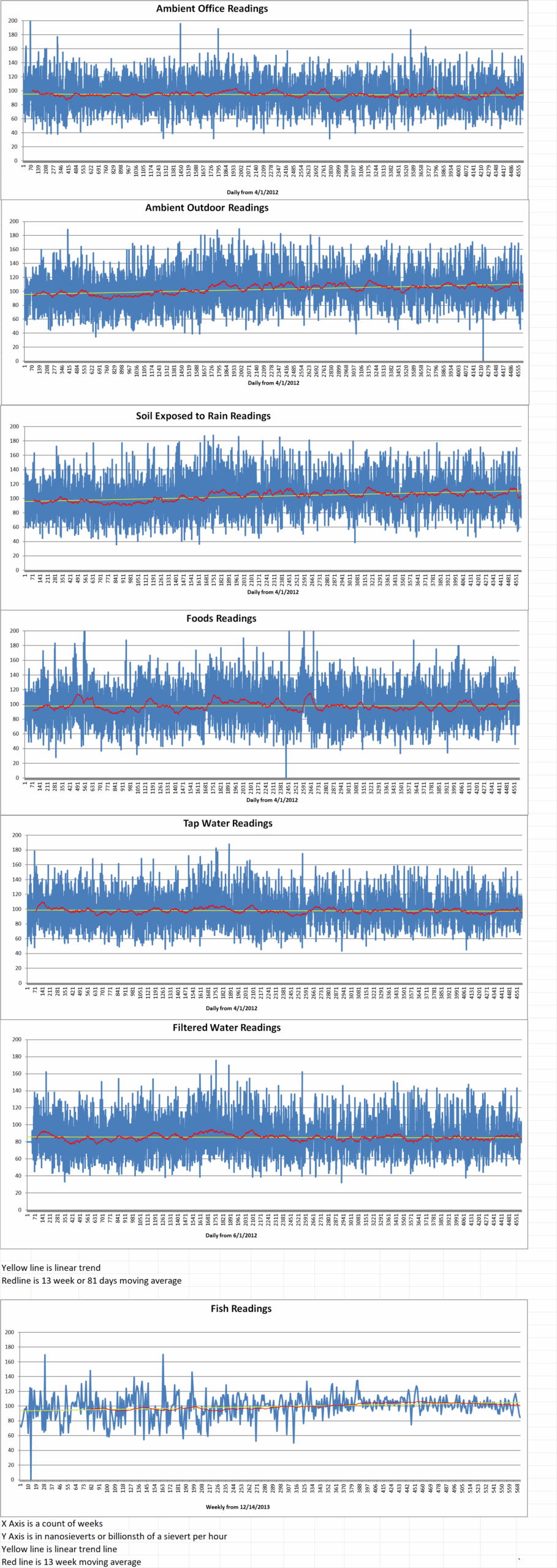
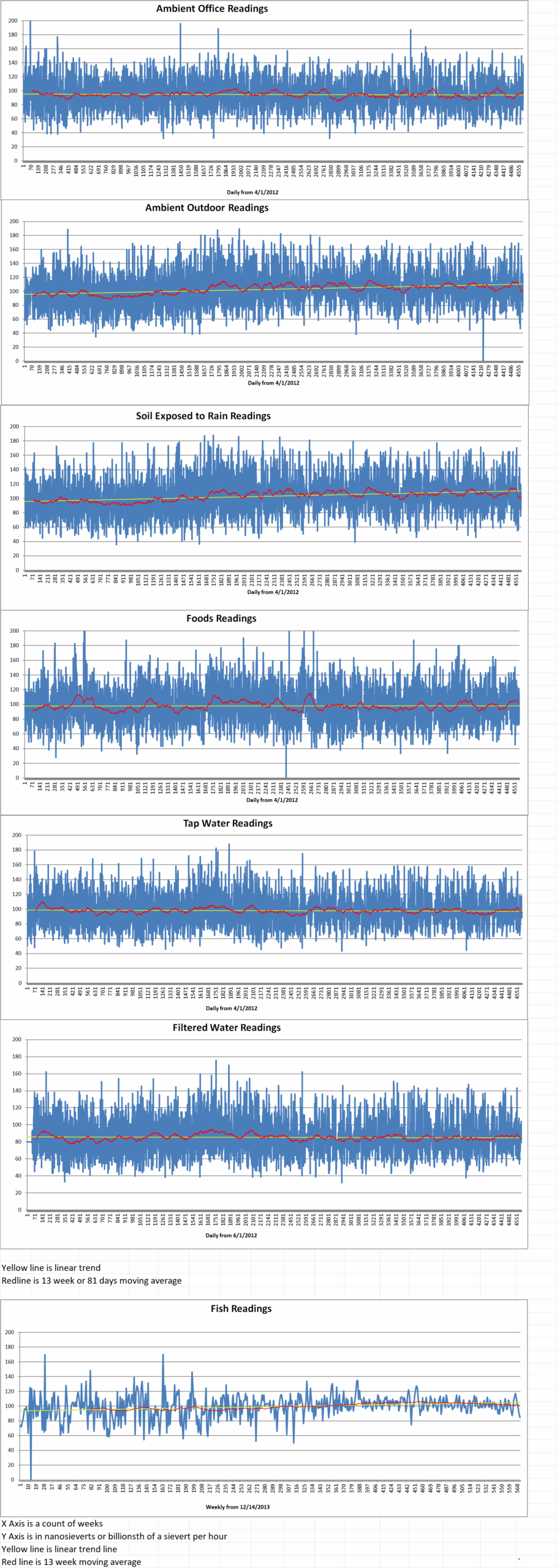
  • Geiger Readings for Jun 06, 2025

    Latitude 47.704656 Longitude -122.318745

    Ambient office = 121 nanosieverts per hour

    Ambient outside = 105 nanosieverts per hour

    Soil exposed to rain water = 101 nanosieverts per hour

    Corn from Central Market = 136 nanosieverts per hour

    Tap water = 89 nanosieverts per hour

    Filter water = 72 nanosieverts per hour

  • Nuclear Reactors 1521 – Argentina Celebrates the 75th Anniversary of Its National Atomic Energy Commission

    A close-up of a nuclear power plant

AI-generated content may be incorrect.

    As Argentina’s National Atomic Energy Commission celebrated its 75th anniversary, plans for the deployment of four ACR-300 small modular reactors (SMRs) and restarting uranium mining and enrichment were among the priorities outlined.

    Demian Reidel is the President of the Argentine Nuclear Council. He told the event held at the site of the RA-10 multipurpose reactor, “With the development of the ACR-300, we will offer the world a clean, stable, and scalable source of energy. The ACR-300, a 300 MW technological marvel designed by Argentine engineers, is a centerpiece of the Nuclear Power Plan, which will position our country at the forefront of the new energy revolution. We are going to begin construction of four modules at the Atucha site, which will allow us to nearly double the country’s installed nuclear capacity. This is only the first stage. Then, we will license this technology to the rest of the world. This will not only transform our energy mix, it will also change Argentina’s export mix.”

    Germán Guido Lavalle is the President of the National Atomic Energy Commission (CNEA). He outlined the organization’s five key targets for the coming year. These include reaching criticality at the RA-10 plant, beginning the refurbishment of the Heavy Water Industrial Plant (PIAP), restarting uranium mining; launching the Argentine Proton Therapy Center, and resuming uranium enrichment to complete the nuclear fuel cycle.

    Lavalle said, “We have a National Atomic Energy Commission that, through technological development and human resource training, has provided the platform for the emergence of nuclear sector companies that today compete globally, export, create jobs, and offer services in Argentina. This is a true success of state policy.”.

    Reidel is also a chief adviser to Argentina’s President Javier Mile. He told La Nacion last week that the aim was for Argentina to be the first country, or among the first, to sell SMRs. He said that the National Nuclear Plan is aimed at accelerating the development of the ACR-300, developed by INVAP with private capital, and “aims to have the four modules operational within five years”.

    He has also suggested that the sale of SMRs could include a commitment to purchase Argentine uranium. He added in a March interview with Infobae that it was “crazy” for the country to import uranium for its existing reactors despite having substantial reserves.

    The anniversary ceremony for the anniversary was broadcast across all CNEA’s centers. The commission was created in 1950. Its mission “is to consolidate Argentina’s position as a leading nation in the peaceful and safe use of nuclear energy, having been committed to scientific and technological development since its inception”.

    Argentina currently has three operable nuclear power units. The Atucha 1 was connected in 1974, the Atucha 2 was connected in 2014 and Embalse was connected to the grid in 1983. Between them they generate about five percent of the country’s electricity. There had been plans for a fourth unit called Atucha III. However, it appears that has been superseded by the SMR plans.

    Argentina has already had an SMR in development called the the CAREM SMR. The name comes from Central Argentina de Elementos Modulares. It is a thirty-two-megawatt prototype and is Argentina’s first domestically designed and developed nuclear power reactor. First concrete was poured in 2014, but construction has been suspended a number of times. It is estimated to be about two-thirds complete. With reports of funding uncertainty, a Critical Design Review was ordered for it in May of last year because of funding uncertainty.

    Argentina’s National Atomic Energy Commission


  • Geiger Readings for Jun 05, 2025

    Latitude 47.704656 Longitude -122.318745

    Ambient office = 139 nanosieverts per hour

    Ambient outside = 73 nanosieverts per hour

    Soil exposed to rain water = 73 nanosieverts per hour

    Campari tomato from Central Market = 84 nanosieverts per hour

    Tap water = 113 nanosieverts per hour

    Filter water = 102 nanosieverts per hour

  • Nuclear Reactors 1520 – Nucleareurope Commissions A Report on Nuclear Capacity By 2050

    A blue green and yellow text

AI-generated content may be incorrect.

    A nuclear power generating capacity of two hundred gigawatts would generate widespread economic benefits throughout the EU. These include sustaining almost two million jobs and hundreds of billions in additional economic output, tax revenues and household income. These estimates were listed in a report commissioned by Brussels-based nuclear trade body Nucleareurope.

    Nucleareurope commissioned Deloitte to analyze the contribution of the nuclear power industry to the overall economy of the European Union (EU). Deloitte assessed current economic and social benefits generated directly through the nuclear industry and effects resulting from the nuclear sector’s economic activities across the EU. The analysis was conducted to cover both the current impact of the industry and provide a measurable outlook on its future benefits up to 2050.

    Currently, with a generating capacity of about one hundred and six gigawatts, the EU’s nuclear sector contributes two hundred and seven billion dollars per year to the bloc’s economy and generates yearly public revenues of about fifty-five billion dollars, the study says. In addition, more than eight hundred and eighty-three thousand jobs are sustained in the EU each year through the nuclear sector.

    The Economic and Social Impact Report focuses on the three installed nuclear capacity scenarios for 2050 which were included in the 2024 report developed on behalf of Nucleareurope by Compass Lexecon. These scenarios call for one hundred gigawatts, one hundred and fifty gigawatts and two hundred gigawatts.

    If installed nuclear capacity in the EU was increased to one hundred and fifty gigawatts by 2050, it would generate over three hundred and eighty billion dollars in annual economic output and support nearly one and a half million jobs across the EU according to the study. Increasing capacity to two hundred gigawatts would generate over four hundred and forty billion in annual economic output and support nearly one million six hundred thousand jobs across the EU.

    Nucleareurope said, “The decision-makers now have access to a reliable forecast of the benefits that would be derived from the deployment of a 200 GW nuclear power capacity throughout the Europe Union, while the results are dependent on the construction plan of the new nuclear reactors.”.

    Emmanuel Brutin is the Director General of Nucleareurope. He said, “Nuclear is one of the few net-zero value chains that is anchored in Europe, and this is clearly reflected in the figures put forward by this report,” said. “It shows how, by investing in nuclear, Europe can reap the benefits in terms of stimulating economic growth and job creation, alongside ensuring security of supply and meeting the decarbonization targets. As such, it is important that the European Commission provides the right policy framework to stimulate long-term investment in nuclear through, for example, the Nuclear Illustrative Program (PINC) and the next Multi-annual Financial Framework.”.

    In April of this year, the European Commission launched a four-week call for any evidence related to the investment needs of the nuclear power sector in the EU. This will be an important part of the consultative process and an opportunity for input from stakeholders and the public. The feedback received through this exercise will be part of the Commission’s work in preparing the update of the PINC, which is expected to be published before the end of 2025.

    Nucleareurope

  • Geiger Readings for Jun 04, 2025

    Latitude 47.704656 Longitude -122.318745

    Ambient office = 138 nanosieverts per hour

    Ambient outside = 102 nanosieverts per hour

    Soil exposed to rain water = 104 nanosieverts per hour

    Beefsteak tomato from Central Market = 108 nanosieverts per hour

    Tap water = 90 nanosieverts per hour

    Filter water = 80 nanosieverts per hour

  • Nuclear Reactors 1519 – Radiant Nuclear Raises Funding for Development of Kaleidoscope Microcomputer

    A logo with a blue circle

AI-generated content may be incorrect.

    Radiant Nuclear is a nuclear startup based in California. It has raised one hundred and sixty-five million dollars in Series C funding. This funding will aid the U.S. in modernizing its energy systems by developing portable nuclear microreactors using advanced nuclear technology.

    The announcement was made on June 2nd. It pushes Radiant’s total venture capital raised to two hundred and twenty-five million dollars, reinforcing its ambition to bring mass-produced one-megawatt microreactors to market by the decade’s end.

    The funding round was led by Data Collective Venture Capital (DCVC), and included StepStone, Giant Ventures, Hanwha Asset Management Venture Fund, SGA, Crossbeam Venture Partners, ARK Venture Fund, Align Ventures, HartBeat Ventures, Gigascale Capital, and Pax Ventures.

    This infusion of capital arrives at a critical moment for Radiant. It follows the U.S. Department of Energy’s recent decision to supply the company with high-assay, low-enriched uranium (HALEU) for its first operational reactor test.

    The reactor, known as Kaleidos, is a one-megawatt microreactor designed for modularity, rapid deployment, and diesel-generator replacement.

    Its applications target austere environments such as remote settlements, military forward operating bases, and disaster zones where grid infrastructure is absent or compromised.

    Radiant is one of just five U.S. companies selected to receive HALEU fuel under the DoE’s strategic enrichment program, reflecting growing federal support for next-gen civilian and defense-related nuclear systems.

    The first Kaleidos reactor prototype is scheduled for live testing in 2026 at the Idaho National Laboratory’s DOME (Demonstration of Microreactor Experiments) facility.

    Doug Bernauer is Radiant’s CEO and a former SpaceX engineer. He said, “Adding some of the smartest minds in technology investment to our team is a powerful vote of confidence in Radiant and the belief that America must continue to lead in nuclear innovation. We are ramping up to test the first new reactor design in the U.S. in over 50 years.”

    Radiant’s Kaleidos reactor is based on a helium gas-cooled design with passive safety architecture and no reliance on water for cooling. This offers survivability in harsh environments and reduced logistical burden.

    The Kaleidos system is designed for air, road, or sea transport and includes an integrated power conversion unit and modular shielding. The company estimates an output of up to fifty units per year once its production facilities are operational.

    Site selection and early construction planning for these manufacturing facilities are currently underway and will be funded using proceeds from the Series C round.

    Industry analysts view the Kaleidos reactor as a key player in the emerging field of tactical and off-grid nuclear energy. This is an area of strategic interest for national defense planners and climate-focused investors.

    Will Dufton is the head of growth investments at Giant Ventures. He said, “We are seeing a new nuclear renaissance play out. Radiant’s success will uncork the final bottlenecks to progress for the entire nuclear industry.”

    Radiant’s backers now include Andreessen Horowitz, Union Square Ventures, Founders Fund, Chevron Technology Ventures, and Draper Associates. Founded in 2020, Radiant intends to deploy its first operational reactors to customers by 2028.

    Its mission is to manufacture the most economical, safe, and logistically flexible microreactors on the market. This is a vision increasingly aligned with US national security, energy resilience, and climate imperatives.

    As demand for resilient energy grows amid rising global instability and climate volatility, microreactors like Kaleidos may emerge as critical assets in the next evolution of nuclear power.

    Radiant Nuclear
  • Geiger Readings for Jun 03, 2025

    Latitude 47.704656 Longitude -122.318745

    Ambient office = 118 nanosieverts per hour

    Ambient outside = 80 nanosieverts per hour

    Soil exposed to rain water = 84 nanosieverts per hour

    Avocado from Central Market = 108 nanosieverts per hour

    Tap water = 89 nanosieverts per hour

    Filter water = 80 nanosieverts per hour