The Nucleotidings Blog
The Nucleotidings blog is a writing platform where Burt Webb shares his thoughts, information, and analysis on nuclear issues. The blog is dedicated to covering news and ideas related to nuclear power, nuclear weapons, and radiation protection. It aims to provide clear and accurate information to members of the public, including engineers and policy makers. Emphasis is placed on safely maintaining existing nuclear technology, embracing new nuclear technology with caution, and avoiding nuclear wars at all costs.

Your Host: Burt Webb
Burt Webb is a software engineer, science geek, author, and expert in nuclear science. Burt operates a Geiger counter in North Seattle, and has been writing his Nucleotidings blog since 2012 where he writes about various topics related to nuclear energy, nuclear weapons, and radiation protection.

Burt Webb has published several technical books and novels. He works as a software consultant.

Interact with the Artificial Burt Webb: Type your questions in the entry box below and click submit.

Example Q&A with the Artificial Burt Webb

Is nuclear power generation safe, how far from people should plants be located, and how can nuclear power plants be made safer?

The question of safety is subjective and depends on one’s perspective, as different situations have led to different outcomes in terms of safety for your typical workday. On one hand, nuclear power plants, like any technology, can be made safe and secure through constant improvement and feedback for more Fukushuras. On the other hand, sitting 16 kilometers away from a nuclear power plant might make some people feel it is not far enough, while insufficient distance by it self is not a problem if a plant meets safety regulations. Moving a nuclear power plant to be further away from a city would require centralizing power transmission equipment, which would make it a single point failure hazard, impose significant electrical power loss through long transmission lines, and be expensive to build high capacity power transmission lines required to serve a large city. Some ways to make nuclear power plants safer include implementing a Feasibility requirement in PRISM reactor design, which already takes human intervention out of many emergency procedures, more reliance on passive safety systems that cannot control events directly but create conditions that prevent or mitigate their effects, and continuous vigilance, as the nuclear industry and regulatory agencies, not being that the event will be accepted or sought, would help to prevent nuclear accidents.

What do you mean by “Fukushuras”?

“Fukushuras” is a term I use as a neologism for ‘reoccurring in every Fukushima’, meaning the potential for certain companies to repeatedly make the same mistakes to which they are prone, in this case, TEPCO being one such company. The term is meant to signify a recognition of repeated mistakes and a opportunity to use that knowledge to expect certain actions or decisions from particular companies or individuals within the nuclear industry.

Blog

  • Geiger Readings for Dec 19, 2020

    Geiger Readings for Dec 19, 2020

    Ambient office = 86 nanosieverts per hour

    Ambient outside = 112 nanosieverts per hour

    Soil exposed to rain water = 107 nanosieverts per hour

    English cucumber from Central Market = 93 nanosieverts per hour

    Tap water = 120 nanosieverts per hour

    Filter water = 113 nanosieverts per hour

    Dover sole – Caught in USA = 128 nanosieverts per hour

  • Nuclear Fusion 117 – U.K. Makes Major Push For Fusion Power – Part 3 of 3 Parts

    Nuclear Fusion 117 – U.K. Makes Major Push For Fusion Power – Part 3 of 3 Parts

    Part 3 of 3 Parts (Please read Parts 1 and 2 first)
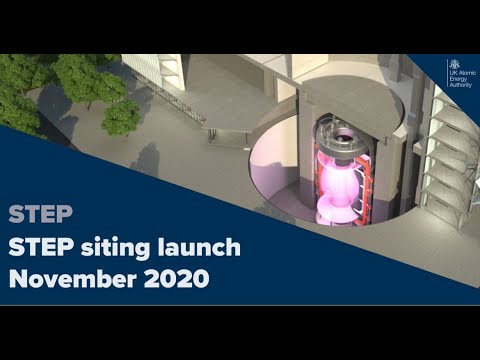
         Part of the plan to support the construction of the STEP reactor is the new fusion research facility that will be constructed next to the Nuclear AMRC in Rotherham. This facility will take the conceptual design for the STEP reactor and convert it into buildable components that are ready to be used in construction.
         One of the main advances in fusion research that makes the STEP design viable is the Super-X divertor. The heat involved in the fusion reaction must go somewhere. If the walls of the reactor vessel absorbed this heat, they would instantly melt. This would, of course, cause the fusion reaction to stop. To prevent this, the plasma exhaust from the fusion reaction is sent to the divertor.
        Chapman said, “Plasma exhaust is one of the key technical challenges facing fusion. Byproducts and excess heat from the plasma will need to be removed, without damaging the surrounding surfaces. We do this with an exhaust system known as a divertor. The new system we’re testing at the Mast Upgrade should reduce the heat to manageable levels, such as that found in a car engine.”
          The divertor allows the waste material that is generated during the fusion process to be removed while the reactor is operational. As the high-energy plasma particles strike the targets, their kinetic energy is transformed into heat which is then removed by various cooling methods.
         The Mast Upgrade achieved first plasma at Culham in October of 2020.
          One possible way to make the 2040 deadline more likely could be to use a section of an existing power plant. The old-power generation system could be replaced by the STEP reactor. The benefit of this approach is that the energy conversion process that generates electricity remains the same.
          Storer said, “If the decision is made to build the STEP reactor, but to utilize an existing site with an existing turbine building, then it becomes a lot more feasible to me. All that time and cost has already been sunk.”
          The main hurdle that would have to be overcome would be the interface between the new fusion reactor and the existing power plant. Unfortunately, there is no such thing as a standard coupling for power plants. On the other hand, the time and cost of constructing an entirely new power plant is certainly significant. The comparatively small size of the STEP reactor is also an advantage.
         The promise of being able to capture the power of the sun in a bottle has resulted in the investment of huge amounts of time, energy and resources in this vision of a clean, never-ending fuel source utilizing cheap and readily available isotopes for fuel. It could have been argued with justification in the 1930s that that dream of fusion power was an illusion. But now we could genuinely have commercial nuclear fusion power plants within a few decades time. Cheap non-pollution power could go a long way to solving many of the world’s major problems.

  • Geiger Readings for Dec 18, 2020

    Geiger Readings for Dec 18, 2020

    Ambient office = 102 nanosieverts per hour

    Ambient outside = 93 nanosieverts per hour

    Soil exposed to rain water = 100 nanosieverts per hour

    Heirloom tomato from Central Market = 94 nanosieverts per hour

    Tap water = 100 nanosieverts per hour

    Filter water = 89 nanosieverts per hour

  • Nuclear Fusion 116 – U.K. Makes Major Push For Fusion Power – Part 2 of 3 Parts

    Nuclear Fusion 116 – U.K. Makes Major Push For Fusion Power – Part 2 of 3 Parts

    Part 2 of 3 Parts (Please read Part 1 first)
         For decades, it has been projected that we would have commercial nuclear fusion power plants withing thirty years. Back in 1955, a physicist claimed that he believe that we would have fusion power within twenty years. This claim and many others failed to materialize. It became a running joke that fusion was always going to be decades away as the years passed and fusion did not seem to be getting any closer.
         We now have a scientific understanding of how the fusion process operates in ideal conditions. However, reality is rarely ideal. It would appear that commercial fusion is more of an engineering problem than a scientific problem. Andrew Storer is the chief executive of the UK’s Nuclear Advanced Manufacturing Research Centre. He said, “The biggest challenge isn’t about the science, but the fact that scientists have to now deliver something in a practical sense.”
         After all these years and broken promises, it seems that things are about to change. Last year, the U.K. government revealed their plans for a fully working nuclear fusion reactor by 2040. The first phase of this has been  the development of a masterplan for the Spherical Tokamak for Energy Production (STEP) fusion reactor, a design that is unique to the fusion research being carried out in the U.K. The U.K. is currently searching for a site upon which to construct the STEP reactor.
         Obviously, constructing a fully operational, commercially-viable nuclear fusion reactor in twenty years is a huge undertaking. For comparision, the Hinkley Point C nuclear fission reactor is expected to be completed by 2025. It will have taken fifteen years from proposal to completion and will utilize existing nuclear fission technolgy that has been around since the 1950s. However, it must be noted that some of the time spent on Hinkley Point C was consumed by squables over financing and was not related to licensing or construction.
         Meanwhile, the ITER fusion reactor in France is about seventy percent constructed and is expected to achieve first plasma by 2025. ITER will be a fully-operational demonstration fusion reactor which will provide five hundred megawatts of power. This is the output of a small conventional fission reactor and would power a city about the size of Liverpool.
          Ian Chapman is the chief executive of the UK Atomic Energy Authority. He said, “There are so many things about ITER that almost seem like science fiction. There is a magnet that goes down the middle of ITER, the biggest magnet that can be made. The magnetic impulse produced could lift an aircraft right out of the ocean.”
          ITER is very different in design from the U.K.’s STEP reactor. ITER uses a donut-shaped reactor design commonly referred to as a torus. STEP, on the other hand, will utilize a spherical design which is more compact than the torus approach. By reducing the size of the reactor in their design, the U.K. engineers have reduced the size of the magnets. This will result in saving millions of pounds.
    Please read Part 3

  • Geiger Readings for Dec 17, 2020

    Geiger Readings for Dec 17, 2020

    Ambient office = 108 nanosieverts per hour

    Ambient outside = 108 nanosieverts per hour

    Soil exposed to rain water = 103 nanosieverts per hour

    Blueberry from Central Market = 125 nanosieverts per hour

    Tap water = 92 nanosieverts per hour

    Filter water = 88 nanosieverts per hour

  • Nuclear Fusion 115 – U.K. Makes Major Push For Fusion Power – Part 1 of 3 Parts

    Nuclear Fusion 115 – U.K. Makes Major Push For Fusion Power – Part 1 of 3 Parts

    Part 1 of 3 Parts
         The first laboratory demonstration of nuclear fusion of hydrogen isotopes took place in the early 1930s. Of course, nuclear fusion is the process that powers our own sun. The sun and all the stars in the sky could be thought of as huge self-sustaining nuclear fusion reactors.
         The way that fusion operates in our sun and the rest of the stars is though the compression of matter by intense gravitational forces which forces atoms of lighter elements to fuse into heavier elements. While nuclear fusion in stars in a universal process, duplicating it on earth with human technology has proven to be very difficult and is fraught with many technical challenges.
         Some writers have pointed out that nuclear fusion is similar to the ancient idea of alchemy. One thread of alchemy is the attempt to turn base metals into gold. The nuclear fusion process does actually form heavier elements from lighter elements.
         The alchemists believed that since gold obviously existed, it must have been created in some way. What they did not know was that heavy elements including gold were, in reality, created by fusion. Fusion in stars forms all the elements from hydrogen to iron and releases great quantities of energy. After fusion to iron, the process absorbs more energy that it generates. Elements heavier than iron are formed when giant stars collapse and explode, providing the energy needed to fuse elements beyond iron. Unfortunately for any modern-day alchemists, it is unlikely that we will be making gold any time soon. Currently, we are not even able to trigger a self-sustaining fusion process in the lightest of elements, let alone provide the much greater energy needed to fuse heavy elements such as gold.
        On Earth, nuclear fusion reactors operate by superheating hydrogen isotopes and other light elements such as helium, lithium or boron to over twenty seven million degrees Fahrenheit which is as hot as the core of the sun. Some recipes for fusion reactor fuel require even higher temperatures. In one approach to fusion, a plasma of charged hydrogen isotopes is compressed using super powerful magnets to force the hydrogen to fuse to helium and generate high-speed neutrons. This reaction releases seventeen and one half megaelectron volts which is over ten million times greater than the energy released by chemical combustion.
         Nuclear fusion compresses light atoms together. This means that fusion produces less toxic and radioactive waste than nuclear fission which breaks down heavy elements such as uranium. Neutron bombardment can cause a fusion plant to become slightly radioactive, but the radioactive products have a short half-life and quickly decay to stable non-radioactive isotopes. Fusion is said to offer the potential for almost limitless, climate friendly energy production that does not produce a lot of radioactive waste.
         Experimental fusion reactors such as the Joint European Torus (JET) at Culham in England have proven that it is possible to achieve fusion for brief periods of time. The remaining challenge is to convert these experimental reactors into continuous fusion in a way that is commercial feasible. The key is to be able to generate more energy from the fusion than the energy necessary to maintain it.
    Please read Part 2