
Part 2 of 2 Parts (Please read Part 1 first)
The construction of a spent nuclear fuel storage canister begins with a flat piece of stainless steel that is rolled into a cylinder and then welded where the edges of the flat piece join. The heat from the welding process creates zones in the seam that experience tensile stress. Stress on these zones around the weld seam makes the seam more susceptible to corrosion from salt over time.
Sandia received its test canisters on November 13th. Each of them will be outfitted with thirty-two electrical heaters to simulate the heat released as a result of radioactive decay. Thirty-two heating elements are used because the typical storage canister contains thirty-two spent nuclear fuel assemblies which are bundles of fuel rods. Devices called thermocouples which measure temperature and other sensors for diagnostic testing and surface sampling will also be attached to the canisters.
Once the setup and tests at Sandia are complete, the canisters will be repacked for shipment to a storage pad at an independent fuel storage facility on the West Coast. There the canisters will be subjected to the same real-life conditions of canisters that are currently in use.
The Sandia team is led by managers Sylvia Saltzstein and Geoff Freeze, Durbin and includes chemists/corrosion specialists Charles Bryan and Rebeca Schaller. They will be joined by scientists from other national laboratories to monitor the test canisters and record surface deposits for three to over ten years depending on how much variation there is in the data as time passes. Durbin said, “Sodium-chloride, or salt, that settles on the surface of spent nuclear-fuel canisters can lead to chloride-induced stress corrosion cracking, and right now there is inadequate data on these surface deposits.”
Durbin said that in real-life storage of nuclear waste in canisters, the decay heat generated by the spent nuclear fuel creates natural convection currents around the canisters which causes outside air to be drawn across the surface of the canisters. These convection currents help to cool the spent nuclear fuel over time. As the ambient air around the canisters is drawn in, salt and other particulates in the air are pulled in as well. They can settle on the canister surface. During the Sandia tests, the electrical heaters installed inside the canisters will replicate the decay heat driven convection process without the need for real nuclear materials.
In hot and dry conditions, salt deposits alone will not cause any serious issues. However, over time, as the level of decay heat falls and the canisters cool, water can condense on the surface of the canister and a brine can form. Durbin said, “These conditions can occur nationwide and are seen as precursors to chloride-induced, stress-corrosion cracking. Back when these canisters were being designed, people weren’t thinking about this as an issue because we had a plan for permanent disposal. The current national nuclear waste situation forces canisters to be stored onsite for the foreseeable future, which could be 100 years or longer, so stress corrosion cracking becomes more of a concern.”
In addition to the long-term heating and surface deposition tests, the researchers at Sandia will also utilize another three canisters for tests in the laboratory to conduct research on the cracking that can be caused by salt and stress. This research will focus on the welded seams and intersections of the canisters. The effectiveness of commercially available crack repair and mitigation coatings will be tested. In order to test the seams, the team will slice the canisters into small pieces and test pieces with and without welded seams to study the precursor conditions of salt and stress to cause corrosion that results in the formation of cracks.
Blog
-

Radioactive Waste 786 – Sandia National Loboratory Is Testing Durability Of Spent Nuclear Fuel Storage Canisters – Part 2 of 2 Parts
-
Nuclear News Roundup Dec 08, 2020
-

Geiger Readings for Dec 08, 2020
Ambient office = 845 nanosieverts per hour
Ambient outside = 91 nanosieverts per hour
Soil exposed to rain water = 89 nanosieverts per hour
Avocado from Central Market = 92 nanosieverts per hour
Tap water = 95 nanosieverts per hour
Filter water = 75 nanosieverts per hour
-

Radioactive Waste 785 – Sandia National Loboratory Is Testing Durability Of Spent Nuclear Fuel Storage Canisters – Part 1 of 2 Parts
Part 1 of 2 Parts
With the cooling pools at nuclear plants filling up with spent nuclear fuel, some nuclear power plants will have to shut down if those spent fuel rods cannot be moved out of the pools. The U.S. had plans for a permanent geological repository at Yucca Mountain but those plans were cancelled in 2009. Now the soonest that a repository can be sited, licensed and constructed is 2050. So the spent fuel has to be moved but it will have to be to temporary storage for a few decades either onsite at the power plant or at an temporary storage facility. In order to store the spent nuclear fuel assemblies, concrete and steel cannisters are used.
The storage canisters which are currently being used for spent nuclear fuel have an intended lifespan of a few decades. However, as the spent fuel continues to accumulate, it is probable that the cylinders already in use may be needed for much longer than originally intended according to Tito Bonano who is nuclear energy fuel cycle manager at Sandia National Laboratory.
Sandia is carrying out research on the durability of the current nuclear storage canisters. Three twenty-two ton sixteen and one half foot long stainless steel storage canisters are being fitted with heaters and instrumentation which is intended to simulate nuclear waste. These three cylinders were received at Sandia last November. They have never contained any nuclear materials. The purpose of the research is to study the accumulation of salt on canisters over time. The researchers will also study the possibility of salt and stress causing corrosion in another batch of canisters in the next phase of the program.
More data is needed to validate and guide how the nuclear industry should manage nuclear storage canisters for longer than they were originally designed for. Bonano said “Salt can be present in the ambient air and environment anywhere, not just near the ocean. We need to be able to plan for extended long-term storage of spent nuclear fuel at nuclear power plants for the foreseeable future — it’s a national reality.” Bonano went on to say that his team expects that the project to have very important implications for public health and safety, industry best practices, regulatory frameworks and laying out future research paths.
The three-year project at Sandia is being funded by the U.S. Department of Energy (DoE) office. Fifteen DoE-owned storage canisters which have never been used are being sent to Sandia and two other national laboratories, an industry research institute and an independent storage facility at an operating nuclear power plant.
Nuclear power plants use uranium pellets stuffed inside a metal coated tube called a fuel rod. When the nuclear fuel in the rods has been burned up, the rod has to be removed from the reactor and stored onsite before being taken to another storage facility that is either permanent or temporary. Samuel Durbin is a mechanical engineer and Sandia’s canister project lead. He said, “When fuel is removed from a reactor, it’s very hot, both in temperature and radioactivity. The utility loads it into a pool for about five years to cool down. After that, the spent fuel can be offloaded into a dry storage canister.”
Please read Part 2 -
Nuclear News Roundup Dec 07, 2020
Energy Bridge has geopolitical significance, says Polenergia world-nuclear-news.org
Nuclear needed in future Dutch energy mix, says EPZ world-nuclear-news.org
EnergySolutions takes over TMI-2 license world-nuclear-news.org
IAEA concludes virtual mission to assess safety in Lithuania world-nuclear-news.org
-
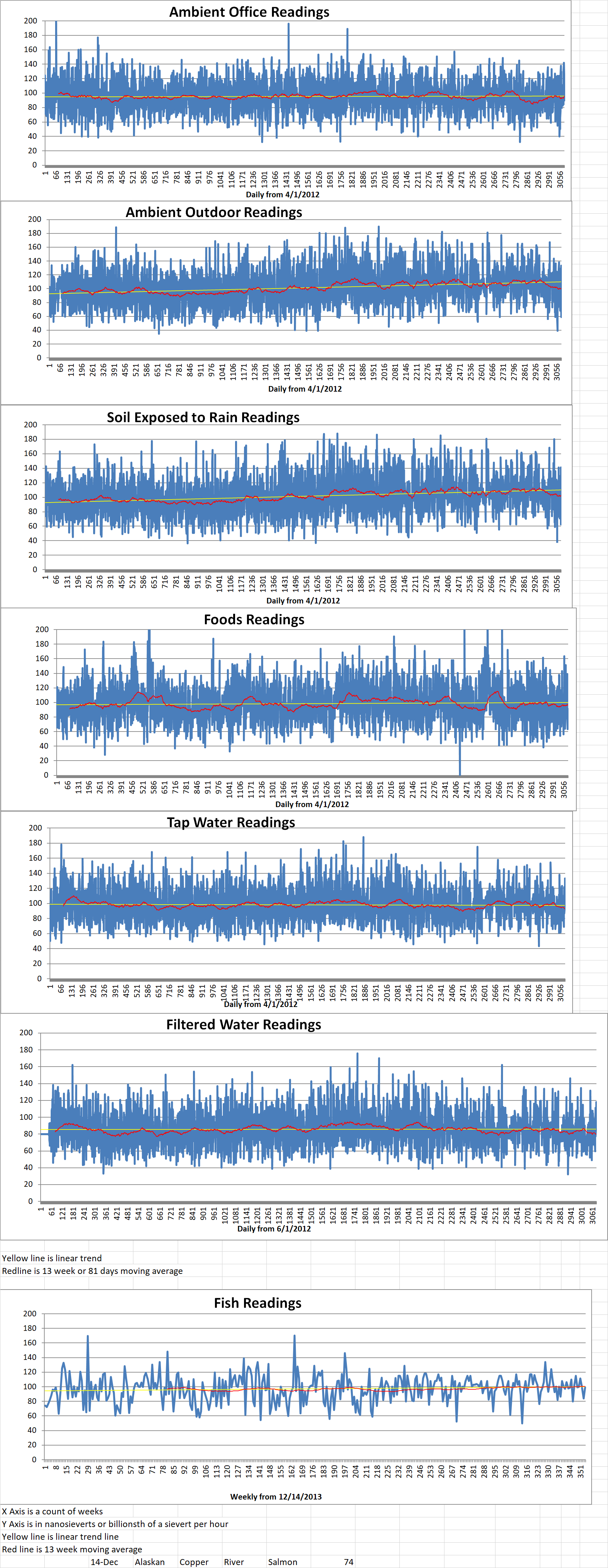
Geiger Readings for Dec 07, 2020
Ambient office = 90 nanosieverts per hour
Ambient outside = 133 nanosieverts per hour
Soil exposed to rain water = 141 nanosieverts per hour
Red bell pepper from Central Market = 90 nanosieverts per hour
Tap water = 133 nanosieverts per hour
Filter water = 118 nanosieverts per hour
-
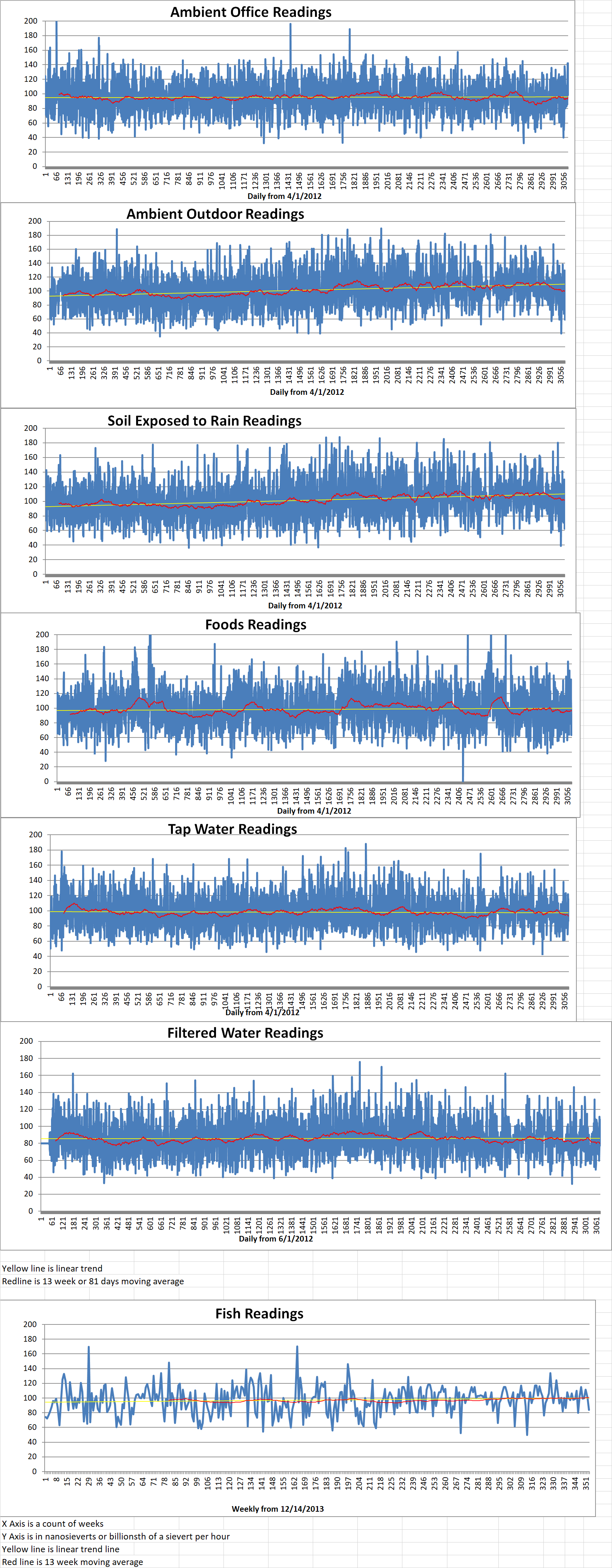
Geiger Readings for Dec 06, 2020
Ambient office = 99 nanosieverts per hour
Ambient outside = 59 nanosieverts per hour
Soil exposed to rain water = 63 nanosieverts per hour
Heirloom tomato from Central Market = 72 nanosieverts per hour
Tap water = 115 nanosieverts per hour
Filter water = 108 nanosieverts per hour
-
Nuclear News Roundup Dec 06, 2020
First assemblies loaded into new Chernobyl used fuel store world-nuclear-news.org
First UAE nuclear reactor reaches full power world-nuclear-news.org
Extending nuclear cooperation to the Middle East world-nuclear-news.org
-
Nuclear News Roundup Dec 05, 2020
Iran nuclear deal: Saudi Arabia says Gulf states must be consulted if US revives accord theguardian.com
Nuclear, Power: Things Getting Interesting for this Uranium ETF etftrends.com
Rolls-Royce agrees sale of I&C business to Framatome world-nuclear-news.org
Assassination of Iranian scientist won’t halt Iran’s nuclear program, experts say nbcnews.com
-
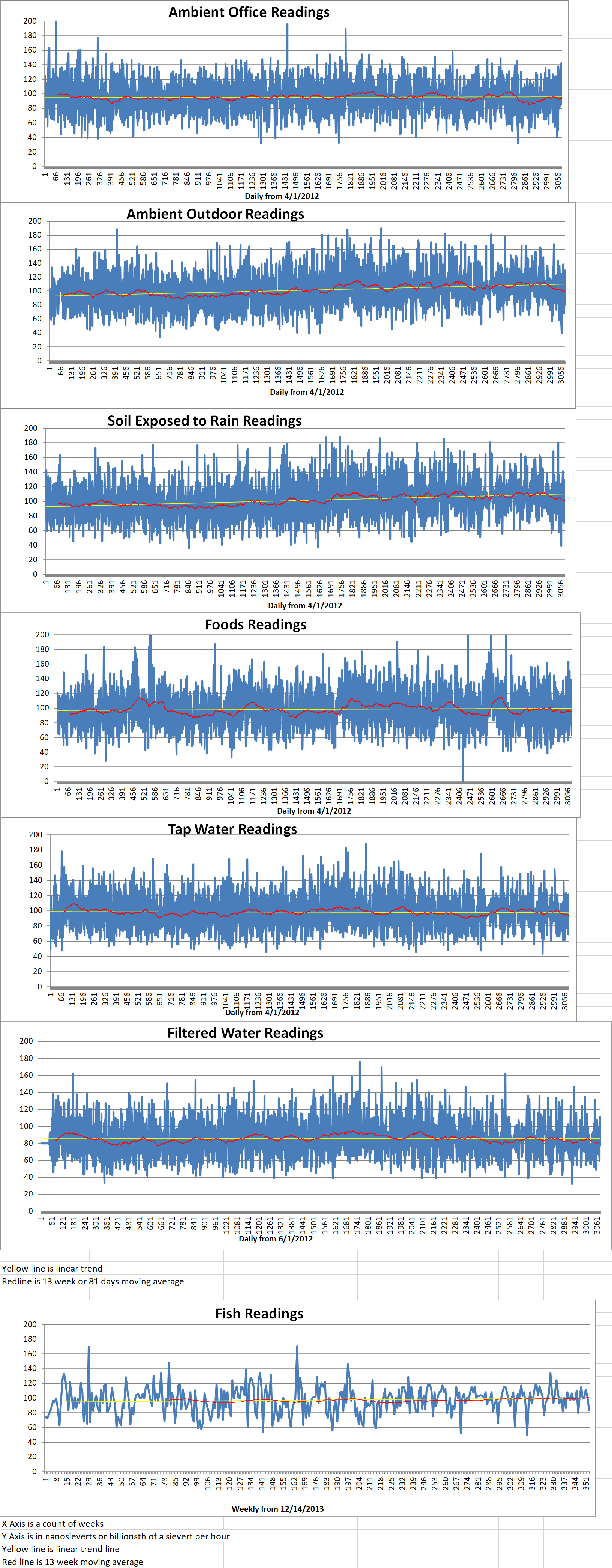
Geiger Readings for Dec 05, 2020
Ambient office = 119 nanosieverts per hour
Ambient outside = 103 nanosieverts per hour
Soil exposed to rain water = 106 nanosieverts per hour
Blueberry from Central Market = 92 nanosieverts per hour
Tap water = 110 nanosieverts per hour
Filter water = 97 nanosieverts per hour
Dover sole – Caught in USA = 99 nanosieverts per hour