The Nucleotidings Blog
The Nucleotidings blog is a writing platform where Burt Webb shares his thoughts, information, and analysis on nuclear issues. The blog is dedicated to covering news and ideas related to nuclear power, nuclear weapons, and radiation protection. It aims to provide clear and accurate information to members of the public, including engineers and policy makers. Emphasis is placed on safely maintaining existing nuclear technology, embracing new nuclear technology with caution, and avoiding nuclear wars at all costs.

Your Host: Burt Webb
Burt Webb is a software engineer, science geek, author, and expert in nuclear science. Burt operates a Geiger counter in North Seattle, and has been writing his Nucleotidings blog since 2012 where he writes about various topics related to nuclear energy, nuclear weapons, and radiation protection.

Burt Webb has published several technical books and novels. He works as a software consultant.

Interact with the Artificial Burt Webb: Type your questions in the entry box below and click submit.

Example Q&A with the Artificial Burt Webb

Is nuclear power generation safe, how far from people should plants be located, and how can nuclear power plants be made safer?

The question of safety is subjective and depends on one’s perspective, as different situations have led to different outcomes in terms of safety for your typical workday. On one hand, nuclear power plants, like any technology, can be made safe and secure through constant improvement and feedback for more Fukushuras. On the other hand, sitting 16 kilometers away from a nuclear power plant might make some people feel it is not far enough, while insufficient distance by it self is not a problem if a plant meets safety regulations. Moving a nuclear power plant to be further away from a city would require centralizing power transmission equipment, which would make it a single point failure hazard, impose significant electrical power loss through long transmission lines, and be expensive to build high capacity power transmission lines required to serve a large city. Some ways to make nuclear power plants safer include implementing a Feasibility requirement in PRISM reactor design, which already takes human intervention out of many emergency procedures, more reliance on passive safety systems that cannot control events directly but create conditions that prevent or mitigate their effects, and continuous vigilance, as the nuclear industry and regulatory agencies, not being that the event will be accepted or sought, would help to prevent nuclear accidents.

What do you mean by “Fukushuras”?

“Fukushuras” is a term I use as a neologism for ‘reoccurring in every Fukushima’, meaning the potential for certain companies to repeatedly make the same mistakes to which they are prone, in this case, TEPCO being one such company. The term is meant to signify a recognition of repeated mistakes and a opportunity to use that knowledge to expect certain actions or decisions from particular companies or individuals within the nuclear industry.

Blog

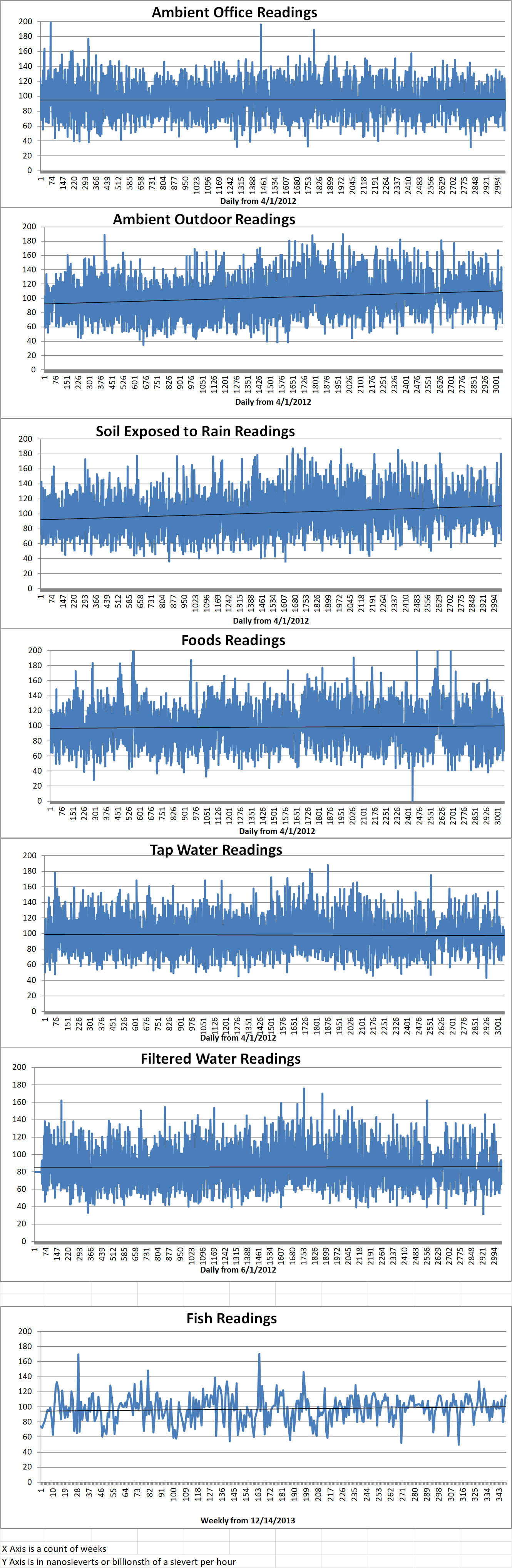
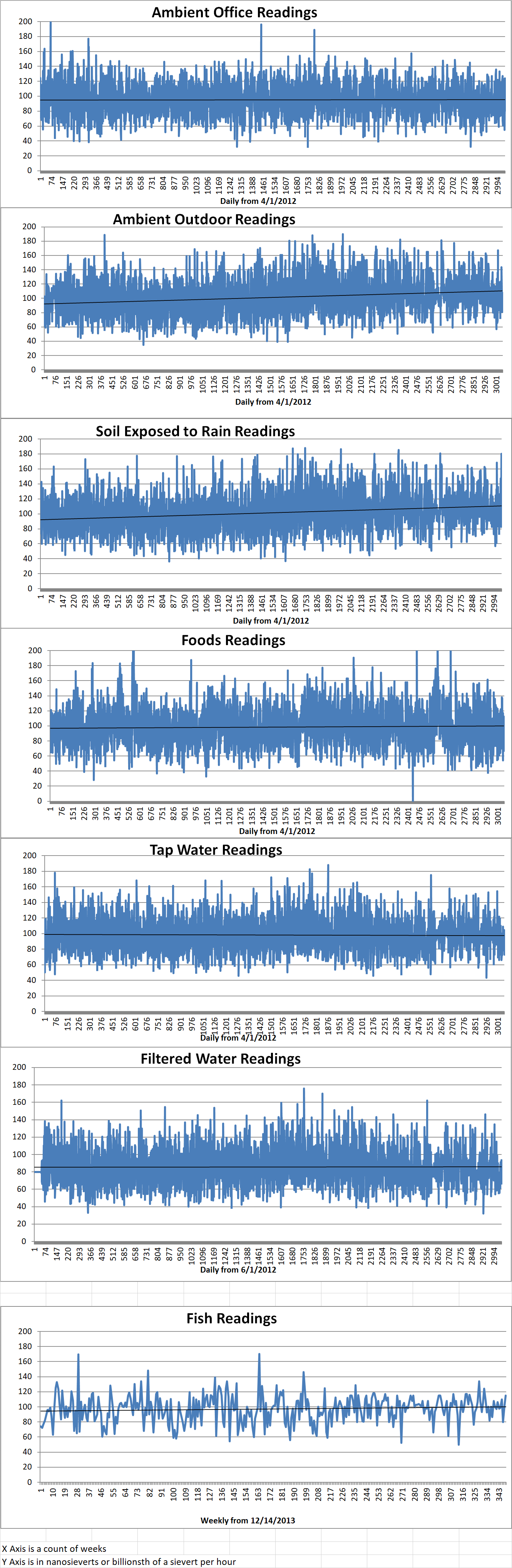
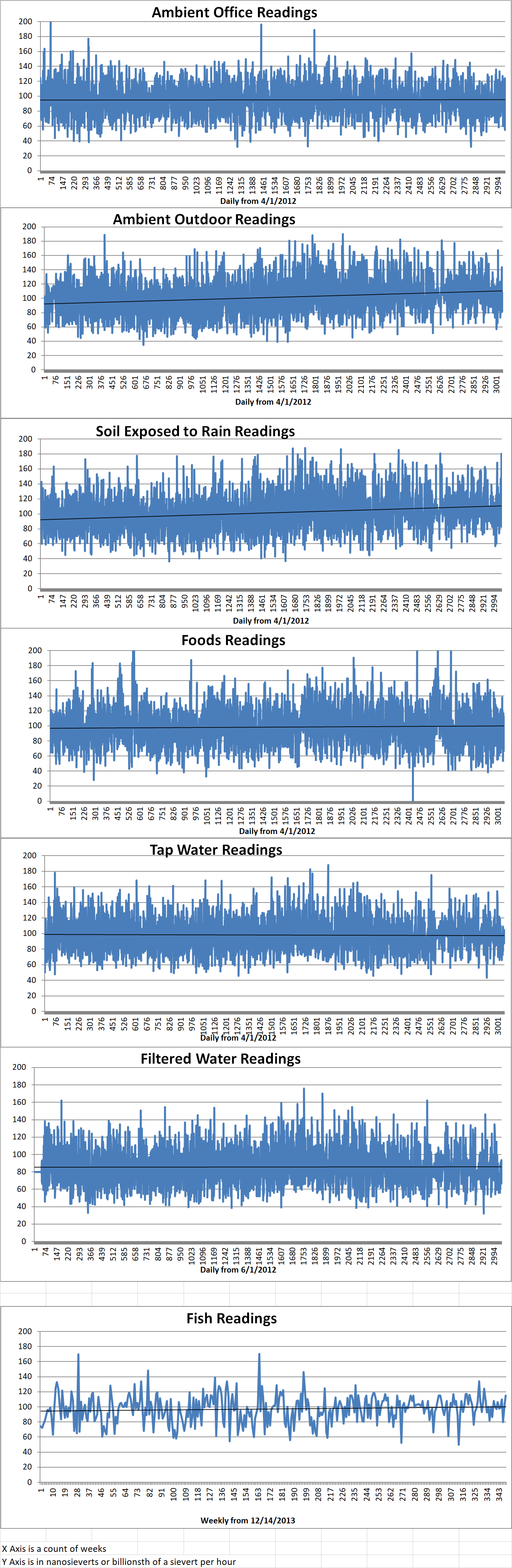
  • Geiger Readings for Oct 31, 2020

    Geiger Readings for Oct 31, 2020

    Ambient outside = 98 nanosieverts per hour

    Soil exposed to rain water = 97 nanosieverts per hour

    Avocado from Central Market = 102 nanosieverts per hour

    Tap water = 77 nanosieverts per hour

    Filtered water = 69 nanosieverts per hour

    Dover sole – Caught in USA = 99 nanosieverts per hour

  • Nuclear Reactors 829 – NuScale Working On Development Of First U.S. Small Modular Reactor – Part 3 of 3 Parts

    Nuclear Reactors 829 – NuScale Working On Development Of First U.S. Small Modular Reactor – Part 3 of 3 Parts

    Part 3 of 3 Parts (Please read Parts 1 and 2 first)
         NuScale believes its passive safety systems support its argument that it should be exempt from other nuclear reactor safety requirements. These requirements include maintaining emergency evacuation and planning zones within a ten-mile radius of the site and employing an onsite security force to prevent sabotage attempts. If NuScale has to implement these safety requirements, it might push NuScale’s projected power cost beyond the fifty-five dollars per megawatt hour that it has targeted. Lyman said, “Nuclear safety is not just design. It’s the whole set of measures.”
         NuScale had hoped to have a more comprehensive stamp of government approval than the NRC safety review by now. John Hopkins is the CEO of NuScale. He testified before the U.S. House of Representatives last March. He said that parent company Fluor and investors have provided around five hundred million dollars to prepare a “design certification application,” which was submitted in 2016 and was expected to be completed by September.
         However, the recent approval that NuScale received from the NRC is not a design certification application. Instead, it is a “standard design approval” said Lyman. This application has less strict rules for NRC review and allows for future changes in design. It opens up NuScale’s design to future legal challenges that a design certification approval would not.
         NuScale is planning on increasing the size of its SMR units from fifty megawatts to sixty megawatts. This change will require a separate design approval review, said Lyman. Meanwhile, NuScale’s original design certification, “when it’s approved, may never actually be used,” Lyman.
         NuScale’s Hughes noted that the final report from the ACRS on July 29, 2020 concluded that there is reasonable assurance that the NuScale reactor can be “constructed and operated without undue risk to the health and safety of the public.” She went on to say that the remaining issues of concern in the ACRS report will be resolved through analysis, design and testing before their SMRs are put into operation.
         Unfortunately, these uncertainties have complicated the situation for UAMPS which has pushed back its deadline for finalizing it licensing agreement with NuScale from September to October 31 of this year. UAMPS could be required to invest over one hundred million dollars under the agreement which remains to be finalized.
         While three cities have so far left the consortium because of their concerns about the potential cost of committing to buy power from the CFPP, another city has joined the consortium. UAMPS spokesperson Webb said that “there is no impact on the economics of the project.”
         M.V. Ramana is as professor of disarmament and human security at the University of British Columbia. In a report last September, he highlighted some of the other risks facing NuScale. These include possible further delays in licensing and certification, as well as the possibility that design changes and increased safety requirements will increase the cost of power from NuScale’s SMRs. This price for electricity is already higher than the prices being set by new wind and solar installations today. Adding batteries or other new forms of energy storage to intermittent renewable may be a cheaper way to get low-carbon electricity than NuScale SMRs.
          Ramana has also raised questions about the financial stability of NuScale’s parent company, engineering and construction giant Fluor. It has seen its share price fall by about eighty percent over the past two years due to rising financial losses and federal investigations into its accounting practices.
           Fluor has invested more than six hundred and forty three million dollars into NuScale which has also received three hundred and fourteen million dollars in funding from the DoE, Hopkins told Congress last March. But it will need to bring in more investors in the next ten years to meet its goals.
         As for the DoE cost sharing agreement, Lyman said that it was dependent on future congressional budget approvals that may not come. “The bottom line is, without a large subsidy, it would not be economical for them to buy this power.”
         Lyman says that NuScale’s light water reactor technology is the most well-developed nuclear technology in the world. He added that the technology currently serves as the workhorse of the global reactor fleet. Other SMR developers are pursuing more innovative designs which have had little or no real-world operating experience. These novel designs will face steeper challenges in proving that their technology is suitable for real-world applications.

  • Geiger Readings for Oct 30, 2020

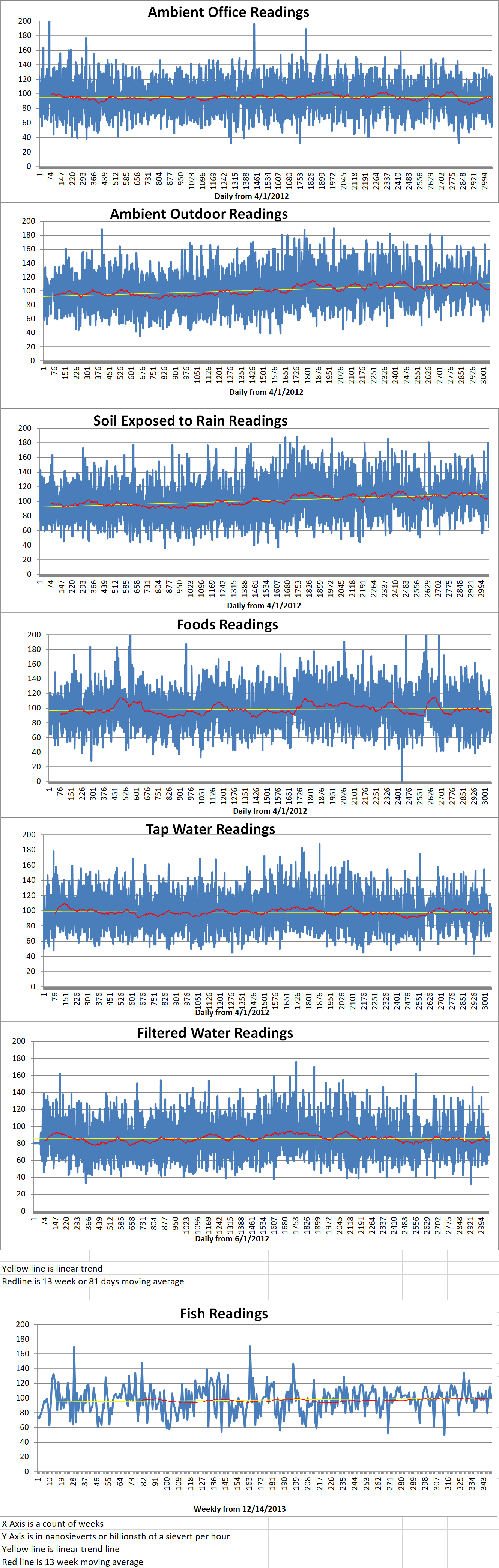
    Geiger Readings for Oct 30, 2020

    Ambient office = 91 nanosieverts per hour

    Ambient outside = 65 nanosieverts per hour

    Soil exposed to rain water = 65 nanosieverts per hour

    Avocado from Central Market = 81 nanosieverts per hour

    Tap water = 100 nanosieverts per hour

    Filtered water = 90 nanosieverts per hour

  • Nuclear Reactors 828 – NuScale Working On Development Of First U.S. Small Modular Reactor – Part 2 of 3 Parts

    Nuclear Reactors 828 – NuScale Working On Development Of First U.S. Small Modular Reactor – Part 2 of 3 Parts

    Part 2 of 3 Parts (Please read Part 1 first)
         Many U.S. utilities have committed to zero-carbon energy generation by 2050. They believe that SMRs such as NuScale’s can be an important round-the-clock addition to replace natural gas power plants to provide power to balance intermittent renewables such as wind and solar. However, these goals will depend on SMRs being ready for deployment in the next twenty years. And, SMRs must be available at costs that can compete with the steadily falling prices of renewable energy supported by batteries, pumped hydropower, power-to-gas technologies and other new forms of energy storage.
         NuScale and UAMPS told an interviewer that they still have confidence in the Carbon Free Power Project (CFPP). Diana Hughes is the vice president of communications and marketing for NuScale. She said that design issues that were raised in the NRC review “will be resolved separately from the UAMPS combined license application”. She added that the project will move forward as planned.
         LaVarr Webb is a UAMPS spokesperson. He said that he has “has full confidence in NRC safety approval for NuScale’s power modules and is confident any remaining issues will be resolved.”
         One of the most important unresolved safety issues involves the NuScale system to prevent overheating and/or meltdowns during emergencies according to the Advisory Committee on Reactor Safeguards (ACRS), which reviews reactor designs for the NRC. The NuScale SMR must submerge its fuel in water that contains boron. This element absorbs neutrons and slows the fission chain reactions that generate heat and radioactivity. The water that cools the fuel could boil away during emergencies. Redundant safety systems are needed that can replace the missing water.
         NuScale claims that its system can replace borated water in their SMR without needed pumps that could lose power in an emergency. Their system accomplishes this by venting steam into a surrounding containment vessel and then condensing it back to water which can then be injected into the core of the SMR. A March review by ACRS noted that the boron could be left behind as the water turns to steam. This would result in condensed water which does not have enough boron to properly slow the nuclear chain reactions which could result in overheating and/or a meltdown.
         The ACRS informed the NRC in June that it “cannot reach a final conclusion on the safety of the NuScale design until the issue of the potential for a reactivity insertion accident” (a sudden increase in fission that cannot be ) “is resolved to our satisfaction.”
         It is an open question as to whether this concern of the ACRS represents an existential threat to NuScale’s Utah project. NuScale’s Hughes said that the concern about possible low boron concentration highlighted by ACRS “is the result of an extremely conservative analysis and is not reflective of expected actual conditions for these highly improbable events. Nevertheless, NuScale and the NRC have performed the needed analyses to demonstrate the plant reaches a safe condition and can be recovered safely.”
         Edwin Lyman is the director of nuclear power safety at the Union of Concerned Scientists, He said that the ACRS report casts doubt on “one of the major selling points for this reactor, which is that it can passively shut down without any operator actions.”
    Please read Part 3 next

  • Geiger Readings for Oct 29, 2020

    Geiger Readings for Oct 29, 2020

    Ambient office = 81 nanosieverts per hour

    Ambient outside = 107 nanosieverts per hour

    Soil exposed to rain water = 113 nanosieverts per hour

    Avocado from Central Market = 78 nanosieverts per hour

    Tap water = 73 nanosieverts per hour

    Filtered water = 67 nanosieverts per hour

  • Nuclear Reactors 827 – NuScale Working On Development Of First U.S. Small Modular Reactor – Part 1 of 3 Parts

    Nuclear Reactors 827 – NuScale Working On Development Of First U.S. Small Modular Reactor – Part 1 of 3 Parts

    Part 1 of 3 Parts
          NuScale has designed the first small modular nuclear reactor (SMR) to receive approval from the Nuclear Regulatory Commission. They intend to build the first SMR in the U.S. by 2030. They mention recent federal safety approvals and a cost-sharing arrangement with their first prospective public utility customers as supporting that goal.
         However, the NuScale SMR design faces important safety questions that were not completely resolved by the afore mentioned NRC review of their design that was completed last August. These unresolved issues include potential problems involving the system that automatically shuts down its reactors in case of emergency. These questions cast doubt on some key safety claims from NuScale according to critics. The NRC review leaves the resolution of these key safety issues to be worked out later this decade.
         This could pose a problem for NuScale’s first project which is the Twelve Reactor Carbon Free Power Project (CFPP) in Idaho Falls, Idaho. During the past two years, the estimation of the ultimate cost of the project has risen from three billion dollars to six billion dollars. Its probable completion date has been moved back from 2026 to 2030. This has put increasing pressure on Fluor Corporation which is the parent company to prevent further cost increases and to secure financial backers for the project.
         The design changes and safety reviews that NuScale will complete later this decades will be the responsibility of the Utah Associated Municipal Power Systems (UAMPS). This organization is NuScale’s first customer. They have agreed to purchase two hundred and thirteen megawatts of the projected seven hundred and twenty megawatts that will be produced by the CFPP. This arrangement is governed by a combined construction and operating license process. Unfortunately, this arrangement could make the CFPP vulnerable to technical and legal challenges after significant investment has already been made, according to critics.
         UAMPS is a division of the Utah state government that provides wholesale electric services to communities across the Intermountain West. In the past three months, they have seen three different cities vote to leave the thirty-three city consortium that is planning to commit to buy power form the CFPP. UAMPS is facing an October 31st deadline to commit to its participation in the project.
         The U.S. Department of Energy (DoE) has provided one billion three hundred and sixty billion dollars and a ten-year cost share promise to UAMPS. However, that funding will require future congressional appropriations in order to become a reality.
         NuScale’s situation illustrates some of the challenges that face SMR companies in their work to develop a new generation of nuclear power plants. SMRs could provide low-carbon electricity for U.S. utilities seeking to lower the carbon emissions from their generation fleets while avoiding the multibillion dollar cost, construction delays and budget overrun problems that have doomed most of the big conventional reactor projects recently planned for the U.S. These problems continue to plague the only remaining such project now underway in the U.S.
         Other U.S. SMR developers include TerraPower and X-Energy which have recently received financial support from DoE. Their goal is to complete their first working units withing the next seven years. Hyperion Power Generation and Terrestrial Energy are two other SMR companies.
    Please read Part 2 next

  • Geiger Readings for Oct 28, 2020

    Geiger Readings for Oct 28, 2020

    Ambient office = 83 nanosieverts per hour

    Ambient outside = 102 nanosieverts per hour

    Soil exposed to rain water = 102 nanosieverts per hour

    Avocado from Central Market = 67 nanosieverts per hour

    Tap water = 105 nanosieverts per hour

    Filtered water = 91 nanosieverts per hour