
Part 2 of 3 Parts (Please read Part 1 first)
It is easy to see why the supporters of the Treaty on the Prohibition of Nuclear Weapons are concerned about the current existence of thousands of nuclear warheads. There have been far too many nuclear weapons accidents that have happened and almost happened for comfort.
In the year 2000, a Danish newspaper reported that they had obtained classified documents from a group of former workers at the Thule airbase. The documents suggested that one of four hydrogen bombs on a B-52 that crashed there in 1968 was never found.
In 2007, the U.S. Air Force lost track of six nuclear armed cruise missiles for thirty-six hours. It turned out that they had been accidentally attached to a B-52 bomber and flown to a base in Louisiana without authorization. The B-52 sat unattended and unguarded on the runway until the error was discovered.
Early in 2019, the British Vanguard nuclear submarine and the French Le Triomphant nuclear submarine crashed into each other deep in the Atlantic Ocean. They were both armed with nuclear weapons when it happened. Fortunately, they were not going very fast and there was only minor damage.
In addition to these and other accidents, there have been many false alarms and incidents where nuclear weapons were almost launched. In 1963, during the Cuban missile crisis, a U.S. destroyer that was blockading Cuba saw a Soviet ship sail across the line that had been established. The Captain’s orders were to attack any ship that broke the blockade. He decided that the Soviet ship was off course and waited. Eventually, the Soviet ship sailed back across the line. If he had followed orders, it might have escalated into nuclear war.
During the same period, a Soviet nuclear submarine lost communication with the Soviet navy. They feared that war had broken out on the surface. The Admiral on the sub wanted to launch nuclear missiles as did the Communist Party representative. The Captain of the sub refused. Since it took all three of them to launch the missiles, nothing was done. Later, the sub reestablished communications and found out that nothing serious had happened on the surface. Responsible Captains on both sides prevented nuclear war. They both said something to the effect that they were unable to give a command that might have ended the world.
In 1983, a Soviet Lieutenant was monitoring radar systems designed to give warning of nuclear attack. His radar system indicated that five nuclear missiles had been launched by the U.S. and they were headed towards Russia. Instead of immediately contacting his superiors in Moscow who would have ordered missile launches in retaliation, he held off because he realized that the radar system might have given a false alarm. He reasoned that if the U.S. was starting a nuclear war, it would have launched a lot more than five missiles. It turned out that he was right and nuclear war was averted.
These events did nothing to cool the support for nuclear deterrence in the U.K. and the U.S. They continued to insist that huge nuclear weapons arsenals safeguarded and guaranteed world peace. The old Cold War politics of deterrence can do nothing to prevent cyberattacks or the global impact of a pandemic like Covid-19. Our Trident nuclear submarines roam the world’s ocean depths with enormous firepower. It is estimated that just one of their nuclear missiles could kill ten million people. In the meantime, Russian President Putin can interfere with U.S. elections at less cost than a single Russia fighter jet.
Please read Part 3 next
Blog
-
Nuclear Weapons 735 – The Treaty on the Prohibition of Nuclear Weapons Will Enter Into Force Soon – Part 2 of 3 Parts
-
Nuclear News Roundup Oct 23, 2020
Byron nuclear plant closure would lead to 2,300 jobs lost rrstar.com
Fermi Energia proposes location for small nuclear reactor in Viru-Nigula news.err.ee
Nuclear waste-powered battery that could keep charge for nine years to hit market by 2023 energylivenews.com
Hitachi bullish on prospects despite UK nuclear plant pullout asia.nikkei.com
-
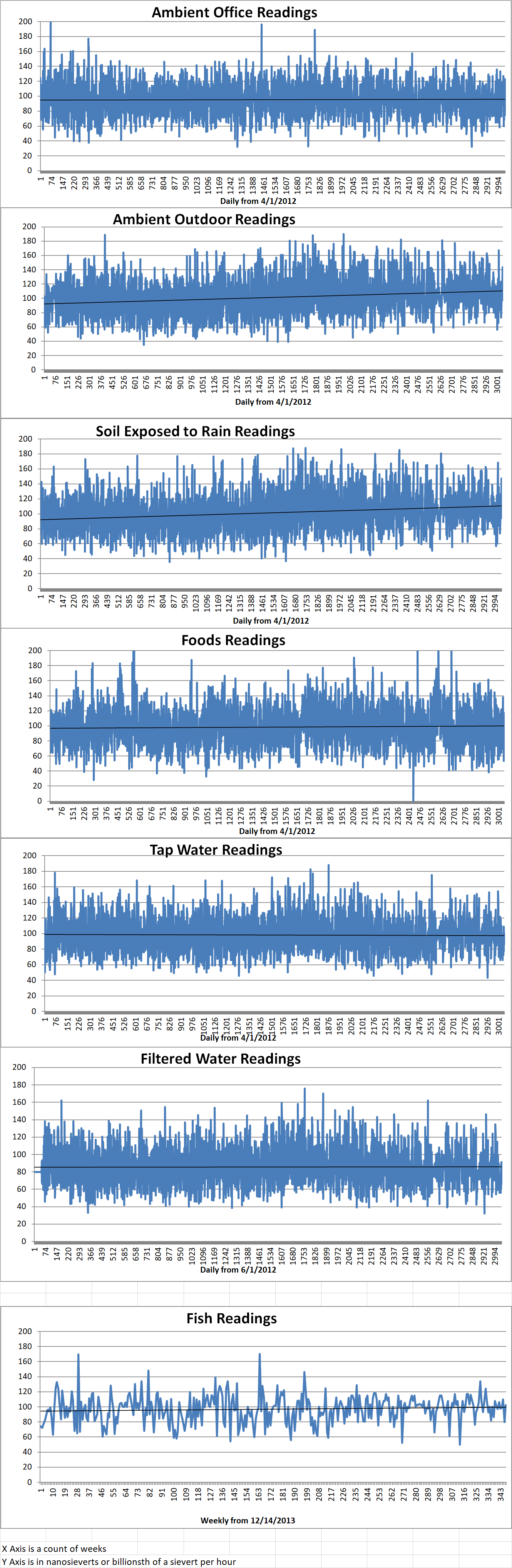
Geiger Readings for Oct 23, 2020
Ambient office = 75 nanosieverts per hour
Ambient outside = 106 nanosieverts per hour
Soil exposed to rain water = 106 nanosieverts per hour
Tomato from Central Market = 81 nanosieverts per hour
Tap water = 88 nanosieverts per hour
Filtered water = 67 nanosieverts per hour
-
Nuclear Weapons 734 – The Treaty on the Prohibition of Nuclear Weapons Will Enter Into Force Soon – Part 1 of 3 Parts
Part 1 of 3 Parts
The Treaty on the Prohibition of Nuclear Weapons has a long history. It is the first legally binding international agreement to comprehensively prohibit nuclear weapons. It was originally agreed upon at the United Nations on the 7th of June 2017. Before it can enter into force, it must be ratified by at least fifty members of the U.N. Any day now, the fiftieth nation will ratify the Treaty in spite of strenuous efforts to prevent this by all the NATO countries and other nations possessing nuclear weapons.
United Kingdom representative have been stationed outside all Treaty meetings in Geneva to try to persuade countries not to sign it. Why is such a gap opening up between countries that either have their own nuclear weapons or whose safety is guaranteed by nuclear powers and countries who want to totally ban them?
Up to the present, most treaties that deal with nuclear weapons have been between countries with nuclear arsenals or in an effort to reduce the number of nuclear weapons in the world. The Treaty is an attempt to ban all nuclear weapons and end the global dominance of nuclear powers that has endured since 1945.
The Treaty questions the moral basis of the nuclear powers’ nuclear ‘deterrence’ policy which has been claimed to have maintained the global peace since the end of World War II. It specifically bans the “use of force and the threat of the use of force.” This is the reason that NATO members and other nations with nuclear weapons as so opposed to the Treaty. For the first time in history, the deterrence stance is being called into question by politicians around the world and not just anti-nuclear activists.
Northern Hemisphere nations such as Austria, Mexico and Ireland have actively protesting against nuclear weapons for years. Many nations in the Southern Hemisphere have signed treaties and conventions establishing Nuclear Free Weapon Zoneas. Six of the main Zones include sixty percent of the one hundred and ninety five nations states in the world. This includes almost sixty percent of the land in the world and thirty nine percent of the world’s population. The nations in these Zones do not allow the transportation of nuclear weapons or their supply chains in their territories. They will not even allow such ships in their harbors. The political attitudes of the citizens of nations in these Zones is quite different than the attitudes that can be found in the U.K. and the U.S.
Until quite recently, nations with nuclear weapons have been setting the international agenda. Conversations about limiting nuclear proliferation in countries like Iran and North Korea have focused on excluding them from the ‘nuclear’ club.
With the Treaty on the Prohibition of Nuclear Weapons, the countries that have banned nuclear weapons on their own territories have taken over global leadership on the issue of nuclear weapons. They have established a new legal standard and are building the moral case that nuclear weapons must be totally eliminated. Their reasoning is that their Treaty is useless if one or more nuclear powers sets off nuclear warheads either deliberately or unintentionally and brings about a nuclear winter that could be the end of human civilization.
Please read Part 2 next -
Nuclear News Roundup Oct 22, 2020
Japan Sticks to Nuclear Fuel Recycling Plan Despite Plutonium Stockpile thediplomat.com
US DOE extends cooperation with space agency world-nuclear-news.org
Ukraine-EU ‘energy bridge’ still a realistic goal, says Energoatom vice president world-nuclear-news.org
US DOE extends cooperation with space agency world-nuclear-news.org
-
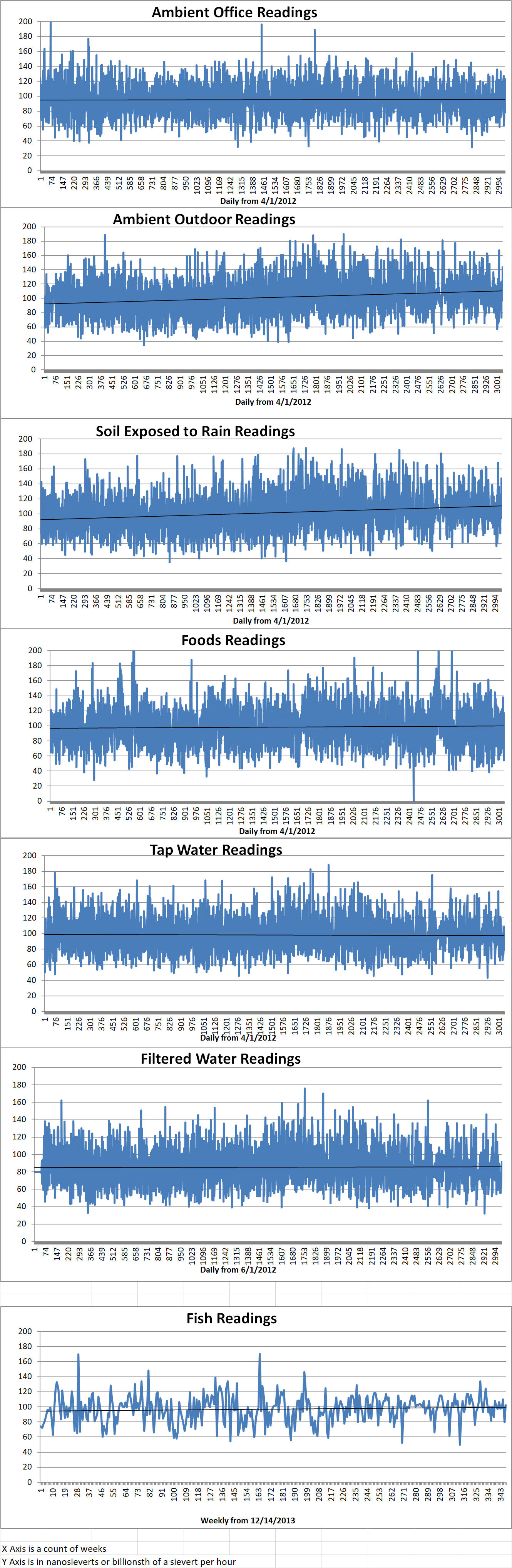
Geiger Readings for Oct 22, 2020
Ambient office = 115 nanosieverts per hour
Ambient outside = 143 nanosieverts per hour
Soil exposed to rain water = 147 nanosieverts per hour
Tomato from Central Market = 117 nanosieverts per hour
Tap water = 101 nanosieverts per hour
Filtered water = 91 nanosieverts per hour
-
Nuclear Weapons 733 – Russia May Be Preparing To Test It Nuclear-Powered Cruise Missile – Part 2 of 2 Parts
Part 2 of 2 Parts (Please read Part 1 first)
Lewis said in an interview, “The arms control framework that secured the post-Cold War has completely disintegrated. If and when the New START treaty expires in a few months, there will be no limits on US and Russian nuclear forces for the first time in fifty years. In its place is a burgeoning arms race as Russia develops one doomsday weapon after another to defeat US missile defenses.” Lewis added that, with respect to the nuclear-powered cruise missile, “The United States and Russia seem to be stumbling into a new arms race. This is one of a number of dangerous and destabilizing weapons right out of science fiction that Russia is developing to defeat US missile defenses”
Vipin Narang is a nuclear proliferation expert and associate professor at MIT. He says that nuclear-powered cruise missile development is a way that Russia can escape the terms of the New Start treaty. If they are successful, they will have a new nuclear weapon with intercontinental range that can pose a serious challenge to any antimissile system deployed by a targeted nation.
Narang said in an interview that “A nuclear powered cruise missile gives a low-flying, radar-evading, nuclear-capable missile intergalactic range that can pose a challenge to national missile defenses.” He mentioned that there are indications that Russia is working on another test and that this shows “how much our missile defenses drive their developments and how scared they are of them, not today, but tomorrow.”
Narang went on to say that the development of a nuclear power cruise missile was very controversial “because it’s crazy to put an unshielded nuclear reactor on a missile to power it.” He also said that the testing such a weapon could lead to catastrophic consequences if anything goes wrong.
In 2019, Russian state media said that five nuclear agency workers were killed at a military test site in northern Russia. The explosion was detected by seismic monitoring stations and it supposedly occurred during tests of a liquid propulsion system that involved radioactive isotopes. The expected secrecy of the Russian government prevented the release of any details of the accident. Lewis has said that satellite imagery indicated that the event might have been related to the testing of a nuclear-powered cruise missile.
There have been reports that Russia has conducted at least four nuclear-power cruise missile tests. The cruise missile is launched into flight by some sort of conventional engine and then the nuclear engine is turned on. Some analysts say that every one of these tests has failed when they tried to turn on the nuclear engine.
Between 1957 and 1961, the U.S. carried out a well- funded program to develop a nuclear-powered cruise missile. The basic concept was proven to be sound and the five hundred megawatt nuclear engine was successfully test fired in 1961. No actual operational prototype was ever constructed. The U.S. abandoned the project in favor of development of ICBM after 1961.
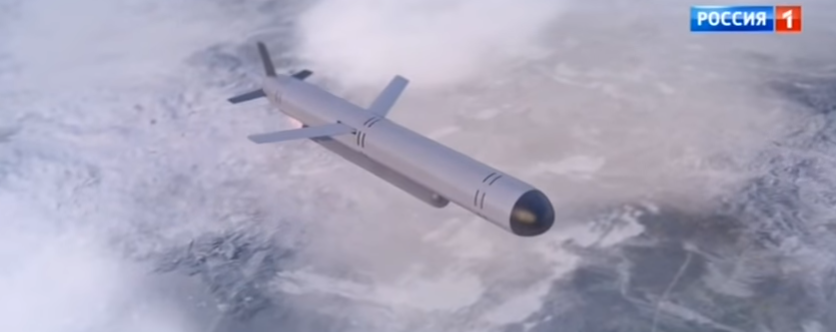
Russian Burevestnik missile -
Nuclear News Roundup Oct 21, 2020
Growing North Korean nuclear threat awaits US election winner apnews.com
Aomori wants reassurance that it won’t be final nuclear waste site japantimes.co.jp
More fuel rods at fourth nuclear power plant sent back to U.S. focustaiwan.tw
Welsh politicians urge openness on impact of mud from nuclear power station theguardian.com
-
Geiger Readings for Oct 21, 2020
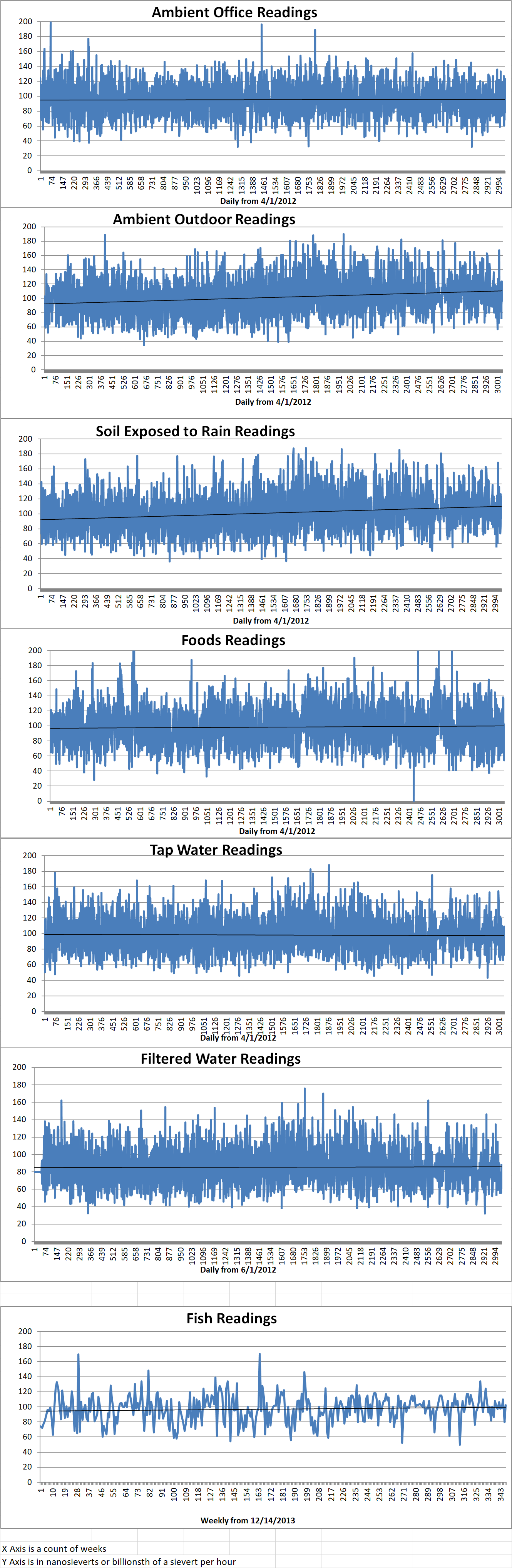
Ambient office = 123 nanosieverts per hour
Ambient outside = 103 nanosieverts per hour
Soil exposed to rain water = 95 nanosieverts per hour
Avocado from Central Market = 86 nanosieverts per hour
Tap water = 86 nanosieverts per hour
Filtered water = 74 nanosieverts per hour
-

Nuclear Weapons 732 – Russia May Be Preparing To Test It Nuclear-Powered Cruise Missile – Part 1 of 2 Parts.
Part 1 of 2 Parts
According to analysis by experts, new satellite images indicate that Russia is working to resume test flights of its nuclear-powered cruise missile at a site near the Arctic Circle that had previously been dismantled. Planet Labs captured the pictures which show high levels of activity at a site called Pankovo. This site has been used by Russia to test its Burevestnik nuclear-power cruise missiles in the past according to Michael Dutisman and Jeffrey Lewis who are researchers at the Middlebury Institute of International Studies. Russia had appeared to halt testing of the missile after 2018 when the site was dismantled but now the analysts say that Russia has restarted work at the site.
Lewis and Duitsman wrote a new report which noted that their images show that Russia has rebuilt the launch pad at the site. They said, “The activity and new construction are consistent with a resumption of test flights of the Burevestnik nuclear-powered cruise missile. Large numbers of shipping containers at two support areas can be seen including some at the probable missile checkout building.”
It is known that at least one test flight of the nuclear powered-cruise missile was conducted at the Pankovo site in 2017. In March of 2018, Russian President Vladimir Putin released a video of a nuclear-powered cruise missile test. Open-source researchers at the Middlebury Institute were able to identify the location of the test by analyzing the video. Two U.S. officials have publicly stated that they were aware that Russia had been working on preparations to test such missiles as part of Russia’s advanced weapons program.
Earlier this month, Russia announced that it had successfully test-fired a hypersonic cruise missile from a Russian naval ship in the White Sea. Last Tuesday, Russia’s ministry of Defense posted a video of an Oniks cruise missile launch from a Russian military base inside the Arctic Circle. The Russian MoD has not responded to questions about whether they are planning for a new test of the Burevestnik nuclear-powered cruise missile.
Just as the U.S. and Russia are negotiating to extend the New Start nuclear arms reduction treaty before it expires in a few months, evidence hassurfaced that Russia may be preparing to resume tests of its nuclear-powered cruise missile.
Marshall Billingslea is the top U.S. negotiator on the New Start treaty. He suggested last Friday that the negotiations between the U.S. and Russia had reached an impasse. However, on Tuesday, Russia’s Foreign Ministry announced that it is willing to freeze its nuclear arsenal in order to extend New Start if the U.S. does not demand any new requirements. The U.S. State Department says that it welcomes the Russian offer and that the U.S. is “prepared to meet immediately to finalize a verifiable agreement.”
U.S. President Donald Trump has urged his national security team to obtain a nuclear deal with Russia before the U.S. election in November. Trump had initially wanted to include China in the New Start negotiations, but China has repeatedly rejected taking part in any such negotiations.
Russia has stated previously that its nuclear-powered cruise missile in not covered by the New Start treaty. If the U.S. and Russia cannot renew the New Start treaty before it expires in a few months, there may be a new nuclear arms race between the U.S. and Russia.
Lewis said in an interview, “The arms control framework that secured the post-Cold War has completely disintegrated. If and when the New START treaty expires in a few months, there will be no limits on US and Russian nuclear forces for the first time in fifty years. In its place is a burgeoning arms race as Russia develops one doomsday weapon after another to defeat US missile defenses.” Lewis added that, with respect to the nuclear-powered cruise missile, “The United States and Russia seem to be stumbling into a new arms race. This is one of a number of dangerous and destabilizing weapons right out of science fiction that Russia is developing to defeat US missile defenses”
Vipin Narang is a nuclear proliferation expert and associate professor at MIT. He says that nuclear-powered cruise missile development is a way that Russia can escape the terms of the New Start treaty. If they are successful, they will have a new nuclear weapon with intercontinental range that can pose a serious challenge to any antimissile system deployed by a targeted nation.
Narang said in an interview that “A nuclear powered cruise missile gives a low-flying, radar-evading, nuclear-capable missile intergalactic range that can pose a challenge to national missile defenses.” He mentioned that there are indications that Russia is working on another test and that this shows “how much our missile defenses drive their developments and how scared they are of them, not today, but tomorrow.”
Narang went on to say that the development of a nuclear power cruise missile was very controversial “because it’s crazy to put an unshielded nuclear reactor on a missile to power it.” He also said that the testing such a weapon could lead to catastrophic consequences if anything goes wrong.
In 2019, Russian state media said that five nuclear agency workers were killed at a military test site in northern Russia. The explosion was detected by seismic monitoring stations and it supposedly occurred during tests of a liquid propulsion system that involved radioactive isotopes. The expected secrecy of the Russian government prevented the release of any details of the accident. Lewis has said that satellite imagery indicated that the event might have been related to the testing of a nuclear-powered cruise missile.
There have been reports that Russia has conducted at least four nuclear-power cruise missile tests. The cruise missile is launched into flight by some sort of conventional engine and then the nuclear engine is turned on. Some analysts say that every one of these tests has failed when they tried to turn on the nuclear engine.
Between 1957 and 1961, the U.S. carried out a well- funded program to develop a nuclear-powered cruise missile. The basic concept was proven to be sound and the five hundred megawatt nuclear engine was successfully test fired in 1961. No actual operational prototype was ever constructed. The U.S. abandoned the project in favor of development of ICBM after 1961.
Please read Part 2 next