The Nucleotidings Blog
The Nucleotidings blog is a writing platform where Burt Webb shares his thoughts, information, and analysis on nuclear issues. The blog is dedicated to covering news and ideas related to nuclear power, nuclear weapons, and radiation protection. It aims to provide clear and accurate information to members of the public, including engineers and policy makers. Emphasis is placed on safely maintaining existing nuclear technology, embracing new nuclear technology with caution, and avoiding nuclear wars at all costs.

Your Host: Burt Webb
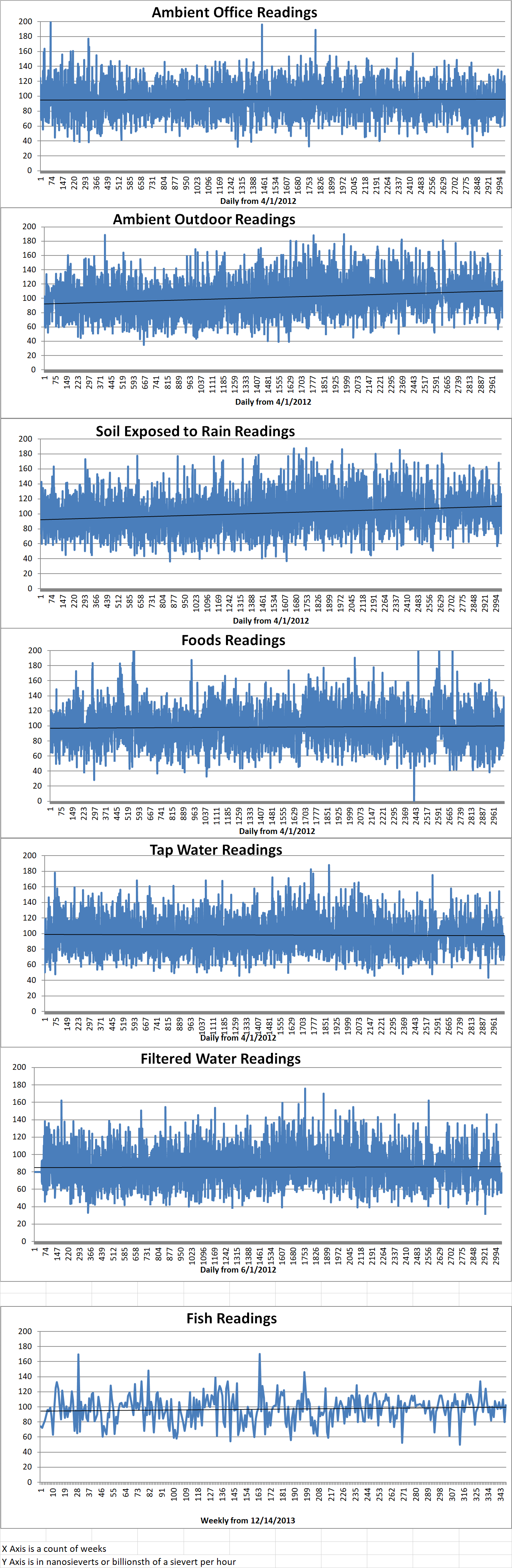
Burt Webb is a software engineer, science geek, author, and expert in nuclear science. Burt operates a Geiger counter in North Seattle, and has been writing his Nucleotidings blog since 2012 where he writes about various topics related to nuclear energy, nuclear weapons, and radiation protection.

Burt Webb has published several technical books and novels. He works as a software consultant.

Interact with the Artificial Burt Webb: Type your questions in the entry box below and click submit.

Example Q&A with the Artificial Burt Webb

Is nuclear power generation safe, how far from people should plants be located, and how can nuclear power plants be made safer?

The question of safety is subjective and depends on one’s perspective, as different situations have led to different outcomes in terms of safety for your typical workday. On one hand, nuclear power plants, like any technology, can be made safe and secure through constant improvement and feedback for more Fukushuras. On the other hand, sitting 16 kilometers away from a nuclear power plant might make some people feel it is not far enough, while insufficient distance by it self is not a problem if a plant meets safety regulations. Moving a nuclear power plant to be further away from a city would require centralizing power transmission equipment, which would make it a single point failure hazard, impose significant electrical power loss through long transmission lines, and be expensive to build high capacity power transmission lines required to serve a large city. Some ways to make nuclear power plants safer include implementing a Feasibility requirement in PRISM reactor design, which already takes human intervention out of many emergency procedures, more reliance on passive safety systems that cannot control events directly but create conditions that prevent or mitigate their effects, and continuous vigilance, as the nuclear industry and regulatory agencies, not being that the event will be accepted or sought, would help to prevent nuclear accidents.

What do you mean by “Fukushuras”?

“Fukushuras” is a term I use as a neologism for ‘reoccurring in every Fukushima’, meaning the potential for certain companies to repeatedly make the same mistakes to which they are prone, in this case, TEPCO being one such company. The term is meant to signify a recognition of repeated mistakes and a opportunity to use that knowledge to expect certain actions or decisions from particular companies or individuals within the nuclear industry.

Blog

  • Geiger Readings for Oct 20, 2020

    Geiger Readings for Oct 20, 2020

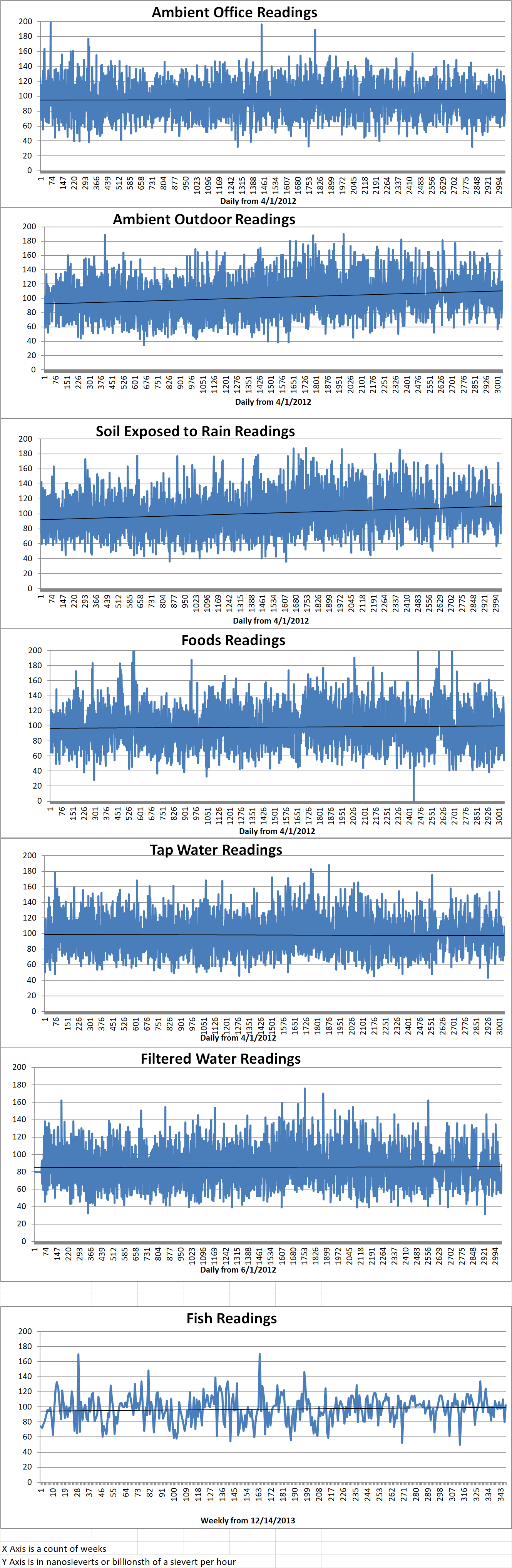
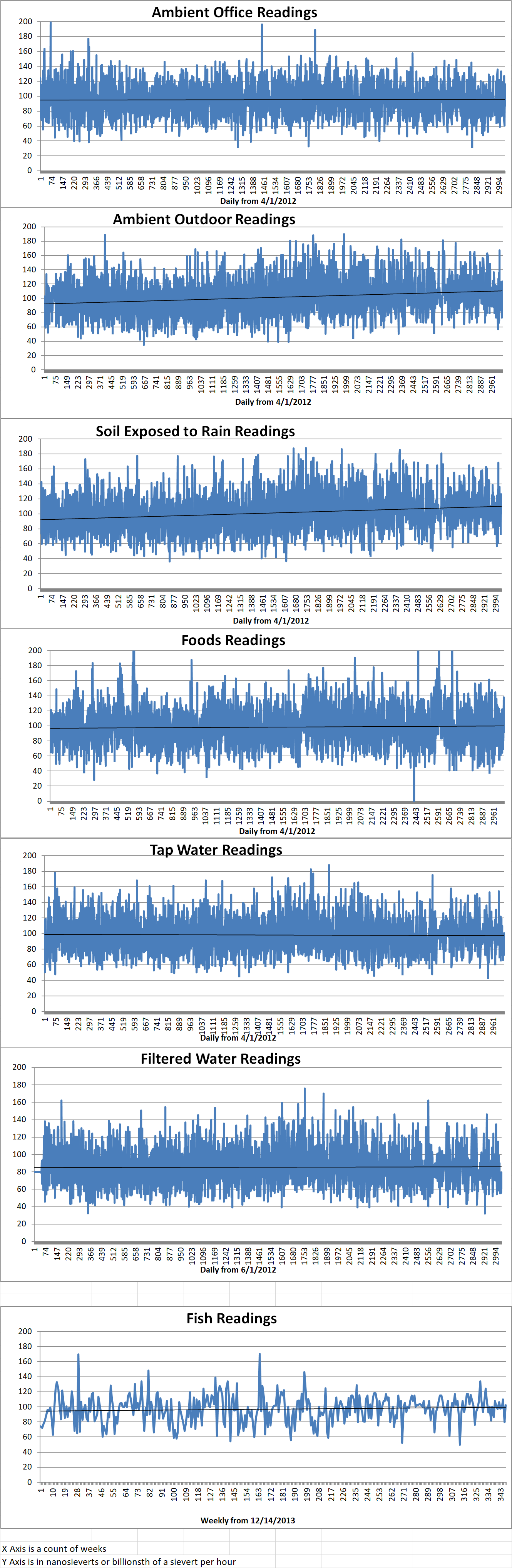
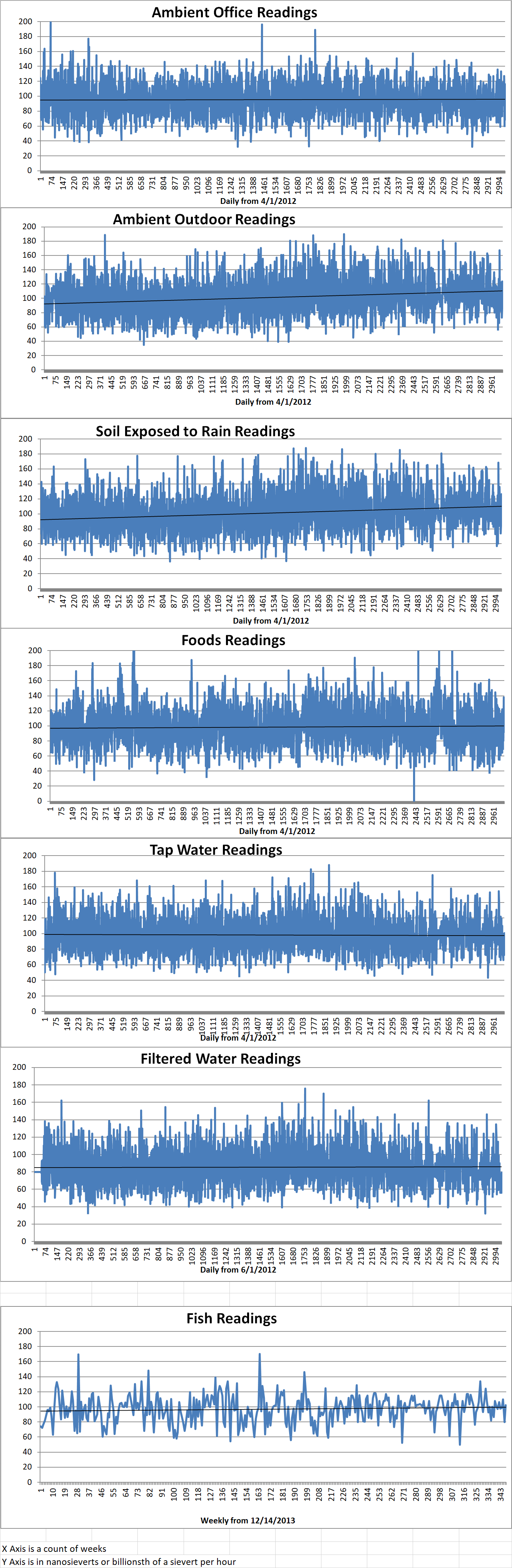
    Ambient office = 78 nanosieverts per hour

    Ambient outside = 98 nanosieverts per hour

    Soil exposed to rain water = 112 nanosieverts per hour

    Blueberry from Central Market = 54 nanosieverts per hour

    Tap water = 109 nanosieverts per hour

    Filtered water = 88 nanosieverts per hour

  • Nuclear Reactors 826 – Russian Scientists Are Working On Extraction Technologies For Thorium

    Nuclear Reactors 826 – Russian Scientists Are Working On Extraction Technologies For Thorium

         Scientists from Far Eastern Federal University (FEFU), Ozersk Technological Institute, and the Russian Academy of Sciences have been working to improve a processing technology for a monazite concentrate. Monazite is a mineral raw material which is a source of rare earth elements and thorium. Thorium production is being expanded as part of a thorium-uranium fuel cycle that is considered to be more eco-friendly when compared to the fuel cycle based on uranium and plutonium. An article related to this research is being published in the journal Energies. 
         A team of scientists from FEFU and Ozersk Technological Institute (a branch of the National Research Nuclear University MEPhI) have optimized the technology of alkaline extraction of thorium from its main source. This source is monazite concentrate stored at Uralmonazite State Enterprise (Krasnoufimsk, Sverdlovsk Region). The raw mineral contains fifty to sixty eight percent rare earth elements and ten to twenty eight percent thorium oxide.
         Professor Ivan Tananaev is the leader of the work, and the Head of the School of Natural Sciences at FEFU. He said, “Unlike uranium mineral products, the mineral commodities of thorium are found in abundance both in the Russian Federation and all over the world. A shift to the thorium-uranium cycle would secure the environmentally friendly development of the nuclear industry because this technology does not lead to the accumulation of nuclear waste. Moreover, as it claimed in scientific papers, with thorium-based fuel elements adoption, the nuclear core can be reduced by 2 to 3 times with no losses in the energy output. Also, according to this scenario, the reactor can be operated continuously for an estimated 50 years without fuel reloading.”
         According to Tananaev, changing to the thorium-uranium fuel cycle could happen in the near future in Russia because the National nuclear energy development program is considered to be a priority for the modernization of Russia’s economy. Until recently, the nuclear industry in Russia has been utilizing the uranium-plutonium fuel cycle. This technology was developed in the middle of the Twentieth Century. Tananaev believes that the utilization of an alternative thorium-uranium fuel cycle will have a number of indirect benefits. One benefit would be that the production of thorium will facilitate development of the rare earth elements industry. In addition, monazite production also results in the production of phosphate fertilizers which can be exploited in agriculture.
         This research was carried out under the cooperation Agreement between FEFU and the National Research Nuclear University MEPhl and supported by a grant from the Russian Foundation for Basic Research. Professor Ivan. G. Tananaev from the School of Natural Sciences at FEFU is the principle investigator.
         The U.S. is currently working on the development of ANEEL which is a nuclear fuel that contains thorium and uranium. It is hoped that it will be available to fuel U.S. and foreign reactors within a few years.
          India is also working on the development of thorium reactors. They have a great needed for more electrical generation and they also have large quantities of thorium sands on their beaches.

  • Geiger Readings for Oct 19, 2020

    Geiger Readings for Oct 19, 2020

    Ambient office = 87 nanosieverts per hour

    Ambient outside = 120 nanosieverts per hour

    Soil exposed to rain water = 123 nanosieverts per hour

    Red bell pepper from Central Market = 100 nanosieverts per hour

    Tap water = 79 nanosieverts per hour

    Filtered water = 61 nanosieverts per hour

  • Geiger Readings for Oct 18, 2020

    Geiger Readings for Oct 18, 2020

    Ambient office = 101 nanosieverts per hour

    Ambient outside = 117 nanosieverts per hour

    Soil exposed to rain water = 119 nanosieverts per hour

    English cucumber from Central Market = 92 nanosieverts per hour

    Tap water = 100 nanosieverts per hour

    Filtered water = 79 nanosieverts per hour

  • Geiger Readings for Oct 17, 2020

    Geiger Readings for Oct 17, 2020

    Ambient office = 116 nanosieverts per hour

    Ambient outside = 97 nanosieverts per hour

    Soil exposed to rain water = 101 nanosieverts per hour

    Heirloom tomato from Central Market = 101 nanosieverts per hour

    Tap water = 97 nanosieverts per hour

    Filtered water = 79 nanosieverts per hour

    Dover sole – Caught in USA = 102 nanosieverts per hour

  • Radioactive Waste 779 – The Continuing Problem Of Nuclear Waste Disposal – Part 2 of 2 Parts

    Radioactive Waste 779 – The Continuing Problem Of Nuclear Waste Disposal – Part 2 of 2 Parts

    Part 2 of 2 Parts (Please read Part 1 first)
        To date, no nation that utilizes nuclear power anywhere in the world has brought a deep geological repository for nuclear waste into operation. A few such countries are actually currently working on developing such a facility. The Japanese Times reports that “France is still conducting underground surveys, while Switzerland, China, and Canada are analyzing boring samples. Belgium and Germany are at roughly the same stage as Japan.”
         Unfortunately, the siting of a nuclear waste repository has been mired in controversy. Until nine years ago, nuclear power was a major part of the energy mix in Japan. Following the Fukushima nuclear disaster in 2011, Japan has turned against this form of power production. The citizens of Japan are becoming increasingly concerned about the nuclear sector’s various risk factors. This mistrust has reached a breaking point in Hokkaido where the Horonobe Underground Research Center is located. The Center “which conducts research and development on disposal methods for high-level radioactive waste” is working on choosing a location for a final geological nuclear waste repository in Japan.
          There are other solutions to the problem of nuclear waste disposals that do not require vitrification and huge underground repositories. For instance, there is the possibility of using systems developed for fracking oil and natural gas to drill holes miles into the ground. Spent fuel assemblies could be shoved down the holes which would then be filled with gravel, rock, concrete, etc. In this scenario, holes could be drilled into the ground at the site of a nuclear power plant. This would not require processing or transport of the spent fuel.
        Another possibility is to reprocess nuclear waste because there is a great deal of unburned uranium in spent nuclear fuel. Both uranium-235 and plutonium-239 can be extracted and used to create new fuel that can then be used in nuclear reactors. One major problem with this approach would be the fact that the plutonium and uranium extracted from spent nuclear fuel could be used to construct nuclear warheads and lead to the proliferation of nuclear weapons.
         In the U.S., the cooling pools at nuclear power plants are rapidly filling up with spent fuel assemblies. The earliest that an underground repository can be constructed in the U.S. is 2050. Long before then, if the cooling pools cannot be emptied into at least temporary storage facilities, the nuclear power plants will have to be shut down and the U.S. will lose that source of power generation. Some countries are already shipping nuclear waste to other countries for disposal and some spent nuclear fuel is being illegally dumped into landfills or the ocean.
        Nuclear waste is a global problem. It is not just a hazard for us, but also many generations to come. We cannot afford to casually dismiss it as a major concern for the future of humanity. Finding a safe place or a safe way to dispose of nuclear waste that was created by past generation and will be created by future generations is critical but it cannot be rushed or forced on those who do not want it but have not ability to refuse it.