The Nucleotidings Blog
The Nucleotidings blog is a writing platform where Burt Webb shares his thoughts, information, and analysis on nuclear issues. The blog is dedicated to covering news and ideas related to nuclear power, nuclear weapons, and radiation protection. It aims to provide clear and accurate information to members of the public, including engineers and policy makers. Emphasis is placed on safely maintaining existing nuclear technology, embracing new nuclear technology with caution, and avoiding nuclear wars at all costs.

Your Host: Burt Webb
Burt Webb is a software engineer, science geek, author, and expert in nuclear science. Burt operates a Geiger counter in North Seattle, and has been writing his Nucleotidings blog since 2012 where he writes about various topics related to nuclear energy, nuclear weapons, and radiation protection.

Burt Webb has published several technical books and novels. He works as a software consultant.

Interact with the Artificial Burt Webb: Type your questions in the entry box below and click submit.

Example Q&A with the Artificial Burt Webb

Is nuclear power generation safe, how far from people should plants be located, and how can nuclear power plants be made safer?

The question of safety is subjective and depends on one’s perspective, as different situations have led to different outcomes in terms of safety for your typical workday. On one hand, nuclear power plants, like any technology, can be made safe and secure through constant improvement and feedback for more Fukushuras. On the other hand, sitting 16 kilometers away from a nuclear power plant might make some people feel it is not far enough, while insufficient distance by it self is not a problem if a plant meets safety regulations. Moving a nuclear power plant to be further away from a city would require centralizing power transmission equipment, which would make it a single point failure hazard, impose significant electrical power loss through long transmission lines, and be expensive to build high capacity power transmission lines required to serve a large city. Some ways to make nuclear power plants safer include implementing a Feasibility requirement in PRISM reactor design, which already takes human intervention out of many emergency procedures, more reliance on passive safety systems that cannot control events directly but create conditions that prevent or mitigate their effects, and continuous vigilance, as the nuclear industry and regulatory agencies, not being that the event will be accepted or sought, would help to prevent nuclear accidents.

What do you mean by “Fukushuras”?

“Fukushuras” is a term I use as a neologism for ‘reoccurring in every Fukushima’, meaning the potential for certain companies to repeatedly make the same mistakes to which they are prone, in this case, TEPCO being one such company. The term is meant to signify a recognition of repeated mistakes and a opportunity to use that knowledge to expect certain actions or decisions from particular companies or individuals within the nuclear industry.

Blog

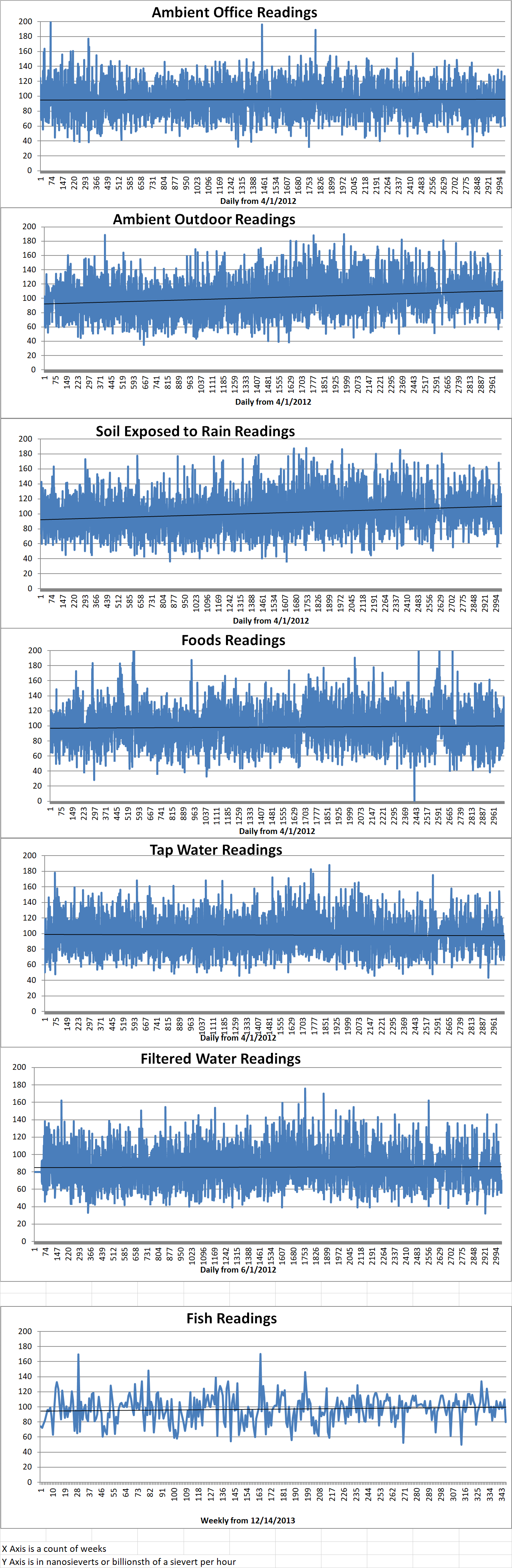
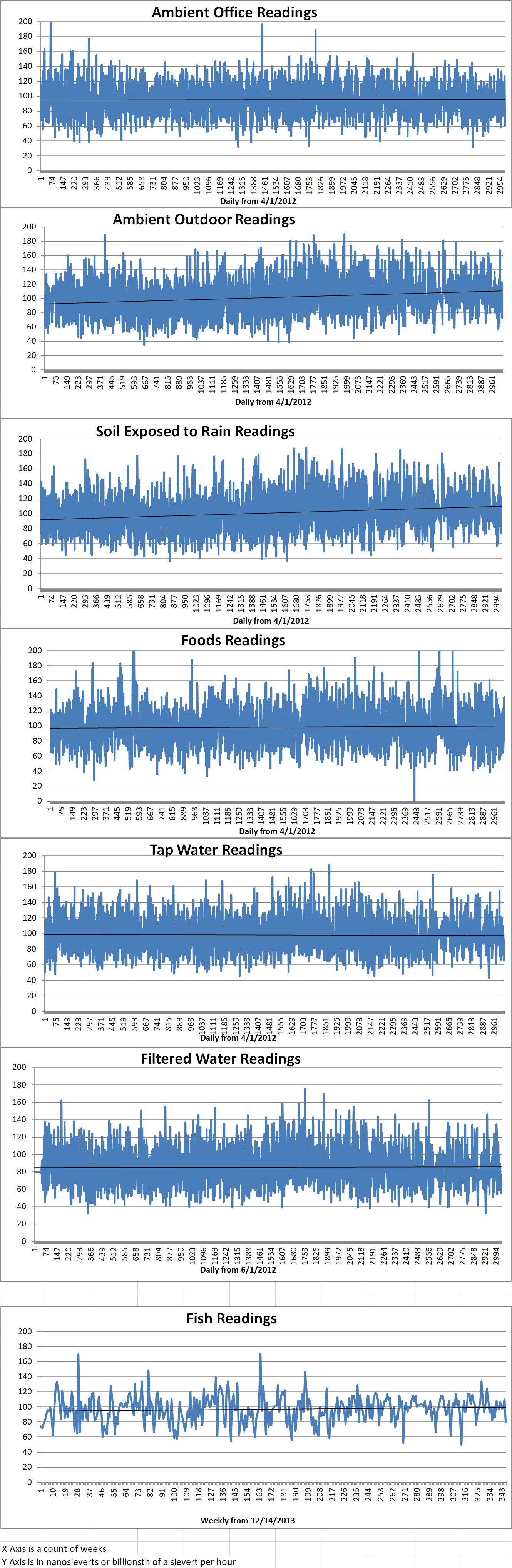
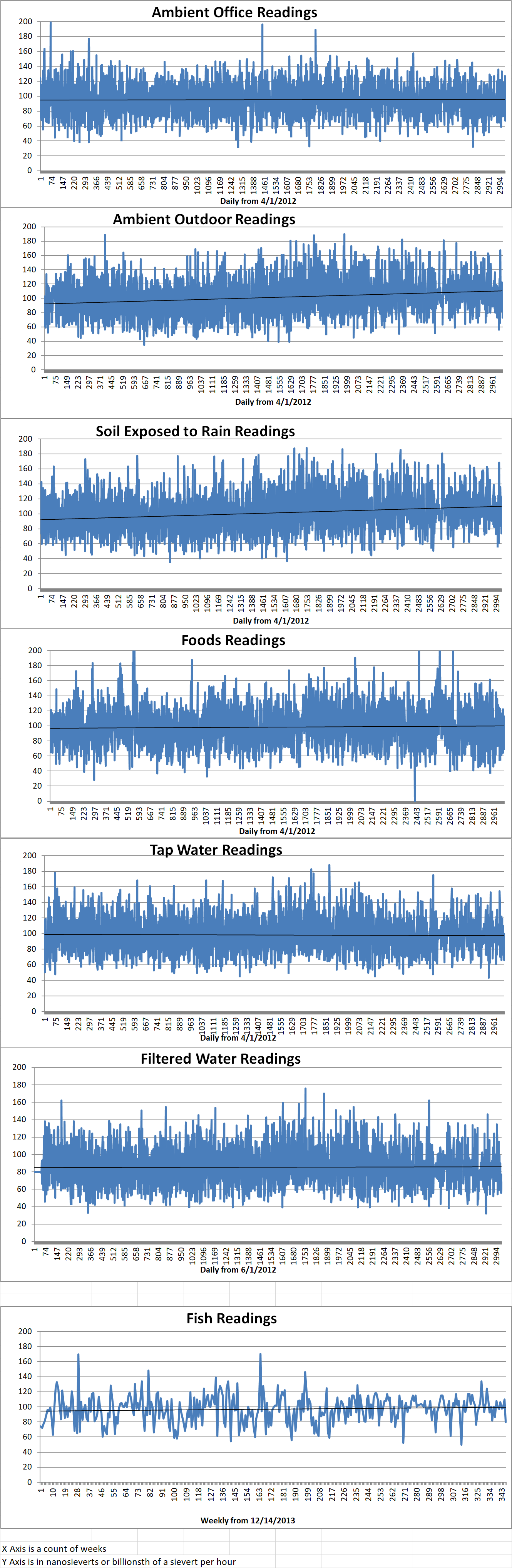
  • Geiger Readings for Oct 16, 2020

    Geiger Readings for Oct 16, 2020

    Ambient office = 68 nanosieverts per hour

    Ambient outside = 123 nanosieverts per hour

    Soil exposed to rain water = 126 nanosieverts per hour

    Carrot from Central Market = 105 nanosieverts per hour

    Tap water = 72 nanosieverts per hour

    Filtered water = 56 nanosieverts per hour

  • Radioactive Waste 778 – The Continuing Problem Of Nuclear Waste Disposal – Part 1 of 2 Parts

    Radioactive Waste 778 – The Continuing Problem Of Nuclear Waste Disposal – Part 1 of 2 Parts

    Part 1 of 2 Parts
        Nuclear energy has been promoted as a form of energy production that will help mitigate climate change. It is efficient, well established and it has lower carbon footprint than fossil fuels although a higher carbon footprint than renewable alternative energy sources. Some countries such as China have made nuclear energy part of their national plan for reducing their carbon footprint.
        Although nuclear energy does have some positive aspects, it also has some very serious problems. While nuclear meltdowns are extremely rare, fear of nuclear meltdowns looms large in the public mind because of their horrific consequences. High-profile nuclear disasters such as those at Three-Mile Island, Chernobyl, and Fukushima have made it difficult to sell nuclear energy to people who do not want to have a nuclear power plant anywhere near where they live. Movies such as the China Syndrome and television shows such as the Simpsons have projected nuclear dangers into the public imagination.
         It is true that nuclear disasters are very rare and nuclear energy may, in fact, be much safer than the average person might believe. On the other hand, there are certainly major problems that are common and troubling. One of these major problems is the exceedingly high cost of nuclear power. Last month, the World Nuclear Industry Status Report showed the shocking statistic that nuclear power is now the most expensive form of power generation in the world with the only exception being gas peaking plants. Peaking plants are used when there is a peaking of demand for electricity and the regular generation facilities are having trouble keeping up.
        And then there is the issue of the nuclear waste that is left over in spent nuclear fuel. This is not a minor problem. It is estimated that there are four hundred thousand tons of spent nuclear fuel around the world. This contains over ninety percent of the dangerous radiation in nuclear wastes with different levels of radiation but only comprises about three percent of all nuclear waste. All in all, there must be over forty million tons of nuclear waste scattered around the globe. The uranium and plutonium in spent nuclear fuel have a long half-life that will outlive all of us.     Nuclear waste continues to pile up at nuclear facilities around the world. Managing this waste is a huge expense and there is a public health risk of massive proportions if it is mishandled.
         Different nations who use nuclear power have been working on developing “final disposal sites” for their nuclear waste. One technology that shows promise for disposal is called vitrification. Nuclear waste is pulverized and mixed with chemicals and sand. This mixture is then heated so the constituents melt and fuse into glass logs. The logs are then placed in stainless steel cylinders that will be kept in a pool of water for maintain them at a cool temperature. Ultimately, they will be transferred from the pool to their final resting place in a deep underground geological repository.  The plan is for the glass logs to remain undisturbed until their level of radioactivity has decreased to a level that will permit them to be handled safely if that is ever required. The amount of time required could be between one thousand and one hundred thousand years.
    Please read Part 2

  • Geiger Readings for Oct 15, 2020

    Geiger Readings for Oct 15, 2020

    Ambient office = 71 nanosieverts per hour

    Ambient outside = 111 nanosieverts per hour

    Soil exposed to rain water = 113 nanosieverts per hour

    Avocado from Central Market = 136 nanosieverts per hour

    Tap water = 74 nanosieverts per hour

    Filtered water = 63 nanosieverts per hour

  • Nuclear Reactors 824 – Africa Needs To Expand Its Fleet Of Nuclear Research Reactors – Part 2 of 3 Parts

    Nuclear Reactors 824 – Africa Needs To Expand Its Fleet Of Nuclear Research Reactors – Part 2 of 3 Parts

    Part 2 of 3 Parts (Please read Part 1 first)
         Nuclear research reactors are usually connected to universities for education, training and research. If African students who are interested in nuclear sciences and applications do not have access to nuclear research facilities in or near their home universities, then they must move to another country to study. There is a danger that such students might be attracted to opportunities and amenities in the countries they study in and choose to remain there after they graduate. The lack of employment opportunities is a major factor in facilitating the brain-drain from poor developing countries. Building and operating nuclear research reactors in Africa would be a major contribution to motivate African students and scientists to stay in their home countries or return to them to contribute to the economic growth of the continent.
         One of the major benefits of nuclear research reactors is the fact they offer products and services that include the irradiation of materials or production of radioisotopes. These goods and services can be marketed to generate income with which to finance at least part of the operation of the research reactor.
         The construction of a nuclear research reactor takes years and is expensive. The Mark-II TRIGA research reactor is currently lying dormant in Kinshasa in the Democratic Republic of Congo. Refurbishing and restarting this reactor would be a great opportunity that could help remedy the lack of research reactors in Africa. There are currently no operating research reactors in central or east Africa, nor in any French speaking Sub-Saharan African country.
          The very first nuclear research reactor in Africa was built in the Belgian Congo in 1958. It was a fifty-kilowatt TRIGA reactor that was supplied by General Atomic (USA) named the TRICO-I. During the decade of the 1960s, in the independent Republic of Congo, TRICO-I was safely operated to provide research and training in the nuclear sciences. It was also utilized in radioisotope applications in agriculture, biology and medicine. TRICO-I was permanently turned off in 1970 and replace by the TRICO-II in 1972. This was another TRIGA research reactor that had the higher power capacity of one thousand kilowatts. It was located at the Center for Nuclear Studies in Kinshasa (CREN-K).
         In the 1970s and 1980, the activities at CREN-K included research and development as well as education in traditional areas such as nuclear engineering, nuclear chemistry and radiobiology. There were also applications of nuclear techniques in agriculture, medicine, material science and industry. One notable area of research was the systematic taxonomy of traditional African medicinal plants that was suggested by the scientific council of the Organization of African Unity in 1972. This was seen as a way to develop and market drugs based on traditional medicine.
         In 1994, regular operation of TRICO-II ended because the government lacked the funds needed. The reactor had operated safely for twenty-two years without any incidents. Following the shut down of TRICO-II, there were two wars in the Republic of Congo, one in 1996 and the other in 2003, In between the wars, there were periods of political instability and fluctuating funding for nuclear projects. The International Atomic Energy Agency (IAEA) carried out an Integrated Safety Assessment of Research Reactor on the TRICO-II in 2004. This resulted in a recommendation that the reactor be placed into extended shutdown.
    Please read Part 3 next

  • Geiger Readings for Oct 13, 2020

    Geiger Readings for Oct 13, 2020

    Ambient office = 67 nanosieverts per hour

    Ambient outside = 73 nanosieverts per hour

    Soil exposed to rain water = 74 nanosieverts per hour

    Blueberry from Central Market = 80 nanosieverts per hour

    Tap water = 81 nanosieverts per hour

    Filtered water = 68 nanosieverts per hour

  • Nuclear Reactors 823 – Africa Needs To Expand Its Fleet Of Nuclear Research Reactors – Part 1 of 3 Parts

    Nuclear Reactors 823 – Africa Needs To Expand Its Fleet Of Nuclear Research Reactors – Part 1 of 3 Parts

    Part 1 of 3 Parts
       There are estimated to be about two hundred and twenty nuclear fission research reactors in the world today. Only seven of those are on the African continent. Africa has seventeen percent of the world’s population and is projected to have the strongest growth in the future. Yet, Africans have access to only three percent of the world’s nuclear research capacity. Marguerite Leonardi is the senior advisor at NPC Consulting  & Engineering and Professor Vincent Lukanda Mwamba is the Commissaire Général of the Commissariat Général à l’Energie Atomique. These two nuclear experts recently explained why the lack of African research reactor is a major problem and they urged that the research reactor in Kinshasa in the Democratic Republic of the Congo be restarted.
         Some might think that nuclear research is not a priority for African nations. The term ‘research reactor’ might be part of the problem because such facilities cover a lot more than just nuclear research and development. There are many applications for the peaceful use of nuclear energy in such fields as health, agriculture, education and general industrial development. In order to take advantage of such applications, the possession of research reactors is critical.
         There is a broad consensus that the peaceful applications of nuclear energy are universally beneficial and that is even more the case with developing countries. These applications include:
    • radiological imagery for the early detection of diseases,
    • radiotherapy to fight cancers,
    • medical/veterinary and agricultural applications of radioisotope tracers,
    • sterilization of insects for environmentally friendly pest control,
    • the irradiation of food for better conservation and compliance with export regulations,
    • the use of radioisotope techniques in soil and water conservation strategies,
    • the use of radiation to obtain more resistant crops and better yields,
    • and the production of electricity with a low carbon footprint.
        Of all the continents on Earth, Africa has the largest energy gap to close in the coming years. The International Energy Agency says that only forty five percent of the people in Sub-Saharan Africa have access to electricity and in thirteen African nations, seventy five percent of the population do not have access to electricity at all. Nuclear energy, especially with the arrival of micro and small modular reactors, is expected to play a critical role along with other sources of low-carbon energy generation in the electrification of Africa.
       It is taken for granted that nuclear research reactors are an important first step towards the introduction of an nuclear energy program. They are needed to carry out studies that support nuclear power plants over their whole lifecycle, including training for nuclear power plant operators. In the context of African nations that want to introduce nuclear power in the future, research reactors play an important part in laying the foundation and facilitating public understanding of the beneficial applications of nuclear power. Unlike the restricted access to nuclear power plants, access to research reactors by the general public is easy and safe. Such access to a nuclear facility plays an important part in generating vocation interest in the nuclear sciences and quieting public fears about nuclear energy and radiation.

    Please read Part 2 next