The Nucleotidings Blog
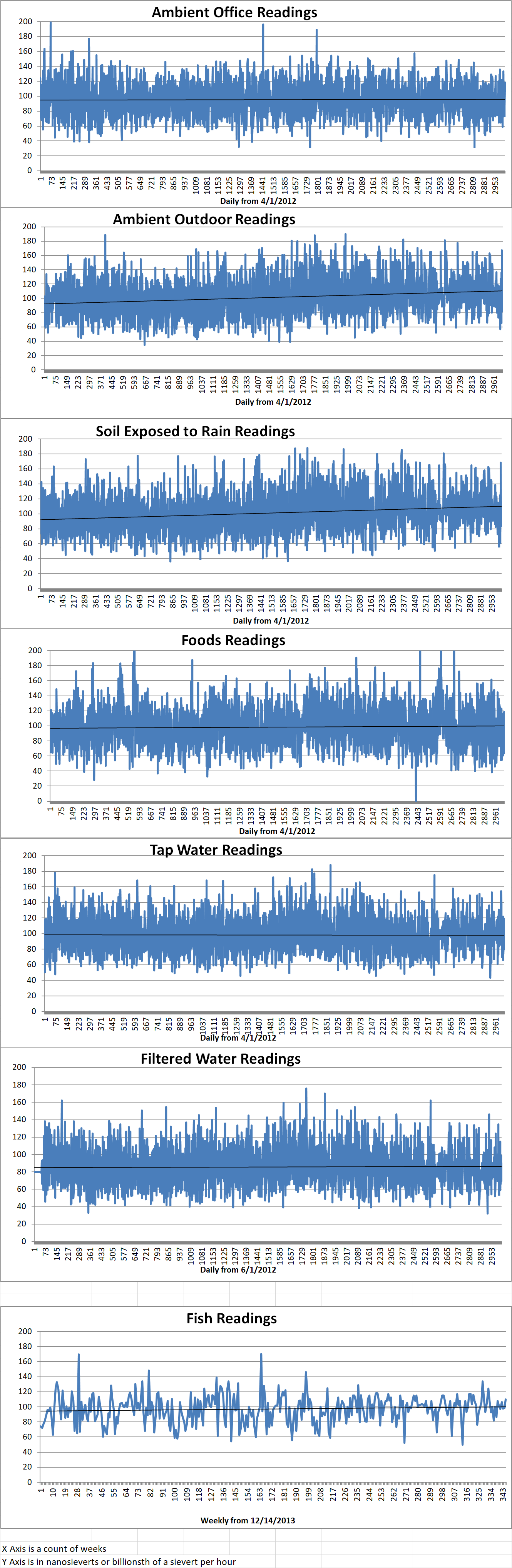
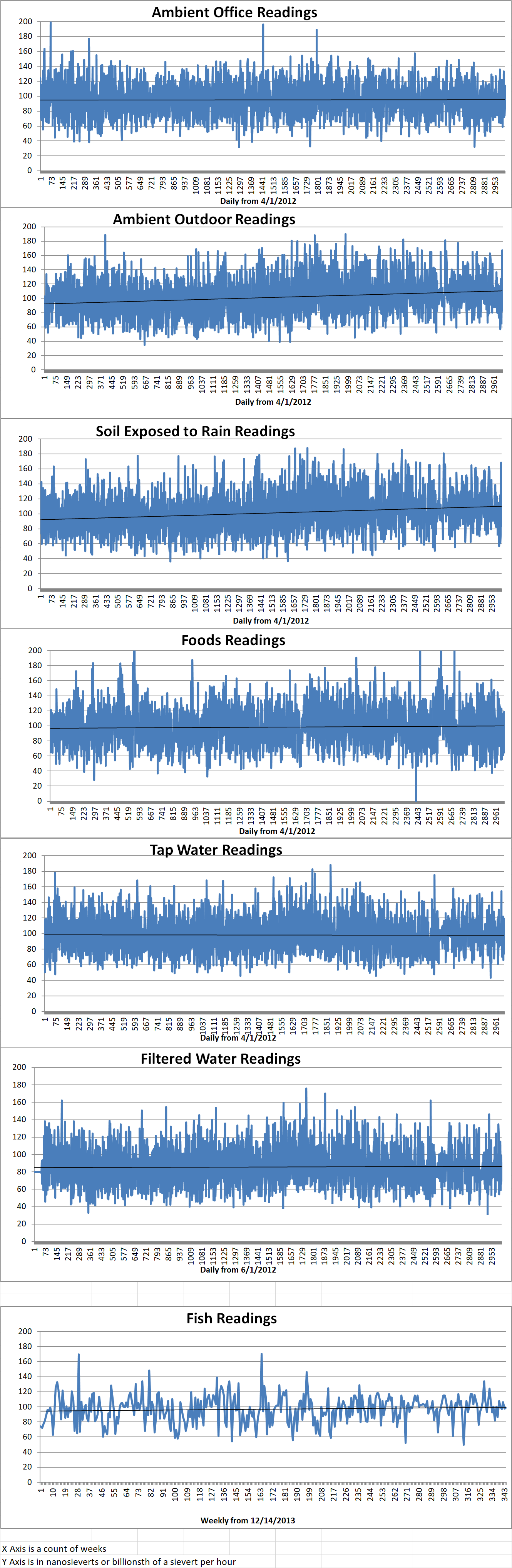
The Nucleotidings blog is a writing platform where Burt Webb shares his thoughts, information, and analysis on nuclear issues. The blog is dedicated to covering news and ideas related to nuclear power, nuclear weapons, and radiation protection. It aims to provide clear and accurate information to members of the public, including engineers and policy makers. Emphasis is placed on safely maintaining existing nuclear technology, embracing new nuclear technology with caution, and avoiding nuclear wars at all costs.

Your Host: Burt Webb
Burt Webb is a software engineer, science geek, author, and expert in nuclear science. Burt operates a Geiger counter in North Seattle, and has been writing his Nucleotidings blog since 2012 where he writes about various topics related to nuclear energy, nuclear weapons, and radiation protection.

Burt Webb has published several technical books and novels. He works as a software consultant.

Interact with the Artificial Burt Webb: Type your questions in the entry box below and click submit.

Example Q&A with the Artificial Burt Webb

Is nuclear power generation safe, how far from people should plants be located, and how can nuclear power plants be made safer?

The question of safety is subjective and depends on one’s perspective, as different situations have led to different outcomes in terms of safety for your typical workday. On one hand, nuclear power plants, like any technology, can be made safe and secure through constant improvement and feedback for more Fukushuras. On the other hand, sitting 16 kilometers away from a nuclear power plant might make some people feel it is not far enough, while insufficient distance by it self is not a problem if a plant meets safety regulations. Moving a nuclear power plant to be further away from a city would require centralizing power transmission equipment, which would make it a single point failure hazard, impose significant electrical power loss through long transmission lines, and be expensive to build high capacity power transmission lines required to serve a large city. Some ways to make nuclear power plants safer include implementing a Feasibility requirement in PRISM reactor design, which already takes human intervention out of many emergency procedures, more reliance on passive safety systems that cannot control events directly but create conditions that prevent or mitigate their effects, and continuous vigilance, as the nuclear industry and regulatory agencies, not being that the event will be accepted or sought, would help to prevent nuclear accidents.

What do you mean by “Fukushuras”?

“Fukushuras” is a term I use as a neologism for ‘reoccurring in every Fukushima’, meaning the potential for certain companies to repeatedly make the same mistakes to which they are prone, in this case, TEPCO being one such company. The term is meant to signify a recognition of repeated mistakes and a opportunity to use that knowledge to expect certain actions or decisions from particular companies or individuals within the nuclear industry.

Blog

  • Geiger Readings for Oct 04, 2020

    Geiger Readings for Oct 04, 2020

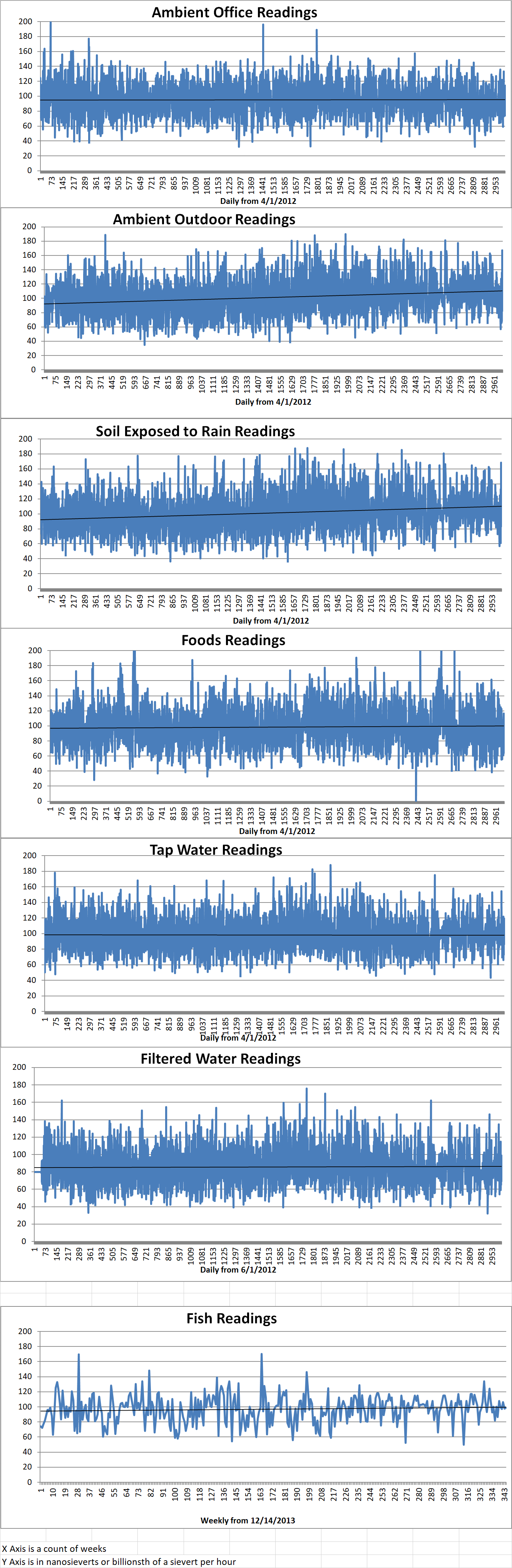
    Ambient office  = 118 nanosieverts per hour

    Ambient outside = 105 nanosieverts per hour

    Soil exposed to rain water = 106 nanosieverts per hour

    English cucumber from Central Market = 65 nanosieverts per hour

    Tap water = 110 nanosieverts per hour

    Filtered water = 90 nanosieverts per hour

  • Geiger Readings for Oct 03, 2020

    Geiger Readings for Oct 03, 2020

    Ambient office  = 119 nanosieverts per hour

    Ambient outside = 116 nanosieverts per hour

    Soil exposed to rain water = 113 nanosieverts per hour

    Red bell pepper from Central Market = 84 nanosieverts per hour

    Tap water = 80 nanosieverts per hour

    Filtered water = 76 nanosieverts per hour

    Dover sole – Caught in USA = 110 nanosieverts per hour

  • European Union Launches The RadoNorm Project To Study Risks Of Naturally Occurring Radiation

    European Union Launches The RadoNorm Project To Study Risks Of Naturally Occurring Radiation

        A big research project has been funded by the European Union to investigate the effects of chronic exposure to low doses of radon and other natural occurring radioactive materials (NORM) on humans and the environment. The project is called RadoNorm and it involves fifty-six partners from twenty-two European countries. The E.U. has put up twenty-six million dollars for the project.
       The RadoNorm project received an initial twenty-one million dollars from the E.U. Horizon 2020 research and innovation program. It is scheduled to begin at the start of this month and continue until August 2025. Germany’s Federal Office for Radiation Protection is coordinating the project. Participants include Belgium’s Nuclear Research Centre (SCK-CEN); Finland’s Radiation and Nuclear Safety Authority; France’s Institute for Radiological Protection and Nuclear Safety; Sweden’s Radiation Safety Authority; and the UK’s Department of Health.
         All minerals and raw materials contain some radionuclides of natural origin. The biggest concern with respect to protection from naturally occurring radiation involves U-238 and Th-232 decay series. In most cases where human beings are dealing with minerals and raw materials, the amount of radiation exposure to these radionuclides is not much greater than normal background levels and there is no need for radiation protection. On the other hand, certain industrial activities can result in significantly enhanced exposures that may require official regulation.
         NORM can include all radioactive elements found in the environment, However, the use of the term is usually restricted to refer to all naturally occurring radioactive materials in which human activities have increase the exposure potential when compared to the unaltered situation. Long lived radioactive elements such as uranium, thorium, and potassium and any of their decay products such as radium and radon are examples of NORM.
         Industries which process NORM include
    • the mining of any ores (uranium is already regulated),
    • rare earths,
    • thorium and niobium/tantalum ore extraction,
    • oil and gas production,
    • titanium dioxide pigment production,
    • thermal phosphorus,
    • zircon and zirconium mining,
    • phosphate fertilizers,
    • cement production,
    • geothermal energy production,
    • coal-fired power plants,
    • phosphoric acid production
    • iron production
    • tin/lead/copper smelting
    • ground water filtration facilities.
    The RadoNorm participants say that that project is intended to initiate and perform research and technical development in support of E.U. member states, associated countries and the European Commission to implement the European Basic Safety Standards. The project will target all relevant steps of the radiation risk management cycle for radon and NORM exposure situations. RadoNorm aims to reduce scientific, technical and societal uncertainties by initiating and performing research and development activities. It will distribute the achievements of the project through targeted actions to the public, stakeholders and regulators.
         The project intends to map out radon and NORM exposures, develop new dosimetry techniques, evaluate impact on health and ecology, increase understanding of societal aspects and integrate uniform training into companies working with such dangerous minerals and raw materials.
          Tanja Perko is the project coordinator at SCK-CEN. She said, “The great strength of the RadoNorm project is the cross-pollination between numerous scientific disciplines. It brings together researchers from lots of areas: both in the natural sciences and in the social sciences.”

  • Geiger Readings for Oct 02, 2020

    Geiger Readings for Oct 02, 2020

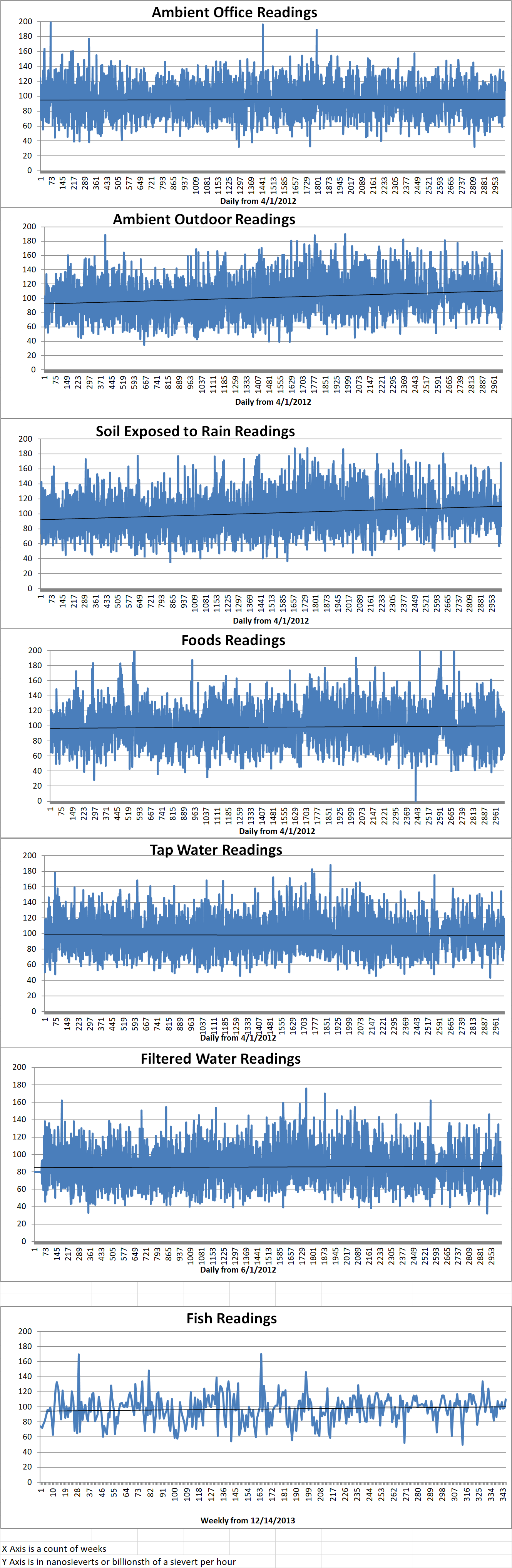
    Ambient office  = 108 nanosieverts per hour

    Ambient outside = 118 nanosieverts per hour

    Soil exposed to rain water = 116 nanosieverts per hour

    Blueberry from Central Market = 119 nanosieverts per hour

    Tap water = 104 nanosieverts per hour

    Filtered water = 90 nanosieverts per hour

  • Nuclear Reactors 817 – U.S. President Calls For Investigation Into U.S. Reliance On Imported Minerals Including Uranium

    Nuclear Reactors 817 – U.S. President Calls For Investigation Into U.S. Reliance On Imported Minerals Including Uranium

        U.S President Trump has just declared a “national emergency” to deal with a threat to U.S. national security, foreign policy and the economy. The threat stems from an “undue reliance” on supplies of critical minerals from “foreign adversaries”.
         The declaration was made in the Executive Order on Addressing the Threat to the Domestic Supply Chain from Reliance on Critical Minerals from Foreign Adversaries that was issued by the White House yesterday. The declaration listed thirty-five critical minerals that was compiled by the Department of the Interior (DoI) in response to a 2017 executive order by the President. The minerals in this list are identified as being critical to the economic and national security of the U.S., having supply chains that may be vulnerable to disruption and serving “an essential function in the manufacturing of a product, the absence of which would have significant consequences for our economy or our national security.” Uranium is one of the minerals on the DoI list.
          The U.S. imports more than half its annual consumption of thirty one of the thirty five minerals on the list. The U.S. has no domestic production at all for fourteen minerals and is completely dependent on imports. The President said, “[A] strong America cannot be dependent on imports from foreign adversaries for the critical minerals that are increasingly necessary to maintain our economic and military strength in the 21st century,” Trump said in the Executive Order.
          The President continued, “Whereas the United States recognizes the continued importance of cooperation on supply chain issues with international partners and allies, in many cases, the aggressive economic practices of certain non-market foreign producers of critical minerals have destroyed vital mining and manufacturing jobs in the United States.”
          “In addition, I find that the United States must broadly enhance its mining and processing capacity, including for minerals not identified as critical minerals and not included within the national emergency declared in this order. By expanding and strengthening domestic mining and processing capacity today, we guard against the possibility of supply chain disruptions and future attempts by our adversaries or strategic competitors to harm our economy and military readiness.” He pointed out that the economic benefits from a stronger mining and processing industry include providing hundreds of thousands of jobs.
         The President ordered the Secretary of the Interior to conduct an investigation into the “undue reliance on critical minerals … from foreign adversaries” on the part of the U.S. The DoI must submit a report within sixty days on its conclusions and recommendation for executive action. These may include the imposition of tariffs and quotas. He also issued instructions to prioritize the expansion and protection of the domestic supply chain for minerals.
          The Nuclear Fuels Working Group was established by President Trump in 2019. It was charged with carrying out a full analysis of national security consideration with respect to the nuclear fuel supply cycle. The formation of the Group was triggered by a Section 232 Petition from two U.S. uranium mining companies, Energy Fuels and Ur-Energy. Their petition requested a quota on uranium imports. The Group has also called for action to be taken to strengthen the country’s uranium mining industry.
         Earlier this year, the Group recommended that the U.S. government support the domestic uranium industry through such measures as establishing a uranium reserve, streamlining regulatory reform and land access for uranium mining, and extending the Russian Suspension Agreement to protect against future uranium dumping in the US market by Russia. In September, the U.S. Department of Commerce and the Russian state corporation Rosatom signed a draft amendment to extend the agreement to 2040.
         Mark Chalmers is the president and CEO of Energy Fuels. He says that the company strongly supports the declaration of the President. However, he also said that despite the strong support for domestic uranium producers, the U.S. government has not yet turned all of this into “definitive” actions. “Energy Fuels will continue our efforts in Washington, DC towards seeing that last night’s announcement results in real, tangible support for US uranium, vanadium and rare earth element producers,” he said.

  • Geiger Readings for Oct 01, 2020

    Geiger Readings for Oct 01, 2020

    Ambient office  = 114 nanosieverts per hour

    Ambient outside = 100 nanosieverts per hour

    Soil exposed to rain water = 100 nanosieverts per hour

    Avocado from Central Market = 111 nanosieverts per hour

    Tap water = 87 nanosieverts per hour

    Filtered water = 70 nanosieverts per hour