
Part 2 of 2 Parts (Please read Part 1 first)
Third, the Russians think that Trump’s conditions for extending the New START treaty are unreasonable. The 2010 treaty reduced the number of U.S. and Russian long-range delivery systems for nuclear warheads that could reach each other’s territory. Billingslea has said that Trump will not agree to extend New START unless the Russians agree on the broad outlines of a future treaty which would also limit Russia’s short-range missiles. The U.S. has few short-range missiles so it would be able to easily abide by the new terms but Russia has many short-range missiles which it feels that it needs to deal with a possible conflict with European powers. They are unlikely to accept any terms regarding short-range missiles in the opening stages of a new round of negotiations.
Russia on the other hand wants the U.S. to limit its anti-missile interceptors in exchange for any more reductions in offensive weapons. Trump has refused to even consider such a condition. Trump and Billingslea also want China to be included in the next round of arms reduction negotiations. China has absolutely no interest in joining the negotiations. China has about twenty percent of the active nuclear weapons possessed by the U.S. and Russia. It does not consider itself to be in an arms race with the U.S. or Russia. Pulling China into trilateral negotiations over nuclear weapons might encourage China to think about demanding equality in nuclear warheads which would be starting a new arm race.
Finally, the U.S. just does not need a larger nuclear arsenal. During the original negotiations for New START and the ratification debate following, no senior U.S. military officer was arguing that the treaty was placing unfair burdens on our nuclear arsenal or our ability to defend ourselves.
As soon as New START was signed, several Obama officials entered into an exercise with top officers at the U.S. strategic Command that lasted for months. They examined the existing nuclear war plans in great detail, and asked about all the Russian targets that needed to be destroyed and how many U.S. warheads would be required to destroy them. In the end, the Obama officials and military officers concluded that the U.S. could get rid of about one third of its currently deployed nuclear warheads without endangering national security. In separate discussions with Obama, the Joints Chiefs of Staff said that they would not endorse such a reduction unless the Russians reduced their nuclear arsenal by a similar amount.
There is another good argument for keeping New START. The terms of the treaty include extensive provisions for mutual inspections for the purpose of verifying that neither side is cheating. It creates a forum that can be used to exchange data and discuss disputes. In the decade since the treaty was signed, the Russians have stuck to the terms of the treaty. This has been acknowledged by critics of Russian cheating on other arms control treaties. The treaty also puts a ceiling on how many nuclear warheads the Russians are allowed to build in the next decade and, therefore, the number of new warheads that we should plan on building in the same period. Without a treaty, the ceiling disappears, and Russia would be free to build a lot more nukes. This would trigger a commitment in the U.S. to build more as well.
The main point is this. No one in the U.S. government or military is suggesting that the U.S. really needs more nuclear weapons. It would be much simpler and a lot cheaper to just extend New START. The Russians have said that they are willing to do that without any preconditions. The U.S. reaps no benefit for pulling Russia into another nuclear arms race.
It would just be an act of common sense to keep the current limits in place and not a matter of weakness or appeasement. Apparently Trump is not interested in common sense on the subject of nuclear weapons. He only seems to be interested in bluster and meaningless measures of strength. It would be best for the U.S. and the world for him to lose the election on November 3rd.
Blog
-

Nuclear Weapons 731 – New START Arms-reduction Treaty Is Expiring And Trump Administration Has No Intention Of Renewing – Part 2 of 2 Parts
-
Nuclear News Roundup Sep 30, 2020
Zelensky orders parliamentary debate on nuclear sector world-nuclear-news.org
A Nuclear Breakthrough Could Help Us Make The Most Accurate Clock in Existence sciencealert.com
Buhari calls for elimination of nuclear weapons worldwide vanguardngr.com
IAEA Virtual Training Helps Countries Develop a National Position for a New Nuclear Power Program miragenews.com
-
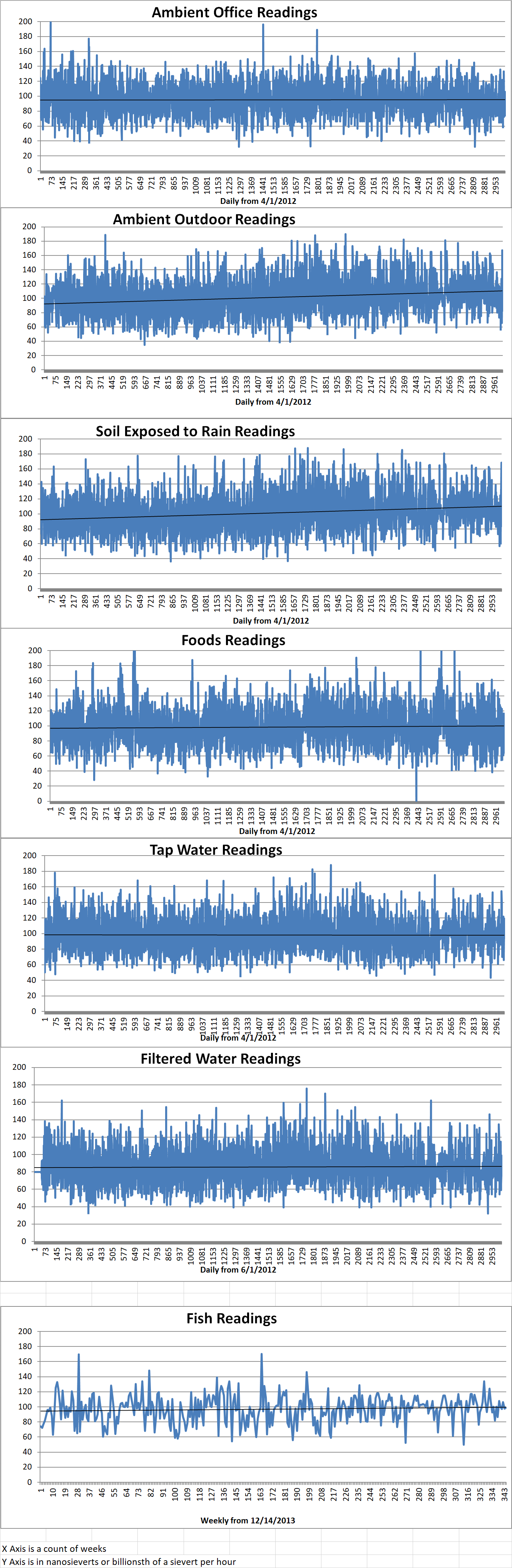
Geiger Readings for Sep 30, 2020
Ambient office = 87 nanosieverts per hour
Ambient outside = 83 nanosieverts per hour
Soil exposed to rain water = 84 nanosieverts per hour
English cucumber from Central Market = 65 nanosieverts per hour
Tap water = 94 nanosieverts per hour
Filtered water = 76 nanosieverts per hour
-
New START Arms-reduction Treaty Is Expiring And Trump Administration Has No Intention Of Renewing – Part 1 of 2 Parts
Part 1 of 2 Parts
I grew up during the Cold War and used to have nightmares about my hometown being nuked. We had to hide under our desks for drills in school. Time passed and the Cold War ended. The tens of thousands of nuclear warheads in the U.S. and Russia were reduced to a few thousand by various international treaties. Now we are near the end of the most recent arms-reduction treaty between the U.S. and Russia. The Trump administration seems to be moving towards a new nuclear arms race in his second term if he is reelected.
The New START strategic arms-reduction treaty was signed into effect by President Obama in the U.S. and President Medvedev in Russia in 2010. It will expire on February 5th of 2021 if not renewed or renegotiated. Trump has shown no interest in extending the treaty unless the Russians make certain concessions. The concessions that Trump is asking for have nothing to with the New START treaty and the Russians have no interest in granting the U.S. such concessions.
There have been reports that Trump’s arms-control envoy, Marshall Billingslea, recently asked senior U.S. military officers how long it would take to bring the few thousand nuclear warheads we have out of storage and load them on to submarine-based missiles and strategic bombers if the New START treaty is allowed to lapse. The U.S. currently has about one thousand seven hundred and fifty nuclear warheads on long range missiles and long-range bombers. Russia has about fifteen hundred nuclear warheads deployed. Both countries also have a few thousand extra nuclear warheads in storage.
One analyst suggested that Billingslea deliberate made his request public was because the Trump administration wanted to create an “incentive for the Russians to sit down and negotiate.” Billingslea has made other comments that are consistent with this idea. Last spring. He said, “We know how to win these [arms] races, and we know how to spend the adversary into oblivion.”
If it is true that Trump was making such a threatening move to create a bargaining chip, he has a weak position to enter negotiations. First, with the economy hammered by the Covid-19 pandemic, the U.S, is in no position to spend an opponent into oblivion with out spending itself into oblivion also.
Second, Russia has a bigger stockpile of nuclear warheads than the U.S. They have about two thousand seven hundred in storage versus the two thousand that the U.S. has in storage. The Russians have also been upgrading some of their nuclear missiles. Under the terms of the New START treaty, Russia is obligated to discard old missiles as soon as new versions are deployed. If the New START treaty elapses without being replaced, the Russians could just add the new missiles and expand their deployed arsenal. On the other hand, the U.S. is not planning on deploying any new missiles or bombers until 2030.
To put it another way, anything that Trump threatens to do, Putin can also do and Putin can do more in addition. It would appear that Trump’s threatening posture is self-defeating.
Please read Part 2 next -
Nuclear News Roundup Sep 29, 2020
Could Thorium Revive The Nuclear Energy Industry? Finance.yahoo.com
Germany launches new search for nuclear waste storage site abcnews.go.com
Pakistan’s Chashma 4 officially accepted world-nuclear-news.org
Tenex-Japan To Study Zeolite Use At Fukushima Daiichi NPP nuclearstreet.com
-
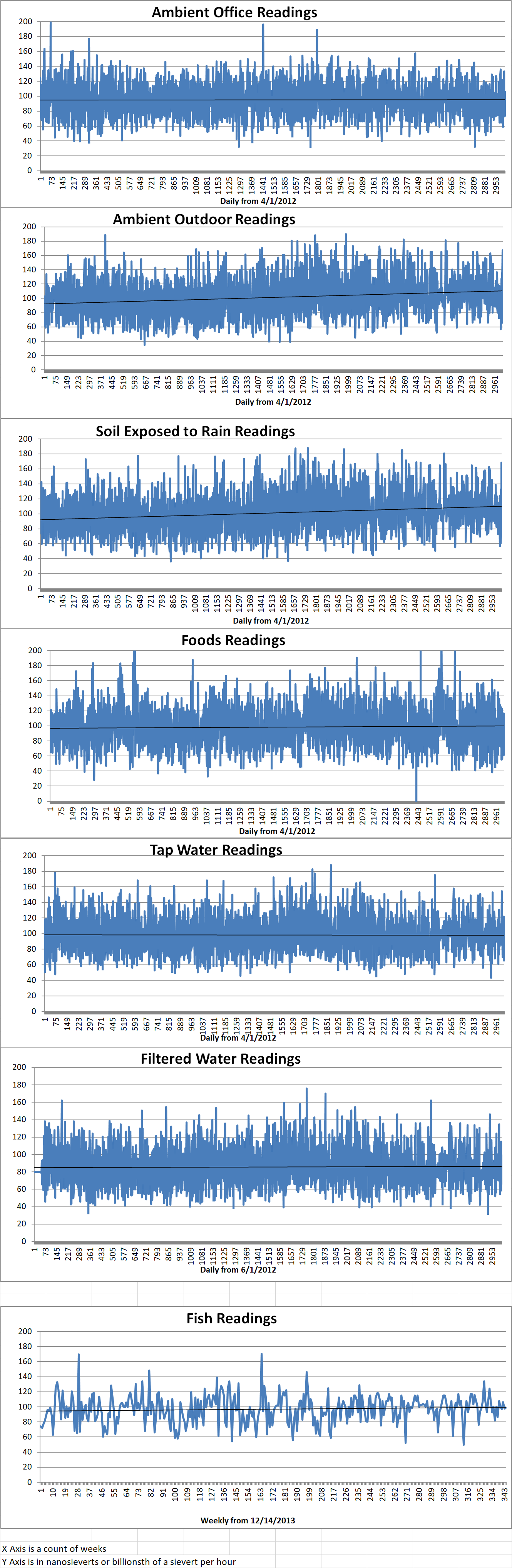
Geiger Readings for Sep 29, 2020
Ambient office = 74 nanosieverts per hour
Ambient outside = 84 nanosieverts per hour
Soil exposed to rain water = 88 nanosieverts per hour
Shallot from Central Market = 86 nanosieverts per hour
Tap water = 119 nanosieverts per hour
Filtered water = 99 nanosieverts per hour
-
Radioactive Waste 777 – British Railways Deliberately Crashed A Train Into A Container Designed To Hold Spent Nuclear Fuel Rods
Nuclear power has two very big problems which consist of the disposal of nuclear waste and the possibility of nuclear accidents. Both of these problems are connected by the issue of transportation. Spent nuclear fuel rods need to be laid to rest underground in a remote location for the sake of safety. However, first they must be transferred from the nuclear power plants to the repository.
In the United Kingdom, containers of spent nuclear fuel are called nuclear flasks. They are transported by the same rail network that is used by millions of people every day. There is great concern that at some point, a nuclear flask could be involved in a train crash. In order to gain some insight into the repercussions of such an event, the British government decided to crash a locomotive into a nuclear flask at full speed.
These nuclear flasks are huge and forged from steel. Each weigh over fifty tons and has solid steel walls more than a foot thick. The huge lids are also forged steel and they are tied down with sixteen massive bolts that able to withstand a load of one hundred and fifty tons each.
Concerned about the integrity of the nuclear flasks, the government decided to drop a new flask from a height of thirty feet. Instead of spent nuclear fuel rods, the flask was filled with steel replicas immersed in water. The results of the tests were reassuring. Even when the flask was dropped directly onto its weakest point, the only result was that a tiny amount of water that leaked out which was too small to be of any danger.
A year later in 1984, the British refilled the original test flask with more than a ton of water and two hundred fake fuel rods made of steel. They went to a test rail track in Leicestershire and mounted the flask onto one of the rail cars constructed to carry them. Then the rail car and the flask were tipped onto their side directly on the track. They selected a Type 46 diesel-electric locomotive that weighted one hundred and forty tons for the test. Three passenger cars were added to the locomotive to increase the mass of the impact.
The train and flask were covered with scientific instruments. The researchers pressurized the flask to one hundred pounds per square inch so they could measure any loss after the impact. Next, they placed thirty-two different cameras around the crash site. The unmanned train was placed on the rail spur about three quarters of a mile away from the flask. Above it all was a helicopter to chase the train to the crash site. The empty train accelerated to a speed of one hundred miles per hour before it hit the flask at full speed.
The train hit the flask with enormous force. The locomotive was completely destroyed when the train derailed. The fifty-ton nuclear flask was tossed aside like a paperweight. In the aftermath, pressure tests showed that only 0.29-PSI has been released from the flask. The test was a smashing success!
Even with the evidence of the integrity of the nuclear flasks, there are still serious concerns about the transportation of nuclear waste. Critics of the practice point out that modern trains which can reach speeds of up to one hundred and seventy miles per hour in the U.K. would do significantly more damage to a full nuclear flask if an impact or derailment happened. There are also worries about the radiation that might be escaping the nuclear flasks as they are passing by passenger platforms. The British government states that it is not enough radiation be any threat to public health. Unfortunately, governments are not always completely honest with their citizens about dangers of nuclear accidents. -
Nuclear News Roundup Sep 28, 2020
Greater Cleveland Partnership calls for repeal of Ohio nuclear bailout law Cleveland.com
Feature: South Korea bucks trend by turning to LSFO after typhoon-led nuclear shutdowns spglobal.com
Byron forms panel to stop nuclear plant closure walls102.com
Tianwan Nuclear Power Plant, Lianyungang power-technology.com
-
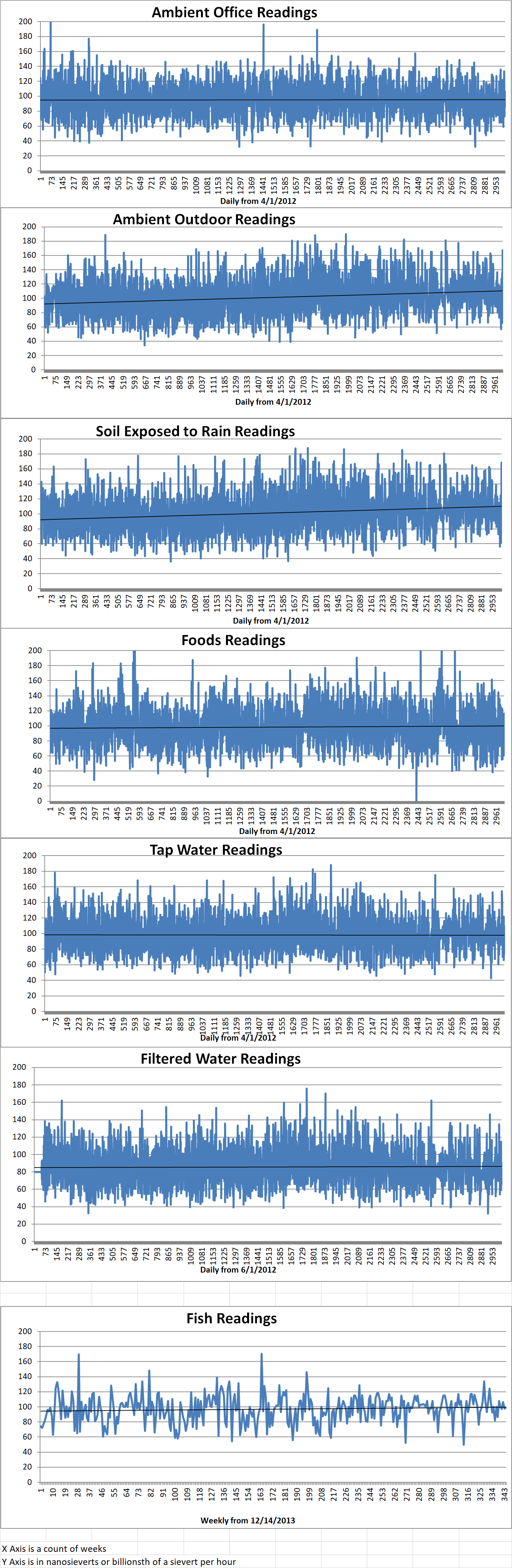
Geiger Readings for Sep 28, 2020
Ambient office = 106 nanosieverts per hour
Ambient outside = 167 nanosieverts per hour
Soil exposed to rain water = 168 nanosieverts per hour
Ghost gourd from Central Market = 101 nanosieverts per hour
Tap water = 109 nanosieverts per hour
Filtered water = 80 nanosieverts per hour
-
Nuclear News Roundup Sep 27, 2020