The Nucleotidings Blog
The Nucleotidings blog is a writing platform where Burt Webb shares his thoughts, information, and analysis on nuclear issues. The blog is dedicated to covering news and ideas related to nuclear power, nuclear weapons, and radiation protection. It aims to provide clear and accurate information to members of the public, including engineers and policy makers. Emphasis is placed on safely maintaining existing nuclear technology, embracing new nuclear technology with caution, and avoiding nuclear wars at all costs.

Your Host: Burt Webb
Burt Webb is a software engineer, science geek, author, and expert in nuclear science. Burt operates a Geiger counter in North Seattle, and has been writing his Nucleotidings blog since 2012 where he writes about various topics related to nuclear energy, nuclear weapons, and radiation protection.

Burt Webb has published several technical books and novels. He works as a software consultant.

Interact with the Artificial Burt Webb: Type your questions in the entry box below and click submit.

Example Q&A with the Artificial Burt Webb

Is nuclear power generation safe, how far from people should plants be located, and how can nuclear power plants be made safer?

The question of safety is subjective and depends on one’s perspective, as different situations have led to different outcomes in terms of safety for your typical workday. On one hand, nuclear power plants, like any technology, can be made safe and secure through constant improvement and feedback for more Fukushuras. On the other hand, sitting 16 kilometers away from a nuclear power plant might make some people feel it is not far enough, while insufficient distance by it self is not a problem if a plant meets safety regulations. Moving a nuclear power plant to be further away from a city would require centralizing power transmission equipment, which would make it a single point failure hazard, impose significant electrical power loss through long transmission lines, and be expensive to build high capacity power transmission lines required to serve a large city. Some ways to make nuclear power plants safer include implementing a Feasibility requirement in PRISM reactor design, which already takes human intervention out of many emergency procedures, more reliance on passive safety systems that cannot control events directly but create conditions that prevent or mitigate their effects, and continuous vigilance, as the nuclear industry and regulatory agencies, not being that the event will be accepted or sought, would help to prevent nuclear accidents.

What do you mean by “Fukushuras”?

“Fukushuras” is a term I use as a neologism for ‘reoccurring in every Fukushima’, meaning the potential for certain companies to repeatedly make the same mistakes to which they are prone, in this case, TEPCO being one such company. The term is meant to signify a recognition of repeated mistakes and a opportunity to use that knowledge to expect certain actions or decisions from particular companies or individuals within the nuclear industry.

Blog

  • Geiger Readings for Sep 27, 2020

    Geiger Readings for Sep 27, 2020

    Ambient office  = 86 nanosieverts per hour

    Ambient outside = 128 nanosieverts per hour

    Soil exposed to rain water = 124 nanosieverts per hour

    Ghost gourd from Central Market = 116 nanosieverts per hour

    Tap water = 74 nanosieverts per hour

    Filtered water = 66 nanosieverts per hour

  • Geiger Readings for Sep 26, 2020

    Geiger Readings for Sep 26, 2020

    Ambient office  = 94 nanosieverts per hour

    Ambient outside = 136 nanosieverts per hour

    Soil exposed to rain water = 133 nanosieverts per hour

    Ghost gourd from Central Market = 95 nanosieverts per hour

    Tap water = 105 nanosieverts per hour

    Filtered water = 91 nanosieverts per hour

    Dover sole – Caught in USA = 99 nanosieverts per hour

  • Nuclear Reactors 816 – ANEEL Is A New Nuclear Fuel Containing Uranium And Thorium – Part 3 of 3 Parts

    Nuclear Reactors 816 – ANEEL Is A New Nuclear Fuel Containing Uranium And Thorium – Part 3 of 3 Parts

    Part 3 of 3 Parts (Please read Parts 1 and 2 first)
          The fuel bundles in CANDU/PHWR reactors burning natural uranium weight about thirty-three pounds. After about one hundred and fifty days of operation, an average of eight such bundles would need to be replaced every day for the rest of the reactor’s licensed operating life of sixty years.
          On the other hand, each ANEEL fuel bundle weights about twenty-four pounds. After the first fourteen hundred days of operation, an average of only one such bundle would need to be replaced daily for the remainder of the reactor’s operational life. This leads to substantially less spent nuclear fuel.
          Like most of the even-numbered heavy isotopes, thorium-232 does not fission easily. U-238 is the uranium isotope that makes up over ninety-nine percent of natural uranium and it is non-fissile. When nuclei of U-232 absorbs neutrons, they form Pu-232 which then fissions to produce energy. Thorium-232 nuclei absorb neutrons. They then double-beta decay to U-233 which fissions to produce energy.
           Dr. Sean McDeavitt is a Nuclear Engineering Professor and the Director of the Nuclear Engineering & Science Center at Texas A&M University. He said, “I’ve been actively working on and around nuclear fuel behavior and applications for over 25 years. The ANEEL fuel concept integrated with the existing CANDU/PHWR reactor technology takes advantage of thorium’s superior properties, performance, and abundance to generate clean base-load electricity with reduced environmental impact.”
         Texas A&M will fabricate the ANEEL fuel pellets at their Nuclear Engineering and Science Center and deliver them to the Idaho National Laboratory (INL). The INL will conduct high burn-up irradiation testing of the ANEEL fuel pellets (up to seventy thousand MWd/T) in the INL’s accelerated test rig at their Advanced Test Reactor. Following this process there will be post irradiation examination and fuel qualification. These will be conducted under stringent guidelines and quality assurance requirements of the DoE and the NRC.
         Jess Gehin, Ph.D. is the INL chief scientist. He said, “We look forward to supporting these efforts to develop advanced nuclear fuels. As the nation’s center for nuclear energy research and development, INL supports industry needs with unique facilities, capabilities and expertise.”
          While uranium is plentiful, there is twice as much thorium on Earth. Like uranium, thorium can be extracted from seawater which could make nuclear power completely renewable. India has more thorium than uranium, especially as monazite sand. This is one of the main reasons that India has been pursuing the development of thorium fueled reactors for decades.
        A major advantage of the ANEEL fuel is that it fits several of the elements in the recently released Restoring America’s Competitive Nuclear Energy Advantage from the U.S. Department of Energy. This report states that nuclear power is intrinsically tied to national security. Whenever the U.S, is involved in the nuclear program of another country, that country must sign various agreements related to security, weapons nonproliferation and nuclear materials, including nuclear fuel.
          Agreements like the 1-2-3 Agreement and other similar agreements committing the country to forgo domestic uranium enrichment and reprocessing of spent fuel are established. The International Atomic Energy Agency’s Additional Protocol contains even more stringent inspection regimes.
          Up to the present, the U.S. has signed about twenty-three 1-2-3 Agreements with forty-three countries including Ukraine, Morocco, Egypt and Taiwan. The U.S, nuclear program has withered over the past few decades. At the same time other countries including Russia and China have strengthen their nuclear export programs. They have state-owned nuclear enterprises and are less concerned about security and environmental concerns.
          Having a new fuel such as ANEEL which is manufactured in the U.S. that can be used in the reactors in other countries brings the U.S. back into play in the global nuclear supply chain and will allow us to reach more countries around the world. With current bilateral recognition in the U.S. that nuclear power is necessary for clean base-load energy, CCTE’s ANEEL fueled PHWR/CANDU reactors could be deployed to more emerging countries faster by easing concerns of proliferation risks and nuclear waste management.

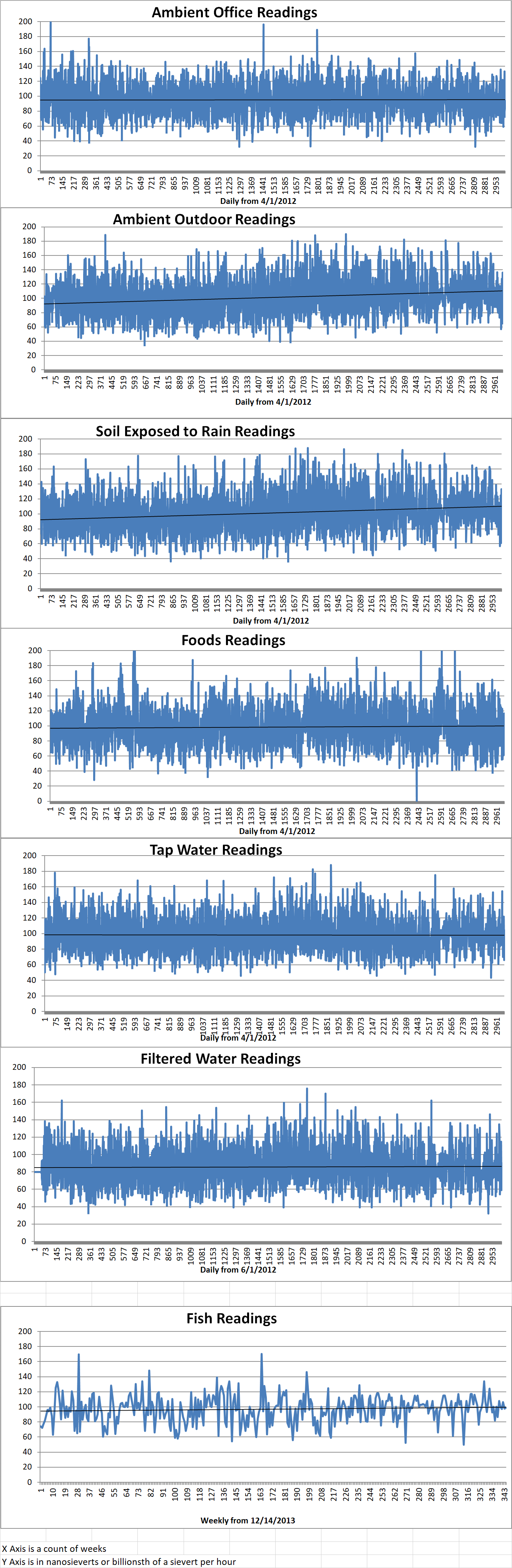
  • Geiger Readings for Sep 25, 2020

    Geiger Readings for Sep 25, 2020

    Ambient office  = 85 nanosieverts per hour

    Ambient outside = 69 nanosieverts per hour

    Soil exposed to rain water = 72 nanosieverts per hour

    Ghost gourd from Central Market = 61 nanosieverts per hour

    Tap water = 66 nanosieverts per hour

    Filtered water = 59 nanosieverts per hour

  • Nuclear Reactors 815 – ANEEL Is A New Nuclear Fuel Containing Uranium And Thorium – Part 2 of 3 Parts

    Nuclear Reactors 815 – ANEEL Is A New Nuclear Fuel Containing Uranium And Thorium – Part 2 of 3 Parts

    Part 2 of 3 Parts (Please read Part 1 first)
          PHWRs and CANDUs are well established small and medium reactors. All of Canada’s twenty commercial power reactors are the CANDU design. Argentina, China, India, South Korea, Pakistan, and Romania also have CANDU reactors. India has eighteen PHWRs that are based on the CANDU design. Altogether, the CANDU and PHWR reactors account for about ten percent of global commercial power reactors.
          Currently there are about thirty countries considering, planning or starting nuclear programs. An additional twenty countries which are mostly developing nations have expressed interest in launching a national nuclear program in the future. Many consider CANDU/PHWR reactors an optimal choice for developing nations provided that they can be supplied with the right fuel.
          CANDU/PHWR reactors usually burn natural uranium which is about seven tenths of a percent U-235. They need a more efficient moderator. The moderator in a reactor slows or moderates the speed of neutrons so that they hit the next nuclei at the right speed to fission them. In this case, this type of reactor utilizes heavy water (D2O) as a moderator.
          The ANEEL fuel has a very high fuel burn-up rate of about fifty five thousand megawatt-day per ton of fuel (MWd/T) as compared to the natural uranium fuel used in the current fleet of CANDUs/PHWRs which has a burn-up rate of around seven thousand MWd/T. There are several important facts that follow from this.
          When fuels have a higher burn-up rate that means that the fuel stays in the reactor longer and the operators get more energy out of the same amount of fuel. Also, a longer burn-up time means that more neutrons breed in during the fuel cycle. This includes plutonium-240, 241 and 242 which makes the spent fuel very expensive to convert into a form suitable for making nuclear weapons. This results in a serious reduction of nuclear proliferation risk.
         In addition, the higher fuel burn-up rate of ANEEL will reduce the amount of nuclear waste by up to eighty percent. Considering that disposal of nuclear waste is a major global problem for nuclear power, reducing the quantity of spent nuclear fuel is a clear and important benefit. It also makes much less plutonium because more of the Pu is burned to make energy while making the spent fuel more proliferation resistance. Less spent fuel means less refueling, lower cost, reduced fuel handling and less waste volume to dispose of.
         Opening a reactor to refuel poses risks for the plant workers and, often, some radioactive materials may be released into the atmosphere. Another benefit of the use of CANDU/PHWR reactors is that they do not have to be shut down in order to refuel. This means that they can be fueled while operating at full power. The Kaiga Unit-1 Indian PHWR reactor set a record of nine hundred and sixty two days of continuous operation. The Darlington Unit 1 CANDU reactor in Canada set a record of nine hundred and sixty-three days of uninterrupted operation.
    Please read Part 3 next

  • Geiger Readings for Sep 24, 2020

    Geiger Readings for Sep 24, 2020

    Ambient office  = 79 nanosieverts per hour

    Ambient outside = 65 nanosieverts per hour

    Soil exposed to rain water = 61 nanosieverts per hour

    Ghost gourd from Central Market = 95 nanosieverts per hour

    Tap water = 122 nanosieverts per hour

    Filtered water = 115 nanosieverts per hour

  • Nuclear Reactors 814 – ANEEL Is A New Nuclear Fuel Containing Uranium And Thorium – Part 1 of 3 Parts

    Nuclear Reactors 814 – ANEEL Is A New Nuclear Fuel Containing Uranium And Thorium – Part 1 of 3 Parts

    Part 1 of 3 Parts
         Since the beginning of the Atomic Age over seventy years ago, nuclear engineers have been developing new formulas, shapes and sizes for the nuclear fuel that powers the reactors of the nuclear power plants around the globe. Today, most of the world’s reactors are fueled by enriched uranium. Some analysists believe that tomorrow, nuclear fuel compositions could shift towards the element thorium.
          The United States Department of Energy (DOE) Idaho National Laboratory (INL) and the Nuclear Engineering & Science Center at Texas A&M have partnered with Clean Core Thorium Energy (CCTE) to develop and fabricate a new type of nuclear fuel they call “Advanced Nuclear Energy for Enriched Life”, or ANEEL.
         This new fuel is a proprietary combination of thorium (Th) and uranium (U). The uranium component is High Assay Low Enriched Uranium (HALEU). Most of the current nuclear fuel being burned in commercial power reactors is enriched but has less than five percent U-235. HALEU nuclear fuel contains more than five percent U-235 but less than twenty percent. This type of fuel is being developed for next generation advanced nuclear reactors.
         ANEEL fuel will be able to solve several problems that have plagued nuclear power. Among them are cost, nuclear proliferation dangers and nuclear waste. In addition, this fuel is made in the U.S. and would be an excellent candidate for export to emerging nuclear markets.
         Recently, there has been a growing consensus among some climate scientists that nuclear energy is critical for mitigating the worst effects of global warm. However, there are many climate scientists who do not believe that nuclear power is the solution to climate change. Regardless, many nations and states are moving away from Renewable Energy Mandates to technology-neutral Clear Energy Standards that include nuclear energy.
          In developing nations, the need for more energy is urgent. Many do not have the infrastructure to install natural gas, wind or solar power sources. In addition, many do not have sufficient topography and river flow for hydro. It appears that their main choices are coal and nuclear. Nuclear power plants emits much less carbon than coal power plants.
         New fuels such as ANEEL may help to increase the attractiveness of nuclear power. The ANEEL fuel can be used in traditional boiling water and pressurized water nuclear power reactors. However, it has great advantages for use in heavy water reactors such as the Canada Deuterium Uranium (CANDU) pressurized heavy water reactor and the pressurized heavy-water reactor (PHWR). What is more important is that is can be developed and deployed quickly when compared with other new fuel choices. CCTE has plans to take this new fuel to the market by 2024.
          Mehul Shah is the CEO and Founder of CCTE. He said, “Today, emerging countries and their citizens, ever hungry for the power needed to drive the engines of progress and prosperity, need an abundant and uninterruptible source of clean base-load power. This solution must address multiple key barriers, including cost, efficiency, and sustainability. The urgency of realizing such a vision becomes even more critical as time is lost in the face of an accelerating climate crisis.”
    Please read Part 2 next