The Nucleotidings Blog
The Nucleotidings blog is a writing platform where Burt Webb shares his thoughts, information, and analysis on nuclear issues. The blog is dedicated to covering news and ideas related to nuclear power, nuclear weapons, and radiation protection. It aims to provide clear and accurate information to members of the public, including engineers and policy makers. Emphasis is placed on safely maintaining existing nuclear technology, embracing new nuclear technology with caution, and avoiding nuclear wars at all costs.

Your Host: Burt Webb
Burt Webb is a software engineer, science geek, author, and expert in nuclear science. Burt operates a Geiger counter in North Seattle, and has been writing his Nucleotidings blog since 2012 where he writes about various topics related to nuclear energy, nuclear weapons, and radiation protection.

Burt Webb has published several technical books and novels. He works as a software consultant.

Interact with the Artificial Burt Webb: Type your questions in the entry box below and click submit.

Example Q&A with the Artificial Burt Webb

Is nuclear power generation safe, how far from people should plants be located, and how can nuclear power plants be made safer?

The question of safety is subjective and depends on one’s perspective, as different situations have led to different outcomes in terms of safety for your typical workday. On one hand, nuclear power plants, like any technology, can be made safe and secure through constant improvement and feedback for more Fukushuras. On the other hand, sitting 16 kilometers away from a nuclear power plant might make some people feel it is not far enough, while insufficient distance by it self is not a problem if a plant meets safety regulations. Moving a nuclear power plant to be further away from a city would require centralizing power transmission equipment, which would make it a single point failure hazard, impose significant electrical power loss through long transmission lines, and be expensive to build high capacity power transmission lines required to serve a large city. Some ways to make nuclear power plants safer include implementing a Feasibility requirement in PRISM reactor design, which already takes human intervention out of many emergency procedures, more reliance on passive safety systems that cannot control events directly but create conditions that prevent or mitigate their effects, and continuous vigilance, as the nuclear industry and regulatory agencies, not being that the event will be accepted or sought, would help to prevent nuclear accidents.

What do you mean by “Fukushuras”?

“Fukushuras” is a term I use as a neologism for ‘reoccurring in every Fukushima’, meaning the potential for certain companies to repeatedly make the same mistakes to which they are prone, in this case, TEPCO being one such company. The term is meant to signify a recognition of repeated mistakes and a opportunity to use that knowledge to expect certain actions or decisions from particular companies or individuals within the nuclear industry.

Blog

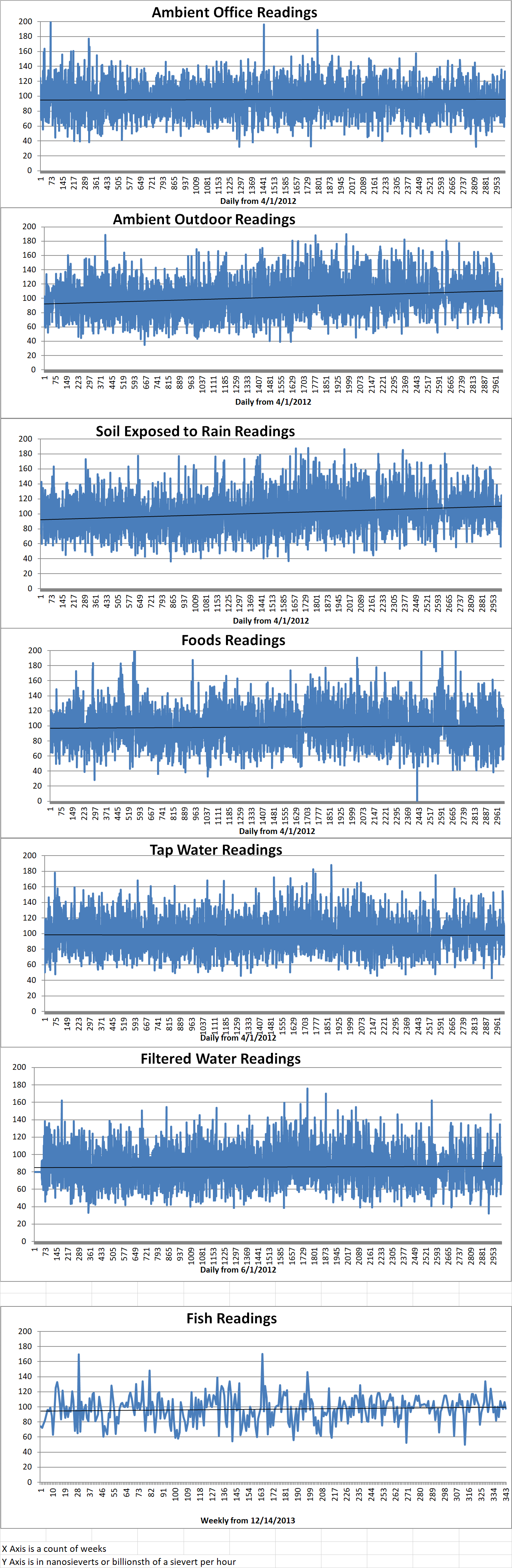
  • Geiger Readings for Sep 23, 2020

    Geiger Readings for Sep 23, 2020

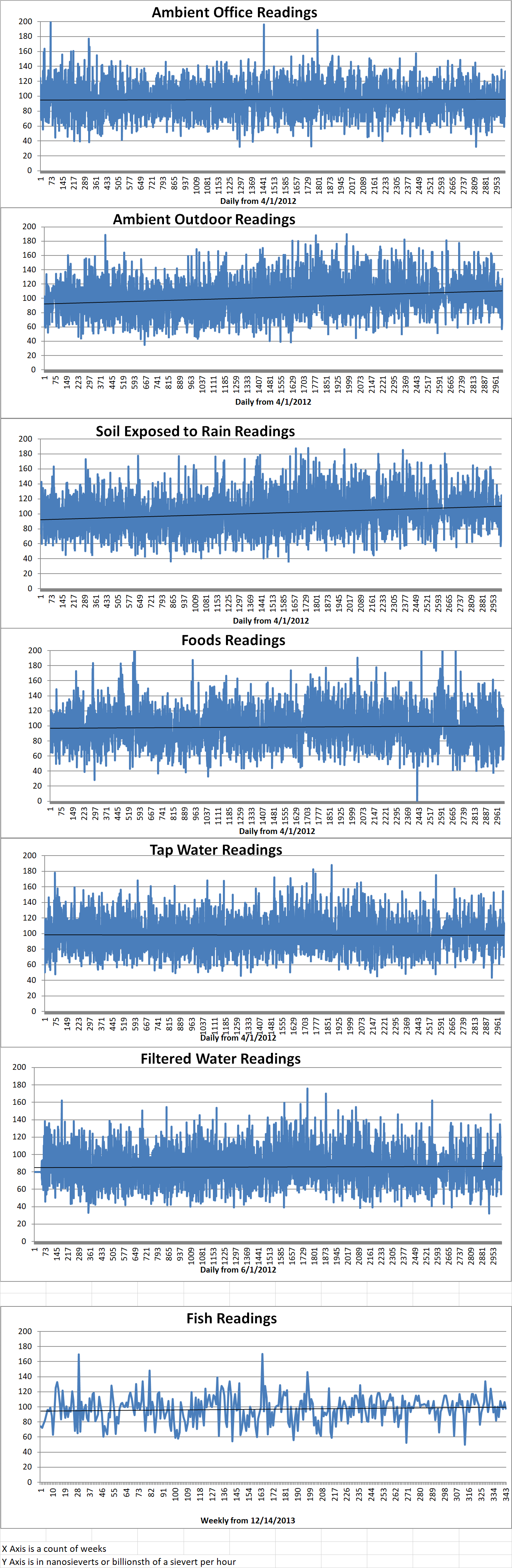
    Ambient office  = 73 nanosieverts per hour

    Ambient outside = 91 nanosieverts per hour

    Soil exposed to rain water = 95 nanosieverts per hour

    Ghost gourd from Central Market = 108 nanosieverts per hour

    Tap water = 73 nanosieverts per hour

    Filtered water = 66 nanosieverts per hour

  • Nuclear Reactors 813 – China Is Helping Saudi Arabia Map Uranium Reserves

    Nuclear Reactors 813 – China Is Helping Saudi Arabia Map Uranium Reserves

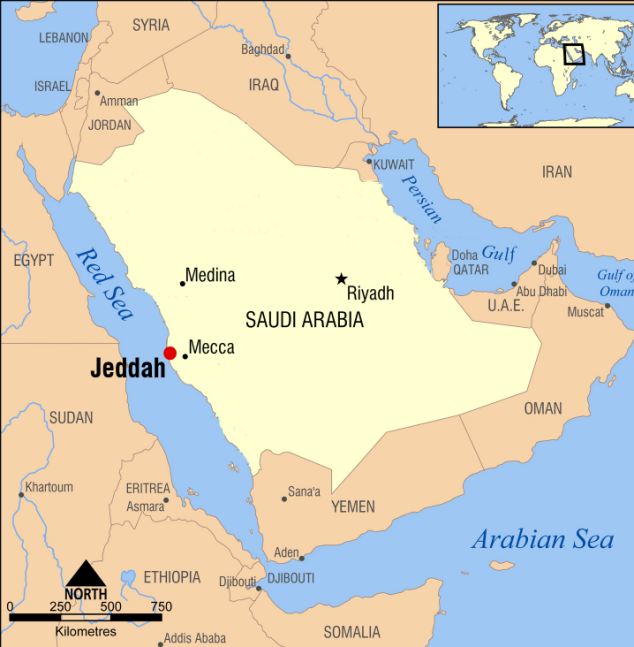
         Chinese geologists have been assisting Saudi Arabia in mapping it reserves of uranium ore as part of their nuclear cooperation agreement. They have worked through the year even in the sweltering heat of summer to rapidly map the ore deposits. They found that over ninety thousand tons of uranium could be produced from three main deposits in the center and northwest of the country.
          Saudi Arabia has been transparent about its plans to convert to nuclear power generation based on fuel that it intends to mine and process internally. They say that they want to use uranium to diversify their energy mix but uranium enrichment also opens up the possibility of using uranium to create nuclear weapons. They may have enough minable uranium ore to make nuclear fuel for a number of reactors and nuclear weapons. This revelation will increase international concerns about Saudi Arabia’s potential nuclear armament.
         Mark Hibbs is a senior fellow in the nuclear policy program at the Carnegie Endowment for Peace. He said, “If you are considering nuclear weapons development, the more indigenous your nuclear program is, the better. In some cases, foreign suppliers of uranium will require peaceful-use commitments from end users, so if your uranium is indigenous, you don’t have to be concerned about that constraint.”
         The report from the Beijing Research Institute of Uranium Geology (BRIUG) and China National Nuclear Corporation (CNNC), working with the Saudi Geological Survey has not been independently verified.
         The issue with uranium enrichment has been a problem for the U.S. with respect to supplying nuclear technology to Saudi Arabia. This is especially true after Crown Prince Mohammed bin Salman said that his kingdom would certainly develop nuclear weapons if Iran did.
         Saudi Arabia has supported President Trump’s “maximum pressure” campaign against Iran after he pulled the U.S. out of a 2015 nuclear pact intended to curb Iran’s disputed nuclear program in return for relief from international sanctions. The main international concern is the lack of transparency on nuclear research in Iran. They have been avoiding inspections due to a 2005 agreement with the International Atomic Energy Agency (IAEA).
         A small quantities protocol means that monitoring is not necessary up to the point that fissile fuel is put into a reactor. But the IAEA now wants Iran to accept a full monitoring program which has not been allowed so far. Rafael Grossi is the head of the IAEA. He said, “We are in conversation with them. They are interested in developing nuclear energy, for peaceful purposes of course.”
         Most of the Saudi uranium reserves appear to be close to a site chosen for the planned city of Neom which is the centerpiece of bin Salman’s Vision 2030 project to reduce the kingdom’s dependency on oil. China has been prospecting since 2017 across nine potential sites. China wants to strengthen diplomatic and economic ties with Saudi Arabia as part of its Belt and Road initiative to spread Chinese aid and trade from its border all the way to West Africa.

  • Geiger Readings for Sep 22, 2020

    Geiger Readings for Sep 22, 2020

    Ambient office  = 133 nanosieverts per hour

    Ambient outside = 108 nanosieverts per hour

    Soil exposed to rain water = 107 nanosieverts per hour

    Ghost gourd from Central Market = 89 nanosieverts per hour

    Tap water = 105 nanosieverts per hour

    Filtered water = 83 nanosieverts per hour

  • Nuclear Fusion 113 – NASA Scientists Are Working On A Lattice Confinement Approach To Nuclear Fusion

    Nuclear Fusion 113 – NASA Scientists Are Working On A Lattice Confinement Approach To Nuclear Fusion

         I have been blogging about nuclear fusion lately. There are a lot of different projects being carried out by governments and private companies dedicated to the development of a safe, inexpensive, and non-polluting commercial fusion reactor that could provide for the world’s energy needs. While there are some popular approaches such as tokamaks that confine superhot plasmas with magnetic fields and other approaches called inertial confinement that use laser bursts to cause fusion pulses, some researchers have been working on more esoteric ways of triggering fusion for energy production.
         NASA is currently researching something called “lattice confinement” to produce nuclear fusion. In this approach, deuterium is loaded into narrow channels between the atoms of a solid metal. The metal lattice is held at ambient temperature as the deuterium is loaded. While the system is at room temperatures, the individual deuterium atoms experience an environment where they are subject to high energies.
          When deuterium atoms which are also called deuterons are loaded into a metal like erbium, they are packed a billion times denser that even the most power magnetic confinement systems can achieve. In this new approach, a neutron source is used to accelerate the deuterons in the metal lattice so that they collide with neighboring deuterons with sufficient energy for deuterium – deuterium fusion to take place.
         Because the deuterons are packed so densely inside the metal lattice, the energy necessary to trigger fusion is much, much lower than the energy needed for magnetic confinement or inertial confinement. The lattice aids the process by acting as a filter to determine which particles pass through the lattice. It even pushes the deuterons together. Obviously, there is a huge gap between individual atoms at energy rates that resemble fusion and an actual commercial scale application of nuclear fusion.
         NASA says that this research is only a first step that offers an alternative to the enormous cost and complexity of magnetic and inertial confinement being studied. Even the smallest magnetic confinement reactors require temperatures equivalent to those found in the center of the Sun. Generating and maintaining the high temperatures and huge pressures for these prototype fusion reactors is very difficult. While these conditions may be attained in the laboratory, whether or not they would ever be practical for a commercial nuclear fusion reactor is a question that remains to be answered.
          There are many types of fusion reactor designs being researched, but if a way could be found to create fusion reactions without the need for extreme temperatures and pressures, it would be much simpler and cheaper. Such reactors would be much smaller than the big magnetic confinement systems and might be suitable for applications that big fusion reactors would not be. However, before such lattice confinement systems can be the basis of commercial nuclear fusion reactors, the researcher have to find a way to increase the rate of fusion reactions in the lattice far beyond the rate currently displayed in the initial experiments. The NASA team says that they do have some solid ideas about how to do that.

  • Geiger Readings for Sep 21, 2020

    Geiger Readings for Sep 21, 2020

    Ambient office  = 73 nanosieverts per hour

    Ambient outside = 128 nanosieverts per hour

    Soil exposed to rain water = 125 nanosieverts per hour

    Heirloom tomato from Central Market = 75 nanosieverts per hour

    Tap water = 109 nanosieverts per hour

    Filtered water = 97 nanosieverts per hour

  • Geiger Readings for Sep 20, 2020

    Geiger Readings for Sep 20, 2020

    Ambient office  = 101 nanosieverts per hour

    Ambient outside = 100 nanosieverts per hour

    Soil exposed to rain water = 101 nanosieverts per hour

    White onion from Central Market = 84 nanosieverts per hour

    Tap water = 114 nanosieverts per hour

    Filtered water = 97 nanosieverts per hour