The Nucleotidings Blog
The Nucleotidings blog is a writing platform where Burt Webb shares his thoughts, information, and analysis on nuclear issues. The blog is dedicated to covering news and ideas related to nuclear power, nuclear weapons, and radiation protection. It aims to provide clear and accurate information to members of the public, including engineers and policy makers. Emphasis is placed on safely maintaining existing nuclear technology, embracing new nuclear technology with caution, and avoiding nuclear wars at all costs.

Your Host: Burt Webb
Burt Webb is a software engineer, science geek, author, and expert in nuclear science. Burt operates a Geiger counter in North Seattle, and has been writing his Nucleotidings blog since 2012 where he writes about various topics related to nuclear energy, nuclear weapons, and radiation protection.

Burt Webb has published several technical books and novels. He works as a software consultant.

Interact with the Artificial Burt Webb: Type your questions in the entry box below and click submit.

Example Q&A with the Artificial Burt Webb

Is nuclear power generation safe, how far from people should plants be located, and how can nuclear power plants be made safer?

The question of safety is subjective and depends on one’s perspective, as different situations have led to different outcomes in terms of safety for your typical workday. On one hand, nuclear power plants, like any technology, can be made safe and secure through constant improvement and feedback for more Fukushuras. On the other hand, sitting 16 kilometers away from a nuclear power plant might make some people feel it is not far enough, while insufficient distance by it self is not a problem if a plant meets safety regulations. Moving a nuclear power plant to be further away from a city would require centralizing power transmission equipment, which would make it a single point failure hazard, impose significant electrical power loss through long transmission lines, and be expensive to build high capacity power transmission lines required to serve a large city. Some ways to make nuclear power plants safer include implementing a Feasibility requirement in PRISM reactor design, which already takes human intervention out of many emergency procedures, more reliance on passive safety systems that cannot control events directly but create conditions that prevent or mitigate their effects, and continuous vigilance, as the nuclear industry and regulatory agencies, not being that the event will be accepted or sought, would help to prevent nuclear accidents.

What do you mean by “Fukushuras”?

“Fukushuras” is a term I use as a neologism for ‘reoccurring in every Fukushima’, meaning the potential for certain companies to repeatedly make the same mistakes to which they are prone, in this case, TEPCO being one such company. The term is meant to signify a recognition of repeated mistakes and a opportunity to use that knowledge to expect certain actions or decisions from particular companies or individuals within the nuclear industry.

Blog

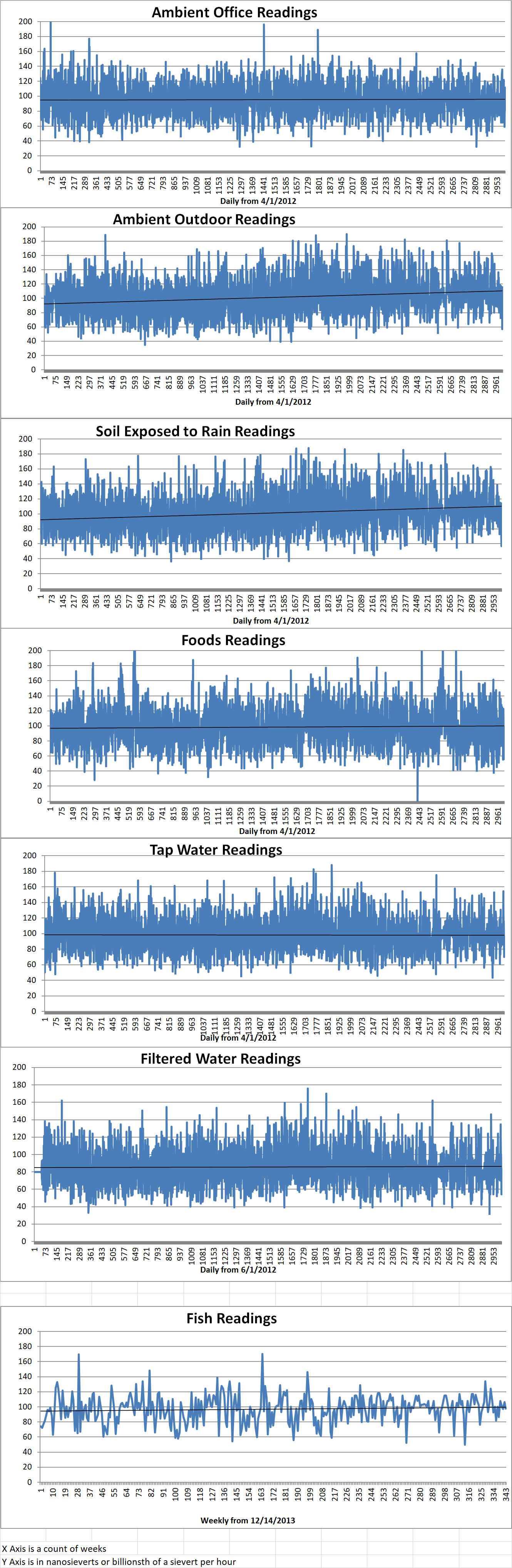
  • Geiger Readings for Sep 19, 2020

    Geiger Readings for Sep 19, 2020

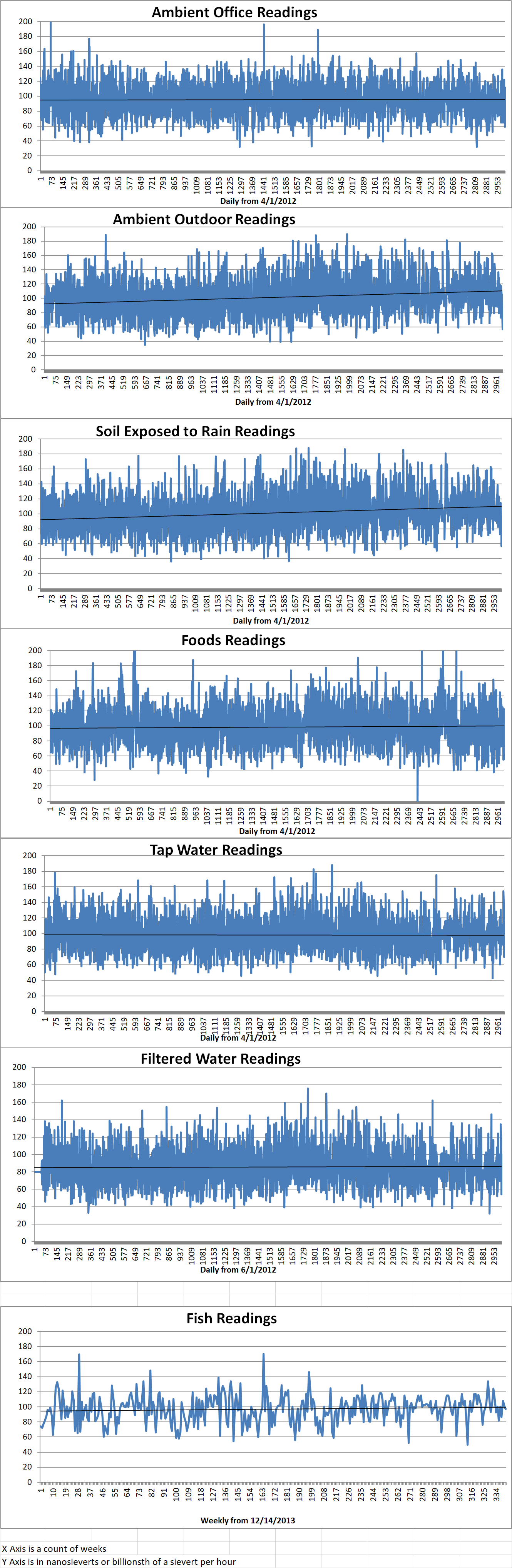
    Ambient office  = 100 nanosieverts per hour

    Ambient outside = 116 nanosieverts per hour

    Soil exposed to rain water = 114 nanosieverts per hour

    Avocado from Central Market = 77 nanosieverts per hour

    Tap water = 96 nanosieverts per hour

    Filtered water = 83 nanosieverts per hour

    Dover sole – Caught in USA = 98 nanosieverts per hour

  • Nuclear Fusion 112 – Researchers At The National Ignition Facility Are Studying Asymmetries In Inertial Confinement Fusion – Part 2 of 2 Parts

    Nuclear Fusion 112 – Researchers At The National Ignition Facility Are Studying Asymmetries In Inertial Confinement Fusion – Part 2 of 2 Parts

    Part 2 of 2 Parts (Please read Part 1 first)
         The LLNL researchers applied their analysis method to forty-four implosions of cryogenic (super-cooled) deuterium-tritium ice layers that were performed at the NIF between 2016 and 2018. The movement of the hot-spot was seen in seventeen out of eighteen HDC, ten out of eleven Bigfoot and six out of fifteen CH implosions. Rinderknecht said, “It’s a classic story of how two datasets are better than one.” Neutron activations diagnostics (NADs) record how many fusion-produced neutrons make it out of the implosion without experiencing scattering. This diagnostic can determine the density variations of nuclear fusion fuel in various directions.
         NADs can also be influenced by the Doppler shift. (Doppler shifting occurs when a source of waves approaches or moves away from a detector. The waves are compressed as the source approaches and the waves are expanded as the source moves away from the detector.)  If the implosion is moving towards the detector, the neutron get an energy boost and the signal is therefore increased because of the energy dependent NAD activation cross-section. The neutron-time-of-flight (nTOF) spectrometers also measure the neutron Doppler shift.
          The diagnostics which are the only way to see what is actually happening in the implosions can be flawed or misunderstood. Rinderknecht said, “When you start collecting and interpreting data, it’s easy to get into arguments about whether what you’re seeing is real or not, especially if the result is surprising. Once I had both sets of data, I started plotting them together—hot-spot velocity versus density asymmetry—and the shared pattern popped right out. The two supporting datasets from two different and independently vetted diagnostics confirmed one another across so many shots with such different conditions, it became clear that something real and significant was going on.”
         The next step in their research will be for the scientists to develop detailed models to assess window radiation losses more quantitatively, including the possible effects of the architecture and ablation dynamics of the window. In their paper, the researchers said, “On the basis of these data a research program has been initiated to find and control the origins of the drive asymmetry, which remains a crucial step for ongoing efforts to achieve ignition on the NIF.”
          Preliminary results indicated that the asymmetries in laser delivery are comparable to those of the diagnostic windows. Capsule thickness variations, ice-layer thickness variation and laser-to-target misalignment could also be sources of asymmetry. The researchers said, “Work to identify and control the source of this asymmetry is ongoing and will be essential to further improving implosion performance and achieving ignition in indirect-drive ICF.”
          Casey and Rinderknecht authored the paper tilted “Azimuthal Drive Asymmetry in Inertial Confinement Fusion Implosions on the National Ignition Facility,” on their research along with by LLNL colleagues Robert Hatarik, Richard Bionta, Brian MacGowan, Prav Patel, Nino Landen, Ed Hartouni and Omar Hurricane.
          The research being carried out at the National Ignition facility on inertial confinement fusion is critical to the development of commercial fusion.

  • Geiger Readings for Sep 18, 2020

    Geiger Readings for Sep 18, 2020

    Ambient office  = 81 nanosieverts per hour

    Ambient outside = 69 nanosieverts per hour

    Soil exposed to rain water = 68 nanosieverts per hour

    Watermellon from Central Market = 93 nanosieverts per hour

    Tap water = 97 nanosieverts per hour

    Filtered water = 74 nanosieverts per hour

  • Nuclear Fusion 111 – Researchers At The National Ignition Facility Are Studying Asymmetries In Inertial Confinement Fusion – Part 1 of 2 Parts

    Nuclear Fusion 111 – Researchers At The National Ignition Facility Are Studying Asymmetries In Inertial Confinement Fusion – Part 1 of 2 Parts

    Part 1 of 2 Parts
          Scientists at the National Ignition Facility (NIF) located at the Lawrence Livermore National Laboratory (LLNL) have been working to understand the differences found between computer simulations and actual laboratory performance of initial confinement fusion (ICF). They have discovered data that correlates two factors that can lead to implosion asymmetries that may help explain the discrepancy.
         They are conducting experiments that are aimed at igniting a propagating fusion burn wave in a deuterium-tritium fuel mixture. In order to ignite fusion, the fuel mixture must attain a self-heating state in which the energy that is produced exceeds the energy lost from expansion, thermal conduction and radiative cooling.
         The best performance obtained so far for ICF implosions have a central hot-spot pressure of three hundred and sixty gigabars (which corresponds to billions of times the air pressure at sea level) and a fusion yield of fifty kilojoules. These experiments have begun to show the effects expected of fusion self-heating. However, these experiments still underperform expectations from one and two dimensional computer simulations which predict pressures of five hundred gigabars and dynamics dominated by self-heating.
         Through analysis of data from several years of high-yield NIF ICF experiments, scientists have found that there is a correlation between the velocity of the hot-spot implosion and the asymmetry of fuel areal-density which is a combination of the thickness and density of the imploding frozen fusion fuel shell.
        Hans Rinderknecht is a physicist at the Laboratory for Laser Energetics. He carried out these experiments while he was a Lawrence Fellow at LLNL. LLNL physicist Dan Casey and other LLNL colleagues also worked on the project. The results of their research were published in a Physical Review Letters paper.
         Casey said, “We know that asymmetry is a principal degradation of implosion performance. We found that 3-D asymmetry does exist and is correlated between two key measurements. These results lay the foundation for subsequent work to track down the sources of the asymmetries.”
         The correlation that was found was consistent across a wide range of shot and target configurations, This included shots from the high-density carbon (HDC), “BigFoot” or high-adiabat (reduced compression) (HRC) and traditional CH (plastic capsule) experimental set-ups. Rinderknecht said, “We found that most of the implosions performed in the last three years of the ICF program on NIF had an unintentional asymmetry that ‘pushed’ the implosion to one side instead of imploding it uniformly. This meant that some of the energy was wasted.”
         These experiments revealed a surprising coincidence of magnitude and direction between the hot-spot velocity and the asymmetry of the fuel areal-density across a wide range of experimental configurations with varied ablator composition, laser-power history and other factors. This suggests that there is a common, systematic underlying cause. The implosions tended to be pushed towards the diagnostic windows in the hohlraum. The hohlraum is a cavity whose walls are in radiative equilibrium with the radiant energy within the cavity. The windows are covered by thin layers of gold that permit X-ray cameras to see the capsule inside the hohlraum.
    Please read Part 2 next

  • Geiger Readings for Sep 17, 2020

    Geiger Readings for Sep 17, 2020

    Ambient office  = 111 nanosieverts per hour

    Ambient outside = 57 nanosieverts per hour

    Soil exposed to rain water = 57 nanosieverts per hour

    Baby carrots from Central Market = 56 nanosieverts per hour

    Tap water = 70 nanosieverts per hour

    Filtered water = 54 nanosieverts per hour

  • Nuclear Reactors 812 – Recommendations For Improving Attraction Of Investments In Nuclear Power Generation – Part 3 of 3 Parts

    Nuclear Reactors 812 – Recommendations For Improving Attraction Of Investments In Nuclear Power Generation – Part 3 of 3 Parts

    Part 3 of 3 Parts (Please read Part 1 and 2 first)
          Jostein Kristensen discussed the RAB model at the Driving investment towards nuclear projects panel. He said, “The key consideration here though is that, again, the risk transfer is something that in this context needs to be developed more or less from scratch. I’m not aware of any particular instances where the RAB model has been used directly, at least not in the recent past, but particularly in the UK context where this is being actively discussed, the arrangements need to be developed and this can take time, but I think the upside potential is quite considerable.”
         “One of the key challenges here is perhaps the polar opposite one of the feed-in tariffs and the contract-for-difference model which is that in the RAB model the energy user will be partly funding potentially the construction of the plant before it is completed. And I think that is something that, as a point of risk transfer, and risk allocation efficiency, needs to be worked out. Provided this can be overcome then, certainly, the RAB model is one that potentially can do a lot of good in bringing forward investment in certain markets at certain times, and particularly where there is a culture of using regulation in the infrastructure sector over time as there is in the UK.”
         When asked whether the electricity markets give a clear signal to investors in low-carbon generation, he said that the short answer was “no”. He added “What we do have in a number of countries are taxes on, or incentives for, different kinds of technologies, activities or fuels, and while that’s helpful, very often there is potentially quite a lot of variation in the effective carbon price built into them. That means you don’t get the right kind of competition between different fuel types or technologies that you would if you had an overarching market-wide price signal.”
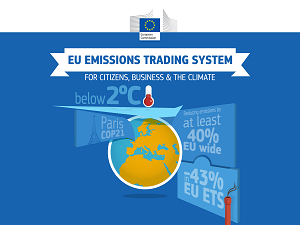
         The European Union’s Emissions Trading Scheme provides a carbon price. Different countries have a similar kind of cap-and-trade system that provides a uniform market price. Maybe in the future, they will be expected to cover more segments of the economy in low-carbon generation.
         Unfortunately, prices based on these mechanisms reflect the long-term risks and costs of climate change. There are serious policy related reasons for this. Kristensen said,  “Obviously, in some countries where you have very high carbon prices or carbon taxes, that can then affect the price of electricity and other services to consumers and industries and producers of various goods and services, and reduce the overall competitiveness of the economy relative to other neighboring countries that don’t have such price signals.”
         It is going to require international coordination to shield those consumers producers and industries that are within the zone of effective carbon pricers from inefficient or unfair competition outside where their competitors don’t have the same incentives. Market arrangements just don’t internalize the costs that different infrastructures impose on the system and that means that the electricity or other infrastructure services might not be priced correctly, Kristensen said. To have a clear signal it will be necessary to evolve more robust market arrangements especially for pricing carbon. As long as those conditions are not met, other supporting policies will be needed. Among those would be carbon border taxes being discussed as part of the European Green Deal.

  • Nuclear News Roundup Sep 16, 2020

    Lightbridge CEO to Discuss Innovative Nuclear Technology on Atlantic Council’s EnergySource Innovation Stream globenewswire.com
    NIA: UK nuclear industry jobs robust despite COVID-19 impacts power-eng.com
    Japan Struggles to Secure Radioactive Nuclear Waste Dump Sites thediplomat.com
    Nuclear: Hitachi ‘withdraws’ from £20bn Wylfa project bbc.com