
Researchers at the Pacific Northwest National Laboratory (PNNL) are uncovering new information about the way in which uranium dioxide (UO2) interacts with water. These new findings will improve our understanding of how spent nuclear fuel will degrade in deep geological repository environments.
UO2 is the primary form of nuclear fuel used in commercial nuclear power reactors. During nuclear fission in a reactor, a variety of radionuclides are created in the fuel. Researchers want to acquire more information about UO2. They are especially interested in the dissolution mechanisms that come into play when the ceramic material’s surface contain water. These mechanisms control the release of the majority of the radionuclides. This could have important implications for the environment.
Many laboratory instruments currently in use do not have the sensitivity, resolution and radiological controls necessary to effectively investigate UO2 surfaces. However, the PNNL has a one-of-a-kind instrumentation suite which recently enabled a multi-institute research team to take a closer look at surface areas. The team represented the University of Cambridge, the European Commission’s Joint Research Center, and PNNL. It has uncovered some key revelations for our understanding of nuclear energy.
Deep geological repository research around the globe is focused on the saturation zone where the water is chemically reducing which can lead to a loss of oxygen. UO2 is thermodynamically stable in this zone. The major remaining challenge is to develop an approach to examine UO2 with enough chemical resolution and fidelity to predict how it may behave in these environments. PNNL materials scientist Edgar Buck explains that “We’re just now developing the tools we need to answer longstanding questions about nuclear materials.”
In the study, researchers from the University of Cambridge collaborated with PNNL scientists to investigate UO2 samples exposed to anoxic (oxygen free) corrosion utilizing PNNL’s flagship instrumentation in the Radiochemical Processing Laboratory’s Radiological Microscopy Suite. This is also called the “quite suite.” The belowground room is home to the JEOL GrandARM 300F scanning transmission electron microscope (STEM). Using aberration-corrected scanning transmission electron microscopy and electron energy loss spectroscopy (EELS), the research team explored the progression of atomistic structures and defects. The PNNL team had previously shown that EELS is able to map non-equilibrium pathways for oxidation in UO2 that are difficult to probe with other methods and equipment.
PNNL materials scientist Steven Spurgeon explains that “Our approach provides direct information at the atomic scale to improve our models for dissolution.” Better models can help with the development of more accurate, long-term predictions regarding the fate of spent nuclear fuel under anoxic disposal conditions.
In their study, the researchers found that dissolution initiates at the material surface grain boundaries and film cracks. Significantly, they observed that there was no amorphous surface layer formation (no loss of its crystalline structure) during the dissolution process. This means that there is a different process for oxygen substitution in which oxygen substitution appears to create an oxidized passivating layer, which is responsible for the observed reduction in uranium release as a function of leaching time.
Co-author Professor Ian Farnan of Cambridge said, “The collaboration with PNNL provided us with unique tools to uncover a behavior that would be inaccessible by other means. Through our shared expertise, we were able to show how subtle changes in the surface chemistry of used nuclear fuel can control its dissolution and the release of radioactive elements to the environment—a fundamental requirement for safe disposal.” The findings from the study are reported in the team’s paper “An Atomic-Scale Understanding of UO2 Surface Evolution During Anoxic Dissolution,” published in ACS Applied Materials & Interfaces.
Blog
-

Radioactive Waste 776 – Researchers At The Pacific Northwest National Laboratory Study Behavior Of Spent Nuclear Fuel In Deep Geological Repositories
-
Nuclear News Roundup Sep 04, 2020
US officials: No new environmental study for nuclear lab abc27.com
Japan OKs safety steps for new spent nuclear fuel facility japantimes.co.jp
North Korea’s nuclear activity still a ‘serious concern’: UN watchdog nypost.com
How the Bitcoin Blockchain Is Being Used to Safeguard Nuclear Power Stations coindesk.com
-
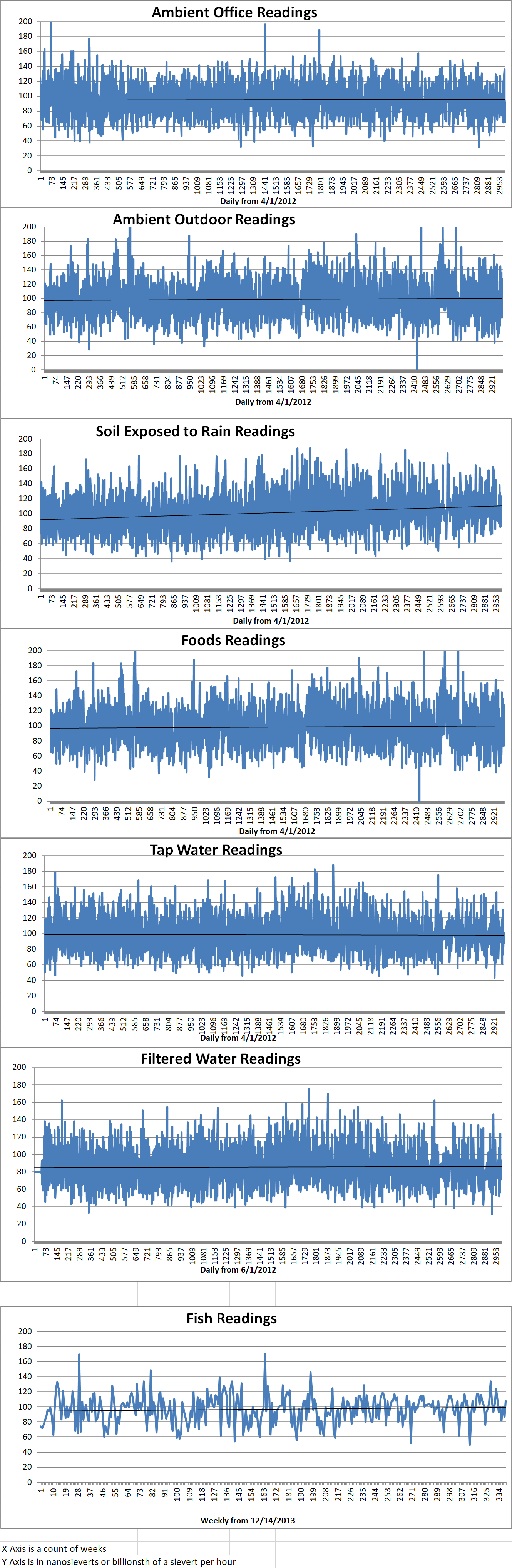
Geiger Readings for Sep 04, 2020
Ambient office = 88 nanosieverts per hour
Ambient outside = 80 nanosieverts per hour
Soil exposed to rain water = 84 nanosieverts per hour
Hierloom tomato from Central Market = 99 nanosieverts per hour
Tap water = 93 nanosieverts per hour
Filtered water = 93 nanosieverts per hour
-
Nuclear Reactors 804 – Researchers At The Pacific Northwest National Laboratory Are Studying Tellurium Particles In Spent Nuclear Fuel
Researchers at the Pacific Northwest National Laboratory (PNNL) are working on better understanding of how some metal particles behave in nuclear fuel. They hope to contribute to the design of future fuels that will be safer and more efficient. One recent experiment showed how tellurium containing particles in uranium oxide fuel contributed to the formation and rupture of high-pressure gas bubbles. Such ruptures can damage the fuel and its protective outer layer which is known as the cladding. Details of the experiment can be found in a research paper featured in the March 21st edition of Physical Chemistry Chemical Physics. This research was sponsored by the PNNL’s Nuclear Process Science Initiative (NPSI). It is the latest in a series of NPSI-funded projects that have produced insights about noble metal phase (NMP) particle behavior in nuclear fuel during normal reactor operations.
It was believed that tiny NMP particles found in spent nuclear fuel consisted of five metals including ruthenium, molybdenum, palladium, technetium, and rhodium. Recently, NPSI researchers found that there was a sixth metal, tellurium, in spent fuel. Other recent experiments have found NMP particles in the fuel’s zirconium cladding near the interface with the fuel. These experiments suggested to researchers that rupturing gas bubbles had propelled the particles into the cladding.
Jon Schwantes is a PNNL chemist who leads NPSI’s nuclear security research focus and is lead author for the recent journal paper. He said, “NPSI’s work is dramatically adding to the body of information about noble metal phase particles. A new non-diffusional gas bubble production route in used nuclear fuel: implications for fission gas release, cladding corrosion, and next generation fuel design.”
For the latest experiment, the PNNL team used a sample of spent fuel that had been irradiated in a commercial between 1979 and 1992. Various instruments in the PNNL’s Radiochemical Processing Laboratory were used to characterize the sample. The instruments involved included scanning and transmission electron microscopes which were both equipped with energy dispersive X-ray spectroscopy.
The PNNL team also utilized the Oak Ridge Isotope Generation and Depletion Code computer program in order to simulate activation and decay of the tellurium isotopes inside the NMP particles over time. The results of these experiments were compared to previous experimental measurements. In order to test their hypothesis that the tellurium was causing bubbles, the team made use of a simple physics continuum model that they borrowed from the ballistics community. This approach resulted in an indication of the energy and penetration of a particle when it was propelled out of the fuel and into the cladding after a bubble ruptured.
Some of the key conclusions from the work of the PNNL researchers are listed below.
• In spent nuclear fuel, tellurium and palladium are probably the first components to combine and precipitate which promote the formation and growth of the other NMP particles.
• Within in hours of their formation, the tellurium atoms decay into stable isotopes of xenon which eventually forms gas bubbles near the NMP particles.
• The xenon gas bubbles can reach very high pressures. Within the bulk of the nuclear fuel, the uranium oxide in strong enough to contain them.
• However, when bubbles are within five to ten microns of the surface of the fuel, pressure in the bubble can combine with local effects of radiation damage such as fission recoil to catastrophically overpower and escape the uranium oxide layer. The resulting rupture of the bubble forces nearby NMP particles out of the fuel and into the surface of the adjacent cladding.
Schwantes says, “These results have far-reaching implications on the current understanding of the behavior of fission gas atoms within irradiated nuclear fuel. Our work has shed more light on issues of fuel integrity, fission gas release, and cladding corrosion, while informing the science driving next-generation high burnup fuel designs.”
These recent experiments add to the knowledge already acquired from the multiple NPSI-funded NMP particle inquiries since 2015. In addition to the discovery of tellurium as the sixth NMP particle and finding NMP particless in the cladding, the team’s earlier studies found that
• Tellurium distribution in spent nuclear fuel correlates strongly with palladium.
• A palladium-rich telluride phase is probably the first component of the NMPs to form during irradiation.
• NMP particles are closely associated with a variety of other significant fission produces including iodine, cesium, barium, and xenon. All these elements have been discovered in the cladding near NMP particles.
These discoveries continue to expand scientific understanding of NMP particles and their formation, fate and importance withing the nuclear fuel cycle. -
Nuclear News Roundup Sep 03, 2020
Ultra Safe Nuclear Opens Salt Lake City Facility to Support Development of Fully Ceramic Micro-encapsulated Fuel prnewswire.com
China poised to overtake US in nuclear power by 2030 asia.nikkei.com
What the Hell’s Going on at Miami’s Turkey Point Nuclear Plant? Mianminewtimes.com
Nuclear Power Could Win Big In U.S. Elections oilprice.com
-
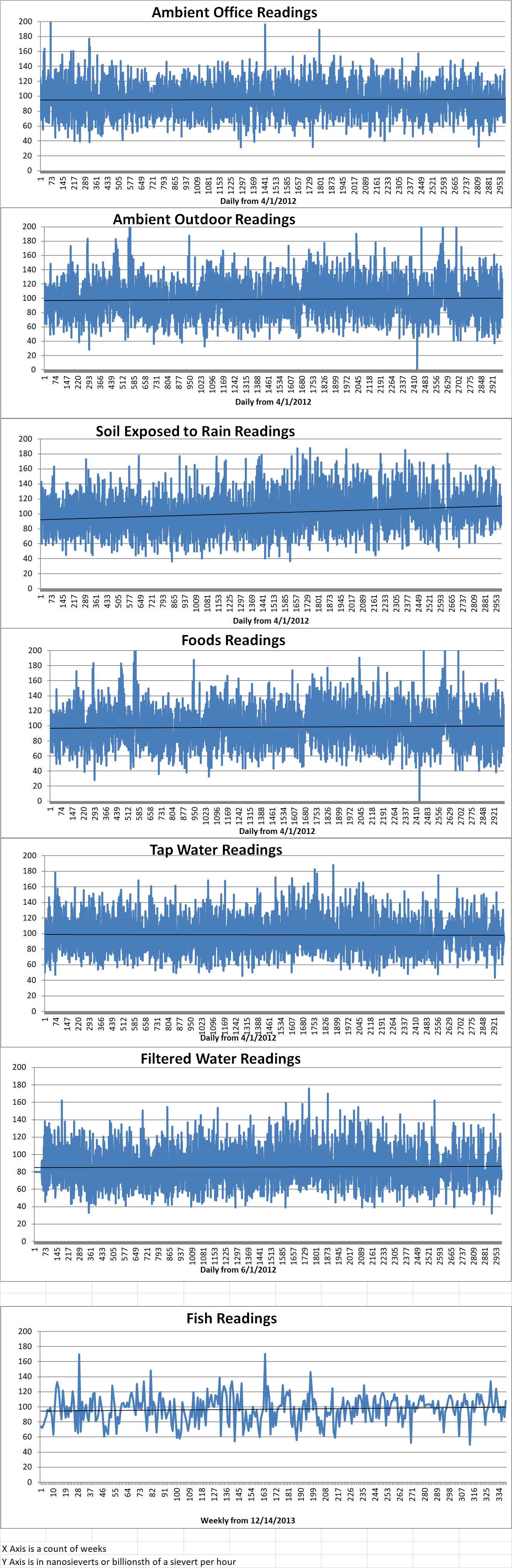
Geiger Readings for Sep 03, 2020
Ambient office = 65 nanosieverts per hour
Ambient outside = 85 nanosieverts per hour
Soil exposed to rain water = 86 nanosieverts per hour
English cucumber from Central Market = 79 nanosieverts per hour
Tap water = 91 nanosieverts per hour
Filtered water = 81 nanosieverts per hour
-
Nuclear Fusion 110 – Researchers Explore Behavior Of Tungsten Inside A Fusion Reactor – Part 2 of 2 Parts
Part 2 of 2 Parts (Please read Part 1 first)
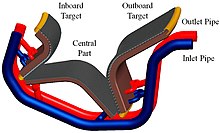
One complication with the design and operations of divertors in tokamaks is impurity contamination in the plasma caused by edge-localized modes or ELMs. Some of these rapid, high-energy events similar to solar flares can damage or destroy vessel components such as divertor plates. The frequency of the ELMs is an indicator of the amount energy released from the plasma to the wall. High-frequency ELMs can release low amounts of plasma on each eruption. However, if the ELMs are less frequent, the release of plasma and energy during each eruption is high with a much greater probability for serious damage. Recent research has been studying ways to control and increase the frequency of ELMs such as injection of pellets or using additional magnetic fields at very small magnitudes.
Unterberg’s team found that when they placed tungsten far from the high-flux strike-point, it significantly increased the probability of contamination when exposed to low-frequency ELMs that have higher energy content and surface contact per event. The team also found that this divertor far-target region was more prone to contaminate the SOL even though it generally has lower fluxes than the strike-point. These results are counter-intuitive, but they are being confirmed by divertor modeling efforts in relation to this project and future experiments on DIII-D.
This project involved a team of experts from across North America, including collaborators from Princeton Plasma Physics Laboratory, Lawrence Livermore National Laboratory, Sandia National Laboratories, ORNL, General Atomics, Auburn University, the University of California at San Diego, the University of Toronto, the University of Tennessee—Knoxville, and the University of Wisconsin-Madison, as it provided a significant tool for plasma-material interaction research. DOE’s Office of Science (Fusion Energy Sciences) provided support for the study.
The research of Unterberg and his team was published online earlier this year in the journal Nuclear Fusion. Their research could be of immediate benefit to the Joint European Torus, or JET, and ITER, now under construction in Cadarache, France, both of which use tungsten armor for the divertor. Unterberg said, “Where is it best to put tungsten, and where should you not put tungsten? Our ultimate goal is to armor our fusion reactors, when they come, in a smart way.”
Unterberg says that the ORNL’s unique Stable Isotopes Group which developed and tested the enriched isotope coating before putting it in a form that was useful for the experiment made the research possible. That isotope would not have been available anywhere but from the National Isotope Development Center at ORNL which maintains a stockpile of almost every element separated into different isotopes. Unterberg said, “ORNL has unique expertise and particular desires for this type of research. We have a long legacy of developing isotopes and using those in all kinds of research in different applications around the world.”
The next project for Unterberg’s team will be to investigate how putting tungsten into differently shaped divertors might affect contamination of the core. They theorize that different divertor geometries could minimize the effects of plasma-material interactions on the core plasma. Divertors are a necessary component for a magnetically-confined plasma device. Knowing the optimal shape for a divertor would bring scientists one step closer to a viable commercial nuclear fusion reactor. Unterber said, “If we, as a society, say we want nuclear energy to happen, and we want to move to the next stage, fusion would be the holy grail.” -
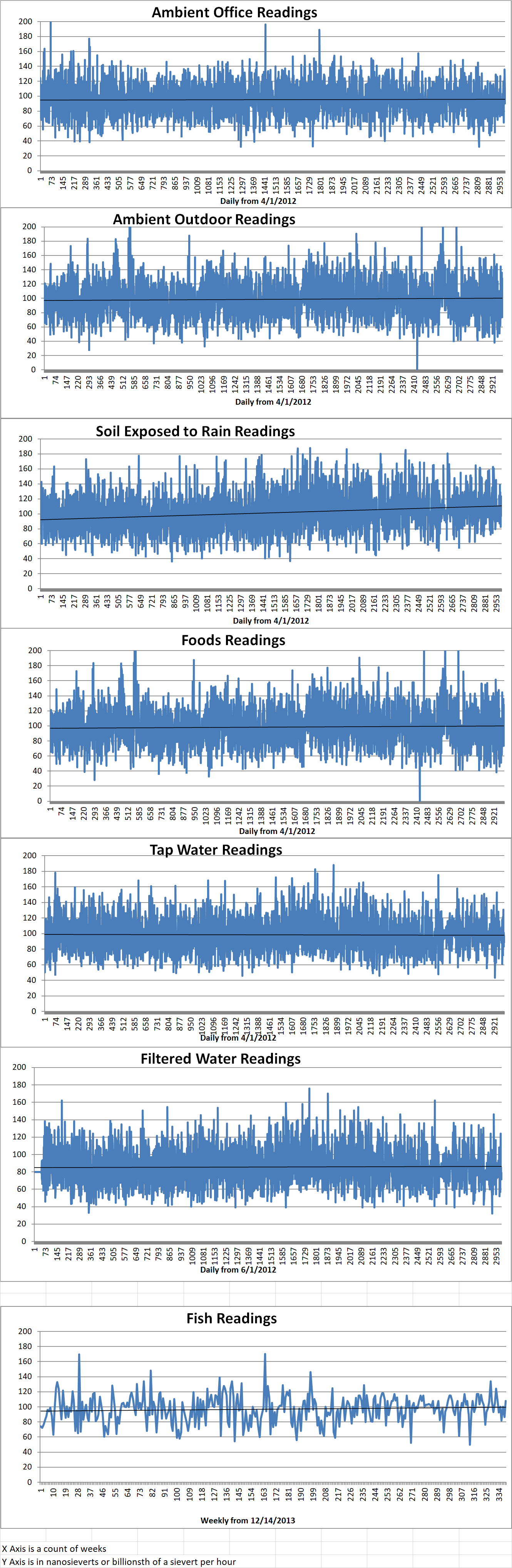
Geiger Readings for Sep 02, 2020
Ambient office = 91 nanosieverts per hour
Ambient outside = 97 nanosieverts per hour
Soil exposed to rain water = 98 nanosieverts per hour
Blueberry from Central Market = 87 nanosieverts per hour
Tap water = 97 nanosieverts per hour
Filtered water = 79 nanosieverts per hour
-
Nuclear News Roundup Sep 02, 2020
Nuclear Regulators Inspecting Turkey Point After Reactor Shut Down wlrn.com
Opinion: Nuclear bailout corruption kills public trust and competition Cincinnati.com
Nuclear cooperation can bolster US-Slovenia ties atlanticcouncil.org
U.S. Reveals First Assessment of Chinese Nuclear Weapons Stockpile usnews.com
-
Nuclear Fusion 109 – Researchers Explore Behavior Of Tungsten Inside A Fusion Reactor – Part 1 of 2 Parts
Part 1 of 2 Parts
The physical conditions inside a nuclear fusion reactor are some of the harshest environments every produced on Earth. The materials that line a fusion reactor vessel have to cope with temperatures in the hundreds of millions of degrees at the very least. Zeke Unterberg is a senior research scientist in Department of Energy’s Oak Ridge National Laboratory’s Fusion Energy Division. He is the leader of team working with tungsten which is the leading candidate for nuclear fusion reactor construction. It has the highest melting point and the lowest vapor pressure of all the metals on the periodic table. It also has very high tensile strength. All of these properties make it a suitable material able to withstand extreme conditions for long periods of time.
Unterberg’s team is concentrating on understanding how tungsten survives inside a nuclear fusion reactor which heats light elements to temperatures hotter than the inside of the core of the sun so they fuse and release enormous energy. When hydrogen gas is injected into a fusion reactor, it becomes hydrogen plasma, a cloud of charged particles. The plasma is confined to a very small region by powerful magnetic fields or lasers.
Unterberg said, “You don’t want to put something in your reactor that only lasts a couple of days. You want to have sufficient lifetime. We put tungsten in areas where we anticipate there will be very high plasma bombardment.”
In 2016, Unterberg and his team began carrying out experiments in the tokamak at the DIII-D National Fusion Facility which is a DoE Office of Science user facility in San Diego, California. They were researching whether tungsten could be used as armor in the tokamak’s vacuum chamber in order to protect it from rapid destruction by the effects of plasma without causing heavy contamination of the plasma. If contamination did occur, it could ultimately extinguish the fusion reaction. Unterberg said, “We were trying to determine what areas in the chamber would be particularly bad: where the tungsten was most likely to generate impurities that can contaminate the plasma.”
Unterberg’s team used an enriched isotope of tungsten, W-182, along with the unmodified isotope in order to trace the erosion, transport and redeposition of tungsten from within the divertor. The divertor is an area inside the vacuum chamber designed to divert plasma and impurities. Observing the movement of tungsten inside the divertor gave them a deeper understanding of how tungsten erodes from surfaces inside a tokamak and interacts with the plasma. The W-182 isotope has exactly the same physical and chemical properties as regular tungsten.
The tungsten experiments at the DIII-D utilized small metal inserts coated with the enriched isotope which were placed closed to, but not at, the highest heat flux zone. The flux zone is an area of the reactor vessel which called the divertor far-target region. At the same time, researchers inserted inserts coated with the unmodified tungsten isotope at the strike-point in a divertor region with the highest fluxes. The remainder of the DIII-D chambers are armored with graphite.
The experimental setup with the tungsten inserts inside the fusion reactor permitted the researchers to collect samples on special probes temporarily inserted into the chamber for measuring impurity flow to and from the armor lining the vessel. This could give them a more precise concept of where the tungsten that had leaked away from the divertor into the chamber had originated. Unterberg said, “Using the enriched isotope gave us a unique fingerprint.”
These were the first such experiments conducted in a tokamak fusion reactor. One of the goals of the research was to help decide the best materials and locations for these materials in order to armor the fusion chamber while keeping impurities caused by the plasma-material interactions largely contained to the divertor and not contaminating the magnet-confined core plasma used to produce the fusion reaction.
Please read Part 2 next