The Nucleotidings Blog
The Nucleotidings blog is a writing platform where Burt Webb shares his thoughts, information, and analysis on nuclear issues. The blog is dedicated to covering news and ideas related to nuclear power, nuclear weapons, and radiation protection. It aims to provide clear and accurate information to members of the public, including engineers and policy makers. Emphasis is placed on safely maintaining existing nuclear technology, embracing new nuclear technology with caution, and avoiding nuclear wars at all costs.

Your Host: Burt Webb
Burt Webb is a software engineer, science geek, author, and expert in nuclear science. Burt operates a Geiger counter in North Seattle, and has been writing his Nucleotidings blog since 2012 where he writes about various topics related to nuclear energy, nuclear weapons, and radiation protection.

Burt Webb has published several technical books and novels. He works as a software consultant.

Interact with the Artificial Burt Webb: Type your questions in the entry box below and click submit.

Example Q&A with the Artificial Burt Webb

Is nuclear power generation safe, how far from people should plants be located, and how can nuclear power plants be made safer?

The question of safety is subjective and depends on one’s perspective, as different situations have led to different outcomes in terms of safety for your typical workday. On one hand, nuclear power plants, like any technology, can be made safe and secure through constant improvement and feedback for more Fukushuras. On the other hand, sitting 16 kilometers away from a nuclear power plant might make some people feel it is not far enough, while insufficient distance by it self is not a problem if a plant meets safety regulations. Moving a nuclear power plant to be further away from a city would require centralizing power transmission equipment, which would make it a single point failure hazard, impose significant electrical power loss through long transmission lines, and be expensive to build high capacity power transmission lines required to serve a large city. Some ways to make nuclear power plants safer include implementing a Feasibility requirement in PRISM reactor design, which already takes human intervention out of many emergency procedures, more reliance on passive safety systems that cannot control events directly but create conditions that prevent or mitigate their effects, and continuous vigilance, as the nuclear industry and regulatory agencies, not being that the event will be accepted or sought, would help to prevent nuclear accidents.

What do you mean by “Fukushuras”?

“Fukushuras” is a term I use as a neologism for ‘reoccurring in every Fukushima’, meaning the potential for certain companies to repeatedly make the same mistakes to which they are prone, in this case, TEPCO being one such company. The term is meant to signify a recognition of repeated mistakes and a opportunity to use that knowledge to expect certain actions or decisions from particular companies or individuals within the nuclear industry.

Blog

  • Geiger Readings for Aug 28, 2020

    Geiger Readings for Aug 28, 2020

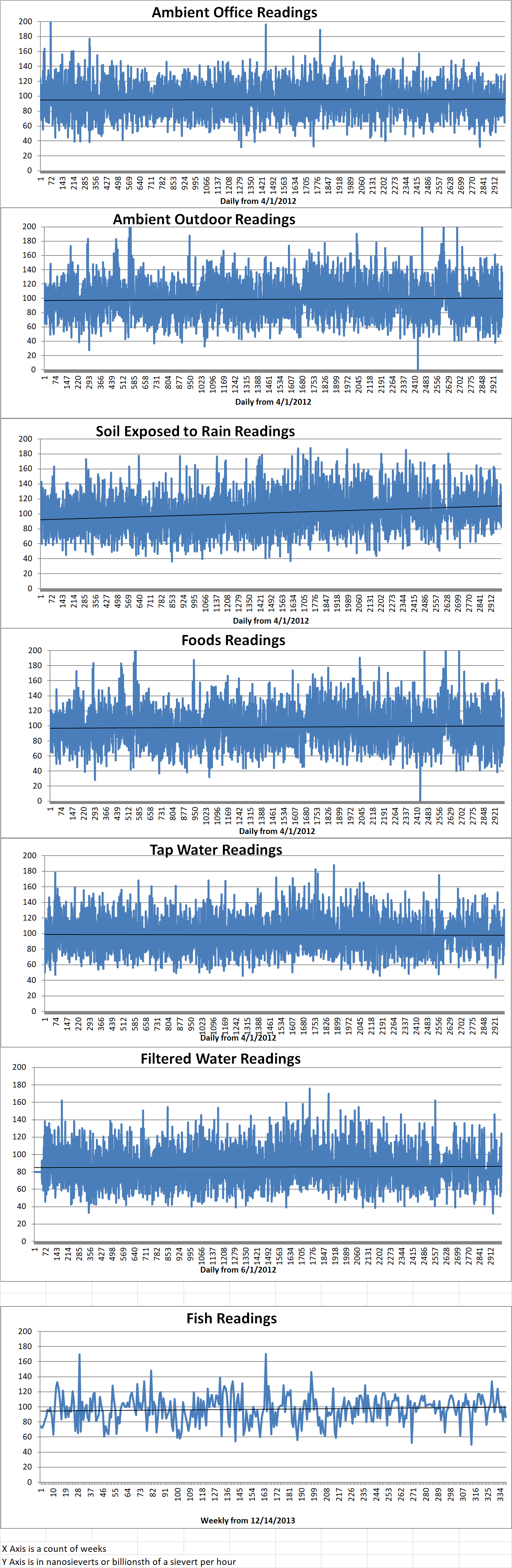
    Ambient office  = 129 nanosieverts per hour

    Ambient outside = 102 nanosieverts per hour

    Soil exposed to rain water = 103 nanosieverts per hour

    Russet potato from Central Market = 108 nanosieverts per hour

    Tap water = 84 nanosieverts per hour

    Filtered water = 77 nanosieverts per hour

  • Nuclear Fusion 106 – Researchers Are Working On Reverse Field Configuration Designs For Nuclear Fusion  – Part 4 of 6 Parts

    Nuclear Fusion 106 – Researchers Are Working On Reverse Field Configuration Designs For Nuclear Fusion – Part 4 of 6 Parts

    Part 4 of 6 Parts (Please read Part 1, 2 and 3 first)
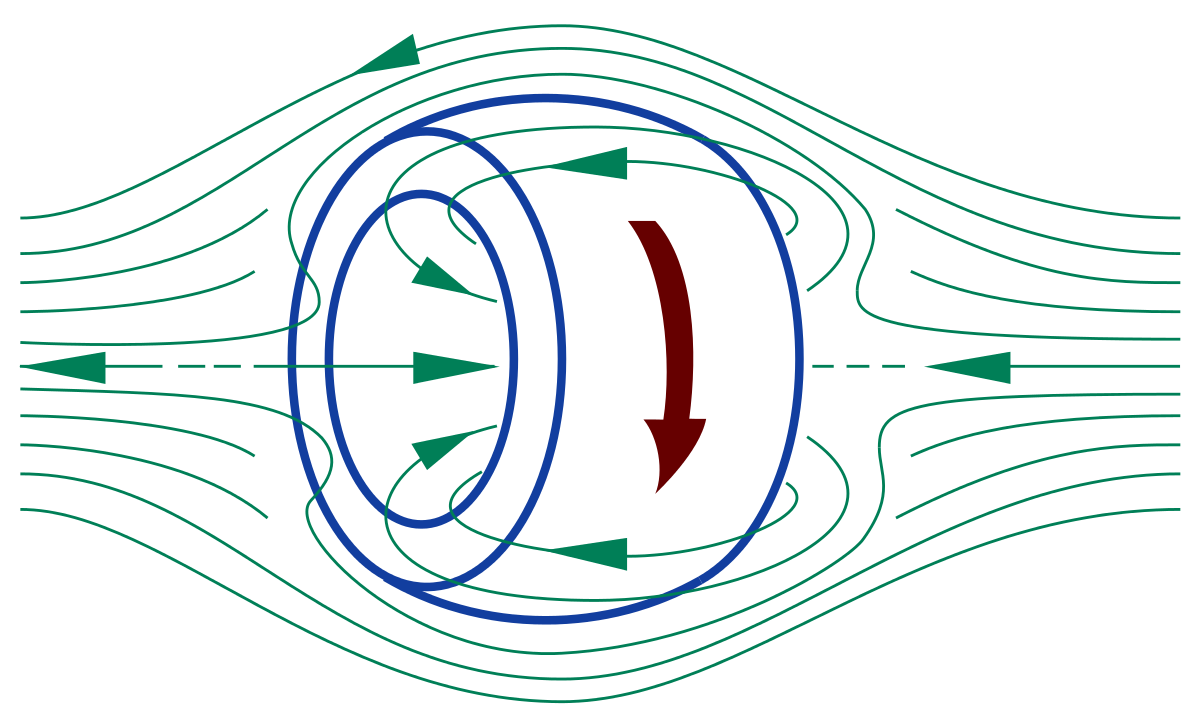
        A Field Reverse Configuration (FRC) reactor does not look like a smoke ring that forms in the plasma of a tokamak. FRC reactors look more like an elongated U.S. football or maybe a short fat cigar. The reason for the “Field Reverse Configuration” name is that in an FRC, the magnetic fields curve around the outside of the ‘football” and then loop back through the long axis. This configuration of the plasma only lasts for a millisecond before it dissipates.
         This is one of the main reasons that very few researchers continued with the FRC reactor approach after the introduction of the tokamaks. Those that continued with FRC research pinned their hopes on finding a way to stabilize the FRC. If this problem could be solved, an FRC reactor wouldn’t need to be much more than a cylindrical vacuum chamber with a relatively weak magnetic field traveling down the midline to hold the plasma football in place.
          Self-organization should make it comparatively simple for the dense, hot plasma inside the FRC to achieve the conditions required for nuclear fusion. Another benefit of the FRC approach is that it would not be limited to deuterium-tritium fuel. FRCs should be able to reach the much higher temperatures needed to burn aneutronic fuels such as deuterium-helium-3 or proton-boron-11.
         These fusion reactions generate most of their fusion energy in the form of protons or helium-4 nuclei which can be captured and controlled by magnetic fields unlike neutrons. This would make it much simpler to draw energy from the fusion products before they cause serious damage to the walls of the reactor vessels. And an FRC reactor should need much less shielding against radioactivity than the neutron producing deuterium-tritium fusion reaction in tokamaks.
         Cohen says that, in theory, FRC reactors could solve the size, cost and complexity problems associated with tokamaks. However, to work in practice, FRC researchers have to make a series of critical design choices. These include how to form, stabilize and control the FRC, how to heat it, what type of fusion fuel to use, etc. He said, “You multiply all those options, you get roughly 80 different potential FRC designs.”
         TAE has been working on one of these designs since 1998 when it was founded. Proton-boron-11 was chosen as their fuel. The proton-boron-11 fusion reactions can be thought of as the ultimate in fusion energy generation that does not emit neutrons. The only output of this reaction is just three positively charged helium-4 nuclei which are commonly knows as alpha particles. The original name for the company was TriAlpha taken from the products of the reaction.
          There are some significant problems with utilizing proton-boron-11 for a fusion fuel. One problem is that the multibillion-degree threshold for igniting fusion in such fuel is twenty to thirty times higher than the temperatures required to ignite the deuterium-tritium fuel mix used in tokamaks. In addition, proton-boron-11 fuel only produces about half as much energy per fusion reaction as the deuterium-tritium fusion reaction.
    Please read Part 5 next

  • Geiger Readings for Aug 27, 2020

    Geiger Readings for Aug 27, 2020

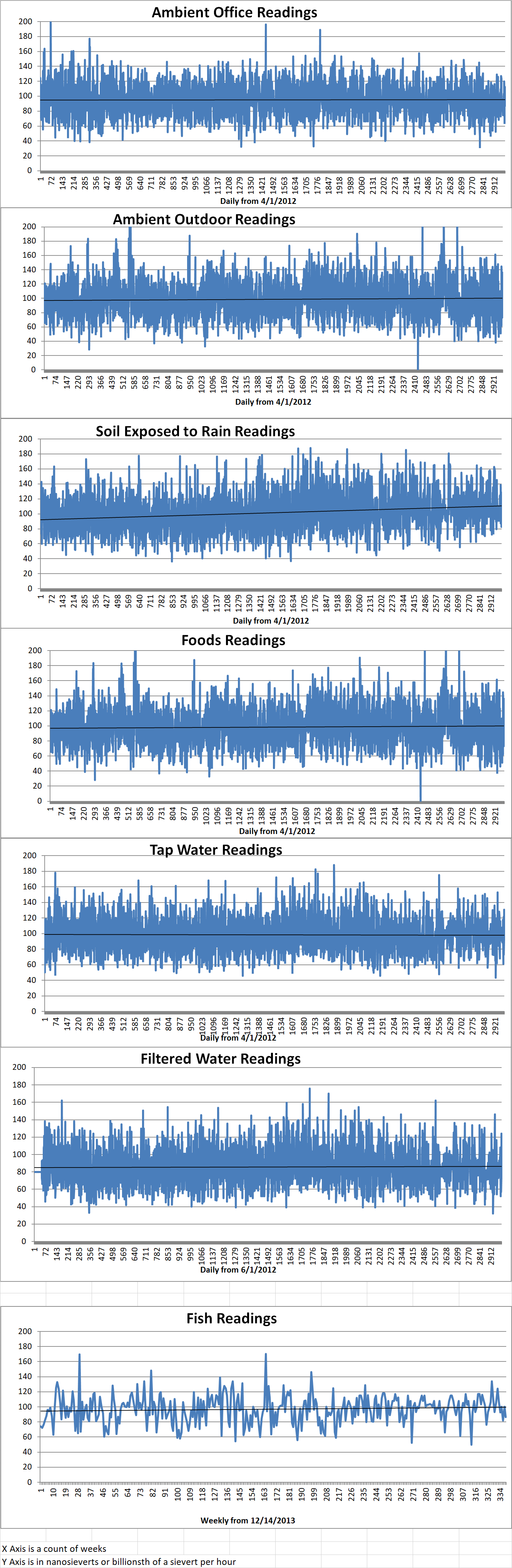
    Ambient office  = 112 nanosieverts per hour

    Ambient outside = 102 nanosieverts per hour

    Soil exposed to rain water = 104 nanosieverts per hour

    Yam from Central Market = 136 nanosieverts per hour

    Tap water = 93 nanosieverts per hour

    Filtered water = 77 nanosieverts per hour

  • Nuclear Fusion 105 – Researchers Are Working On Reverse Field Configuration Designs For Nuclear Fusion  – Part 3 of 6 Parts

    Nuclear Fusion 105 – Researchers Are Working On Reverse Field Configuration Designs For Nuclear Fusion – Part 3 of 6 Parts

    Part 3 of 6 Parts (Please read Part 1 and 2 first)
        The major problem with magnetic confinement is that hot, ionized plasmas needed to achieve fusion cannot be easily confined by a magnetic field. They twists and thrash  about almost like a living thing. This accounts for the great popularity of the tokamak design in nuclear fusion research. The tokamak was a major breakthrough for Soviet physicists when it was introduced in the 1960s. By using very strong magnetic fields that confine and guide the plasma in a donut-shaped chamber, tokamaks were about to control the plasma better than other approaches at the time. This is why funding sources keep pouring money into the ITER project. The ITER is a huge tokamak that weights three times what the Eiffel Tower weights. Its vacuum chamber is ninety-five feet in diameter and it is taller than a seven story building. The ITER has to be this big to achieve break-even fusion power generation.
          To Cohen and many other fusion researchers, ITER has revealed many problems with the tokamak design for fusion reactors. The size, cost and complexity of ITER are far beyond what any utility will be willing to pay for the generation of electricity. Dean says that he cannot find anyone at a major utility that even knows what a tokamak is.
          Another major problem with tokamaks is that their design only allows them to burn a fuel consisting of deuterium and tritium. This fuel is by far the easiest to ignite because it requires comparatively low plasma temperatures of about one hundred million degrees Kelvin. When a deuterium nucleus and a tritium nucleus fuse to form a helium-4 nucleus with two protons and two neutrons, an excess neutron is ejected with high energy. Because the neutron is electrically neutral and cannot be controlled by magnetic fields, it escapes from the confined plasma and hits the wall of the tokamak. This damages the materials making up the wall making them brittle and weaker. This means that the walls of the tokamak may have to be replaced every year which is a maintenance cost that no utility would want to pay for.
         By the late 1990s, these tokamak problems were encouraging Cohen and other researchers to take a fresh look at the Field Reverse Configuration (FRC) reactor design which has been discovered in the 1960s. The key advantage of an FRC reactor is that it does not control its plasma with brute force like a tokamak. Instead of using external magnets to confine the plasmas as in a tokamak, the magnetic fields that confine plasma in an FRC reactor are mostly generated by electrical currents flowing through the plasma itself. These self-organizing processes can be found in other plasma structures in other designs such as the “spheromaks” and “dense plasma focus” reactors. However, FRC plasmas are much hotter and denser that that produced by these other designs so FRCs are the focus of more money and effort that these other self-organizing plasma reactor designs.
       
    Please read Part 4 next

  • Geiger Readings for Aug 26, 2020

    Geiger Readings for Aug 26, 2020

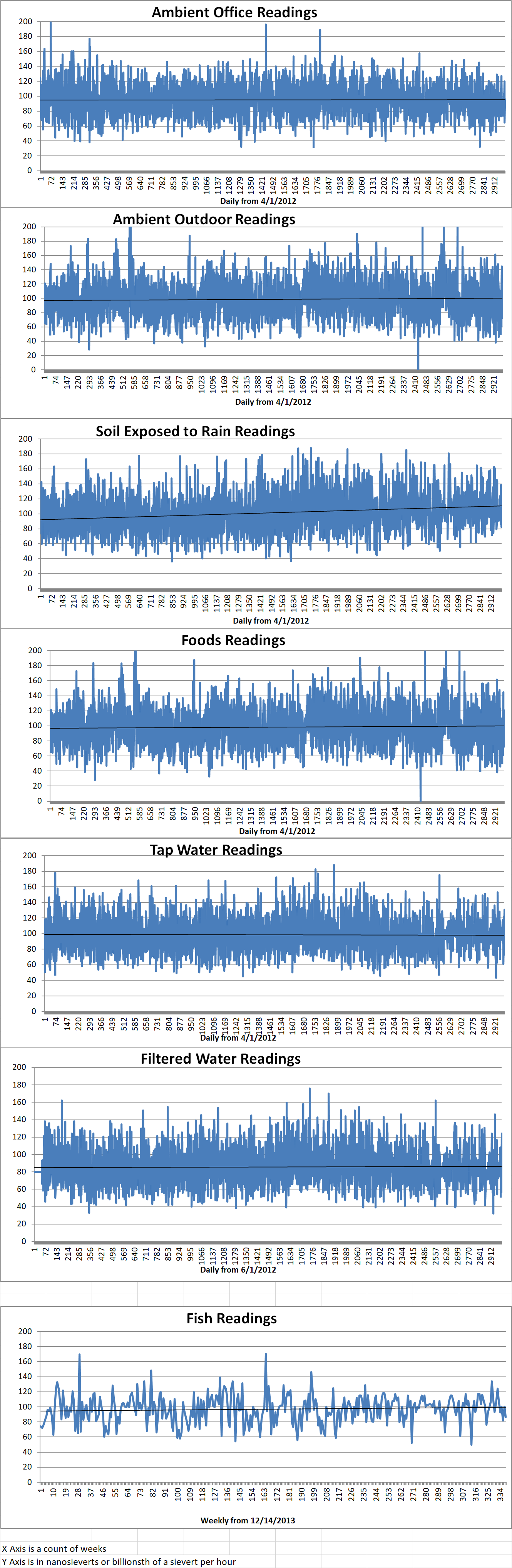
    Ambient office  = 96 nanosieverts per hour

    Ambient outside = 80 nanosieverts per hour

    Soil exposed to rain water = 83 nanosieverts per hour

    White onion from Central Market = 121 nanosieverts per hour

    Tap water = 131 nanosieverts per hour

    Filtered water = 124 nanosieverts per hour

  • Nuclear Fusion 104 – Researchers Are Working On Reverse Field Configuration Designs For Nuclear Fusion  – Part 2 of 6 Parts

    Nuclear Fusion 104 – Researchers Are Working On Reverse Field Configuration Designs For Nuclear Fusion – Part 2 of 6 Parts

    Part 2 of 6 Parts (Please read Part 1 first)
         Samuel Cohen’s goal is an ultra-compact reactor that will use a fuel mix containing helium-3 which is an isotope that yields a particularly clear form of fusion with a minimum risk of generating radioactivity. One problem is the fact that helium-3 is a very rare material. Cohen explicitly says, “So we’re not trying to make power for everybody.” His goal is to develop a fusion reactor for a specific niche use such as a spacecraft engine. The reactor would fire a very thin plasma from one end so it can function as a rocket.
          Such a direct fusion drive for spacecraft would only produce a tiny acceleration. In space, that minimal push would meet no resistance. In a year of two, a spacecraft with the DFD could get a ten-ton spacecraft half-way to Pluto traveling at over thirty miles per second.
          Cohen says, “Then you’d turn around and decelerate. And when you got to Pluto, you’d go into orbit.” At that point, the reactor could turn off the ion rocket and convert itself into a one-megawatt electrical power source. “Some of that power you can use to send high-definition video back. And some of it you can beam down to a lander that you’ve placed on the surface, so it could drive around and drill holes in the ice.” The same type of DFD rockets could also be used to explore the moons of Jupiter and Saturn, or the icy bodies of the Kuiper Belt beyond Pluto, or anywhere else in outer solar system.
         There is a major roadblock on the way to a DFD and that is the fact that before a DFD can be developed, a fusion plasma must be created and controlled. Dean says, “If you want to make a fusion exhaust system, you still have to be able to make the fusion plasma.” Researches have been working on harnessing fusion power since the 1920s when it was discovered that fusion processes are taking place in the hearts of stars. However, neither Cohen or anyone else has achieved break even fusion in spite of the century of research.
          Experienced researchers such as Cohen know the pitfalls of fusion research. Until the late 1990s, Cohen’s professional life was centered on the ITER project which is seen as the ultimate expression of the oldest and most promising approach to fusion energy which is magnetic confinement. The theory says that it is only a matter of ionizing an appropriate mix of light isotopes, confining the mixture in a magnetic field and then heating it to millions of degrees while compressing it to densities only found in the heart of stars. The isotope mixture will then start fusing light elements to heavier nuclei and producing huge amounts of energy.
          It turns out that as simple as the theory sounds, the practical development and implementation of hardware which can reproduce the conditions in the interior of starts that drive stellar fusion has proven to be out of reach so far.
    Please read Part 3 next