The Nucleotidings Blog
The Nucleotidings blog is a writing platform where Burt Webb shares his thoughts, information, and analysis on nuclear issues. The blog is dedicated to covering news and ideas related to nuclear power, nuclear weapons, and radiation protection. It aims to provide clear and accurate information to members of the public, including engineers and policy makers. Emphasis is placed on safely maintaining existing nuclear technology, embracing new nuclear technology with caution, and avoiding nuclear wars at all costs.

Your Host: Burt Webb
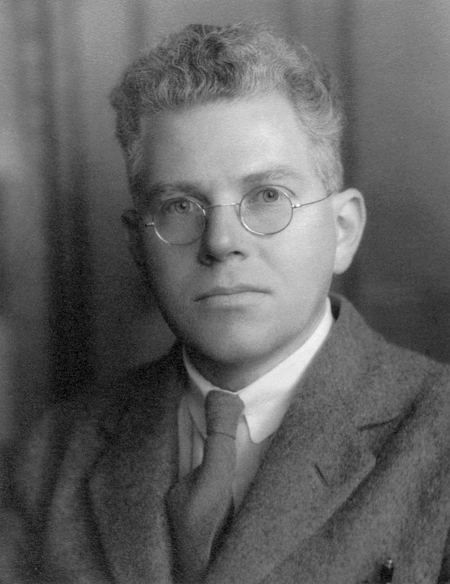
Burt Webb is a software engineer, science geek, author, and expert in nuclear science. Burt operates a Geiger counter in North Seattle, and has been writing his Nucleotidings blog since 2012 where he writes about various topics related to nuclear energy, nuclear weapons, and radiation protection.

Burt Webb has published several technical books and novels. He works as a software consultant.

Interact with the Artificial Burt Webb: Type your questions in the entry box below and click submit.

Example Q&A with the Artificial Burt Webb

Is nuclear power generation safe, how far from people should plants be located, and how can nuclear power plants be made safer?

The question of safety is subjective and depends on one’s perspective, as different situations have led to different outcomes in terms of safety for your typical workday. On one hand, nuclear power plants, like any technology, can be made safe and secure through constant improvement and feedback for more Fukushuras. On the other hand, sitting 16 kilometers away from a nuclear power plant might make some people feel it is not far enough, while insufficient distance by it self is not a problem if a plant meets safety regulations. Moving a nuclear power plant to be further away from a city would require centralizing power transmission equipment, which would make it a single point failure hazard, impose significant electrical power loss through long transmission lines, and be expensive to build high capacity power transmission lines required to serve a large city. Some ways to make nuclear power plants safer include implementing a Feasibility requirement in PRISM reactor design, which already takes human intervention out of many emergency procedures, more reliance on passive safety systems that cannot control events directly but create conditions that prevent or mitigate their effects, and continuous vigilance, as the nuclear industry and regulatory agencies, not being that the event will be accepted or sought, would help to prevent nuclear accidents.

What do you mean by “Fukushuras”?

“Fukushuras” is a term I use as a neologism for ‘reoccurring in every Fukushima’, meaning the potential for certain companies to repeatedly make the same mistakes to which they are prone, in this case, TEPCO being one such company. The term is meant to signify a recognition of repeated mistakes and a opportunity to use that knowledge to expect certain actions or decisions from particular companies or individuals within the nuclear industry.

Blog

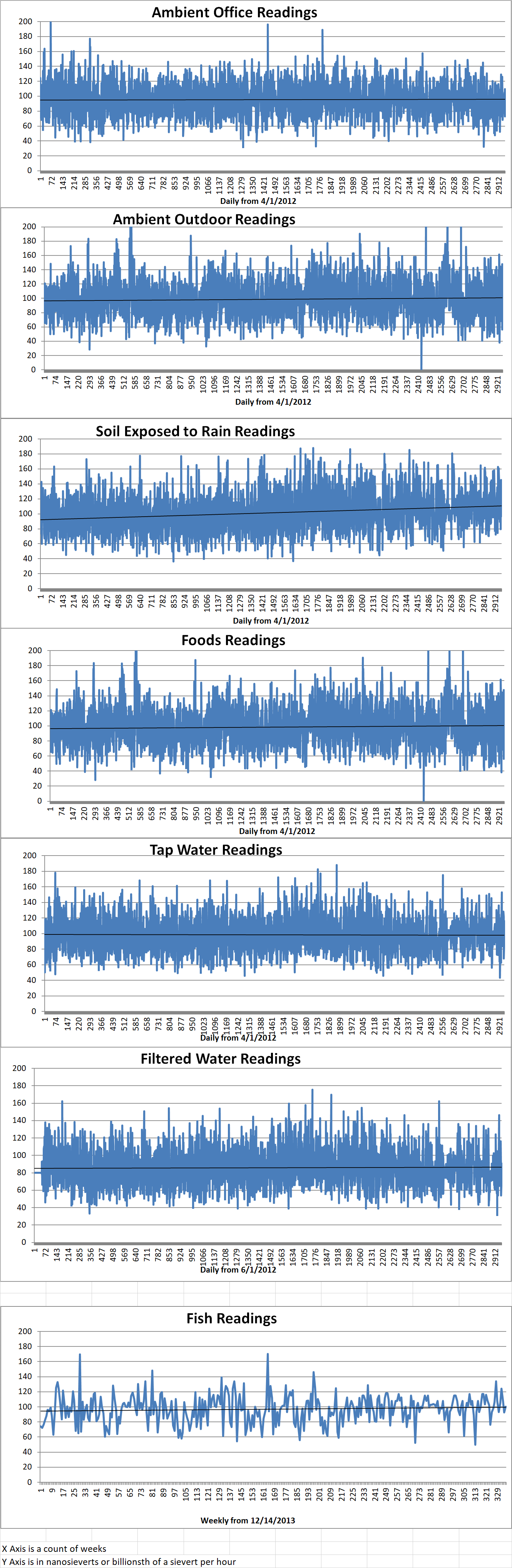
  • Geiger Readings for Aug 03, 2020

    Geiger Readings for Aug 03, 2020

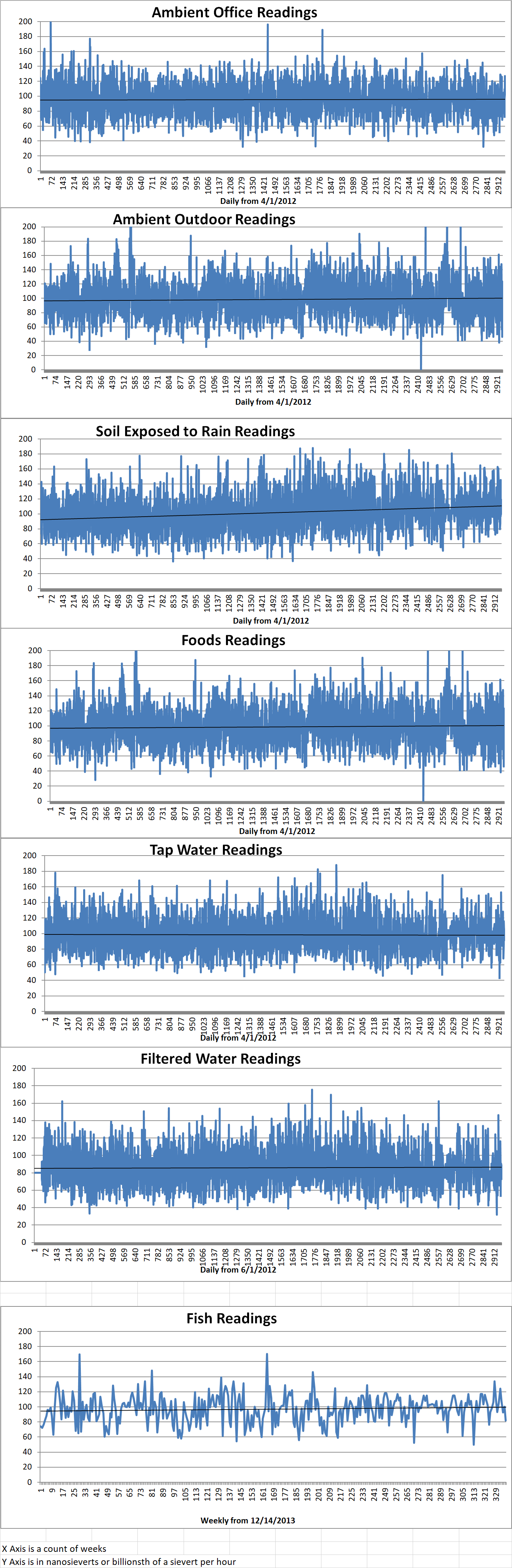
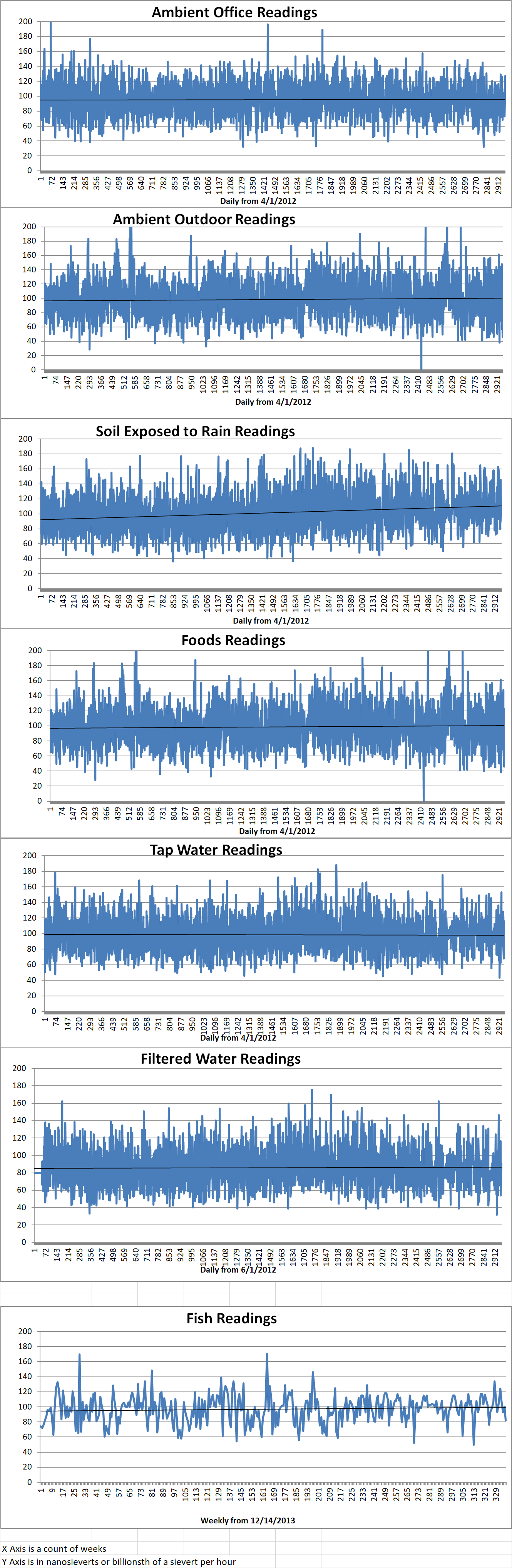
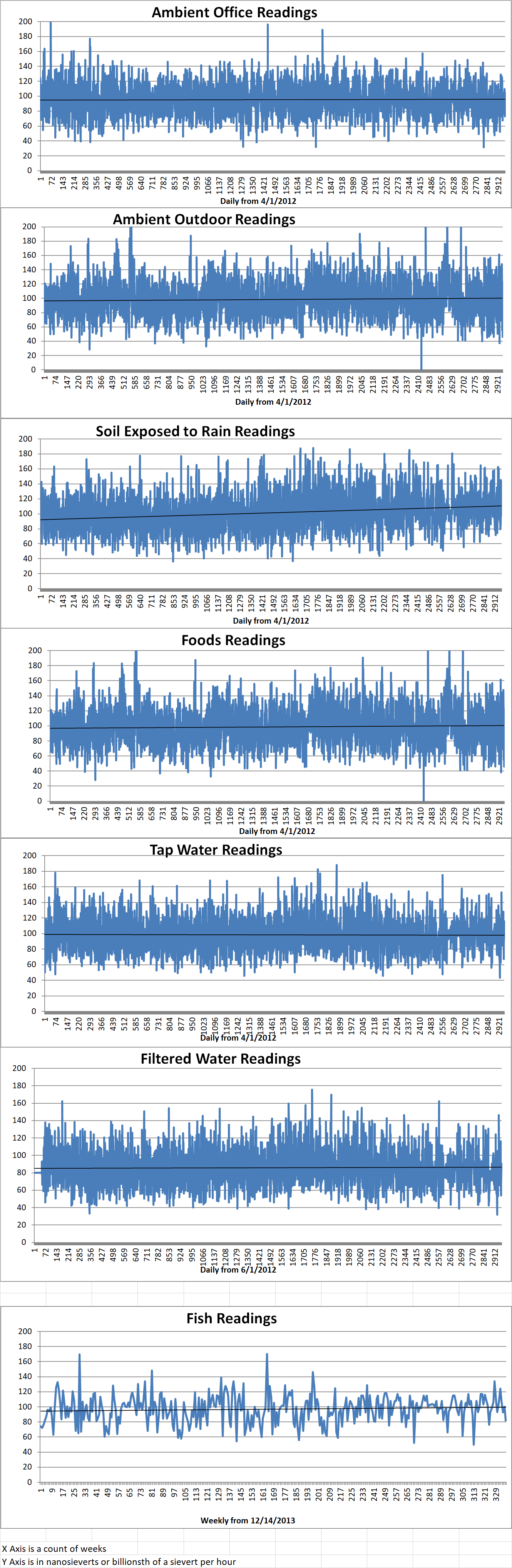
    Ambient office  = 123 nanosieverts per hour

    Ambient outside = 100 nanosieverts per hour

    Soil exposed to rain water = 100 nanosieverts per hour

    Strawberry from Central Market = 89 nanosieverts per hour

    Tap water = 92 nanosieverts per hour

    Filtered water = 73 nanosieverts per hour

  • Geiger Readings for Aug 02, 2020

    Geiger Readings for Aug 02, 2020

    Ambient office  = 127 nanosieverts per hour

    Ambient outside = 105 nanosieverts per hour

    Soil exposed to rain water = 104 nanosieverts per hour

    Corn from Central Market = 93 nanosieverts per hour

    Tap water = 106 nanosieverts per hour

    Filtered water = 89 nanosieverts per hour

  • Geiger Readings for Aug 01, 2020

    Geiger Readings for Aug 01, 2020

    Ambient office  = 104 nanosieverts per hour

    Ambient outside = 106 nanosieverts per hour

    Soil exposed to rain water = 108 nanosieverts per hour

    Watermellon from Central Market = 46 nanosieverts per hour

    Tap water = 99 nanosieverts per hour

    Filtered water = 83 nanosieverts per hour

    Dover sole – Caught in USA = 82 nanosieverts per hour

  • Nuclear Fusion 87 – A  Mixture of Hydrogen and Boron Is Being Researched As A Fuel For Nuclear Fusion – Part 4 of 18 Part

    Nuclear Fusion 87 – A Mixture of Hydrogen and Boron Is Being Researched As A Fuel For Nuclear Fusion – Part 4 of 18 Part

    Part 4 of 18 Parts (Please read Parts 1, 2 and 3 Parts)
           Currently, almost all of the research into fusion energy has been concentrated on the deuterium-tritium reactions. Deuterium-tritium is the easiest nuclear fusion reaction to create in terms of required combination of temperatures, pressures, and “burn” duration. Despite more than five decades of research and tens of billions of dollars spent on research and development, the goal of net energy generation from deuterium-tritium reactions has still not been accomplished.
         The road from successful experiments to functioning fusion reactors will be long and difficult. This is true as least for the fusion approached which are receiving most of the funding today. In recent years, significant amounts of private money have been dedicated to alternative pathways and some of them hold great promise.
         The hydrogen-boron fusion reaction is far more difficult than the deuterium-tritium fusion reaction with respect to the necessary combination of physical parameters. Nuclei do not always interact when they collide. The probability of a nuclear fusion reaction from a collision is called the “cross-section” of the reaction. The hydrogen-boron cross-section which indicates the reaction rate is about three hundred times smaller than the cross-section of the conventional deuterium-tritium reaction.
        The required temperature for hydrogen-boron fusion is also ten times higher than the temperature needed for the deuterium-tritium reaction. The actual energy obtained from a hydrogen-boron fusion reaction is about half of that of the energy generated by the deuterium-tritium reaction. The reason behind these differences can be attributed the specifics of the nuclear structures and interaction involved. There are also other issues of concern such as potentially much larger energy losses due to the bremsstrahlung radiation which is caused by the interaction of the electrical fields of particles that are near each other.
         To summarize, the vast majority of the nuclear fusion research community consider the obstacles to exploiting the hydrogen-boron reaction for a practical source of energy appear to be so great that it is not considered a serious option.
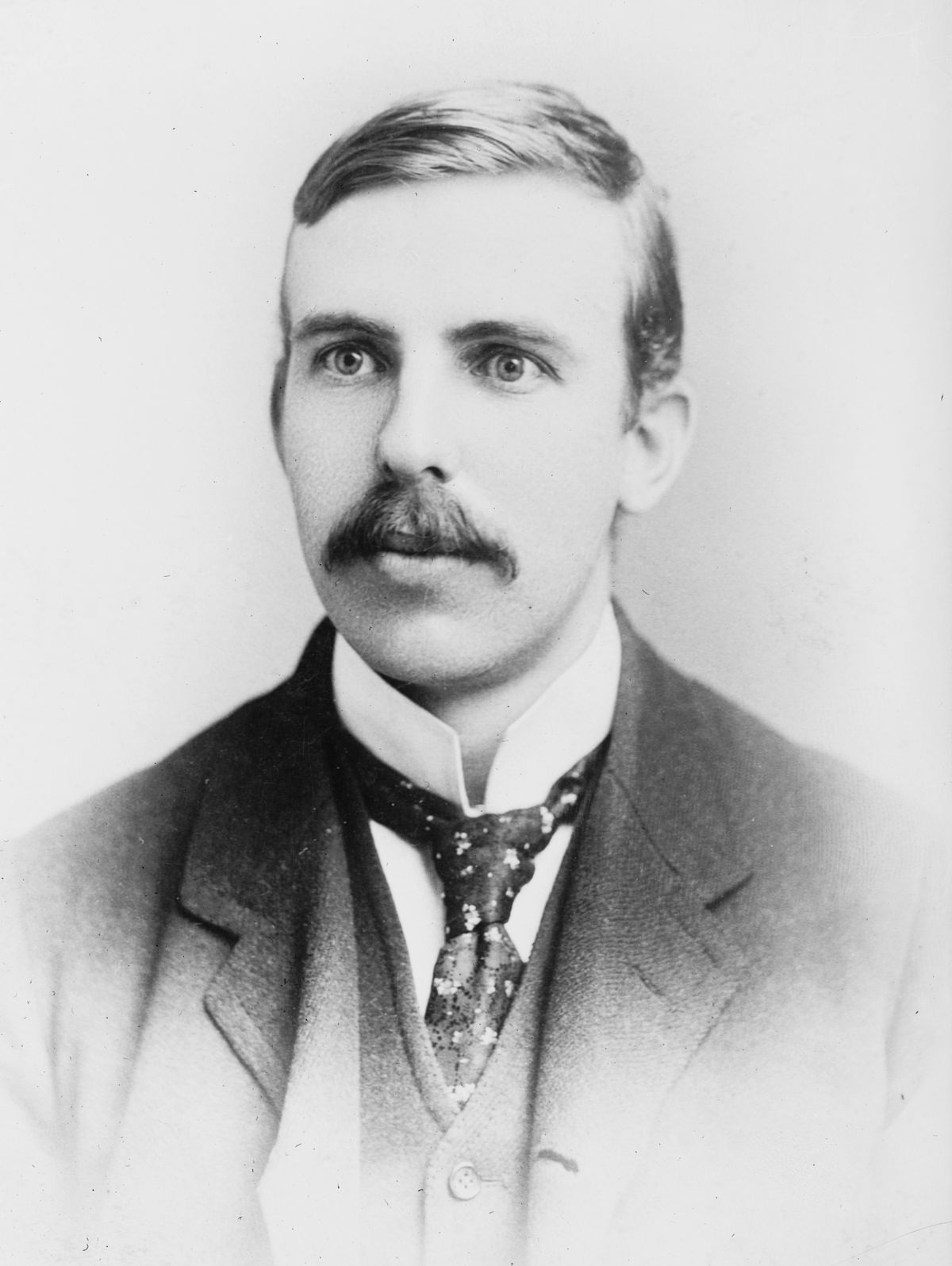
         The question could be raised that if Rutherford and Oliphant were able to generate hydrogen-boron reactions with a primitive proton accelerators in the 1930s, why can we not just scale up their system? Compact proton accelerators are readily available on the open market. Why do we need to talk about generating billion degree temperatures?
         There is an easy reason why the simple beam-target approach of Rutherford and Oliphant will not work for commercial nuclear fusion power generation. First, only a tiny percentage of the protons in the beam actually trigger a fusion reaction. This is the small cross-section problem mentioned above. The rest of the protons bounce off, fly off or are lost in some other way. And, the energy expended to accelerate them is lost. The overall efficiency  is thus less than zero. The applies to the hydrogen-boron reaction and even the relatively easy deuterium-tritium reaction.
         In order to get fusion processes to generate net energy, making reactions happen on a one by one basis will not work. There needs to be some sort of global collective process. The simplest approach would be to compress as many mutually repelling particles as possible into a container and then heat the compressed particles. This will increase their interaction as they bounce around. That has to be maintained long enough to produce enough fusion reactions to produce net energy. Ultimately, for all their huge technological sophistication, the conventional approaches to realizing commercial fusion energy boils down to the simple process detailed above. This approach could be called the “thermal” scenario because heat mediates the whole process.
         In the case of hydrogen-boron, the thermal approach offers little hope for net energy generation. It would require a special combination of temperatures, density and so-called confinement time that is far beyond present or even foreseeable technology.
        Fortunately, the arrival of ultra-high-power lasers and “extreme light” makes it possible to develop a short-cut method for accomplishing hydrogen-boron fusion which non-thermal, highly organized collective processes play the critical role.
    Please read Part 5 next

  • Geiger Readings for Jul 31, 2020

    Geiger Readings for Jul 31, 2020

    Ambient office  = 97 nanosieverts per hour

    Ambient outside = 107 nanosieverts per hour

    Soil exposed to rain water = 105 nanosieverts per hour

    Tomato from Central Market = 108 nanosieverts per hour

    Tap water = 116 nanosieverts per hour

    Filtered water = 91 nanosieverts per hour

  • Nuclear Fusion 86 – A  Mixture of Hydrogen and Boron Is Being Researched As A Fuel For Nuclear Fusion – Part 3 of 18 Parts

    Nuclear Fusion 86 – A Mixture of Hydrogen and Boron Is Being Researched As A Fuel For Nuclear Fusion – Part 3 of 18 Parts

    Part 3 of 18 Parts (Please read Parts 1 and 2 first)
            In 1933, the British physicists Ernest Rutherford and Mark Oliphant reported on a series of experiments in which they used a beam of protons (hydrogen nuclei) to bombard a thin film of the boron compound borax and observed the emission of high-energy alpha particles (nuclei of helium atoms). These experiments confirmed the earlier experimental evidence gathered by Cockcroft and Walton that nuclear reactions were taking place between protons and boron nuclei. This results in the transmutation of chemical elements in which hydrogen and boron are fused into helium. This hydrogen-boron reaction was one of many nuclear reactions that were discovered and catalogued in the 1930s.
         Closer analysis revealed that the nuclei of the boron atom absorbs a proton and splits into three alpha particles (helium nuclei) which fly away at tremendous velocity. The total energy contained in the flight of the alpha particles is millions of times greater than the energy that can be generated by any known chemical reaction. This means that the hydrogen-born reaction is a potential candidate for large-scale energy production. And boron is a readily available element. The reaction that I am talking about only takes place with the single boron isotope boron-11. Fortunately for possible energy generation, about eighty percent of naturally occurring boron is boron-11.
         So far, I have been referring to the hydrogen-boron reaction as being fusion. In reality, it is sort of a combination of fusion and fission. A hydrogen nucleus or proton fuses with a boron-11 nucleus to form a very unstable, highly excited nucleus of the carbon-12 isotope of carbon. Almost instantaneously, this carbon-12 isotope disintegrates into three high energy alpha particles which take off at high speed. There are a number of different reasons that the hydrogen-boron reaction is especially attractive as a potential energy source.
         First of all, there is plenty of the required isotope of boron available. Unlimited hydrogen can be recovered from the disassociation of water. A single gram of hydrogen-boron fuel mixture in a fusion reactor could release energy equivalent to the combustion of three tons of coal. There are over one billion tons of borax in proven reserves. That would be enough to supply all the world’s energy needs at current levels of consumption for a million years.
        Second, the hydrogen-boron nuclear reaction does not produce any radioactivity. The alpha particles released in the reaction are stable and do not undergo radioactive decay. Even high energy alpha particles have very little ability to penetrate ordinary matter. The alpha particles rapidly give up their energy through elastic collisions with heavier nuclei when they interact with ordinary materials.
        Even with the high velocity, the emitted particles have a range of only about an inch in open air and they can be blocked by a few sheets of paper. In order for alpha radiation to be dangerous, a person would have to be exposed at very short range. Radioactivity generated by secondary but rare reactions between alpha particles and other nuclei is very small.
         In contrast, the fusion reactions between the deuterium and tritium isotopes of hydrogen which are the main focus of fusion energy research release penetrating gamma radiation and large numbers of neutrons. Such neutrons are absorbed by the nuclei of surrounding materials which transforms some of them into radioactive isotopes.
        The problem of disposing of materials that have been made radioactive by the deuterium-tritium reaction is small compared to decommissioning a nuclear fission reactor and disposing of nuclear waste from nuclear fission power plants. However, the problem still exists and increases the cost and complexity of proposed nuclear fusion power reactors. This problem does not exist for fusion reactors based on the hydrogen-boron reaction.
         A third advantage of the hydrogen-boron approach to nuclear fusion is the fact that the alpha particles emitted during the fusion reaction, each alpha particles carrying two units of positively electricity. This can be understood as a stream of high velocity alpha particles that is, essence, a high-voltage electric current. If the stream of alpha particles is made to cross an electrical field, their energy of motion will be transferred into electrical energy with virtually no practical loss. The heat exchangers, pumps and turbine systems, which account for much of the cost of fossil fuel power stations or nuclear fission power stations become unnecessary.
    Please read Part 4 next