
The international consultancy LucidCatalyst has issued a report that concludes that flexible advanced nuclear power reactors could complement wind and solar in markets with a high penetration of renewable energy sources. Advanced reactors with a capital cost of under three thousand dollars per kilowatt should be an attractive investment and create the most value for nuclear plant owners.
The new report was produced as part of the ARPA-E MEITNER (Modelling-Enhanced Innovations Trailblazing Nuclear Energy Reinvigoration) Program. This program aims to identify and develop innovative technologies that can enable designs for lower cost, more flexible advanced nuclear power reactors.
This study reviews two future scenarios for 2034 at a time when advanced reactors are expected to be commercially available. These scenarios involve four of the principle power markets in the U.S. including ISO-New England (ISO-NE); Pennsylvania, New Jersey, Maryland Power Pool (PJM); Midcontinent Independent System Operator (MISO); and California ISO (CAISO). The two scenarios cover a ‘low renewables’ baseline scenario which assumes the continuation of existing renewables policies and current renewables build rates and a ‘high renewables’ scenario based on the National Renewable Energy Laboratory’s Regional Energy Deployment System with low renewables costs and low natural gas costs. Three additional scenarios and potential market conditions were examined in PJM in order to determine the effects of a price being levied for CO2 emissions, fleet deployment and increased operating and maintenance costs and fuel costs.
The study shows how advanced reactors can complement wind and solar by modeling high penetration of renewables in the mid-2030s by following NREL scenarios. These technologies could drive down costs, reduce emissions and improve performance in the U.S. electrical grid. In each of the markets mentioned above, the addition of advanced reactors lowered the overall system cost.
LucidCatalyst concluded that only by designing advanced reactors that hit cost and performance targets will reactor developers be successful in delivering the hoped for large scale market transformation. Flexibility without storage may be good for the grid but it will not necessarily be a benefit to a plant’s revenue stream. Nuclear plants are designed to run at their maximum rated output. In order to make flexibility economic for nuclear power plants, developers will have to include a thermal storage system or be the beneficiary of major market reforms.
Blog
-
ar Reactors 802 – Study By LucidCatalyst Says That Cost Of Advanced Reactors Must Be Reduced
-
Nuclear News Roundup Jul 15, 2020
Fears of a Nuclear Catastrophe as Seven Ships Close to Power Plant Engulfed in Flames euroweeklynews.com
Sherman: Iran now has more operational centrifuges, more nuclear fuel tehrantimes.com
Fuel loading completed at fifth Tianwan unit world-nuclear-news.com
Novovoronezh II-1 switches to longer fuel cycle world-nuclear-news.com
-
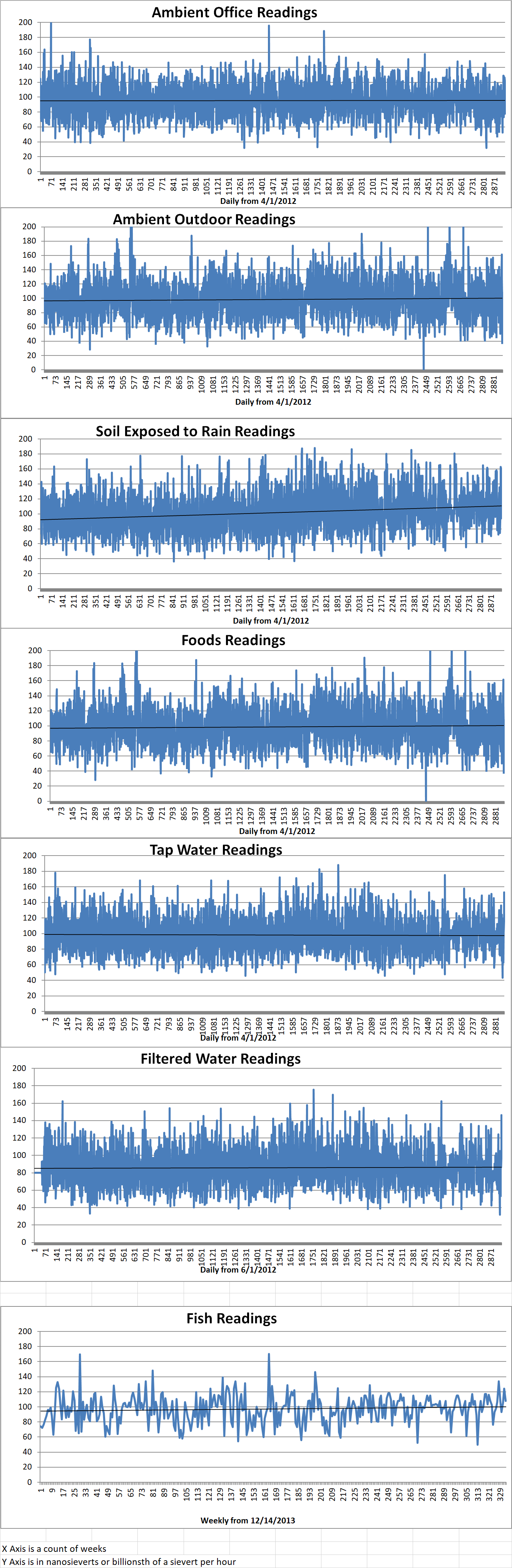
Geiger Readings for Jul 15, 2020
Ambient office = 101 nanosieverts per hour
Ambient outside = 141 nanosieverts per hour
Soil exposed to rain water = 141 nanosieverts per hour
Tomato from Central Market = 145 nanosieverts per hour
Tap water = 94 nanosieverts per hour
Filtered water = 78 nanosieverts per hour
-

Nuclear Fusion 77 – ITEM Project Is Progressing And Nearing Completion
A tokamak is a scientific device that produces energy from nuclear fusion. A huge tokamak is being built in southern France as part of the ITER initiative which has been in development for thirty-five years involving thirty-five different nations. ITER is a nuclear fusion power plant that is designed to investigate using fusion to produce industrial scale carbon-free energy.
ITER is scheduled to go online at the end of 2025. It will be the biggest tokamak ever constructed. It is based on use of toroidal (donut-shaped) magnetic field coils. Tokamaks were originally developed by the Soviet Union in the 1960s. The word tokamak itself is an acronym for “toroidal magnetic confinement” in Russian. ITER’s field coils are the most powerful superconductive magnets ever constructed. The ITER tokamak will utilize eighteen of these magnets which total a weight of six thousand metric tons. It needs them in order to confine the plasma created by the fusion process.
The fusion process consists of atoms of light elements such as helium and hydrogen being fused together to create atoms of heavier elements. A huge amount of energy is released during this process. The walls of the tokamak absorb this heat which is then transferred to a heat exchanger where it is used to boil water to steam. The steam is used to turn a turbine to generate electricity.
A big advantage of fusion is that it does not involve the same risks as energy generation using nuclear fission. During fission, very heavy atoms such as uranium and plutonium are broken apart into atoms of lighter elements. Demonstrating the fusion process on a large scale is one of the reasons for the construction of ITER.
In laboratory conditions, two isotopes of hydrogen, deuterium and tritium, have been found to create the most efficient fusion. Deuterium consists of one electron, one proton and one neutron. It is not radioactive. Tritium consists of one electron, one proton and two neutrons. It is radioactive. In a tokamak, electrons and nuclei are broken apart at temperatures over two hundred thirty-four thousand degrees Fahrenheit. This creates a plasma that can be described as a super-heated gas that is a hundred thousand times less dense that air at sea level.
The volume of the plasma inside the ITER tokamak will be much larger than plasmas generated by previous tokamaks. The temperature of the plasma is so hot that metals cannot be used to confine it. Powerful magnetic fields are used to contain the plasma and enable the fusion reaction. A series of toroidal superconducting magnets is used for this purpose.
The National Institutes of Quantum and Radiological Science and Technology (QST) in Japan is the leader in the development and construction of the toroidal field coils required to contain the plasma in the ITER tokamak. Mitsubishi Heavy Industries (MHI) is delivering five of these huge magnets to France this year.
The biggest five-axis machining equipment in the world is being used to make the coiling equipment. The completed magnets are tested at MHI’s Futami plants with the use of large-scale x-ray and ultrasonic test equipment that were originally developed to inspect nuclear reactor vessels. Each of the field magnets weighs three hundred -and ten metric tons. They are twenty-nine feet wide and fifty-four feet high. This is the size of a five-story building.
Another three of the magnets will be delivered to ITER by 2021. The remainder will be sent in 2022. Three years after all the magnets are in place, the grand launch of ITER will take place. When ITER goes online five years from now, it will be the first fusion reactor in the world to pass breakeven and actually produce more energy that is being input. ITER is expected to produce five hundred megawatts from only fifty megawatts input power.
Many different companies around the world are currently developing different fusion reactor designs in the hope of being the first to create a prototype of small cheap nuclear fusion power reactors. -
Nuclear News Roundup Jul 14, 2020
Foreign Ministry Spokesperson Hua Chunying’s Remarks on the Iranian Nuclear Issue fmprc.gov.cn
£30M investment to develop small nuclear reactors newcivilengineer.com
India, EU ink nuclear cooperation pact hindustanitimes.com
Sizewell C Consortium urges decision on funding world-nuclear-news.org
-
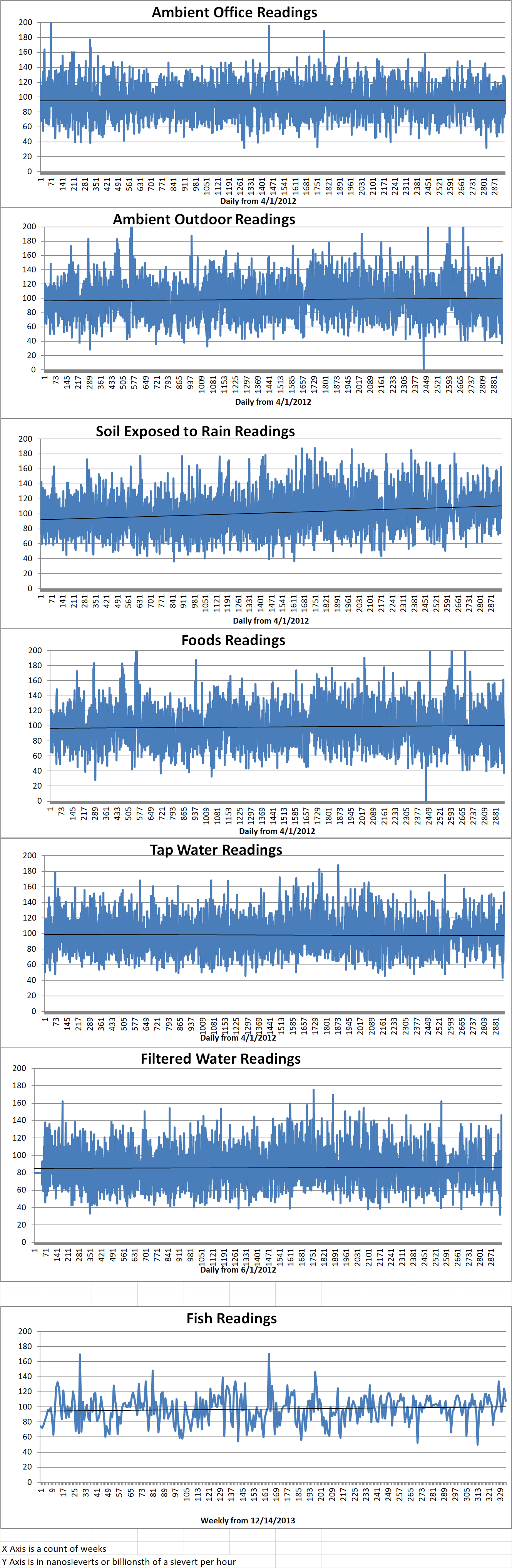
Geiger Readings for Jul 14, 2020
Ambient office = 119 nanosieverts per hour
Ambient outside = 134 nanosieverts per hour
Soil exposed to rain water = 134 nanosieverts per hour
Tomato from Central Market = 133 nanosieverts per hour
Tap water = 87 nanosieverts per hour
Filtered water = 66 nanosieverts per hour
-
Nuclear News Roundup Jul 13, 2020
Fuel loading completed at fifth Tianwan unit world-nuclear-news.com
Dominion Energy intends to raise SC utility rates for first time since nuclear fiasco thestate.com
Proposed Emergency Plan Exemption for New Nuclear Designs Raises Concerns publicnewsservice.org
Democrats split on Trump plan to use development funds for nuclear projects thehill.com
-
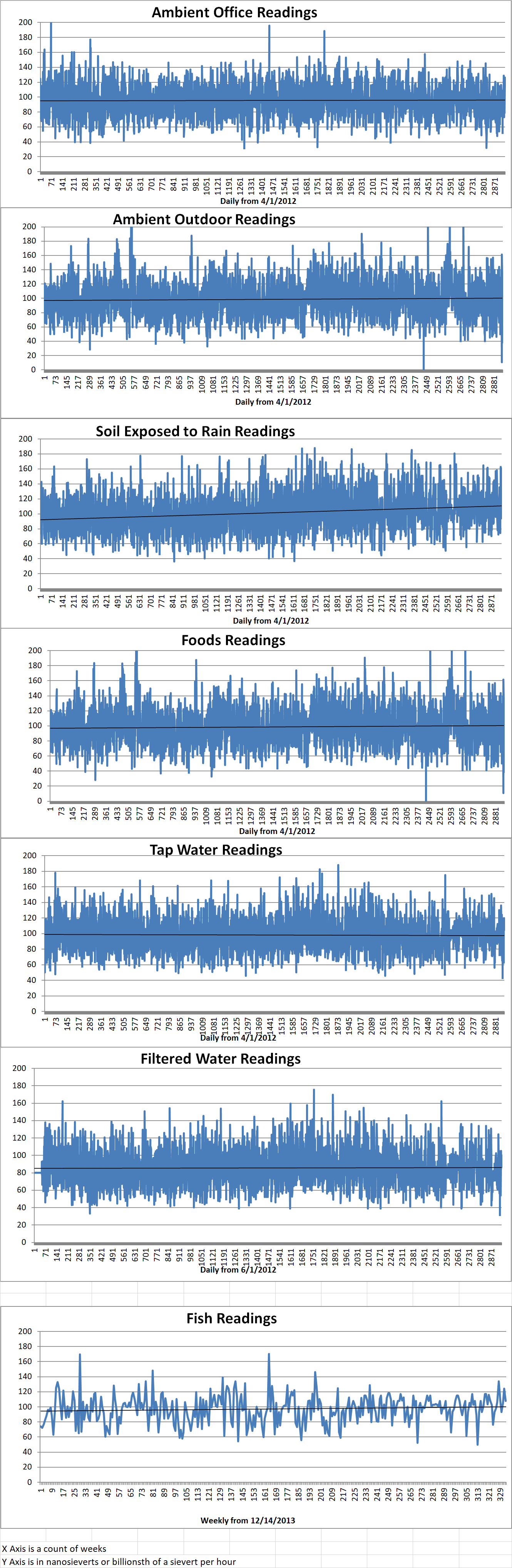
Geiger Readings for Jul 13, 2020
Ambient office = 121 nanosieverts per hour
Ambient outside = 160 nanosieverts per hour
Soil exposed to rain water = 161 nanosieverts per hour
Tomato from Central Market = 93 nanosieverts per hour
Tap water = 120 nanosieverts per hour
Filtered water = 100 nanosieverts per hour
-
Nuclear News Roundup Jul 12, 2020
FPL deploys artificial reef ball project to stop beach erosion, create wildlife habitat tcpalm.com
Nuclear power to endure in French energy mix – new minister montelnews.com
New EC ‘Green Deal’ strategies ignore nuclear power neimagazine.com
Global Nuclear Medicine Imaging Equipment Industry oleantimesherald.com
-
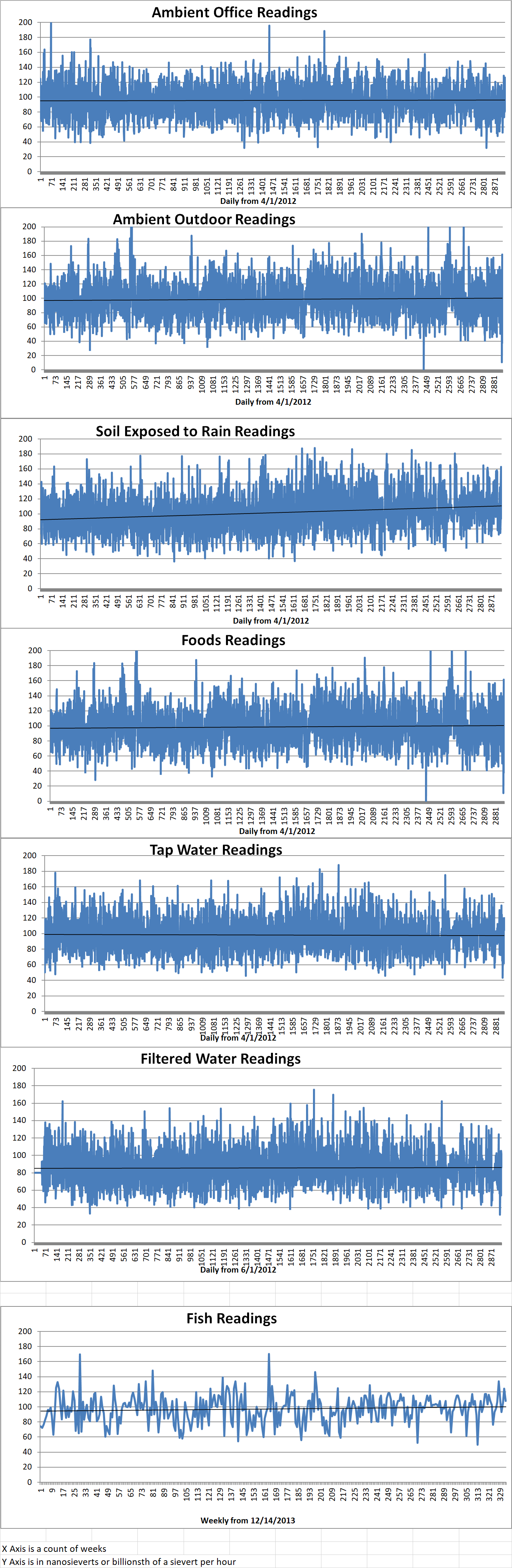
Geiger Readings for Jul 12, 2020
Ambient office = 126 nanosieverts per hour
Ambient outside = 98 nanosieverts per hour
Soil exposed to rain water = 100 nanosieverts per hour
English cucumber from Central Market = 38 nanosieverts per hour
Tap water = 105 nanosieverts per hour
Filtered water = 86 nanosieverts per hour